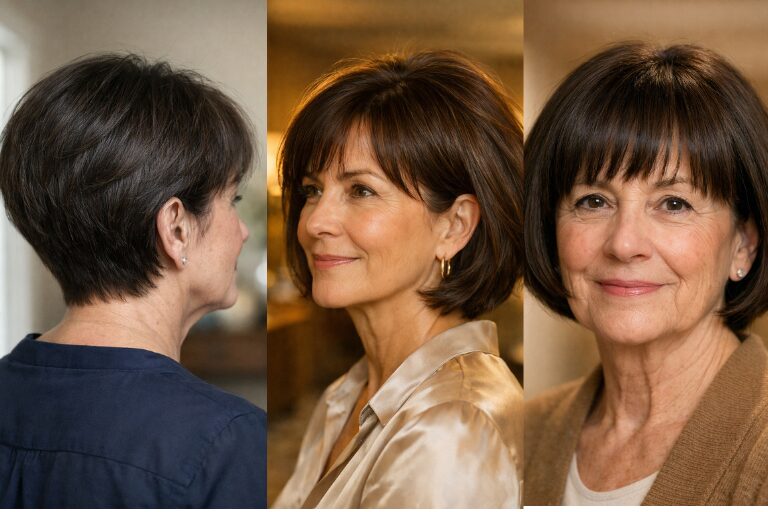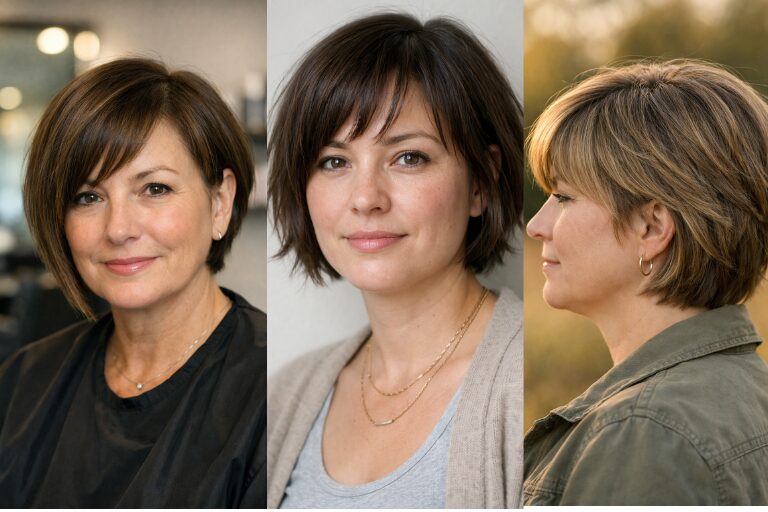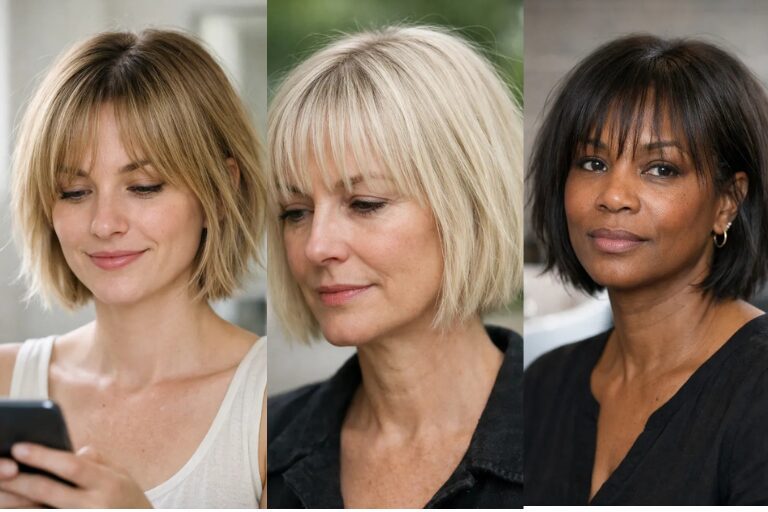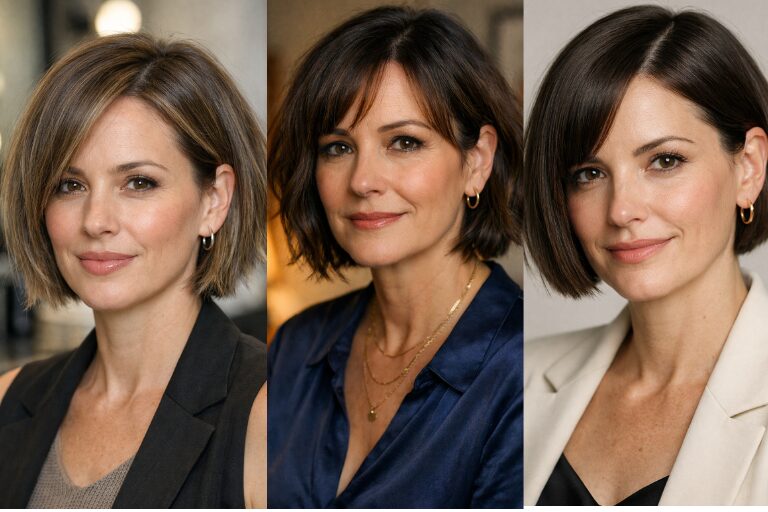
32 Stacked Bob Hairstyles for Fine Hair That Add Real Volume and Shape
Fine hair and short cuts have a complicated relationship. Too much layering and the ends look wispy and sparse. Too little layering and the whole thing lies flat against the head by mid-morning. The sweet spot — the cut that actually works — is the stacked bob. And if you haven’t tried one yet, understanding exactly why it performs so well on fine hair changes everything about how you think about short hairstyles.
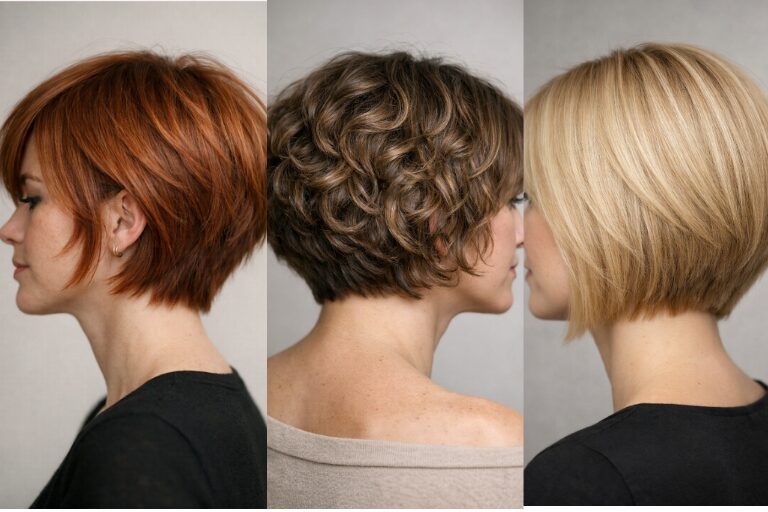
The stacked bob works because it builds volume architecturally rather than relying on products or styling tools to manufacture it. The graduated layers at the back of the head — stacked shorter underneath and progressively longer on top — create a rounded, lifted shape that holds itself upright through the structure of the cut rather than through any external intervention. Fine hair doesn’t need more product. It needs a cut that creates fullness at the foundation level. The stacked bob does exactly that.
These 32 stacked bob hairstyles for fine hair cover every variation — from the shortest, most structured options to longer stacked lobs that maintain the volume principle at a more comfortable length. Every style comes with what to ask your stylist and how to maintain it at home, because a great stacked bob is a partnership between the cut and the styling approach.
Why the Stacked Bob Works So Well for Fine Hair
The stacked bob’s effectiveness on fine hair is structural. Here’s precisely how it works.
Graduation creates volume without density. In a stacked bob, the interior layers are cut shorter than the exterior layers. When the hair falls naturally, the shorter interior layers push the longer exterior layers outward and upward — creating a rounded, lifted shape that reads as full even when the individual strands are fine. The volume is built into the mathematics of the cut rather than borrowed from a product.
The rounded back creates a visual illusion of fullness. Fine hair viewed from behind in a flat, one-length cut shows the scalp through the lengths and has no perceptible shape. The same fine hair viewed from behind in a stacked bob shows a clean, rounded silhouette with visible curvature — the rounding of the stacked layers creates the impression of abundant, full hair even when the actual density is low.
The shorter nape keeps the weight in the right zone. One of the most common problems with longer fine hair is that weight collects at the ends, pulling the hair flat against the head and making the silhouette collapse. A stacked bob removes that weight from the bottom sections entirely, redistributing the visual fullness upward toward the crown where it flatters the face and profile most effectively.
The shape holds through the day without constant restyling. Because the volume in a stacked bob is created by the cut’s structure rather than by heat or products, it doesn’t deflate throughout the day in the way that product-dependent volume does. A well-cut stacked bob on fine hair looks just as full at 5pm as it did at 8am.
What to ask for and what to avoid. The most important request when getting a stacked bob on fine hair is to avoid over-layering through the mid-lengths and ends. The stacking at the back provides structure; adding too many layers through the visible lengths thins the ends and undermines the density that makes fine hair look its best. A stronger, cleaner perimeter combined with strategic interior graduation is the right approach.
32 Stacked Bob Hairstyles for Fine Hair
1. Angled Stacked Bob
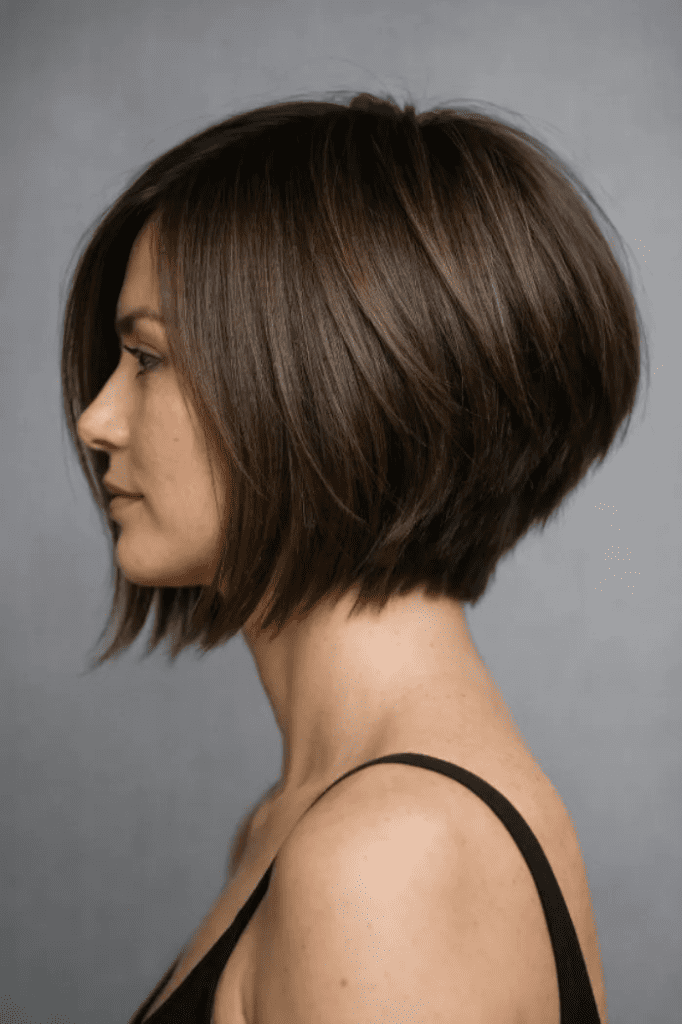
The angled stacked bob combines two of the most effective structural principles available in a single cut: the diagonal front-to-back angle that creates visual interest and face-framing, and the stacked graduation at the back that builds volume and shape. The longer front pieces frame the face and jawline with an intentional, modern quality, while the stacked back creates the rounded fullness that gives the style its lift and presence.
For fine hair specifically, the angle is a strategic tool — it distributes the hair’s limited density across a diagonal rather than a horizontal line, which means the transition from the shorter back to the longer front reads as a design decision rather than an obvious length difference caused by thinning.
Ask your stylist for: A clearly defined angle from the longer front to the stacked shorter back. Specify that you want the stack to be visible and rounded rather than blended into invisibility — the stack is the structural feature that makes this cut work for fine hair. A clean, precise front line at whichever length suits your face shape.
Styling tip: A round brush used through the front sections during blow-drying, rolling the ends under or outward depending on your preference, gives the angled front its most polished, intentional quality. The stacked back holds its shape with almost no intervention — a quick rough-dry with fingertips at the back section is sufficient.
2. Ash Blonde Stacked Bob
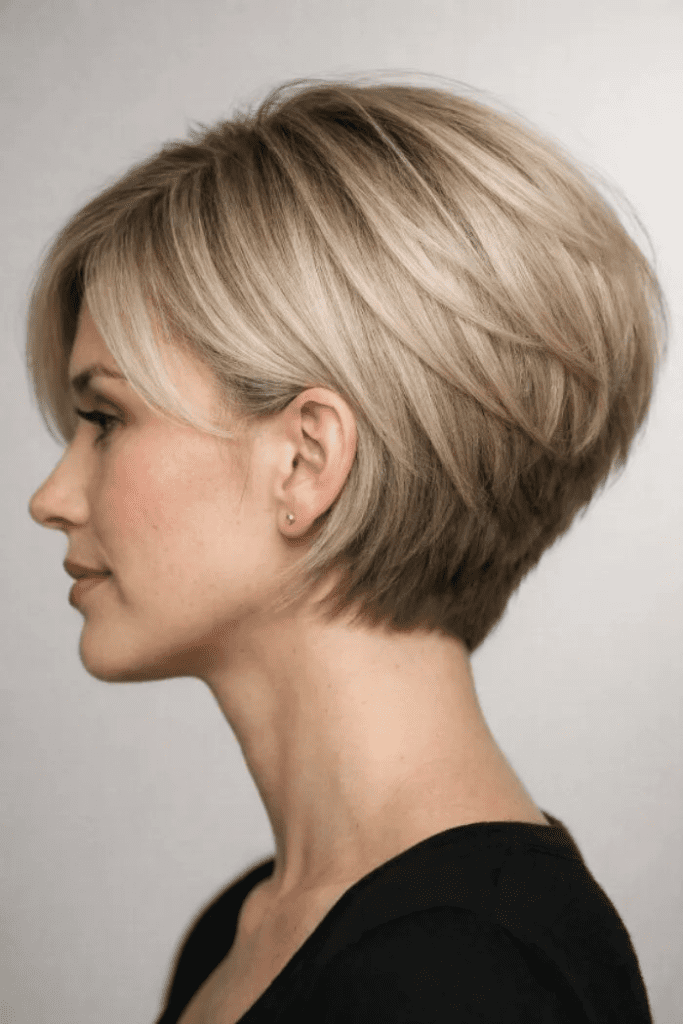
Color and cut work together in the ash blonde stacked bob in a way that multiplies the impact of both. The cool ash tone creates a tonal variation through the stacked layers that reads as depth and dimension — even when individual strands are fine, the presence of multiple ash tones catching light differently through the stacked graduation makes the hair look more abundant and three-dimensional than it actually is.
The cool tone also does something practically valuable: it prevents the stacked shape from looking heavy or dense. Warmer tones can make close-stacked layers look thick and solid; cool ash tones keep the stacked shape looking airy and light while still maintaining full structural impact.
Ask your stylist for: Closely blended layers that keep the cut smooth against the head while still maintaining visible stacking at the back. The blending should be thorough — no visible steps or harsh transitions — which is what produces the sleek, polished quality of this version.
Ask your colorist for: A cool ash blonde that has enough tonal variation (slightly darker at the roots, lighter through the lengths) to add dimension to the stacked layers. A clear or ash-toned gloss every six to eight weeks maintains the cool quality and prevents yellowing.
Styling tip: A smoothing cream worked through damp hair before blow-drying with a flat paddle brush gives the ash blonde stacked bob its signature sleek, smooth finish. Avoid heavy products that add shine at the expense of lift at the root area.
3. Bold Stacked Bob
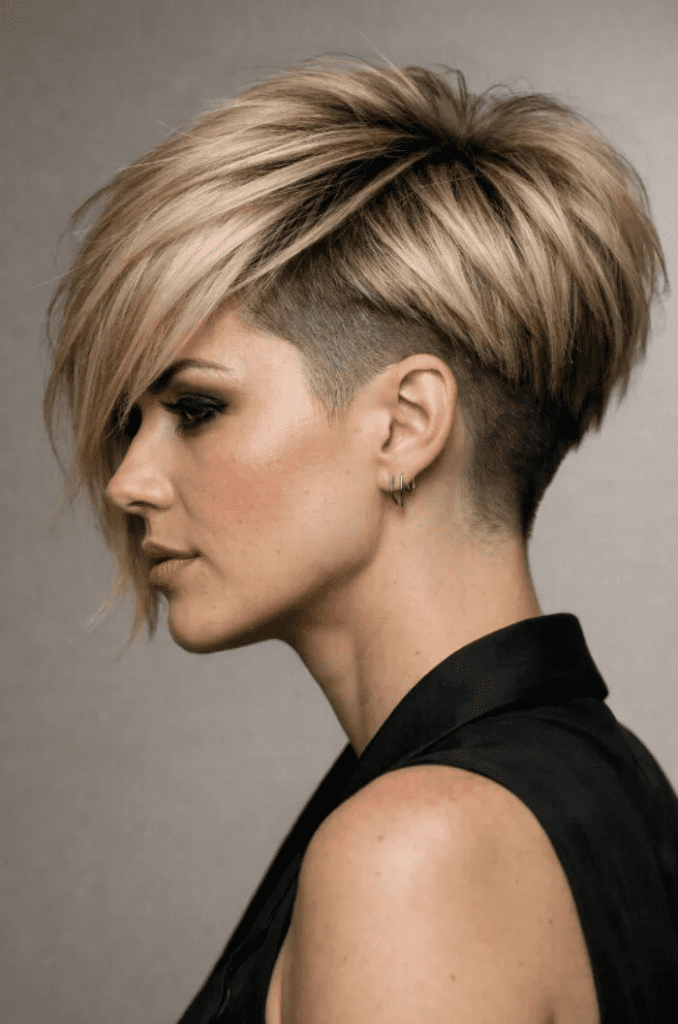
The bold stacked bob makes no apologies. The stack at the back is pronounced and clearly defined, creating a strong, rounded shape that’s immediately visible and immediately impressive. The longer top section provides contrast and balance — the length on top prevents the bold stacked back from looking top-heavy or disproportionate. Together they create a modern, confident silhouette that communicates exactly what it is: a deliberate, well-considered haircut.
For fine hair, the bold stacking is particularly effective because the contrast between the longer top and the clearly stacked back creates a dynamic shape that holds visual interest even when the hair has limited density to work with.
Ask your stylist for: A strong, pronounced stack that’s clearly visible from the back rather than subtly suggested. A longer top section with enough length that the contrast between the stacked back and the top is evident. Specify that you want the stack to be the defining visual feature of the cut.
Styling tip: This style looks great air-dried on fine hair because the strong stack holds its rounded shape without any heat styling required. A lightweight volumizing spray at the roots before rough-drying adds extra lift at the crown that complements the stacked back beautifully.
4. Chin-Length Stacked Bob
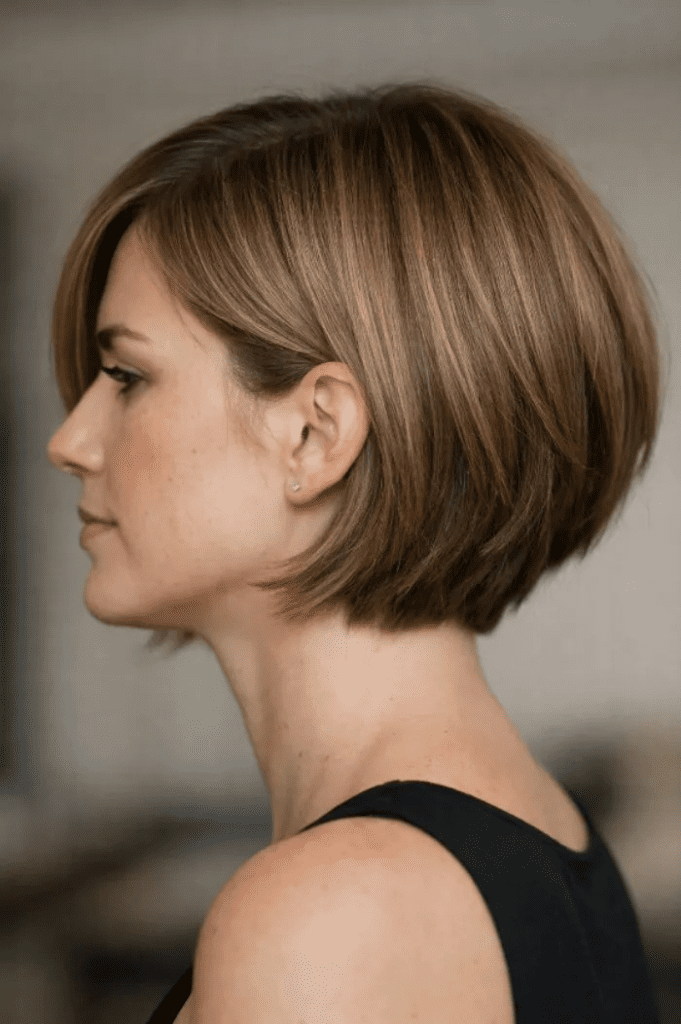
The chin length is a particularly strategic choice for fine hair in a stacked bob because it keeps the overall silhouette compact — all the hair’s limited density is concentrated into a shorter area, which means each section looks fuller relative to the overall cut. At chin length, fine hair can’t spread its density thinly over too much length, which means the ends always look appropriately full and the stacked back always looks intentionally shaped.
The way this length frames the jaw is also genuinely flattering across a wide range of face shapes — the chin is one of the most universally flattering landing points for a bob because it balances the face without creating a harsh line.
Ask your stylist for: A stacked bob that sits precisely at the chin on the longer front sections — not slightly below or slightly above, but right at the jaw. A stacked back that creates visible rounding when viewed from the side profile. Soft framing through the front that suits your specific jaw and cheekbone shape.
Styling tip: A flat iron used through just the front sections — a single smooth pass in each direction — gives the chin-length pieces their most flattering, polished quality. The stacked back can air dry or be rough-dried with fingers.
5. Choppy Stacked Bob
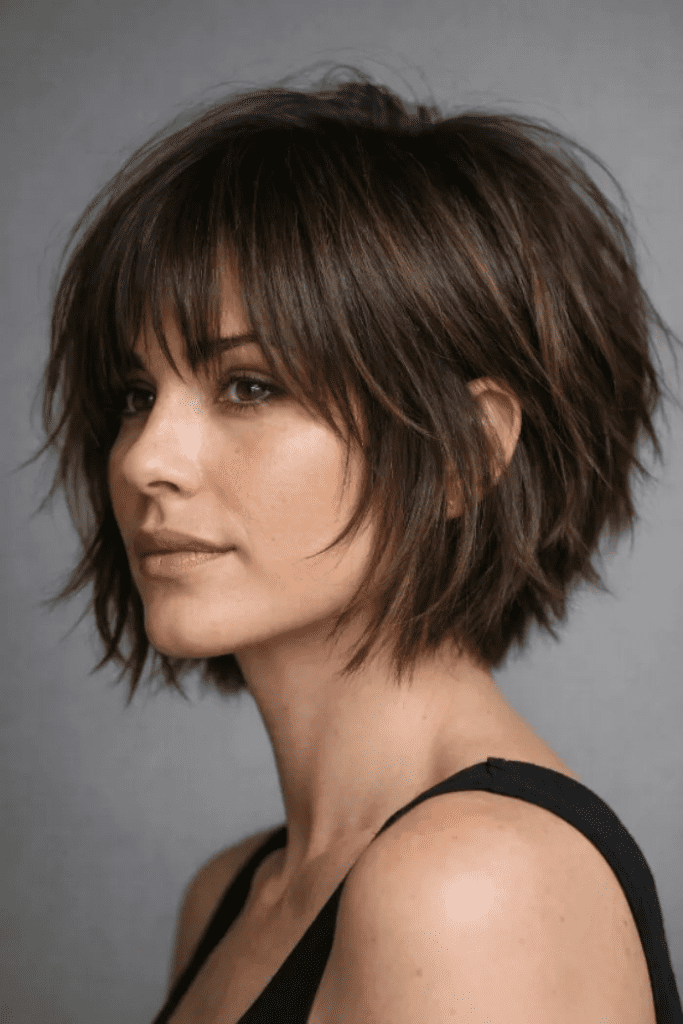
The choppy stacked bob takes the clean, structural precision of a standard stacked bob and introduces deliberate textural irregularity at the surface — the ends are point-cut rather than scissor-sheered straight across, which creates soft choppiness that gives the style an organic, lived-in quality. On fine hair, this surface texture creates the visual impression of more hair by introducing separation and movement between the strands that a smooth, blunt finish doesn’t provide.
The choppy quality also makes this style significantly more forgiving on imperfect styling days — the intentional irregularity means there’s no “perfect” state to maintain, which reduces styling pressure considerably.
Ask your stylist for: Point-cut ends throughout the visible lengths — this is the technique that creates choppy texture without producing a harsh, blunt result. The stacking at the back should remain precise even as the surface becomes textured. Avoid razoring on fine hair, which removes too much weight from already-delicate ends.
Styling tip: A texturizing spray scrunched through dry or slightly damp hair gives this style its full choppy, lived-in quality in under 60 seconds. On fine hair, applying it directly to the roots first and then through the lengths adds lift and separation simultaneously.
6. Classic Stacked Bob
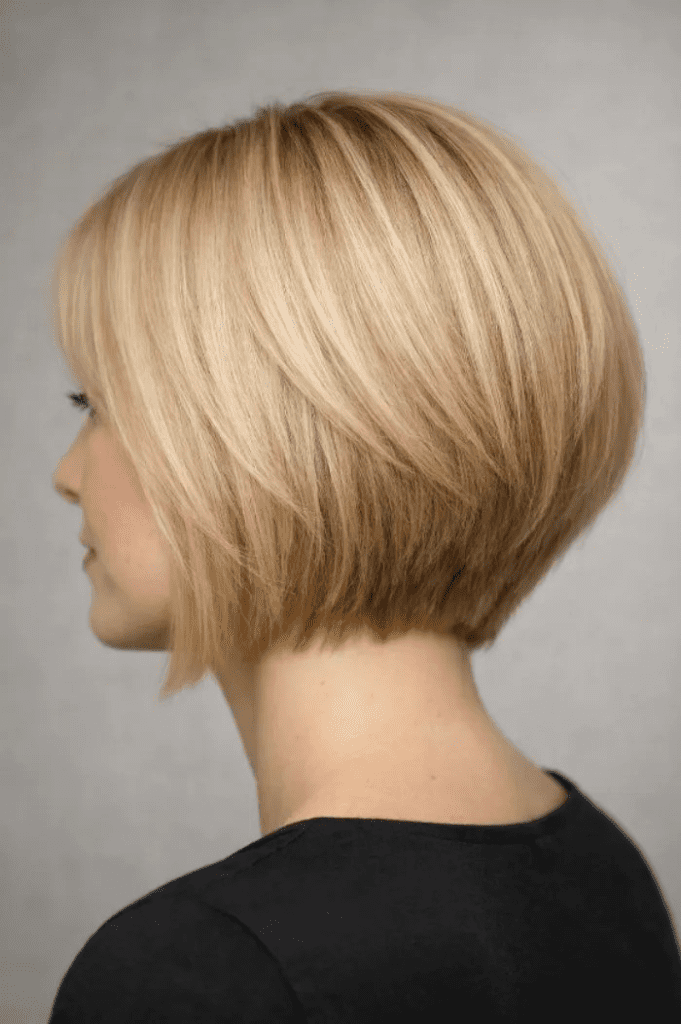
The classic stacked bob is the foundational version from which every other variation on this list derives — and its enduring relevance across decades of hairstyling is a testament to how well its structural principles work. The back is cleanly graduated with close-stacked layers that create a rounded, full shape. The sides blend smoothly into the back stacking. The front falls in a clean line that frames the face without drama. The finish is smooth and polished throughout.
For fine hair, this classic version is often the most effective choice precisely because it doesn’t add any complicating variables — no asymmetry, no surface texture, no dramatic angles. Just clean stacking and a smooth finish, which gives fine hair the most reliable and consistent volume result.
Ask your stylist for: Traditional stacked graduation at the back — ask to see the back shape in a hand mirror before leaving the salon. A rounded silhouette rather than a flat or angular one. A smooth, polished finish throughout. Specify “clean and classic” to your stylist to set the right expectation.
Styling tip: A round brush blowout through the whole cut — rolling each section under at the back and outward at the sides — gives the classic stacked bob its signature polished, complete finish. A lightweight flexible-hold spray over the finished style extends the blowout significantly.
7. Classic Stacked Bob with Soft Finish
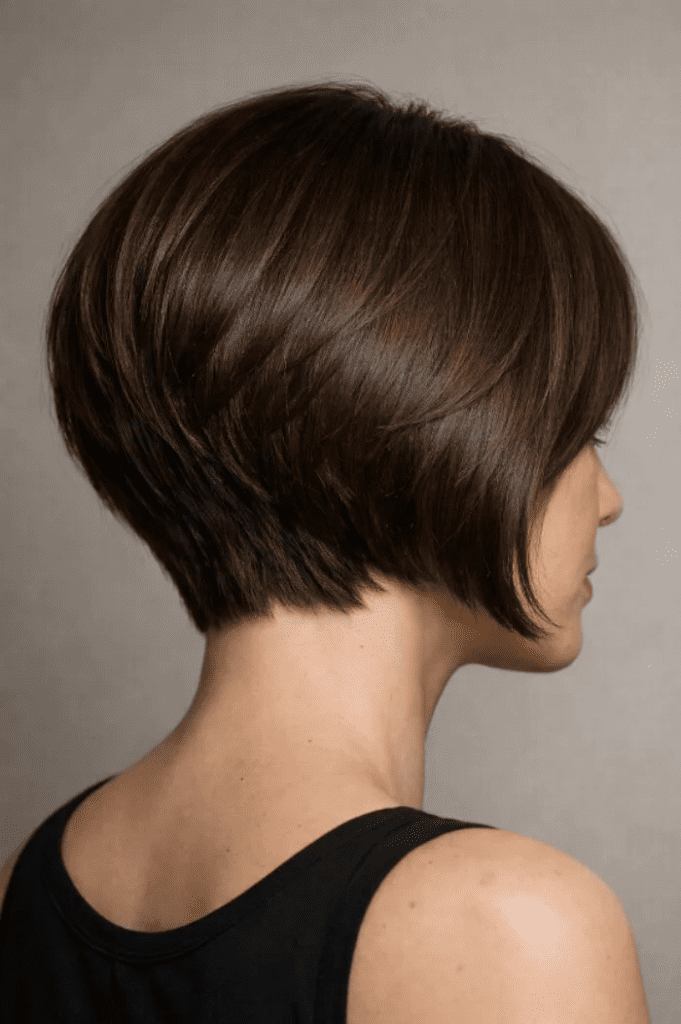
The soft-finish variation of the classic stacked bob makes one meaningful adjustment: instead of a smooth, polished surface, the finish is slightly softened — a touch of natural movement and texture rather than a sleek, pressed result. For fine hair, this small difference is significant because a softer finish reveals the stacked graduation more naturally, showing how the layers move and interact rather than lying flat under a smooth surface treatment.
It’s also considerably easier to maintain day to day — the soft finish looks just as intentional on days when there wasn’t time for a full blowout as it does on days when there was.
Ask your stylist for: The same clean stacking as the classic version but with a slightly softer, more blended layering approach through the crown and upper sections. The goal is a rounded back with gentle surface movement rather than a helmet-smooth finish.
Styling tip: A light mousse worked through damp hair before rough-drying with fingertips — rather than a brush — gives the soft finish its natural, organic quality. The roots get lift from the mousse and the rough-dry; the lengths fall into their soft, natural movement without any additional intervention.
8. Curly Stacked Bob
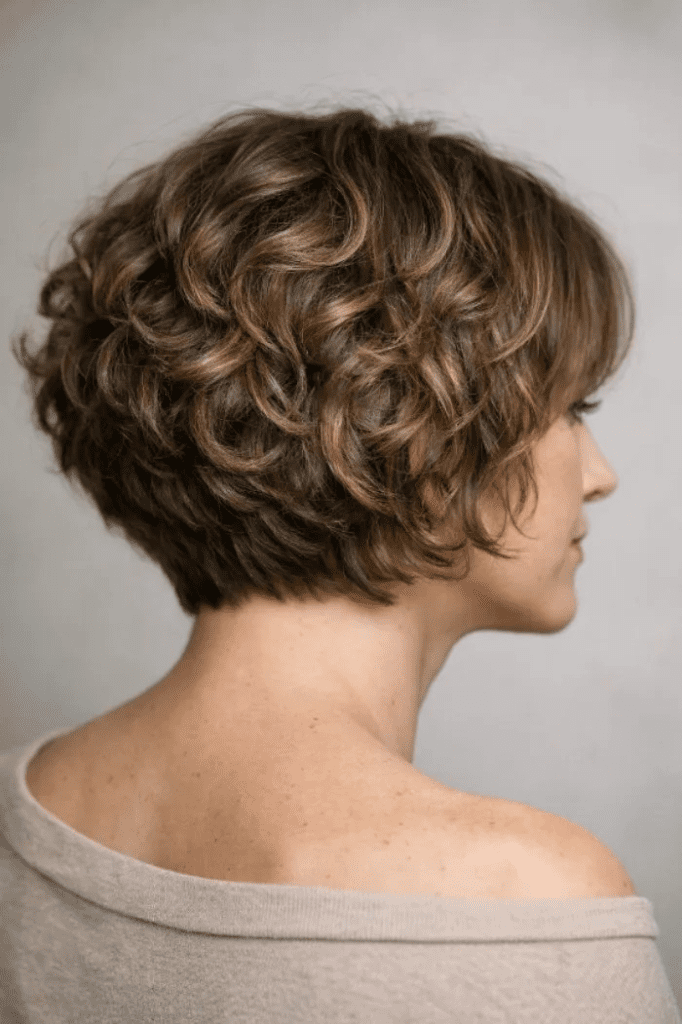
Natural curl texture transforms the stacked bob into something genuinely spectacular. Where straight fine hair creates a smooth, rounded stacked shape, naturally curly fine hair creates a stacked shape with three-dimensional texture throughout — each curl adds its own individual dimension on top of the structural dimension provided by the stacking, producing a result that looks remarkably full and vibrant even on hair that’s technically fine in strand diameter.
The stacked graduation also solves one of the most persistent problems with curly fine hair at shorter lengths: the tendency for curls to spread outward rather than sit in a controlled, rounded shape. The stacking guides the curls upward and inward, creating a supported, beautiful curl pattern rather than a spreading, uncontrolled one.
Ask your stylist for: A stacked bob cut specifically for the curl pattern — ideally performed as a dry cut so the stylist can see exactly how the curls form and sit before making any length decisions. Ask for the stacking to support the curl pattern upward rather than fighting against the natural curl direction.
Styling tip: A curl cream applied to soaking-wet hair section by section, followed by diffusing on the lowest heat setting while scrunching the hair upward, gives fine curly hair in a stacked bob its most defined, voluminous result. Let it cool completely in the diffuser before releasing for maximum curl definition.
9. Disconnected Stacked Bob
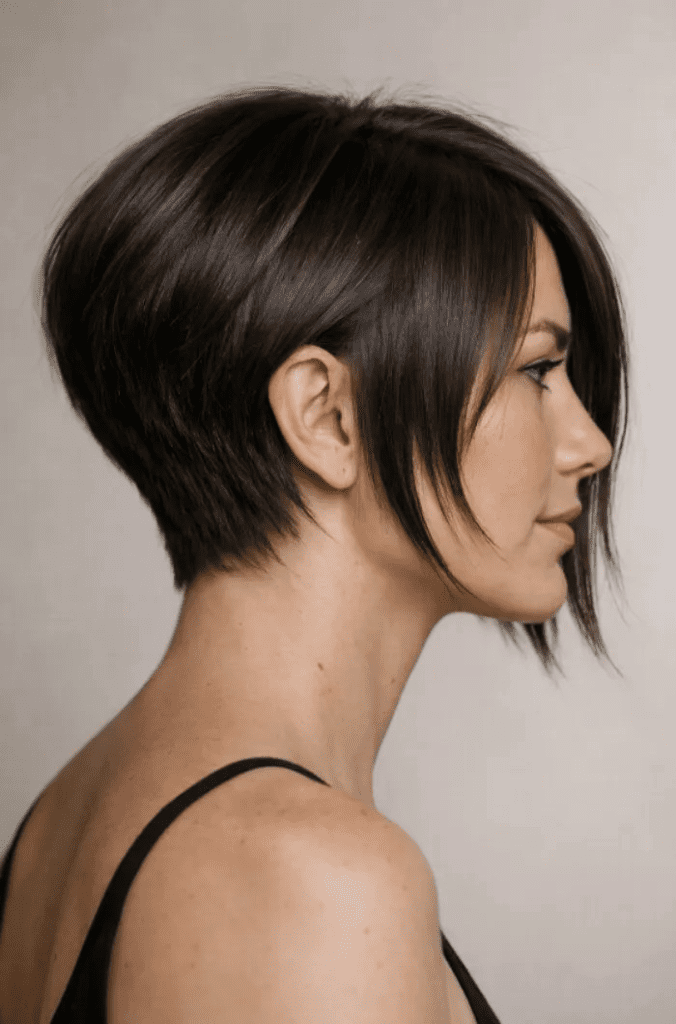
The disconnected stacked bob introduces a deliberate separation between the stacked back section and the longer top section — rather than blending gradually from one to the other, the two sections are kept visually distinct. On fine hair, this disconnection is a powerful optical tool: the eye perceives the contrast between the two sections as visual depth and dimension, which reads as more hair even when the actual density hasn’t changed.
It’s a bolder styling statement than the classic stacked bob but one that requires the same level of styling effort — the disconnection is built into the cut rather than created through daily styling.
Ask your stylist for: A clear, intentional disconnection between the stacked back and the longer top section — ask your stylist to keep the contrast between the sections visible rather than blending them smooth. The top section should be noticeably longer than where the stacking begins at the back.
Styling tip: The disconnected section at the top can be styled in different directions depending on the day — forward for coverage, to the side for face-framing, or pushed back for a more structured, architectural look. A lightweight paste gives the top section definition without stiffness.
10. Inverted Long Stacked Bob
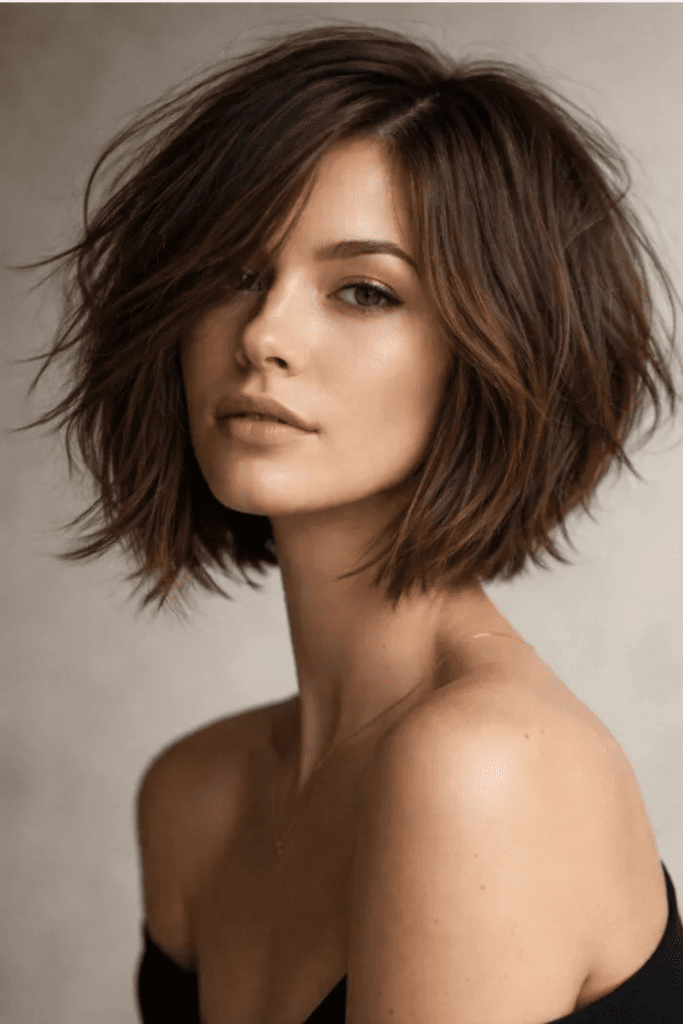
The inverted long stacked bob takes the standard stacked bob proportions and extends the front sections significantly — the result is a style where the stacked back provides structure and lift while the longer front sections provide coverage, face-framing, and the flexibility to style in multiple ways. For fine hair that needs volume at the back but feels more comfortable with some length around the face, this is the ideal version.
The “long” qualification in this style means the front sections fall somewhere between the jaw and the collarbone rather than at a short, chin-skimming length — which gives the style significantly more versatility than a traditional stacked bob while maintaining the volume benefits of the stacked back.
Ask your stylist for: A stacked back with clear, rounded graduation and longer front sections that fall to your preferred length between jaw and collarbone. The angle from the stacked back to the longer front should be dramatic enough to be visible and intentional-looking.
Styling tip: A large-barrel curling iron used through just the longer front sections creates a loose, flowing quality that complements the structured stacked back beautifully. The contrast between the waved front and the precise stack is what gives this version its sophisticated quality.
11. Inverted Stacked Bob
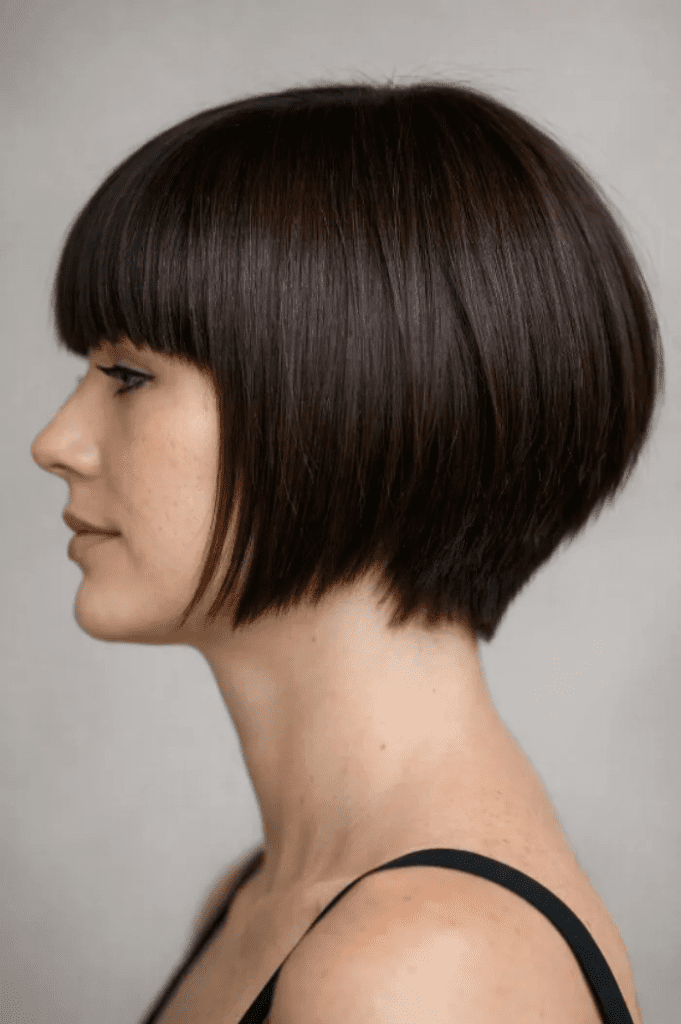
The standard inverted stacked bob keeps the front slightly longer than the back without the dramatic length extension of the long version — the front falls somewhere around or just below the chin while the back is cleanly stacked and tapered. It’s the most balanced proportion within the inverted family and suits the widest range of face shapes and hair textures.
For fine hair at the crown, the lift provided by the stacked back is particularly valuable — the crown area, where fine hair most often looks flat and thin, benefits directly from the upward push of the graduated layers beneath it.
Ask your stylist for: A clean, tapered stacked back with a front that extends to the jaw or slightly below. The crown area should benefit from the stacking’s lift — ask your stylist specifically to ensure the graduation reaches high enough to support the crown volume.
Styling tip: A root-lifting spray applied directly to the crown area before blow-drying dramatically amplifies the lift that the stacked graduation already provides. Blow-dry the crown section last, directing the heat and the brush upward for maximum volume at the most visible point.
12. Layered Blonde Stacked Bob
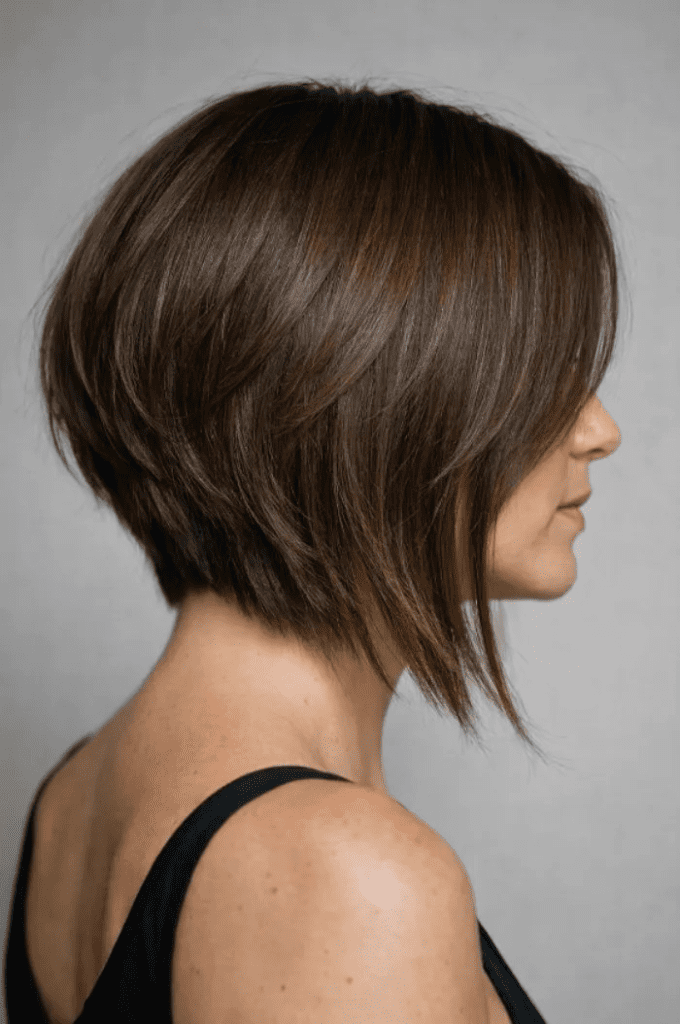
Light blonde tones at the surface of a stacked bob serve a specific optical function: they create tonal variation that the eye reads as depth and dimension, making the stacked layers appear to have more visual complexity than they would in a single, flat tone. On fine blonde hair, this tonal dimension makes the difference between a stacked bob that looks full and a stacked bob that looks a little sparse.
The visible layering through a blonde stacked bob — where you can see the lighter exterior layers against the slightly darker interior layers — adds another dimension of visual interest that reinforces the fullness impression of the stacking itself.
Ask your stylist for: Layers that are visible but still blended — you want to see the layering through the blonde tones without having obvious, harsh steps. A slightly brighter blonde at the surface layers and slightly deeper at the interior creates the tonal variation that amplifies the volume impression.
Ask your colorist for: A blonde balayage or babylights technique that concentrates the lightest tones at the surface of the stacked bob where they’ll be most visible. A warm or neutral gloss as a finishing step for the most luminous, dimensional result.
Styling tip: A shine spray applied to the finished style amplifies the tonal variation in the blonde layers and gives the stacked bob a healthy, vibrant quality that reads as abundance.
13. Layered Long Stacked Bob
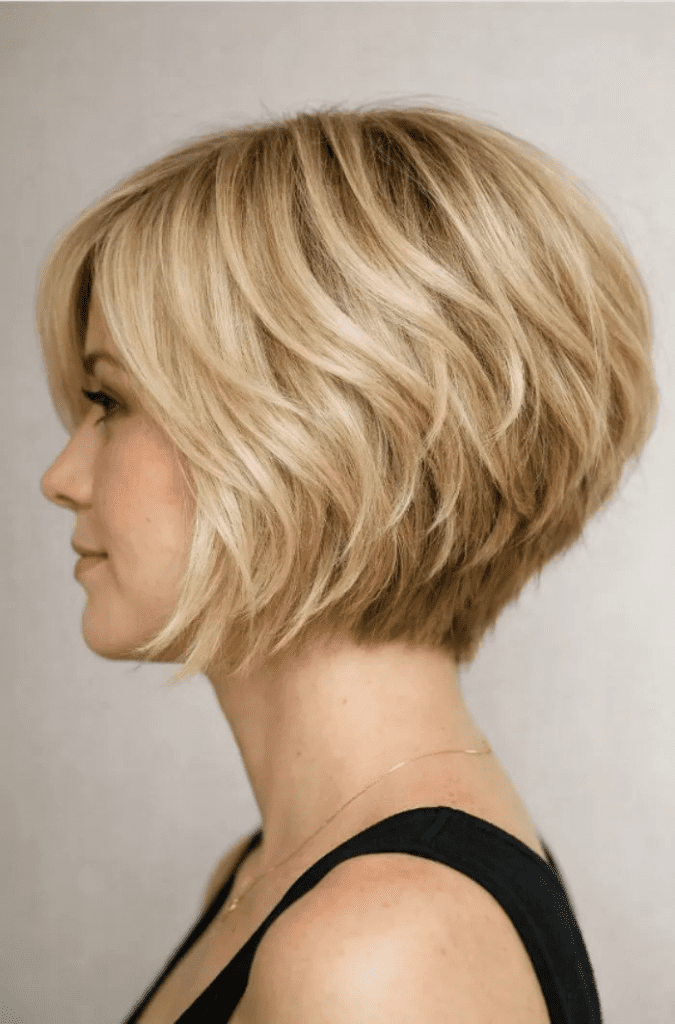
The layered long stacked bob proves definitively that you don’t have to sacrifice length to get the benefits of stacked graduation. By maintaining longer lengths through the front and sides while building a clear stack at the back, this version delivers volume where fine hair needs it most without requiring a commitment to a significantly shorter overall length.
The layers through the longer front sections prevent the length from lying heavy and flat — they keep the longer pieces moving and light rather than dragging the crown area down the way longer one-length fine hair tends to.
Ask your stylist for: A clear stacked back that’s visible and rounded even with the longer lengths around it. Long, blended layers through the front and sides that keep the longer lengths light and mobile rather than heavy. The overall silhouette should look balanced — the stacked back should be proportionate to the longer front sections.
Styling tip: Loose waves through the longer front sections, added with a large-barrel curling iron, complement the stacked back beautifully and prevent the longer sections from looking flat against the head. A light volumizing spray at the roots keeps the crown lifted throughout the day.
14. Layered Stacked Bob
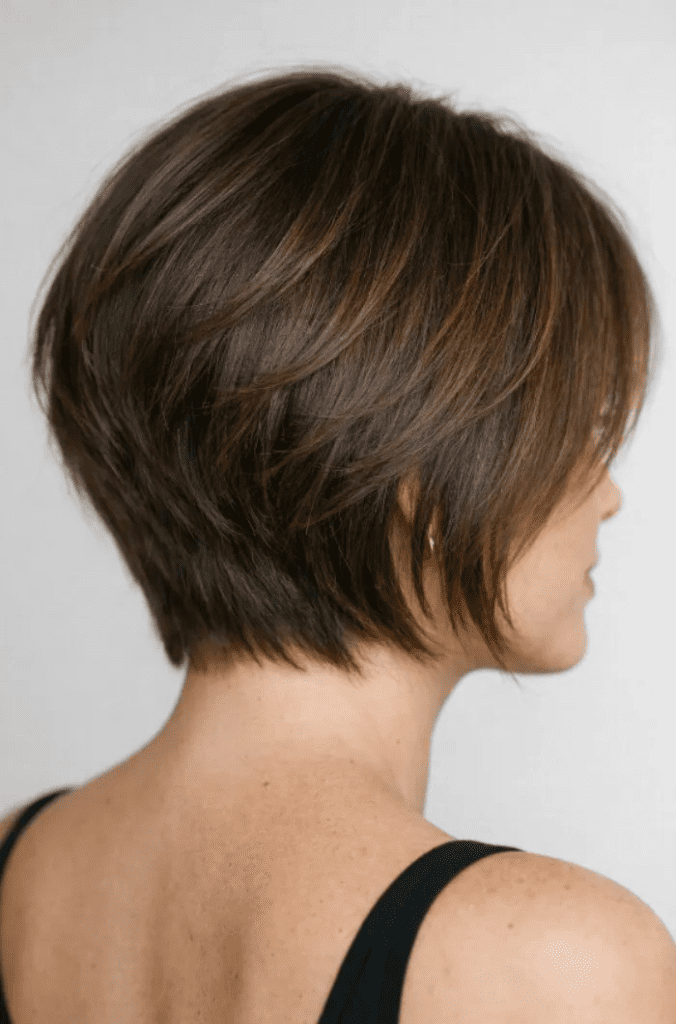
The layered stacked bob adds surface layering to the classic stacked structure — the stacking at the back provides the foundational volume, while additional layering through the visible lengths adds movement and prevents the surface from lying flat. For fine hair, this combination is one of the most effective available: structure from the stack, movement from the layers, and enough density at the ends to avoid the wispy, sparse look that over-layering produces.
The key is keeping the additional layering light and strategic — concentrated at the crown and upper sections where movement is most valuable, rather than distributed throughout the ends where it would thin the perimeter.
Ask your stylist for: Stacking at the back as the primary structural feature. Light additional layering at the crown and upper sections only — the ends should remain relatively strong and clean. Specify “light layering, strong perimeter” to communicate the right balance.
Styling tip: A mousse worked through the crown section before blow-drying with a round brush gives the layered sections their most lifted, voluminous result. The stacked back can rough-dry or air dry while the crown section gets the full round brush treatment.
15. Medium-Length Stacked Bob
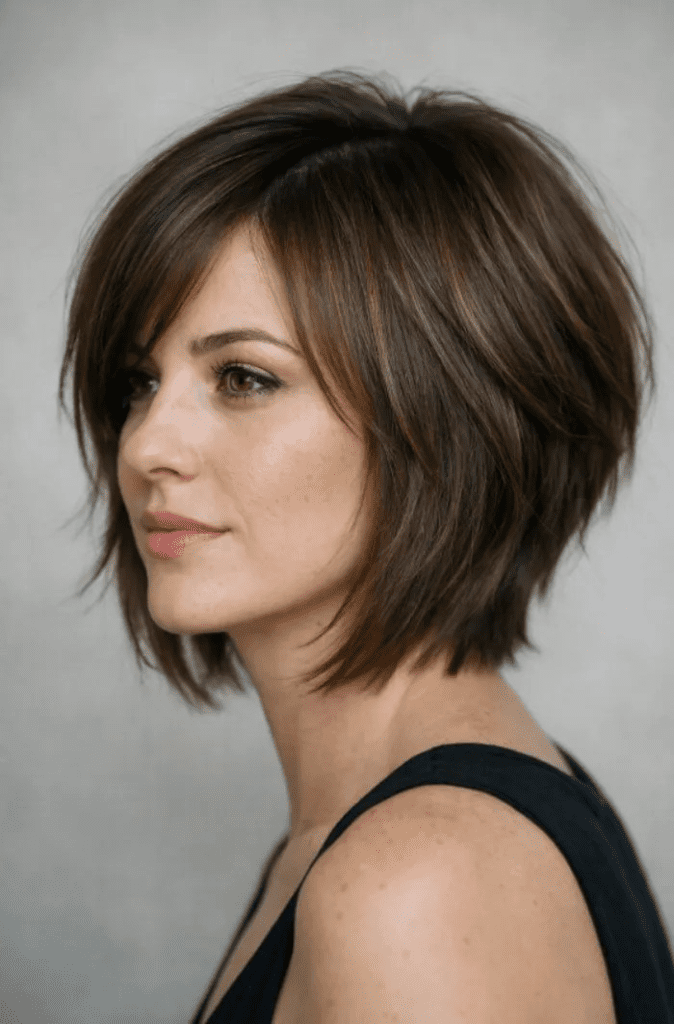
The medium-length stacked bob sits between the traditional shorter bob and the long stacked lob — a length that gives fine hair more versatility than a very short cut while keeping the weight in a zone where the stacked graduation can still work effectively. At this length, there’s enough hair to have meaningful styling options on different days while still maintaining the full structural benefit of the stacked back.
For women transitioning from longer styles to shorter ones, the medium-length stacked bob is an ideal intermediate step — it offers dramatically more volume than the previous longer length while not requiring the full commitment of a short bob.
Ask your stylist for: A stacked bob that sits at a length that feels comfortable for you — between the chin and the shoulder. The stacking at the back should be proportionate to the overall length: at medium lengths, the graduation can be more gradual than at very short lengths and still produce excellent volume results.
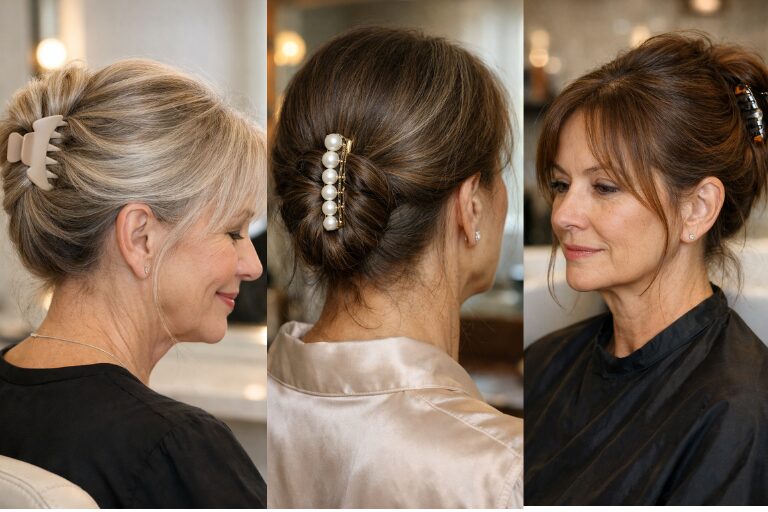
Styling tip: A half-up styling option is easily accessible at medium stacked bob lengths — pulling the top section up while leaving the stacked back visible is a quick, polished variation that works beautifully on fine hair because it draws attention directly to the volume at the stacked back.
16. Messy Chic Stacked Bob
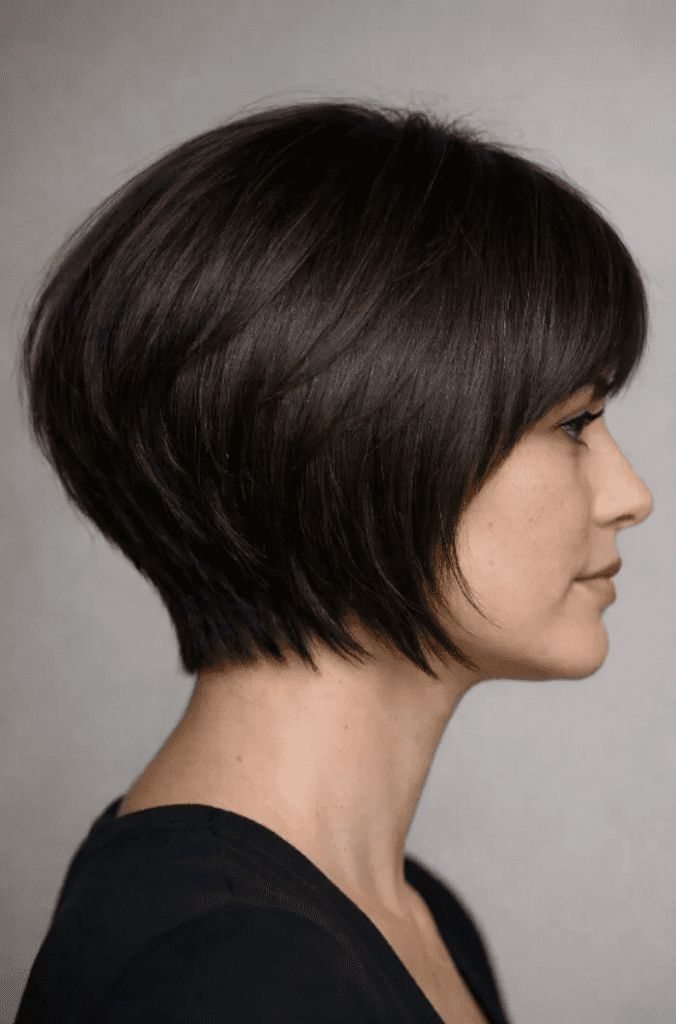
The messy chic stacked bob is the deliberately undone version — and on fine hair, a little strategic messiness is genuinely one of the most effective volume tools available. When fine hair is styled too perfectly, every strand lies flat against every other strand, and the overall impression is of hair that’s trying to look more abundant than it is. Strategic, organic messiness introduces air between the strands, creates the impression of more hair through the movement and separation, and makes the whole style look relaxed and confident rather than effortful.
The stacked back keeps the messiness controlled — the underlying structure prevents the relaxed styling from looking simply unstyled.
Ask your stylist for: Uneven layers that create organic, irregular texture rather than precise, uniform layering. The stack at the back should provide structure while the surface layering keeps everything feeling loose and casual. Point-cut ends rather than blunt sheering for the most natural-looking irregular texture.
Styling tip: Applying a light texturizing paste to dry hair — working it through with fingers in a scrunching, lifting motion rather than a smoothing one — produces the messy chic quality. Then deliberately imperfect the result by pulling a few pieces out of position. The intentional mess is what makes it chic rather than simply unkempt.
17. Modern Stacked Bob
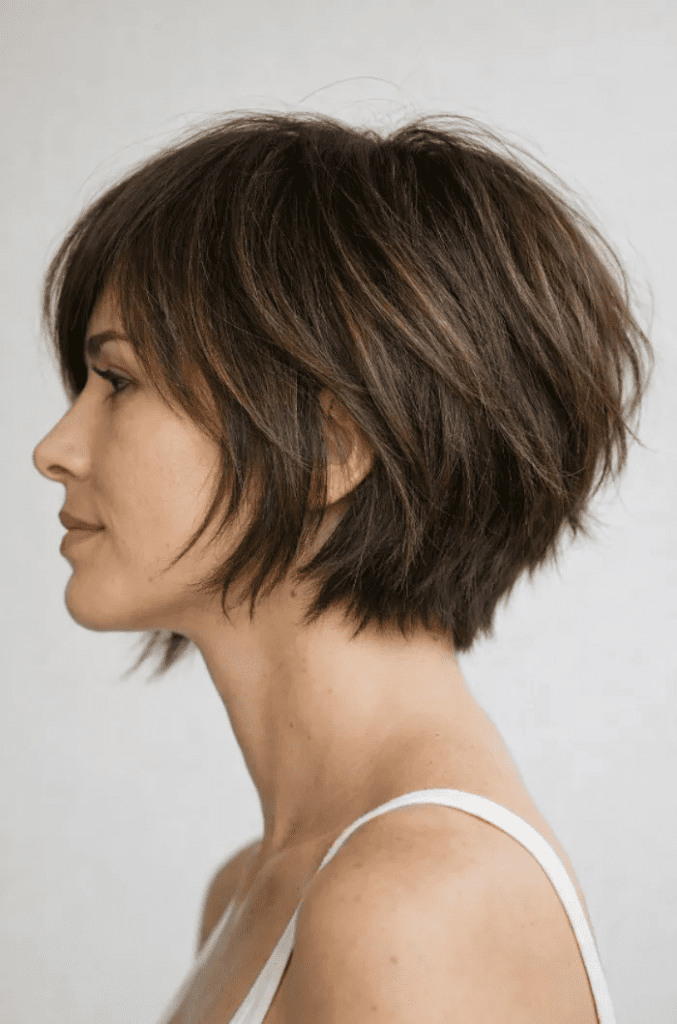
The modern stacked bob distinguishes itself from the classic version through its finish: where the classic leans toward a polished, complete look, the modern version has a controlled, smooth quality that feels current and editorial rather than traditionally styled. The layering is precise but the finish has a subtle softness — not messy, not stiff, but exactly between the two in a way that reads as deliberately contemporary.
For fine hair that wants to look effortlessly on-trend without chasing specific seasonal styling trends, the modern stacked bob is the most future-proof option on this list.
Ask your stylist for: Clean, controlled graduation at the back with lines that stay soft rather than sharp. The overall shape should feel current and intentional — ask your stylist what their most-requested stacked bob version looks like right now if you want to make sure you’re getting the most contemporary interpretation.
Styling tip: A lightweight styling milk worked through slightly damp hair before a quick blow-dry gives this style its smooth, modern finish without any stiffness. A small flat brush rather than a round brush produces the most controlled, contemporary result.
18. Middle-Parted Long Bob
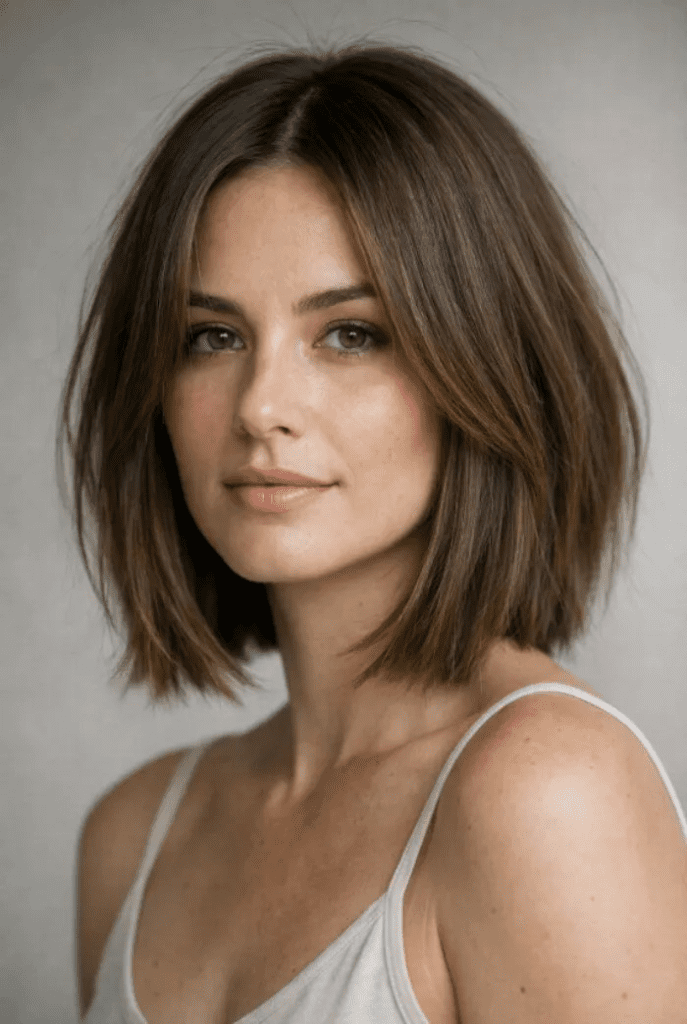
The middle-parted long bob is the most understated stacked variation on this list — the stacking is deliberately subtle, adding gentle support and shape at the back without calling obvious attention to itself. The center part creates a clean, symmetrical balance that suits the quiet confidence of this styling approach, and the overall silhouette reads as calm and considered rather than structured or dramatic.
For fine hair that prefers a more natural-looking result — one where the volume seems to belong to the hair rather than being obviously engineered — the subtle stacking of this version is the most authentic-feeling option.
Ask your stylist for: Subtle stacking that adds support without creating an obvious, dramatic rounded shape at the back. The graduation should be present enough to feel when you run your hand up the back but understated enough that the overall impression is of naturally well-behaved hair.
Styling tip: A center part created while the hair is damp and left to dry in place — rather than being forced into position on dry hair — gives this style the most natural, settled quality. A light oil worked through the ends after drying adds the healthy luminosity that makes subtle stacking look intentional rather than incomplete.
19. Red Shaggy Stacked Bob
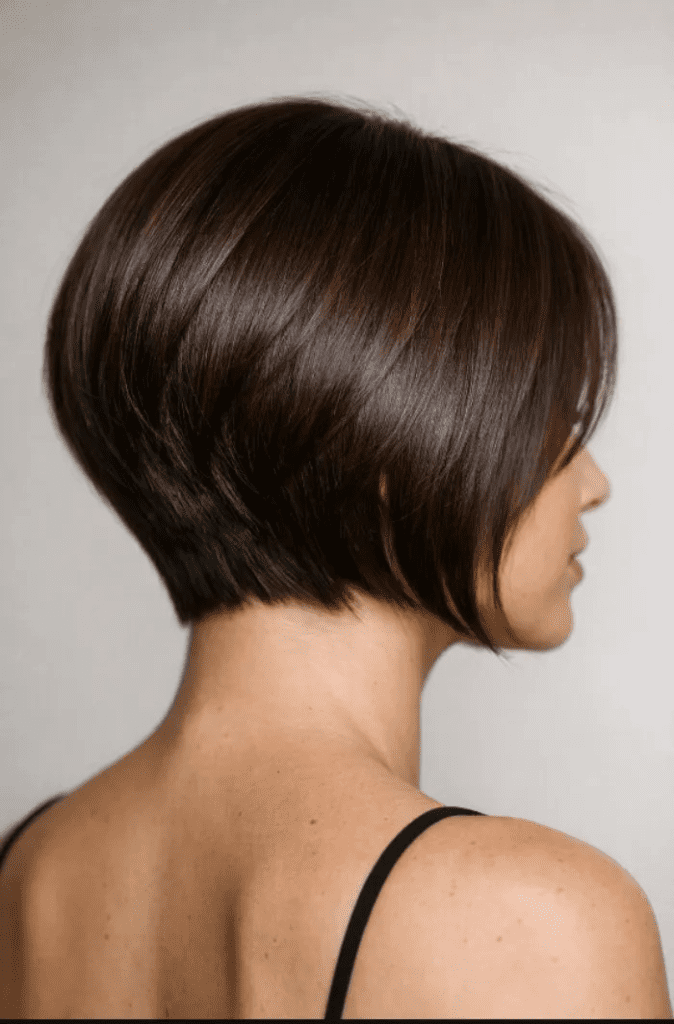
The red shaggy stacked bob combines three distinct elements — warm red color, shag texture, and stacked graduation — that each independently add visual depth and fullness to fine hair. Together, they produce a result that’s remarkably full-looking for fine hair: the red tones add warmth and dimension, the shag texture adds surface movement, and the stacked graduation adds structural volume. Each element amplifies the others.
The warm red tone specifically is worth noting as a color strategy for fine hair: warm tones in general make hair look more vibrant and full than cool or neutral tones because they interact with natural light in a way that creates an impression of richness and depth.
Ask your stylist for: Shag layers that are light rather than heavy — on fine hair, shag layering needs to be restrained to avoid thinning the ends to the point of sparseness. The stacking at the back should still be clearly present beneath the shag texture.
Ask your colorist for: A warm red or auburn tone that has natural depth variation — slightly deeper at the roots, brighter through the mid-lengths — which amplifies the dimensional quality of the stacked layers.
Styling tip: A diffuser on damp hair with a light curl cream or texturizing cream gives the shaggy layers their organic, warm-toned texture. A light shine spray enhances the richness of the red tone.
20. Rounded Stacked Bob
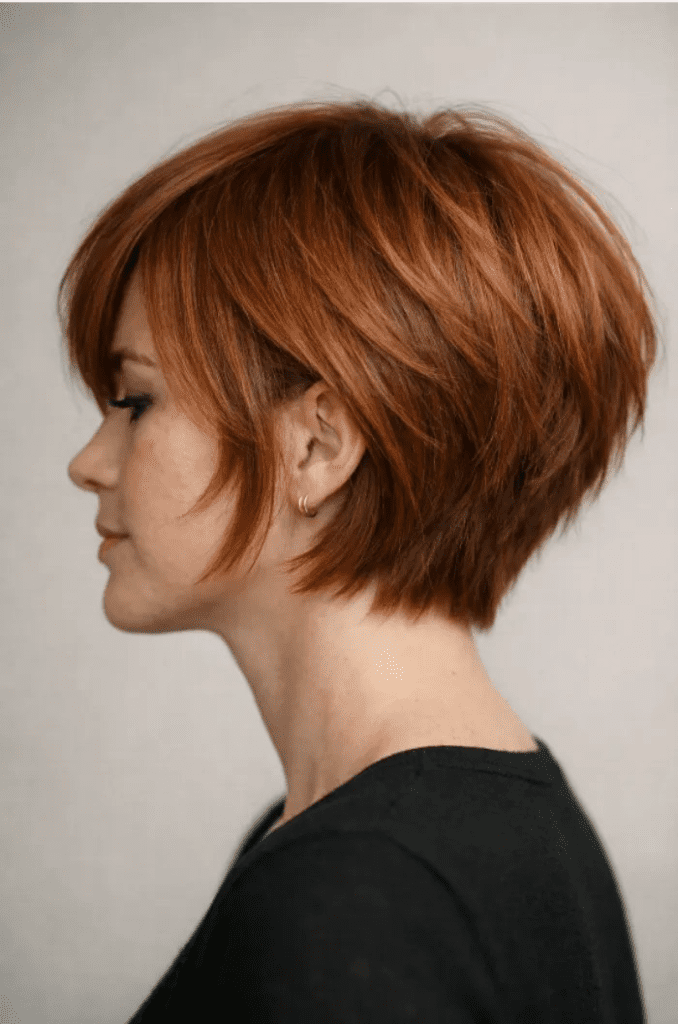
The rounded stacked bob prioritizes the silhouette above all else — the graduation at the back is specifically designed to create a smooth, perfectly curved shape when viewed from behind, rather than angular or sharp lines. On fine hair, this rounded quality is particularly beautiful because a smooth, rounded back shape reads as full and healthy in a way that an angular or squared back simply doesn’t.
The softness of the rounded approach also makes this version one of the most universally flattering stacked bob options across different face shapes and ages.
Ask your stylist for: A rounded back shape specifically — use the word “rounded” rather than “stacked” to help communicate the priority. The curvature should be smooth and consistent all the way from the nape upward. Soft, blended layering rather than sharp, obvious steps.
Styling tip: A round brush used at the back during blow-drying — rolling each section upward and inward to reinforce the rounded shape — is the essential technique for maintaining the rounded silhouette between salon visits. The rounder the brush, the more pronounced the rounded shape in the finished result.
21. Short Stacked Bob
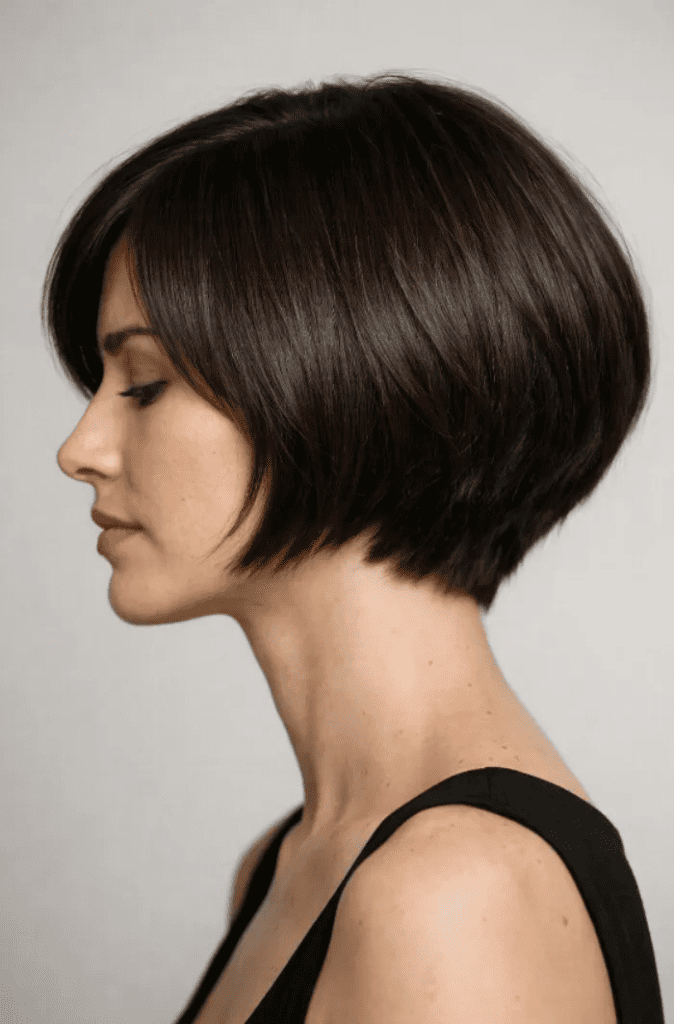
The short stacked bob is the purest expression of the stacked bob principle — everything that makes stacking effective for fine hair is maximized at shorter lengths. The volume is concentrated into a compact area, the graduation is steep and dramatic, and the rounded back shape has maximum visual impact. For fine hair that’s been struggling with flat, shapeless longer styles, the short stacked bob often feels like a revelation: suddenly the hair has presence, structure, and a shape that holds throughout the day without any effort.
Ask your stylist for: A clearly defined, steeper graduation at the back than a longer stacked bob would require. A neckline that’s clean and tapered rather than rounded or squared — the clean taper gives the short stacked bob its signature precise, polished quality. A front length that suits your face shape — this is worth discussing specifically with your stylist.
Styling tip: This style holds its shape with minimal intervention, which is one of its greatest practical virtues. A quick rough-dry with fingertips at the crown for lift and a light flexible-hold spray over the finished result is typically the complete morning routine.
22. Sleek Asymmetrical Stacked Bob
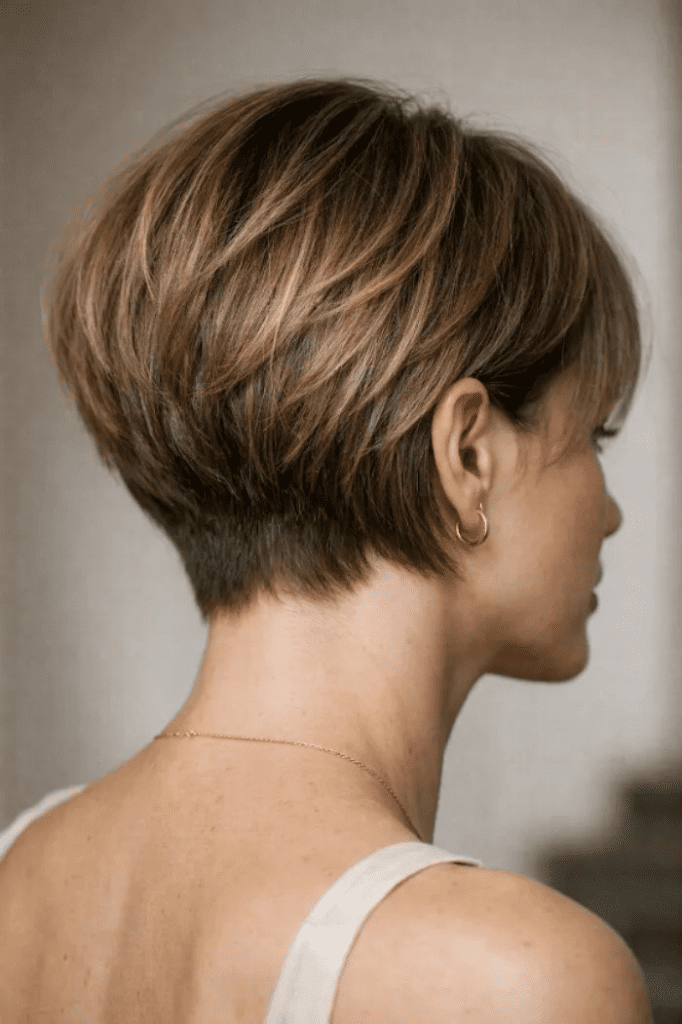
The sleek asymmetrical stacked bob adds one more structural variable to the stacked bob formula: asymmetry. One front section is deliberately cut longer than the other, creating a diagonal movement through the front of the style that adds visual interest and a distinctly modern quality. On fine hair, the asymmetry also distributes the hair’s limited density in a more strategic way — the longer side has more presence than it would at a symmetrical length, and the shorter side is close enough to the face to look intentionally styled rather than sparse.
Ask your stylist for: A clearly defined asymmetrical angle — one side noticeably longer than the other rather than a subtle length difference that could look accidental. A sleek, smooth finish throughout that emphasizes the precision of the asymmetry. The stacked back should remain rounded and clean regardless of the asymmetrical front.
Styling tip: A flat iron used through the longer front section gives the asymmetrical piece its most striking, deliberate quality. The sleek finish on fine hair requires a very light smoothing serum — applied sparingly at the mid-lengths and ends only — to prevent frizz without flattening root volume.
23. Stacked Long Bob
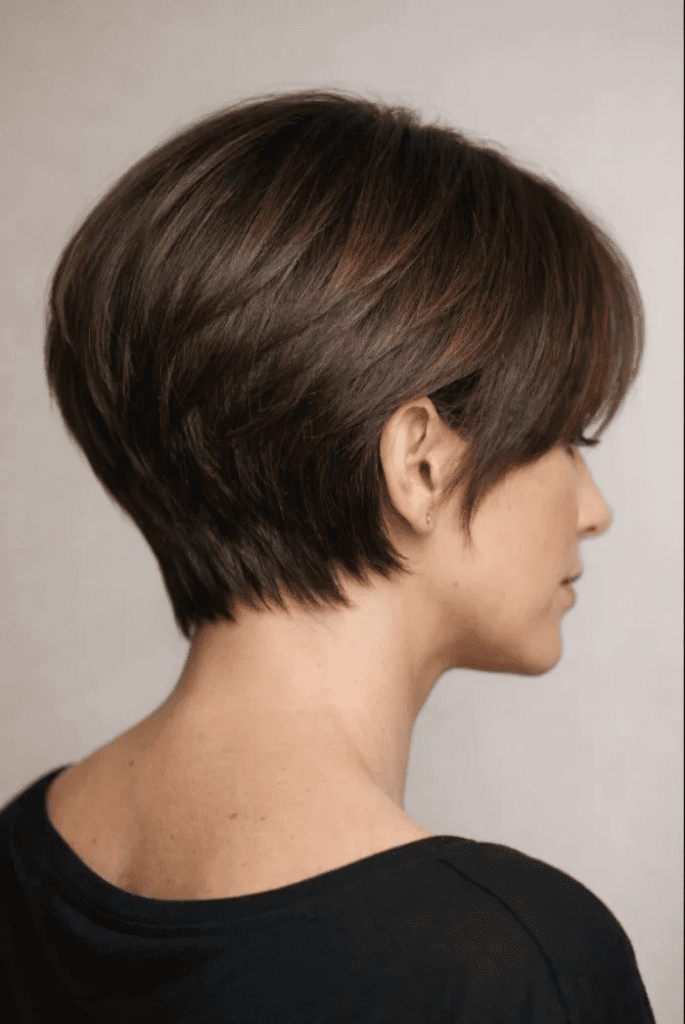
The stacked long bob (or stacked lob) is the style that convinced many long-hair devotees to try stacking — because it proves that the full structural benefits of stacked graduation are available without committing to a short haircut. The lob length — sitting at the collarbone or slightly past — is maintained through the front sections while the back is clearly and visibly stacked, creating volume and shape without changing the overall impression of length.
For fine hair that wants volume but isn’t ready to go short, this is genuinely one of the best options available anywhere in the hairstyle category.
Ask your stylist for: A stacked back that’s clearly visible even within the longer lob proportions — the stacking needs to be more pronounced at this length than at shorter lengths to achieve the same visual impact. A collarbone or just-past-collarbone length through the front sections that sits in the zone where fine hair holds its shape most reliably.
Styling tip: Loose waves through the front sections complement the stacked back in the stacked lob more naturally than a sleek, straight finish — the waves add movement that prevents the longer lengths from looking flat against the structured back.
24. Stacked Pixie
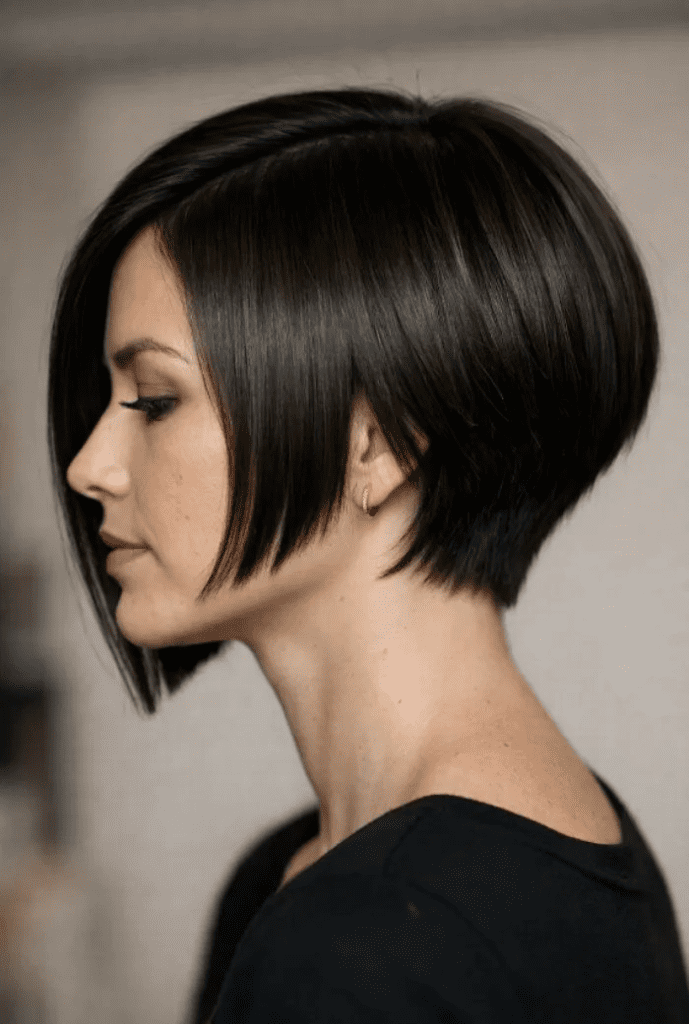
The stacked pixie is the shortest option on this list and the one that delivers the most dramatic volume-per-inch ratio. At pixie length, the stacked graduation creates an immediate, lifted shape at the crown that would be difficult or impossible to achieve with any other cut at this length. For fine hair, the stacked pixie removes the weight problem entirely — there simply isn’t enough length for weight to accumulate and flatten the style.
The result is hair that looks consistently lifted, shaped, and full from the first moment of the day to the last.
Ask your stylist for: Stacking that reaches all the way to the crown section — at pixie length, the graduation needs to support the entire visible top area, not just the nape. A front section that’s long enough to frame the face and provide some styling flexibility. A clean, tapered nape and sides.
Styling tip: A matte paste worked through the crown section with fingertips, lifting and separating as you go, gives the stacked pixie maximum volume and texture. Keep the product away from the nape area — the stacking holds naturally there without any product assistance.
25. Subtle Stacking at the Back
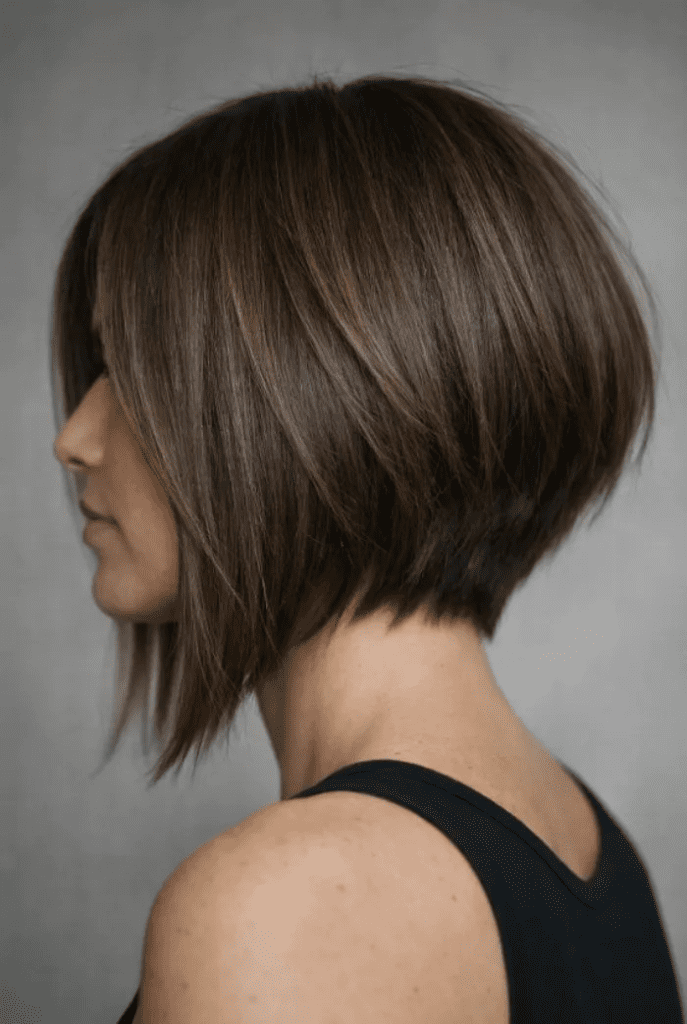
Subtle stacking is for the woman who wants the volume benefits of a stacked bob without the obvious architectural statement. The graduation is present and functional — it genuinely lifts the crown and creates shape at the back — but it’s blended so thoroughly that the stacking isn’t the first thing you notice about the style. Instead, what reads is simply “very well-behaved, naturally full hair.”
For fine hair that gravitates toward understated, natural-looking styles, subtle stacking achieves remarkable results without any obvious styling commitment.
Ask your stylist for: Graduation that’s blended through several more steps than a classic stack would be — the key is creating the functional volume benefit while keeping the visible effect quiet. A smooth, natural finish throughout.
Styling tip: A volumizing mousse at the roots before blow-drying activates the subtle stacking’s volume potential most effectively. The combined effect of the mousse and the graduation produces a natural fullness that looks completely organic.
26. Tapered Nape Bob
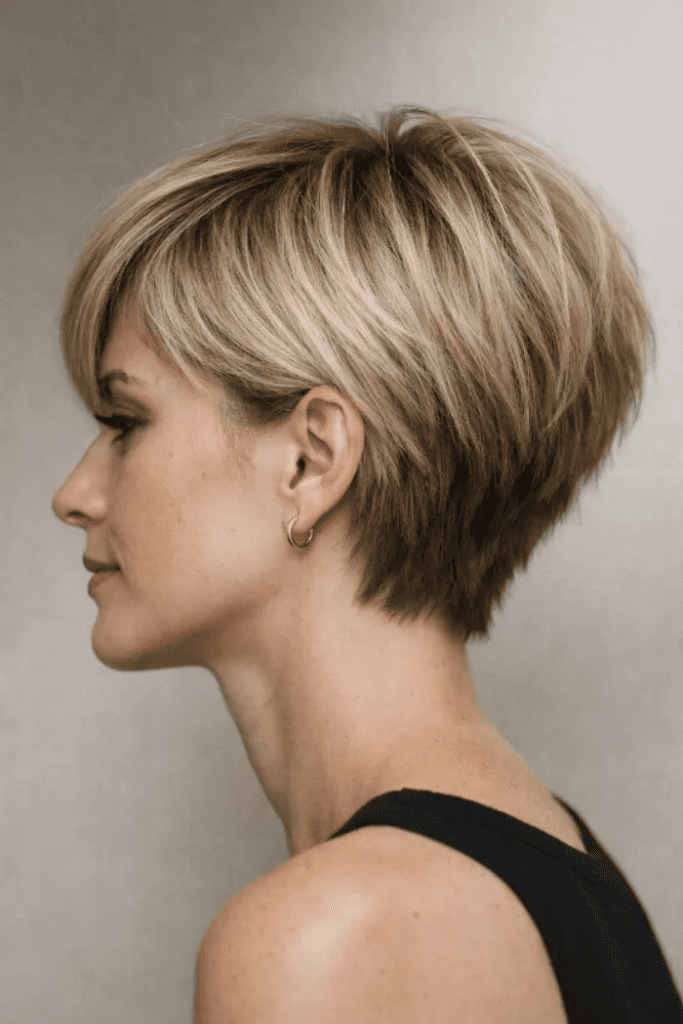
The tapered nape bob focuses the stacked bob’s refinement specifically on the neckline — the hair tapers gradually from the nape upward rather than being cut straight across or rounded. This tapering creates the most elegant, refined neckline profile available in the short hairstyle category and removes the excess bulk at the nape that fine hair doesn’t need and that can make the back of the head look heavy rather than graceful.
For fine hair specifically, the tapered nape solves a particular problem: the nape area often has some of the finest, most fragile hair on the head, and the tapering keeps this section clean and neat without exposing how delicate the strands are in that area.
Ask your stylist for: A clean, gradual taper at the nape rather than a blunt or squared neckline. The tapering should begin at the natural neckline and graduate upward into the main stacked section. Ask to see the back profile in a hand mirror to approve the taper shape before leaving.
Styling tip: The tapered nape is the element of this style that ages most gracefully between salon visits — because it tapers rather than ending in a blunt line, it grows out more naturally and maintains its elegance for longer. Trims every six to eight weeks keep it at its most precise.
27. Textured Stacked Pixie
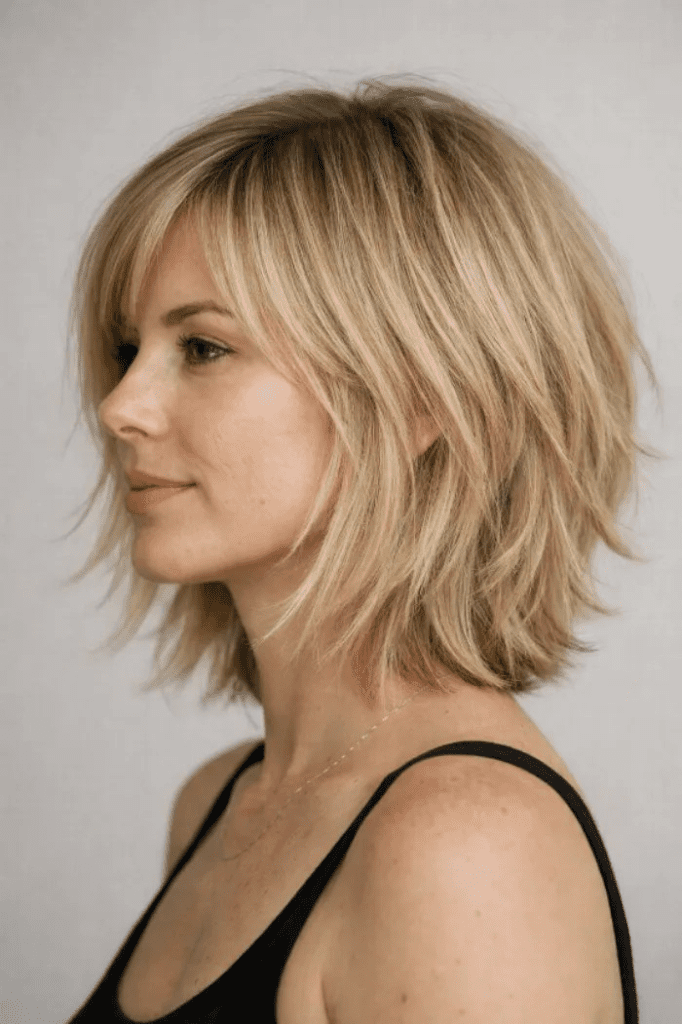
The textured stacked pixie adds deliberate surface texture to the shortest and most structurally defined style on this list. At pixie length with stacked graduation, the base is already doing significant volume work. The additional surface texture — through point-cutting, light razoring at the very tips, or a deliberately imperfect finish — adds the organic movement that makes a very short style look effortless rather than severe.
For fine hair at pixie length, texture is the difference between a style that looks like it belongs on a confident, modern woman and one that looks like a practical haircut made from necessity.
Ask your stylist for: Point-cut texture specifically through the crown and top section — this is where texture has the most visible impact. The stacking at the back should remain clean and precise as a structural counterpoint to the textured surface.
Styling tip: A matte texture powder dusted at the roots and worked in with fingertips gives the textured stacked pixie its maximum volume and separation with the minimum product weight. On fine hair, lighter products always produce better results than heavier ones.
28. Tucked Deep Side Part
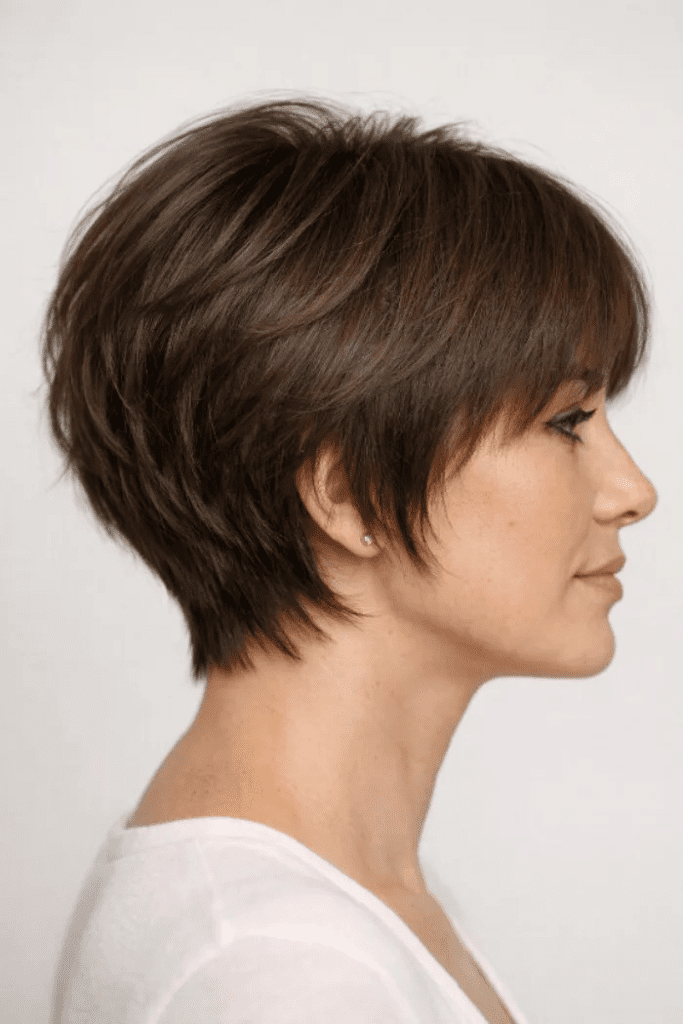
A deep side part is one of the most effective free styling adjustments available to any bob length, and in a stacked bob it takes on additional significance: the deep part creates immediate asymmetry and lifts the parted side’s root area dramatically while the stacked back maintains its rounded fullness independent of the part placement. The combination of root lift from the deep part and structural lift from the stacking creates a crown volume that fine hair rarely achieves from a single technique alone.
Ask your stylist for: A stacked bob that has enough length on top to accommodate a deep side part without looking sparse on the shorter parted side. The overall length distribution should support the asymmetrical styling option as well as a more centered, symmetrical styling option.
Styling tip: A deep side part created on slightly damp hair and set in place with a quick rough-dry lifts the root area on the parted side more effectively than a part created on completely dry hair. A light-hold spray over the root area on the parted side keeps the lift in place through the day.
29. Tucked Stacked Bob
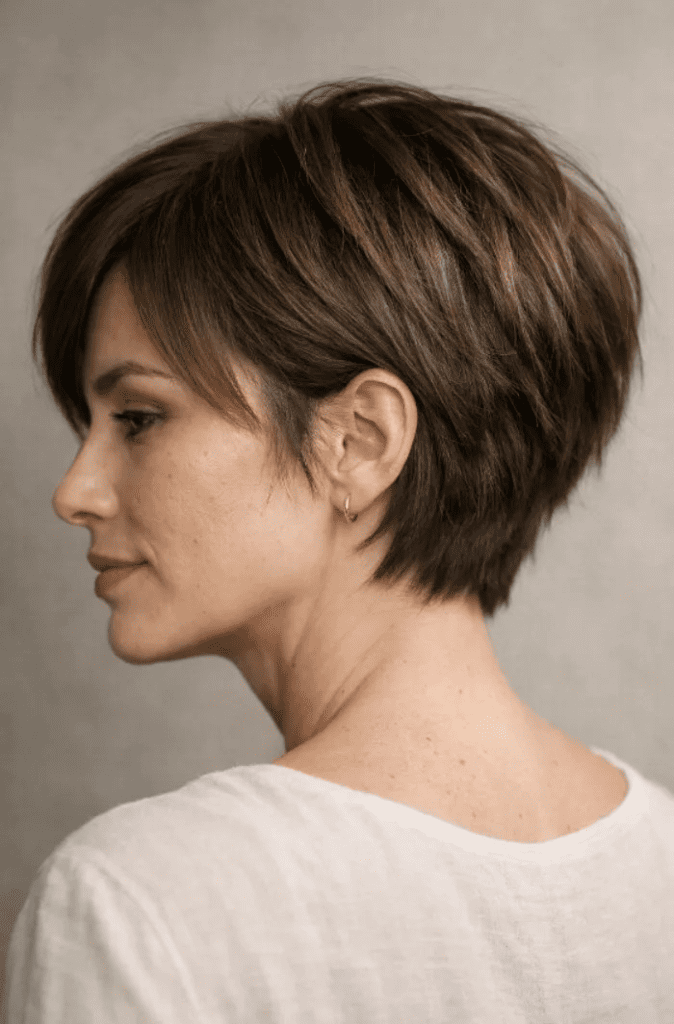
Tucking one or both sides of a stacked bob behind the ears is one of the most elegant and easily accessible styling variations available — and it dramatically changes the character of the style. With the sides tucked, all attention focuses on the stacked back section and the face simultaneously, creating a clean, polished appearance that reads as significantly more deliberate and formal than the same cut worn down.
For fine hair, the tuck is also practically useful: it keeps the sides from separating or showing the scalp through thinning mid-length sections by removing them from the visible equation entirely.
Ask your stylist for: A stacked bob with sides that are long enough to tuck comfortably behind the ear without looking awkward or pulling at the hairline. The tuck works best when the sides have a natural tendency to fall slightly forward and be tucked back — your stylist can adjust the layering to support this.
Styling tip: A small amount of light pomade or hair wax pressed along the tucked sections helps them stay in place behind the ear without bobby pins or clips. Keep the crown section slightly lifted and untouched for contrast between the sleek tucked sides and the full, natural crown.
30. Wispy Stacked Bob with Bangs
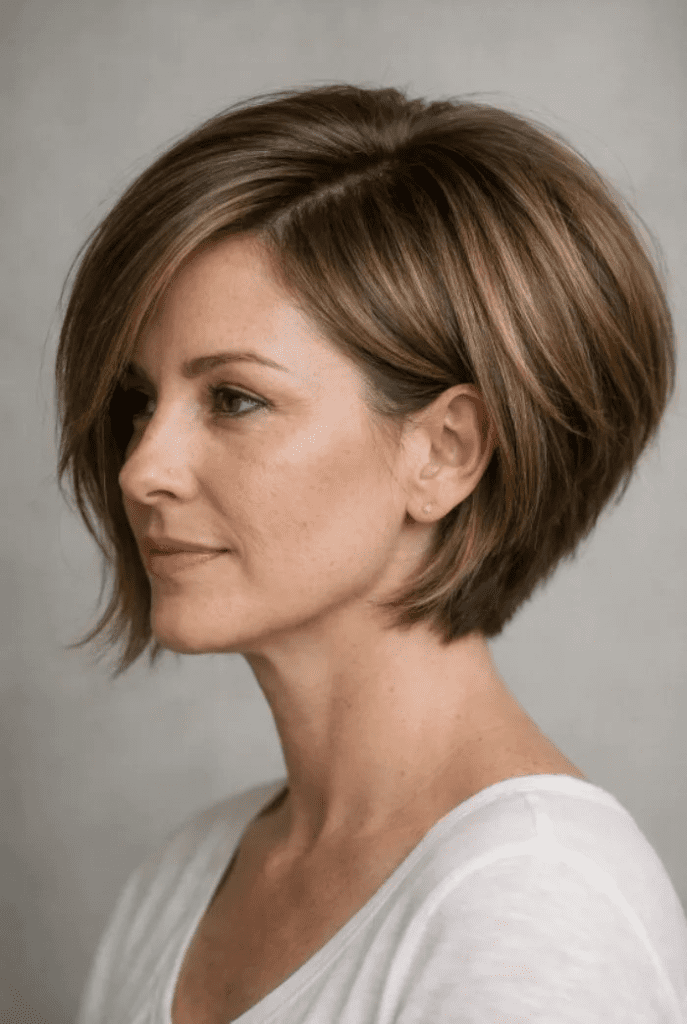
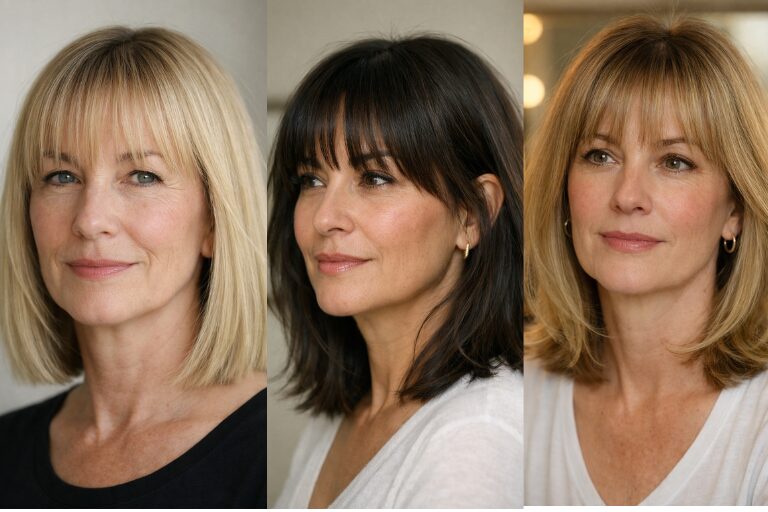
The wispy stacked bob with bangs is the most face-framing option on this list — the bangs add an immediate focal point at the forehead that draws attention to the eyes and creates a complete frame around the face. The wispy quality of the bangs keeps them light and compatible with fine hair — a dense, blunt fringe on a fine-haired stacked bob would look heavy and require significant daily styling to maintain. Wispy bangs require almost no styling commitment and frame the face beautifully at every growth stage.
Ask your stylist for: Wispy bangs created entirely through point-cutting rather than blunt sheering — the lightness of the wispy quality comes from this technique. Bangs that blend naturally into the top section of the stacked bob rather than sitting as a completely separate element. The stacked back should complement rather than compete with the front bang detail.
Styling tip: A small round brush used on the bang section only during blow-drying gives the wispy bangs their most natural, settled quality. Avoid applying any product directly to the wispy ends, which would flatten and clump the airy texture that makes this style so flattering on fine hair.
31. Short Stacked Bob Back View
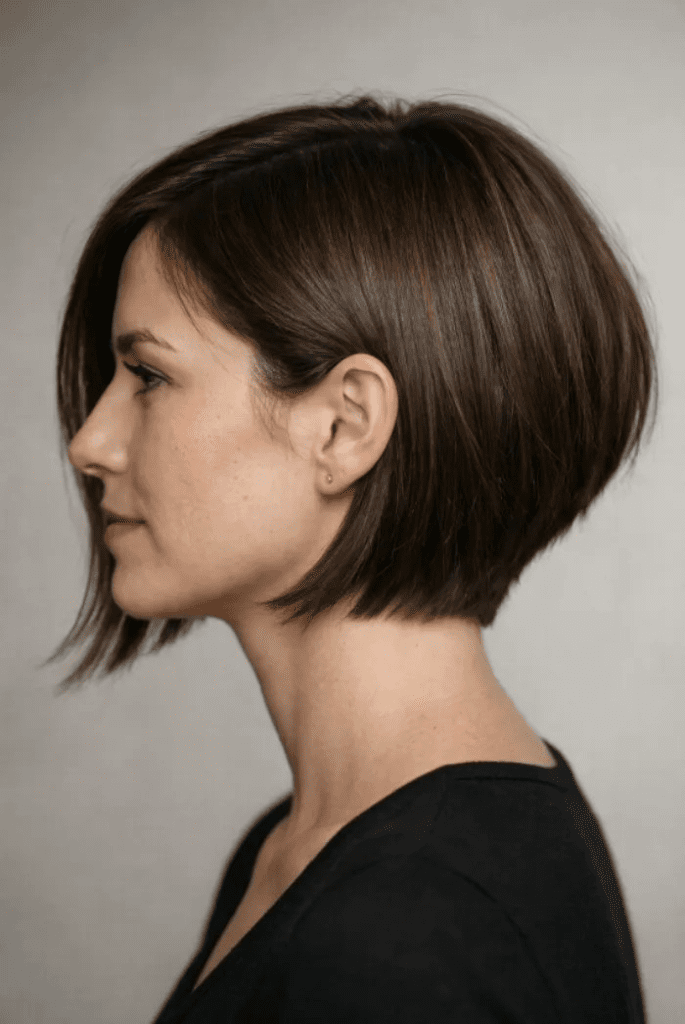
Seeing the back view of a stacked bob is one of the most valuable reference images you can bring to a salon appointment — because the back is where all the structural work of the stacking actually happens, and knowing exactly what shape you want at the nape and through the graduated section is what allows your stylist to execute precisely.
The clean, tapered shape at the nape sits close to the neck’s natural contour. Above that, the graduated sections build progressively outward and upward, creating the rounded silhouette that’s visible from behind. The topmost sections extend outward most significantly, creating the full, rounded crown that gives the stacked bob its signature volume.
Ask your stylist for: Show this back view reference specifically and ask your stylist to achieve the same nape-to-crown graduation ratio. The taper at the nape, the roundness through the mid-back section, and the outward extension at the crown are the three elements that define the stacked bob’s back profile.
Styling tip: After every blow-dry, check the back shape with a hand mirror. The stacked shape should be clearly rounded and lifted rather than flat or collapsed. If it’s not, the blow-dry technique — specifically the upward rolling of the round brush through the back sections — needs adjustment.
32. Disconnected Long Bob Variation
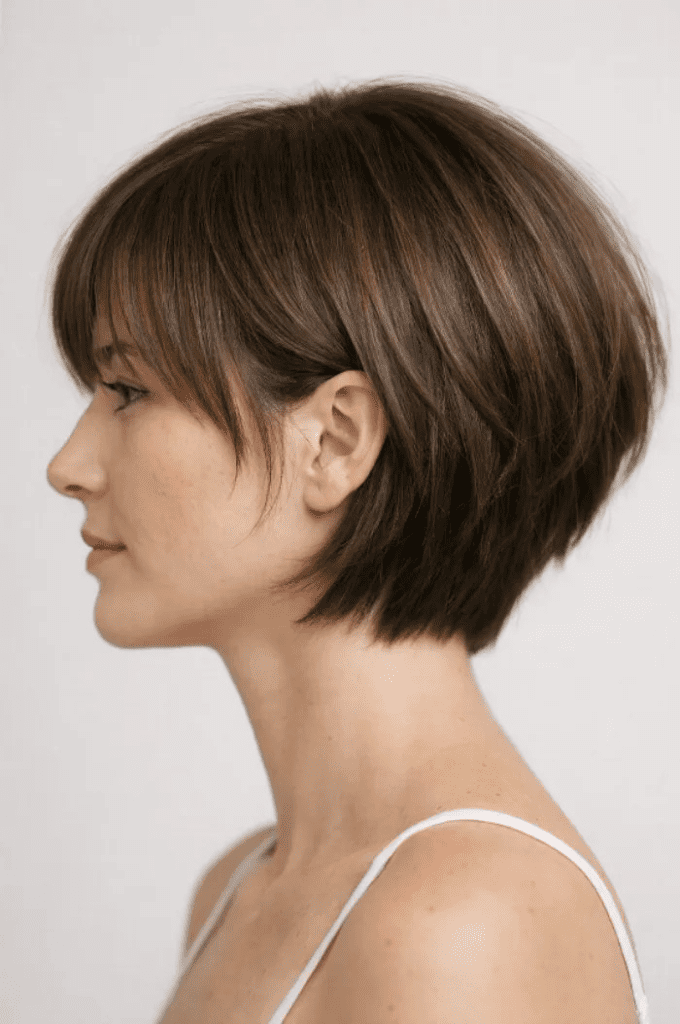
This extended stacked variation keeps the dramatic disconnect between a clearly visible stacked back section and significantly longer front sections — creating the most versatile and length-preserving version of the disconnected stacked bob. The stacked back provides the volume and structure that fine hair needs, while the longer front sections provide coverage, face-framing flexibility, and the practical versatility of being able to wear the hair up or half-up when desired.
Ask your stylist for: A stacked back section that’s visible and rounded even when viewed alongside the much longer front sections. The disconnect between the back and the front should be dramatic enough to be the defining visual feature of the cut. Specify that you want the volume and shape at the back, not blended away into the transition from back to front.
Styling tip: The longer front sections of this variation can be worn multiple ways — straight and smooth for a sleek, architectural contrast with the stacked back; waved loosely for a soft, romantic quality; or clipped up to showcase the stacked back as the entire visual statement. The versatility is one of this version’s greatest practical assets.
How to Maintain a Stacked Bob for Fine Hair
A stacked bob on fine hair requires less daily styling than most people expect — but it does require consistent salon maintenance to preserve the structural integrity that makes it work.
Trim every five to six weeks for shorter stacked bobs. The graduation at the back of a stacked bob is what creates the volume — and that graduation grows out relatively quickly at shorter lengths. As the nape grows, the graduation becomes less steep, the rounded shape becomes less pronounced, and the volume starts to flatten. Regular trims are what keep the stacking working as designed.
Trim every six to eight weeks for medium and long stacked bobs. At longer lengths, the graduation grows out more gradually and the shape maintains itself for longer between appointments. The front sections may need a length touch-up before the back does.
Use a volumizing product at the roots, not through the ends. Fine hair in a stacked bob benefits from a light volumizing mousse or root spray applied specifically to the root area before blow-drying. Applying volumizing product through the ends adds weight rather than lift, which counteracts the stacking’s structural volume.
Blow-dry with a round brush through the back sections. The round brush rolling upward into the stacked back during blow-drying is the technique that fully activates the stacking’s volume potential. Rough-drying or air-drying alone produces significantly less volume than a round brush blowout.Protect against heat damage consistently. Fine hair is more susceptible to heat damage than coarser hair, and heat damage makes fine strands even finer and more fragile over time. A heat protectant applied before any hot tool use is non-negotiable for maintaining the health and density that makes the stacked bob look its best.
Final Thoughts
The stacked bob is not just a haircut for fine hair. It’s the haircut category most specifically designed to solve fine hair’s most persistent problem: the tendency to lie flat and shapeless against the head regardless of how much product you apply or how long you spend styling.
By building volume architecturally into the structure of the cut — through carefully graduated layers that push the hair upward and outward from the nape — the stacked bob gives fine hair the foundation it needs to look full, shaped, and genuinely confident. Not manufactured fullness that deflates by noon. Structural fullness that holds from morning to evening, day after day, appointment after appointment.
Find the version that fits your personality, your face shape, and your lifestyle. Bring the photo to your stylist. Be specific about the stacking and the perimeter density. And then enjoy what fine hair can look like when the cut is genuinely working for it rather than against it.
Save your favorites and bring them to your next appointment — the back view is especially valuable to show your stylist so they can match the exact graduation shape you want.
Do stacked bobs really work for fine hair?
Yes — and they typically work better for fine hair than for thick hair, because the structural volume the stacking creates is most impactful on hair that lacks natural density. The key is avoiding over-layering through the visible lengths, which would thin the ends and undermine the density that fine hair needs at the perimeter. Clean stacking at the back combined with a relatively strong perimeter is the right approach.
How much daily styling does a stacked bob require?
Less than most people expect. Because the volume is built into the structure of the cut rather than created through styling, a stacked bob on fine hair holds its shape and fullness with minimal daily intervention. A quick rough-dry with fingertips and a light product is sufficient on most days. A full round brush blowout every two to three days keeps the shape at its most polished and precise.
How often does a stacked bob need to be trimmed?
Every five to six weeks for shorter, more structured stacked bobs. Every six to eight weeks for medium and longer versions. The graduation at the back is the functional feature that makes the stacked bob work, and it grows out faster than most other cut features — consistent trimming is what preserves it.
Can I style a stacked bob in different ways to change the look?
Absolutely. A deep side part dramatically changes the balance and volume distribution of any stacked bob. Tucking the sides behind the ears shifts the focus entirely to the stacked back and the face. Adding loose waves through the longer sections of a stacked lob creates a completely different character than the same cut worn straight. The stacked back is a constant structural foundation; the front and top sections can be styled with significant variety.
What’s the difference between a stacked bob and a regular layered bob?
A regular layered bob distributes layers throughout the entire length of the hair, including the perimeter. A stacked bob builds graduated, close layers specifically at the back section, creating a rounded, lifted shape at the nape that a standard layered bob doesn’t produce. The stacked bob’s volume is concentrated and directional — upward and outward at the back — while a layered bob’s volume is more diffused throughout the cut. For fine hair, the directional, concentrated volume of the stacked bob is typically more effective.