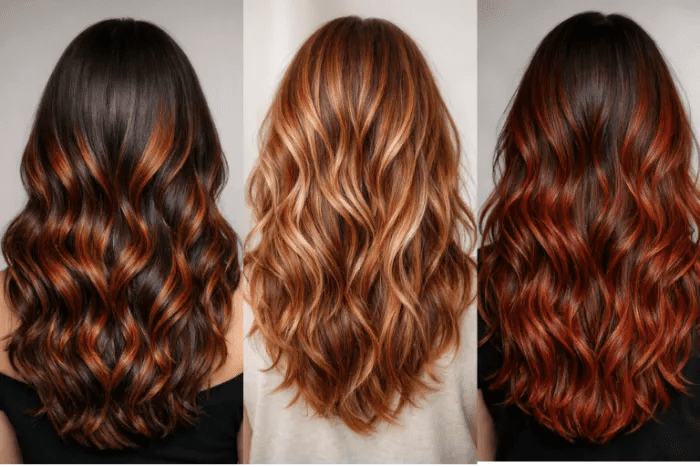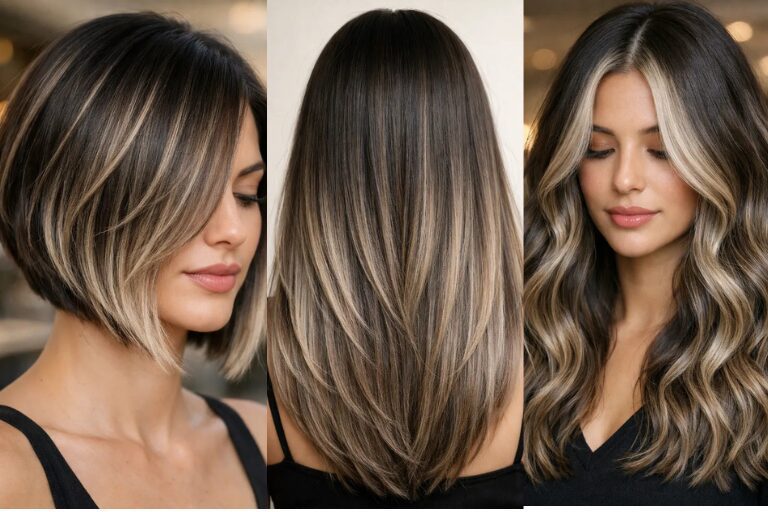
21 Dark Roots Blonde Balayage Bobs That Grow Out Beautifully
The dream is blonde hair that looks expensive and intentional every single day — not just the week after your salon appointment. The reality, for most people who’ve chased that dream with traditional highlights, is a four-week window of looking great followed by eight weeks of obvious regrowth, constant toning, and the slow creep of brassiness that makes the whole thing feel more like maintenance than beauty.
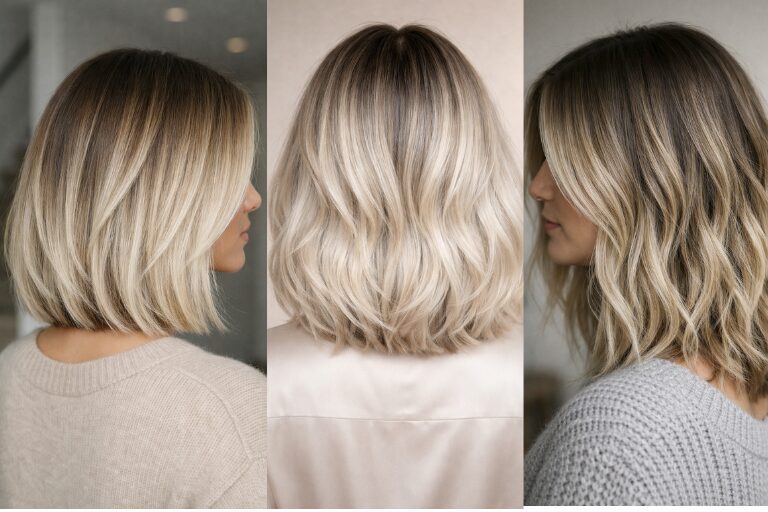
Dark roots blonde balayage bobs solve this problem at the structural level. By keeping the root deeper and melting the blonde through the mid-lengths and ends, the grow-out becomes part of the design rather than an accident to manage. The root is meant to be visible. The contrast is intentional. And on a bob — where the cut keeps the color sitting right at eye level, where the dimension is fully visible and fully flattering — the combination is genuinely spectacular.
Whether you want icy and cool, creamy and neutral, warm bronde, or something in between, these 21 dark roots blonde balayage bobs will show you exactly what’s possible. Every style comes with what to ask your colorist and stylist so you walk out with the specific look you came in for.
What Makes Dark Root Balayage Work on a Bob
Before the styles, a few things worth understanding — because the difference between a dark root balayage that looks expensive and one that looks unfinished comes down to technique details that most people don’t know to ask about.
Root melt versus root shadow. These are two different techniques that produce slightly different results. A root shadow adds depth at the top after lightening — like a soft, slightly darker veil placed over the new growth area to prevent a harsh line. A root melt blends the darker tone further down into the blonde for an even longer, smoother transition. If your goal is the softest, most forgiving grow-out possible, a root melt is typically the more effective choice.
Balayage placement on a bob is different from balayage on long hair. On longer hair, balayage is often placed from mid-length downward. On a bob, there’s far less length to work with, which means the placement needs to start lower than traditional highlights but high enough that the blonde is visible and impactful at the shorter length. Ask your colorist specifically about bob-appropriate placement rather than assuming standard balayage technique will translate directly.
Tone is a commitment, not an afterthought. Before your appointment, decide whether you want a cool, icy, or ash blonde result or a warm, creamy, buttery, or bronde one. This decision affects what developer and toner your colorist uses throughout the entire process. Cool blonde needs consistent toning maintenance and a purple or silver shampoo routine at home. Warm blonde needs a gloss treatment to refresh the tone and a moisturizing conditioner to combat dryness. Getting clear on this before you sit down saves significant frustration later.
Soft face-framing, not chunky money pieces, is the more versatile choice. Unless you’re specifically going for a bold, high-contrast money piece look, ask for soft and blended face-framing highlights rather than chunky, heavily saturated sections. Soft face-framing grows out gracefully and continues to flatter the face at every stage of regrowth. Chunky money pieces look striking when fresh but can become high-maintenance and difficult to blend as they grow.
21 Dark Roots Blonde Balayage Bobs
1. Rooted Icy Blonde Wavy Bob
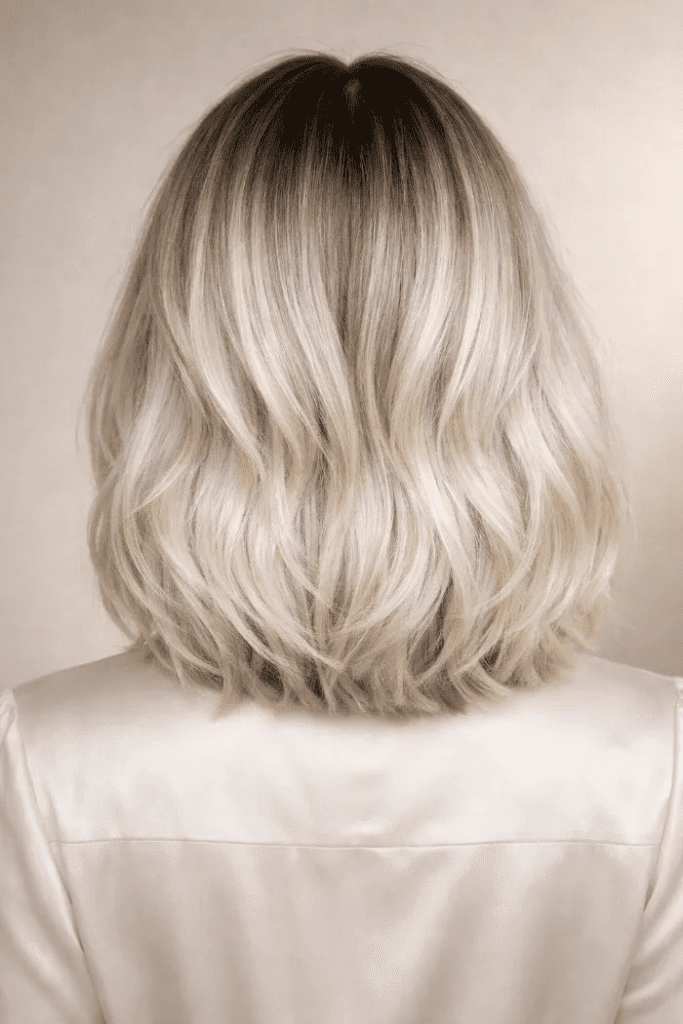
The rooted icy blonde wavy bob is for the woman who wants serious brightness without the maintenance price tag that typically comes with it. The icy blonde — cool, platinum-adjacent, and strikingly bright — is concentrated from the mid-length to the ends, while a deep, intentional root melt keeps the regrowth looking soft and gradual as it grows in. On loose, soft waves, the contrast between the dark root and the icy ends shows up beautifully because the waves reveal the color at multiple depths simultaneously.
This style reads as bright and high-fashion but requires significantly less frequent salon visits than a traditional bleach-and-tone approach because the root growth is built into the design.
Ask your colorist for: An icy cool-toned blonde through the mid-lengths and ends with a root melt that creates a soft, gradual transition rather than a hard line. Specify a cool or violet-based toner on the blonde sections for that platinum-adjacent finish.
Ask your stylist for: A wavy bob with enough internal movement to show the color at multiple depths. Soft, blended layers that enhance the wave without thinning the ends.
At-home maintenance: A purple shampoo used once or twice a week keeps the icy tones bright and prevents the warm yellowing that platinum-adjacent blonde is prone to. A deeply hydrating conditioner every wash day counteracts the dryness that comes with cooler, lighter blonde.
2. Textured Bob with Beige Blonde Balayage
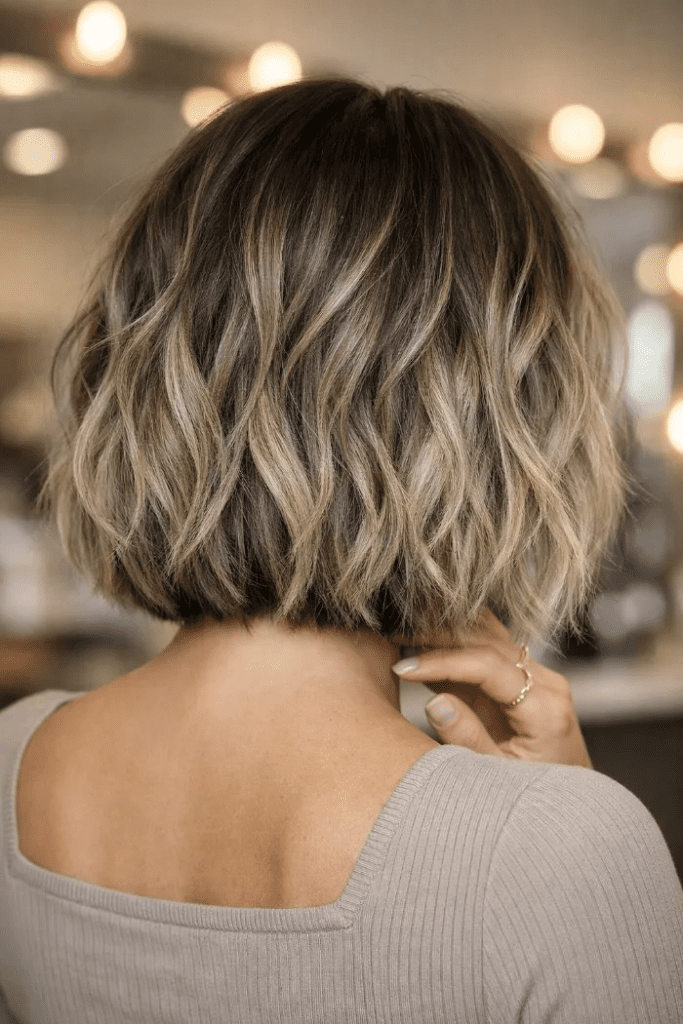
The textured bob with beige blonde balayage is one of the most reliably flattering dark root blonde combinations available — because beige blonde sits at the neutral midpoint between warm and cool, which means it complements an enormous range of skin tones and doesn’t require the same aggressive toning maintenance that icy or very warm blonde does.
The dark base provides depth and richness that makes the beige blonde highlights look more dimensional and expensive than they would on their own. Loose waves through the textured bob reveal the blend and prevent the color from looking flat, which is the risk with any neutral blonde that doesn’t have enough tonal variation in the cut to bring it to life.
Ask your colorist for: Beige blonde balayage that starts lower than traditional highlights — emphasize that you want the color to begin well below the root for the most forgiving grow-out. The highlights should be fine and blended rather than chunky.
Ask your stylist for: A textured bob with point-cut ends and enough movement to show the color blend. Avoid over-smoothing during styling, which flattens the dimension.
At-home maintenance: A gloss treatment every six to eight weeks keeps beige blonde looking fresh and dimensional. Between appointments, a color-protecting conditioner prevents fade and keeps the beige tone from shifting warmer.
3. Soft Lob with Cool Blonde Balayage
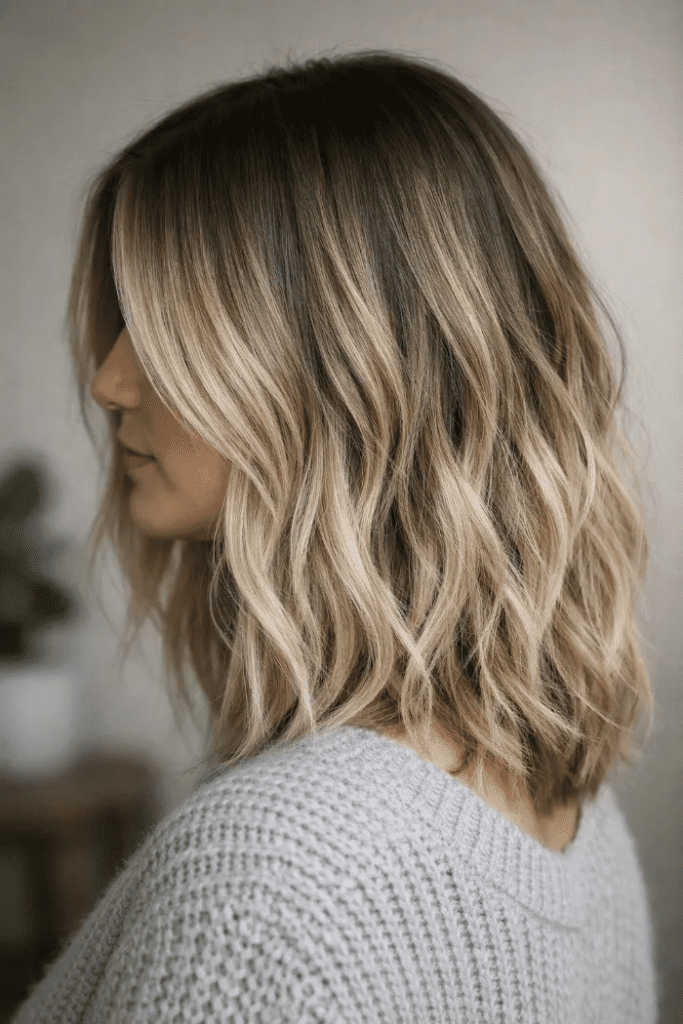
The soft lob — sitting at or just past the collarbone — gives you more styling versatility than a shorter bob while still keeping the balayage color visible and flattering at eye level. Cool blonde balayage at this length has room to breathe: the highlights have enough length to be placed in sweeping, dimensional sections that look genuinely beautiful rather than compressed into a short space.
The darker roots are intentional and integral to the design — they ground the cool blonde and prevent it from looking bleached-out or overly contrasted. As the roots grow, they simply add more of what’s already there: depth, dimension, and a cool-toned shadow that makes the blonde look more expensive by comparison.
Ask your colorist for: Cool blonde balayage concentrated primarily through the mid-lengths and face-framing sections. A root shadow in a slightly cooler shade than your natural base for the smoothest grow-out. Specify an ash or cool-neutral toner rather than a warm or golden one.
Ask your stylist for: A lob that falls just past the collarbone with a slight bend at the ends for softness. Long, blended internal layers that support movement and show off the color dimension.
At-home maintenance: Cool blonde requires the most consistent toning maintenance of any blonde category. A purple or blue shampoo used weekly is non-negotiable for keeping the ash tones intact and preventing brassiness.
4. Blunt Lob with Buttery Blonde Balayage
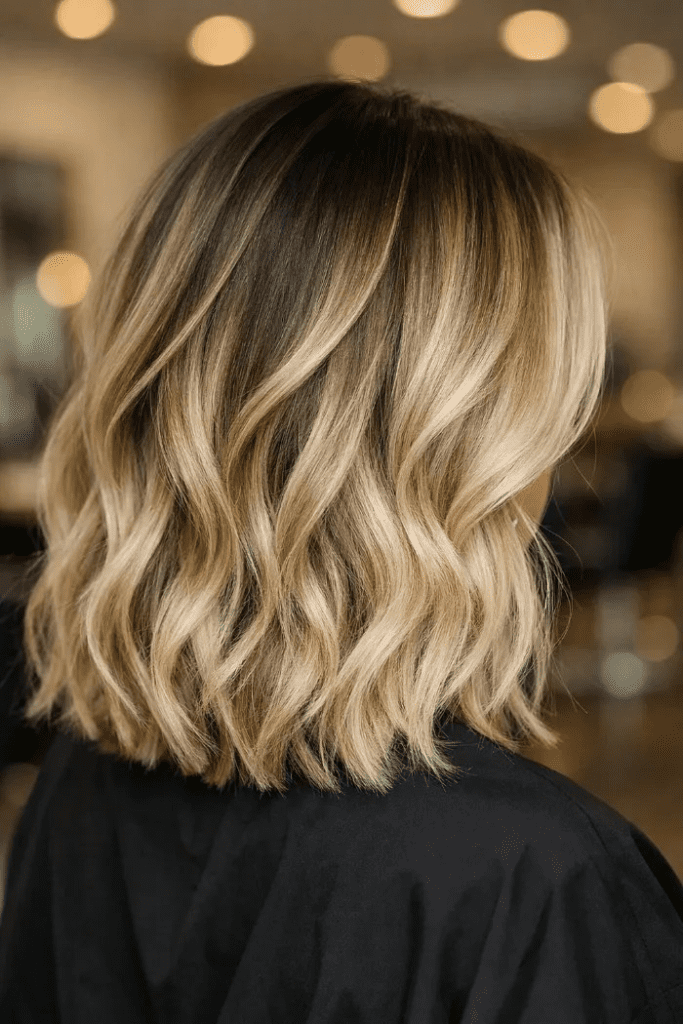
The blunt lob is a structural choice that makes fine or thin hair look denser and more abundant — the aligned hemline creates a visual density at the ends that reads as fullness even when individual strands are fine. Add buttery blonde balayage and the warm, creamy tones add another layer of visual depth that reinforces that fullness from a color perspective.
Buttery blonde specifically is one of the most flattering warm blonde tones for a wide range of skin tones because it reads as naturally sun-kissed rather than artificially lightened. It’s the color equivalent of a perfect tan — warm, glowing, and incredibly appealing.
Ask your colorist for: Buttery, golden-warm blonde concentrated through the mid-lengths and ends. A slightly darker, honey-toned root melt that transitions smoothly into the butter blonde below. Avoid any ash or cool toner on this application — the warmth is the point.
Ask your stylist for: A clean, blunt lob hemline with minimal internal layering for maximum density at the ends. Soft waves added after the cut soften the blunt edge and reveal the buttery tones in their most flattering light.
At-home maintenance: A golden or honey-toned gloss treatment every six to eight weeks refreshes the buttery warmth that can fade between appointments. A hydrating mask weekly combats the dryness that warm, lifted blonde tends to develop over time.
5. Choppy Bob with Bright Money Pieces
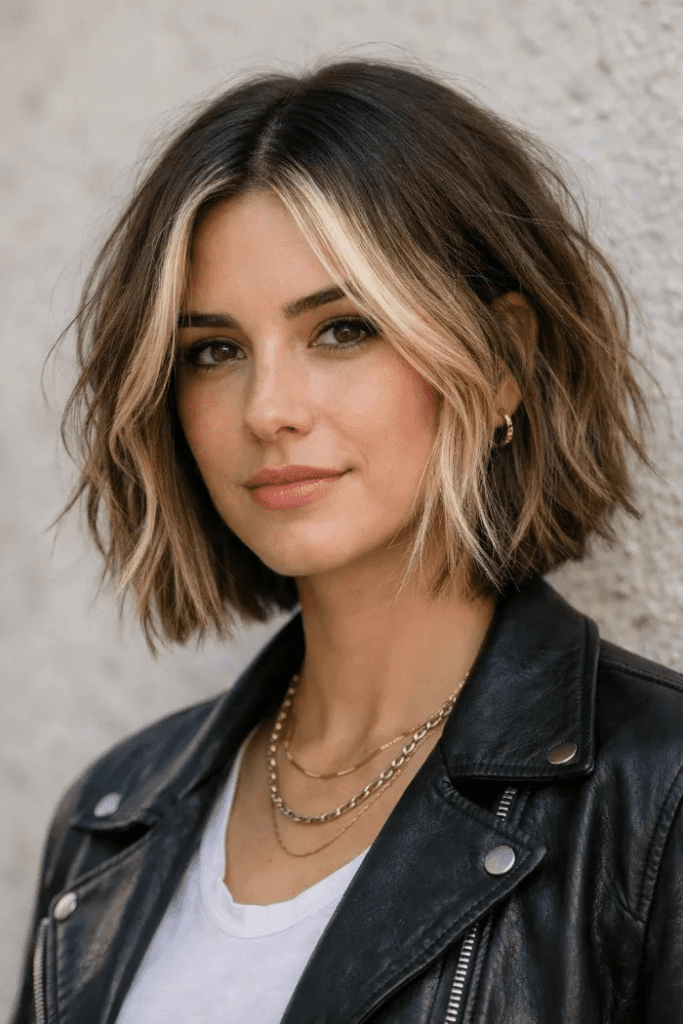
The money piece — a concentrated section of brighter, more saturated blonde placed directly at the face-framing pieces on either side of the center part — is one of the most impactful color techniques available at bob length. On a choppy, textured bob, the money pieces frame the face with immediate brightness while the blended balayage through the rest of the bob provides the dimensional backdrop that keeps the money pieces from looking isolated or harsh.
The choppy texture of the cut is what makes this color placement work so beautifully: as the pieces move and separate during styling and throughout the day, they reveal and conceal the money pieces in a way that keeps the style looking dynamic and alive.
Ask your colorist for: Money pieces that are brighter and more saturated than the rest of the balayage but still blended at the root — the transition should be soft rather than a hard line where the money piece begins. Specify whether you want a warm, cool, or neutral money piece tone before your appointment.
Ask your stylist for: A choppy bob with point-cut ends and piecey, lived-in texture. The more organic and undone the styling, the better the money pieces will reveal themselves naturally throughout the day.
At-home maintenance: Money pieces are often lighter than the rest of the balayage, which makes them more prone to brassiness. A purple or pigmented toning conditioner used once a week keeps the money pieces bright and prevents them from fading to an unflattering yellow.
6. Creamy Lived-In Blonde Lob
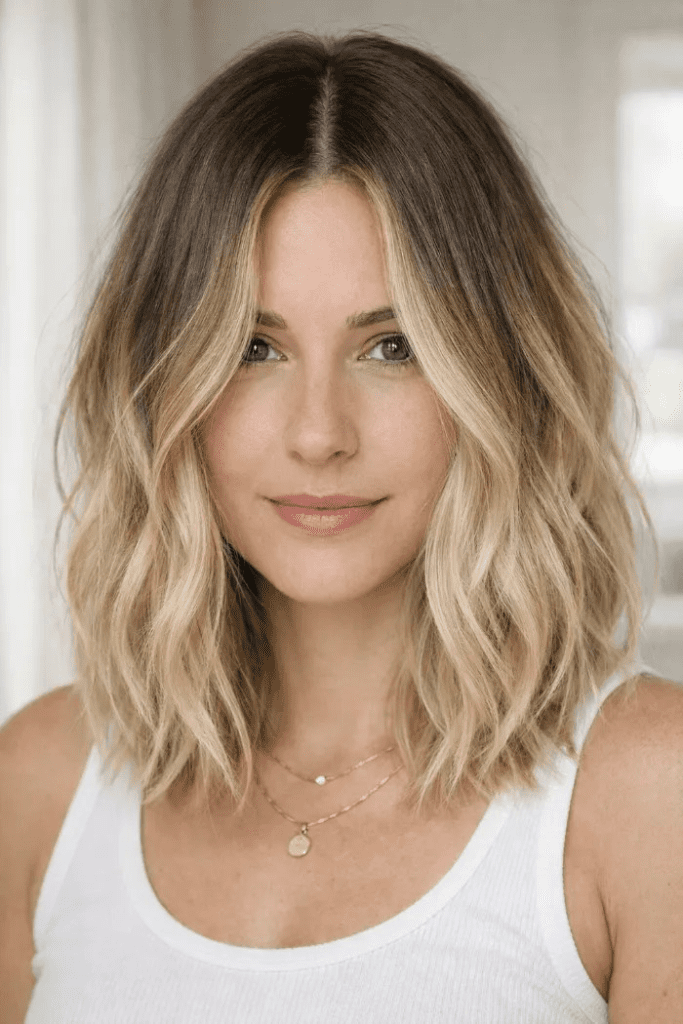
Creamy blonde is the great democratizer of the blonde world — it works on a wider range of skin tones than either icy cool or very warm honey blonde, it requires less toning maintenance than platinum-adjacent shades, and it grows out with a natural, dimensional quality that looks genuinely intentional rather than neglected.
The lived-in quality of this lob comes from both the color placement and the styling approach. The balayage is blended so smoothly through the lengths that the transition from dark root to creamy blonde reads as a natural gradient rather than a color treatment. It’s the kind of hair that makes people ask whether you’re just naturally blonde with dark roots — which is exactly the goal.
Ask your colorist for: A creamy, neutral blonde without strong cool or warm bias — ask specifically for “lived-in” or “natural-looking” balayage placement with a root melt that extends further down than standard balayage for maximum grow-out forgiveness.
Ask your stylist for: A lob with soft, blended internal layers and an effortless, slightly undone finish. This style looks most natural when it’s not over-styled.
At-home maintenance: A neutral toning conditioner used weekly keeps the creamy tone from shifting warm or dull. Because this blonde is specifically designed to look natural, avoiding product buildup at the roots is important — a clarifying shampoo once a month keeps the scalp and root area clean and the natural base color looking fresh.
7. Wavy Lob with Curtain Bangs and Balayage
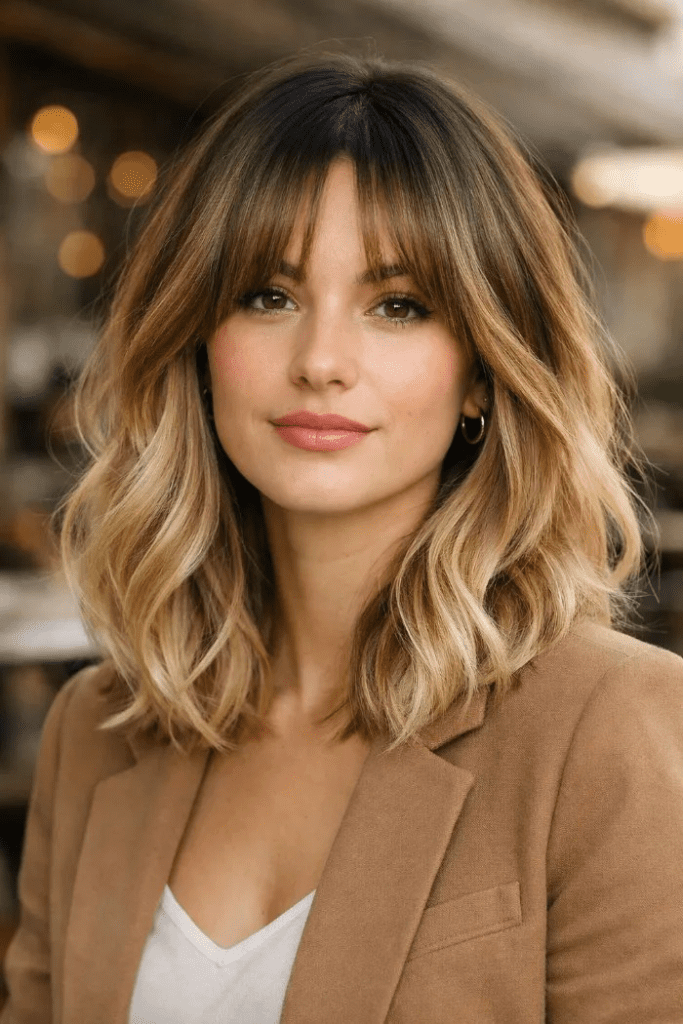
Curtain bangs and blonde balayage are one of the most synergistic combinations in modern hairstyling — because both are designed to frame the face softly and flatteringly, and when they work together on a wavy lob, the effect is genuinely beautiful. The warm blonde is strongest and most concentrated at the front sections, which naturally draws the eye toward the face and the curtain bangs. The deeper root keeps the contrast gentle enough that the overall impression is soft rather than stark.
The grow-out on this style is particularly forgiving because the curtain bangs themselves grow into soft, seamless layers over time rather than reaching an awkward length plateau the way full blunt bangs do.
Ask your colorist for: Warm blonde concentrated at the face-framing sections and curtain bang area, with slightly less saturation through the back. The root should stay deeper everywhere, but especially through the middle sections to create a natural, dimensional shadow effect.
Ask your stylist for: A lob with curtain bangs that part naturally in the center and fall to around the cheekbone. Long, movement-friendly layers through the rest of the lob support the wavy finish.
At-home maintenance: Curtain bangs grow quickly, and at blonde shades, the grow-out line can become visible before the rest of the balayage. A gloss treatment every six to eight weeks keeps the face-framing area bright and blended as it grows.
8. Ash Brown Root Shadow Lob
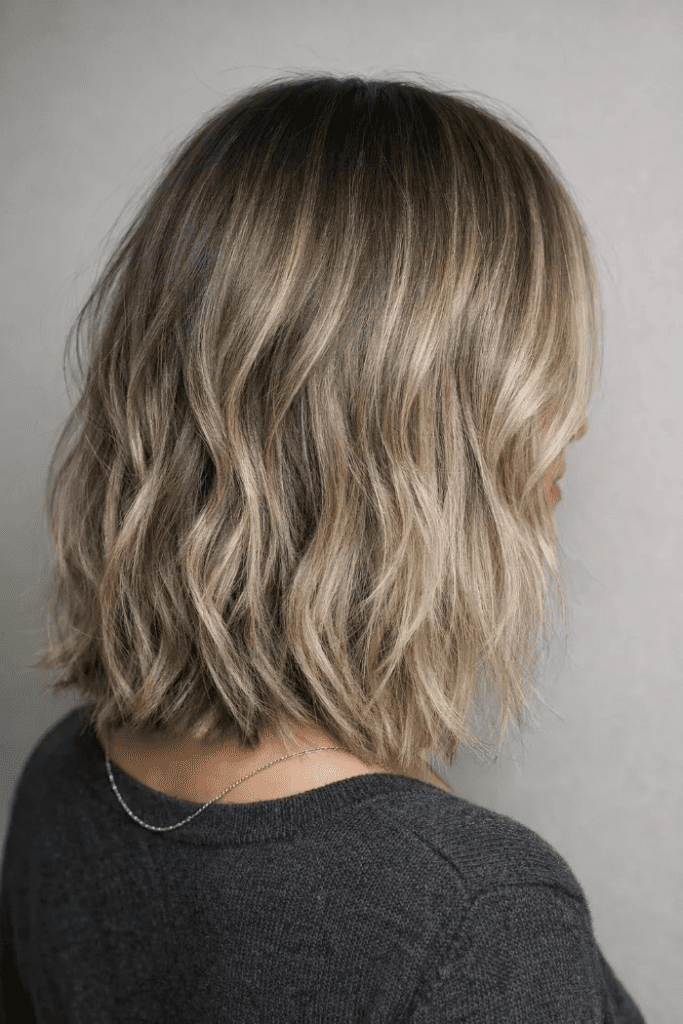
The ash brown root shadow lob is for the woman who loves blonde but wants the overall impression to read as sophisticated and smoky rather than bright and summery. The ash-brown root shadow is slightly cooler in tone than a standard root melt, which means the transition from dark root to blonde below has a beautiful, dusty quality — like smoke blending into light.
The blonde through the mid-lengths and ends is fine and delicately placed rather than chunky, so the overall dimensional effect is subtle and refined rather than high-contrast. It’s a blonde balayage for women who prefer understated elegance over obvious color.
Ask your colorist for: An ash-brown root shadow — not a warm or neutral brown, but specifically cool and ashy. Fine, delicate blonde highlights through the mid-lengths rather than bold, chunky sections. The whole effect should read as “dimensional” rather than “highlighted.”
Ask your stylist for: A lob with a smooth, polished finish and minimal surface texture. The subtlety of this color works best in a sleek, refined cut where the color dimension is the most interesting visual element.
At-home maintenance: Ash-toned color is the most prone to fading toward warmth over time. A blue or purple shampoo used once a week preserves the cool dimension and prevents the ashy quality from developing a brassy, unflattering undertone.
9. Dark Rooted Bob with Caramel Ribbons
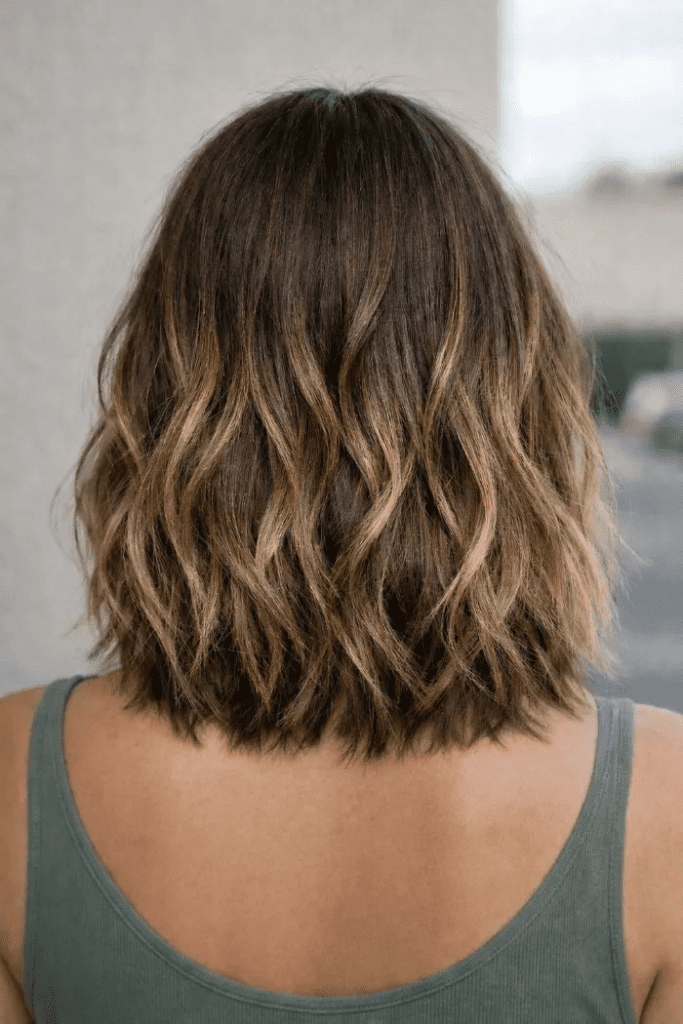
The dark-rooted bob with caramel ribbons is the perfect entry point for women who are curious about blonde balayage but aren’t ready for a dramatic lightening commitment. Caramel sits between a deep honey and a warm brown on the color spectrum, which means the contrast between the dark base and the caramel ribbons is significant enough to be impactful without being as stark as a true blonde application.
The “ribbon” placement — long, flowing sections of color that wrap through the mid-lengths — creates movement and dimension that shows up beautifully in loose waves, where the caramel pieces surface and disappear as the hair moves.
Ask your colorist for: Caramel ribbons placed primarily through the mid-lengths with slightly brighter, more concentrated pieces at the face-framing sections. The root should stay very close to the natural base color with only minimal blending — the contrast is part of what makes this style so striking.
Ask your stylist for: A bob with enough internal movement to reveal the caramel ribbons as the hair moves. Loose, natural-looking waves are the ideal finish for this color placement.
At-home maintenance: Caramel tones are generally the most low-maintenance of all the balayage options on this list because they don’t require toning in the same way that cooler or lighter blonde does. A color-protecting shampoo and a deep conditioning treatment used weekly are the primary maintenance requirements.
10. Tousled Bob with Toasty Blonde Streaks
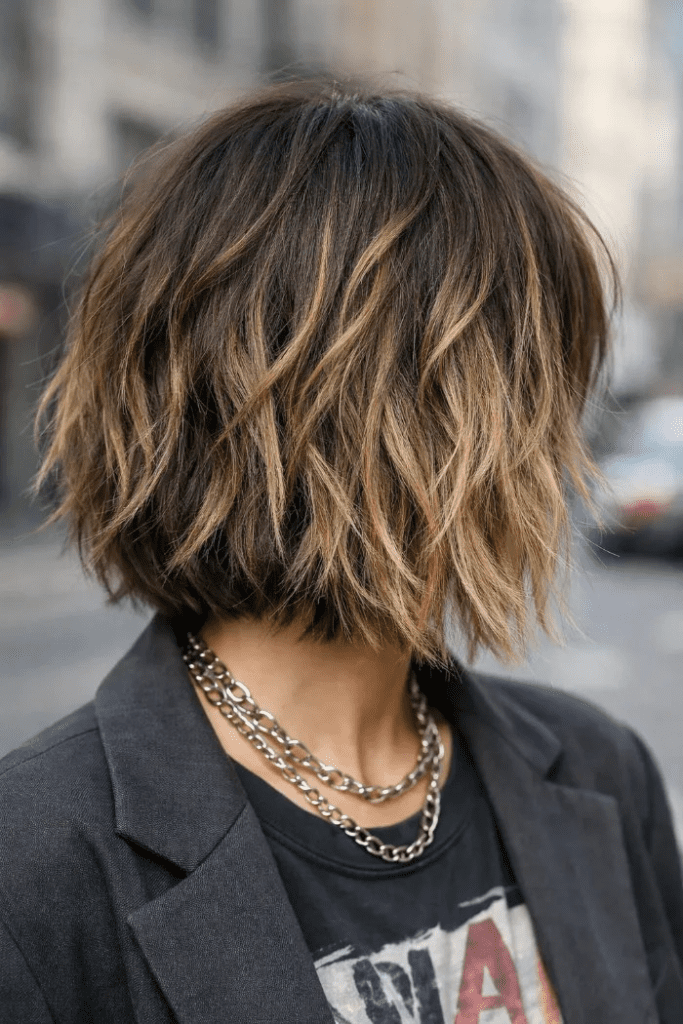
Toasty blonde — the warm, slightly amber-tinged blonde that sits between honey and butter on the warmth spectrum — reads as effortless and summery in a way that cooler, more precise blondes often don’t. On a tousled, piecey bob, the toasty streaks create a scattered, sun-kissed effect that looks like the result of time outdoors rather than time in a salon chair.
The scattered placement of the streaks through the bob means the color looks even better slightly grown out than it does immediately after the appointment — a genuinely rare quality in any color treatment.
Ask your colorist for: Toasty, warm blonde placed in scattered ribbons through the mid-lengths rather than in precise, uniform sections. Ask for the placement to be deliberately irregular — the organic, unpredictable quality is what makes this look so naturally beautiful. A deep, intentional root keeps the warm blonde looking grounded.
Ask your stylist for: A tousled, piecey bob with organic, undone texture. This style explicitly looks better when it’s not perfectly styled — the more lived-in, the better.
At-home maintenance: Warm blonde tones are prone to oxidizing (going even warmer and more orange-tinted) between appointments. A golden-toned gloss applied at home every four to six weeks refreshes the warmth while preventing it from tipping into brassiness.
11. Sleek Dark-Rooted Blonde Bob
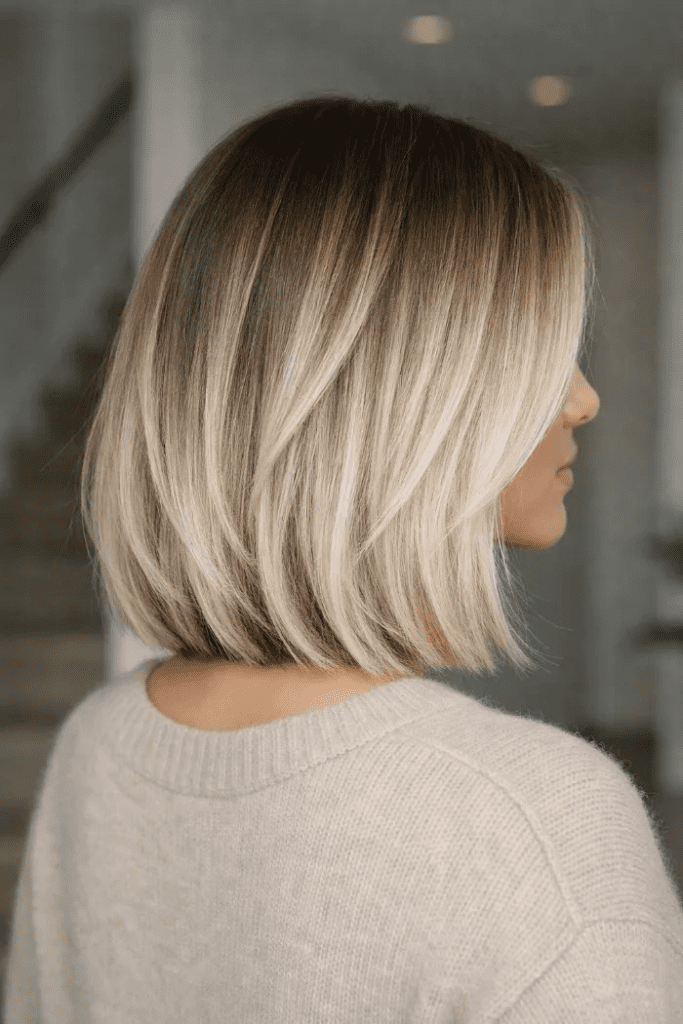
The sleek dark-rooted blonde bob is the sophisticated, professional option — the style that looks as appropriate in a boardroom as it does at dinner. The root is kept deep and slightly smoky, which grounds the blonde above it and prevents it from looking bleached or harsh. The balayage starts low and brightens gradually toward the ends in a smooth, seamless gradient that reads as intentional and expensive.
On a blunt, smooth bob shape, every element of the color gradient is visible and precise — which makes the technique and the quality of the blend more apparent. This is a style that rewards excellent colorist work.
Ask your colorist for: A deep, smoky root — slightly cooler or more neutral than your natural base if possible, which enhances the gradient effect. A low-starting balayage that brightens gradually rather than jumping to blonde immediately below the root. The transition should be long and gradual.
Ask your stylist for: A clean, blunt bob with a smooth, polished finish. A flat iron pass after blow-drying reveals the color gradient in the most flattering, precise way.
At-home maintenance: The contrast between a deep, cool root and bright blonde ends is maintained by keeping the root area as close to its natural or darkened tone as possible. Avoid applying any toning or lightening product near the root area between appointments.
12. Wavy Bob with Deep Brunette Roots
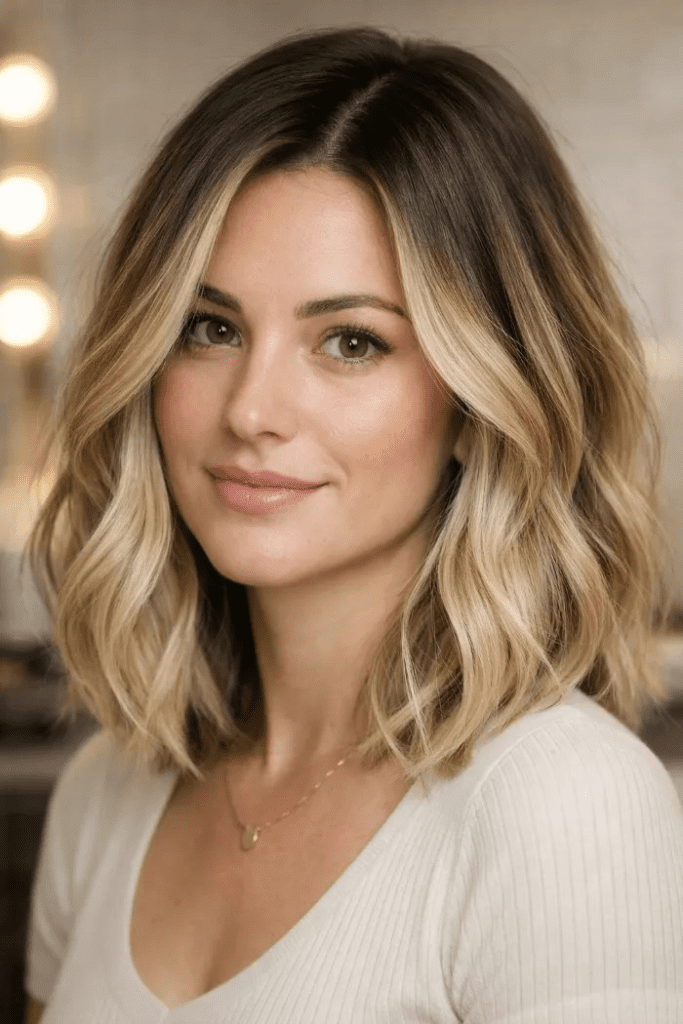
Deep brunette roots and bright, concentrated face-framing blonde pieces are a combination that has remained consistently compelling in hair color for years — because the dramatic contrast between the two creates an immediate, striking visual impact that draws the eye directly to the face. The rest of the bob can stay in a more dimensional, less-bright balayage while the face-framing sections carry the brightest blonde for maximum flattery.
The loose wave through the bob shows off the contrast between the deep roots and the bright face-framing pieces with every movement, which keeps the style looking dynamic and alive rather than static.
Ask your colorist for: Bright face-framing pieces that are noticeably lighter than the balayage through the rest of the bob. Deep brunette roots that stay as close to the natural base as possible — no softening or blending at the very root, which would reduce the visual impact of the contrast.
Ask your stylist for: A wavy bob with enough internal movement to reveal the color contrast as the hair moves. The cut should be secondary to the color in this style — keep it soft and simple so the color can be the star.
At-home maintenance: The bright face-framing pieces are the highest-maintenance element of this style because they’re the lightest. Purple or toning shampoo used specifically on those sections keeps them bright and prevents them from going warm before the rest of the color needs refreshing.
13. Chocolate Root Shadow with Warm Blonde Ribbons
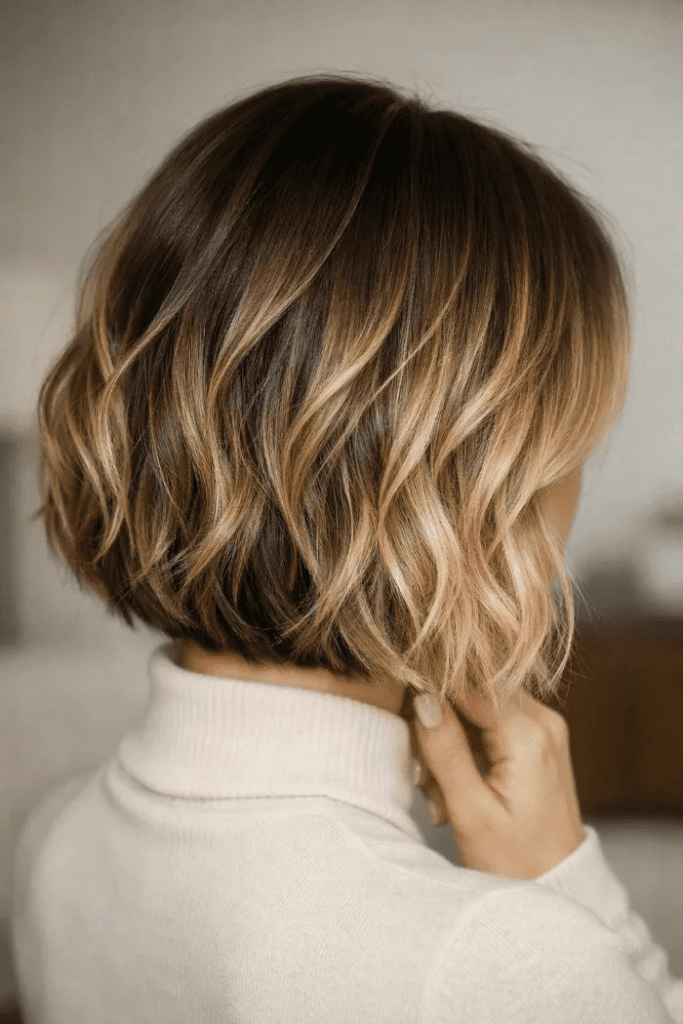
The chocolate root shadow with warm blonde ribbons is the definition of dimensional, expensive-looking hair achieved through a relatively straightforward technique. The chocolate root shadow — a deep, warm brown applied at the root area to create a smooth shadow effect — gives the warm blonde ribbons below something rich and beautiful to melt into. The contrast isn’t stark; it’s layered and nuanced, which is exactly what makes it look so sophisticated.
This is one of the most universally flattering dark-root blonde combinations because the chocolate and warm blonde tones work harmoniously with a wide range of skin tones and eye colors.
Ask your colorist for: A warm chocolate root shadow — not cool or ashy, but genuinely warm and brown — that melts smoothly into the warm blonde ribbons below. The ribbons should be placed through the mid-lengths and ends, with slightly brighter pieces at the face-framing sections for dimension.
Ask your stylist for: A bob or lob with enough movement to reveal the ribbons as they shift through the layers. Soft waves are the ideal styling finish.
At-home maintenance: Warm tones in general are the most forgiving between appointments. A hydrating mask used weekly keeps both the chocolate and the blonde sections looking healthy and luminous.
14. Angled Bob with Icy Platinum Balayage
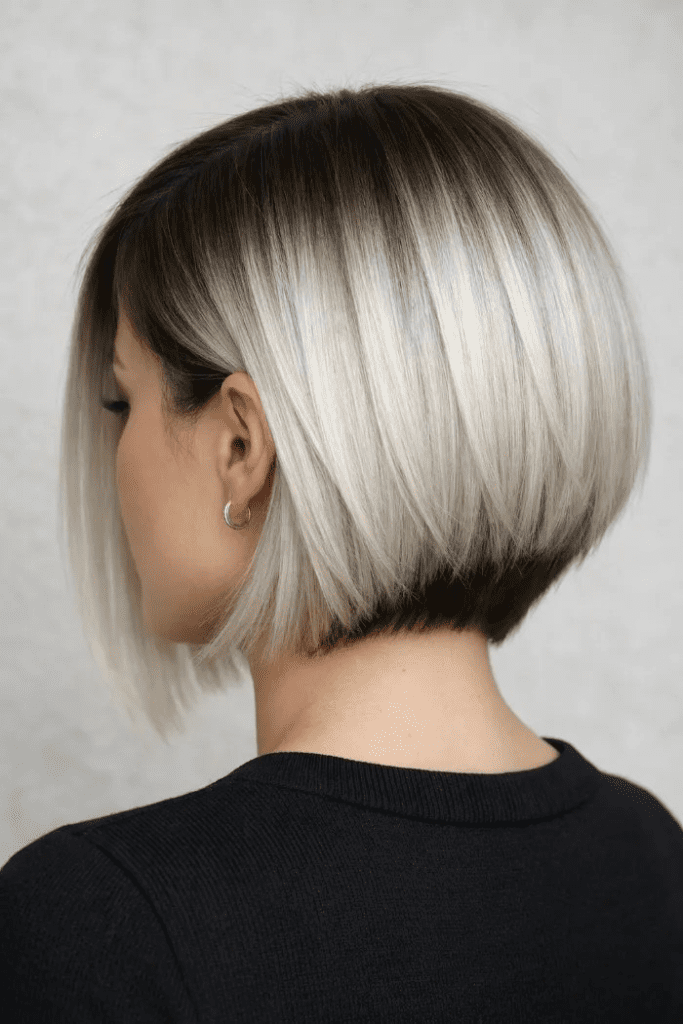
The angled bob is one of the most architecturally interesting short hairstyles available — and when paired with icy platinum balayage, the angular lines of the cut and the high-contrast color create a striking, editorial combination that looks genuinely high-fashion. The darker root is blended into a cool platinum mid-length that brightens further toward the longer front sections, creating a gradient that emphasizes the angular shape of the cut.
The sleek, smooth finish on the angled bob keeps the platinum tones looking precise and intentional — loose waves would soften the impact of both the cut shape and the color intensity.
Ask your colorist for: An icy, cool platinum blonde concentrated through the mid-lengths and longer front sections. A root melt in a cool gray-brown that creates a smooth, sophisticated transition rather than a hard line. Specify a violet or silver-based toner for the most authentically platinum finish.
Ask your stylist for: A clearly defined angled bob — longer in front, shorter and potentially stacked in back. A sleek, smooth finish that keeps the color dimension visible and the cut lines precise.
At-home maintenance: Icy platinum is the highest-maintenance blonde on this list. A purple shampoo and conditioner used every wash day is essential for maintaining the tone. A bond-strengthening treatment used monthly helps preserve the integrity of heavily lightened strands.
15. Tousled Bronde Lob with Dark Roots
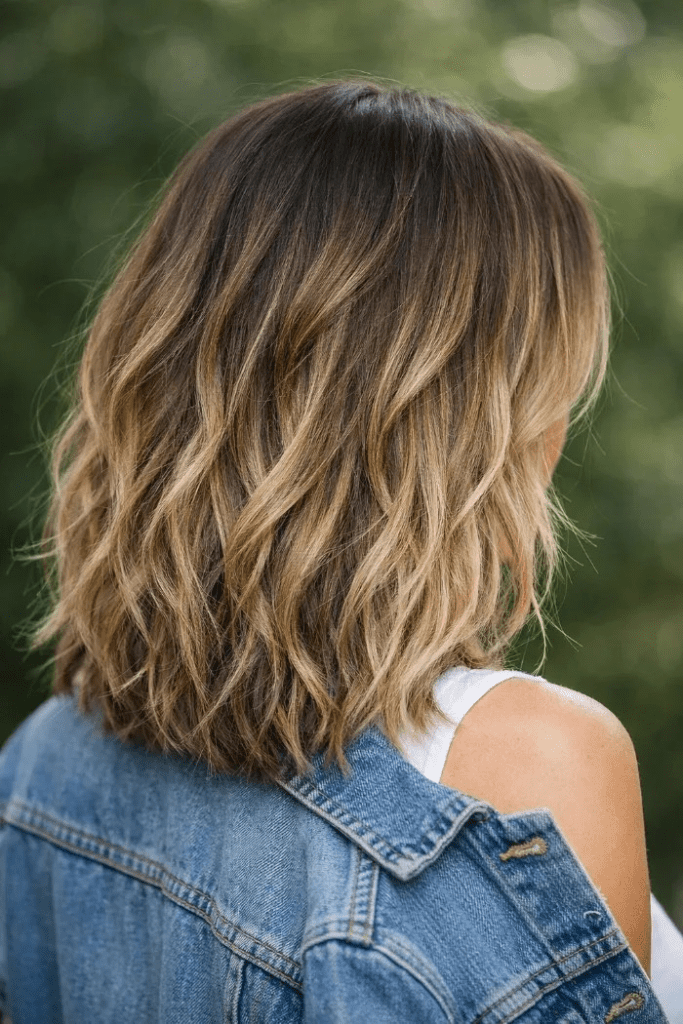
Bronde — the sweet spot between brunette and blonde — is genuinely one of the most practical and flattering color positions available, particularly for women whose natural color sits in the medium-to-dark brown range. It requires less lifting than a true blonde, which means the hair stays healthier and the maintenance visits can be stretched further. And it grows out with the most natural-looking result of any shade on this list because it’s closest to what many women’s hair would look like with natural summer lightening.
The tousled, effortless styling of this lob perfectly suits the casual, natural-looking quality of the bronde color — it’s the hair equivalent of not trying too hard while looking completely beautiful.
Ask your colorist for: Honey-beige bronde pieces scattered through the mid-lengths — not uniformly placed, but organically distributed for that naturally sun-kissed quality. A dark, natural root that stays close to the natural base color with minimal blending.
Ask your stylist for: A lob with long, movement-friendly layers and an undone, tousled finish. This style is specifically designed to look effortless — avoid over-styling.
At-home maintenance: Bronde is the lowest-maintenance option on this list. A color-protecting shampoo and a monthly gloss treatment is typically sufficient to keep it looking fresh and dimensional between appointments.
16. Sleek Italian Bob with Rooted Blonde Balayage
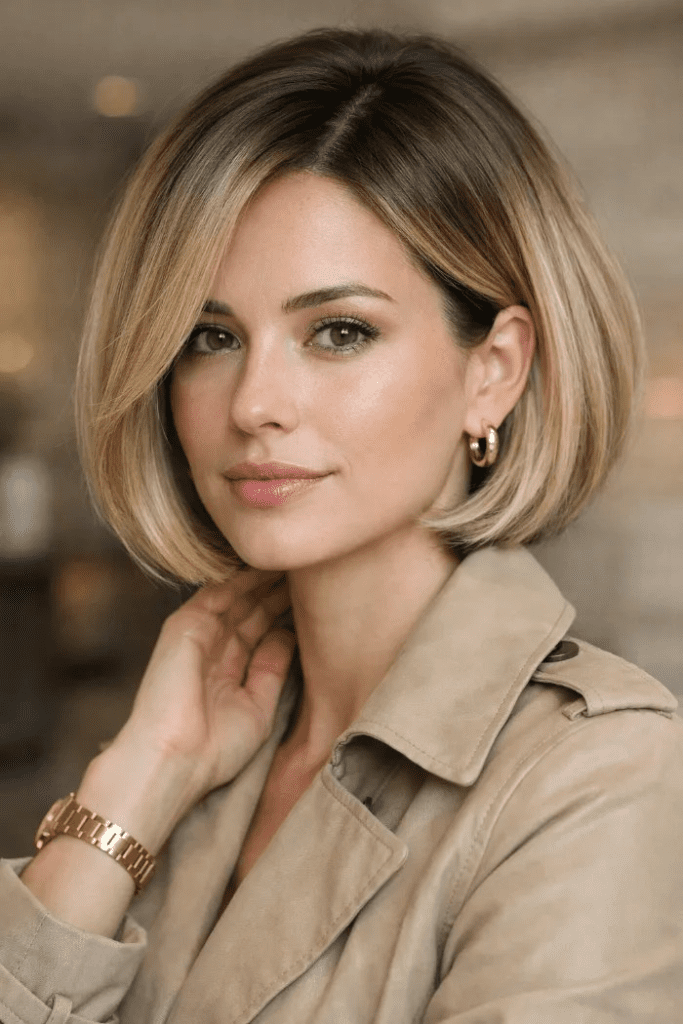
The Italian bob — shorter, blunter, and more precise than a standard bob — has a specific elegance that comes from its clean, deliberate shape. When paired with rooted blonde balayage, that elegance is amplified: the balayage wraps around the face and brightens toward the ends while the root stays deeper, creating a gradient that emphasizes the clean lines of the Italian bob shape rather than competing with them.
This style grows out beautifully because the root depth is built into the design — as the hair grows, it simply adds more of the shadowed dimension that makes the style look expensive in the first place.
Ask your colorist for: Blonde balayage that starts lower than the root and softly wraps around the face-framing sections. The brightest pieces should sit at the ends rather than through the mid-lengths, which creates a gradient that works with the bob’s clean shape rather than breaking it up.
Ask your stylist for: A clean, blunt Italian bob — shorter than a standard bob, typically sitting between the jaw and the chin. A smooth, polished finish that keeps the color gradient visible and precise.
At-home maintenance: The Italian bob requires more frequent trims than a longer style to maintain its precise shape. Every four to six weeks for the cut, and a toner or gloss every eight to ten weeks to keep the blonde dimension fresh.
17. Side-Part Bob with Soft Bronde Pieces
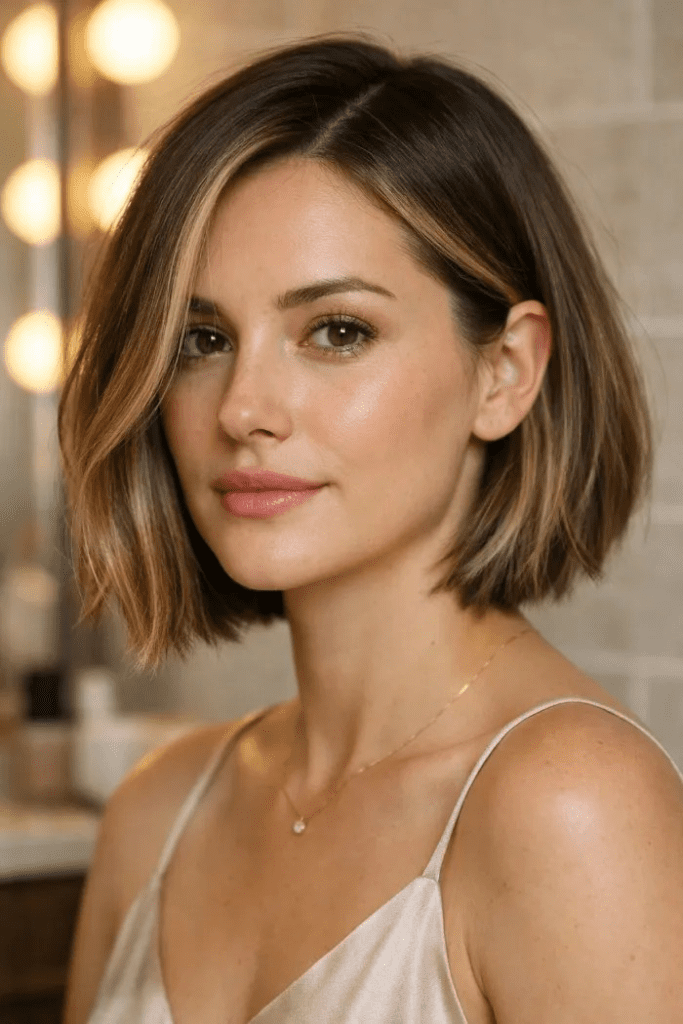
The side-part bob with soft bronde pieces is the style for the woman who wants a color change that her colleagues might notice without being able to articulate exactly why. It’s subtle enough that it reads as dimensional and healthy rather than “colored” — and that natural quality is its greatest asset.
The deeper root fades into warm bronde pieces with extra brightness near the part and face-framing sections — the placement is specifically designed to complement the way the side part creates asymmetrical movement through the bob. When the hair sweeps to one side, the bronde pieces at the front catch the light in a genuinely beautiful way.
Ask your colorist for: Soft bronde pieces with extra brightness at the part line and face-framing sections. The overall placement should be subtle and natural-looking rather than bold or high-contrast. A warm undertone throughout — even the deeper root should have warmth rather than being cool or ashy.
Ask your stylist for: A chin-length bob with a deep side part built into the cut. The bob should have enough internal structure to sweep cleanly to one side without needing heavy product to stay there.
At-home maintenance: A warm-toned toning conditioner used every two to three washes keeps the bronde pieces glowing and prevents them from fading to a flat, dull brown.
18. Neutral Creamy Blonde Balayage Lob
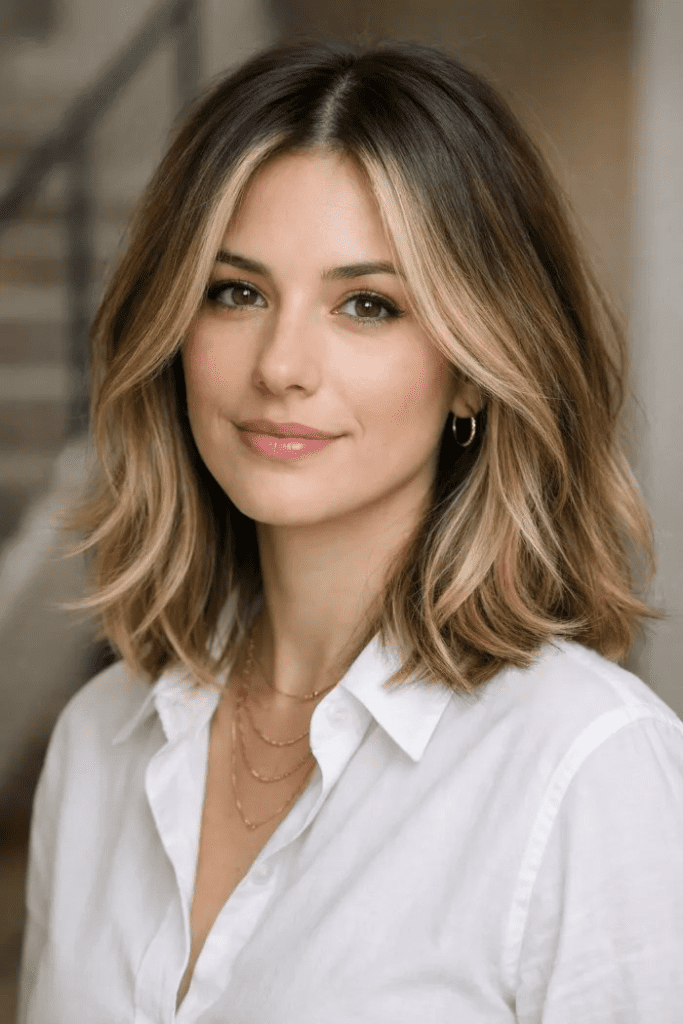
Neutral creamy blonde is the most versatile of all the blonde categories because it genuinely suits the widest range of skin tones and requires the least maintenance of any blonde that still reads as clearly blonde rather than bronde. The darker base stays visible at the roots and through the underneath sections, giving the highlights a dimensional quality — they’re brighter by comparison to the depth below them — without requiring either cool toning or warm-specific maintenance.
Soft waves and light layers at the ends help this grow out with the most natural, seamless quality, because the movement reveals the dimensional layering of the color rather than letting it sit flat.
Ask your colorist for: Neutral creamy blonde — not warm, not cool, but genuinely neutral in tone. Ask your colorist to use a neutral-based toner rather than a warm or cool one. The base should remain clearly visible at the root and through the underneath sections.
Ask your stylist for: A lob with soft, light layers at the ends and a natural, slightly undone finish. The more movement in the cut, the better the dimensional color will show.
At-home maintenance: A neutral toning conditioner every two to three washes maintains the creamy, non-brassy quality that makes this blonde so universally flattering. Avoid warm-toned glosses, which will shift the neutral tone warmer over time.
19. Glossy Bob with Neutral Beige Blonde Ends
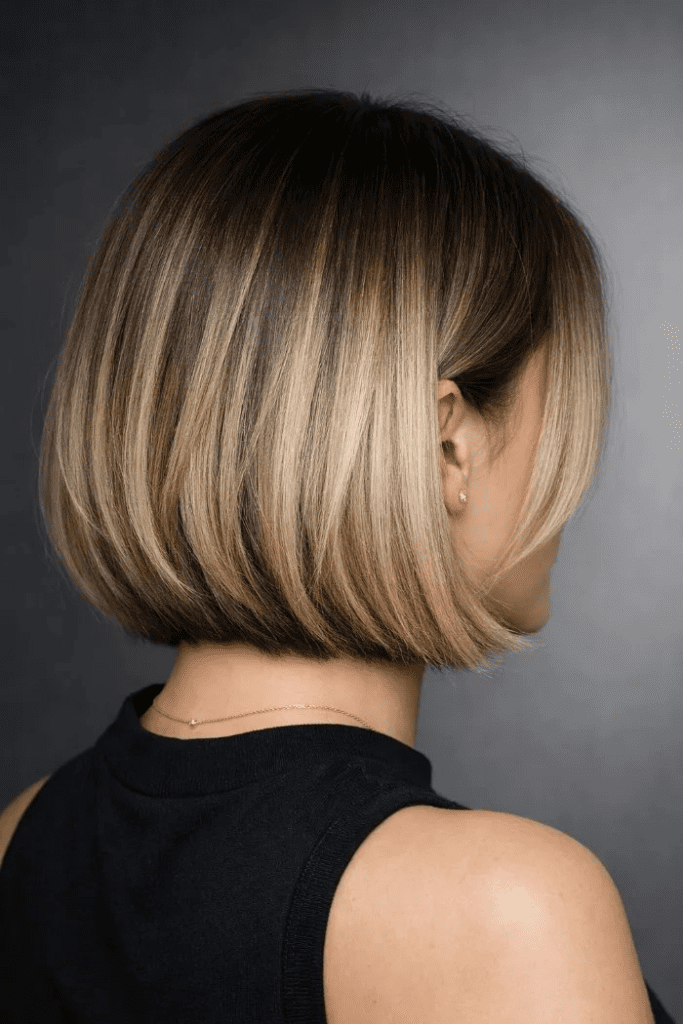
The glossy bob with neutral beige blonde ends is specifically designed for maximum visual impact with minimum technical complexity. The dark root is softened — not sharply contrasted — into a neutral beige blonde that brightens at the ends, where the lightness is most visible and most flattering. The smooth, polished gloss finish amplifies the dimension by adding reflection to both the darker root area and the lighter ends simultaneously.
This style consistently looks chic weeks after the appointment because the root area is designed to deepen gradually rather than producing an obvious grow-out line.
Ask your colorist for: A dark-to-beige gradient that brightens specifically at the ends. The root should be softened rather than sharply contrasted — a very smooth, gradual transition is the technical goal. Specify a glossing treatment as the final step, which seals the color and adds the reflective quality that makes this style look so polished.
Ask your stylist for: A clean, smooth bob that prioritizes the glossy finish over texture or movement. This is a style where the blow-dry technique matters — a round brush that adds smoothness rather than texture preserves the sleek quality.
At-home maintenance: A glossing conditioner used every wash keeps the smooth, reflective finish intact between salon visits. A color-safe, sulfate-free shampoo prevents the gloss treatment from fading prematurely.
20. Asymmetrical Bob with Peekaboo Undercut
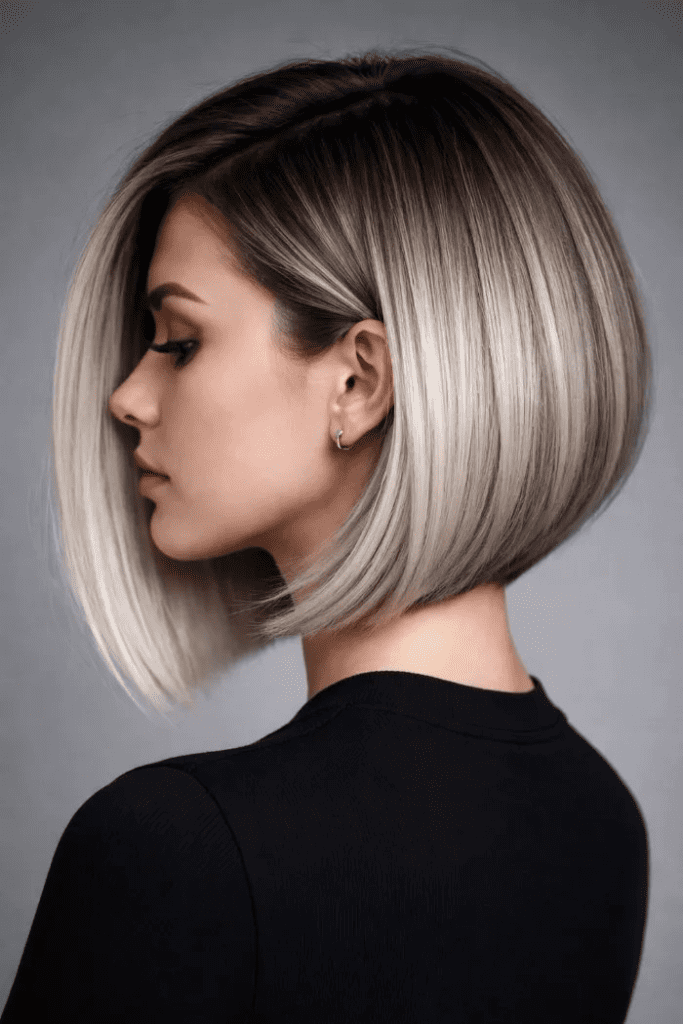
The asymmetrical bob with a peekaboo undercut is the most architecturally complex style on this list — and for the right woman, it’s the most exciting. The longer front pieces create a dramatic, sweeping asymmetry that gives the overall shape real presence, while the hidden undercut at the nape removes bulk from underneath and creates a cool, unexpected detail that reveals itself when the hair moves or is tucked behind the ear.
The cool blonde finish with a deeper root grounds the drama of the cut with a color approach that reads as sophisticated rather than overwhelming.
Ask your colorist for: Cool blonde balayage with a deeper, intentional root — the root depth is what keeps the high-contrast asymmetrical shape from looking too harsh or severe. Ask for the blonde to be brightest at the longer front sections for the most striking asymmetrical effect.
Ask your stylist for: A clearly asymmetrical bob with a peekaboo undercut at the nape. Discuss the undercut depth with your stylist based on your hair’s thickness — deeper for thicker hair, lighter for finer hair.
At-home maintenance: The asymmetrical shape requires more frequent trims than a symmetrical cut to maintain the precise angle. Every four to six weeks. The cool blonde needs a purple shampoo routine to stay bright and prevent brassiness.
21. Wavy Bob with Vanilla Blonde Balayage
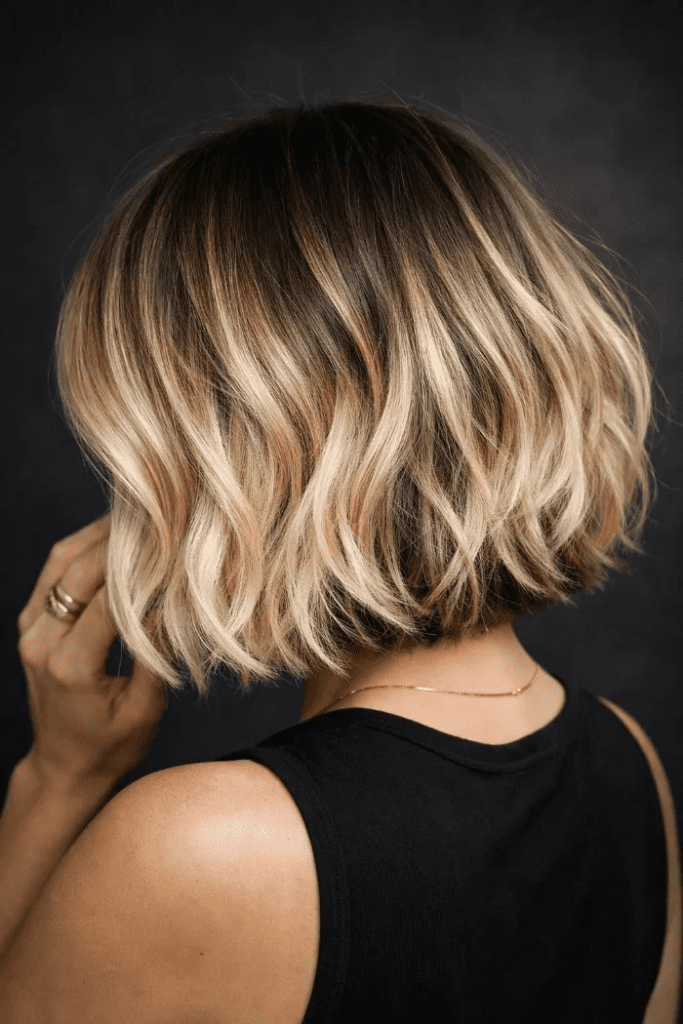
Vanilla blonde is exactly what it sounds like — a creamy, soft, warm-neutral blonde that’s gentle rather than bold and approachable rather than stark. On a wavy bob with dark roots, vanilla blonde balayage creates a style that looks effortlessly beautiful in every context, from a casual Saturday to a formal dinner. It’s one of those colors that never looks overdone or try-hard, which is precisely what makes it so enduringly appealing.
The soft ribbons of vanilla blonde through the wavy bob catch the light as the waves move, creating a dimensional, luminous quality that reads as the most naturally beautiful version of blonde — which is the ultimate goal of any balayage application.
Ask your colorist for: Vanilla blonde ribbons placed softly through the mid-lengths with slightly brighter pieces near the face. The root should stay meaningfully deeper than the vanilla blonde below — the contrast is what gives the vanilla its creaminess and warmth by comparison.
Ask your stylist for: A wavy bob with loose, piecey waves and a soft, undone finish. The vanilla blonde shows up most beautifully when the waves are relaxed and natural-looking rather than tightly curled or smoothed.
At-home maintenance: Vanilla blonde sits in the warm-neutral category and benefits from a warm-toned gloss every six to eight weeks to refresh the creaminess and prevent the tone from fading flat. A hydrating mask used weekly keeps the highlighted sections looking healthy and luminous.
How to Talk to Your Colorist About Dark Root Balayage
Walking into a color appointment with a clear, specific brief is the difference between getting exactly what you want and walking out with something that’s close but not quite right. Here’s how to have the most productive conversation possible.
Know your tone commitment before you sit down. Cool, icy, and ash blonde tones require the most consistent toning maintenance and the most discipline about purple shampoo. Warm, buttery, and bronde tones require the least toning but the most hydration. Neutral and creamy blondes sit in the middle. Knowing which category you’re choosing helps your colorist plan the formula, the developer, and the toner from the very beginning.
Use the right vocabulary. Root melt, root shadow, lived-in balayage, money piece, face-framing, ribbon placement — these are the specific terms that communicate meaningfully to a professional colorist. Saying “I want my roots to blend” is less useful than saying “I want a root melt that extends three to four inches below the natural hairline.”
Bring multiple reference photos. One photo shows the general vibe. Two or three photos let your colorist triangulate the specific tone, the placement, and the contrast level you’re looking for. The more visual information you provide, the more accurately the result can be targeted.
Be honest about your maintenance commitment. If you genuinely can’t make it to the salon more than three or four times a year, tell your colorist. They can adjust the placement and the contrast to maximize your grow-out window rather than creating a style that looks dated after eight weeks.
Ask specifically about grow-out. Ask your colorist to show you — either in photos or by describing — what the style will look like at 8 weeks, 12 weeks, and 16 weeks. A good colorist designs the application with grow-out in mind from the very beginning.
Final Thoughts
Dark roots blonde balayage on a bob is one of those rare style decisions that looks intentional from day one and continues looking beautiful for weeks or months after the appointment. It’s bright enough to feel like a genuine color transformation, low-maintenance enough to fit into a realistic schedule, and flattering enough on enough different skin tones and hair types to be genuinely worth the investment.
Whether you choose the dramatic contrast of an icy platinum angled bob, the effortless warmth of a tousled bronde lob, or the quietly beautiful sophistication of a neutral creamy balayage lob, the design principle is the same: keep the root deep, blend the blonde beautifully, and let the bob shape do what it does best — keep everything sitting at exactly the right level to be seen and appreciated.
Save two or three favorites. Bring the photos. Tell your colorist your tone preference and your maintenance reality. Then walk out with hair that keeps looking great long after everyone else is due for a touch-up.
Pin your favorites to bring to your next appointment — the more specific your color reference, the better your result.
Do dark roots make blonde balayage look grown out in a bad way?
Not when the dark roots are part of the original design. A root melt or root shadow applied intentionally creates a soft, gradient quality that reads as expensive and deliberate rather than neglected. The key is the transition technique: a smooth, gradual blend from the dark root into the blonde below rather than a hard, obvious line where the color begins.
How often do I need a salon visit for dark root blonde balayage?
Most dark-root balayage styles can stretch to 10 to 14 weeks between color appointments — sometimes longer, depending on how much contrast was originally applied. The darker root is specifically designed to grow out without producing an obvious line. Between color appointments, a gloss or toning treatment every six to eight weeks refreshes the blonde dimension and keeps the tone from shifting.
Will dark root blonde balayage work on very dark natural hair?
Yes, though the process may require multiple sessions for the lightest blonde results. On very dark natural hair, a warm balayage in honey, caramel, or bronde tones can be achieved in fewer sessions and with less damage than a platinum or icy result. Discuss your goals and timeline with your colorist before the first appointment — a phased approach over multiple visits produces a healthier, more beautiful result than attempting to reach the lightest blonde in a single session.
Is a bob too short for balayage to show up well?
Absolutely not. On bobs and lobs, balayage often looks even more impactful than on longer hair because the color dimension sits directly at eye level and is fully visible at all times. The key adjustment for shorter lengths is placement: the highlights should start lower than they would on longer hair, and the face-framing sections should be particularly well-considered since they frame the face so closely.
What is the difference between a root shadow and a root melt?
A root shadow is a technique where a slightly darker color is applied over the lightened root area after bleaching to create a soft, shadowed depth that blends the grow-out. A root melt blends the darker root tone further down into the blonde below for a longer, more gradual transition. Root shadows are more precise and defined; root melts produce a longer and typically more seamless grow-out. For the most forgiving low-maintenance result, a root melt is usually the superior technique.
Can I go from traditional highlights to dark root balayage?
Yes, and many women find the transition makes their hair healthier over time because dark root balayage requires less overall lightening than traditional full-head highlights applied close to the scalp. The transition typically involves a single appointment where a root shadow or melt is added and the highlight placement is adjusted to start lower. The result is immediate and the maintenance relief is significant.