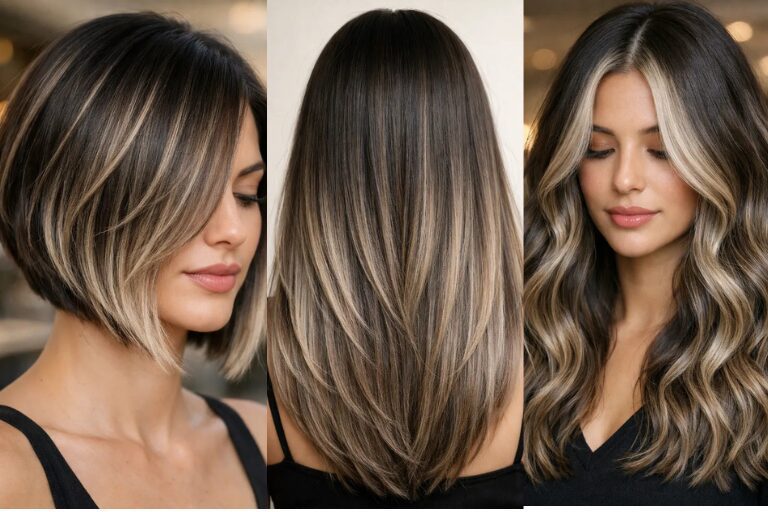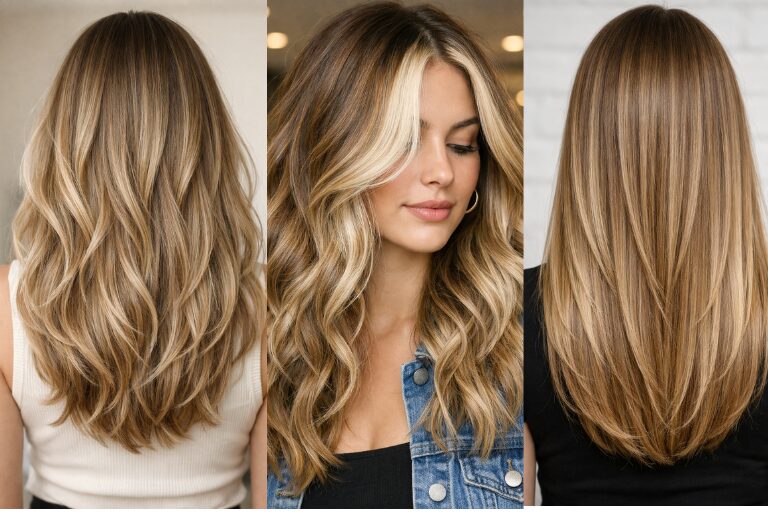
16 Sun-Kissed Balayage for Brunettes: Warm Brown Hair Ideas That Glow
There’s a version of lighter hair that doesn’t require a dramatic commitment, weeks of processing appointments, or a complete departure from your natural brunette. Sun-kissed balayage is exactly that version — and for brunettes specifically, it’s one of the most flattering color techniques available because it works with the natural depth of brown hair rather than trying to replace it.
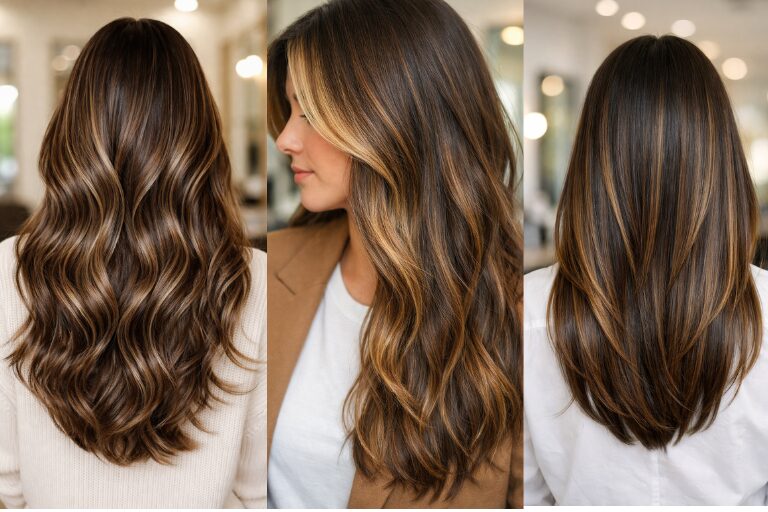
The difference between a balayage that looks genuinely sun-kissed and one that just looks highlighted comes down to two things: placement and tone. Placement means brightness lives around the face, through the mid-lengths where light naturally hits, and toward the ends — not at the root, not evenly distributed throughout. Tone means the highlights share the same warm family as the brunette base — caramel, honey, toffee, cinnamon — rather than a cooler, more obviously colored blonde that sits disconnected from the brown.
When those two elements are right, the result reads as the most flattering version of your natural hair color rather than a separate color on top of it. That’s the sun-kissed quality — warmth that looks earned rather than applied.
This guide covers 16 balayage directions across the full spectrum of warm brunette tones, from barely-there ribbon dimension to brighter money piece contrast. Every style includes what to request in the salon and how to maintain the result so it stays glowing rather than going brassy or flat.
One foundational piece of advice before you choose: ask for hand-painted balayage with a soft root shadow and a blended color melt through the mid-lengths. Tell your colorist you want dimension that reads warm and natural in daylight, not high-contrast ribbons. A gloss finish at the end of the appointment is what gives balayage the smooth, expensive quality that separates a great result from a good one — don’t skip it and don’t let your colorist skip it either.
1. Soft Beige Bronde Melt on Long Waves
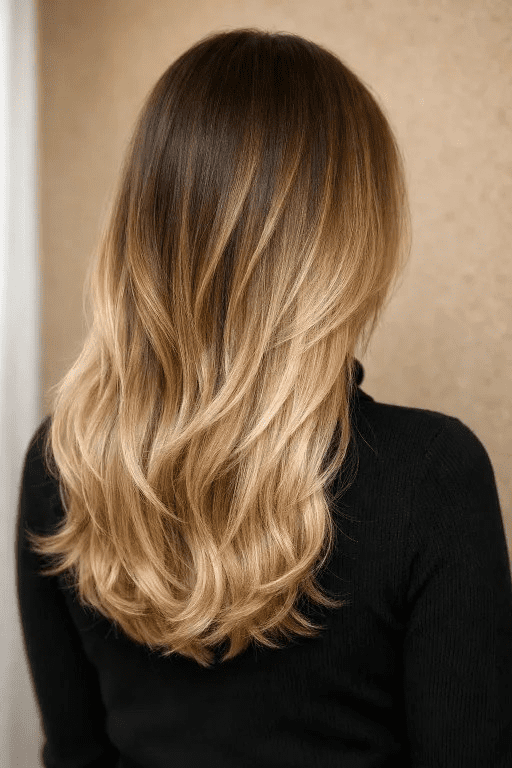
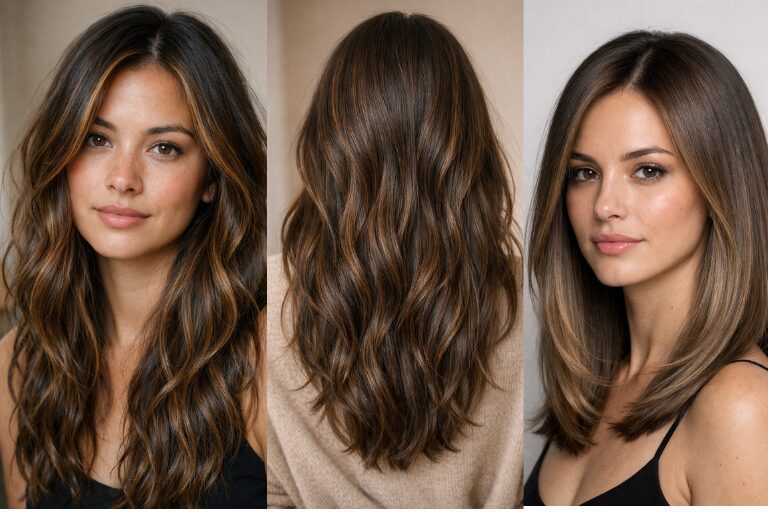
The beige bronde melt is the subtlest transition on this list — a color that sits exactly between brunette and blonde, leaning neither fully warm nor fully cool, but landing in the creamy, neutral space that’s universally flattering and extremely wearable.
The top stays rich and natural while the ends move toward a creamy, brightened beige. On long waves, that gradient is genuinely beautiful because the wave pattern naturally blends the transition at every point — there’s no visible line where the brunette ends and the bronde begins, just a continuous, organic shift that catches light differently through each section.
This is the right choice for women who want visibly lighter ends without the commitment of anything that reads as overtly highlighted or obviously colored. The beige tone specifically keeps the result looking polished and modern rather than golden or retro.
What to ask your colorist: Request a color melt technique rather than standard balayage — a melt involves overlapping the tones at the transition point to create a seamless blend rather than a visible line. Ask for the beige to be developed through a neutral or slightly cool-based toner rather than a warm formula, which keeps the bronde quality without pulling golden.
Maintenance tip: Waves are non-optional for this style — they’re doing the blending work that keeps the transition invisible. Straight styling on a beige bronde melt reveals the transition more clearly and can make the graduation look patchy rather than seamless. A lightweight wave cream on damp hair and air drying is the simplest way to maintain the look between appointments.
Best for: Women who want to go lighter overall in the most natural-looking, low-commitment way possible — a color result that reads as beautiful brunette rather than as a highlighting treatment.
2. Sun-Faded Caramel Balayage on Brunette Waves
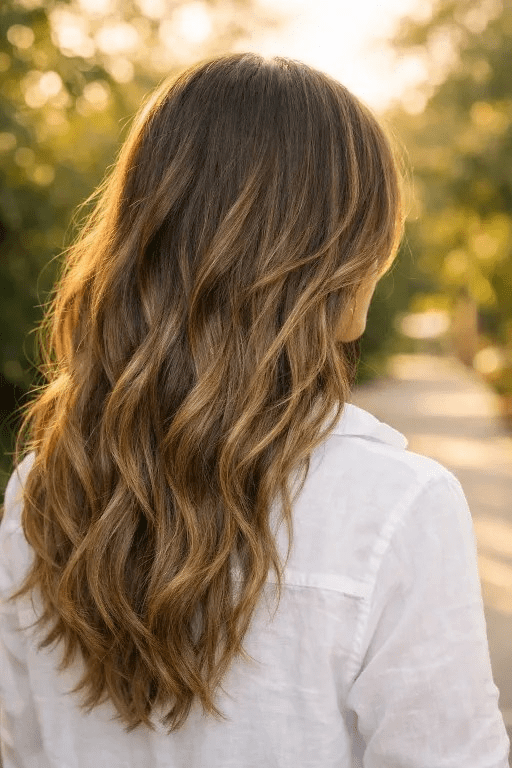
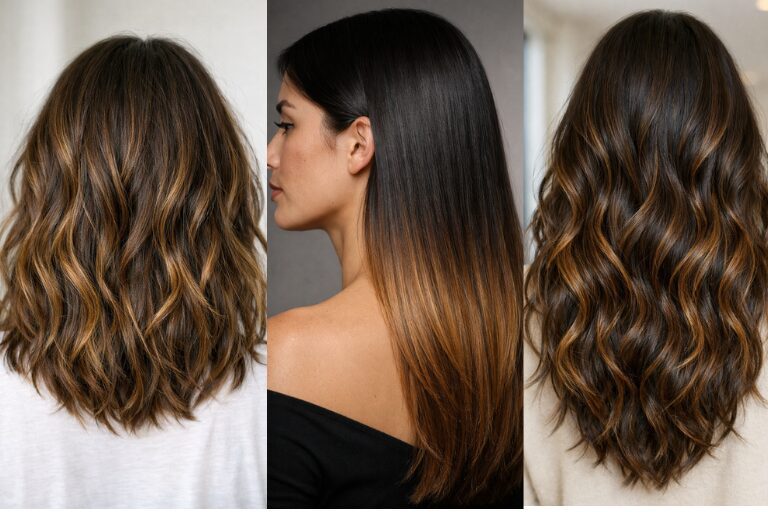
The sun-faded caramel balayage is the closest this list gets to replicating exactly what extended time outdoors does to natural brunette hair — which is why it reads as effortlessly beautiful rather than obviously colored. The base stays deep and rich while caramel ribbons are placed airily through the mid-lengths in a way that looks random and organic rather than systematic.
The word “sun-faded” in the name is technically specific: this isn’t caramel that’s been applied fresh and saturated, it’s caramel that’s been finished with a slightly muted, slightly softer toner so it reads as lightening that’s been there for a while rather than something just applied. That quality is what creates the effortless, lived-in aesthetic that makes this balayage so appealing.
The airy placement through the mid-lengths is also the key to the exceptional grow-out on this style. Because the highlights start below the root and are placed in loose, widely-spaced sections, there’s no dense highlight area near the root to grow out visibly — the grow-out just looks like more of the natural brunette base coming in.
What to ask your colorist: Ask for airy, widely-spaced caramel balayage through the mid-lengths with a soft root shadow to blur any transition. Specify that you want the highlights to start at least two to three inches below the root. Ask for a warm but slightly muted toner — not a vivid, saturated caramel, but a softer, sun-faded version of the same tone.
Maintenance tip: Loose waves are the ideal styling choice because they keep the caramel ribbons moving and catching light from multiple angles. A wide-barrel wand on low heat and a light-hold flexible spray is the complete routine — over-styling with heavy product will weigh the waves down and reduce the visible dimension.
Best for: Women who want the most natural-looking, low-maintenance warm balayage possible — highlights that people attribute to a recent vacation rather than a recent salon visit.
3. Honey Money Piece With Warm Balayage
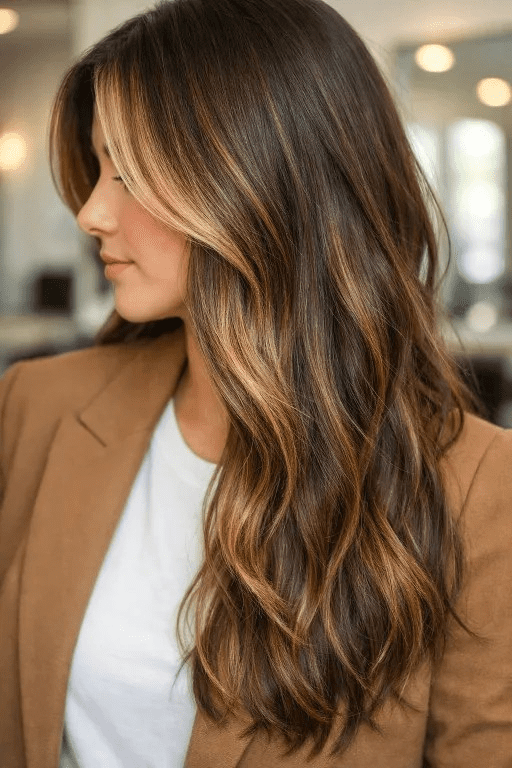
The money piece — bright highlights concentrated in the face-framing sections at the front of the hairline — is the highest-impact, most targeted highlight technique available. Two or three foils on each side of the face delivers more visible brightness in every interaction, every mirror glance, and every photograph than a full head of balayage through the lengths.
The honey tone specifically is the right choice for face-framing on brunettes because it sits at a warmth level that brightens the skin and draws attention to the eyes without the starkness of a platinum or ash money piece against a dark brunette base. The honey quality has a softness and luminosity that reads as flattering in every lighting context.
The warm balayage through the lengths behind the money piece creates continuity — the face framing doesn’t look isolated or disconnected, but part of an overall warm, dimensional color story.
What to ask your colorist: Ask for the money piece to be developed slightly lighter than you think you want — money pieces fade and soften between appointments, and a piece that’s at exactly the right brightness in the salon will feel underwhelming at the six-week mark. A root smudge at the base of the money piece sections is non-negotiable for seamless grow-out.
Maintenance tip: The money piece fades faster than any other highlighted section because it’s washed and heat styled most frequently. A toner refresh specifically on the face-framing sections every six to eight weeks keeps the honey quality without requiring a full color appointment. Ask your colorist what toner formula they used so you can request it specifically at touch-up appointments.
Best for: Women who want the most face-brightening, high-impact color result with the minimum amount of application — maximum visible return for the least color work.
4. Cinnamon Ribbon Balayage on Dark Curls
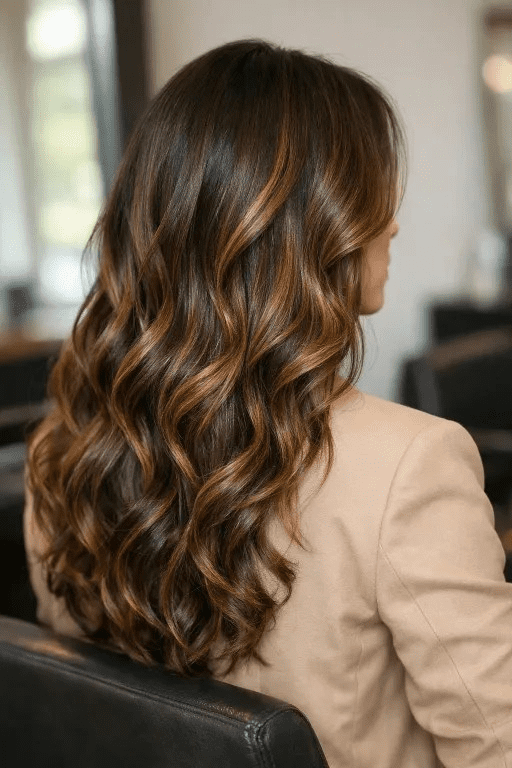
Cinnamon highlights on dark curly hair create a color effect that straight hair simply can’t replicate — because the spiral structure of curly hair catches light at the bends and releases it in the spaces between curls, making the color appear and disappear as the hair moves. That constant shimmer is what gives cinnamon on dark curls its distinctive, sparkle-like quality.
The cinnamon tone is specifically a better choice for dark curls than caramel or honey because it has enough richness and depth to contrast against the dark chocolate base without looking brassy or orange. Caramel can read too golden on very dark brunette bases; cinnamon reads as a natural variation of the same warm brown family.
The color pops most visibly at the bends of the curls where light hits directly — which means the highlight placement should target the outer sections of the curl rather than the interior sections, where the color would be hidden in the curl’s shadow.
What to ask your colorist: Ask for fine cinnamon highlights applied through a scattered, organic placement — not in systematic foils, but in sections that follow the natural curl groupings. Tell your colorist you want the color to read as sparkle within the curl rather than as visible ribbons on the surface.
Maintenance tip: Well-defined, moisturized curls show this color at its absolute best. Dry or frizzy curls obscure the cinnamon ribbons and make the dimension invisible. A leave-in conditioner on soaking wet hair followed by a light gel scrunched upward is the minimum daily routine needed to keep curl definition sharp enough for the color to read correctly.
Best for: Women with naturally curly or coily dark brunette hair who want warm dimension that works with their curl texture rather than being obscured by it.
5. Toffee Swirl Balayage on Mocha Brunette
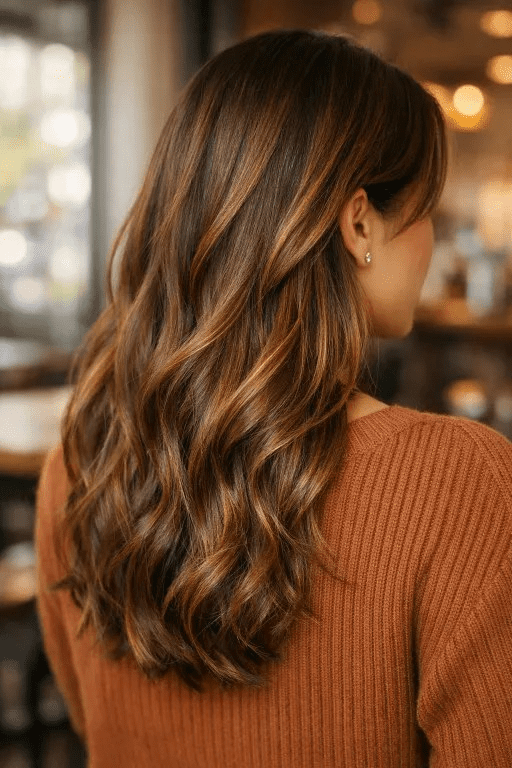
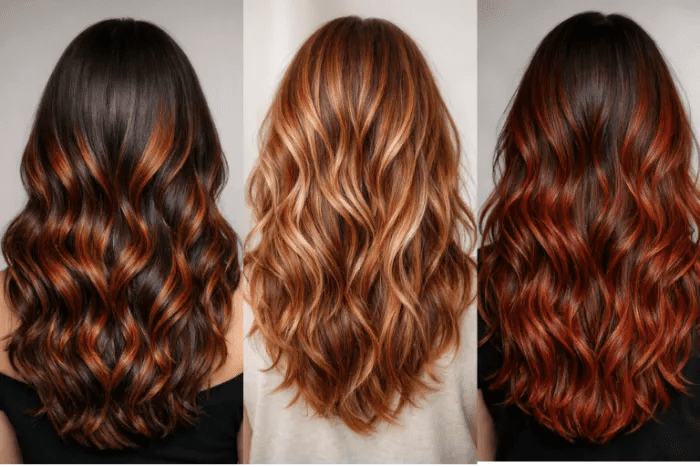
The toffee swirl on a mocha brunette base is one of the richest, most dimensional color combinations on this list — because toffee and mocha exist on the same warm brown spectrum, close enough to look natural together but different enough in depth to create visible, glossy dimension.
The wide ribbon placement is what distinguishes this from a fine highlight application — the toffee sections are broader, creating a swirl of warmth through the mid-lengths rather than individual strands of lighter color. Wide ribbons on a mocha base read as dimension and movement; fine ribbons on the same base would read as subtle highlights. The width of the ribbon changes the whole character of the result.
Concentrating the highlights higher around the crown keeps the roots looking full and rich rather than flat — the toffee sits above the widest part of the head, which adds the illusion of volume and lift to the overall silhouette.
What to ask your colorist: Ask for wide balayage sections rather than fine foils — the ribbon width is what creates the swirl quality. Request the highlights to be placed starting from just below the crown rather than mid-shaft, which creates the lifted, crown-brightening effect. A warm toffee toner finish is essential — without it, the wide sections can look more blonde than toffee.
Maintenance tip: Loose curls or waves styled with a medium-barrel wand show off the swirl placement at its most flattering. The curl movement catches the toffee sections from multiple angles and creates the illusion of more dimension than actually exists. A lightweight curl cream rather than a heavy cream prevents the curls from clumping in a way that hides the color.
Best for: Women who want a warm, cozy brunette color that looks expensive and intentional without requiring a high-contrast, obviously highlighted result.
6. Seamless Bronde Color-Melt Balayage
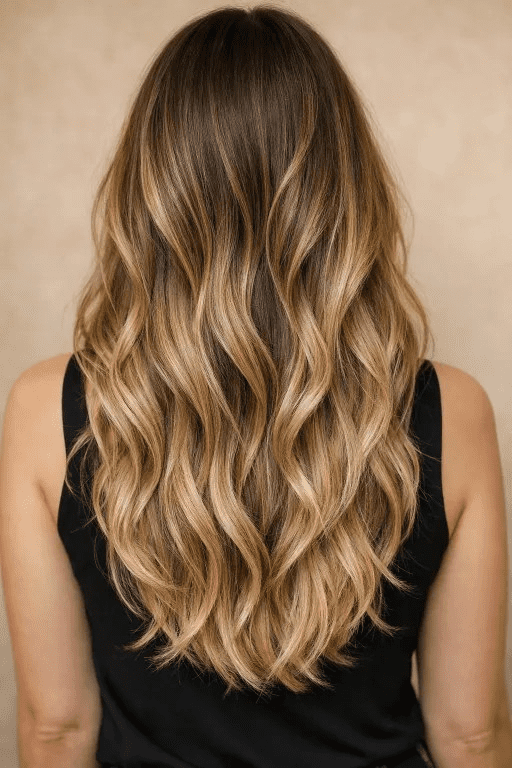
The seamless bronde color melt is the most technical application on this list — because achieving a genuinely seamless transition between brunette and blonde tones requires precise formula placement and overlapping application techniques that standard balayage doesn’t use.
A color melt involves deliberately placing multiple tones at the transition points and blending them together while wet so the boundary between dark and light disappears completely. The result is a gradient that looks like a single, continuous tone rather than a dark section and a light section placed next to each other.
On brunette hair, a seamless bronde melt creates the impression that the hair’s natural color simply gets warmer and lighter toward the ends — which is the most natural, believable brunette-to-lighter result possible.
What to ask your colorist: Ask specifically for a color melt technique rather than balayage — they’re related but different applications. A melt uses multiple formula shades applied in overlapping layers at the transition zone; balayage typically involves a single lighter shade painted onto sections. The melt produces the seamless gradient; balayage produces visible ribbons. Both are beautiful — be clear about which result you want.
Maintenance tip: Beachy waves applied with a salt spray or a light mousse keep the melt visible and beautifully dimensional. The wave texture catches the tonal variation at multiple angles and makes the seamless gradient look more dynamic than it does on straight-styled hair.
Best for: Women who want the most technically refined, seamless balayage result — a color that looks like one continuous tone rather than a darker section and lighter section sitting together.
7. Cool Beige Bronde Balayage for Brunettes
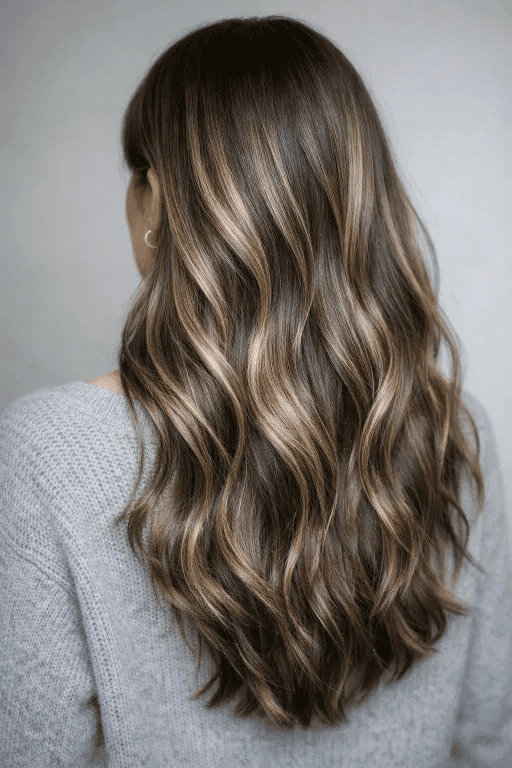
The cool beige bronde is the most modern color direction on this list — it deliberately sits outside the warm, golden palette that most brunette balayage occupies and instead delivers a creamy, muted dimension that reads as sophisticated and intentional rather than sunny and warm.
For women who have always found caramel and honey tones too warm for their complexion or their personal aesthetic, cool beige bronde is the alternative that delivers the same dimensional, lighter-ends result without any of the golden quality.
The tone is specifically beige rather than ash — ash would read too grey and cool on most brunette bases, while beige sits in a warmer neutral space that still has enough warmth to blend naturally with brown without looking disconnected or artificially cool.
What to ask your colorist: Ask for a cool or neutral-series toner rather than any warm formula — this is the technical decision that determines whether the result reads as beige or tips into the caramel territory you’re specifically avoiding. Tell your colorist you want the finished color to look muted and creamy, not warm and golden.
Maintenance tip: A purple shampoo used sparingly — once every two weeks rather than once a week — helps maintain the cool beige quality between appointments. A blue shampoo once a week is a better choice than purple on brunette hair specifically, as it neutralizes brassiness without overcooling the brunette base.
Best for: Women who specifically prefer cool tones over warm and want a lighter brunette result that looks modern and muted rather than warm and sun-kissed.
8. Creamy Blonde Ends With Dark Root Blend
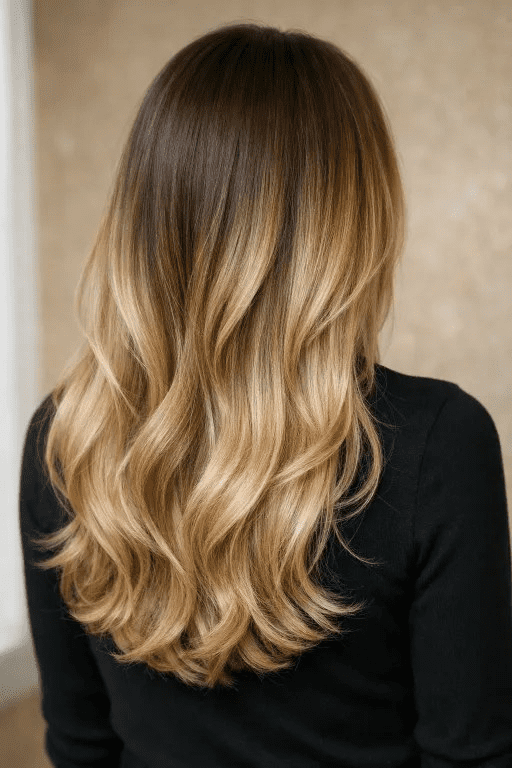
The creamy blonde ends with a dark root blend is the highest-contrast balayage direction on this list — and the one that requires the most precise technical execution to look like a deliberate choice rather than a grown-out dye job.
The key distinction between this style and an overgrown root is the quality of the transition. A deliberate dark-root-to-light-ends balayage has a blended, gradual transition zone through the mid-lengths that softens the boundary between dark and light. An overgrown root has a hard, visible line of demarcation at the root. The blending technique is everything.
The creamy blonde quality at the ends also matters — too bright and the result looks stark; too warm and the ends look orange against the dark root. Creamy means the blonde has a soft, warm-neutral quality that reads as a natural extension of the brunette rather than a separate color placed at the ends.
What to ask your colorist: Ask for a root shadow or root smudge applied specifically at the transition zone to blur the boundary between the dark root and the lighter mid-lengths. Request a creamy or neutral blonde toner for the ends rather than a platinum or ash formula. Tell your colorist you want a blended transition, not a clean contrast.
Maintenance tip: This style is the highest-maintenance on the list because the creamy blonde ends require toner refreshes every six to eight weeks to prevent going brassy. Budget for regular gloss appointments in addition to your balayage appointments — the two together are what keep the result looking intentional rather than neglected.
Best for: Women who want the most visible, high-contrast balayage result and are comfortable with the higher maintenance commitment that a brunette-to-blonde gradient requires.
9. Glossy Chocolate Brunette With Caramel Veins
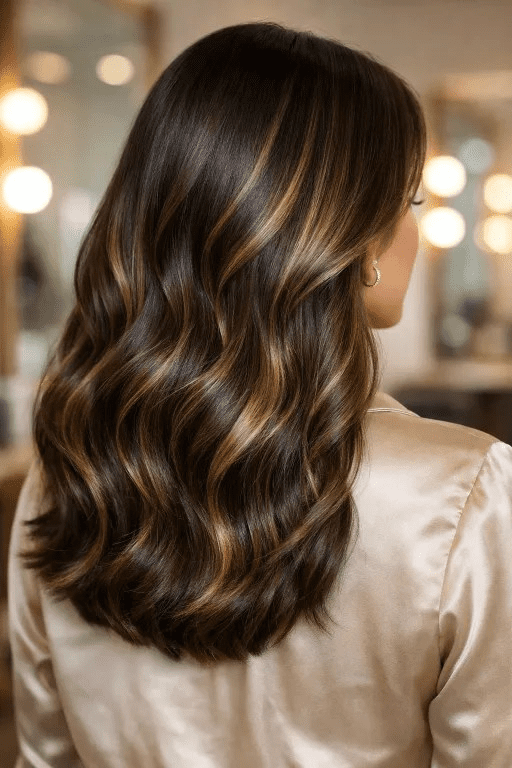
The chocolate brunette with caramel veins is the most understated option on this list — and for women who specifically want their color to be invisible as a color treatment while still making the hair look visibly more beautiful, it’s the right direction.
The caramel veins are fine enough that they don’t read as individual highlights from more than a few feet away. What they do read as, at every distance, is hair that has exceptional shine and depth — the kind of color that makes people ask what you do to your hair rather than noticing that you’ve had it colored.
The gloss application is more important to this style than the highlighting itself. A clear or caramel-tinted gloss applied over fine caramel highlights creates a unified, high-shine surface that makes the overall color look expensive and well-maintained. The highlights provide the structural dimension; the gloss provides the visual finish.
What to ask your colorist: Ask for fine babylights rather than standard balayage — babylights are ultra-thin highlights that create a diffused, overall brightening effect rather than visible ribbons. Request a warm caramel or golden-brown gloss finish applied over the top. Tell your colorist you want the color to look like the best, shiniest version of your natural brunette rather than an obvious highlighting application.
Maintenance tip: A weekly shine mask or a lightweight oil applied to the ends between appointments maintains the glossy quality that makes this style look its best. Matte styling products are specifically incompatible with this look — always finish with something that adds rather than removes shine.
Best for: Women who want invisible color work that makes their hair look noticeably more beautiful without anyone being able to identify what changed — the most subtle and refined balayage option on the list.
10. Golden Bronde Balayage Ribbons
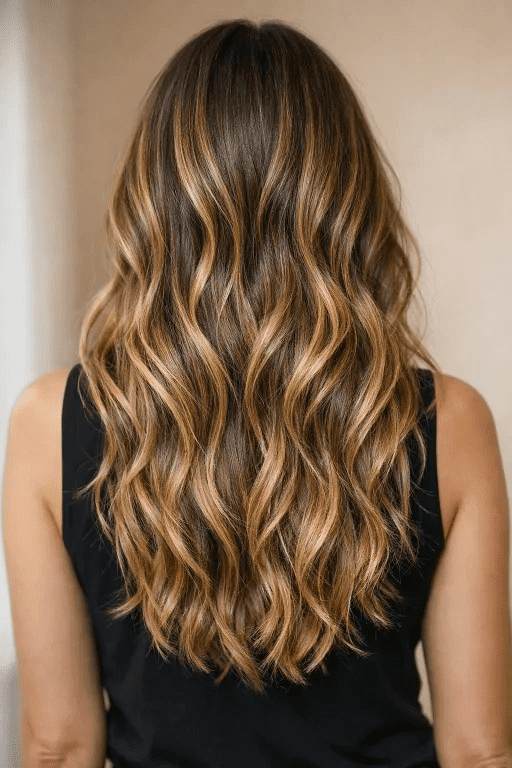
Golden bronde ribbons are the warmest, most luminous balayage option on this list for women who specifically want their brunette hair to glow rather than simply look dimensional. The golden quality of the tone sits brighter and more saturated than honey or caramel — it has a genuine warmth that catches light dramatically and creates a visible, sun-touched quality.
The ribbon placement through the mid-lengths and ends keeps the root looking naturally dark and full while the brightness concentrates in the sections that move and catch light most. On loose waves, the golden ribbons appear and disappear as the hair swings, creating a dynamic, three-dimensional color effect that flat styling can’t replicate.
What to ask your colorist: Ask for a golden or warm-gold toner rather than a neutral or caramel formula — the distinction in warmth level is what gives this specific result its luminous quality. Request ribbon placement rather than soft, scattered balayage — ribbons are more deliberate and visible, which suits the bright, glowing aesthetic this style is built on.
Maintenance tip: A clear gloss with a drop of warm toning formula applied at home every six weeks maintains the golden quality between appointments. Without toner maintenance, golden highlights fade toward a cooler, more ashy tone that loses the warmth that makes this style distinctive.
Best for: Women who want the warmest, most luminous balayage result — brown hair that genuinely glows in natural light and looks visibly brighter and more dimensional at every angle.
11. Sun-Kissed Brunette on Shoulder-Length Waves
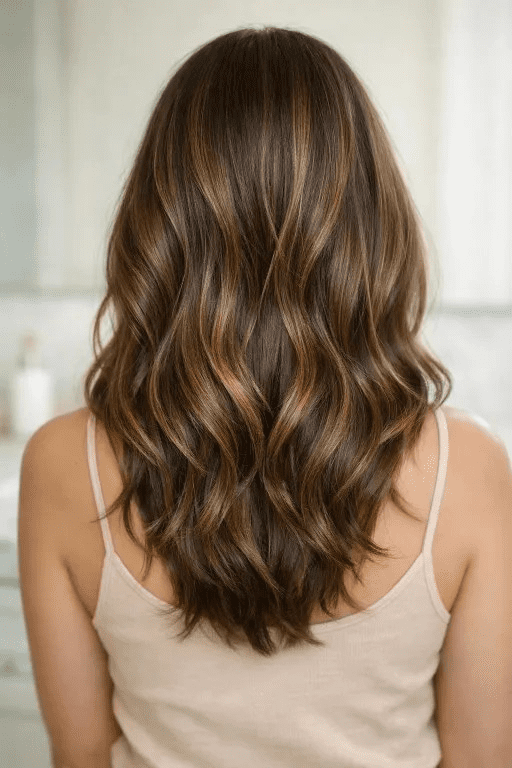
Shoulder-length hair is one of the best lengths for sun-kissed balayage because the length allows enough surface area for the color to transition naturally while keeping the ends close enough to the face that the brightness creates a genuine face-framing effect.
The caramel pieces tucked through the mid-lengths rather than sitting on the surface create a dimensional effect that’s visible when the hair moves but not obvious when it’s still — exactly the quality that makes balayage look natural rather than highlighted. The warmth appears in the movement and catches the light when the hair swings, then settles back into the brunette base when everything is still.
What to ask your colorist: Ask for the balayage to be applied in featherlight sections concentrated through the mid-lengths rather than the full length from root to end — this tucked placement is what creates the warmth-within-the-hair quality rather than an obvious lighter section sitting on the surface.
Maintenance tip: A soft bend through the ends with a one-inch wand is genuinely all this style needs to look polished and dimensional. The bend lifts the highlighted ends slightly, which makes the caramel pieces visible from the front and creates the face-brightening effect this placement is designed to deliver.
Best for: Women with shoulder-length hair who want a warm, subtle sun-kissed result that looks natural from a distance and beautifully dimensional up close.
12. Soft S-Waves With Bronde Dimension
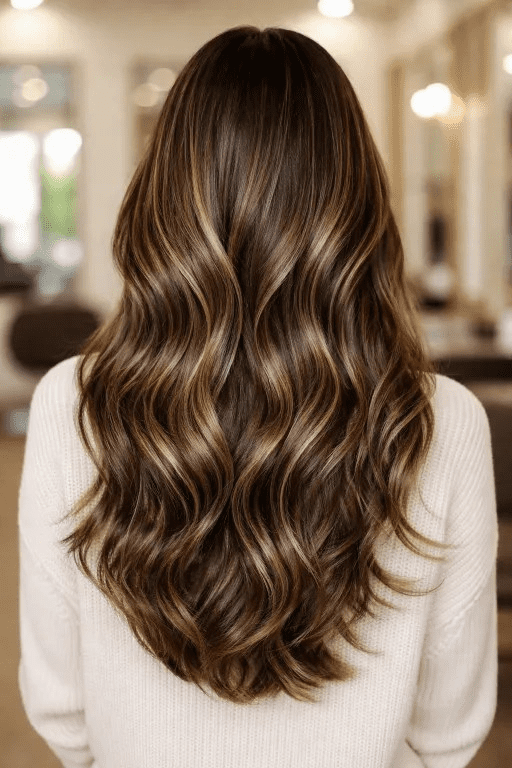
S-waves are one of the most flattering styling choices for balayage because the wave pattern creates a continuous alternation of light and shadow — and balayage is specifically designed to look its best in exactly that kind of light variation.
The fine, evenly-spaced bronde ribbons on soft S-waves create a uniformly dimensional result where every section of the wave catches a slightly different tone. The result looks glossy and polished rather than highlighted because the evenness of the ribbon spacing and the smoothness of the wave pattern prevent any single section from standing out as lighter than the rest.
What to ask your colorist: Ask for fine, evenly-spaced ribbons through a foilayage application — foilayage combines the precision of foil placement with the natural, blended finish of balayage and produces the most even ribbon spacing. Request a bronde toner in the neutral-warm range to keep the result sitting between brunette and blonde rather than tipping into either.
Maintenance tip: S-waves are achieved most easily with a flat iron using a wave technique — clamp the hair and alternate directions every inch down the length. A light smoothing cream on damp hair before flat ironing prevents frizz without weighing the waves down and reducing the glossy quality this style depends on.
Best for: Women who prefer a polished, smooth wave aesthetic over beachy or tousled texture and want a balayage result that looks refined and intentional rather than casual and effortless.
13. Honey Bronde Balayage on Long Texture
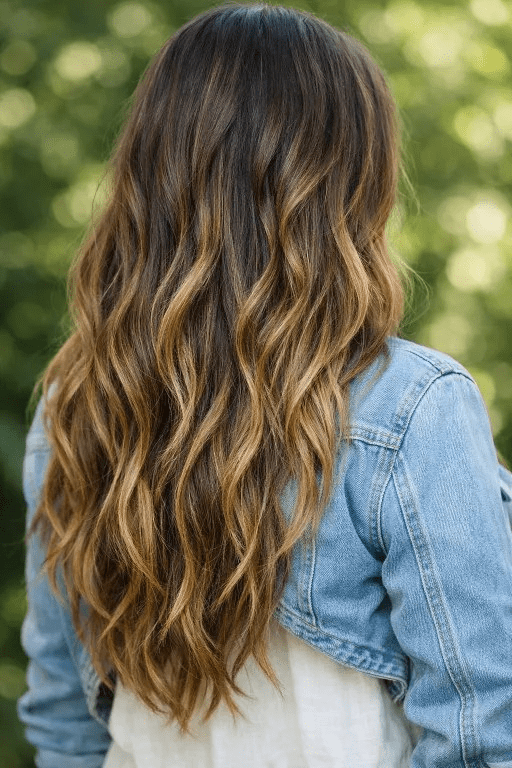
Long hair with honey bronde balayage is one of the most genuinely beautiful color combinations available to brunettes — because the length gives the tonal gradient maximum surface area to develop, and honey is specifically the right tone for long brunette hair because it never tips into the territory where it looks obviously blonde.
The mid-length start of the balayage creates a long, gradual transition from deep brunette root to warm honey ends that looks natural at every stage of grow-out. When the root grows out further, the balayage simply looks like it started even lower — it never develops a visible demarcation line because there isn’t one to grow out.
What to ask your colorist: Ask for the balayage to start mid-length rather than closer to the root — the longer the uncolored section near the root, the more natural and forgiving the grow-out. Request a honey rather than caramel formula: honey is slightly lighter and more golden, which creates more visible contrast on long brunette hair than caramel’s richer, darker tone.
Maintenance tip: A lightweight curl cream or texture spray on damp hair and air drying keeps the loose texture that shows this color at its most flattering. Long balayage on straight styling still looks beautiful, but the texture creates the natural, dimensional quality that makes it look sun-kissed rather than simply lighter at the ends.
Best for: Women with long brunette hair who want a warm, natural-looking color that photographs beautifully at every angle and grows out with genuinely no upkeep required between appointments.
14. Sun-Kissed Ribbon Balayage on Sleek Brunette
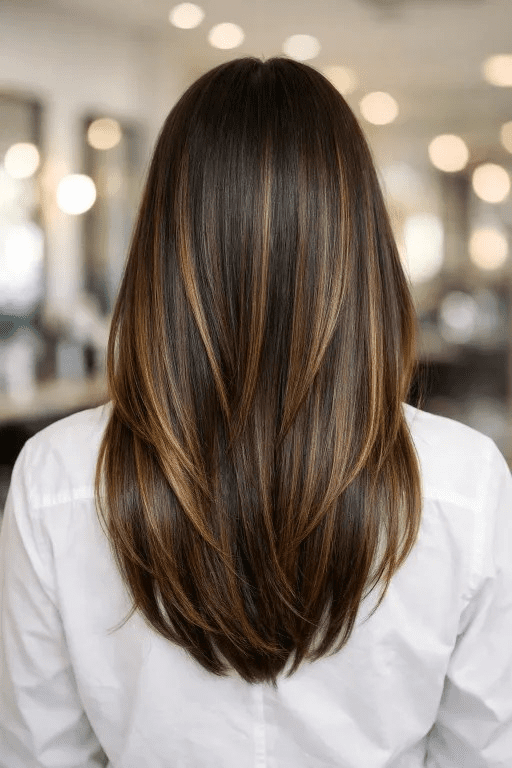
Sleek, straight styling reveals highlights in the most precise, visible way — because the flat, smooth surface creates an even reflective plane where each ribbon catches light at the same angle simultaneously. On a sleek blowout, fine golden ribbons running through the length look incredibly crisp and deliberate — every highlight is visible and defined.
This is either the right or wrong choice depending on your preference. If you want your highlights to be clearly visible and precise, sleek styling is the format that shows them most effectively. If you prefer a more diffused, blended look where the highlights are visible in movement rather than at rest, waves or texture will serve you better.
The dark, glossy base maintained through the sleek styling is what makes the golden ribbons look so striking — the contrast between the deep brunette and the lighter ribbons is at its maximum on a flat, polished surface.
What to ask your colorist: Ask for fine ribbon highlights in a warm golden tone rather than wide balayage sections — on sleek straight styling, width reads as chunkiness rather than dimension. Fine ribbons on a sleek base look precise and intentional; wider sections can look dated.
Maintenance tip: Heat protectant before every flat iron session is the most important maintenance step for this look. The combination of lightened ribbon sections and repeated high heat from flat ironing accelerates damage and dullness faster than any other styling routine. A bond-building treatment used monthly counteracts the cumulative heat exposure.
Best for: Women who prefer wearing their hair sleek and straight and want a highlight result that’s clearly visible in their preferred styling — precise, defined ribbons rather than diffused, blended warmth.
15. Warm Money Piece With Sunlit Balayage
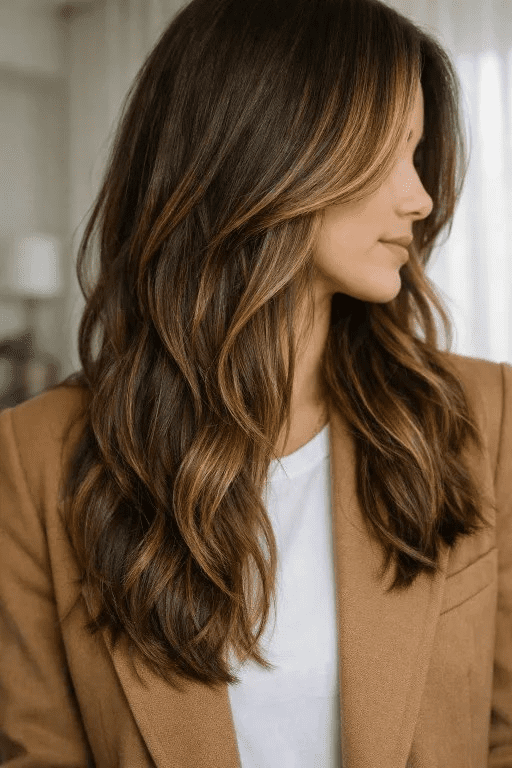
The combination of a warm money piece and sunlit balayage through the lengths creates a layered color result where the face is immediately brightened by the concentrated front highlights while the rest of the hair has a softer, more diffused warmth from the balayage behind it.
The distinction between a money piece that looks intentional and one that looks isolated is the connection between the face-framing piece and the rest of the color. When the balayage behind it shares tones from the same warm family as the money piece, the front highlights read as part of a continuous color story rather than a separate bright strip at the hairline.
What to ask your colorist: Ask for the money piece to be developed slightly lighter than the balayage through the lengths — the face-framing section should be the brightest point of the whole color, with the rest of the balayage serving as a warm context rather than an equally bright field. The tonal relationship between the two is what makes the overall result look intentional and multi-dimensional.
Maintenance tip: A root smudge at the base of the money piece is the most important technical step for maintaining the effortless quality of this look. Without it, the money piece develops a hard root line at six to eight weeks that makes the color look obviously highlighted and high-maintenance rather than naturally luminous.
Best for: Women who want the face-brightening impact of a money piece combined with the overall warmth of a full balayage — the most complete, dimensional warm brunette color result on this list.
16. Ultra-Subtle Sun-Kissed Balayage for Dark Brunettes
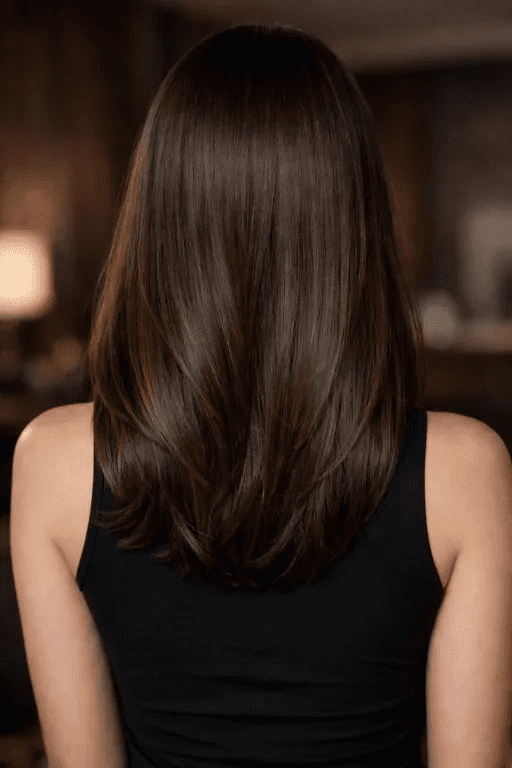
The ultra-subtle balayage is the option for women who want a color appointment that changes something without changing anything obvious — a result that makes the hair look healthier, richer, and more dimensional without anyone being able to point to what’s different.
On a very dark brunette base, even a small amount of lift creates significant visible change — which is why the ultra-subtle approach works better than it sounds. A whisper of warm dimension near the ends of dark hair catches light in a way that makes the overall tone look deeper and more rich rather than simply lighter.
The key technical element is the toner. The lightened sections on ultra-subtle balayage need to be toned with a warm brunette formula that sits close to the natural base — not a caramel or honey formula, but something even closer to the dark brown. The result reads as natural depth variation rather than highlighting.
What to ask your colorist: Ask for minimal lift — one to two levels above the natural base — applied only through the very ends and lowest sections of the hair. Tell your colorist the goal is to look like the hair has naturally lighter ends rather than to show obvious highlights. A warm, deep brunette toner over the lightened sections is essential.
Maintenance tip: A gloss treatment applied at home every six to eight weeks maintains the subtle warmth and adds the shine that makes ultra-subtle balayage look polished rather than flat. This is genuinely the lowest-maintenance color on the list — the subtle application means there’s very little to maintain between appointments beyond a sulfate-free shampoo and regular deep conditioning.
Best for: Women with very dark brunette hair who want the most conservative, natural-looking color experience possible — a result that’s entirely invisible as a color treatment and simply makes the hair look its absolute best.
Final Thoughts
Sun-kissed balayage works for brunettes because it respects what makes dark brown hair beautiful — the depth, the richness, the way it absorbs and reflects light differently than lighter shades — and adds just enough warmth and dimension to make those qualities more visible.
The best choice from this list isn’t necessarily the most dramatic one or the most popular one. It’s the one that matches how much maintenance you’re genuinely willing to do, how much visible change you want, and how close you want the result to look to your natural base.
If you’re unsure, start with the most subtle version of the direction you’re drawn to. A soft ribbon balayage can always be made brighter at the next appointment; going back from brighter to subtle requires growing out or toning down. The conservative starting point is always the one with more options.
Save your two or three favorites, note specifically what you like about the tone and the placement in each one, and bring that information to your colorist. Warm dimension that looks natural is the goal — and the more clearly you can communicate what natural looks like to you, the closer your result will be to the glow you’re looking for.
What should I ask for at the salon to get a true sun-kissed balayage result?
Three specific requests will get you to the right result: hand-painted balayage application rather than foils through the root section, a soft root shadow or root smudge to blur the connection between your natural dark root and the lighter mid-lengths, and a gloss finish at the end of the appointment to unify the tone and add the smooth, expensive quality that separates a great balayage from an average one. Tell your colorist you want warm dimension that reads natural in daylight — not high-contrast stripes, not obvious highlighting, but warmth that looks like it belongs in the hair. If you want brightness specifically around your face, add a soft money piece as a separate request — not a bold stripe, but a gradual, blended brightening in the face-framing sections.
How do I keep warm balayage from going brassy?
A gloss or toner refresh is the most effective tool — not just for preventing brassiness but for keeping the warm tone looking rich and intentional rather than faded and orange. The distinction between warm and brassy is tone quality: a warm caramel balayage maintained with regular glossing looks rich and deliberate; the same balayage left untoned for six months looks flat and orange. Use a color-safe, sulfate-free shampoo for every wash, apply a deep conditioning mask once a week to maintain the moisture that keeps highlighted sections looking vibrant, and use heat protectant consistently to prevent the heat damage that accelerates brassiness. If brassiness appears between appointments, a blue-based shampoo used once a week — not every wash — neutralizes the warm excess without overcooling the tone.
How often do brunettes need touch-ups with sun-kissed balayage?
Most sun-kissed balayage applied with a deep root and a blended mid-length transition looks genuinely good for ten to sixteen weeks without any touch-up. The key variables are how bright the highlights are and how low the application starts — brighter highlights closer to the root need more frequent appointments; softer highlights that start mid-shaft or lower can go significantly longer. Between full balayage appointments, a gloss or toner refresh at the six to eight week mark keeps the color looking fresh without requiring any additional lightening. That combination — a full balayage every four to five months with a gloss refresh halfway through — is the maintenance schedule that keeps sun-kissed brunette balayage looking consistently beautiful with the least overall effort.
Is sun-kissed balayage damaging to brunette hair?
Less damaging than most other lightening techniques, because the hand-painted application specifically avoids the root and scalp area, and the soft blending means less product overlap than traditional foil highlights. The ends — which are already the most porous and fragile section of the hair — do experience the most lifting, which is why consistent deep conditioning and heat protectant use are important maintenance practices rather than optional extras. A bond-building treatment used during the balayage appointment (ask your colorist to add one to the lightening formula) significantly reduces the structural damage from the lifting process and is worth the additional cost.
Can sun-kissed balayage work on very dark brown or black hair?
Yes, but with realistic expectations about the number of sessions required for the best result. Very dark brunette and black hair typically needs to be lightened more significantly before a warm balayage tone can be applied — attempting to go from very dark to caramel or honey in one session usually results in orange or uneven results rather than the smooth, warm dimension you’re aiming for. For very dark hair specifically, a two-session approach delivers a far more beautiful result: the first session lifts the sections to the appropriate level, the second session applies the toner and balayage blending. The ultra-subtle option (style 16) is the most achievable single-session result on very dark brunette bases.