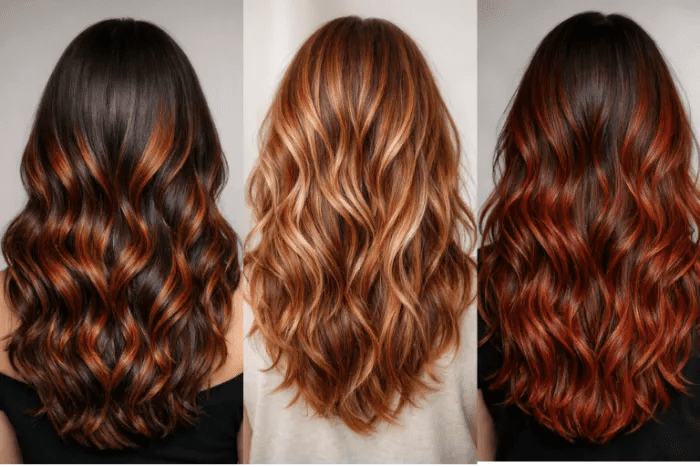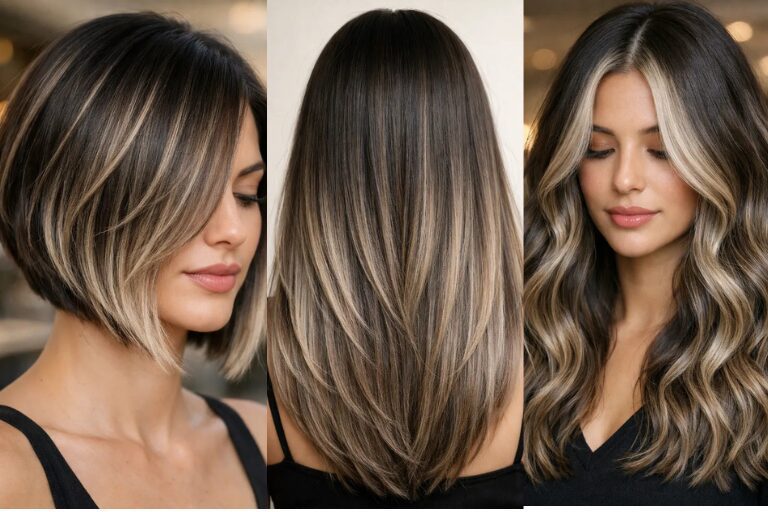
20 Light Brown Hair With Blonde Balayage Highlights That Look Soft and Natural
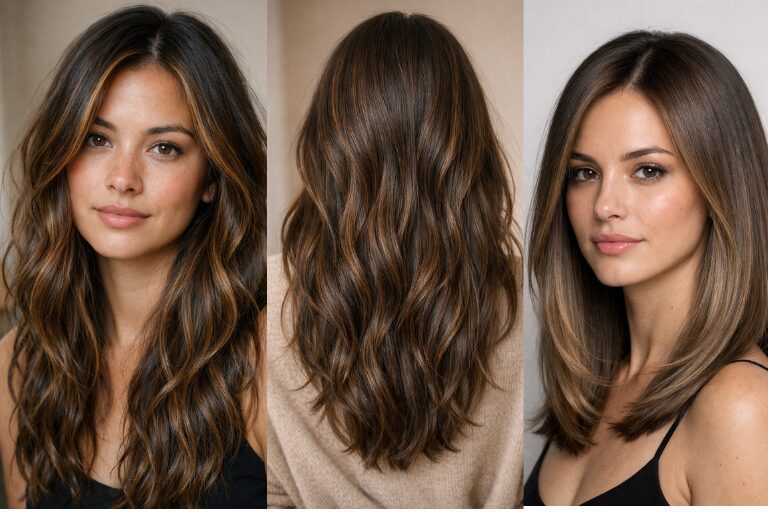
Light brown hair with blonde balayage highlights occupies a very specific and very coveted space in the color world — the space where “done” and “effortless” coexist so seamlessly that people can’t tell where your natural color ends and the highlight begins. It’s bright enough to feel like a genuine transformation but grounded enough that your roots look like they belong on your head rather than growing in from somewhere else entirely.
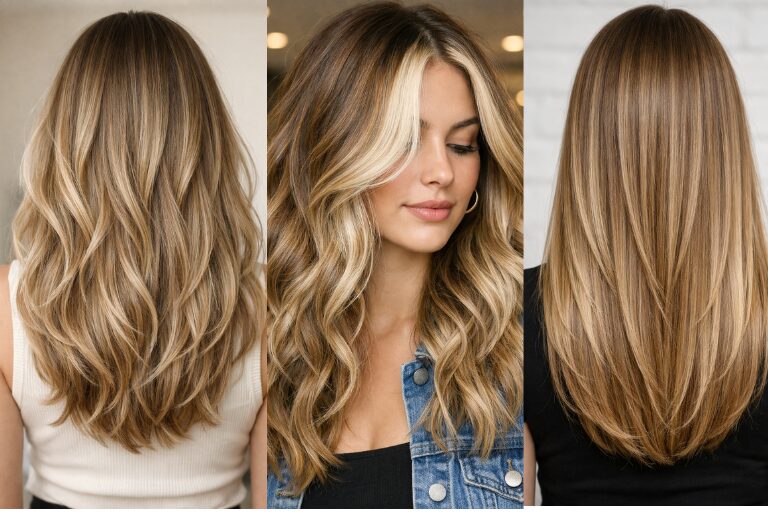
The reason this combination works so consistently well is the starting point. Light brown hair has enough natural warmth and depth to anchor the blonde highlights without creating harsh contrast. The blonde lifts and brightens while the light brown base keeps everything dimensional and real-looking. The result, when executed well, is hair that looks like the best version of what you were already working with — sun-kissed and luminous rather than colored.
What makes it even more appealing is the range of directions it can take. Keep the blonde creamy and neutral for a soft, barely-there effect. Go warmer with honey or golden tones for that buttery, sun-drenched quality. Lean cooler with mushroom bronde or ash-beige for a smoky, sophisticated finish. The base — your light brown — stays consistent. The blonde placement and tone do all the customization work.
These 20 light brown hair with blonde balayage highlights ideas cover every variation: every tone, every length, every lifestyle. Each one comes with exactly what to tell your colorist and how to maintain it at home so the result you walk out with keeps looking beautiful long after the appointment.
What to Know Before Your Appointment
Understanding a few key concepts before you sit in the colorist’s chair transforms the appointment from a hopeful guess into a precise, directed process.
Hand-painted balayage versus foil highlights. Traditional foil highlights are applied from the root outward in uniform sections. Balayage is hand-painted onto the surface of selected sections in a sweeping, freehand motion that starts lower on the hair shaft and focuses color on the mid-lengths and ends. The hand-painted approach is what creates the soft, blended, lived-in quality that makes balayage look so natural on light brown hair. Foil highlights tend to look more uniform — sometimes beautifully so — but they don’t produce the same organic, graduated effect.
Root melt versus root shadow. A root melt blends the darker root tone gradually downward into the blonde, creating a long, smooth transition that makes grow-out virtually invisible. A root shadow applies a slightly darker tone over the very root area after lightening to create a softer starting point for the color. On light brown hair, a root melt is typically the more seamless choice because the transition from the natural root to the blonde is softer and more gradual. A root shadow is useful when more definition at the root is desired.
Tone is everything. Before your appointment, decide whether you want warm, cool, or neutral blonde. Warm blonde (honey, golden, buttercream, caramel) works beautifully on light brown hair with warm or neutral undertones and requires a golden or honey-toned gloss to maintain. Cool blonde (ash, beige, mushroom, smoky) suits cooler complexions and hair with naturally ashy tones, and requires a purple or ash-toned shampoo and toner to maintain. Neutral blonde (creamy, vanilla, natural) sits between the two and works on the widest range of skin tones. Knowing this before your appointment means your colorist can choose the right developer, bleach, and toner from the start.
Face-framing placement changes the entire result. Where the brightest pieces are placed relative to the face changes how dramatically the color transforms the overall look. Soft face-framing that starts below the hairline and blends into the lengths reads as dimensional and natural. Bold money pieces at the very front read as high-contrast and intentional. Both are beautiful — but they’re different looks, and knowing which one you want before the appointment prevents the most common cause of color disappointment.
Maintenance is a two-part commitment. The lightening itself happens at the salon, but what happens between appointments determines whether the color stays looking fresh or fades, yellows, or loses its dimension. A color-protecting shampoo, a toning conditioner or gloss used regularly at home, and occasional salon gloss treatments are the tools that keep light brown hair with blonde balayage looking its best between visits.
20 Light Brown Hair With Blonde Balayage Highlights
1. Face-Framing Blonde Ribbons on Layered Hair
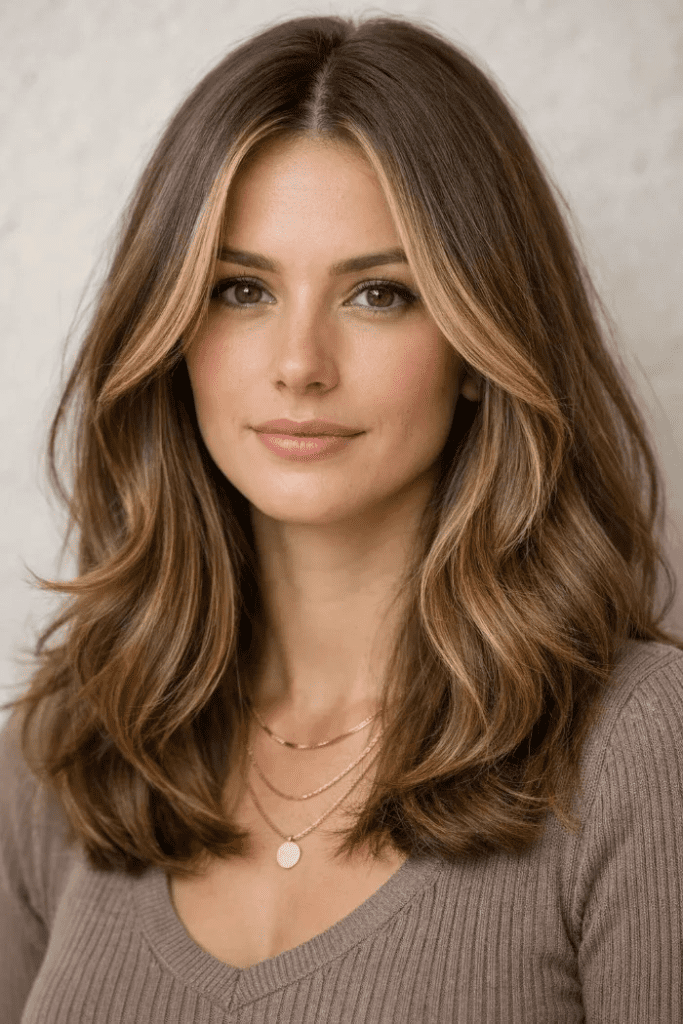
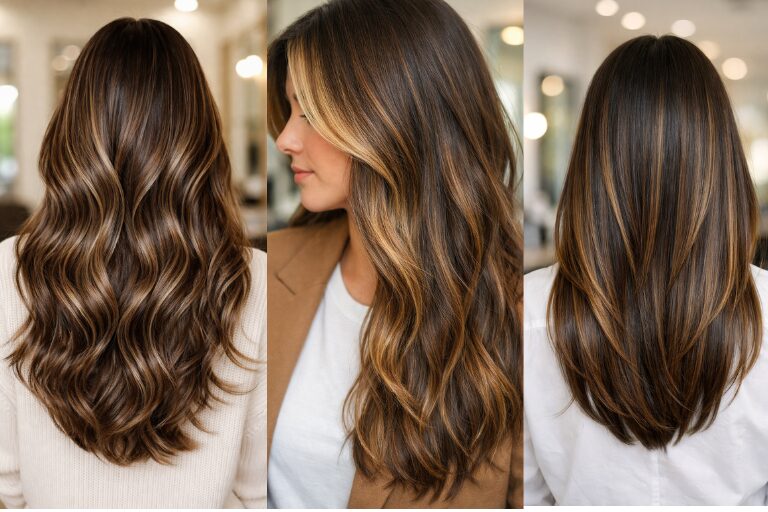
Face-framing is one of the most impactful things a colorist can do with balayage placement, and this style uses it brilliantly. Rich light brown roots stay deep and dimensional through the back and mid-sections, while honey-blonde ribbons are painted specifically through the front sections — the pieces that frame the face, sit near the eyes, and catch the light every time the hair moves. The effect is immediate and flattering: the brightness draws attention directly to the face while the deeper back keeps the overall color looking natural.
The layered cut is an essential partner to this color placement. Layers reveal the face-framing ribbons as the hair moves, preventing the color from sitting flat and static. A blended money piece at the very front that melts smoothly back into the balayage ensures the brightest pieces grow out gracefully rather than producing a hard line at the face-framing section.
Ask your colorist for: A blended money piece at the front that transitions smoothly into the balayage behind it — not a chunky, isolated section but a graduated brightening that peaks at the face-framing pieces. Honey-blonde ribbons rather than wide, saturated sections for the most natural result.
Ask your stylist for: Long, blended layers that start around the cheekbone and flow through the lengths. The layers should reveal the face-framing color as the hair moves rather than hiding it in one static position.
At-home maintenance: A warm-toned toning conditioner used every two to three washes keeps the honey-blonde ribbons glowing rather than fading to a flat, dull yellow. A shine spray applied to dry hair amplifies the warmth of the tones beautifully.
2. Sun-Kissed Balayage on Long Waves
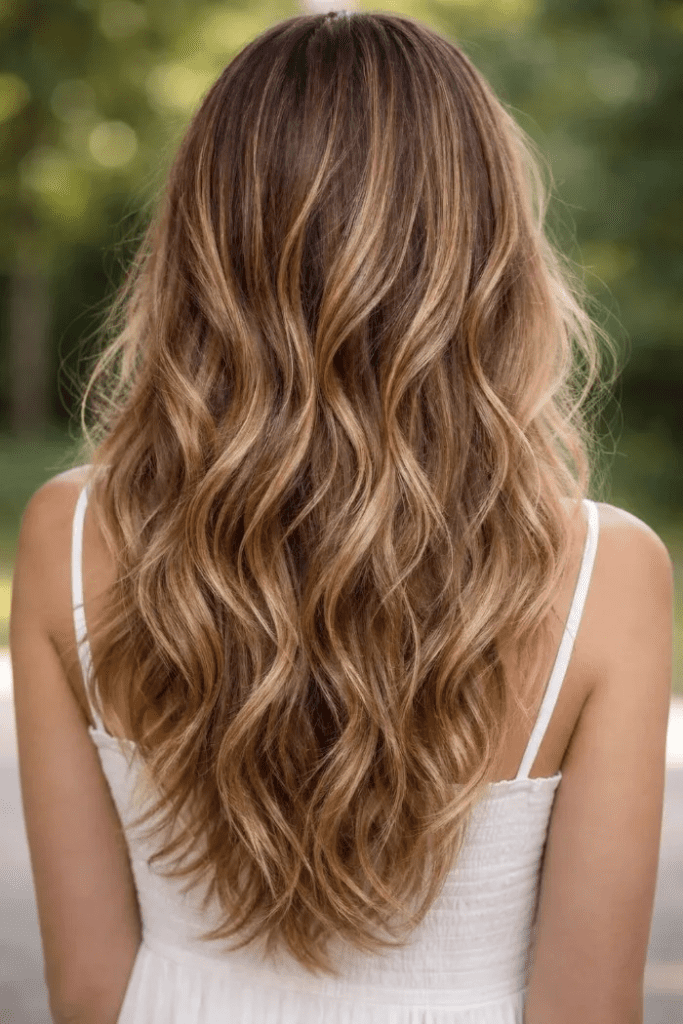
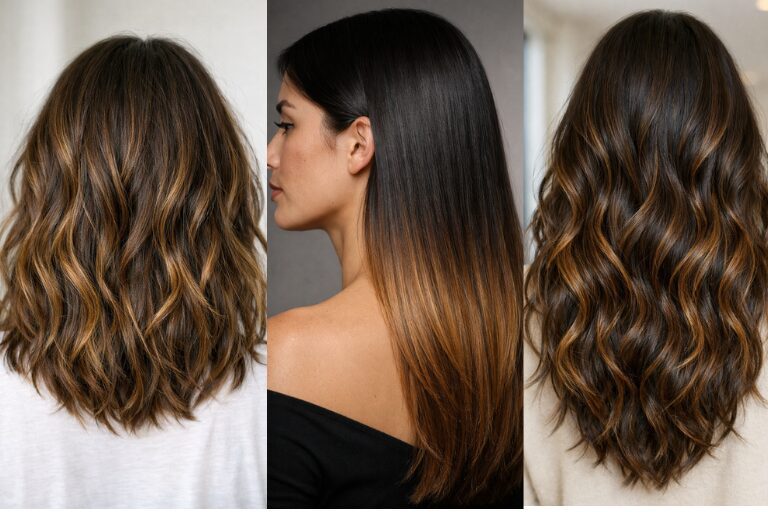
Sun-kissed is the word people use when they want balayage that looks like it happened on a beach rather than in a salon — and this long wave style achieves that quality almost perfectly. The blonde is concentrated from the mid-length to the ends, which creates a natural gradient that mimics the way sun naturally lightens hair: starting with the most exposed sections and leaving the root and underneath naturally darker.
The long waves are integral to making this work. Straight hair shows the balayage placement as a horizontal line through the lengths. Waves move that placement up and down through the hair, creating a soft, diffused brightness that truly reads as natural sunlighting.
Ask your colorist for: Balayage that begins at or below the mid-length — resist the urge to start it higher, which produces a more traditional highlighted look rather than the sun-kissed effect. Brighter tips with a soft root melt that extends well below the root. A warm gloss applied as a finishing step for the most luminous, natural-looking shine.
Ask your stylist for: Long layers that support loose wave formation and prevent the lengths from looking heavy or one-dimensional. The cut should enhance the movement that makes this color placement sing.
At-home maintenance: A golden or warm-toned gloss treatment done at home every six to eight weeks maintains the sun-kissed warmth and prevents the ends from fading to a dull, ashy finish.
3. Ribbon Bronde Balayage with Defined Waves
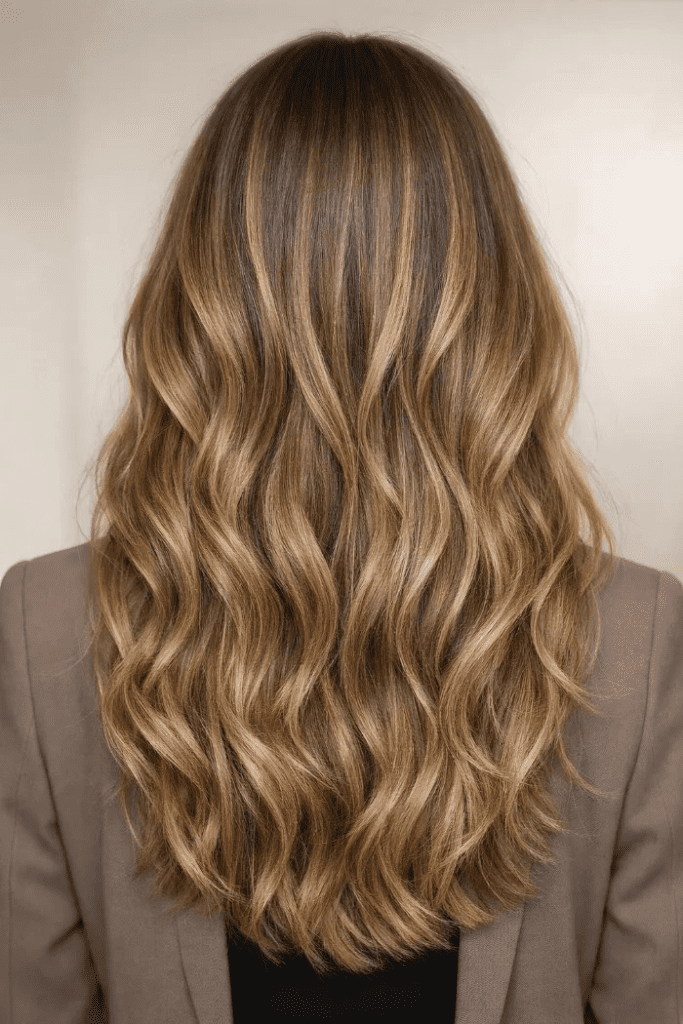
Ribbon balayage describes a specific placement technique where the color is painted in wider, more visible sections rather than fine, barely-there strands. On light brown hair, ribbon bronde balayage creates bold dimension that’s still blended enough to read as natural — the ribbons are wide enough to be visible and impactful but soft enough at the edges that they don’t look like isolated chunks of color.
Defined waves amplify this effect significantly. The wave pattern creates peaks and valleys through the hair that catch light at different angles, making the ribbon placement look three-dimensional rather than flat. The result is hair that looks genuinely fuller and more abundant — one of the best secondary benefits of a well-executed ribbon balayage.
Ask your colorist for: Wide, blended ribbon placement through the back and mid-sections, with slightly finer, more concentrated pieces at the face-framing front sections. The ribbons should be hand-painted rather than foiled for the softest, most natural-looking edges. A toner applied after lightening keeps the ribbon color creamy rather than brassy.
Ask your stylist for: A cut that supports defined wave formation — either through natural texture-friendly layering or a structure that holds a blowout wave beautifully.
At-home maintenance: A neutral toning conditioner used every few washes prevents the ribbons from developing a warm, brassy quality. A touch-up toner every eight to twelve weeks at the salon refreshes the bronde dimension.
4. Sleek Low Bun with Blonde Accent Pieces
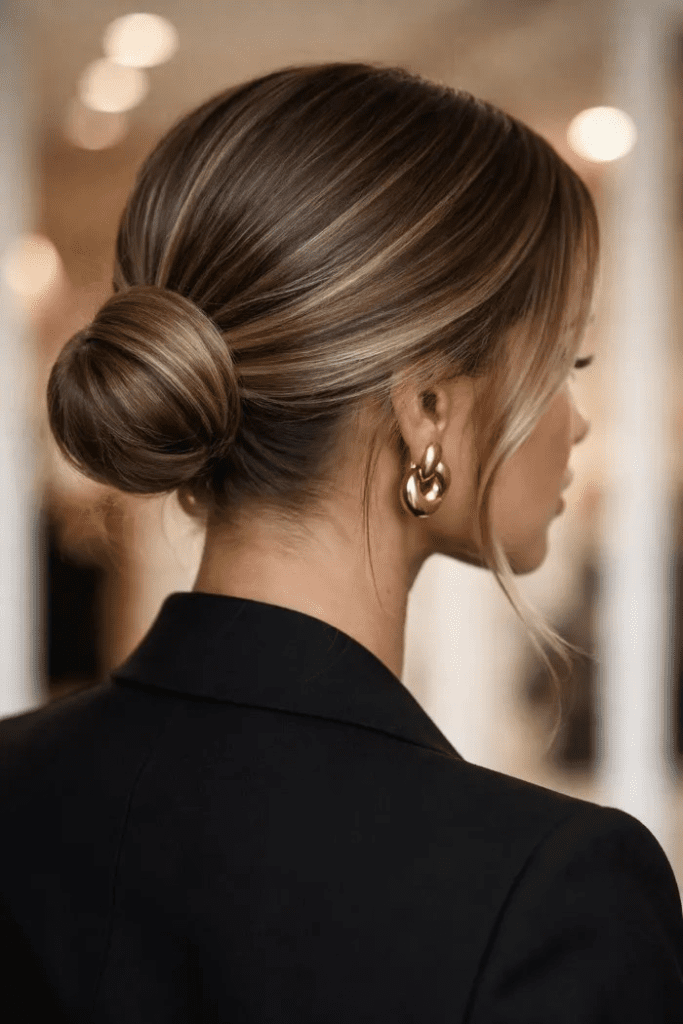
The sleek low bun is a style proof point that balayage isn’t just for wearing hair down. In a polished low bun, the blonde accent pieces surface exactly where light hits the hair most directly — the crown, the pulled-back sections near the face — creating a style that looks simultaneously refined and luminous. The contrast between the deeper roots at the crown and the blonde pieces visible at the sides and front gives a low bun genuine color dimension that a single-tone hair color simply can’t achieve.
This style is also one of the most flattering demonstrations of why face-framing placement matters so specifically. The blonde pieces that would frame the face when worn down continue to catch light and frame the face when the hair is up — meaning the colorist’s most important work is always visible.
Ask your colorist for: Face-framing blonde pieces that sit specifically in the sections that will be visible when the hair is pulled back — the hairline, the sections near the temples, and the pieces that naturally fall around the face regardless of the updo style.
Ask your stylist for: A smooth, polished low bun technique that creates a clean surface through the crown while allowing the face-framing pieces to be pulled loose and styled around the face.
At-home maintenance: A smoothing cream applied before pulling the hair back keeps the surface of the bun sleek and prevents frizz from disrupting the polished finish. A light shine spray over the whole style gives the blonde accent pieces their most luminous, eye-catching quality.
5. Smooth Layers with Beige Blonde Melt
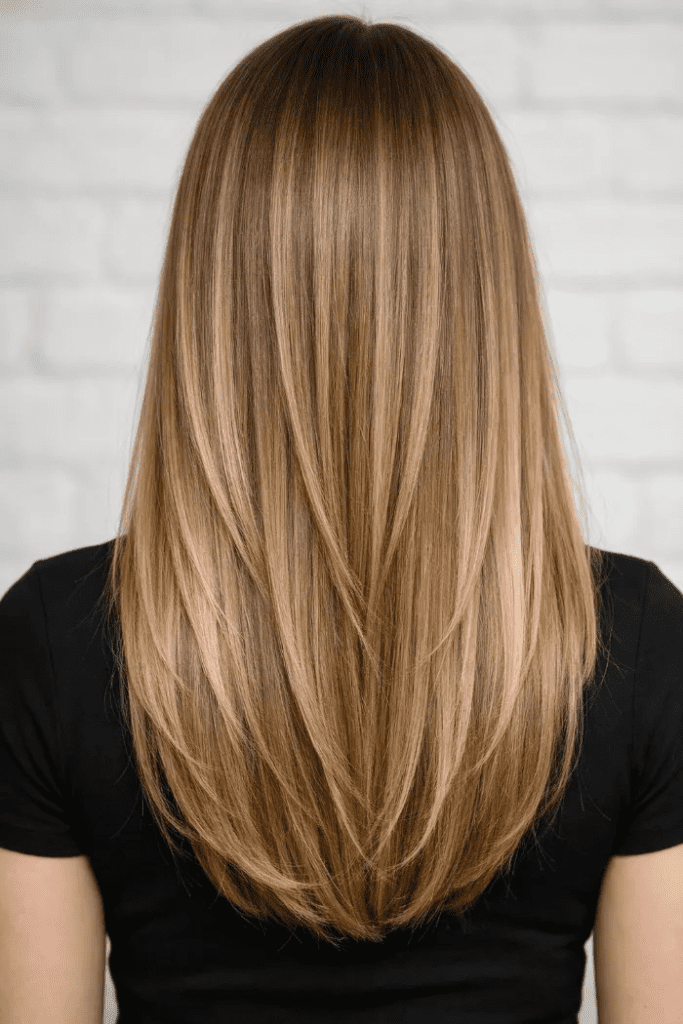
The beige blonde melt on smooth, flowing layers is one of the most universally flattering expressions of light brown hair with balayage — because beige blonde sits at the neutral intersection of warm and cool, which means it complements an extraordinary range of skin tones without requiring the aggressive toning maintenance that icy or very warm blonde does.
The melt technique specifically — where the darker root tone is dissolved gradually into the beige blonde below rather than transitioning sharply — gives this style its signature effortless quality. The grow-out looks like a natural gradient rather than an obvious regrowth line, and the smooth layers give the color dimension room to breathe and move.
Ask your colorist for: A beige-blonde melt with subtle face framing — the emphasis should be on the melt quality (the smoothness and length of the transition) rather than on the brightness of the face-framing pieces. Long, smooth layers from the colorist’s perspective are secondary to the melt placement.
Ask your stylist for: Long, movement-friendly layers that keep the overall silhouette smooth and flowing rather than choppy or heavily textured.
At-home maintenance: A neutral or slightly cool toning conditioner maintains the beige quality and prevents warmth from shifting the color toward a more golden or brassy finish.
6. Beige Blonde Balayage on Soft Mid-Length Waves
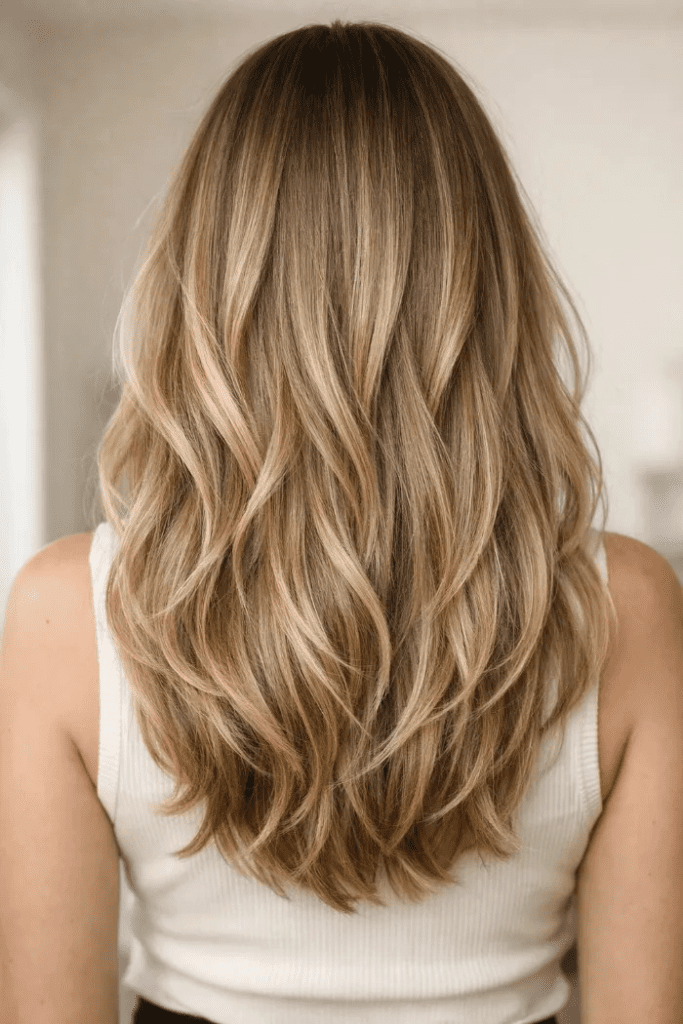
Mid-length hair — sitting between the collarbone and the shoulder — is one of the most versatile canvases for balayage because it’s long enough for the color placement to be fully visible and impactful but short enough that the upkeep is more manageable than at longer lengths. Beige blonde at this length is particularly flattering because the brightness sits right at the most visible zone of the hair — the section that frames the face and shoulders and catches light at eye level.
The soft waves through the mid-length create the blended, casual quality that makes this style look so naturally beautiful. Waves prevent any balayage from looking mechanical or uniform — they introduce just enough movement and irregularity that the color looks like it happened organically.
Ask your colorist for: Hand-painted beige blonde pieces with a root shadow that creates a defined but soft starting point for the color. Ask specifically to stretch your appointments to 10 to 12 weeks — a well-executed root shadow on a medium-depth light brown base makes this very achievable.
Ask your stylist for: A mid-length cut with light internal layers that support soft wave formation. The waves should be effortless-looking rather than tightly curled or overly structured.
At-home maintenance: A beige or neutral toning conditioner used every two to three washes maintains the cool-neutral quality of the beige tone. Avoid very warm or golden toning products, which will shift the beige toward a more honey or caramel result.
7. Beige-Blonde Highlights with Lived-In Texture
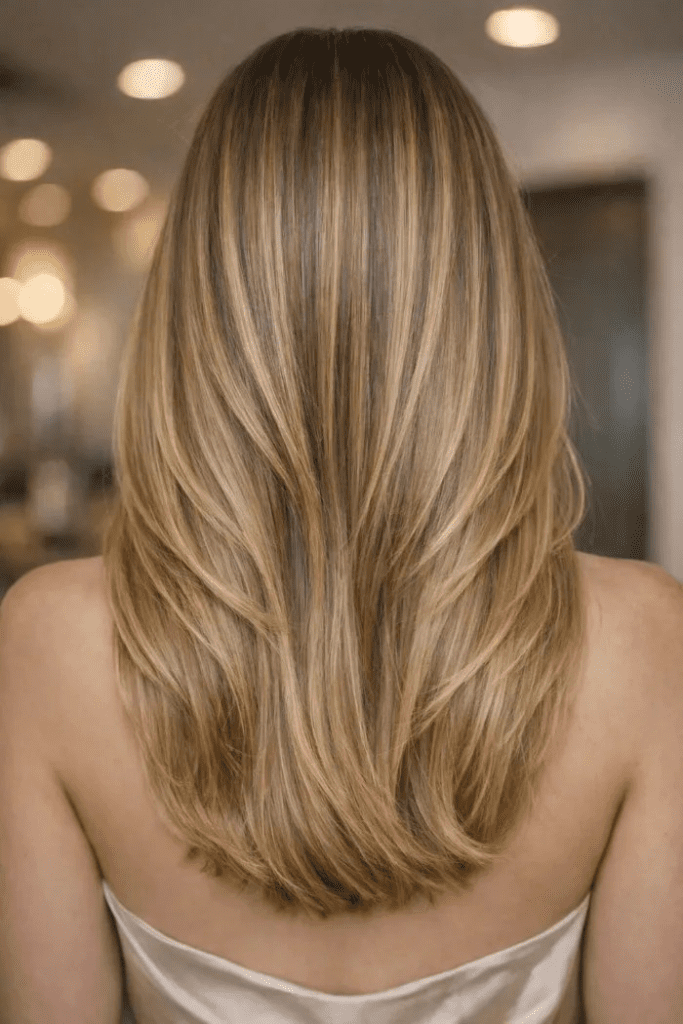
Lived-in texture and balayage color were designed for each other. The deliberate imperfection of a lived-in style — the soft waves, the piecey ends, the slightly undone quality — creates the ideal environment for balayage highlights to look their most natural. When the highlights are slightly more visible than a barely-there balayage but still beautifully blended, the dimensional effect is maximized.
The key distinction in this style is that the highlights follow the wave pattern of the hair — they’re placed specifically in the sections that sit at the surface of the waves, where they’ll catch light, rather than randomly distributed throughout the hair. This wave-matching placement is what separates a naturally dimensional result from one that looks evenly highlighted.
Ask your colorist for: Beige-blonde highlights that are placed specifically at the surface sections of the natural wave pattern — ask your colorist to do a dry consultation first so they can see where the waves naturally fall before beginning placement. A neutral gloss applied as a final step.
Ask your stylist for: A cut and styling approach that supports lived-in, organic texture rather than smooth, polished styling. The more effortless the finish, the better the color placement shows.
At-home maintenance: A large-barrel curling iron used to create the lived-in wave, followed by a light texture spray scrunched through the lengths, is the fastest route to this style’s signature finish. A neutral gloss every eight weeks keeps the highlights dimensional rather than flat.
8. Blunt Bob with Honey-Beige Balayage
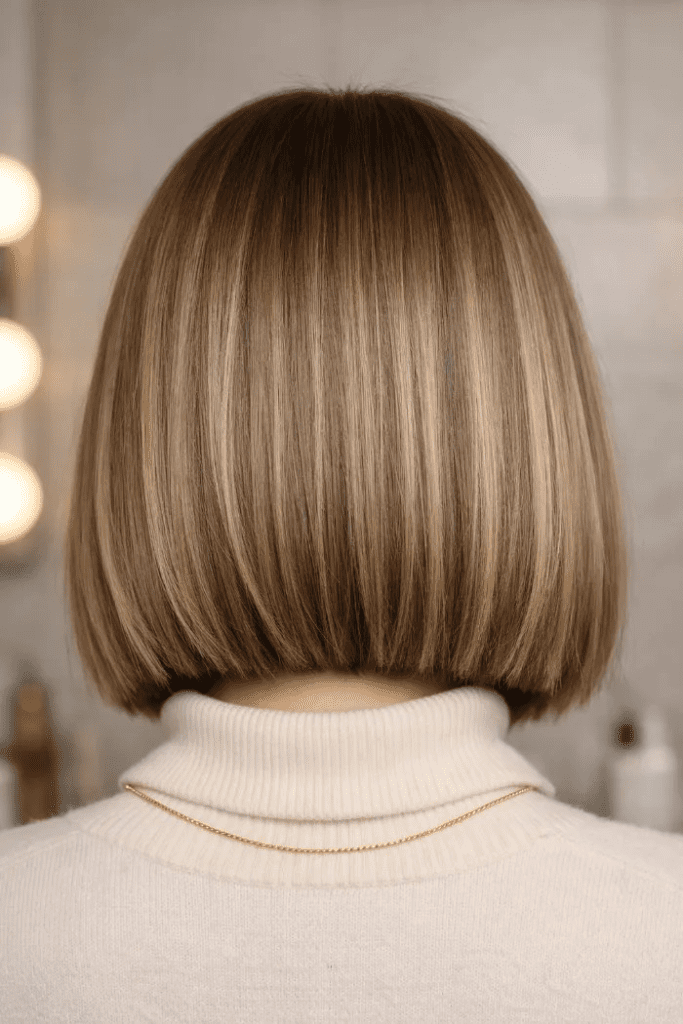
The blunt bob and honey-beige balayage is one of the most consistently sophisticated color and cut combinations available at shorter lengths. The blunt hemline creates a dense, full appearance at the ends — a structural trick that makes fine or medium hair look thicker. The honey-beige balayage adds warmth and dimension that prevents the blunt cut from looking flat or one-dimensional. Together they create a short style that’s both structurally and chromatically interesting.
Honey-beige specifically is one of the most flattering blonde tones on light brown hair because it sits in the warmest range of the neutral blondes — golden enough to be brightening, beige enough to stay sophisticated. It photographs beautifully and looks warm and healthy in natural light.
Ask your colorist for: Fine, hand-painted honey-beige pieces rather than chunky highlights — the fineness is what keeps this looking natural rather than highlighted at a shorter length where every placement decision is more visible. A toner applied every six to eight weeks between balayage appointments maintains the honey-beige quality.
Ask your stylist for: A clean, blunt hemline — the precision of the cut is what makes the color look intentional and expensive. Minimal internal layering to preserve the density and fullness of the blunt bob shape.
At-home maintenance: A warm honey or golden-toned toning conditioner used weekly maintains the warmth of the honey-beige tone. A heat protectant used before any hot tool work preserves the health of the highlighted ends, which are more fragile than the natural base.
9. Buttercream Blonde Balayage with Face Frame
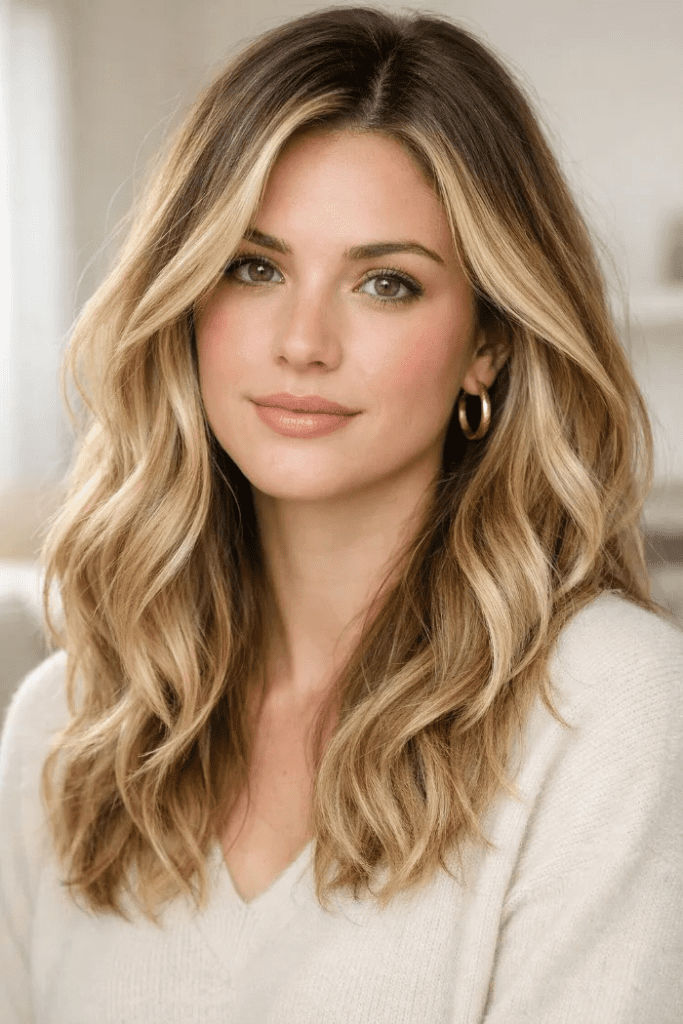
Buttercream blonde is the warmest, most luminous option on this list — a rich, creamy yellow-blonde that sits at the warmest end of the neutral blonde spectrum. On light brown hair, it creates an immediate glow that reads as sun-drenched and healthy. The brighter face-framing pieces lift the entire look, drawing light and warmth directly toward the complexion in a way that’s universally flattering on warm and neutral skin tones.
The key to making buttercream blonde work rather than look brassy is keeping the base color present and dimensional rather than lightening the whole head to the same warmth. The light brown base provides the contrast that makes the buttercream blonde look creamy and intentional rather than over-processed.
Ask your colorist for: Buttercream blonde concentrated specifically at the face-framing sections and through the top layer of the hair, with a deeper light-brown base visible underneath and at the roots. Keep the base a touch deeper than feels necessary — the contrast is what makes the buttercream look so luminous. A golden or honey-tinted gloss as a final step.
Ask your stylist for: Loose waves that reveal the face-framing pieces as the hair moves. The buttercream color is warmest and most beautiful in motion, so the cut and styling should support natural movement.
At-home maintenance: A shine spray or glossing serum applied to dry hair every few days amplifies the warm luminosity of buttercream blonde significantly. A warm-toned gloss treatment every six to eight weeks refreshes the creaminess and prevents the tone from fading flat.
10. Cool-Neutral Mushroom Bronde Balayage
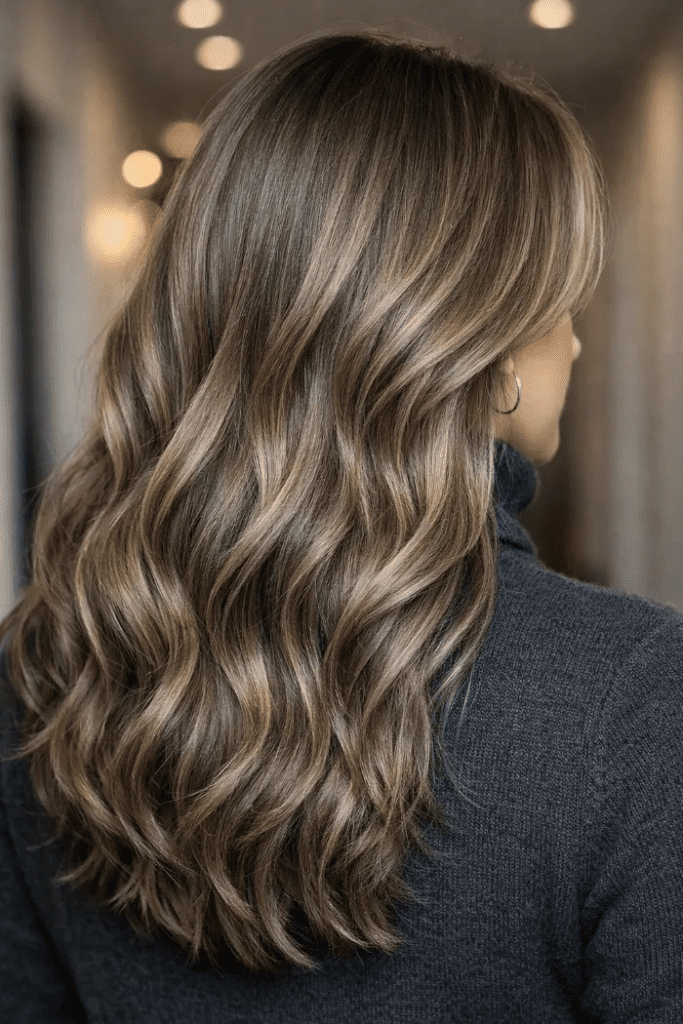
For women whose hair consistently pulls warm and brassy between appointments, cool-neutral tones in general and mushroom bronde specifically are a revelation. Mushroom bronde sits at the intersection of smoky beige, cool brown, and blonde — it has enough blonde in it to brighten and lift the light brown base, but its cool, ashy undertone prevents the yellow-orange brassiness that warmer blondes are prone to developing.
On waves, the mushroom bronde balayage creates a smoky, sophisticated dimension that photographs beautifully in both natural and artificial light. It’s one of the most editorial blonde options on this list — the cool, controlled tone has a quiet luxury quality that warmer blondes often lack.
Ask your colorist for: An ash-beige or cool-neutral toner applied over the balayage sections — this is the step that creates the mushroom quality and prevents brassiness. A soft root melt in a cool-brown shade ensures the grow-out stays consistent with the overall cool aesthetic.
Ask your stylist for: Waves that have some definition and structure rather than very loose, casual movement — the architectural quality of a more defined wave complements the sophisticated, editorial nature of the mushroom bronde tone.
At-home maintenance: A blue or ash-toned shampoo used once a week is essential for maintaining cool-neutral tones. Purple shampoo alone is sometimes insufficient for very warm-pulling hair — a blue-based formula addresses the orange undertones more directly.
11. Creamy Blonde Money Piece on Soft Waves
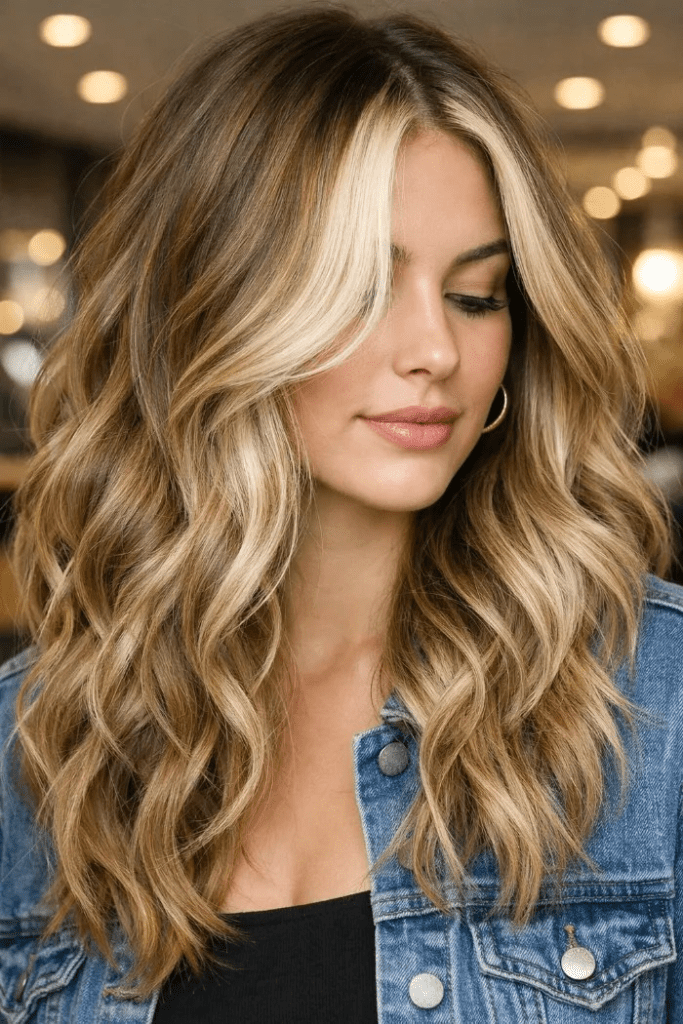
The money piece — a concentrated section of noticeably brighter blonde placed specifically at the front sections that frame the face — is one of the most impactful single color techniques available because it places brightness at exactly the point where it has the most effect on the overall look. When the brightest pieces in the hair are the ones closest to the face, the entire face appears more lit and luminous by association.
On a soft wave style with a light brown base, the creamy money piece creates an immediate, striking brightening effect at the front while the rest of the hair remains more naturally dimensional. The soft waves prevent the money piece from looking like an isolated, boxy streak and instead blend it organically into the rest of the hair with each movement.
Ask your colorist for: A soft root melt specifically on the money piece sections — this is the most important technical detail for ensuring the money piece grows out gracefully rather than producing an obvious line at the hairline. The money piece should be creamy and bright but still blend back into the balayage behind it rather than sitting as a completely separate element.
Ask your stylist for: Soft waves that start at the mid-length rather than the root, which keeps the crown area slightly smoother and lets the money piece sections be clearly visible against the slightly deeper root area.
At-home maintenance: The money piece is typically the lightest section of the hair and the most prone to brassiness and fading. A purple toning conditioner used weekly on just the money piece sections keeps them bright and creamy rather than yellow.
12. Curly Balayage with Golden Highlights
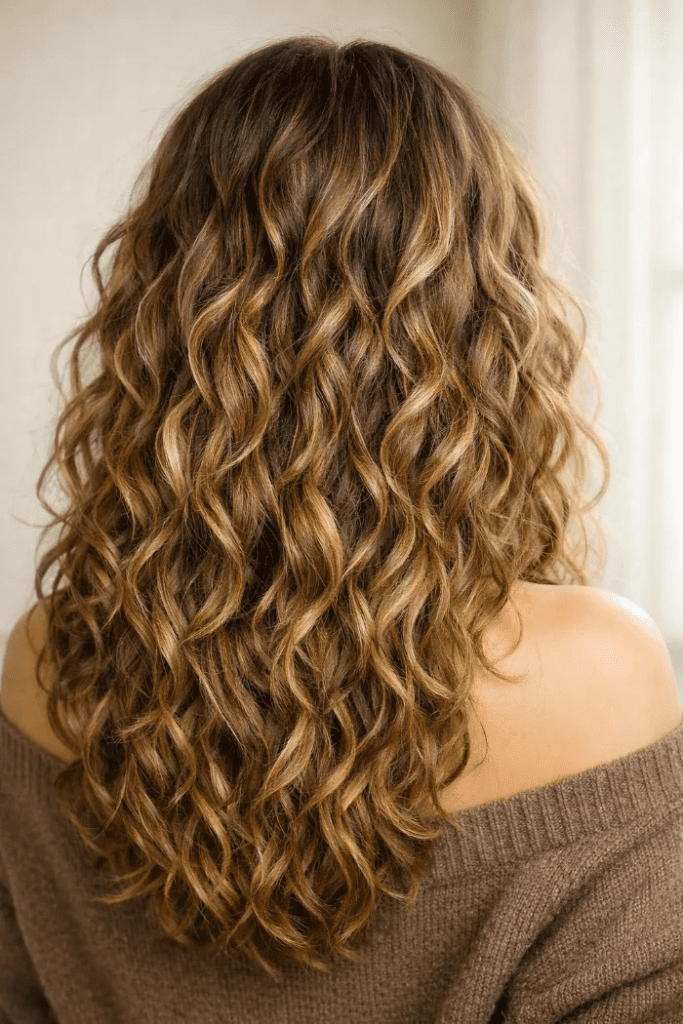
Balayage on curly hair requires a specific approach that’s meaningfully different from balayage on straight or wavy hair — and when it’s done correctly, the result is more beautiful than almost any other hair color combination available. The curl pattern creates natural peaks and valleys through the hair. The outer surface of each curl receives more light and also more bleach during the balayage process, which creates a gradient within each individual curl — darker at the root, brighter at the tip — that makes the overall curl pattern look defined, shiny, and utterly three-dimensional.
Golden blonde specifically works beautifully with the warmth that many light brown curly hair types naturally possess, enhancing rather than fighting the hair’s inherent tonal quality.
Ask your colorist for: Balayage painted specifically on the outer curl pattern — the raised sections of each curl rather than being worked into the inner sections. The placement should follow the curl’s natural direction. A warm, golden-tinted toner applied after lightening enhances the golden quality without making the color look brassy.
Ask your stylist for: A curl-specific cut — either a dry cut or a cut performed with the curl in its natural, unmanipulated state. The curl pattern should be the foundation of every decision the stylist makes.
At-home maintenance: Curly hair tends to be drier than straight or wavy hair, and lightened curly hair even more so. A deeply hydrating conditioning mask used weekly is non-negotiable for keeping curly balayage looking healthy and defined rather than dry and frizzy.
13. Soft Bronde Balayage on Long Layers
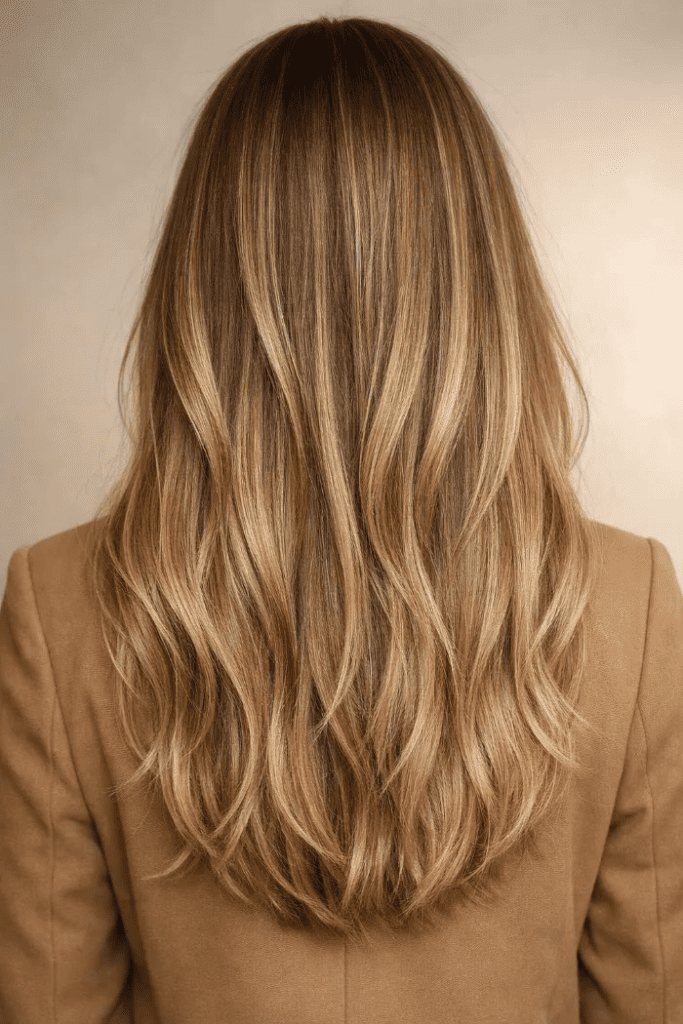
Long layers are arguably the most generous canvas for soft bronde balayage — there’s simply more space for the color to move, graduate, and develop the dimensional quality that makes balayage so compelling. At longer lengths, wide, blended ribbon placement creates a natural-looking result that would look too chunky or heavy at shorter lengths, and the color has room to transition beautifully from the natural light brown root through to the softer bronde ends.
The neutral gloss that should be applied after lightening at longer lengths is particularly important because without it, the wide ribbon placement can look uneven or develop warm patches at different rates.
Ask your colorist for: Wide, blended ribbon placement specifically rather than fine highlights — at longer lengths, the wider sections create more visible dimension and movement in the hair. A neutral gloss applied as a finishing step to unify the result and prevent any section from looking streaky or uneven.
Ask your stylist for: Long layers that start below the chin and flow through the lengths, creating movement that reveals the ribbon balayage from multiple angles.
At-home maintenance: A neutral toning conditioner used every two to three washes keeps the bronde quality from shifting warm. At longer lengths, a monthly deep conditioning treatment preserves the integrity of the highlighted sections.
14. Deeper Shadow Root with Beige Balayage
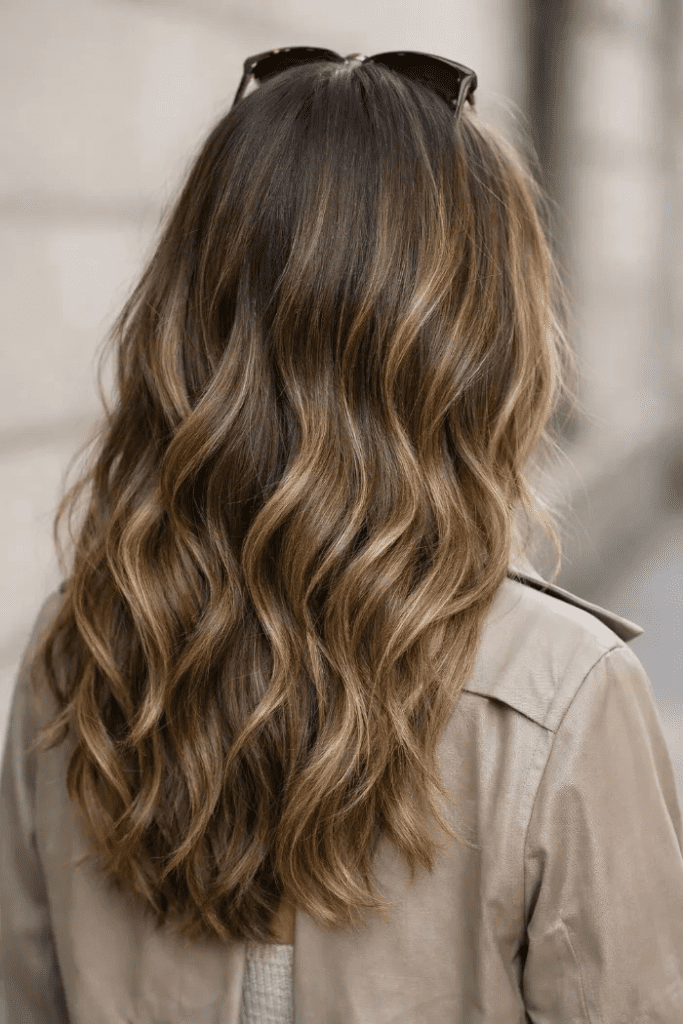
The deeper shadow root is a deliberate stylistic choice rather than a transitional technique — the root is specifically darkened slightly beyond its natural shade to create a more defined, dramatic starting point for the beige balayage below. The result is a style with a higher degree of visible contrast between the root and the blonde that still grows out beautifully because the root area is designed to look intentionally deeper.
This is one of the most low-maintenance balayage options precisely because the root growth reinforces rather than disrupts the design. The darker it grows, the more it looks like exactly what the original color intended.
Ask your colorist for: A shadow root that’s slightly darker than your natural light brown base — a medium or medium-dark brown applied specifically to the root section before or after the balayage process. The beige balayage below should start low and progress gradually from the shadow root tone to a lighter beige at the ends.
Ask your stylist for: A cut that keeps the shadow root visible and intentional-looking — styles that pull the hair away from the face, like a half-up look, show off the contrast between the deeper root and the lighter balayage particularly well.
At-home maintenance: Avoid applying any toning or lightening product near the root area between appointments — the integrity of the shadow root is what makes the whole style work. A beige or neutral toning conditioner through the mid-lengths and ends only.
15. Half-Up Claw Clip with Balayage Dimension
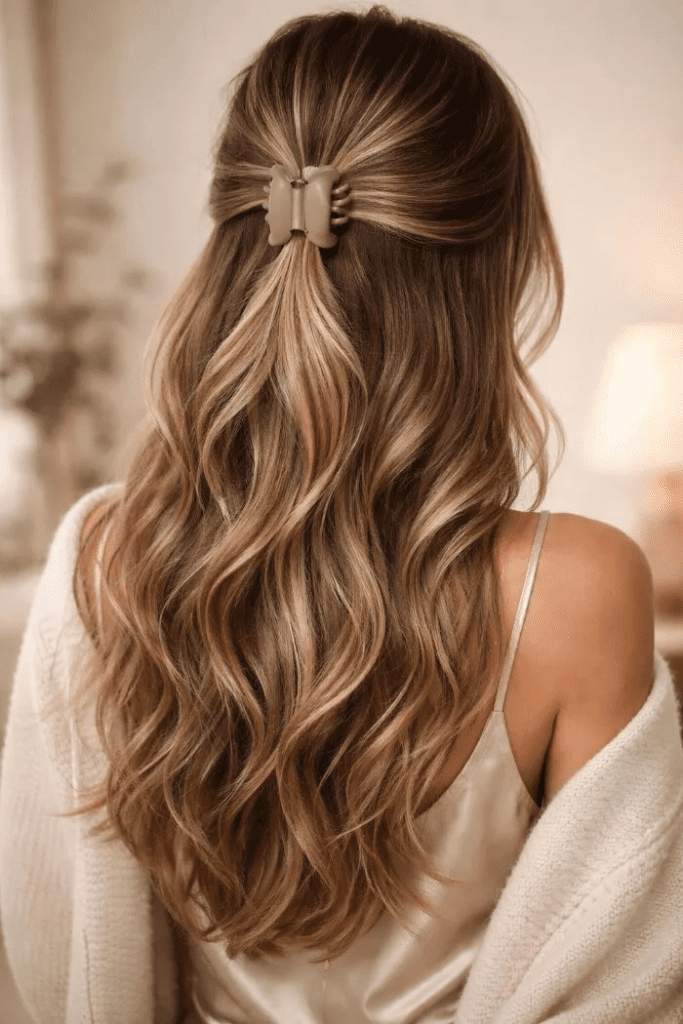
Balayage is one of the few color techniques that looks completely different — and sometimes even better — depending on how the hair is styled. In a half-up claw clip, the darker roots are pulled up and gathered at the crown, creating a deep, rich base at the top of the style while the lighter balayage lengths fall freely below. The contrast between the deeper crown and the lighter falling lengths creates a natural, dimensional gradient that looks expensive and intentional with zero extra effort.
This styling approach also happens to be one of the best ways to show a colorist exactly what your balayage placement should look like — the half-up position reveals the entire color gradient from root to end simultaneously.
Ask your colorist for: Extra brightness through the mid-lengths and ends specifically — since this is a style you’ll frequently wear half-up, the sections that will be most visible in a claw clip are the falling lengths rather than the crown, so that’s where the brightest placement matters most.
Ask your stylist for: A half-up styling technique that creates a slight lift and looseness at the crown rather than pulling everything flat. A loose wave added before clipping gives the falling lengths their most beautiful, dimensional appearance.
At-home maintenance: A light wave added with a large-barrel curling iron before clipping up takes about three minutes and dramatically enhances how the balayage shows in this styling position.
16. Beveled Bob with Bright Face Frame
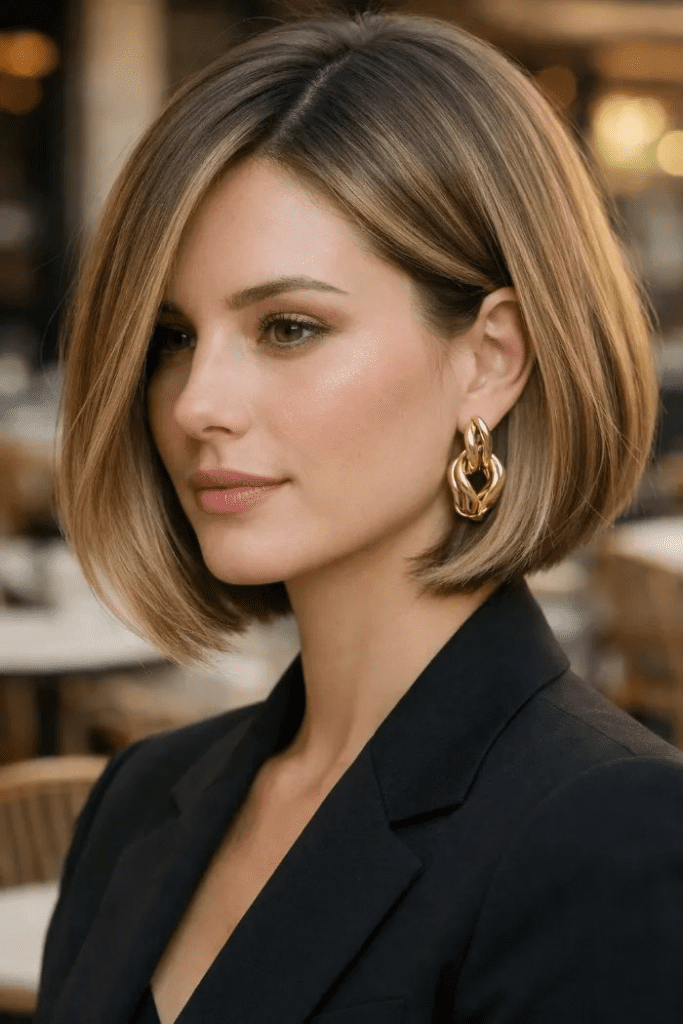
The beveled bob is a sophisticated short style where the ends are cut to curve slightly inward rather than hanging straight — this creates a clean, polished edge that frames the jawline in a particularly flattering way. With a bright face-framing balayage, the beveled bob becomes even more dynamic: the blonde pieces sit at the ends of the frame, adding brightness to the most visible section of the cut and making the whole style look more expensive and intentional.
The beveled edge also makes the blonde pieces at the ends look cleaner and more precise than they would on a straight or textured hemline — the inward curve creates a defined zone where the brightest color sits.
Ask your colorist for: A side-swept face-framing that’s slightly brighter than the rest of the balayage — concentrated at the sections that frame the face and visible at the beveled ends of the bob. A soft beige toner applied as a finishing step keeps the face-framing pieces looking modern rather than golden or brassy.
Ask your stylist for: A clean bevel underneath the hemline — the inward curve should be consistent and precise all the way around the bob. This detail is what elevates the style from a standard bob to a beveled bob.
At-home maintenance: Beveled bobs require more frequent trims than most styles — every four to six weeks — to maintain the clean, precise edge that makes the style look so polished.
17. Subtle Blonde Balayage with Curtain Layers
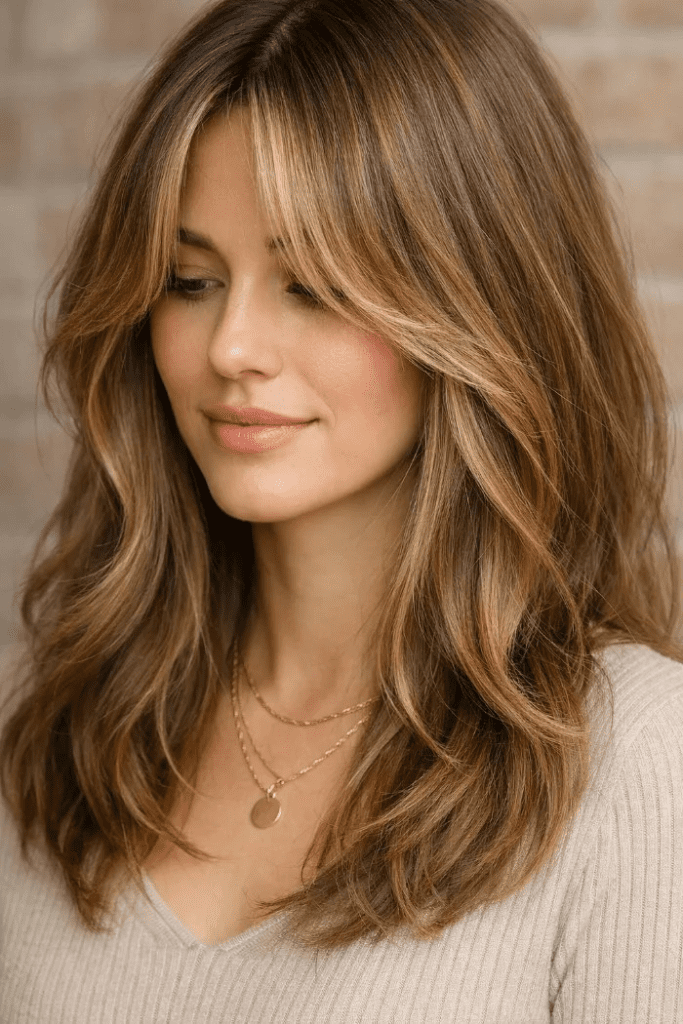
For women who want dimension rather than drama, the subtle blonde balayage with curtain layers is the ideal choice. The light brown base remains dominant throughout — there’s no dramatic brightening or high-contrast placement. Instead, the blonde highlights are placed delicately around the face in curtain-style sections and through the layers, creating a softness and luminosity that reads as “healthy and dimensional” rather than “highlighted.”
This is the balayage for the woman whose colleagues will notice her hair looks particularly good without being able to articulate exactly why — the subtlety of the placement is intentional and sophisticated.
Ask your colorist for: Very fine, soft blonde placement around the face and through the layers only — avoid highlighting through the back and underneath sections, which would shift the result from subtle to more visible. The goal is a barely-there brightening that enhances the light brown rather than replacing it.
Ask your stylist for: Curtain-style layers that part naturally in the center and flow on either side of the face. These layers frame the face beautifully and showcase the subtle face-framing highlights in the most flattering possible way.
At-home maintenance: A gloss treatment every six to eight weeks is the primary maintenance requirement for this subtle approach — it keeps the fine highlights looking fresh and dimensional without the need for frequent re-lightening appointments.
18. Textured Lob with Rooty Blonde Blend
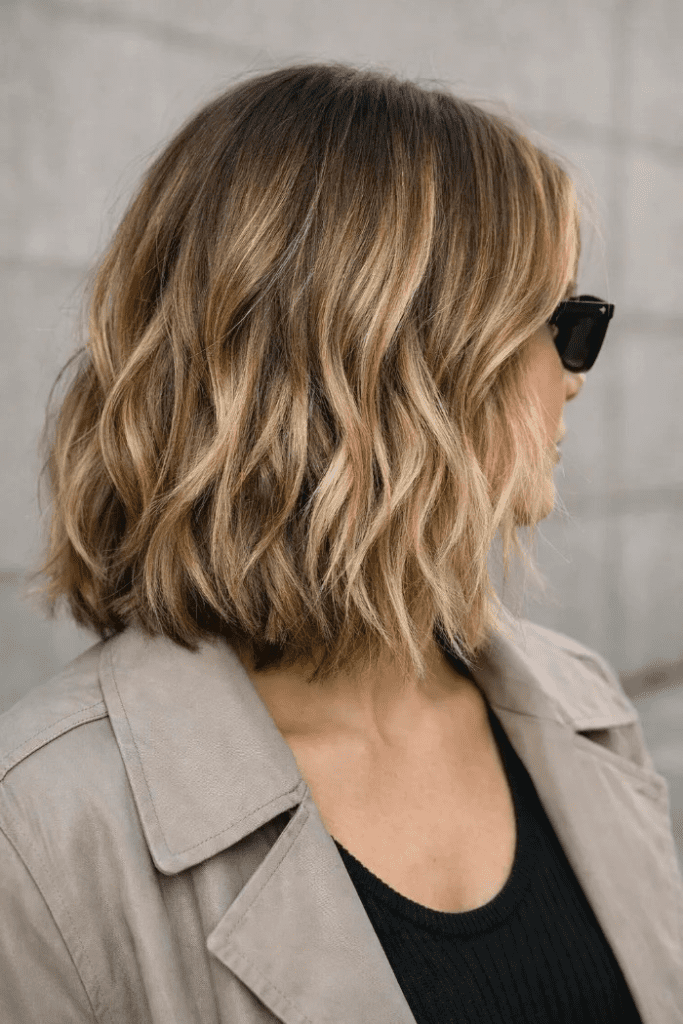
The rooty blonde blend is perhaps the most honest expression of low-maintenance balayage philosophy: the root is not just tolerated, it’s celebrated. The natural light brown root is kept deeply present — visible and intentional — while the blonde blend begins lower and builds gradually through the mid-lengths and ends. The result is hair that looks genuinely natural at the root and deliberately brightened through the lengths, which is the exact quality that makes this style so easy to maintain.
The textured lob creates the organic, undone styling environment that this color placement needs to look its most natural. Over-styled or very sleek hair makes the rooty quality look like neglect. Textured and relaxed styling makes it look like a deliberate, sophisticated choice.
Ask your colorist for: A lived-in blonde blend that starts low — below the mid-length — and builds gradually toward the ends. The root should be kept as close to the natural light brown base as possible without any blending or softening at the very root. A few brighter pieces near the face provide the lift without disrupting the rooty quality of the overall style.
Ask your stylist for: A lob with internal layers that support organic, lived-in texture. Point-cut ends rather than a blunt hemline add to the relaxed, effortless quality of this color approach.
At-home maintenance: The rooty blonde blend is the most forgiving of all the options on this list in terms of grow-out management — the root is already designed to be present and visible. A toning conditioner through the mid-lengths and ends keeps the blonde fresh, and appointments can typically be stretched to 12 to 16 weeks.
19. High Ponytail Showing Blonde Gradient
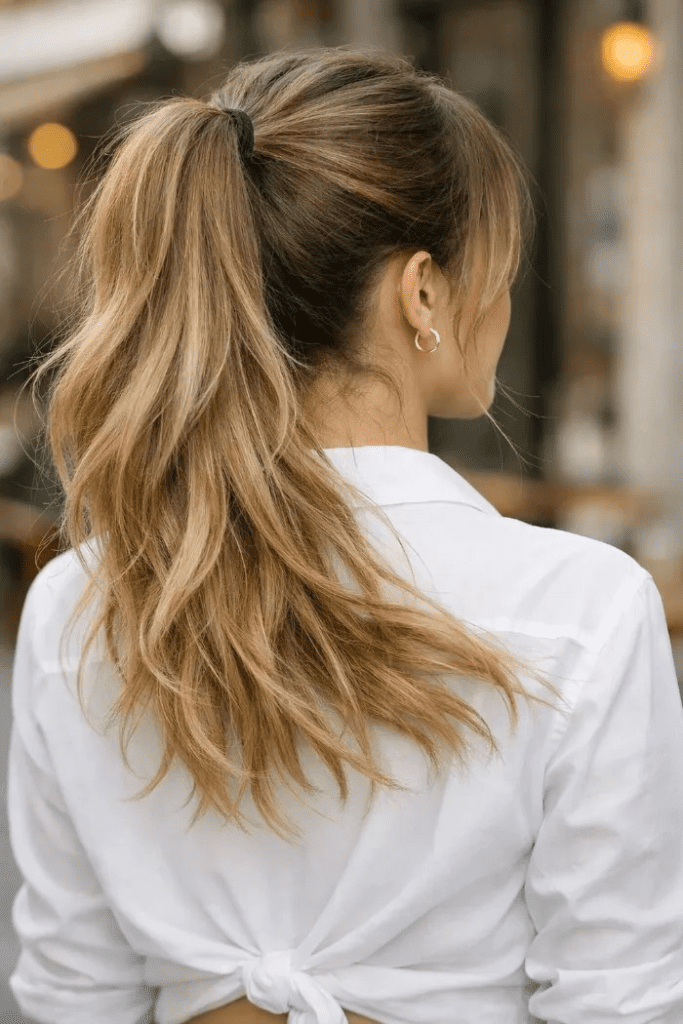
Like the claw clip half-up, the high ponytail reveals a completely different and entirely beautiful dimension of balayage color. The crown — where the roots are gathered and pulled tight — stays deep and natural. As the ponytail falls and swings away from the head, it moves through the full color gradient from medium light brown at the base of the ponytail to the brightest blonde at the tips. The swinging movement of the ponytail in motion is genuinely stunning when the gradient is well-executed.
This updo-friendly balayage is a genuine lifestyle consideration for women who wear their hair up regularly — because a balayage that’s designed only for wear-down styling may be concentrated in areas that are hidden when the hair is pulled up.
Ask your colorist for: Extra brightness specifically through the lengths — the mid-lengths and ends — rather than focusing only on the face-framing sections. Explain that you frequently wear your hair in a high ponytail and want the balayage to be visible and beautiful in that styling position.
Ask your stylist for: A high ponytail technique that creates a smooth, sleek crown — the gradient reads best when the deeper base at the crown is clean and polished rather than textured or piecey.
At-home maintenance: A lightweight smoothing cream through the lengths before pulling up ensures the ponytail falls smoothly and the gradient shows clearly. A gloss or toning treatment every six to eight weeks keeps the tips bright and the gradient looking fresh.
20. Woven Bronde Balayage on Long Waves
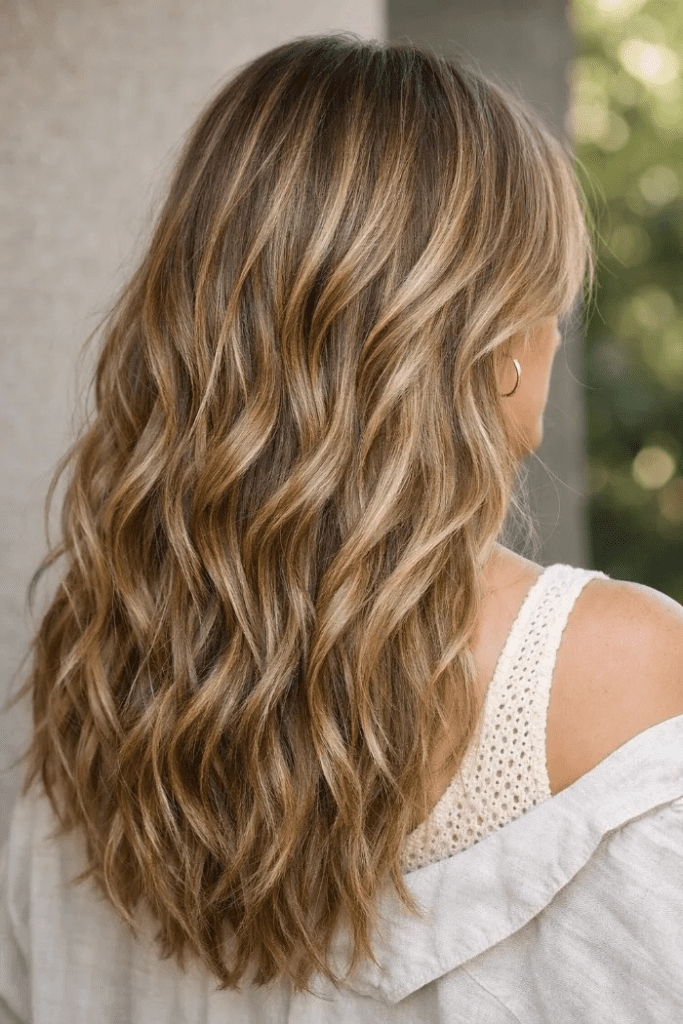
Woven balayage is a specific placement technique where fine, alternating sections of blonde and natural hair are woven together during application rather than painted in wide, sweeping sections. The result is a color that’s incredibly dimensional — dozens of fine, alternating light and dark pieces create a depth and complexity that reads differently from every angle and in every lighting condition. It’s the most technically demanding balayage approach on this list, but also the one that produces the most naturally beautiful, three-dimensional result.
On long waves, woven bronde balayage is at its absolute best. The waves move the woven sections in and out of prominence, catching light at different depths and creating a constantly shifting, luminous dimension that flat-ironed or straight hair simply cannot replicate.
Ask your colorist for: Woven placement rather than standard swept balayage — weaving requires a specific technique that not all colorists use, so it’s worth specifically requesting it and confirming your colorist is comfortable with the approach. A beige-leaning toner as a final step keeps the blonde sections soft and dimensional rather than yellow or brassy.
Ask your stylist for: Long layers that specifically support loose wave formation. The waves are the delivery mechanism for showing off the woven dimension — without them, the complexity of the placement is lost.
At-home maintenance: A neutral or slightly cool toning conditioner used every two to three washes maintains the beige quality of the blonde sections. Because woven balayage involves many fine sections, consistent home maintenance between appointments is more important than with wider ribbon placement.
How to Maintain Light Brown Hair With Blonde Balayage at Home
The salon creates the color. Your home routine keeps it looking exactly that way for as long as possible.
Use a color-protecting shampoo every wash. Sulfates strip color faster than almost anything else. A sulfate-free, color-protecting shampoo extends the life of both the blonde and the light brown base significantly. Look specifically for formulas labeled “color-safe” or “color-protecting.”
Use a toning conditioner or mask weekly. This is the single most impactful at-home maintenance step for any blonde balayage. A toning conditioner — warm-toned for honey and golden blondes, cool or purple-toned for beige and ash blondes, neutral-toned for creamy and vanilla blondes — keeps the blonde sections looking fresh and dimensional rather than faded and yellow.
Limit heat styling frequency. Highlighted hair is structurally more fragile than natural, unlifted hair. Every heat styling session causes some degree of damage to the cuticle, and cumulative heat damage causes highlighted ends to look dry, dull, and split even when they’re freshly toned. If you can’t reduce heat styling frequency, always use a heat protectant and keep your tools at 350°F or below.
Schedule regular gloss treatments. A salon gloss is a semi-permanent color treatment that redeposits tone onto the hair shaft and adds extraordinary shine simultaneously. Done every six to eight weeks, a gloss keeps blonde balayage looking dimensional and fresh between lightening appointments and can extend the time between full color services by several weeks.
Clarify once a month. Mineral buildup, product buildup, and environmental exposure can cause the blonde sections to look dull and yellow even when they’ve been properly toned. A clarifying shampoo used once a month removes that buildup and allows the toner and the natural luminosity of the blonde to read correctly.
Final Thoughts
Light brown hair with blonde balayage highlights is one of those color combinations that rewards investment. Done well, it’s one of the most beautiful, versatile, and genuinely wearable looks in haircol — bright enough to transform, natural enough to maintain, and dimensional enough to look expensive at every growth stage.
The specific combination of tone, placement, and maintenance routine that’s right for you depends on your natural base, your skin tone, your lifestyle, and how often you realistically want to visit the salon. But whatever variation you choose from this list, the foundation is the same: a skilled colorist, a clear brief, and a home routine that takes the maintenance seriously.
Pick the styles that feel most like you, save the photos, and walk into your appointment with specific vocabulary. The more directed your communication, the more precisely the result can be targeted — and the more likely you are to walk out with exactly the hair you came in for.
Pin your favorites to bring to your next color appointment — two or three photos give your colorist everything they need to nail the result.
How do I ask for blonde balayage that looks natural and not stripy?
The most important request is hand-painted placement rather than foil placement. Tell your colorist you want balayage painted in “ribbons” or “soft ribbons” starting well below the root — not highlights placed at the scalp. Ask specifically for a root melt or root shadow to blend the transition. Bringing two to three photos is the single most effective communication tool — choose photos that show the specific tone, the contrast level, and the face-framing intensity you want, separately if needed.
How often do I need to touch up blonde balayage on light brown hair?
Most well-executed dark-root balayage on light brown hair can be stretched to 10 to 12 weeks — sometimes 14 to 16 weeks if the root was kept deeper and the placement started lower. Between full lightening appointments, a toner or gloss treatment every six to eight weeks refreshes the tone and dimension without the need for re-lifting. If brassiness is your primary concern between appointments, a purple or toning shampoo used weekly addresses it effectively.
What’s the best way to prevent balayage from going brassy on light brown hair?
Light brown hair typically has warm, red-orange underlying pigments that are exposed during the lightening process and can produce brassiness in the blonde sections. Prevention requires a multi-step approach: a purple or blue shampoo used weekly deposits cool pigments onto the hair shaft to counteract the warm tones, a toning conditioner reinforces the cool or neutral deposit between washes, and a salon toner or gloss applied every six to eight weeks provides the most comprehensive correction. Minimizing heat styling and UV exposure also prevents tonal shifts between appointments.
Can I go from traditional highlights to balayage on light brown hair?
Yes, and many women find the transition significantly reduces their maintenance commitment. The process typically involves a single transition appointment where a root shadow or melt is added to soften the previously highlighted sections and the new placement is adjusted to a more naturally positioned balayage. The result reads as immediately more natural and dimensional than traditional highlights, and the grow-out is significantly more forgiving.
What blonde tone is best for light brown hair?
It depends on your skin’s undertone and your maintenance commitment. Warm skin tones are typically most flattered by honey, golden, and buttercream blondes — warm blondes that enhance the warmth of both the skin and the light brown base. Cool or neutral skin tones look beautiful with beige, mushroom, and ash blondes — tones that add brightness without adding warmth. Neutral skin tones have the most flexibility. From a maintenance perspective, cool blondes require the most consistent toning, warm blondes require the most hydration, and neutral blondes sit comfortably between the two.
Is balayage damaging to light brown hair?
All lightening involves some degree of chemical processing, and balayage is no exception. However, balayage is generally less damaging than traditional highlights because it involves less overall lightening — the root area is left completely natural, and the hand-painted application uses less bleach product than foil highlights. The key to minimizing damage is choosing a skilled, experienced colorist who uses bond-building additives in the lightening formula (such as Olaplex, K18, or similar) and applying a deep conditioning treatment immediately after lightening.