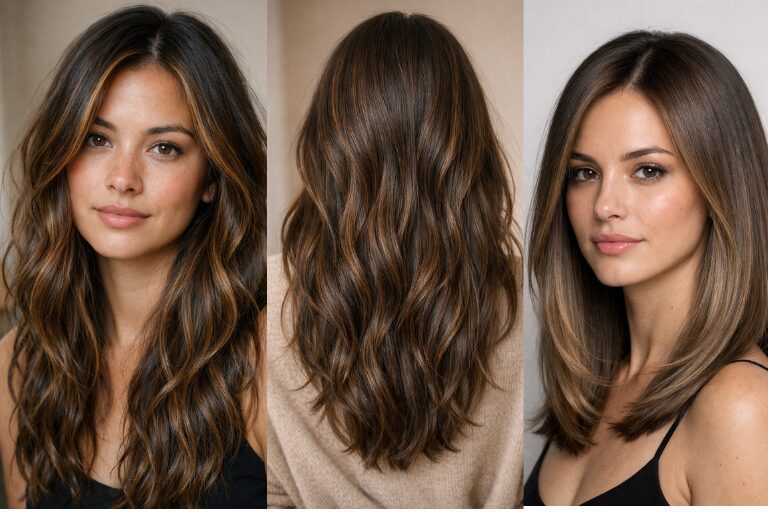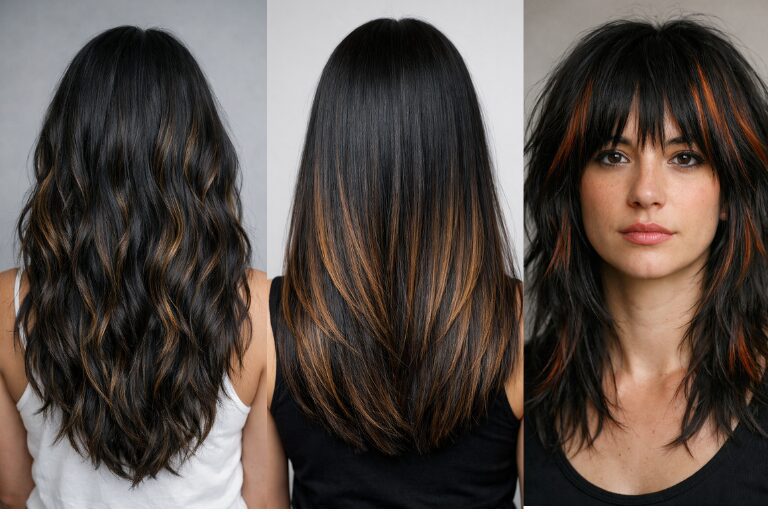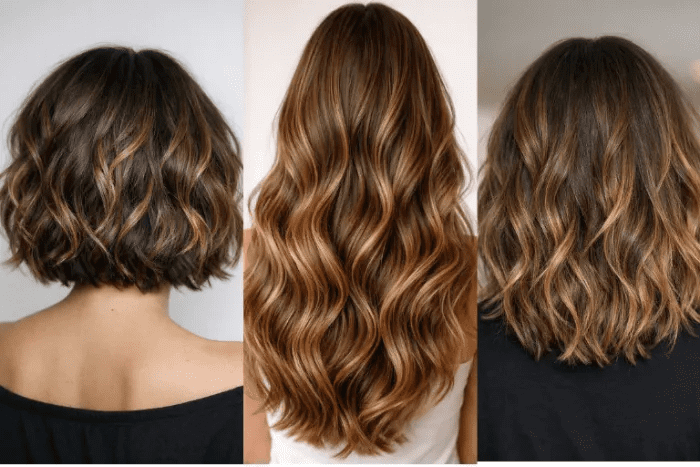
23 Dark Brown Hair With Ash Blonde Balayage Ideas That Look Smoky, Dimensional, and Genuinely Expensive
Dark brown hair with ash blonde balayage occupies a specific aesthetic territory that very few other color combinations can claim: it looks expensive without looking effortful, dimensional without looking obviously colored, and cool-toned without looking unnatural. The dark brown base provides the depth and richness that makes hair look healthy and full. The ash blonde balayage provides the light and dimension that makes it look alive and multifaceted. Together they create something that’s harder to achieve than either element alone.
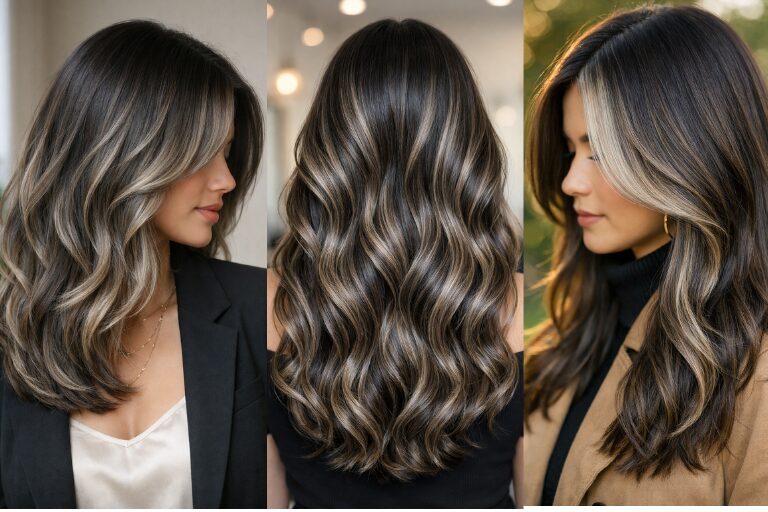
The ash element is what makes this combination distinctive. Standard blonde balayage on dark brown hair tends to pull warm over time — golden, then honey, then eventually orange or brassy. Ash blonde balayage specifically resists that warming process because the toner that creates the ash tone neutralizes the warm underlying pigment that causes brassiness. The result stays smoky and cool-toned significantly longer than a warm blonde would on the same dark base, which means fewer toning appointments and a more consistently satisfying color between salon visits.
The 23 ideas below cover every version of that combination — from the most whisper-subtle ash veil to the boldest icy-end melt — so you can find the placement, contrast level, and ash intensity that suits your hair, your lifestyle, and your face.
The Ash Blonde Spectrum on Dark Brown Hair
Before the individual styles, understanding where different ash tones sit on the spectrum helps narrow down which version is right for you.
Taupe ash is the warmest and most wearable of the cool tones — slightly beige, slightly grey, reads as a sophisticated neutral that looks natural on most dark brunette bases without requiring significant lifting. The lowest maintenance and most forgiving option.
Beige ash sits between taupe and true ash — cooler than taupe but not fully neutral or icy. Creates the most universally flattering ash result on dark brown hair across most skin tones.
True ash or smoky ash is unmistakably cool-toned — neutral to slightly grey, no warmth present. Requires more precise toning to achieve and maintain but produces the most deliberately dimensional and fashion-forward result.
Icy ash is the lightest and coolest option — almost silver-blonde at the ends. Requires the most lifting and the most consistent toning maintenance but produces the highest contrast and most striking result.
23 Dark Brown With Ash Blonde Balayage Ideas
1. Half-Up Claw Clip Waves With Ash Ribbons
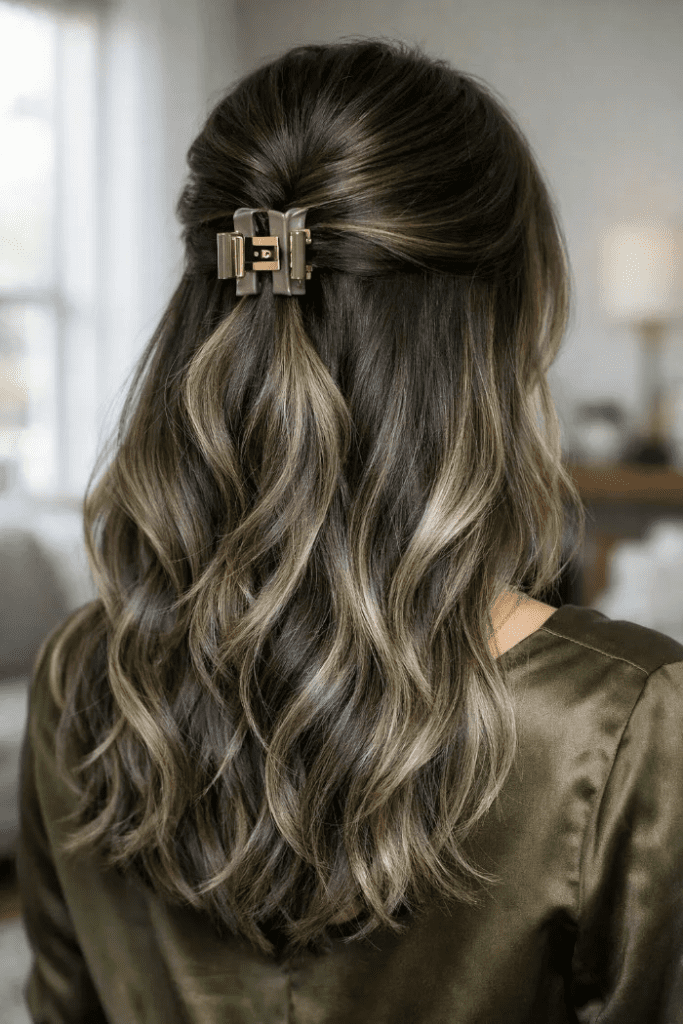
A half-up wave style where ash blonde ribbons are concentrated through the mid-lengths and ends — the half-up placement specifically shows the balayage to its best advantage because the gathered top section reveals the darker base while the loose lower section displays the ash ribbons in full. The contrast between the two sections reads as dimensional and purposeful.
Ask for: Cool beige toner specifically — not warm or golden toner — to keep the ash ribbons reading smoky rather than yellow. Mid-length to end placement for the most graceful grow-out.
Best for: Those who frequently style their hair half-up and want a color that looks its best in that context. Works across most wave textures and lengths.
2. Long Layers With Smoky Face Frame
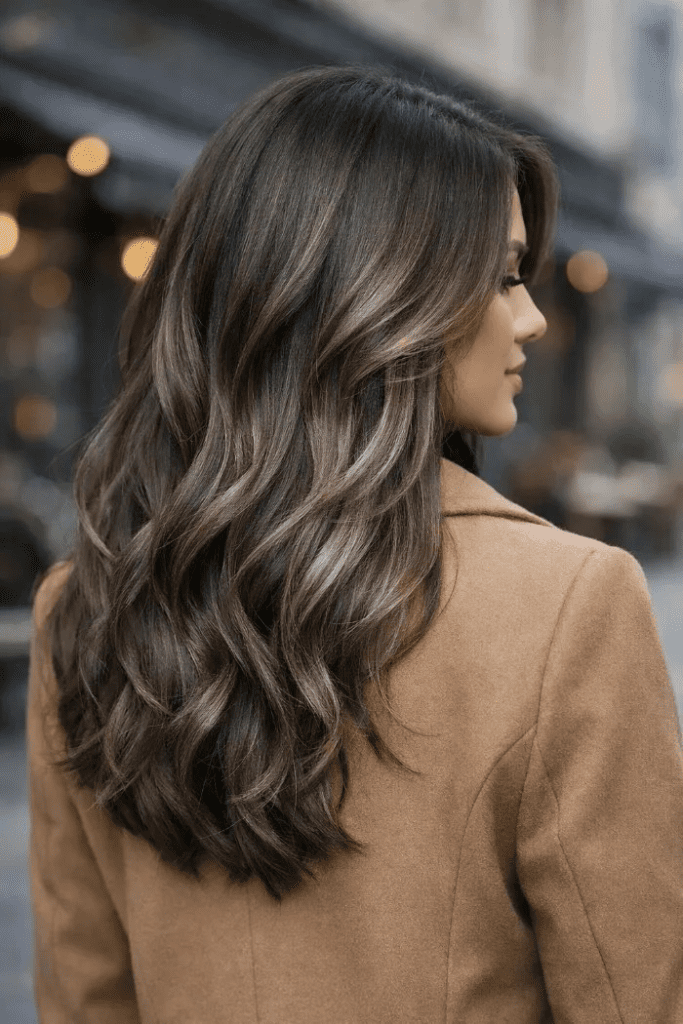
Long, brushed-out waves with ash blonde concentrated through the front face-framing sections and through the ends — this is the most naturally flattering ash balayage placement because it puts the cooler, lighter tones exactly where they create the most luminosity near the face. The dark brown remains dominant throughout, with the ash functioning as enhancement rather than replacement.
Ask for: Ash blonde concentrated at the front and ends with the interior layers left predominantly at the dark brown base. A soft, blended root rather than any defined starting point for the color.
Best for: Those who want brightness and luminosity near the face without a significant overall color change. Works beautifully on long layered hair of most textures.
3. Loose French Braid With Ash Ribbons
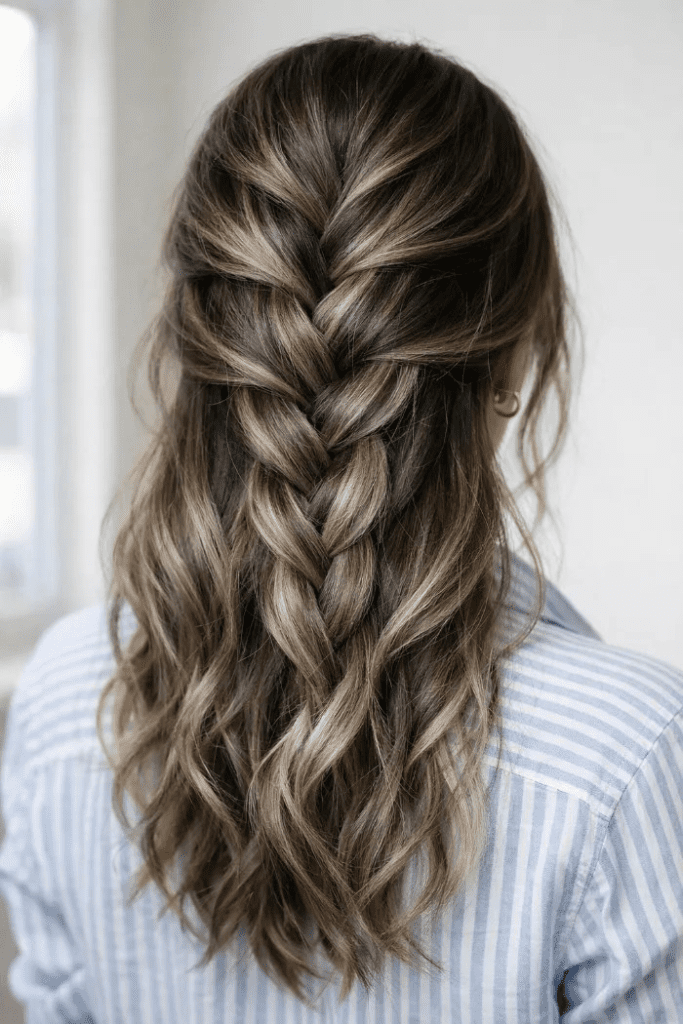
A loosely constructed French braid that reveals ash blonde ribbons woven through the dark brown sections — braided styles specifically showcase balayage placement in a unique way because the weaving motion brings lighter and darker sections into close proximity, making the color contrast more visible and more dimensional than the same hair worn loose would show.
Ask for: Ash ribbons kept gentle in contrast rather than high-contrast — the braid brings the colors together in a way that can amplify the difference, so subtler placement reads more beautifully in this context. A gloss treatment to keep the ribbons looking smooth and dimensional.
Best for: Those who frequently wear braided styles and want their color to look its most dimensional and intentional in that format.
4. Soft Layers With Ash Money Piece
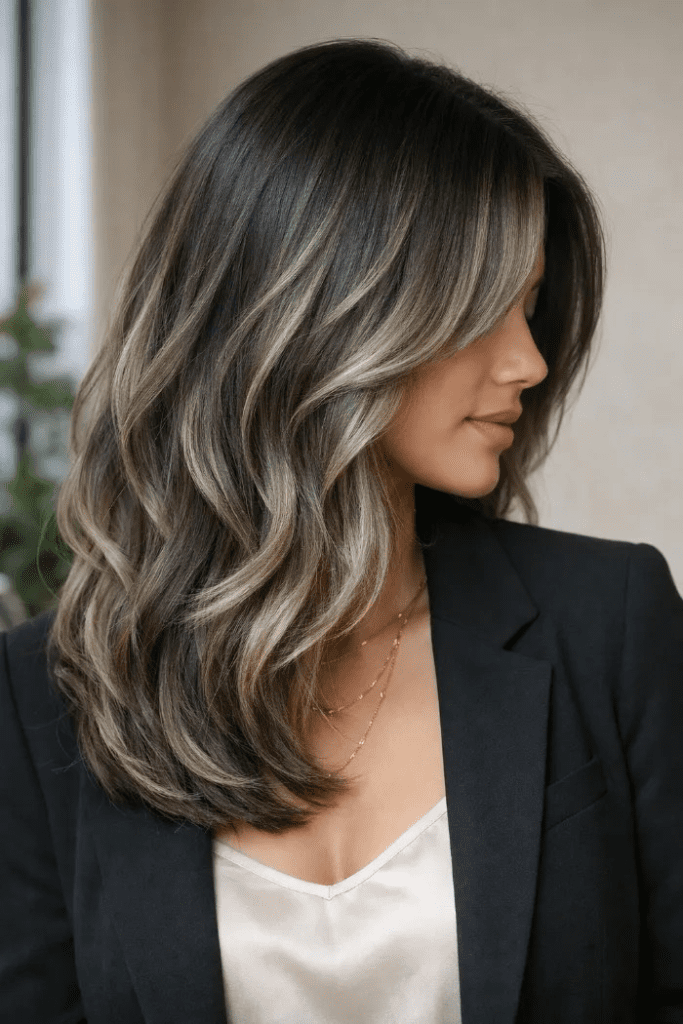
An ash blonde money piece — concentrated at the front two sections framing the face — on a shoulder-length layered cut where the color begins at cheekbone level and melts softly into the ends. The money piece placement in ash rather than warm blonde creates a cooler, more sophisticated face-framing effect than a golden money piece would, and on a layered shoulder-length cut the frame has enough length to taper softly rather than sitting as a hard block.
Ask for: Money piece beginning at the cheekbone rather than the hairline for a softer transition. A soft root melt on the money piece specifically to prevent a hard starting point. Round brush styling for a smooth, polished bend.
Best for: Shoulder-length wearers who want visible face-framing without committing to significant overall color coverage. One of the most immediately impactful placements on this list.
5. Root Shadow Melt to Icy Ash Ends
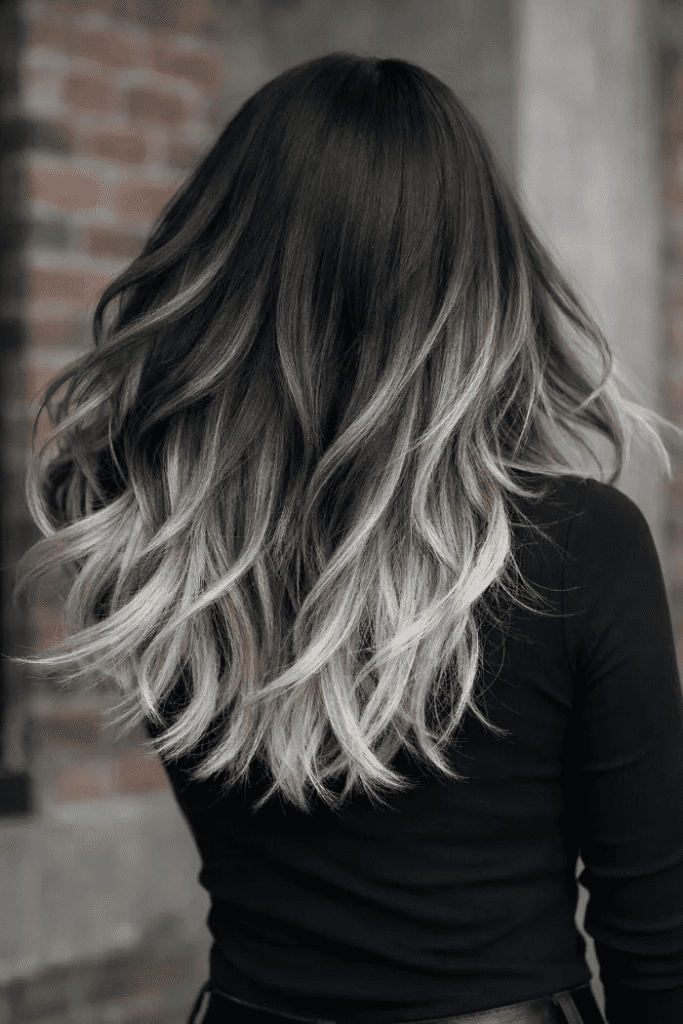
A deep, intentional dark root shadow that transitions into progressively lighter, cooler ash tones through the mid-lengths and into icy ash ends — this is the highest-contrast and most dramatic option on the list, where the cool ash element is the clear and deliberate focal point. The root shadow prevents the color from looking like regrowth by making the dark root intentional and designed.
Ask for: A root shadow applied as a deliberate design decision rather than simply leaving the root untreated. Icy ash ends maintained with purple shampoo once or twice weekly to prevent the icy tones from warming up between toning appointments.
Best for: Those who want the maximum cool-toned statement from dark brown with ash blonde. Requires the most maintenance but produces the most striking and fashion-forward result.
6. Sleek Blunt Lob With Subtle Ash Tips
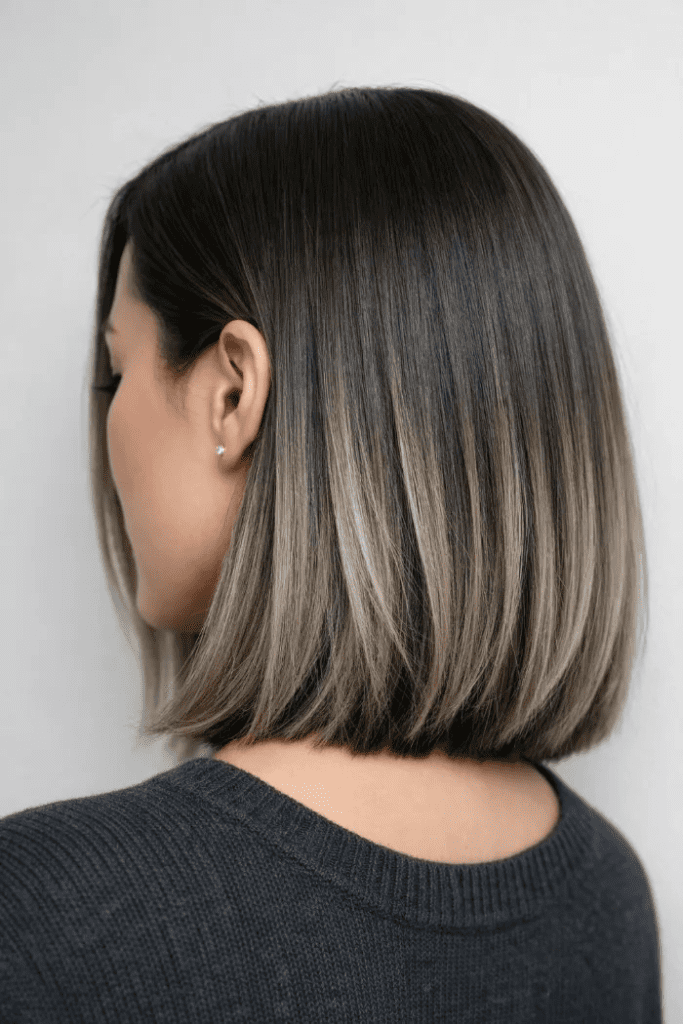
A blunt-perimeter lob with ash blonde concentrated in the lower third of the cut — the bluntness of the lob’s end creates a clean, defined edge that makes the ash placement look precise and intentional, and the lower-third placement keeps the root area naturally dark for maximum grow-out longevity. Straight styling shows the subtlety of this placement most clearly.
Ask for: Ash tones kept to the lower third of the length with a very soft, invisible transition point rather than a visible starting line. A cool-toned gloss to unify the base and the balayage into a smooth, glossy finish.
Best for: Those who wear their hair straight regularly and want clean, modern ash balayage that reads as polished and professional. One of the most low-maintenance placements on this list.
7. Dimensional Medium Waves With Ash Ribbons
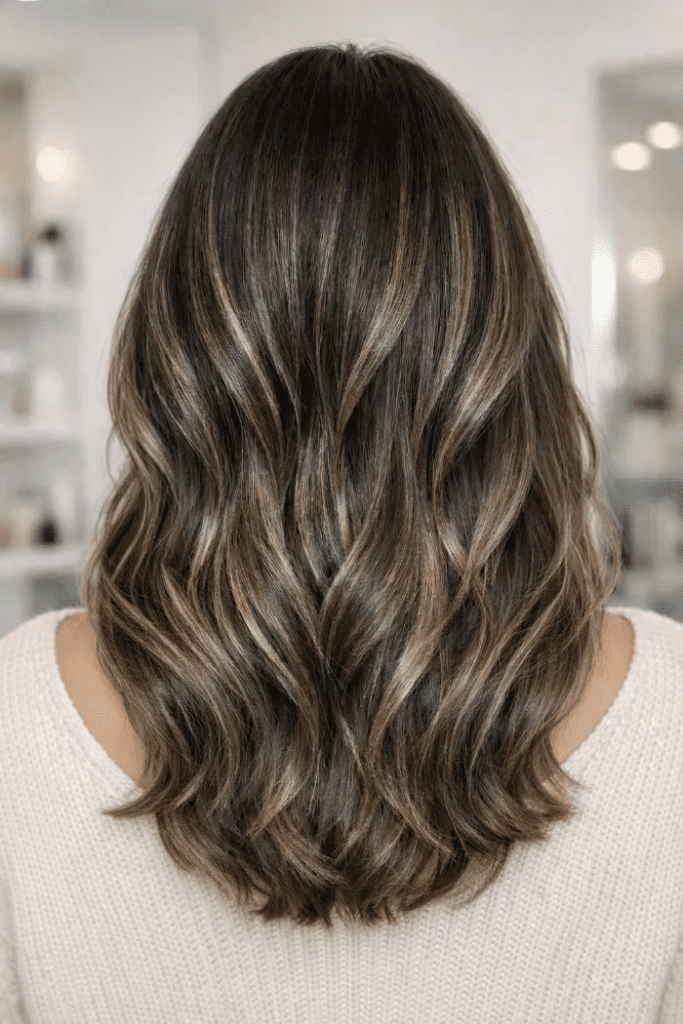
Thin, carefully blended ash ribbons through medium-length waves — the thinness of the ribbons is what creates genuine dimension rather than the striped quality that wider sections can produce on dark brown hair. The medium wave pattern keeps each ribbon visible as the hair moves without any single ribbon dominating the overall color impression.
Ask for: Thin ribbons rather than wide sections — this is a critical specification for achieving dimension rather than stripes on dark brown hair. A cool gloss and a soft root blend for appointment-stretching grow-out.
Best for: Medium-length wave wearers who want dimensional color that reads as genuinely expensive. Works across most hair densities.
8. Cool Ribbon Balayage on Long Waves
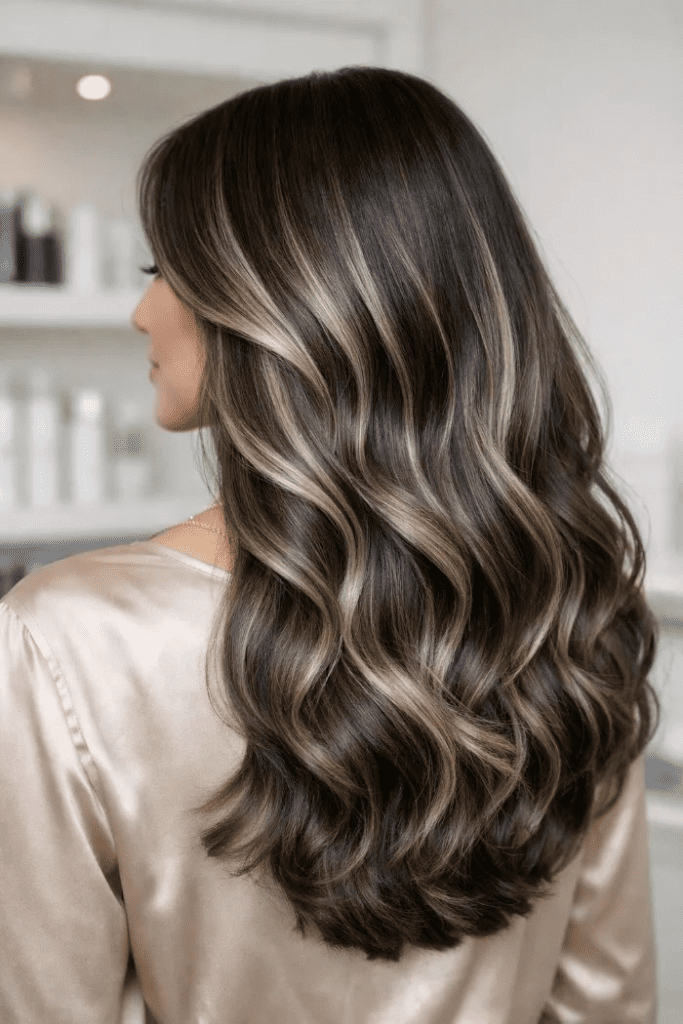
Wider, smoother ash blonde pieces through long waves — the wider ribbon format creates a creamier, more blended appearance than thin ribbons do on long hair where the greater length gives the color more room to develop. The smoothness of the ribbon transition is the key quality: wide ribbons that are softly painted produce a creamy blend, while wide ribbons that are precisely applied produce a striped effect.
Ask for: Wide ribbons painted with a soft, feathered edge rather than a hard line. The blend should look creamy from a distance — confirm this specifically with your colorist before application. Works particularly well on thick hair that needs movement and dimension.
Best for: Long-haired women with thick or dense hair who want visible, creamy ash blonde placement with significant dimension.
9. Ash Balayage on Defined Curls
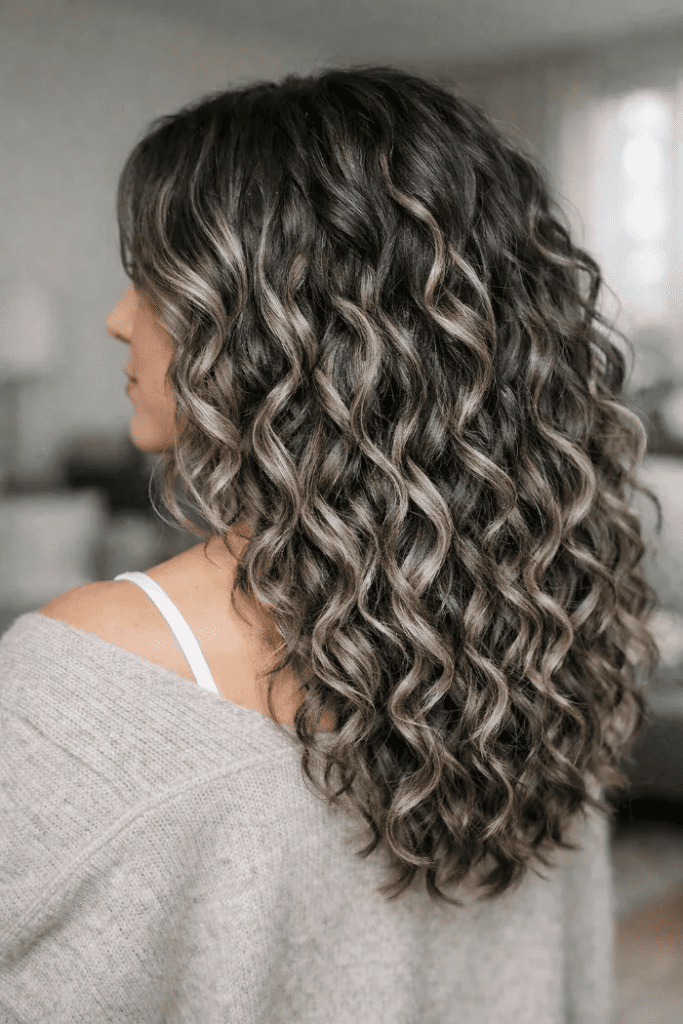
Cool ash balayage placed specifically where natural curls catch light — on the outer curl surface rather than in the inner sections — for a placement that looks like part of the curl’s natural variation rather than color applied over the curl. The outer-curl placement means the ash appears as the curl opens and catches light, creating a reveal effect that flat or straight hair can’t replicate.
Ask for: Placement specifically following the natural curl pattern rather than using standard sectioning. Gentle lifting rather than aggressive lightening — curls are more vulnerable to heat and chemical damage than straight hair, and maintaining the curl pattern’s integrity is as important as the color result. Deep hydration masks immediately after coloring.
Best for: Curly hair wearers who want ash balayage that enhances their curl pattern’s natural movement and dimension.
10. Soft Ash Balayage on Long Brunette Waves
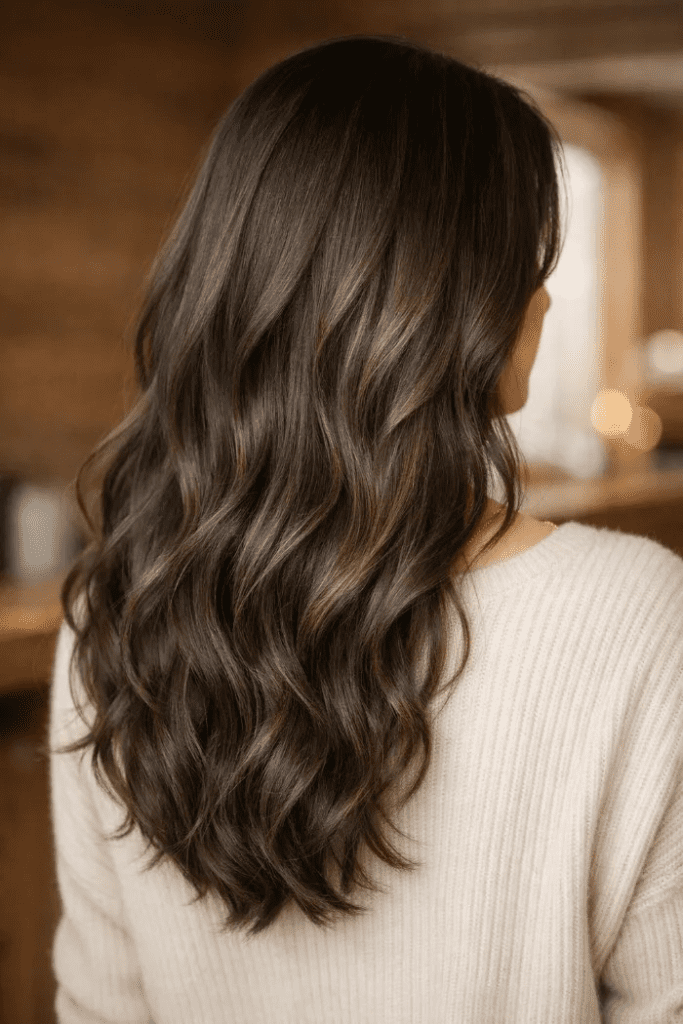
The safest and most natural-looking entry point into ash blonde balayage on dark brown hair — soft, spread-out placement that reads as simply very rich, dimensional brunette rather than obviously colored hair. The ash is present and cool-toned but blended thoroughly enough that it reads as depth rather than highlights from most viewing distances.
Ask for: Soft, spread-out placement with a very gentle contrast between the ash and the dark brown base. Blue-toned shampoo rather than purple for maintaining this subtler ash tone — blue shampoo deposits less aggressively and suits the softer ash better.
Best for: First-time ash balayage clients or those in professional environments where visible highlights might not be appropriate. The most natural-looking and most confidence-inspiring starting point.
11. Curtain Bangs With Smoky Balayage
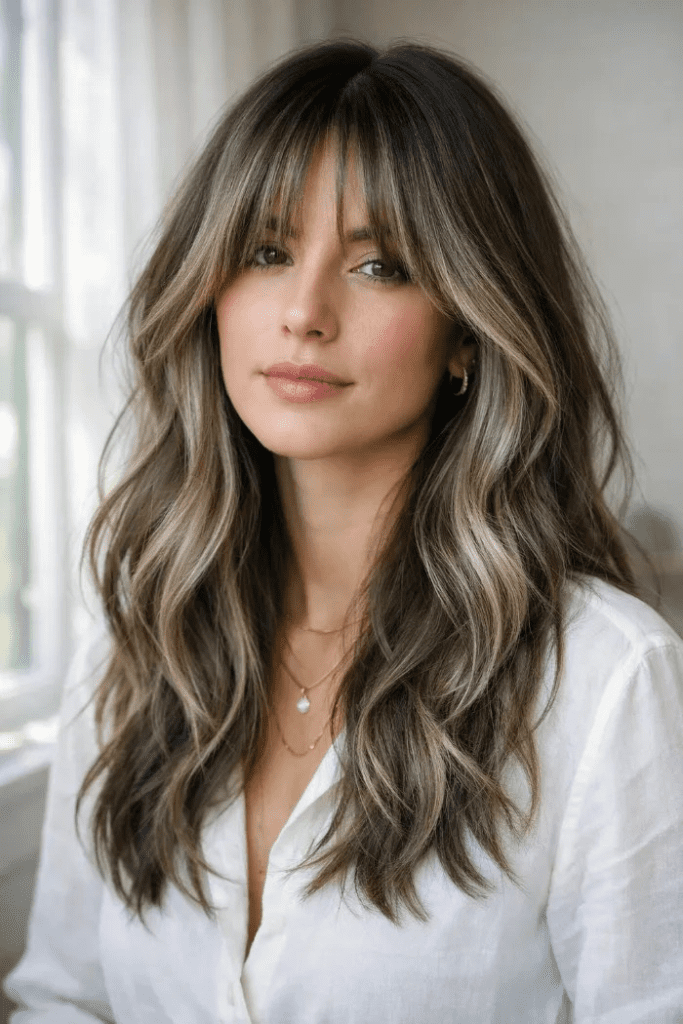
Curtain bangs combined with long, airy layers where the ash blonde sits specifically through the front sections and bangs — the curtain fringe placement puts the cooler, lighter ash tones directly in the most face-brightening position, near the eyes and cheekbones where they catch light most flatteringly. The long layers below maintain dark depth that prevents the overall color from washing out.
Ask for: Ash blonde placement concentrated through the curtain bangs and front face-framing sections. A forward blow-dry of the bangs before sweeping back for the best movement. The dark root kept prominent through the crown for contrast that makes the front-section ash read more clearly.
Best for: Those who wear curtain bangs and want their color to work most flatteringly at the face level where the fringe draws attention.
12. Bold Ash Money Piece With Cool Blend
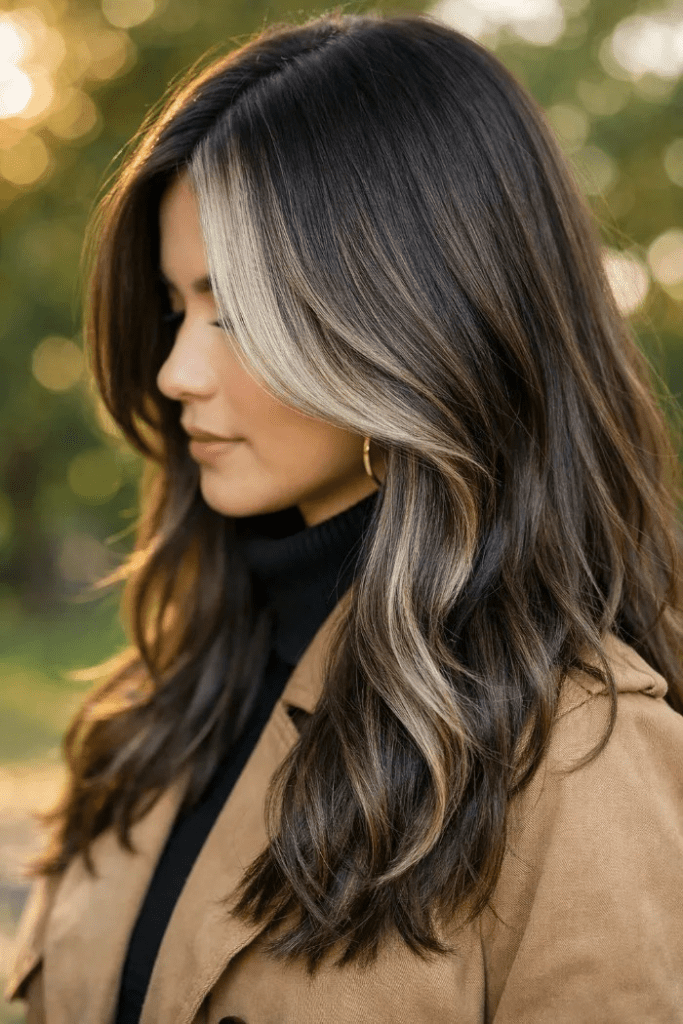
A more saturated, higher-contrast ash money piece — wider and more obviously lighter than the subtle version in style four — with a cooler, more icy tonal direction. The boldness of the money piece is offset by a root melt that prevents it from reading as a bleached panel. Loose waves soften the contrast and prevent the bold front placement from looking too graphic.
Ask for: A root melt applied specifically to the money piece section so it grows out smoothly rather than producing an obvious line at the root. A neutral-to-icy ash toner rather than a golden one for the most deliberately cool finish.
Best for: Those who want the face-framing impact of a money piece in its most visible and statement-making form. Higher maintenance than the subtle version but higher impact.
13. Textured Wavy Bob With Ash Dimension
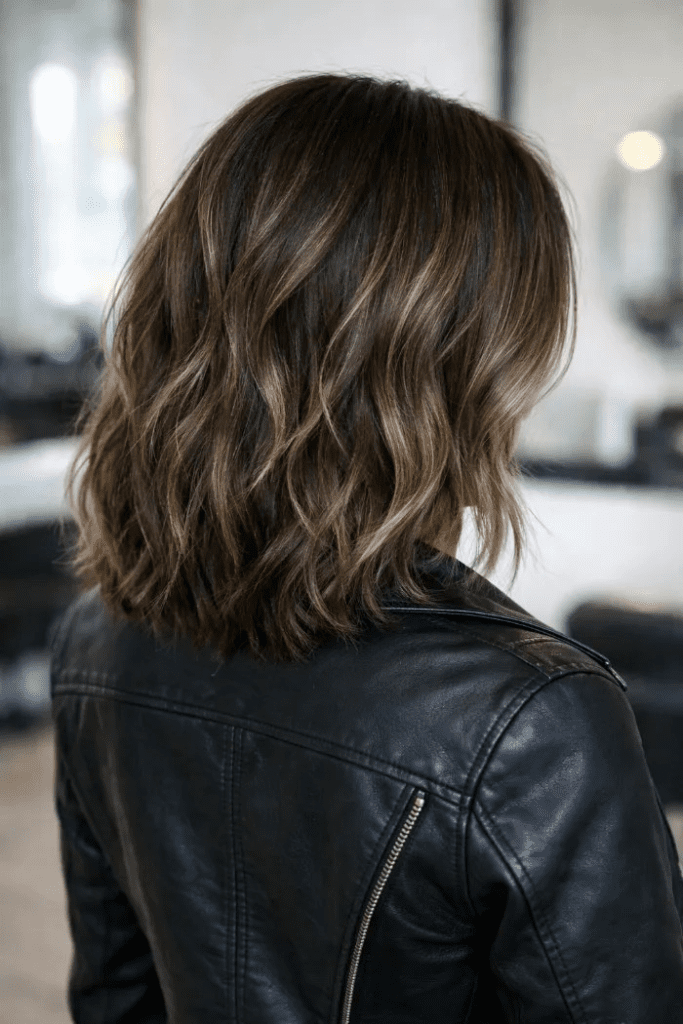
Ash balayage through the mid-lengths of a textured wavy bob — the short-to-medium length of the bob means the placement is visible throughout most of the hair’s visible length, and the textured wave pattern shows the dimensional quality of the color from every angle. A low-effort styling approach suits this placement best because salt spray and a scrunch is enough to show the ash dimension clearly.
Ask for: Ash placement through the mid-lengths without going too close to the root — the bob’s shorter length makes root-area placement more visible and more quickly grown-out-looking than on longer hair. Salt spray and scrunch styling to show the texture and the color together.
Best for: Wavy bob wearers who want modern, low-effort color that shows through their texture naturally. Works well on medium-density hair.
14. Low Bun With Cool Face-Framing Pieces
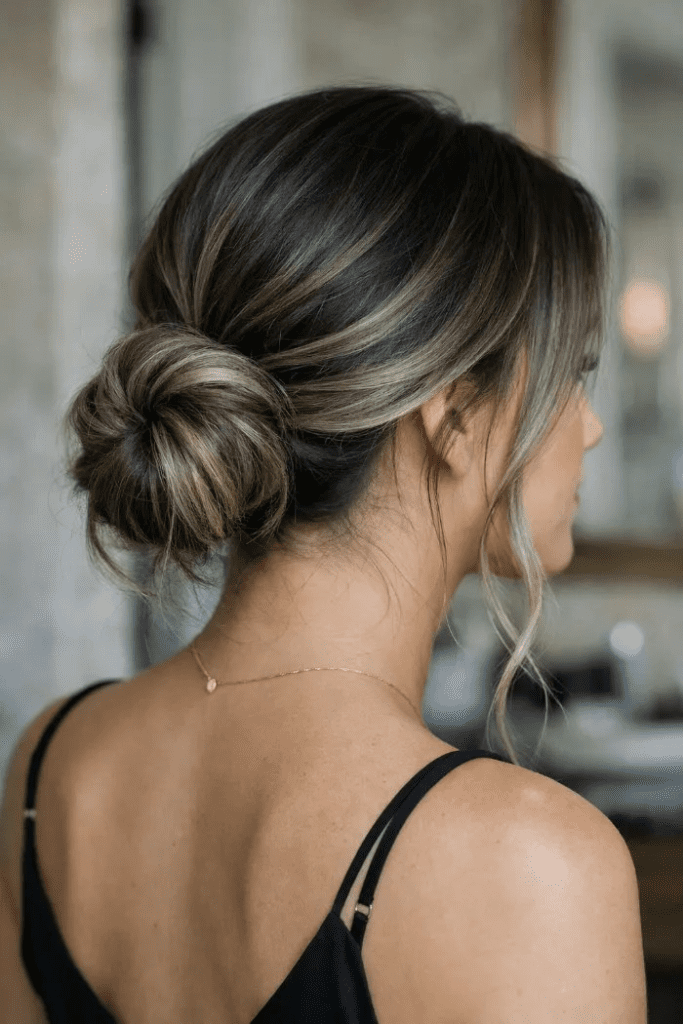
A low bun where the gathered style reveals the dark brown base while the face-framing ash pieces left loose around the face provide contrast and luminosity — this is the upstyle version of face-framing balayage, and it specifically demonstrates how ash blonde can function as an accessory to an updo rather than simply a feature of a down style.
Ask for: Face-framing ash placement specifically designed to look its best when the rest of the hair is gathered up. A shine serum through the face-framing pieces for a polished, intentional finish.
Best for: Those who frequently wear their hair up and want their color to contribute to rather than disappear in that context.
15. Layered Blowout With Soft Ash Ribbons
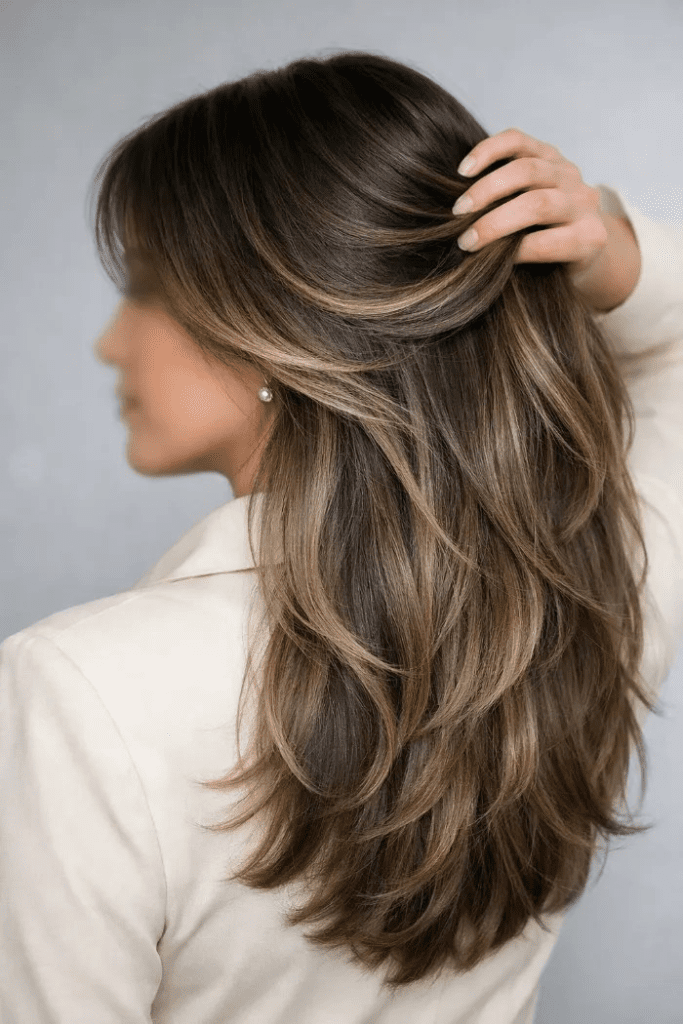
A long, layered blowout where thin ash ribbons are blended through the lengths — the blowout specifically shows this placement at its most polished and most professional because the smooth surface allows each ribbon to read clearly without the distraction of wave pattern or texture. For women who frequently blowout their hair, this is the placement that will consistently look its best.
Ask for: Thin, very well-blended ribbons rather than wide sections — the blowout finish shows every ribbon clearly, which means thin ribbons read as luxurious dimension while wide sections read as obvious highlights. A cool gloss when the ribbons begin to warm.
Best for: Those who blowout their hair regularly and want a color that performs best in that styling context. Works across most hair lengths and densities.
16. Glossy Waves With Deep Root Melt
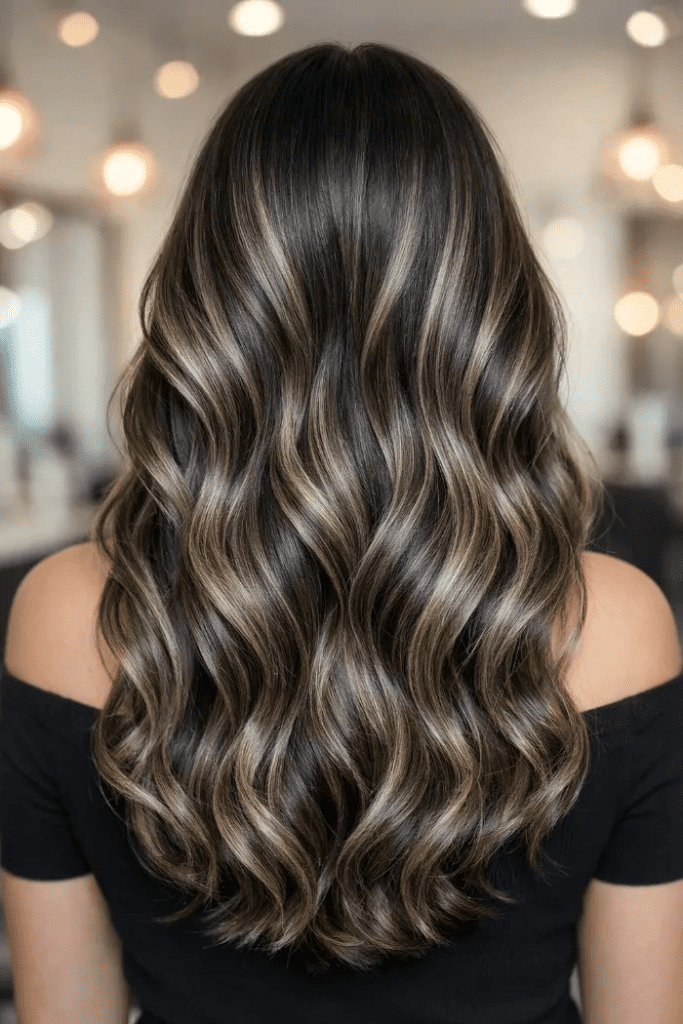
Rich dark brown root melt with cool ash pieces rippling through the waves — the depth of the root melt is what gives this version its expensive quality, grounding the lighter ash sections in a dark, glossy base that prevents the overall color from looking washed out or lacking contrast. A smoky neutral toner keeps the ash from warming between appointments.
Ask for: A rich, deep root melt that extends further than the natural root — the intentionality of a designed root melt is what separates this from simply untreated grow-out. A smoky or neutral-ash toner rather than a warm or golden one. Heat protectant every time styling with heat.
Best for: Those who want maximum depth and contrast between the dark root and the ash lengths. One of the most dimensional and most photographically striking placements on this list.
17. High Ponytail With Ash Blonde Lengths
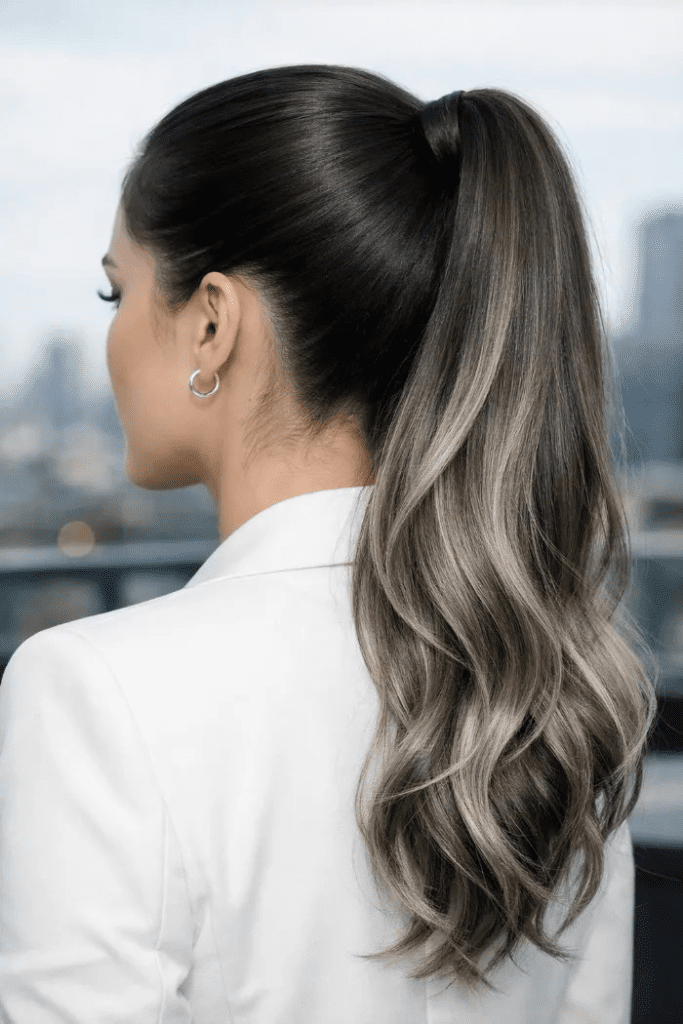
A high ponytail where the gathered, lifted position shows the full gradient from dark crown to ash lengths — the ponytail’s elevation puts the lighter ends at the most visible position, where they catch light and move distinctively. The dark crown stays completely visible at the base of the ponytail, creating a natural gradient that reads as intentional and styled.
Ask for: Ash placement through the mid-lengths and ends that looks intentional from a high ponytail position — confirm this with your colorist by gathering the hair upward during the consultation to see how the placement will read in that style.
Best for: Those who frequently wear their hair in a high ponytail and want their color to read as dimensional and deliberate in that style context. One of the best ponytail-specific color placements available.
18. Straight Lob With Cool Face Frame
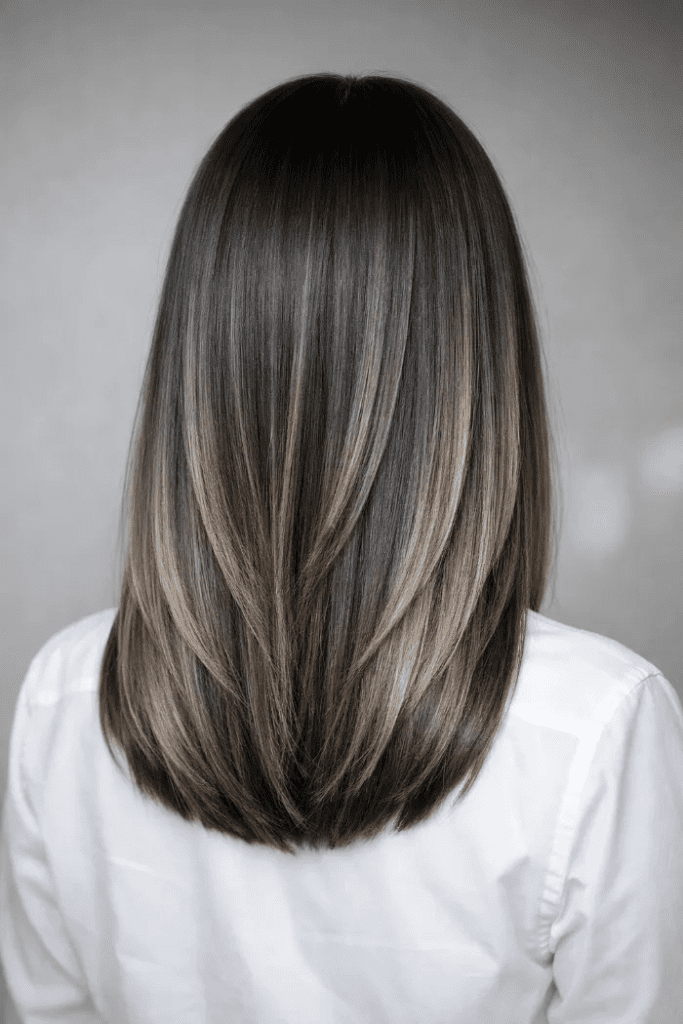
A blunt-leaning straight lob where the ash blonde is confined to the face-framing sections with the rest of the lob remaining at the dark brown base — the straight styling shows the clean precision of the face frame most clearly, and the coolness of the ash tone creates a sophisticated, slightly editorial quality that a warm blonde face frame on the same cut wouldn’t achieve.
Ask for: Subtle ash face frame rather than a bold or chunky one — the straight styling amplifies the visibility of everything, so a more subtle placement reads as more intentional and polished. Smoothing cream and a flat iron on low heat for the glassy finish that shows this placement best.
Best for: Those who wear their hair straight regularly and want a subtle, sophisticated color detail that enhances the sleekness of straight styling.
19. Long Shag With High-Contrast Ash Pieces
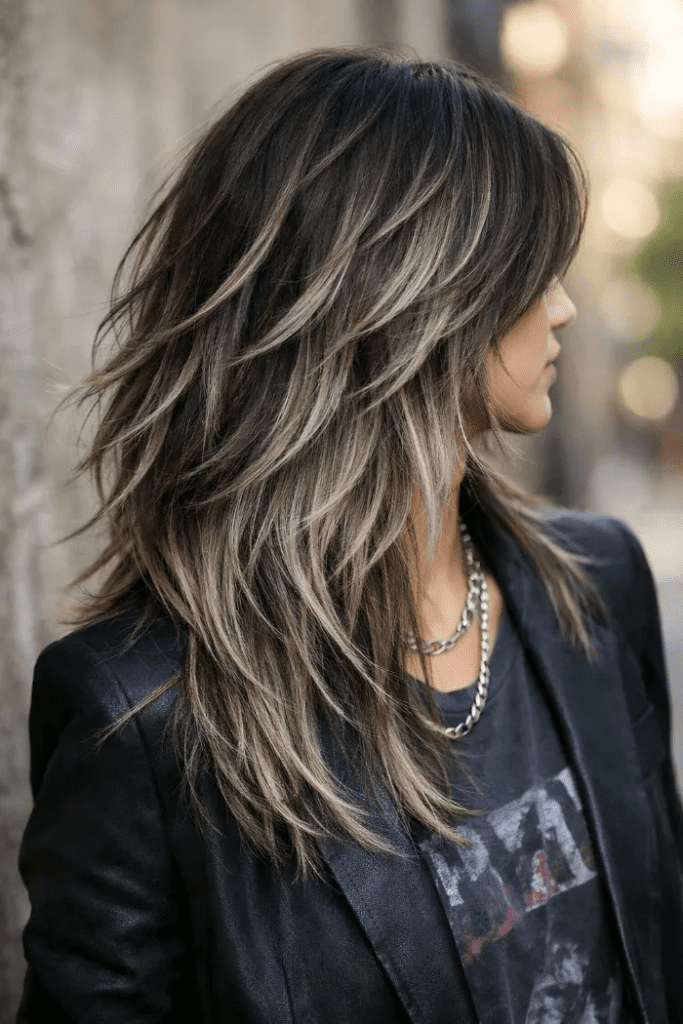
Ash blonde placed brighter and more saturated through the ends and surface layers of a long shag — the shag’s distributed layering means the ash pieces sit at multiple levels throughout the cut, creating a more all-over dimensional quality than placements on non-layered styles. The dark root stays prominent through the crown to balance the brighter ends.
Ask for: Brighter ash placement through the surface layers specifically — the shag’s texture shows this placement most effectively because the distributed layers bring the lighter sections to the surface from multiple angles. A diffuser or soft wave styling for the most natural-looking finish.
Best for: Long shag wearers who want their color to complement the textured, layered quality of the cut.
20. Smudged Roots to Icy Ash Balayage
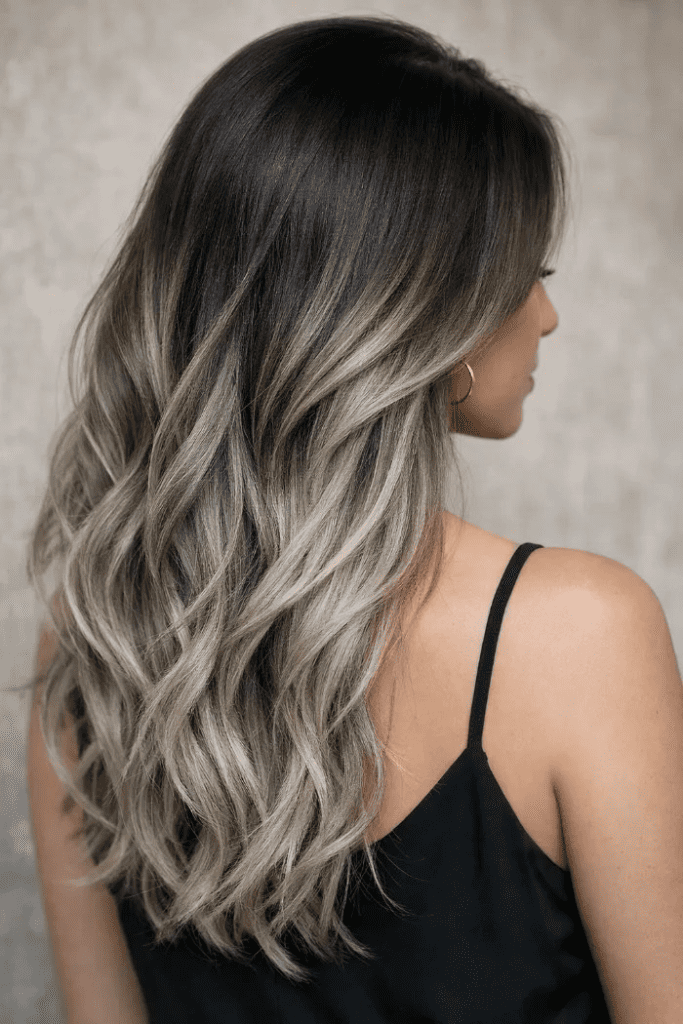
Smudged, deliberately blended roots that transition into icy, very cool ash ends — this is the higher-contrast version of the root shadow melt approach, where the icy end tone is more aggressively light and cool. The smudged root technique is specifically what prevents the high contrast from looking jarring — the smudge creates a soft, diffused transition zone between the dark root and the icy ends.
Ask for: Root smudging as a specific technique — it should be done deliberately rather than simply leaving the root untouched. Purple shampoo maintenance to prevent the icy ends from warming. Loose waves for styling to show the gradient smoothly.
Best for: Those who want the most dramatic and fashion-forward ash balayage on dark brown hair. Requires consistent maintenance but produces a genuinely striking result.
21. Soft Veil Balayage on Long Waves
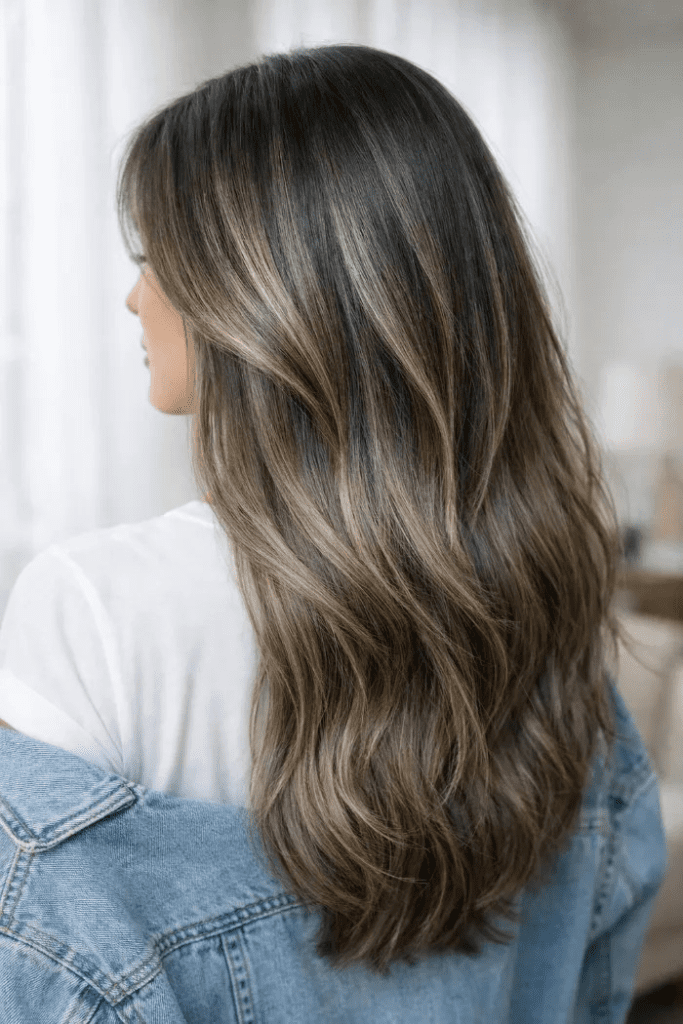
Ash blonde placed so subtly throughout long waves that it reads as a veil of dimension rather than distinct ribbons or pieces — this is the most understated placement on the list and the one that produces the most genuinely natural-looking result. From a distance the hair reads as rich, dimensional dark brunette. Up close or in direct light, the ash veil becomes visible as the source of that dimension.
Ask for: A placement described explicitly as “veil” or “shadow” balayage — the colorist should be aiming for dimension rather than visible highlights. A gloss applied after to unify the tones and maximize the smoky quality.
Best for: Those who want the warm-brunette-that-looks-exceptional quality without any visible color at conversational distances. Works for women in the most conservative professional environments.
22. Smoky Ash Blonde Melt With Defined Waves
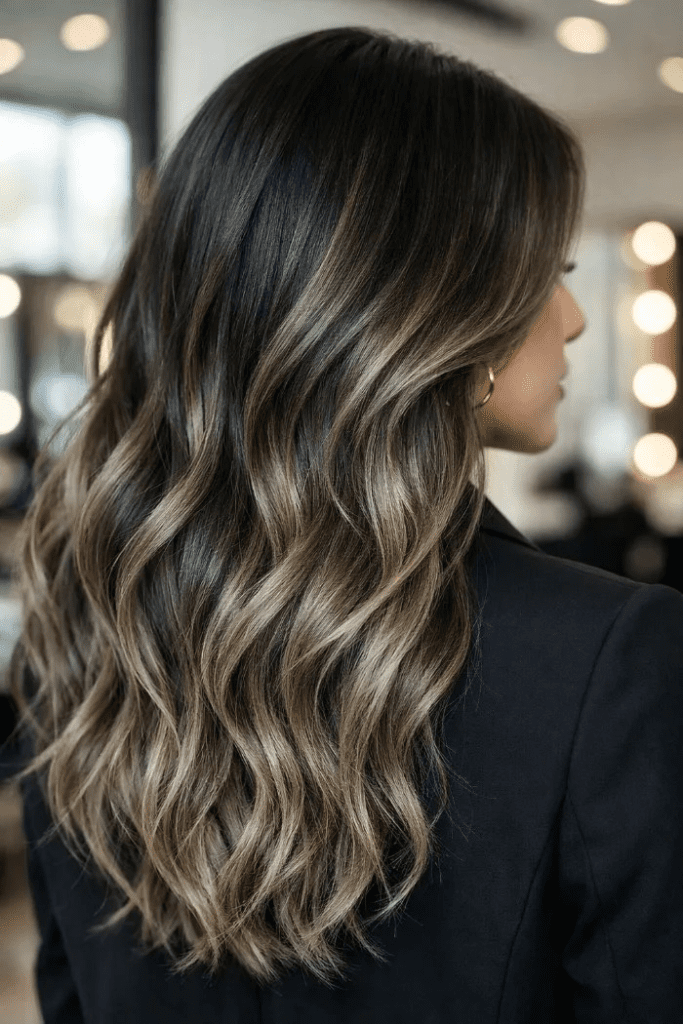
A cool, slightly brighter ash through the mid-lengths that gives defined waves more shape and visibility — the ash placement here specifically serves the wave pattern by brightening the sections that the waves push to the surface, making each wave crest more visible and more dimensional. A rooty blend and neutral-ash toner maintain the smoky quality.
Ask for: Placement calibrated specifically to land where the wave crests rather than in the wave valleys — this requires your colorist to section and apply with attention to your specific wave pattern. A rooty blend and neutral-ash toner for the final result.
Best for: Wave wearers who want their color to specifically enhance the three-dimensional quality of their wave pattern rather than simply adding overall warmth.
23. Taupe Ash Balayage With Soft Layers
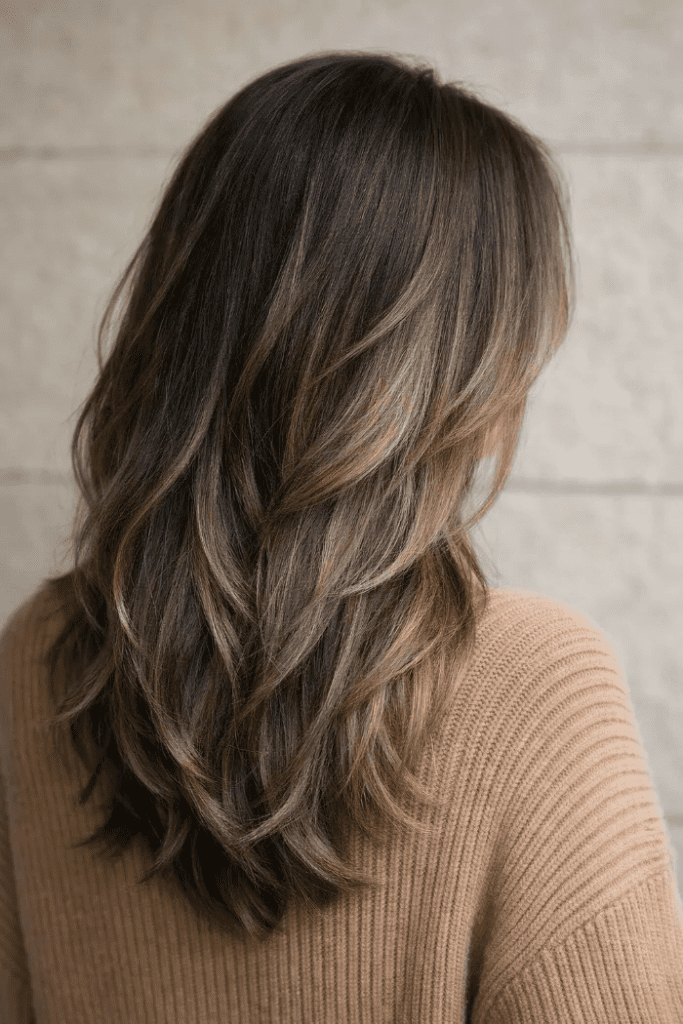
Taupe ash — the warmest and most wearable of the cool ash family — placed through soft, layered hair. Taupe ash reads as a sophisticated neutral: not as cool as true ash or icy blonde, not as warm as honey or caramel, but a specific cool-meets-neutral tone that suits a very wide range of skin tones and dark brunette base colors. On a layered cut, the taupe tones move through the layers in a way that reads as natural and dimensional.
Ask for: Taupe or beige-ash rather than true ash or icy blonde — confirm the tonal direction specifically because the word “ash” means different things to different colorists. Blue shampoo used once a week to maintain the cool neutrality.
Best for: Those who want cool dimension without any risk of the color looking too grey, too icy, or too obviously processed. The most universally flattering ash direction across different skin tones and brunette base shades.
Final Thoughts
Dark brown with ash blonde balayage is consistently one of the most successful color combinations for dark brunettes because it adds dimension and luminosity without departing from the hair’s natural depth. The dark brown does everything right — it looks healthy, full, and rich. The ash blonde provides the light and movement that makes those qualities even more visible. And the cool, smoky tonal direction keeps the result looking sophisticated and intentional rather than simply highlighted.
The right placement from this list depends on how visible you want the color at a distance, how much your hair warms between appointments, and how frequently you want to sit in the salon chair. Veil and taupe ash placements stretch the furthest between appointments. Icy ends and bold money pieces require the most consistent toning maintenance. Every option in between offers a different balance of those qualities.
Save the placements that genuinely match your honest assessment of both what you want and what you’ll actually maintain. That’s the color that will still look beautiful at appointment twelve, not just appointment one.
How do I stop ash blonde balayage from going brassy on dark brown hair?
A blue-violet toning shampoo used once a week is the most practical ongoing maintenance tool — blue neutralizes orange, violet neutralizes yellow, and dark brown hair’s warm underlying pigment produces both as the color fades. A professional toning gloss every eight to twelve weeks adds the ash tone back more significantly than shampoo alone can maintain. Heat protectant at every styling session prevents the thermal exposure that accelerates warm tonal shift. Sun protection — a UV-filtering hair product or a hat — also meaningfully slows the warming process.
How long can I go between balayage appointments with this color?
Most dark brown and ash blonde balayage clients can go twelve to sixteen weeks between full lightening appointments when the root is kept dark and the placement starts at the mid-length. A softer root shadow specifically extends that window because there’s no hard regrowth line to manage. A mid-appointment toning gloss — quicker and less expensive than a full color appointment — refreshes the ash quality and can add four to six weeks to the comfortable appointment gap.
Will ash blonde look good on my skin tone?
Ash and cool tones are most immediately flattering on cool and neutral skin undertones. On warm skin undertones, the beige-ash and taupe-ash directions (rather than true ash or icy blonde) typically produce the most flattering result. The dark brown base remaining dominant throughout helps ground the cool ash in a way that’s more universally flattering than a full cool-blonde would be — the warmth of the brunette base balances the coolness of the ash placement for most skin tones.
What’s the difference between ash blonde balayage and regular highlights on dark brown hair?
Traditional highlights are applied in foils with a defined sectioning pattern, typically from root to end, producing a relatively consistent lightened result throughout each highlighted section and a visible root line as the hair grows. Balayage is painted freehand onto the mid-lengths and ends with a soft, feathered application that produces a more organic, graduated result and a much more graceful grow-out. Ash blonde balayage also specifically includes a cool-toned toner that traditional blonde highlights don’t necessarily incorporate, which is what produces the smoky, cool quality rather than the warm, golden one.
Can I get ash blonde balayage on previously colored dark brown hair?
Yes, but the existing color history significantly affects the result. Previously lightened sections may lift to ash more easily. Previously darkened sections with permanent color may not lift as evenly. The presence of warm tones from previous color treatments may require additional toning to achieve a true ash result. A full and honest disclosure of your complete color history to your colorist before the appointment is the single most important factor in achieving the ash blonde result you’re looking for on previously treated hair.