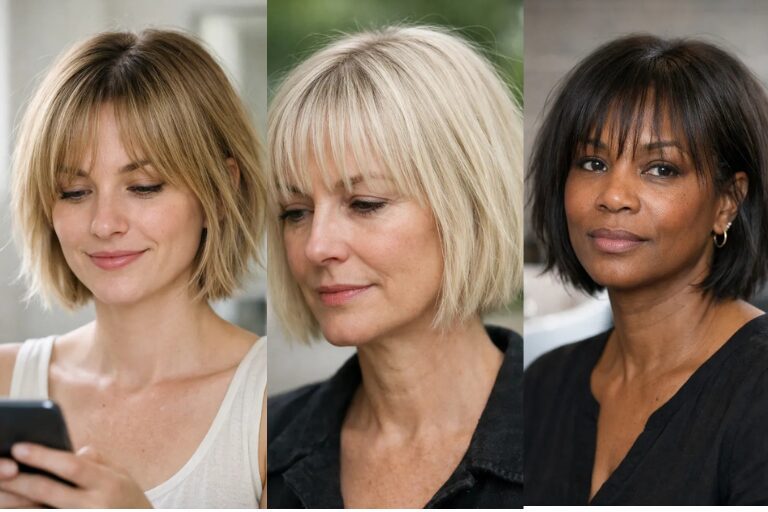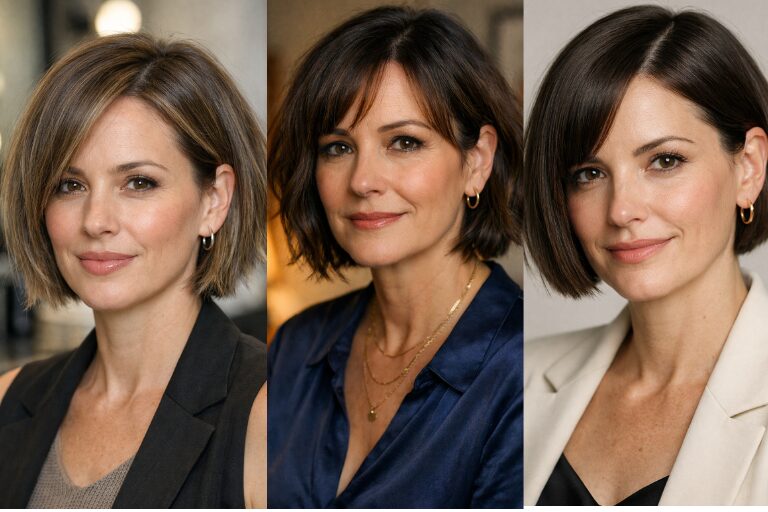
20 Volumizing Choppy Bob Hairstyles for Fine Hair That Actually Hold Shape
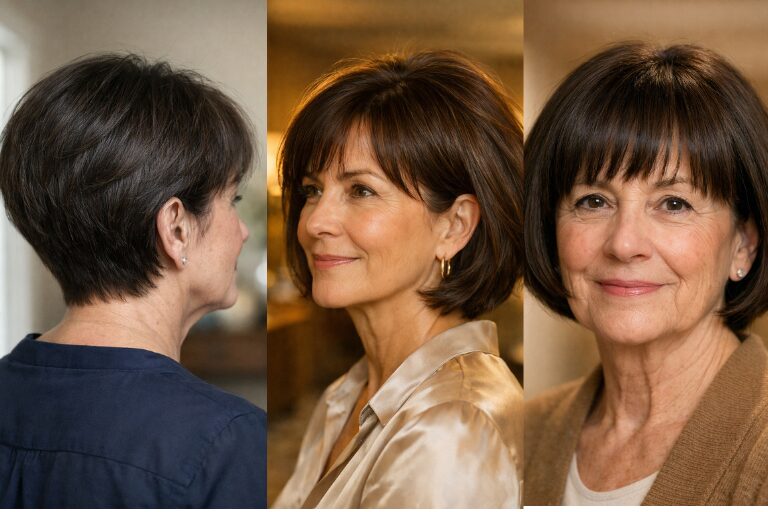
Fine hair exposes the quality of a haircut more honestly than any other hair type. A blunt cut with no internal movement sits flat by mid-morning. An over-layered cut strips the ends of the density they need to look full and healthy. The window between those two extremes is surprisingly narrow — and the choppy bob lives right in the center of it.
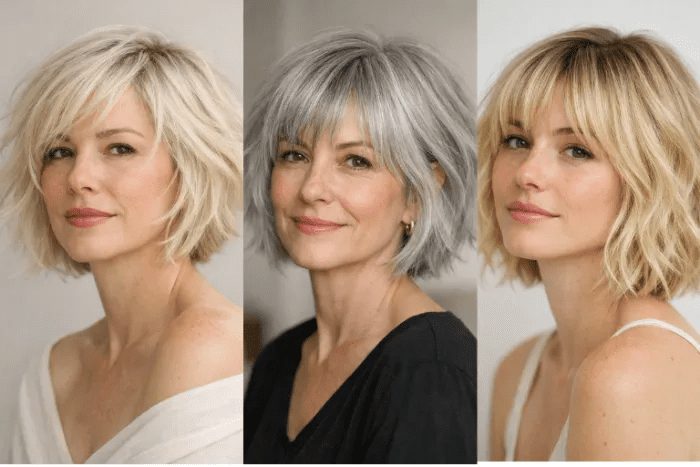
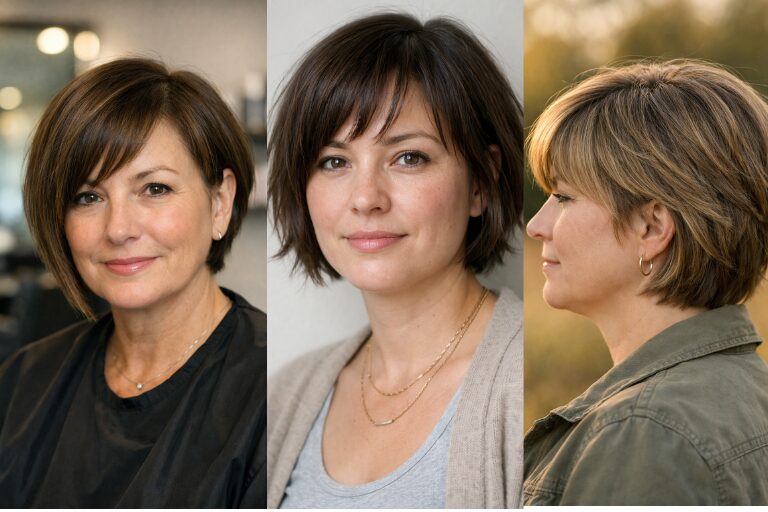
The choppy bob works for fine hair because it operates on restraint rather than aggression. Instead of removing weight in large, obvious sections, a well-executed choppy bob introduces subtle, strategic breaks in the line that allow fine hair to move, lift, and hold air between the strands. The ends stay soft rather than blunt. The crown stays lifted rather than compressed. And the whole style grows out gradually and naturally rather than reaching an awkward in-between stage that demands immediate trimming.
What matters most in any choppy bob for fine hair is the technique: point-cutting through the ends rather than blunt sheering, texture that’s built into the surface rather than removed through aggressive thinning, and a perimeter that stays strong enough to make the hair look dense at the hemline while the interior layering creates the movement. When those elements are in place, the result looks effortless rather than styled and fuller without looking artificially volumized.
These 20 choppy bob hairstyles for fine hair are chosen for how they perform in real life — not just how they look in a photo taken under perfect lighting. Each one comes with what to ask your stylist and how to style and maintain it at home so the result keeps looking great between appointments.
Why Choppy Bobs Work Better Than Other Cuts for Fine Hair
Understanding the mechanics makes it easier to have a productive conversation with your stylist and make better styling decisions at home.
Point-cut ends create movement without removing density. The difference between a choppy bob and a standard layered bob is in the cutting technique. Point-cutting — where the scissors are directed into the hair vertically at the end of each section rather than cutting straight across horizontally — creates soft, irregular ends that move independently rather than lying flat against each other. This independence is what allows fine hair to hold air and shape rather than collapsing into a flat sheet.
Subtle surface texture lifts the crown. In a well-cut choppy bob, the texture isn’t distributed evenly throughout the hair — it’s concentrated at the surface of the crown and mid-lengths where it creates visible lift and movement. The interior layers beneath the surface maintain more of the hair’s weight, keeping the silhouette full. This is the opposite of aggressive thinning, which removes weight from the interior and leaves the surface and perimeter looking sparse.
The choppy finish grows out more gracefully. A blunt cut at an exactly right length looks great the week after the trim and then progressively less intentional as it grows. A choppy bob grows with its edges softening naturally, which means the style remains flattering and wearable for four to six weeks between appointments rather than two to three. For women with fine hair who want to reduce salon frequency, this is a meaningful practical advantage.
It works on straight, wavy, and naturally textured fine hair. The choppy bob is one of the few techniques that genuinely translates across different fine hair textures without requiring significant adaptation. On straight fine hair, it prevents the flat, shapeless look. On wavy fine hair, it allows each wave to separate and define. On naturally textured fine hair, it supports the texture pattern rather than fighting it.
20 Choppy Bob Hairstyles for Fine Hair
1. Soft Blonde Choppy Bob with Wispy Fringe

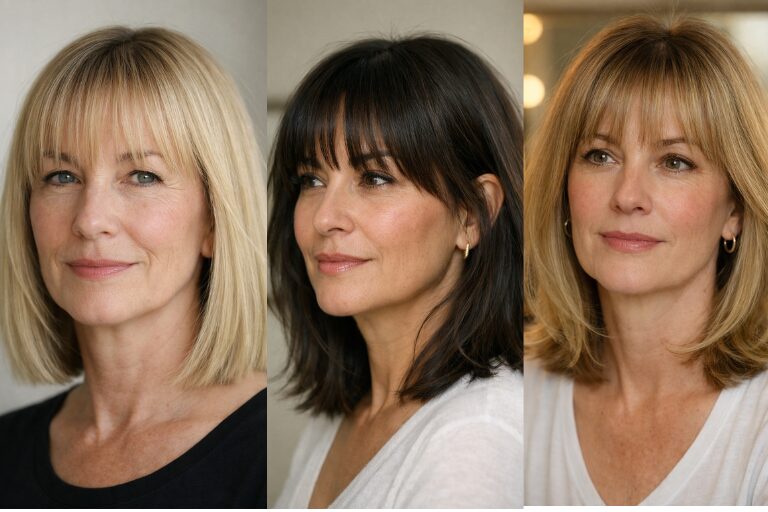
This is the choppy bob that most people picture when they imagine the style at its most flattering: a soft, shoulder-grazing length, warm blonde tones, and a wispy fringe that sits lightly across the forehead without demanding daily precision styling. The layering is understated — a few well-placed breaks in the line rather than dramatic choppiness — which gives fine hair just enough movement to hold its shape without looking thin or uneven.
The wispy fringe is a strategic addition that draws attention directly to the eyes and softens the forehead in a way that makes the whole face look more open and luminous. On fine hair, wispy fringe is almost always more flattering than blunt, dense bangs because it requires less density at the hairline to look intentional and grows out beautifully rather than reaching an awkward mid-forehead length quickly.
Ask your stylist for: Point-cut layers through the ends of the bob — emphasize “soft” and “subtle” choppiness rather than heavy or obvious texture. A wispy, airy fringe created through point-cutting rather than blunt sheering.
Styling tip: A drop of lightweight hair oil worked between the palms and pressed gently through the mid-lengths and ends adds shine, smooths flyaways, and prevents the point-cut ends from looking dry or piecey. Apply after styling, not before, to avoid flattening the root volume.
2. Natural Wavy Choppy Bob
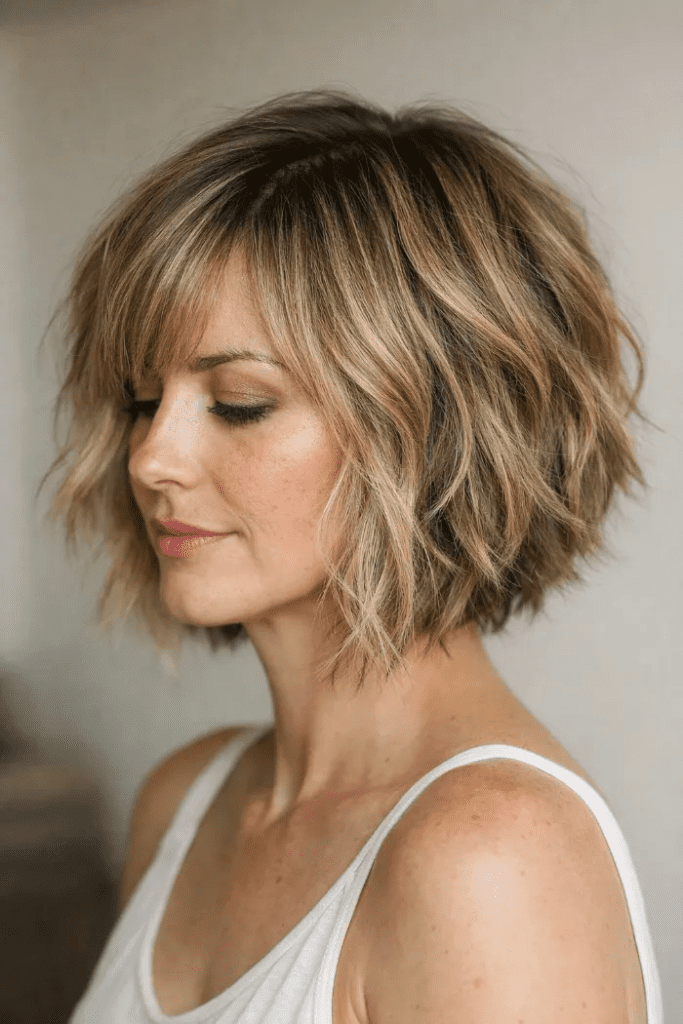
Natural waves and a choppy bob are one of the most mutually beneficial combinations in short hairstyling — because the choppy layering separates each wave rather than letting them clump together, which is the most common problem with wavy fine hair in any cut that doesn’t have enough internal movement. When the waves are separated and individualized by the choppy technique, the whole style looks fuller and more dimensional than it does when the waves fall together in flat, compressed sections.
The genius of this style is that it looks most beautiful on days when you’ve done very little to it. The natural waves and the choppy layers work together to create a result that genuinely improves as the day goes on.
Ask your stylist for: Choppy layering that works with the natural wave pattern rather than against it — ask your stylist to look at your hair’s natural wave direction before making any cutting decisions. Layers placed at the surface of the waves rather than through the underneath sections.
Styling tip: A lightweight volumizing mousse applied to damp hair before any heat styling adds body at the roots while keeping the waves soft and touchable rather than crunchy. Apply at the roots first, then work through the lengths, and rough-dry upside down for maximum crown volume before diffusing or air drying.
3. Classic Choppy Bob with Light Movement

The classic choppy bob is the most restrained and universally flattering version on this list — the kind of cut that looks polished enough for a professional environment on Monday and relaxed enough for a casual weekend on Saturday without any change in styling approach. The shape is clean and the choppy element is subtle: barely-there breaks in the line that create natural lift without changing the overall silhouette in any obvious way.
For fine hair that wants a reliable, low-maintenance style that consistently looks great, this is the most consistently recommended version. It doesn’t rely on perfect styling to look intentional, and it grows out so gradually that the weeks between appointments rarely feel obvious.
Ask your stylist for: Subtle, light choppiness rather than dramatic or obviously textured ends. The cut should look clean and polished at first glance with the texture becoming visible only when the hair moves. Minimal internal layering — the texture should be at the surface, not throughout.
Styling tip: A dry volume and texture spray applied to the roots and lengths of dry hair after styling lifts the crown, adds body to the choppy ends, and extends the life of the style significantly. Apply while holding the hair away from the scalp and massage in gently for even distribution.
4. Choppy Blonde Bob with Texture Through the Ends
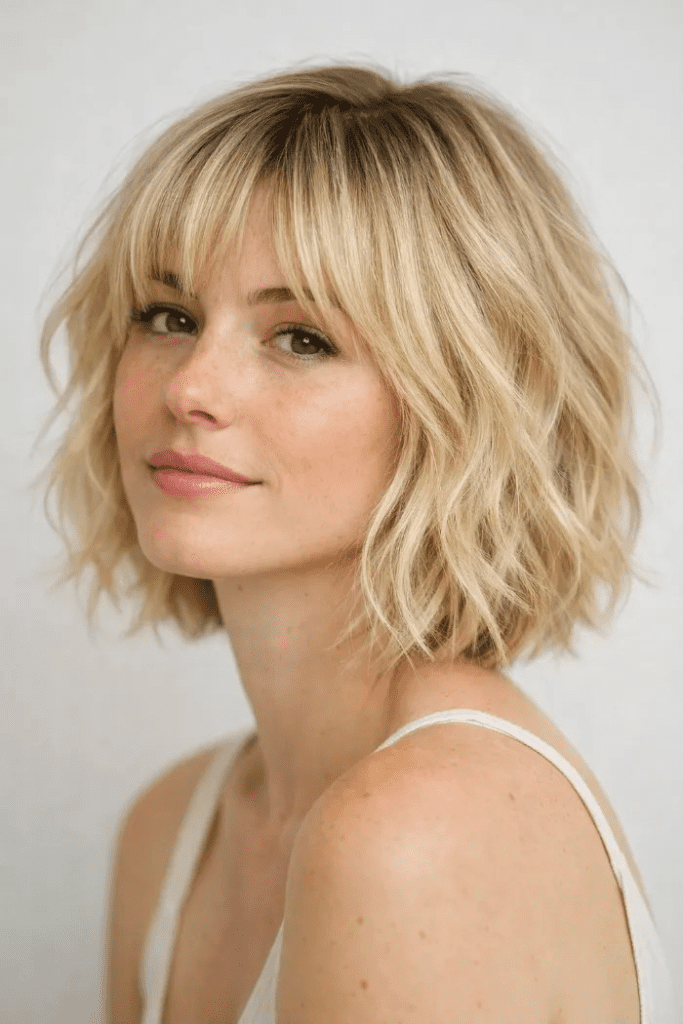
Concentrating the choppy texture specifically at the ends of a blonde bob is one of the most effective fine hair techniques because it solves the exact problem fine hair has at this specific part of the style: the tendency for the ends to lie flat and lose their shape first. By introducing point-cut texture at the hemline, the ends stay separated and light rather than compressing into a flat, one-dimensional line that exposes the hair’s limited density.
The blonde tone amplifies this effect — tonal variation through blonde hair catches light differently through the textured ends than it would through a blunt, uniform baseline, creating the visual impression of more hair through optical dimension.
Ask your stylist for: Texture focused specifically at the ends rather than distributed throughout the entire length. The mid-lengths should stay relatively smooth to maintain the shape, while the ends should be point-cut for the piecey, separated quality that keeps fine hair looking full at the hemline.
Styling tip: A tiny amount of lightweight styling cream pressed between fingertips and pinched gently through the ends after styling defines the choppy texture and prevents it from looking frizzy or unintentional. Use far less than feels necessary — on fine hair, even half a fingertip’s worth of cream can flatten the root volume if it migrates upward.
5. Platinum Choppy Bob with Piecey Layers
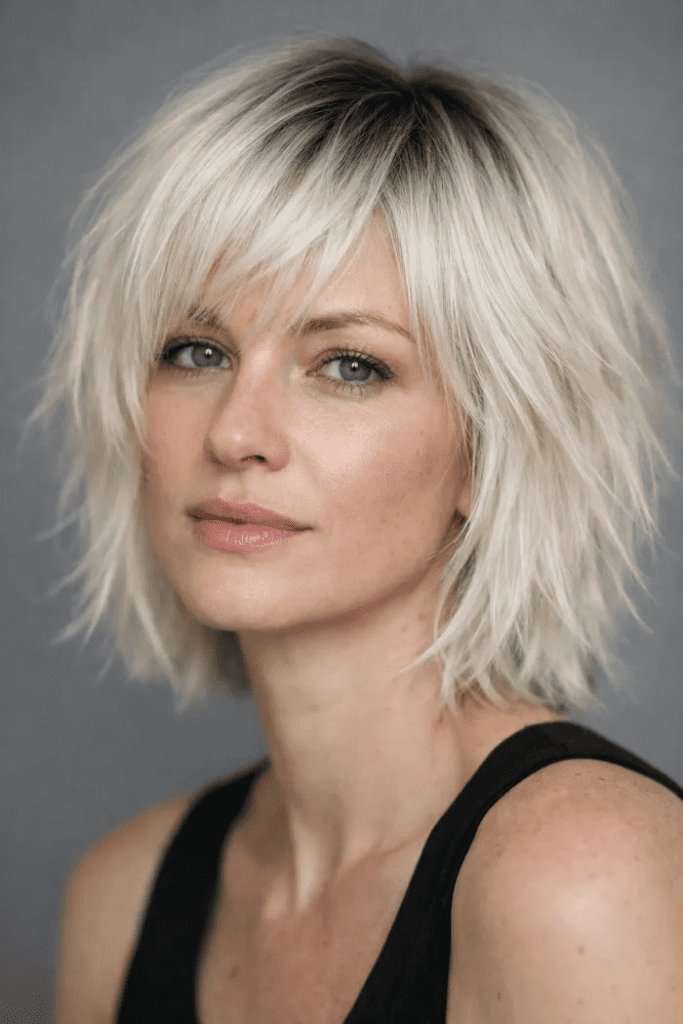
Piecey layers are a specific subset of choppy texture — rather than creating general irregular movement throughout the hair, piecey layers separate the hair into visible, individual sections that move independently and create an airy, dimensional quality. On a platinum blonde bob, piecey layers serve double duty: they add the structural movement that fine hair needs while simultaneously showcasing the brightness and tonal variation of the platinum color in a way that smooth, flat styling never could.
The “slightly undone” quality of piecey layers is exactly what makes fine hair look most modern and confident — it signals that the hair has natural character and movement rather than needing to be heavily processed or aggressively styled to look good.
Ask your stylist for: Piecey layering specifically — ask for layers that are visible as individual sections rather than blended smooth. The platinum color and the piecey texture should work together to create dimension: ask your colorist about babylights or fine balayage through the platinum that adds tonal variation for even more depth.
Styling tip: A dry shampoo paste worked between fingertips and pressed gently through the ends of dry hair creates the piecey separation that defines this style. It also absorbs any oil that can flatten fine hair through the day, so the piecey quality lasts from morning to evening.
6. Tousled Choppy Bob with Soft Bangs
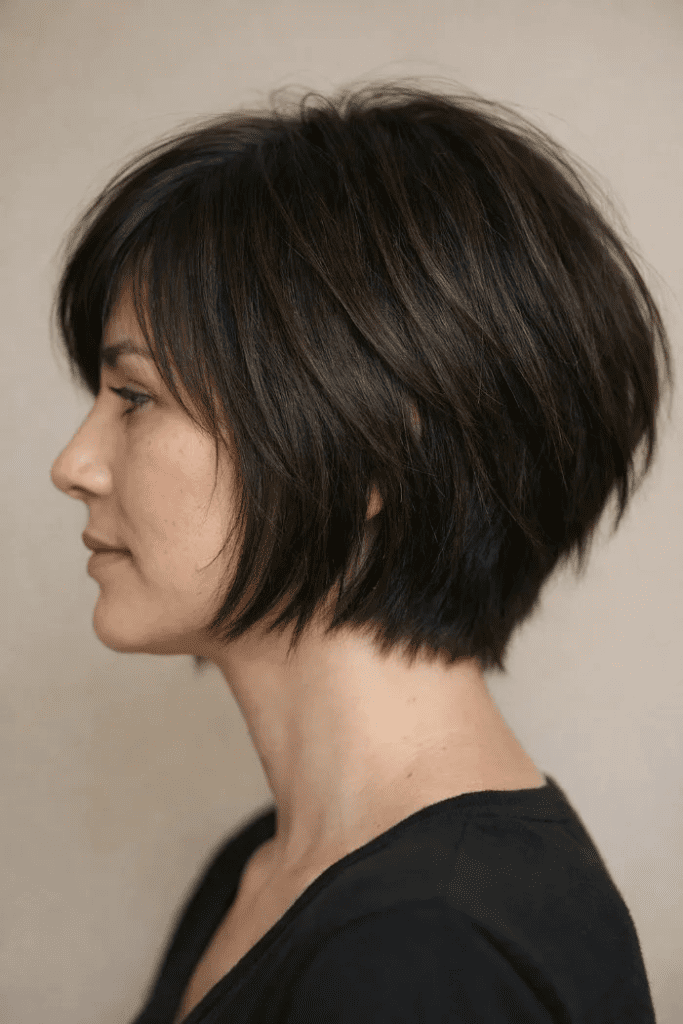
The tousled choppy bob is deliberately imperfect — and that deliberate imperfection is precisely what makes it so flattering on fine hair. When fine hair is styled too precisely, every strand lies against every other strand in a way that exposes the hair’s limited density. When it’s intentionally tousled, air is introduced between the strands, the choppy layers are visible and dimensional, and the overall impression is of hair that has natural volume and character.
Soft bangs add a gentle front focal point that grounds the tousled styling without requiring the daily precision of a blunt or heavier fringe. They blend naturally into the tousled quality of the rest of the bob, which makes the whole style look consistent rather than divided between a styled front and an undone back.
Ask your stylist for: A genuinely tousled, organic cut rather than a precise, architectural one. The layers should be placed to create natural movement rather than a specific, controlled shape. Soft bangs that are blended into the layers rather than cut as a separate, defined section.
Styling tip: A heat protection serum applied before blow-drying provides the flexible hold that keeps a tousled style looking intentional through the day while protecting the fine strands from heat damage. On fine hair, heat damage is cumulative — each session of unprotected heat styling makes the strands finer and more fragile over time.
7. Edgy Choppy Bob with Defined Shape
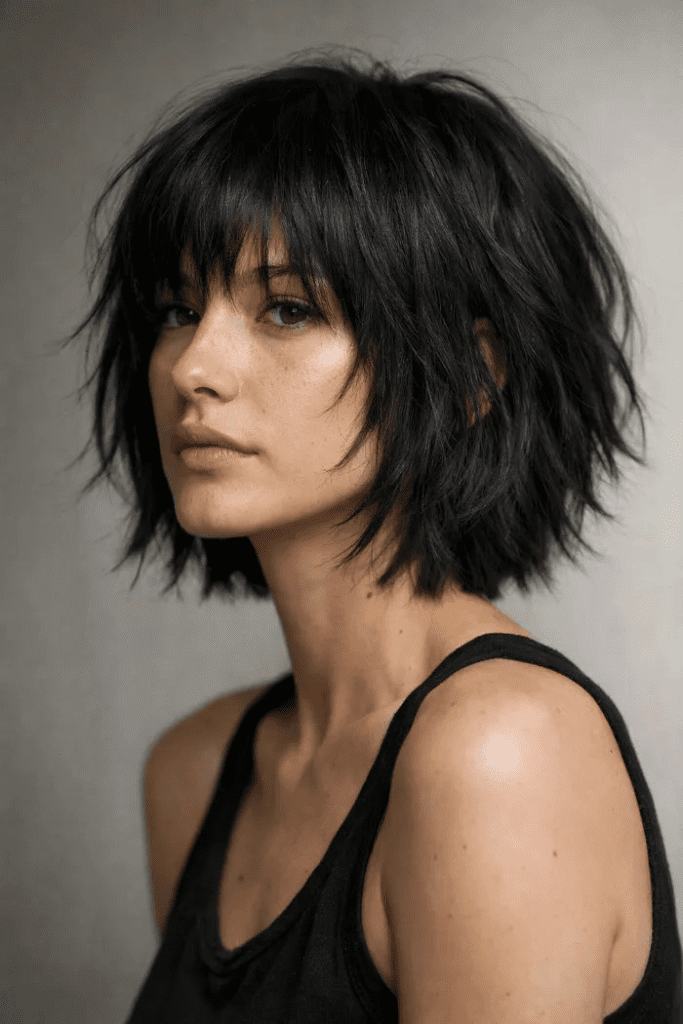
The edgy choppy bob introduces a more pronounced, intentional texture — the choppy element is more visible and deliberate than in the softer versions on this list, creating a style with genuine personality and modern edge. Shorter layers through the crown specifically are what give this version its lift and attitude: by cutting the top layers shorter than the underlying sections, the stylist creates a natural elevation at the crown that makes fine hair look significantly fuller from above and in profile.
For fine hair that’s been wearing softer, more conventional styles and wants something with more character, this is the style that delivers maximum impact without requiring significantly more styling effort.
Ask your stylist for: More pronounced choppy texture than the classic version — the layers should be visible and intentional rather than barely-there. Shorter layers specifically through the crown section for lift. A defined overall shape that has a clear silhouette when the hair is viewed from the side profile.
Styling tip: A root-lifting spray applied directly at the crown before blow-drying creates the elevated foundation that this style’s shorter crown layers build on. Spray at the roots, lift the hair away from the scalp, and blow-dry with a diffuser or fingers rather than a brush for the most natural, lifted result.
8. Elegant Gray Choppy Bob
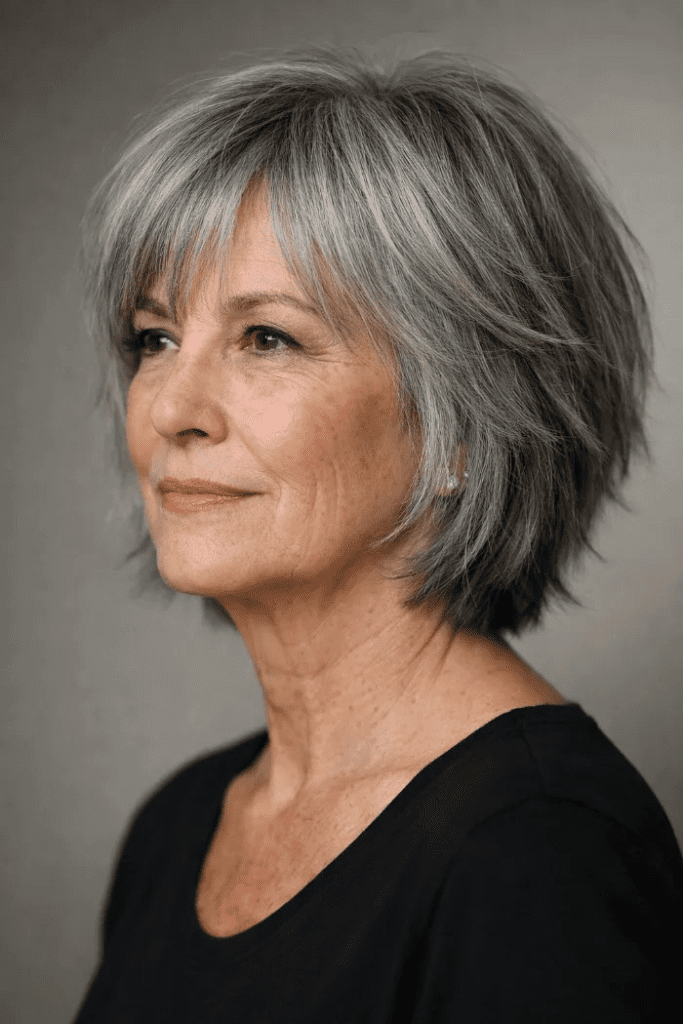
Gray hair and the choppy bob are a genuinely excellent combination that’s worth celebrating specifically rather than treating as a generic case. Natural gray and silver hair tends to be coarser and drier than pigmented hair — qualities that can make smooth, one-length styles look stiff and flat. The choppy bob’s texture and movement work with the coarser quality of gray hair rather than against it, creating a style that looks refined and graceful rather than severe.
The restraint in this version is important: understated choppy texture that adds body without creating frizz. The smooth overall finish keeps the style looking polished and elegant while the subtle texture prevents the gray tones from looking dull or flat.
Ask your stylist for: Restrained choppy texture — the emphasis should be on understated movement rather than obvious layering. A smooth, polished finish throughout rather than an intentionally undone or tousled quality. The layering should add lift without disrupting the refined silhouette.
Styling tip: A purple or violet-toned shampoo used once or twice a week neutralizes the yellow tones that gray hair develops over time and keeps silver strands looking bright and intentional. On fine gray hair, use a formula that’s specifically moisturizing as well as toning — gray hair needs hydration more than pigmented hair does.
9. Graceful Silver Choppy Bob

The graceful silver choppy bob is the more relaxed counterpart to the elegant gray version — where the elegant version prioritizes polish and refinement, the graceful version prioritizes ease and natural movement. Soft layers through the sides prevent fine silver hair from falling limp while keeping the overall silhouette balanced and flattering. The result is a style that requires minimal morning effort but always looks intentional and well-considered.
Silver hair has a luminous quality in soft natural light that few other hair colors can match — and the gentle movement of a well-cut choppy bob showcases that luminosity by allowing light to catch the silver strands from multiple angles simultaneously.
Ask your stylist for: Light choppy layering through the sides specifically — this is where fine silver hair tends to lose volume first. A soft, natural finish rather than a structured or architectural one. The overall impression should be of naturally well-behaved silver hair rather than obviously styled layering.
Styling tip: A lightweight hair oil applied to the mid-lengths and ends after styling adds the shine and smoothness that makes silver hair look its most luminous without flattening the gentle volume that the choppy layers create. Use the minimal possible amount — on fine hair, less is always more with oil products.
10. Icy Blonde Choppy Bob with Airy Layers
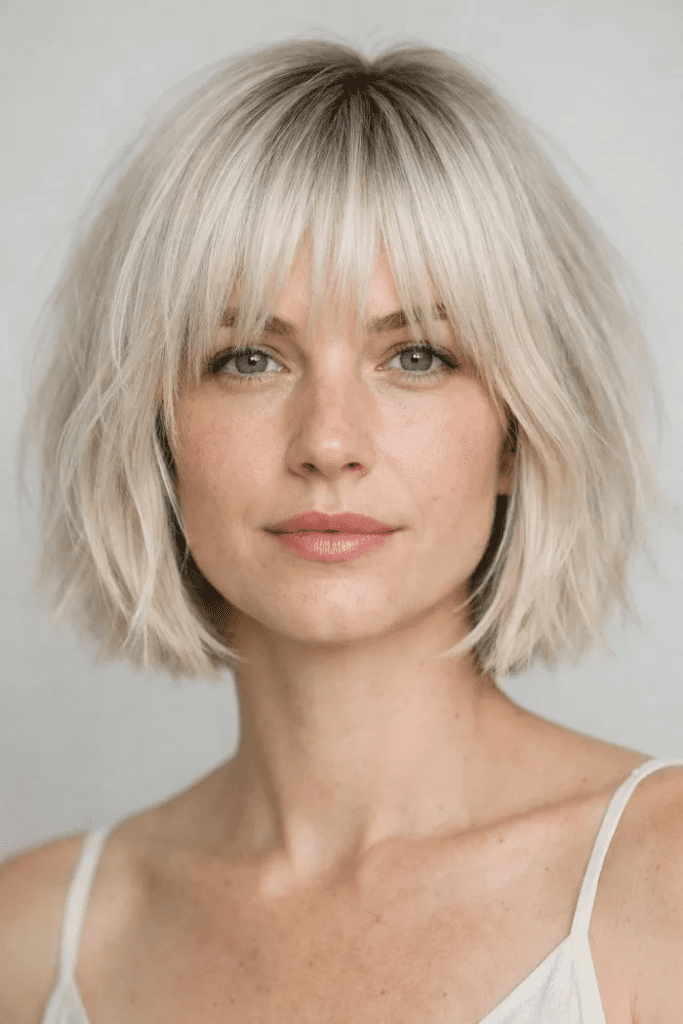
Icy blonde tones and airy choppy layers create a combination that looks strikingly bright and full despite the inherent lightness of both the color and the cut technique. The airy layers — point-cut throughout to create maximum movement and minimum weight — allow fine blonde hair to hold air between the strands in a way that creates visible fullness without any product-dependent volume. The icy tone catches light across the airy layers beautifully, creating the impression of a hair texture that’s both luminous and abundant.
Ask your stylist for: Airy layering throughout — “airy” is a useful word for communicating the lightness and movement you want without the texture becoming heavy or choppy in an obvious way. A very light blending of the ends rather than strong, defined choppy breaks, which can look too obvious on the fine strands of icy blonde hair.
Styling tip: A hair oil applied to the finished style before any heat protection shields the highlighted ends from the cumulative damage of heat styling. Icy blonde hair is typically the most lightened and therefore the most fragile — a bond-strengthening formula used regularly prevents the strands from becoming increasingly fine over time.
11. Mature Silver Choppy Bob with Soft Layers
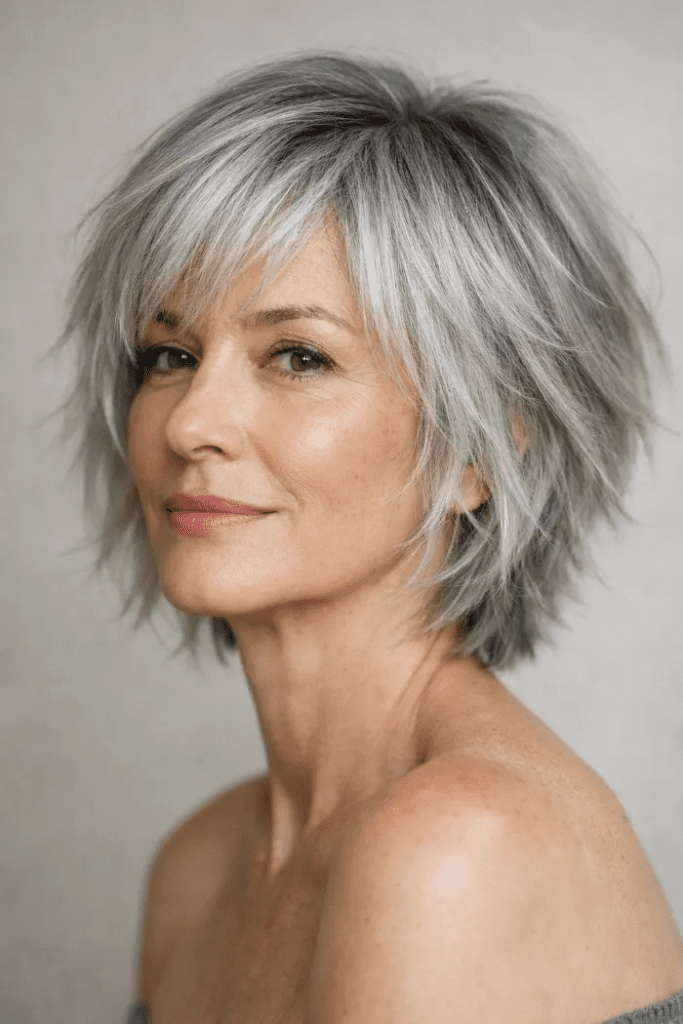
The mature silver choppy bob prioritizes a combination that’s particularly valuable for women over 50 or 60: a style that looks effortlessly polished without requiring significant daily styling time, and that flatters the specific way that silver hair moves and catches light at this stage of life. Soft feathered layers create lift at the crown without disrupting the refined quality of the overall silhouette, and gentle face-framing keeps the style focused on the face rather than the hair itself.
Ask your stylist for: Soft, feathered layering rather than obviously choppy texture. The feathering technique — where the scissors are angled and moved in a fanning motion through the ends — creates a softer, more graduated texture than point-cutting and suits the refined aesthetic of this style particularly well.
Styling tip: A heat protection leave-in treatment applied before blow-drying seals the hair cuticle, which is especially important for silver hair that tends to have a more open cuticle structure than pigmented hair. A sealed cuticle reflects light better, which makes silver hair look brighter and more lustrous rather than dull and matte.
12. Bright Platinum Choppy Bob with Wispy Texture
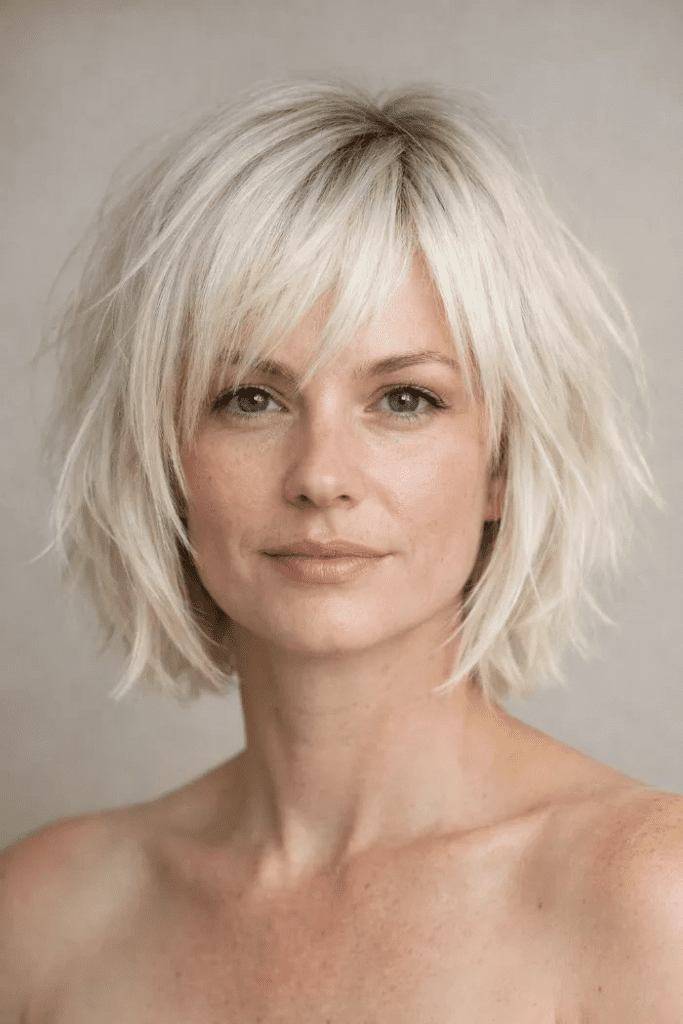
The wispy texture variation of the platinum bob is the lightest and most airy version on this list — everything is calibrated for maximum lightness and minimum weight. The ends are barely-there in their choppiness, the overall shape is soft rather than defined, and even the fringe is wispy and barely-there rather than dense or structured. On fine platinum hair, this approach creates a style that looks ethereally full and bright rather than sparse or over-processed.
Ask your stylist for: The lightest possible choppiness — wispy rather than piecey or obvious. The texture should be barely perceptible when the hair is still, becoming visible only when the hair moves. A wispy fringe that blends completely into the lengths rather than being a defined separate section.
Styling tip: A lightweight matte texture spray applied to dry hair after styling adds the definition that makes wispy texture visible without adding any product weight. Apply by holding the can at arm’s length and misting lightly, then scrunch gently with fingertips rather than working the product through with a brush.
13. Sleek Silver Choppy Bob with Light Movement
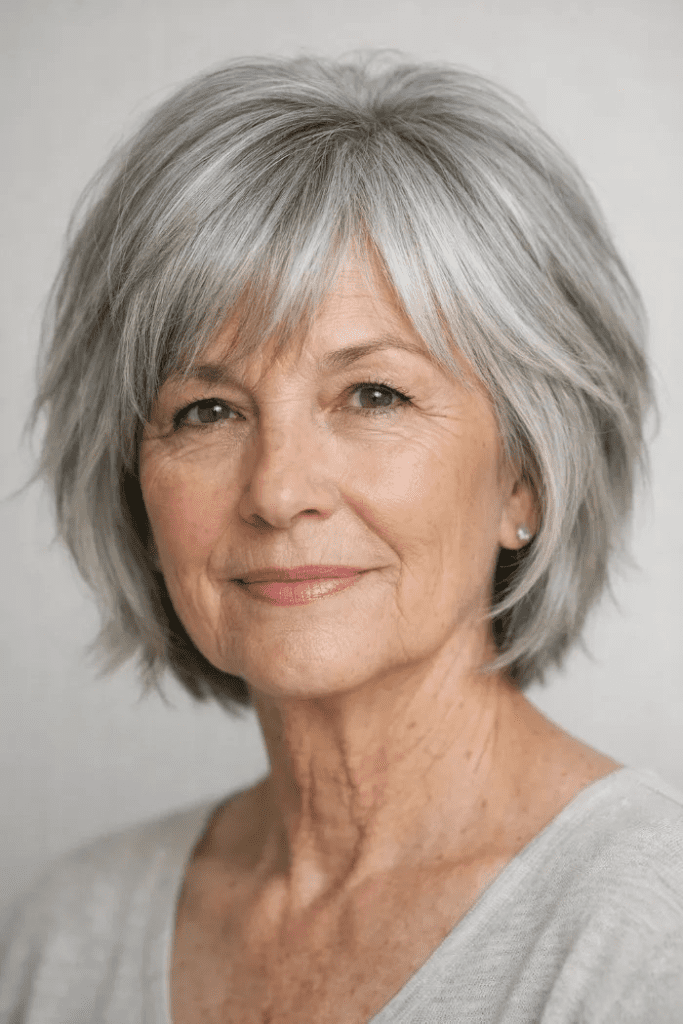
The sleek silver choppy bob is the most contradictory-sounding style on this list — “sleek” and “choppy” seem like opposing aesthetics. But in practice, the combination is one of the most sophisticated options available: the sleek overall finish gives the style its polished, refined quality while the restrained choppy texture prevents the sleekness from becoming flat or stiff. The result is hair that looks smooth and intentional while still having the natural movement that keeps fine silver hair from looking lifeless.
Ask your stylist for: A smooth, sleek finish with minimal visible choppiness at the surface — the texture should be felt in how the hair moves rather than seen in obvious breaks in the line. A clean, precise overall shape.
Styling tip: A multi-tasking leave-in spray applied to damp hair before styling provides detangling, frizz control, heat protection, and shine in a single step — which is ideal for a style where the goal is maximum sleekness with minimum effort. Apply to towel-dried hair, comb through gently, and then proceed with whatever heat styling tool you prefer.
14. Soft Natural Choppy Bob with Relaxed Shape
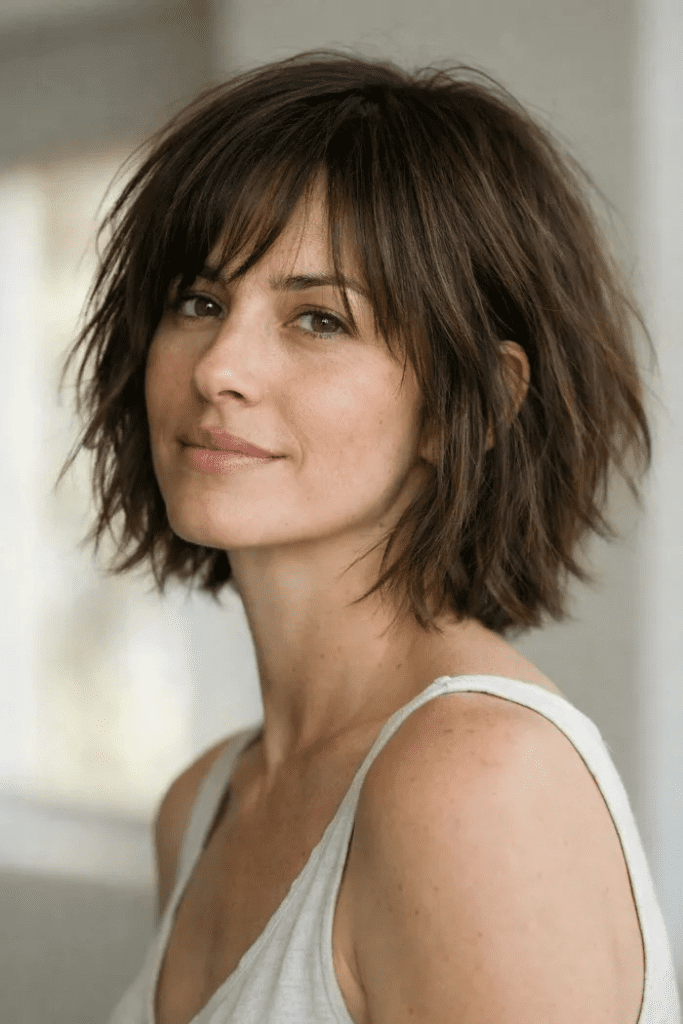
The soft natural choppy bob is the style for the woman who wants to look polished without ever looking like she tried. The choppy texture is present and functional — it keeps the shape lifted and moving throughout the day — but it’s so naturally integrated into the cut that the overall impression is of hair that simply behaves well rather than hair that’s been cut to behave well. The relaxed shape suits casual environments and everyday wear with an ease that more structured bob variations can sometimes lack.
Ask your stylist for: An organic, natural-looking cut rather than a precise, architectural one. The layers should follow the natural fall of the hair rather than imposing a specific direction or shape. A length that suits your lifestyle — this style works at any length from chin to collarbone.
Styling tip: A lightweight all-in-one leave-in milk applied to damp hair before air drying provides the hydration, frizz control, and heat protection that a naturally styled bob needs without adding any product weight. On fine hair, heavy leave-in treatments can collapse the volume that the choppy layers create.
15. Sun-Kissed Choppy Bob with Face-Framing Texture
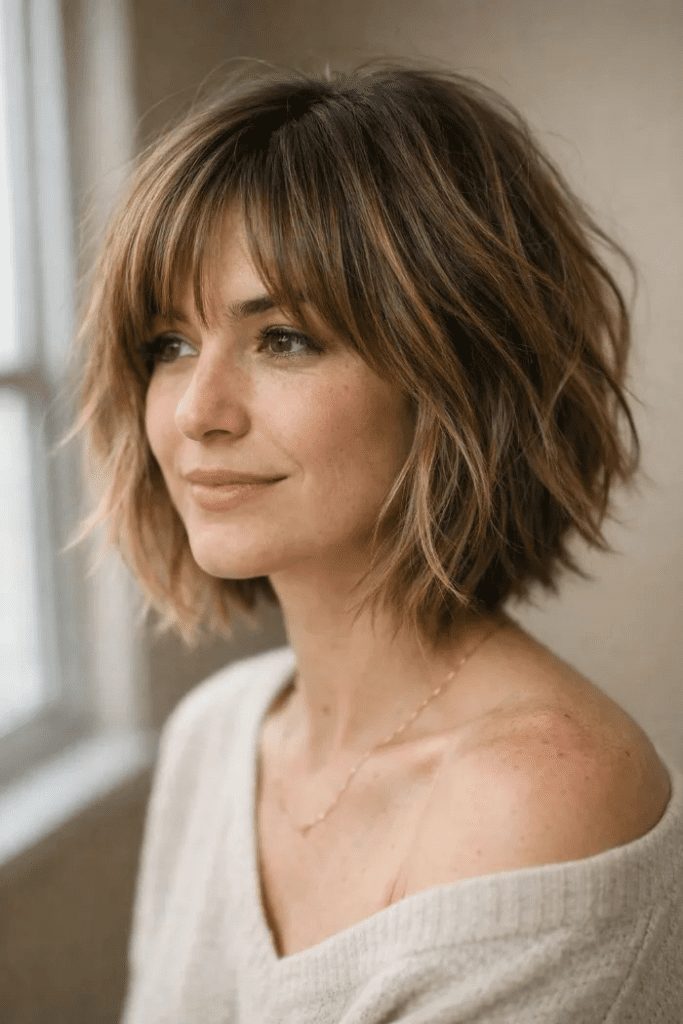
Sun-kissed balayage highlights and choppy texture are one of the most effective color-and-cut combinations for fine hair because they create dimension through two completely different mechanisms simultaneously. The choppy texture creates structural dimension — air between the strands, movement through the lengths. The sun-kissed highlights create optical dimension — tonal variation that the eye reads as depth and fullness. Together they produce a result that looks significantly more abundant than either element could achieve independently.
Ask your stylist for: Choppy texture that works with the highlight placement rather than disrupting it — the face-framing texture should be concentrated where the highlights are strongest, so the color and the movement work together to draw attention to the face.
Ask your colorist for: Sun-kissed balayage with extra brightness at the face-framing sections — the pieces that will be most visible in the choppy texture around the face.
Styling tip: A lightweight argan oil or treatment oil applied to the mid-lengths and ends after styling amplifies the sun-kissed highlights by adding the shine and luminosity that brings warm tones to life. On fine hair, use a formula specifically designed for fine or thin hair to prevent the oil from flattening the root volume.
16. Tousled Choppy Bob with Lived-In Volume
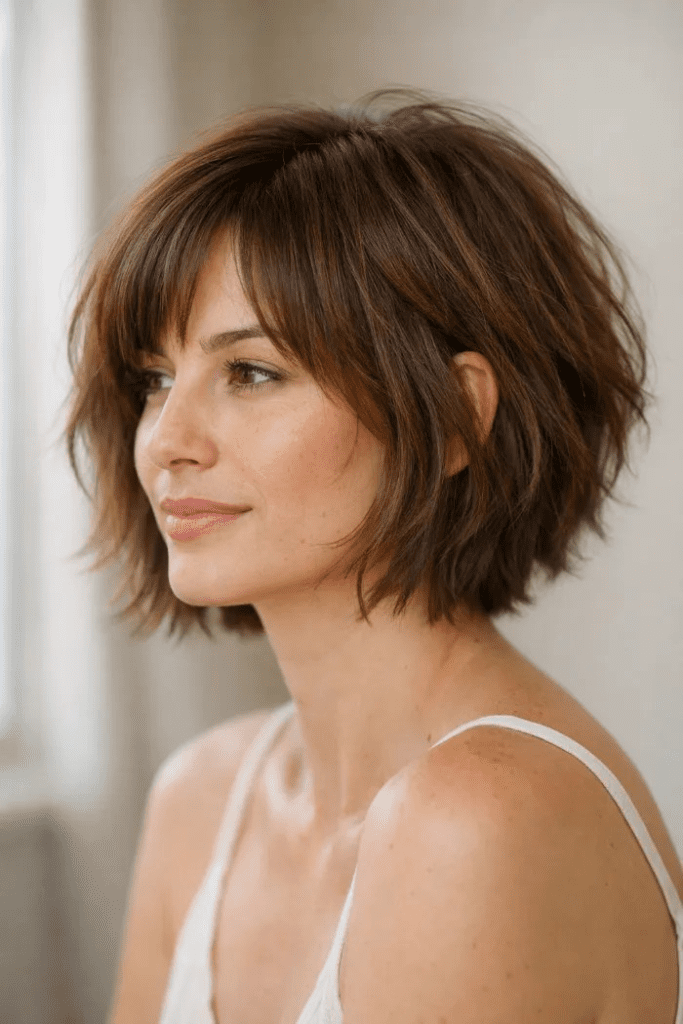
The lived-in choppy bob is the style that looks increasingly good as the day progresses rather than decreasingly good — which is a quality worth prioritizing on fine hair, where styles often peak at 8am and decline from there. The intentionally imperfect layering creates a tousled quality that looks better when it moves and shifts throughout the day, when a few pieces fall out of position, and when the natural oils of the hair add some weight to the ends. It’s the anti-perfectionist’s bob.
Ask your stylist for: Layers that are placed to create lived-in volume rather than precise styling. The cut should look like it will improve with movement and time rather than requiring constant maintenance to stay looking right.
Styling tip: A dry volume spray applied to the roots and lengths of dry hair after styling adds airy lift and touchable texture that enhances the lived-in quality rather than making the style look over-worked. Apply, scrunch lightly, and then resist the urge to smooth or perfect — the imperfection is the point.
17. Soft Wavy Choppy Bob with Natural Body
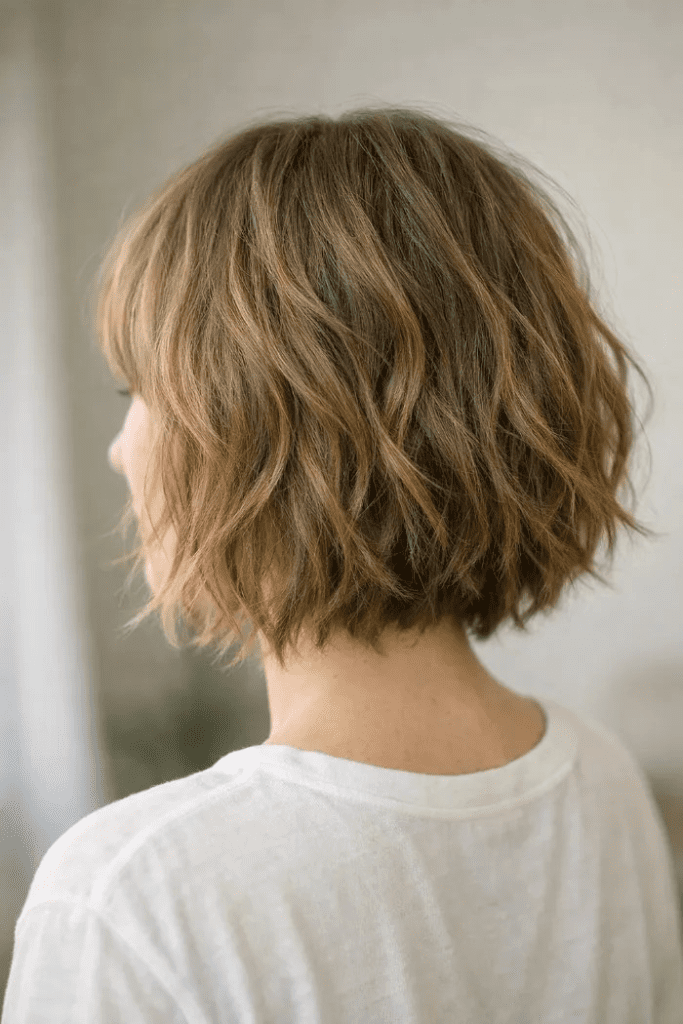
Soft waves and choppy texture are a combination that’s particularly forgiving on fine hair because the waves themselves introduce some visual fullness that the choppy layers then enhance and separate. Without the choppy technique, soft waves on fine hair tend to clump together into flat, wide sections that expose the scalp. With it, each wave stays separated and individual, creating a result that looks genuinely full and naturally dimensional rather than manufactured.
Ask your stylist for: Choppy layering specifically designed to work with your natural wave pattern — ask your stylist to assess your natural texture before cutting and place the layers where the waves naturally occur rather than in uniform sections.
Styling tip: A lightweight curl-defining cream or wave cream worked through damp hair before air drying or diffusing gives soft waves their most defined, separated result. Apply it using the “praying hands” method — pressing the product into the hair from below rather than scrunching from the top — for the most even distribution without disturbing the wave formation.
18. Wind-Swept Choppy Bob with Airy Finish

The wind-swept choppy bob creates the specific impression of hair caught in a flattering breeze — directed, effortless, and full of natural movement. Fine hair rarely looks this naturally full without this specific kind of cut, because the choppy layers create the built-in lift that makes the “wind-swept” quality look organic rather than forced. The airy finish means there’s no product weight dragging the style down — the movement is sustained by the cut’s structure alone.
Ask your stylist for: Layers that create a naturally directional quality — the hair should appear to be moving in a specific direction even when it’s still. A very light finish with minimal product interaction so the airy quality is sustained through the day.
Styling tip: Starting with a volumizing shampoo specifically formulated for fine or flat hair builds the foundation of volume that the choppy bob then amplifies. Volume created at the washing stage is more lasting and more natural-feeling than volume added through styling products alone, because it’s built into the hair’s temporary structure as it dries.
19. Wind-Swept Gray Choppy Bob with Soft Lift
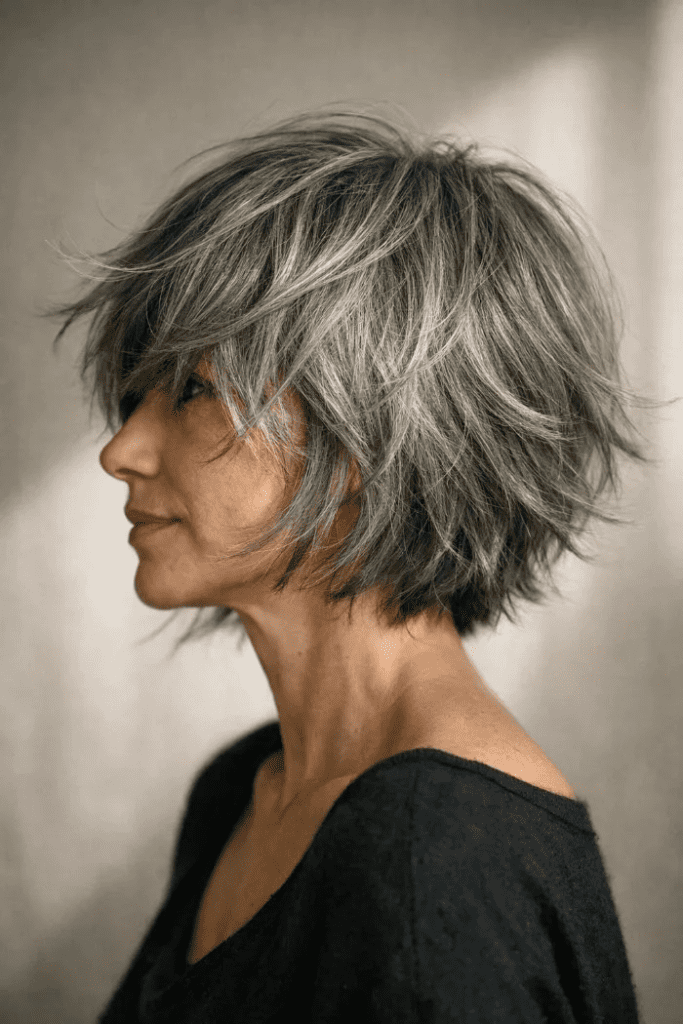
The wind-swept gray version applies the same directional, effortless principle to silver and gray hair — which benefits even more from this approach because gray hair’s coarser, drier texture can look stiff and severe in more structured, less textured styles. The soft lift through the choppy layers creates movement and lightness that works with gray hair’s natural qualities rather than against them, producing a style that looks genuinely graceful rather than maintained.
Ask your stylist for: Soft layers that create gentle lift rather than obvious choppiness. The texture should appear to be a natural consequence of the hair’s movement rather than a deliberate cutting technique. A light, airy finish throughout.
Styling tip: A volumizing styling mist applied to towel-dried hair before blow-drying creates root-to-tip fullness that’s particularly effective on gray hair, which tends to lose volume faster than pigmented hair due to the changes in the hair shaft’s protein structure. Apply at the roots first, then mist through the lengths for the most even distribution.
20. Textured Silver Choppy Bob with Side Volume

The textured silver choppy bob places its layering specifically through the sides — the area where fine silver hair most often loses volume and creates a flat, shapeless quality. By concentrating the choppy texture at the sides, the stylist creates a style that frames the face with visible fullness and keeps the overall silhouette balanced and rounded rather than collapsed or narrow.
This targeted approach to texture placement is one of the most sophisticated techniques in the choppy bob category — rather than distributing layers uniformly throughout the cut, the stylist analyzes where the hair most needs support and places the texture precisely there.
Ask your stylist for: Texture concentrated specifically through the sides and lower crown area — explain that your fine hair loses volume at the sides first and ask for the layering to be strategic rather than uniform. The overall silhouette should look fuller and more rounded from the front after the side texture is added.
Styling tip: A volumizing foam applied to damp hair at the sides and crown before blow-drying creates the lightweight body that supports the side texture throughout the day. The air-infused formula adds lift without the weight of cream or gel products, which is essential for fine hair that needs fullness at the sides without being dragged down by product.
The Right Technique Makes All the Difference
The most important thing to understand about choppy bobs for fine hair is that the technique your stylist uses matters more than the specific style variation you choose. Two stylists can cut what appears to be the same choppy bob and produce completely different results depending on whether they use point-cutting, sliding cuts, or razoring — and the difference in how those techniques interact with fine hair is significant.
Point-cutting is the technique most recommended for fine hair because it creates soft, irregular ends that move independently without removing significant amounts of hair. The scissors are directed into the end of each section vertically, creating small notches that break up the line without dramatically reducing the hair’s density.
Razoring can work on some fine hair textures but is generally higher risk — razors remove weight quickly and can be difficult to control precisely, which can result in ends that are too thin and wispy on fine hair. If your stylist prefers razoring, ask them to use it very lightly and only at the very tips rather than through the lengths.
Thinning shears or texturizing shears should be used sparingly or not at all on fine hair. They remove internal weight by cutting some strands shorter than others throughout the section, which can thin the hair to the point where the ends look sparse rather than textured.
The perimeter should stay relatively strong. In any choppy bob on fine hair, the emphasis should be on surface texture rather than interior thinning. The outside line of the bob — the hemline and the face-framing outline — should maintain enough density to look healthy and full. The texture lives at the surface, not through the structural foundation of the cut.
How to Style a Choppy Bob for Maximum Volume
The right technique at the salon gives you the foundation. The right approach at home keeps it performing.
Blow-dry upside down first. The first 90 seconds of drying are when the most volume can be created. Flip the hair upside down, direct the dryer at the roots, and rough-dry with fingers while pulling the hair away from the scalp. The roots dry in a lifted position rather than compressed against the head, and that initial lift lasts significantly longer than volume that’s styled in after the hair is mostly dry.
Use a round brush through the crown, not a paddle brush. A paddle brush smooths and flattens. A round brush lifts and creates bend. Even one pass with a medium round brush through the crown section during the final stages of blow-drying adds noticeable lift and shape that a paddle brush can’t produce.
Apply volumizing products at the roots, not through the lengths. Volumizing mousse, root spray, and dry shampoo all work by adding friction and body specifically at the root area. Applying them through the lengths adds product weight that counteracts the volume they create at the roots. Focus application at the scalp and root zone and then rough-dry to activate.
Use dry shampoo proactively, not reactively. Most people apply dry shampoo when their hair starts to look oily and flat. Fine hair benefits more from dry shampoo applied to clean, dry roots at the beginning of the second day — before the hair starts to flatten — as a proactive volume foundation rather than a rescue product.
Finish with a flexible-hold spray, not a strong-hold one. Maximum-hold sprays on fine choppy bobs create a stiff, unnatural quality that flattens the texture and makes the choppy ends look clumped rather than separated. A flexible-hold spray holds the shape while allowing natural movement — which is precisely what makes a choppy bob look most beautiful.
Final Thoughts
A choppy bob on fine hair is not a compromise between what you want and what your hair can do. It’s a style specifically calibrated to what fine hair does best — hold lightness, catch natural movement, respond to subtle texture in ways that denser hair can’t replicate. When the technique is right and the layering is placed with intention, fine hair in a choppy bob doesn’t look like fine hair that’s been styled to look fuller. It looks like great hair.
Find the version from this list that feels most like you. Bring the photos to your appointment. Be specific about the technique — point-cut, strong perimeter, surface texture rather than interior thinning. And then let the cut do what a well-executed choppy bob does best: make fine hair look exactly as good as it actually is.
Save your favorites and bring them to your next appointment — your stylist will appreciate having a clear visual reference for both the shape and the texture level you’re looking for.
Do choppy bobs actually make fine hair look thicker?
Yes, when the layering is executed correctly. The key mechanism is air — point-cut choppy ends allow fine hair to hold space between the strands rather than lying flat against each other, which creates the visual impression of more hair without adding any actual density. The goal is better spacing and movement, not more hair.
How do I prevent a choppy bob from looking messy on fine hair?
The balance between choppy and messy is primarily a technique question. Ask for point-cut texture at the ends rather than heavy thinning throughout the interior of the cut. Texture at the surface of the bob looks intentional; thinning through the interior leaves the ends looking sparse and uneven. A small amount of lightweight cream or mousse used for styling keeps the choppy ends defined and separated rather than flyaway.
Are choppy bobs high maintenance for fine hair?
Lower maintenance than most alternative styles, actually. The choppy texture softens as it grows, which means the style looks flattering for four to six weeks between trims rather than the two to three weeks that a blunt or very precise cut typically requires. Bangs and shorter face-framing pieces may need a trim slightly more frequently.
Can a choppy bob work on completely straight, fine hair?
Straight fine hair often benefits the most from a choppy bob because it has the least natural movement to work with. A blunt straight cut on straight fine hair is one of the most unflattering possible combinations — the hair has nowhere to go but flat. The choppy technique introduces the movement and lift that straight fine hair can’t create on its own, making the style look dramatically better than any straight, one-length cut at the same length.
What’s the difference between a choppy bob and a textured bob?
The terms are often used interchangeably, but there’s a subtle distinction. A choppy bob emphasizes irregular, point-cut ends that create visible breaks in the line. A textured bob may have more distributed layering throughout the interior of the cut that creates overall movement without necessarily having the same irregular quality at the hemline. For fine hair, a choppy bob with strong perimeter integrity is typically more effective than a heavily textured bob with significant interior layering.
How do I ask my stylist for a choppy bob that won’t look flat on fine hair?
Tell your stylist specifically that you want point-cut texture at the surface of the ends, not interior thinning through the lengths. Ask for a “strong perimeter with surface choppiness” — this communicates that you want the hemline to stay dense and full while the top of the bob has movement and texture. Bring two photos: one showing the overall shape and one showing the specific texture quality you want.