21 Pretty Pink Highlights in Brown Hair That Look Personal, Not Loud
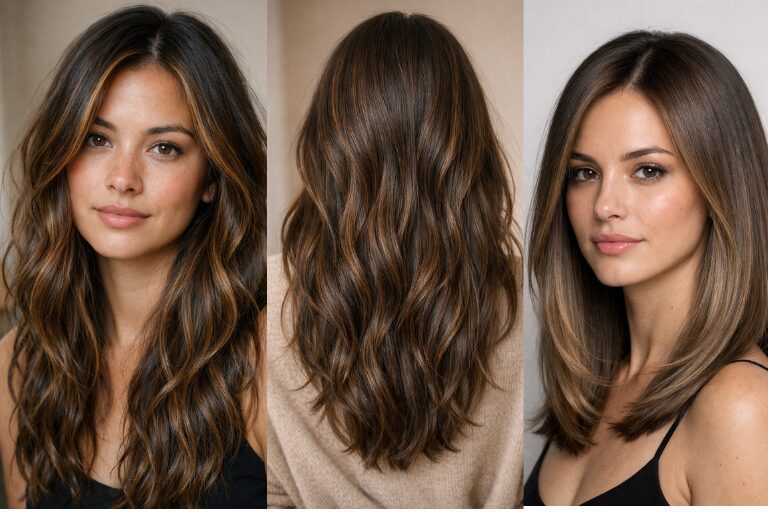
Pink highlights in brown hair occupy a very specific and very appealing territory — the space between playful and wearable, between visible and understated. Done well, they do not announce themselves the moment you walk into a room. They reveal themselves as the hair moves, catching light in a way that makes people wonder whether the color is real or just a beautiful coincidence of warmth in the brown base.
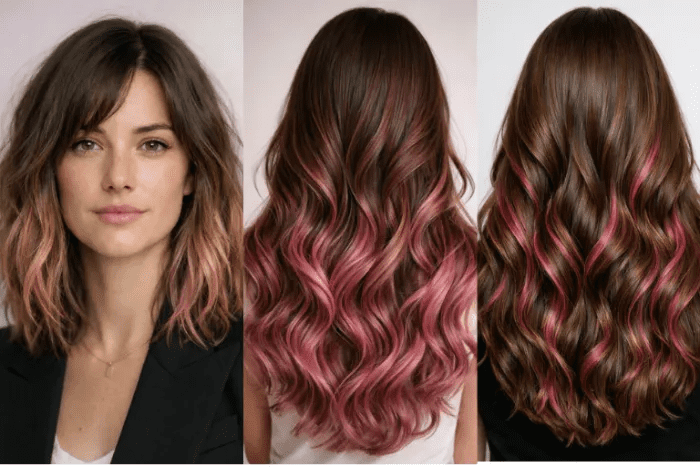
That quality — the feeling of personal rather than performed — is what makes pink highlights on brown hair so compelling. The brown grounds everything. The pink adds dimension, warmth, softness, or a subtle edge depending on the specific tone, placement, and intensity. Sometimes it reads barely there. Sometimes it feels genuinely playful. Either way, it suits the hair rather than sitting on top of it.
What separates the most beautiful pink highlight looks from the ones that look jarring is exactly that relationship between the pink and the brown base. Harsh, heavily saturated pink placed in thick sections on a dark base creates contrast that can feel aggressive rather than intentional. Fine ribbons of soft rose, dusty pink, or warm coral blended through brown waves creates something that feels like it belongs.
These 21 pretty pink highlight ideas in brown hair cover the full spectrum — from the most subtle, barely-visible dusty pink woven through long waves, to the most deliberately bold face-framing magenta pieces. Every look comes with what to ask for at the salon, a styling tip, and why it works so you can walk in knowing exactly the version of this trend that suits your hair and your personality.
How Pink Works Differently on Different Brown Bases
Understanding how your specific brown base interacts with pink tones makes the salon conversation significantly more productive.
Dark brunette and espresso bases create the highest contrast with pink highlights — even subtle, fine pink ribbons are visible against a very dark base. This means you need less color to achieve a noticeable result, and keeping the pink fine and soft is even more important for avoiding a jarring rather than dimensional result.
Medium brunette bases are the most versatile starting point for pink highlights — the contrast is present but not extreme, which means both subtle and more visible pink placement works beautifully. The brown is warm enough to complement most pink tones from rose to coral to dusty pink.
Warm brown and chestnut bases suit warm-leaning pinks best — coral pink, warm rose, and amber-adjacent pink all sit harmoniously with a warm brunette base. Cool or icy pinks can look slightly off against a very warm brown base.
Lighter brunette and dark blonde bases allow pink highlights to show the most clearly and the most brightly. At this base level, even pastel pink has real visibility, and bolder pinks read as genuinely vivid rather than subtle.
The tone of the pink matters as much as the intensity. Dusty pink and dirty rose blend most naturally into brown bases. Coral pink adds warmth that suits warm brunettes particularly well. True pink or hot pink creates the most graphic contrast. Pastel pink has the most delicate, airy quality. Magenta is the boldest and most vivid.
21 Pink Highlight Ideas in Brown Hair
1. Magenta Face-Framing Highlights
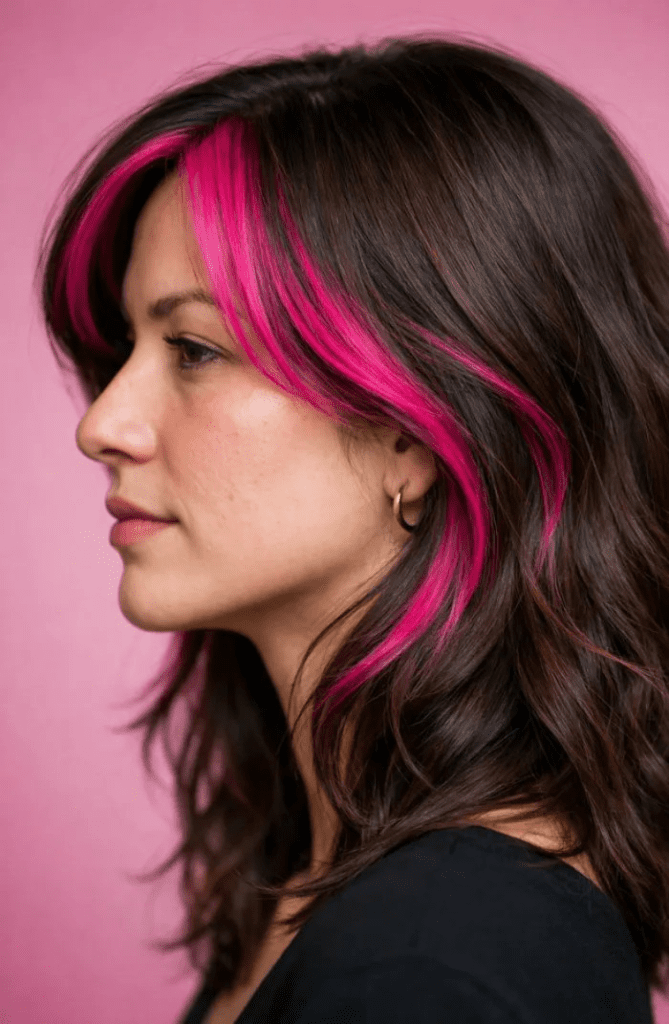
Magenta face-framing highlights are the most deliberately bold choice in this guide — vivid, saturated, and unmistakably intentional. Placed specifically at the front hairline and face-framing sections rather than throughout the hair, they create a graphic contrast against the brown base that draws immediate attention to the face and eyes. The rest of the hair staying deep brown is the essential counterbalance — without it, the magenta would be overwhelming.
What to ask for: Vivid magenta highlights concentrated specifically in the face-framing sections — the pieces around the hairline, temples, and front — rather than distributed throughout. Ask for the sections to be fine rather than broad for the most modern, deliberate result. The brown base should remain clearly dominant.
Best for: Any brown base. The magenta reads most dramatically on darker brunette bases where the contrast is highest. Medium brunette bases allow the magenta to look bold without being harsh.
Styling tip: Keep the rest of the styling minimal when wearing magenta face-framing — the color is the statement and the hair should support it quietly. Loose waves or relaxed texture through the lengths creates the best backdrop for the vivid front pieces.
Why it works: Concentrating the boldest color at the face-framing sections rather than throughout the hair creates maximum impact for minimum application — the magenta draws the eye directly to the face, which is always the most flattering direction for visual attention.
2. Bold Pink Highlights Through Long Waves
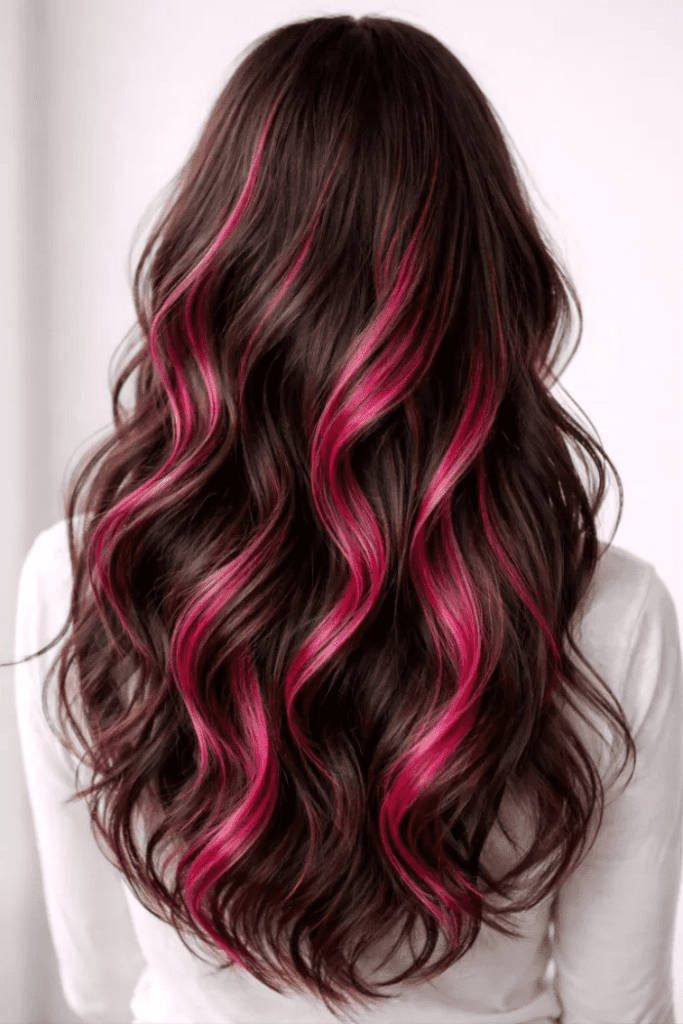
Long, loose waves are genuinely the ideal canvas for bold pink highlights because the movement and dimension of the waves naturally soften and diffuse the intensity of the color. Pink that would look harsh on straight, sleek hair reads as dimensional and intentional when it appears in flashes through moving waves. The sections can be more saturated than you might expect because the wave movement ensures the color never sits in one flat, heavy block.
What to ask for: Saturated pink highlights distributed through long waves — not concentrated in one area but spread through the mid-lengths and visible on the surface of the waves. Ask for the sections to be spaced rather than densely packed so the brown base shows clearly between the pink pieces.
Best for: Long hair with natural wave or blow-out wave texture. Medium to dark brunette bases create the most beautiful contrast with bold pink at this length.
Styling tip: Loose, relaxed waves — either natural or made with a large barrel iron — show these highlights at their most dimensional and most beautiful. Tight curls concentrate the color too much; straight styling makes the pink sections too visible as distinct highlights rather than dimensional color.
Why it works: The movement of long waves creates a constantly changing relationship between the pink highlights and the brown base — as the waves shift, the color appears and retreats, adding life and dimension to the hair that static photography cannot fully capture.
3. Soft Pink Highlights on a Textured Bob
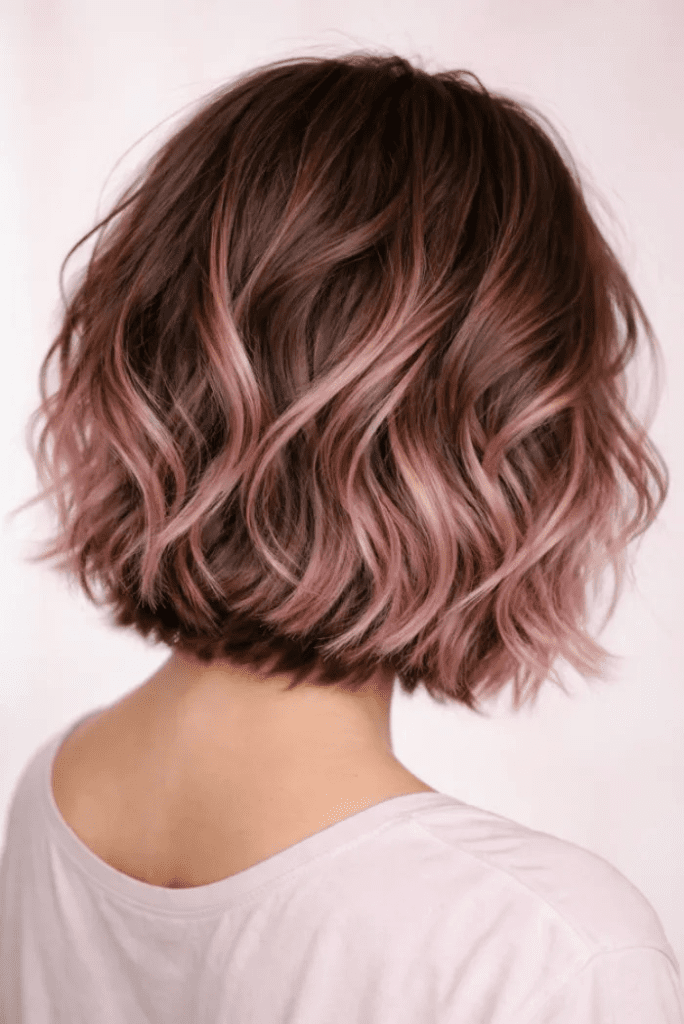
A textured bob with soft, intentionally faded pink through the mid-lengths and ends is one of the most wearable and most modern pink highlight approaches in this guide. The faded quality is designed rather than accidental — the dusty, slightly washed-out pink tone reads as deliberately casual and very contemporary. The texture of the bob’s styling disperses the color organically so it never appears as distinct sections.
What to ask for: Soft, muted pink highlights concentrated through the mid-lengths and ends of a textured bob — ask for the tone to lean dusty or faded rather than bright. Tell your colorist you want the pink to feel like it has been living in the hair for a few weeks rather than freshly applied.
Best for: Medium to light brunette bases at bob length. The faded quality shows most beautifully when the base has some warmth to complement the soft pink tone.
Styling tip: Natural texture or loosely scrunched waves show the soft pink highlights on a textured bob at their most organic and most flattering. The texture disperses the color naturally rather than concentrating it in visible sections.
Why it works: The faded, slightly washed-out quality of the pink on a textured bob creates the most contemporary and most wearable version of pink highlights — it reads as a lived-in, personal color choice rather than an obvious trend moment.
4. Coral Pink Highlights on Medium Waves
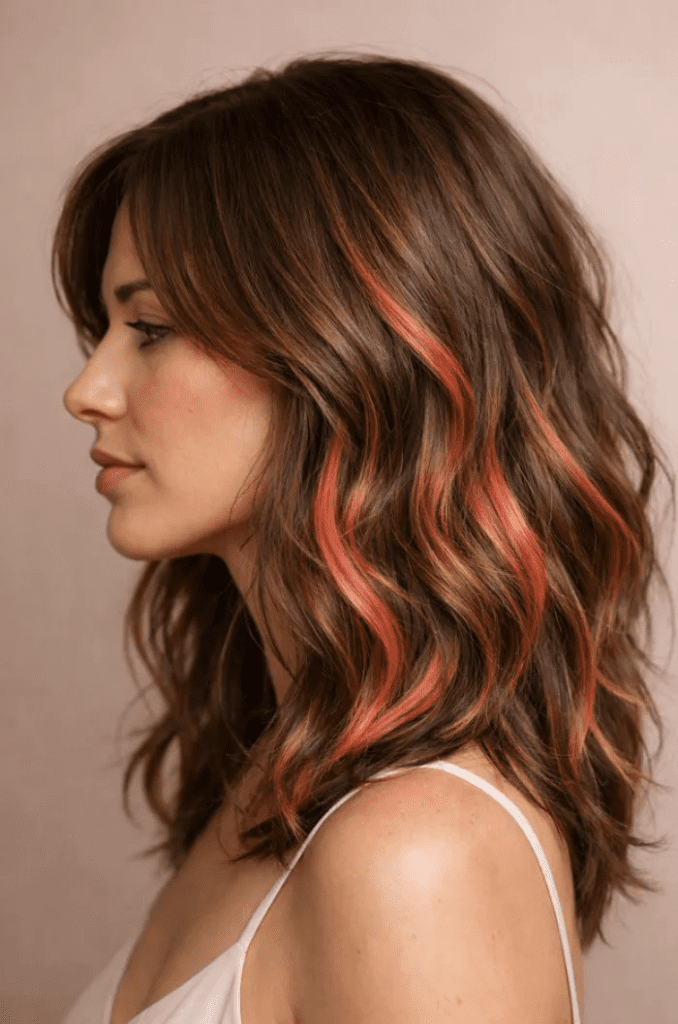
Coral pink is the warmest and most universally flattering pink tone in this guide — it sits between rose and orange in a territory that suits warm brunette bases particularly beautifully. On medium waves, the coral blends into the brown base in a way that feels genuinely natural — warm enough to complement rather than contrast with the brunette base, distinctive enough to be intentional.
What to ask for: Warm coral-pink highlights through medium waves — ask for the tone specifically to lean coral rather than true pink or cool rose, which can clash slightly with warm brunette bases. The placement should be through the mid-lengths where the waves show the warmth most naturally.
Best for: Warm medium brunette to chestnut bases. The warmth of the coral pink is most harmonious with a base that shares its warmth — cool or dark brunette bases can make coral pink look less cohesive.
Styling tip: Medium waves styled with a medium barrel iron, then lightly finger-combed through to separate, show the coral pink highlights at their most flattering and most natural. The waves diffuse the color so it reads as warmth rather than obvious highlight sections.
Why it works: Coral pink occupies the space between warm neutral and bright color — it adds genuine color interest without the jarring quality that true pink or hot pink can have on a warm brown base. It feels like a natural extension of the hair’s own warmth.
5. Delicate Pink Highlights With Natural Texture
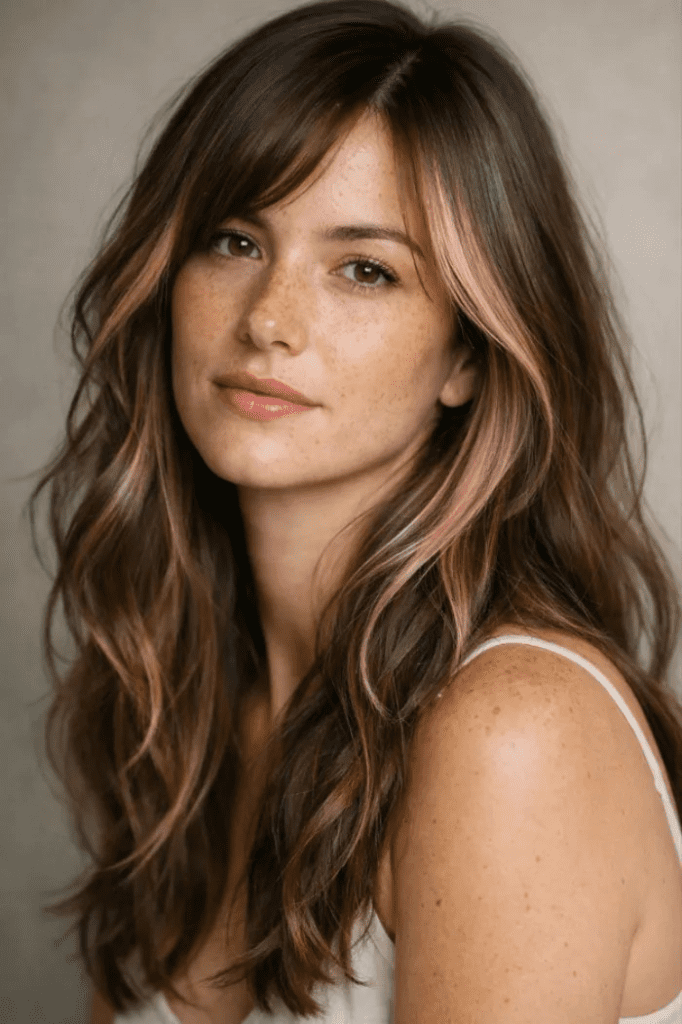
The most subtle and most personally intimate approach to pink highlights in brown hair — fine, understated strands woven gently through the lengths that almost disappear in low light and reveal themselves softly in natural light and movement. For women who want color that feels private and personal rather than statement-making, this is the version.
What to ask for: Fine, delicate pink strands distributed through the lengths — ask for babylight-width sections rather than standard highlight sections. The pink should be a soft rose or dusty pink rather than a vivid or saturated tone. The goal is color that adds depth without announcing itself.
Best for: Most brunette bases. The fine placement and soft tone suit dark brunette bases particularly well because the color shows as warmth and dimension rather than as obvious highlights.
Styling tip: Natural texture — air-dried or diffused without significant heat styling — shows these delicate highlights at their most organic and most personal. Heavy styling can make very fine highlights disappear; natural movement reveals them most beautifully.
Why it works: Fine, delicate pink in natural light has a quality that makes people wonder whether the color is real or simply a beautiful trick of the light. That ambiguity — that sense that the color might be inherent to the hair rather than applied — is the most sophisticated quality any highlight can have.
6. Dirty Rose Pink Face-Framing Pieces
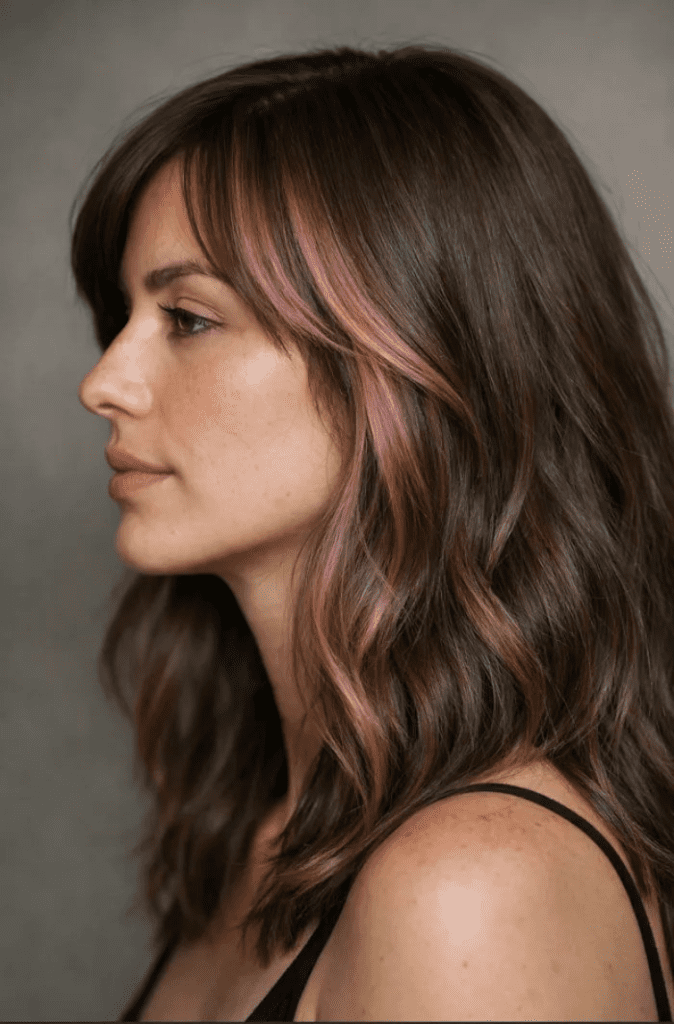
Dirty rose is the most wearable and most consistently flattering pink tone — a muted, slightly grey-tinged rose that sits comfortably between brown and pink in a way that reads as very sophisticated. Face-framing placement means the color appears specifically where it flatters most, and the muted quality means it warms the face without the jarring intensity of a brighter pink.
What to ask for: Muted rose-pink face-framing pieces around the hairline and front sections — ask for the tone to lean dirty rose rather than clean pink, and for the placement to be concentrated around the hairline and temples. The sections should be fine and softly placed to blend naturally into the darker base.
Best for: Medium to dark brunette bases. The dirty rose tone is particularly flattering for women with warm or neutral skin tones where the muted warmth of the color is most complementary.
Styling tip: The face-framing pieces look most flattering when they are allowed to settle naturally around the face rather than being styled back. A light wave through the front sections creates the most natural framing effect.
Why it works: Dirty rose at the face-framing sections adds a warmth and dimension to the front of the hair that genuinely brightens the complexion. The muted quality of the tone is what makes it flattering — it adds warmth without overpowering the natural skin tone.
7. Dusty Pink Highlights on Loose Waves
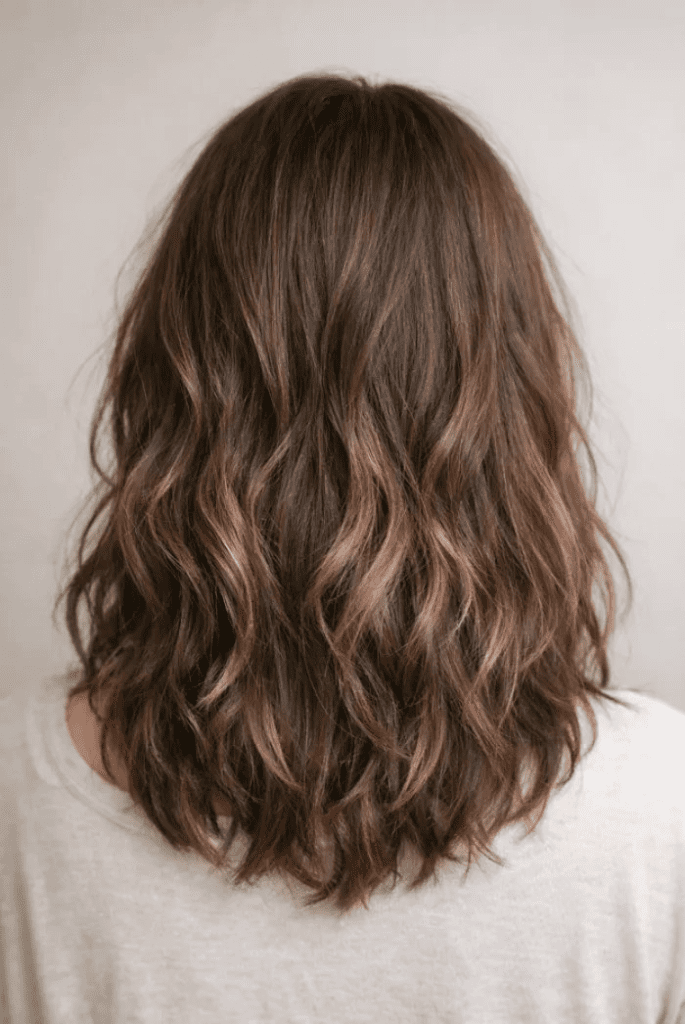
Dusty pink is the pink tone with the most inherent casuality — it looks like color that has been living in the hair for a while, soft and slightly faded from the start. Scattered through loose waves, it has that specific lived-in quality that makes hair color look effortless rather than applied. It works equally well as a fresh color and as a faded version of a bolder pink.
What to ask for: Dusty or muted pink highlights scattered through loose waves — ask for the sections to be placed on the surface of the wave rather than deep into the sections so they are visible when the hair moves. The tone should lean dusty and slightly grey-pink rather than bright or saturated.
Best for: Medium to light brunette bases. Dusty pink reads as particularly beautiful against warm or light brunette bases where the dusty tone has a rose-gold quality.
Styling tip: Loose, casual waves styled with a large barrel iron and then shaken out give the dusty pink highlights their most natural, effortless quality. The slightly undone finish suits the casual tone of dusty pink perfectly.
Why it works: Dusty pink has a relaxed, organic quality that makes it look like the hair’s natural color rather than an applied highlight — exactly the quality that makes pink highlights on brown hair look personal rather than performed.
8. Subtle Pink Highlights With Depth
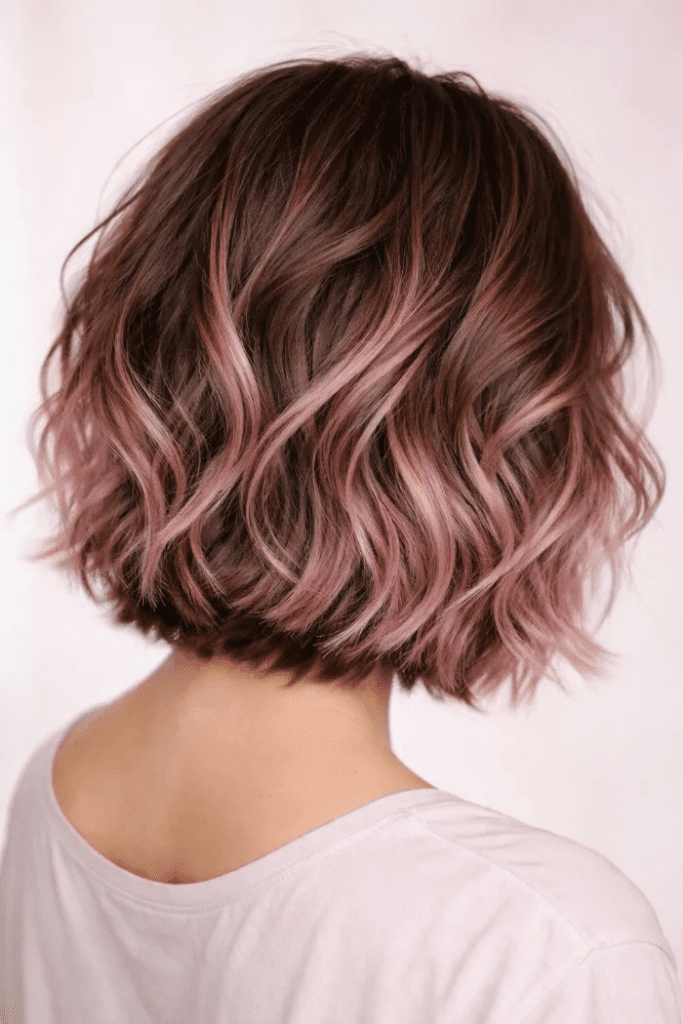
This approach uses pink less as a color and more as a tonal tool — adding depth and dimension to the brown base by introducing pink as a secondary tone that changes how the overall color reads in different lighting conditions. It is the most understated approach in the guide and produces the most natural-looking result.
What to ask for: Pink used as a dimensional tool rather than a bold highlight — ask your colorist for soft pink tones worked through the depths of the brown to add dimension rather than sitting on the surface as obvious highlights. This is a technique that requires an experienced colorist comfortable with tonal work.
Best for: Medium brunette bases. The tonal approach is most effective when the base has enough warmth and variation for the pink to blend seamlessly into the existing depth.
Styling tip: Straight or very lightly waved styling shows the dimensional quality of subtle pink toning most clearly — the smooth surface reveals how the brown reads differently in different light as the pink dimension shifts the overall tone.
Why it works: Pink used as a dimensional tone rather than a highlight adds a complexity to brunette hair that no single-process color can replicate — it makes the brown look more layered, more alive, and more interesting without any obvious color placement.
9. Faded Pink Highlights on Shoulder-Length Hair
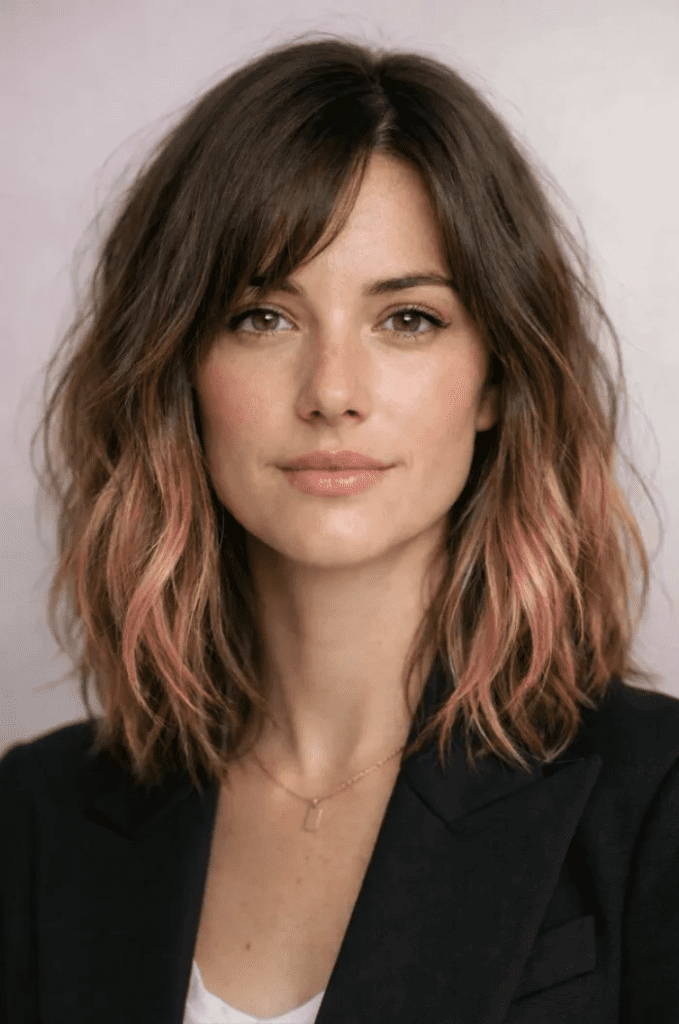
Intentionally faded pink is one of the most contemporary and most low-maintenance approaches to pink highlights — the color looks designed to appear lived-in and gradually washing out, which means it stays looking intentional through the entire grow-out process rather than looking neglected. The fade shows most toward the ends while the roots stay completely natural.
What to ask for: Pink highlights applied from the mid-lengths to the ends on a shoulder-length cut, with the specific intention that the color should read as slightly faded even when freshly applied. Ask for a muted or dusty pink tone rather than a bright one to achieve the most convincing faded quality.
Best for: Medium to light brunette bases at shoulder length. The faded approach grows out most naturally on bases that are not dramatically darker than the pink tone.
Styling tip: Minimal styling — air-drying or a quick scrunch with texturizing spray — suits the relaxed, intentionally faded quality of this look best. Over-styling can make deliberately faded color look simply neglected rather than deliberately casual.
Why it works: Intentionally faded pink is the most honest and most sustainable approach to this trend — because the fade is built into the initial look rather than being its inevitable deterioration, the color stays looking right throughout its entire lifecycle without requiring touch-ups to maintain its most flattering quality.
10. Fine Pink Highlights in Brown Hair
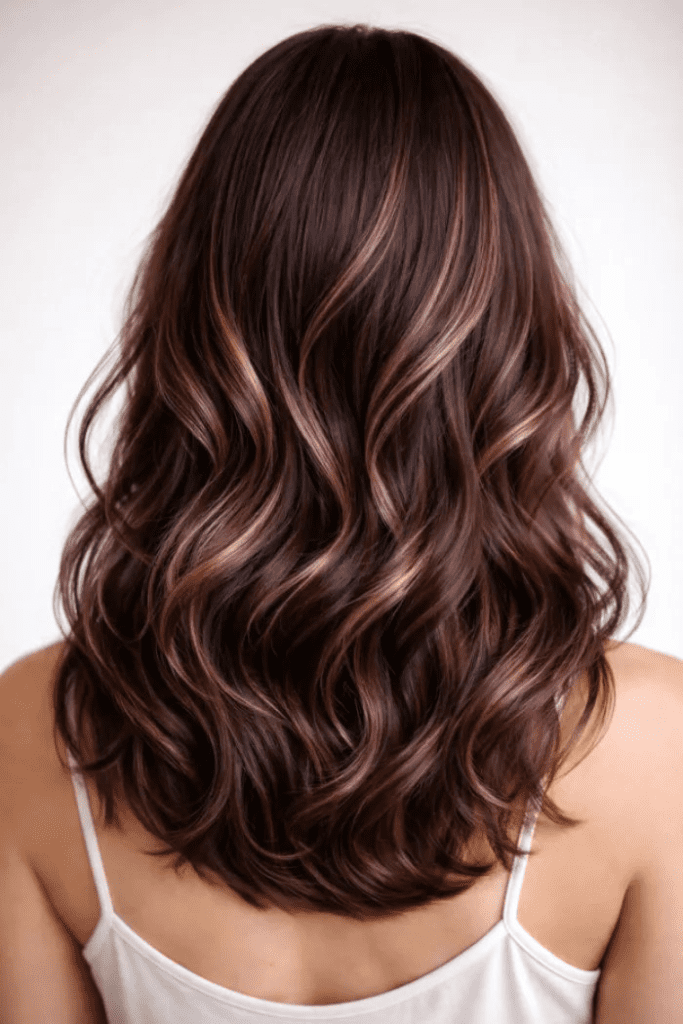
Fine pink highlights through a brown base are the technique with the most enduring appeal — thin enough that they blend almost seamlessly into the base, visible enough that they add real dimension and warmth. They are the pink highlight version of babylights — the impression of color rather than the obvious application of it.
What to ask for: Fine pink highlights through the brown base — ask specifically for thin sections, similar to babylights width, in a soft rose or dusty pink tone. The placement should be distributed naturally through the hair rather than concentrated in specific panels.
Best for: Most brunette bases. Fine pink highlights suit dark, medium, and light brunette bases equally well because the thinness of the sections means they read as dimension rather than contrast at every base level.
Styling tip: Any styling works beautifully with fine pink highlights because the thinness of the sections means they adapt to straight, wavy, and curly finishes equally well. They are one of the most versatile highlight options in terms of daily styling compatibility.
Why it works: Fine highlights have a quality that thicker sections cannot replicate — they look like the color the hair naturally is rather than color that was applied to it. That naturalness is consistently the most flattering quality in any hair color technique.
11. Glossy Waves With Pink Highlights
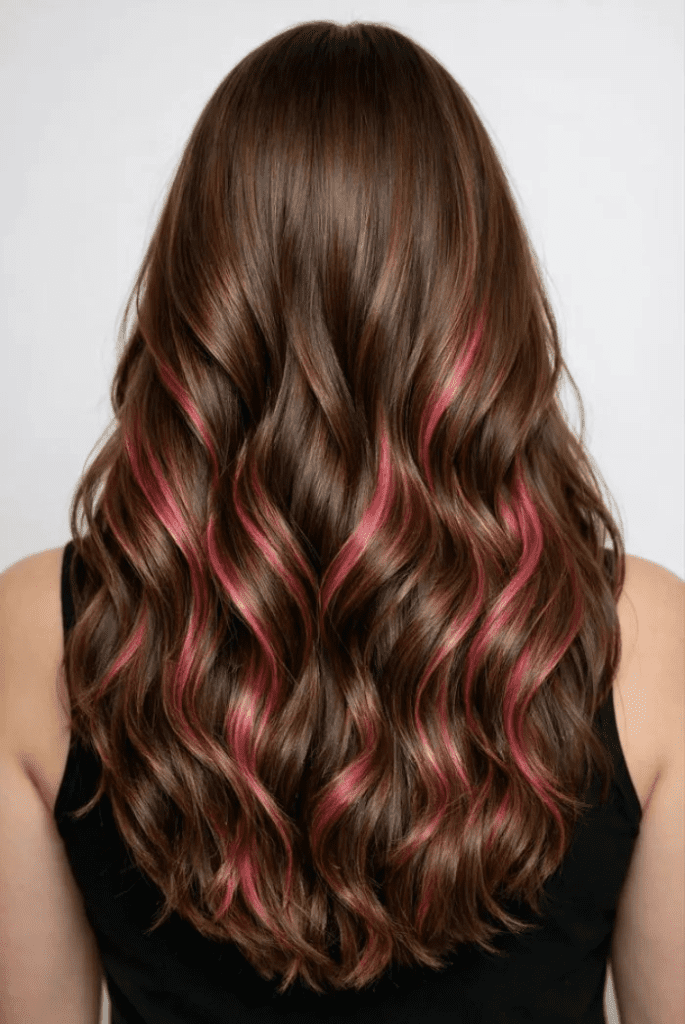
The gloss of beautifully conditioned, freshly styled waves does most of the visual work in this look — the shine amplifies the pink highlights and makes the color appear brighter and more dimensional than it would on dull or matte hair. It is a powerful reminder that the condition and finish of the hair affects how color reads as much as the actual color placement.
What to ask for: Pink highlights placed to show on the surface of waves — ask for outer-layer placement specifically. A glossing treatment over the finished color maximizes the shine that makes this look so effective. The pink tone should be warm rather than cool for the most flattering interaction with a glossy finish.
Best for: Medium brunette bases on medium to long hair. The glossy wave finish suits hair with enough length and density to hold a smooth, shiny wave pattern.
Styling tip: A smoothing serum or hair oil applied through slightly damp hair before blow-drying creates the glassy, reflective surface that makes the pink highlights most visible and most beautiful. The glossy finish is the essential element of this look — without it, the pink highlights read very differently.
Why it works: Gloss and pink highlights work synergistically — the shine amplifies the warmth of the pink, and the pink adds dimension to the glossy surface that plain brown hair on a glossy wave cannot achieve. Together they create a look that is genuinely more beautiful than either element alone.
12. Ombré Pink Highlights on Long Hair
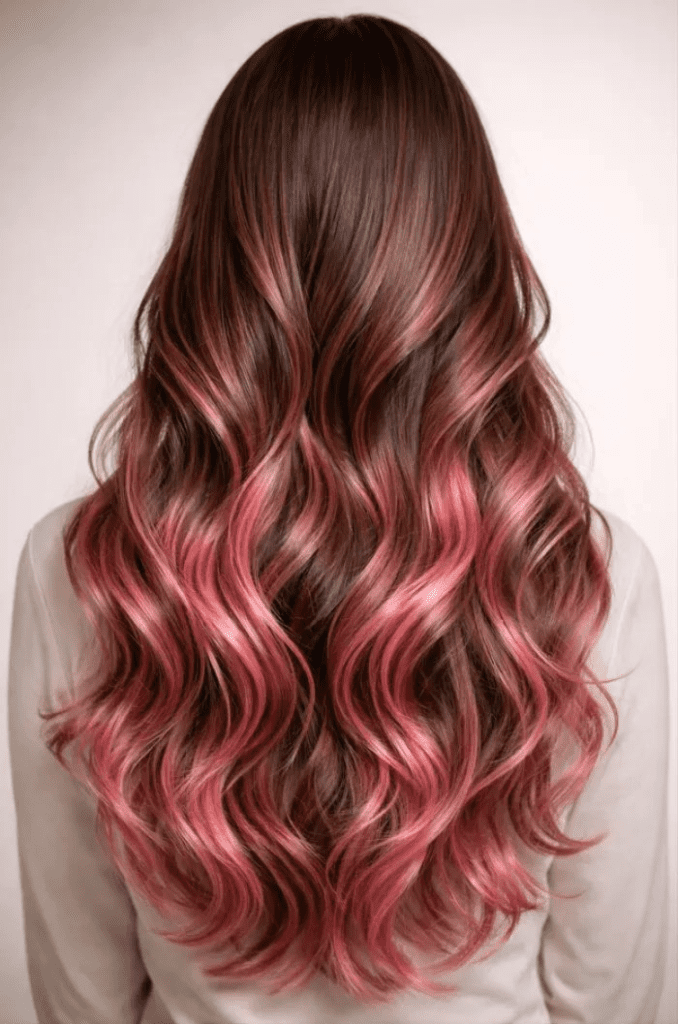
A pink ombré on long hair creates the most gradual and most graceful expression of pink highlights — the color deepens slowly toward the ends, leaving the roots completely natural and untouched. The transition is the point: a slow, invisible shift from natural brown at the roots to soft pink at the ends that looks like the sun has been bleaching the tips over many months.
What to ask for: A pink ombré that begins at mid-length and gradually transitions toward soft pink ends — ask for the transition to be as gradual and as blended as possible, with no visible line where the pink begins. The pink at the ends should be a soft or muted tone rather than vivid for the most natural-looking result.
Best for: Medium to light brunette bases on long hair. The ombré transition requires enough length to develop fully — at least shoulder length for the gradient to read correctly.
Styling tip: Loose, flowing waves through long hair show the pink ombré at its most beautiful — the gradual color transition is most visible and most flattering when the hair is moving. A light hold spray that maintains the wave without adding stiffness is the ideal finishing product.
Why it works: The ombré placement is the most flattering approach for pink on long hair because it keeps the roots and crown completely natural — which means the grow-out is entirely invisible — while adding the color interest at the ends where it has the most movement and visibility.
13. Long Brown Hair With Soft Pink Accents
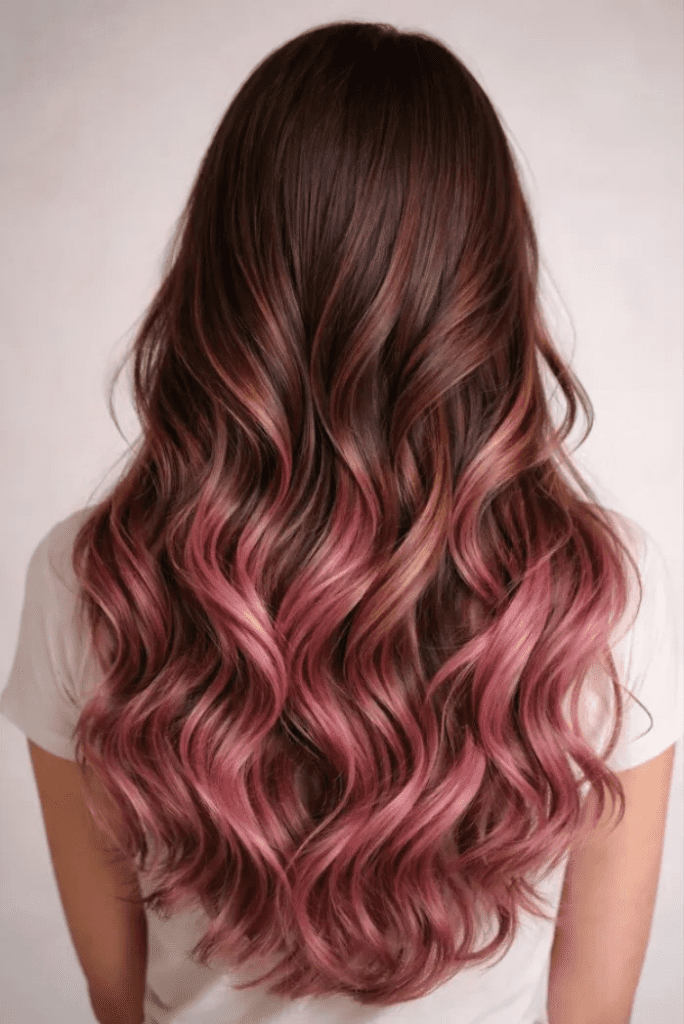
This is the most restrained approach for long brunette hair — soft, lightly placed pink accents that add interest without altering the fundamental character of the hair. The brown base stays clearly dominant, the length and texture remain the focal point, and the pink appears as a secondary detail that reveals itself subtly as the hair moves.
What to ask for: Softly placed pink accents through the mid-lengths of long brown hair — spaced out rather than densely packed, and in a muted or dusty tone that sits comfortably within the brown base rather than standing out sharply from it.
Best for: Dark to medium brunette bases on long hair. The restrained placement and muted tone work best on darker bases where even subtle pink placement reads as warm and dimensional rather than invisible.
Styling tip: Loose, relaxed waves through the length show the soft pink accents most beautifully while allowing the natural quality of the long brunette hair to remain the primary visual focus. The pink should feel secondary to the hair itself.
Why it works: Restraint is the defining quality of this approach — the pink is present but never dominant, adding dimension to a long brunette look that would be beautiful but flat without it. That balance between adding color and not changing the fundamental character of the hair is genuinely difficult to achieve and very appealing when done well.
14. Pastel Pink Highlights With Movement
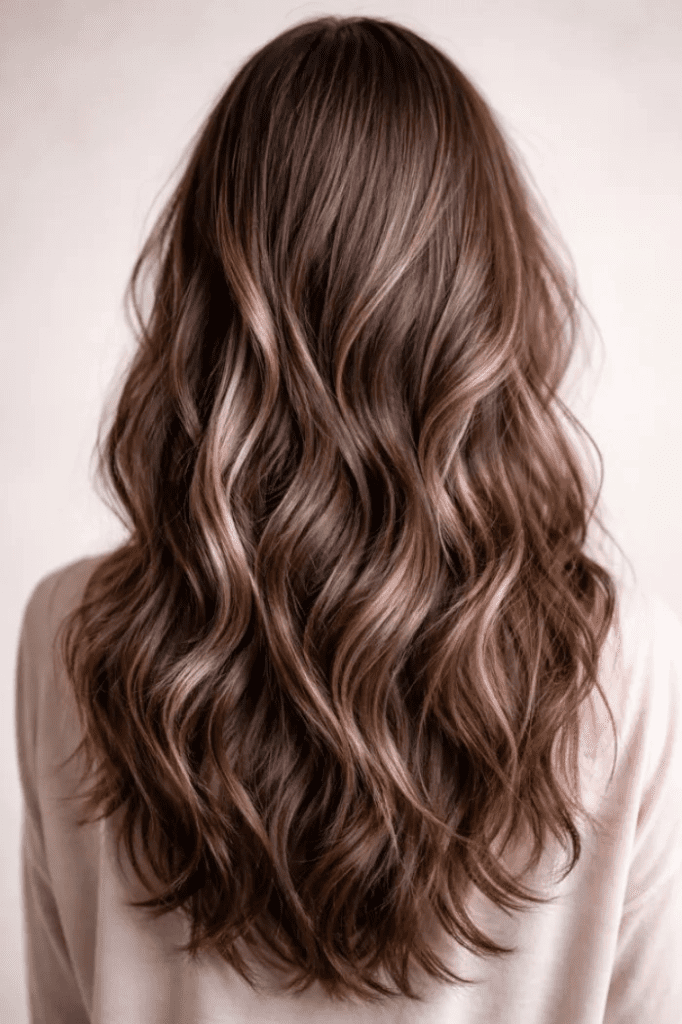
Pastel pink is the lightest and most delicate pink tone — closer to white than to hot pink, with a barely-there quality that suits lighter brunette bases particularly beautifully. Through long, moving hair, pastel pink appears as a whisper of color that shifts between visible and invisible depending on the light and movement. It is the most ethereal and most romantic expression of pink highlights.
What to ask for: Pastel pink highlights through the surface layers of long hair — ask for a very light, desaturated pink rather than a vivid or saturated one. The tone should have a slightly creamy or rose-white quality rather than a clean bubble-gum pink. Placement on the outer surface of the hair rather than deep into the sections maximizes visibility.
Best for: Light to medium brunette and dark blonde bases. Very dark brunette bases may find pastel pink too light to show distinctly — a slightly more saturated pink tone works better on very dark bases.
Styling tip: Long hair styled with loose, flowing waves and minimal product shows pastel pink highlights at their most ethereal and most beautiful. Heavy product can mute the delicate quality of the pastel tone — light hold or no hold is ideal.
Why it works: Pastel pink on long moving hair creates the most ephemeral and most personal color expression — the color appears and disappears with the movement of the hair in a way that feels like something the hair does naturally rather than something applied to it.
15. Pastel Pink Highlights on Warm Brown Hair
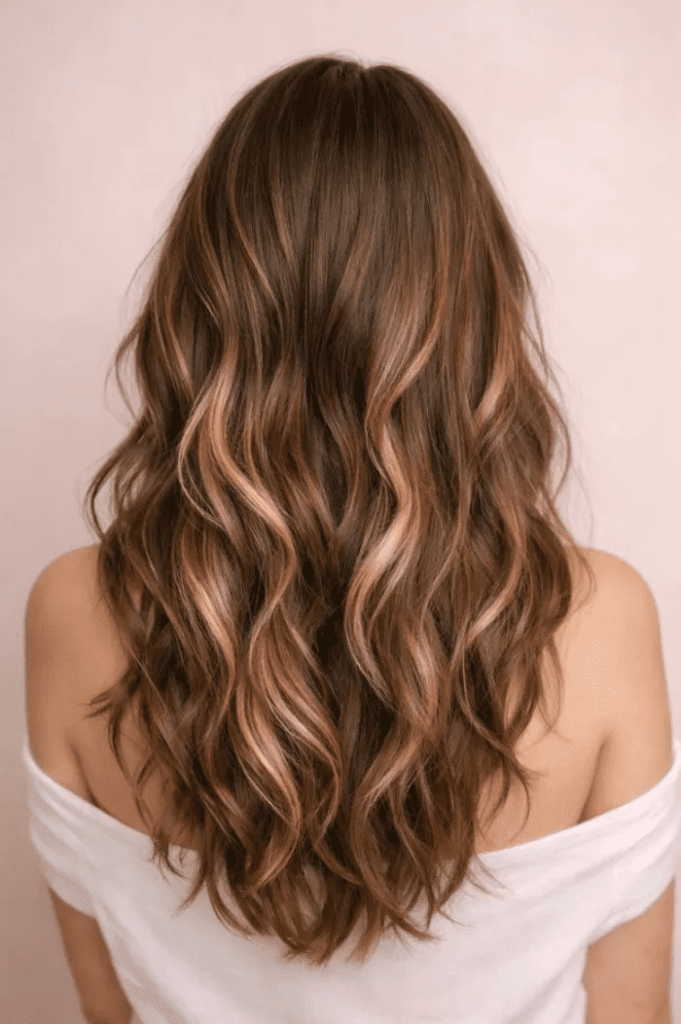
Warm brown and pastel pink is a combination that requires specific tonal consideration — the warmth of the base needs to be balanced with a pink tone that does not clash with it. A slightly warm or creamy pastel pink suits warm brunette bases far better than a cool or blue-leaning pastel, which can look disconnected from the warm base around it.
What to ask for: A warm or creamy pastel pink — ask for the tone to lean rose-gold or warm rose rather than cool pink. The placement should be through the mid-lengths and ends where the warmth of both the brown base and the pink tone can blend harmoniously.
Best for: Warm medium brunette to chestnut bases. The warm-toned approach to pastel pink is most flattering on bases that share the warmth of the highlight tone.
Styling tip: A warm-toned shine spray over the finished style maximizes the harmonious relationship between the warm brown base and the warm pastel pink — everything sits within the same warm color family and the overall result looks very cohesive.
Why it works: Matching the warmth of the pink tone to the warmth of the brown base creates the most naturally blended and most sophisticated pink highlight result — the color integration feels inevitable rather than applied.
16. Pink Highlights Blended Through Mid-Lengths
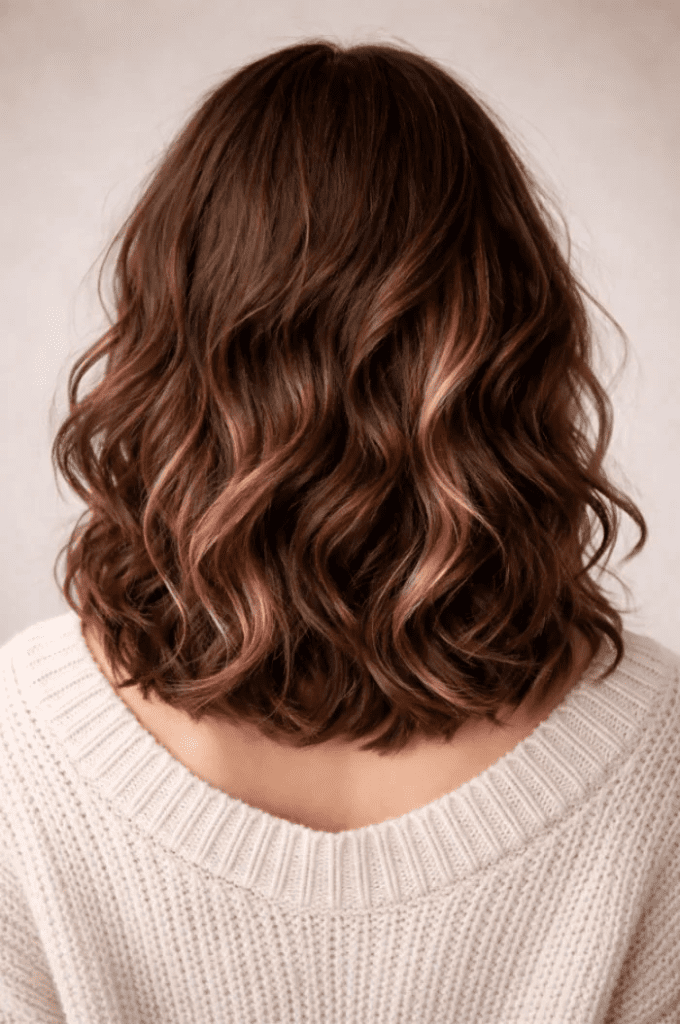
Concentrating pink highlights through the mid-lengths rather than at the roots or ends creates a specifically balanced approach — the roots stay natural, the ends stay relatively natural, and the pink appears in the middle section where the hair has the most natural movement and the most volume. It is the placement that adds dimension throughout the hair without creating any single dramatically lighter area.
What to ask for: Pink highlights concentrated specifically through the mid-lengths — from approximately cheekbone level to jaw level on mid-length hair, or from shoulder to mid-back on longer hair. Ask for balanced placement that adds dimension throughout the middle section rather than being visible only at the ends or only at the roots.
Best for: Medium to long brunette hair of most base colors. The mid-length placement suits most hair types because it works with the hair’s natural volume and movement.
Styling tip: Natural texture or loose waves show mid-length pink highlights most effectively — the color appears throughout the hair’s most visible sections as it moves, creating a genuinely dimensional result that sits within the hair rather than on top of it.
Why it works: Mid-length placement is the most balanced approach for pink highlights because it avoids the two extremes — root placement that needs frequent touch-ups as the roots grow, and end placement that concentrates all the color at the least voluminous point. The middle section is where the hair has the most movement and the most natural highlighting from light.
17. Soft Pink Highlights With Natural Flow
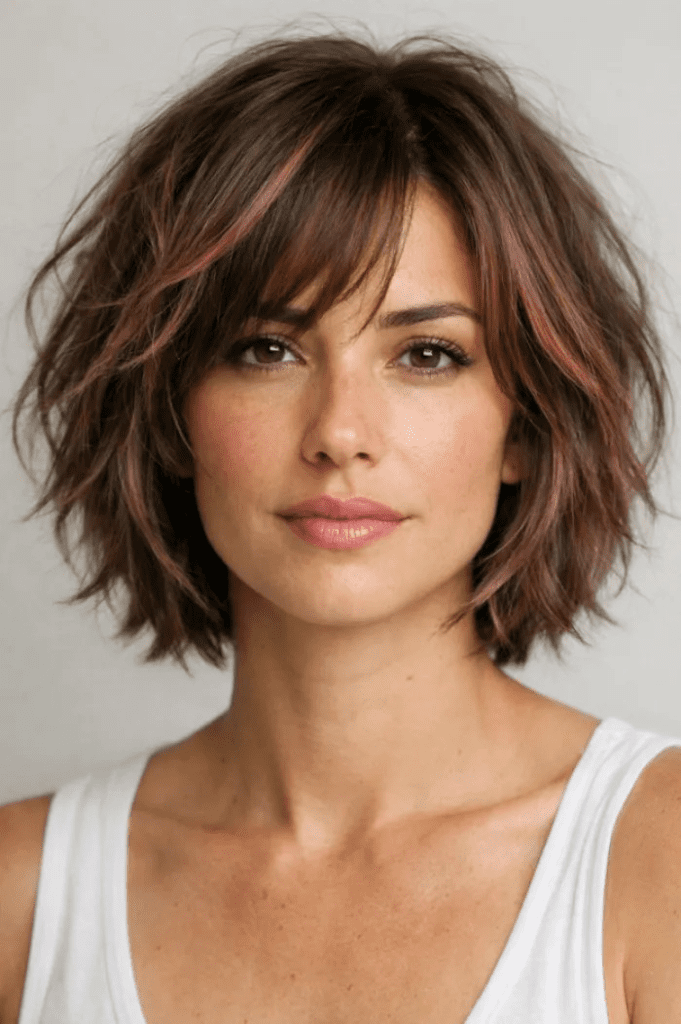
This look prioritizes the most organic, most effortless quality possible — pink tones that are muted and gently blended, following the natural movement of waves rather than sitting apart from them. The highlights melt into the brown base with no visible line, appearing as warmth and dimension rather than as identifiable color sections.
What to ask for: Muted, blended pink highlights that follow the natural movement of the hair — ask for a balayage approach to the pink placement rather than foils, so the color is painted to follow the hair’s natural direction and wave pattern. The tone should be a soft, slightly muted rose rather than a vivid pink.
Best for: Wavy to naturally textured brunette hair. The balayage placement of the pink highlights works most naturally on hair that has inherent movement for the color to follow.
Styling tip: Natural air-drying or gentle diffusing gives this look its most authentic, most effortless finish. Heavy styling can make the pink highlights stand out as distinct sections rather than blending naturally into the wave pattern.
Why it works: Pink balayage painted to follow the hair’s natural movement creates the most organic and most believable version of pink in brown hair — the color looks like it simply belongs rather than having been placed deliberately.
18. Wavy Bob With Subtle Pink Highlights
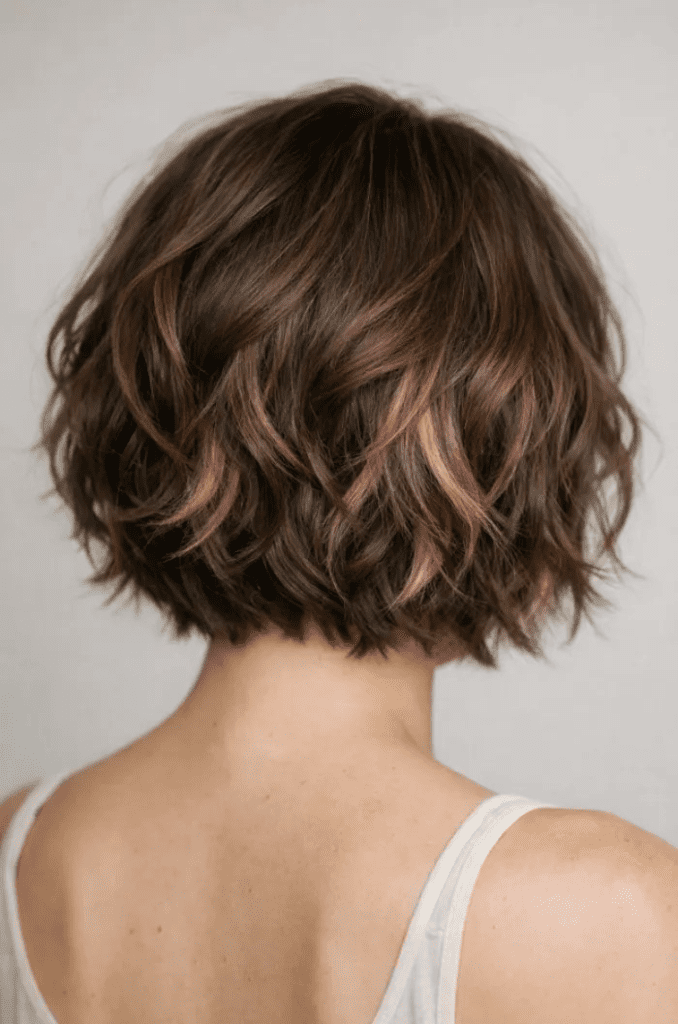
On a wavy bob, even minimal pink highlighting creates real visual interest because the short length concentrates everything — the texture, the movement, and the color all work together in a compact, contained shape. Subtle pink through a wavy bob adds dimension that makes the cut look more complex and more deliberately styled without the color dominating.
What to ask for: Minimal pink highlights through a wavy bob — ask for subtle rather than obvious placement, with the pink concentrated on the outer surface and visible sections rather than throughout. A dusty or muted pink tone suits the casual quality of a wavy bob most naturally.
Best for: Medium to light brunette bases at bob length. The wavy bob suits most pink tones but dusty and muted versions create the most contemporary and most wearable result.
Styling tip: Slightly undone waves or natural texture show the subtle pink highlights on a wavy bob at their most effortless and most flattering. Over-styling can make minimal highlights look too precisely placed rather than naturally dimensional.
Why it works: The compact, contained shape of a wavy bob means even minimal pink placement reads clearly — the short length and textured styling work together to show the color in its most dynamic and most dimensional form.
19. Textured Bob With Pink Dimension
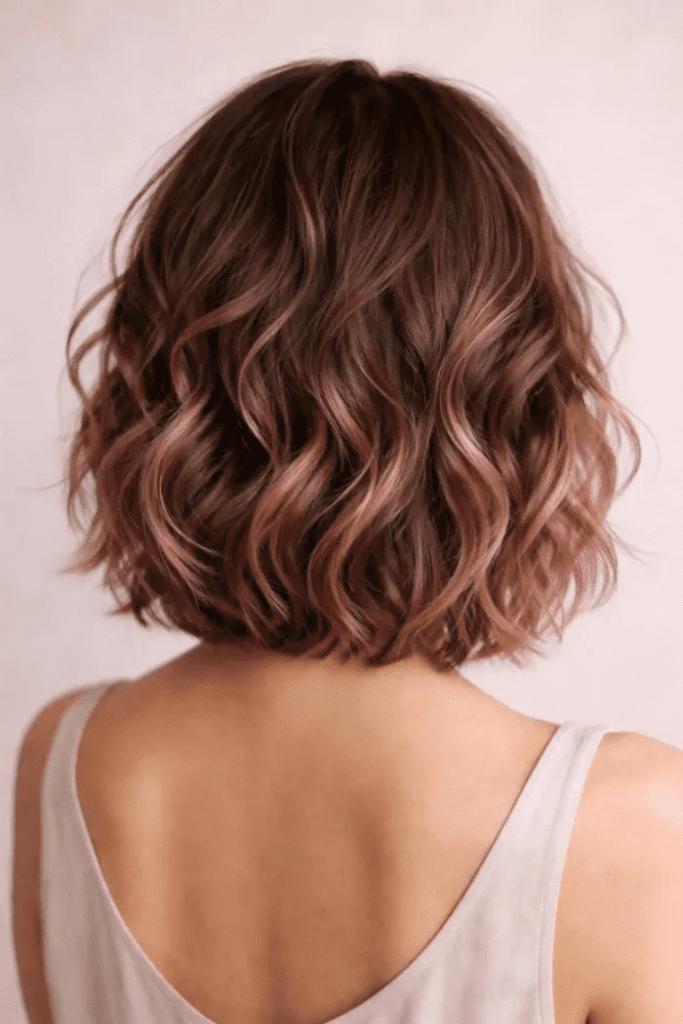
Shorter layers in a textured bob give pink highlights a scattered, multi-directional quality that cannot be achieved on longer, straighter hair. The layers mean the pink appears differently from every angle as the hair moves — front, side, and back all show a slightly different expression of the color — creating genuine three-dimensional depth.
What to ask for: Pink highlights placed through the layers of a textured bob with specific attention to distribution across the different layer lengths — ask for color through the shorter layers as well as the longer ones so the dimension is visible from multiple angles.
Best for: Medium to dark brunette bases at textured bob length. The textured cut shows pink highlights at their most dimensional and most complex.
Styling tip: The natural movement of a textured bob — slightly undone, with visible layer separation — shows the pink dimension most dynamically. A texturizing spray through slightly damp hair before air-drying creates the most natural, multi-directional movement.
Why it works: Shorter layers create multiple surfaces for the pink highlights to sit on simultaneously, producing a color result that looks complex and three-dimensional rather than simply highlighted. The depth that appears in a layered cut with pink is genuinely greater than the sum of its parts.
20. Rose Gold Pink Highlights in Warm Brown
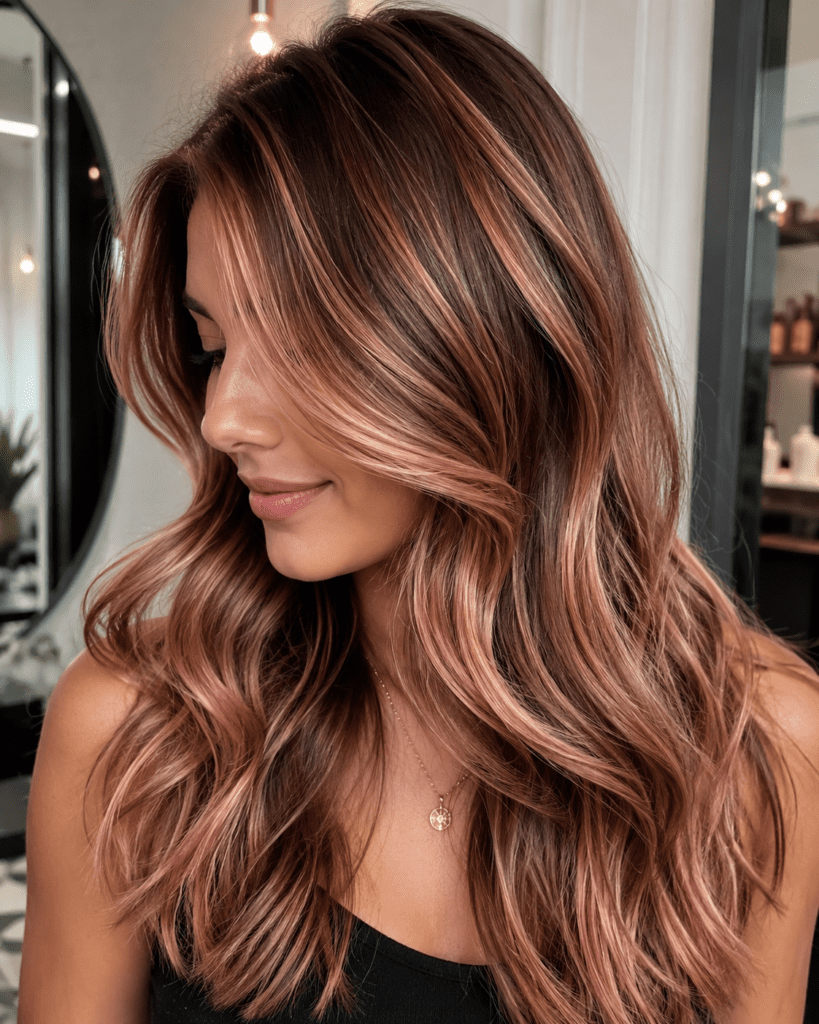
Rose gold is the pink tone that most naturally belongs in warm brown hair — it shares the warmth, the metallic quality, and the dimension of a beautiful brunette base while adding a distinctive pink-gold glow that makes the whole color feel very specifically of-the-moment while remaining completely flattering. On warm brown hair, rose gold highlights do not look applied — they look like the hair’s own natural warmth turned up.
What to ask for: Rose gold highlights through warm brown hair — ask for a tone that has genuine gold in it alongside the pink, rather than a straight pink or a rose without warmth. The placement should follow the hair’s natural lighter points — the surface layers, the face-framing pieces, and the upper mid-lengths.
Best for: Warm to light brunette and chestnut bases. Rose gold is most harmonious on warm brunette bases where the gold in the tone complements rather than contrasts with the base.
Styling tip: A warm-toned glossing treatment over the finished rose gold highlights maximizes the metallic, golden quality of the tone and creates the most beautiful interaction between the warm brown base and the rose gold accents.
Why it works: Rose gold is the most universally flattering pink tone for brown hair because it shares the warmth of the base — the result feels like a naturally warm, golden-pink version of the existing hair color rather than an added color element.
21. Peekaboo Pink Underneath Dark Brown
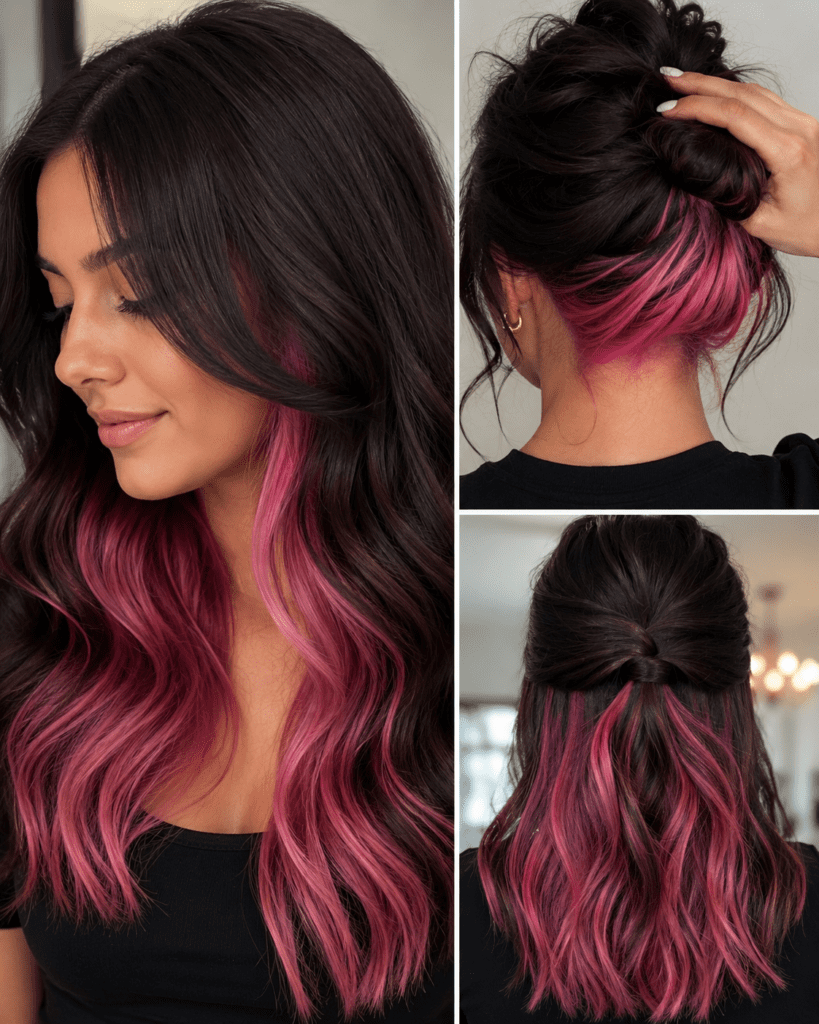
Peekaboo pink — color placed on the underneath layers that is hidden when the hair is down and revealed when it is pulled up, twisted, or parted — is the most playful and most personal approach in this guide. The pink is a private detail that becomes visible only in certain positions, making it the perfect option for women who want a color moment that is entirely theirs to reveal or conceal.
What to ask for: Pink highlights placed specifically on the underneath layers — the sections that sit under the darker top layer when the hair is worn loose. Ask for the placement to be concentrated enough to be visible when the hair is pulled back but covered by the top layer when worn down. A vivid or saturated pink works well here since the contrast with the dark underlayer is the whole point.
Best for: Dark brunette to espresso bases on medium to long hair. The peekaboo effect requires a clear contrast between the dark top layer and the lighter pink underneath to be most effective.
Styling tip: A half-up style, a twist, or a low bun shows the peekaboo pink at its most striking — the dark top layer and the pink underneath create a deliberate, beautiful contrast that reads as genuinely creative and intentional.
Why it works: Peekaboo color is the most honest expression of personal style in hair color — it belongs entirely to the person wearing it and reveals itself only when they choose to show it. That sense of something private and deliberate gives the color a quality that broadly applied highlights simply cannot have.
How to Choose the Right Pink Tone for Your Brown Hair
For dark brunette bases: Dusty pink, dirty rose, and soft rose show as dimension and warmth rather than obvious color. Magenta or vivid pink at the face-framing sections creates the most graphic impact. Avoid very light pastels that will not show against very dark bases.
For medium brunette bases: The most options. Coral pink, rose gold, dusty pink, pastel pink, and vivid pink all work beautifully. Match the warmth of the pink to the warmth of the base for the most natural result.
For warm chestnut and brown-red bases: Coral pink, rose gold, and warm rose are the most harmonious. Avoid cool or blue-leaning pinks that can clash with the warmth of the base.
For lighter brunette and dark blonde bases: The full range of pink tones works. Pastel pink shows clearly and beautifully. Vivid pink creates genuine impact. Rose gold looks particularly flattering.
What to Tell Your Stylist
Three specifics that produce the best pink highlight results on brown hair.
Name the tone as precisely as possible. Dusty pink, dirty rose, warm coral, pastel pink, vivid magenta — being specific about the tone gives your colorist far more useful information than simply saying “pink.” If you have a reference photo, show it.
Specify the placement. Face-framing only. Through the mid-lengths. On the ends. Underneath in a peekaboo placement. Through the surface of the waves. Placement changes the entire character of the result more than tone does.
Describe how visible you want the pink to be. Barely there and personal, or clearly visible at first glance. This single instruction calibrates the intensity and section size of the highlights in a way that prevents the most common pink highlight disappointment — getting something either far too bold or far too subtle for what you actually wanted.
Final Thoughts
Pink highlights in brown hair work best when they feel like a natural extension of the hair’s own warmth and character rather than something placed on top of it. The versions that last — the ones that feel right month after month rather than looking like a trend moment that has passed — are always the ones where the pink and the brown genuinely belong together.
The tone, the placement, and the intensity all contribute to that sense of belonging. A dusty rose woven through warm brunette waves looks like it has always been there. A vivid magenta at the face-framing sections looks like a genuinely personal statement. Both are right. Both are beautiful. The difference is entirely in which one feels most like you.
Save the looks that felt most personal. Notice what specifically drew you to them — the tone, the placement, the intensity, the way the color interacted with the brown base. Share those specifics with your colorist alongside the photo. Pink highlights in brown hair done well are genuinely one of the most beautiful and most wearable color combinations available — and finding your version of them is entirely worth the conversation.
Will pink highlights fade quickly on brown hair?
Pink tones do fade faster than brown or blonde — the pink and red pigment molecules are larger and wash out of the hair cuticle more readily. On a brown base, however, the fade often looks intentional rather than neglected: dusty pinks become even more muted and blended, softer pinks become a subtle warmth in the base. Using a color-protecting shampoo, washing in cool water, and using a color-depositing pink conditioner weekly significantly extends the vibrancy.
Do pink highlights require a lot of maintenance?
It depends entirely on the tone and placement. Subtle highlights — dusty pink woven through the mid-lengths, soft rose through the lengths, or faded ends — grow out gracefully and rarely require touch-ups to look intentional. Vivid or saturated pinks, particularly at the face-framing sections where they are most visible, need more frequent refreshing to maintain their clarity. The more restrained the color, the lower the maintenance.
Can pink highlights work on naturally dark brown hair?
Yes — and they work beautifully when the placement and tone are right. Fine ribbons of soft rose or dusty pink on a dark brunette base add dimension and warmth that reads as a quality of the hair rather than an obvious color technique. Face-framing magenta on a dark base creates the most graphic and most dramatic result. The key on dark hair is working with a colorist who understands how to place pink so it reads as intentional rather than requiring significant lightening of the base.
What pink tone suits warm brown hair best?
Warm-toned pinks — rose gold, coral pink, warm rose, and amber-pink — suit warm brunette bases most harmoniously. They share the warmth of the base rather than contrasting with it, creating the most natural and most cohesive result. Cool or blue-leaning pinks can look slightly disconnected from a warm brown base. If you are uncertain, asking your colorist for a warm rose or rose gold is the safest starting point for warm brunettes.
How do I keep pink highlights looking fresh at home?
A color-depositing conditioner in a soft pink or rose tone used once weekly replenishes the pigment that washing removes. A purple-free, color-protecting shampoo (not a purple shampoo, which can shift pink toward purple) preserves the tone between applications. Washing in cool water, minimizing heat styling, and using a heat protectant every time heat is applied all slow the fading significantly. When the pink starts to look too muted, a single gloss appointment at the salon in a matching tone refreshes everything without a full reapplication.