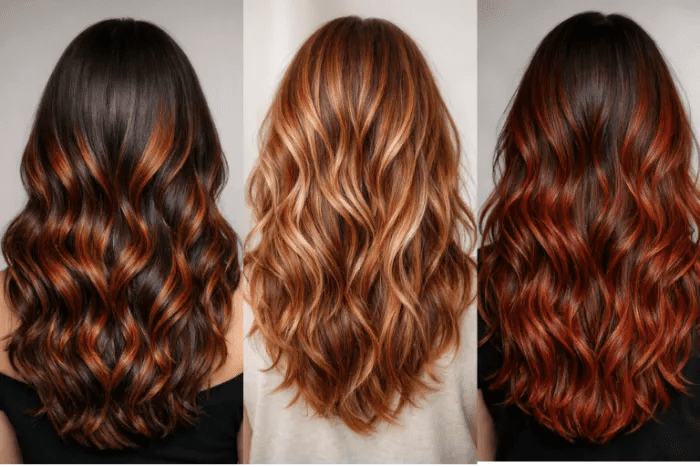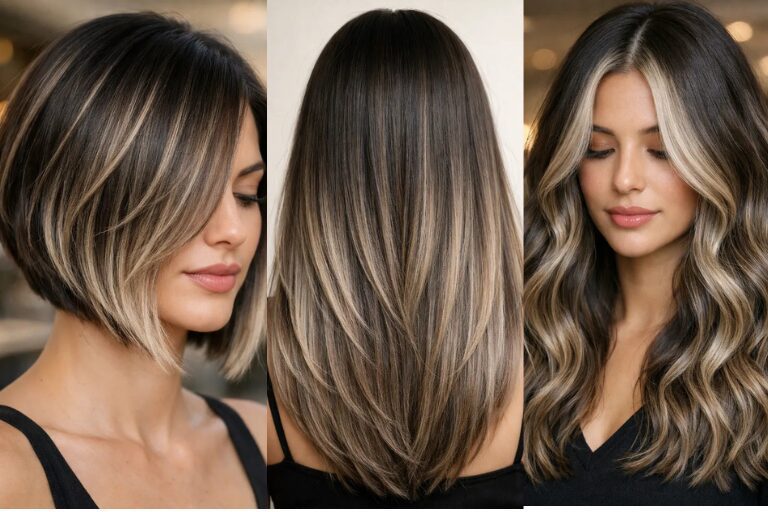
27 Honey Golden Blonde and Caramel Balayage Ideas on Dark Brown Hair That Look Warm, Rich, and Genuinely Sunlit
There’s a specific kind of warmth that honey golden blonde and caramel balayage creates on dark brown hair that nothing else quite replicates — it’s the color equivalent of late afternoon light, the kind that makes dark hair look like it’s glowing from within rather than simply reflecting light off its surface. The dark brown base provides the depth and richness that make hair look full and healthy. The honey and caramel tones provide the warmth and dimension that make it look alive and sun-touched.
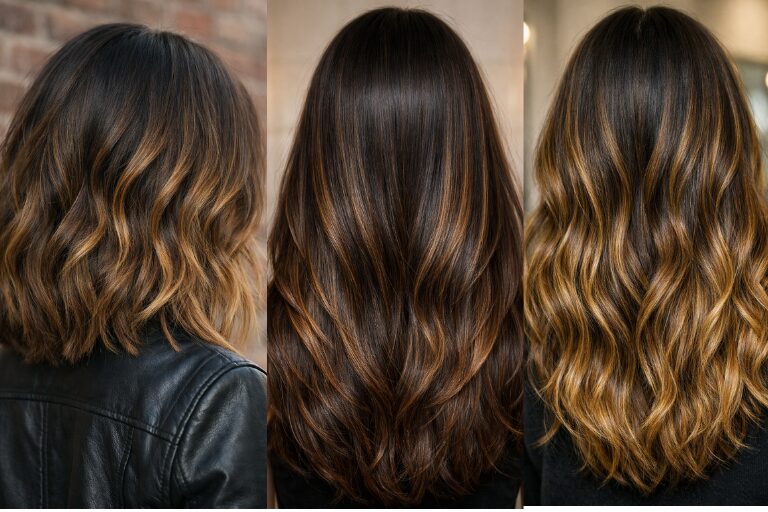
What makes this color combination so consistently successful is the harmony between the base and the highlights. Honey golden blonde and caramel both sit within the warm color family — they share the same underlying yellow-orange undertones that dark brunette hair naturally contains. This means the transition from dark brown to caramel or honey reads as organic and natural rather than imposed, which is exactly what separates an expensive-looking balayage from one that looks processed.
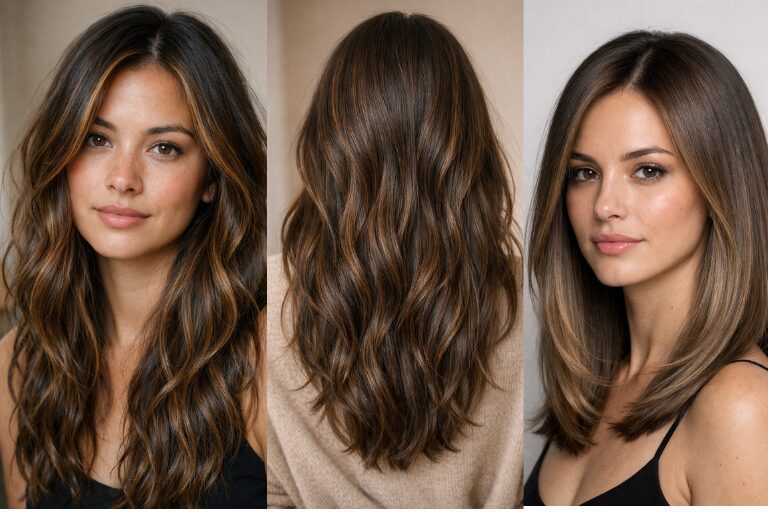
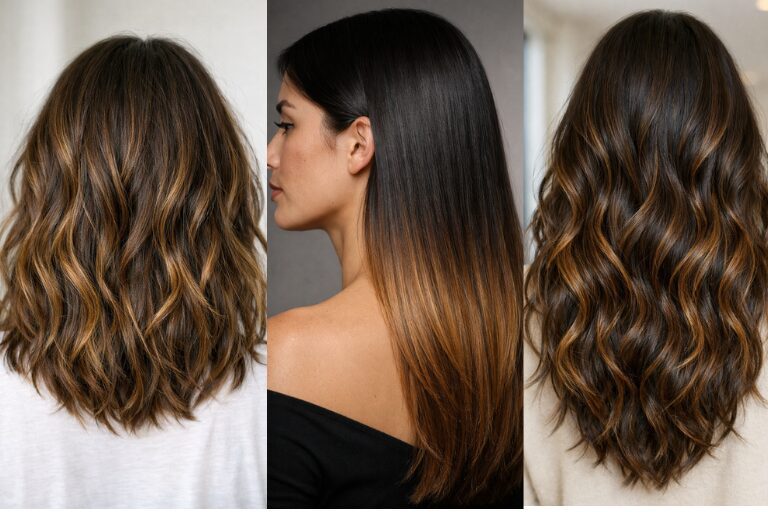
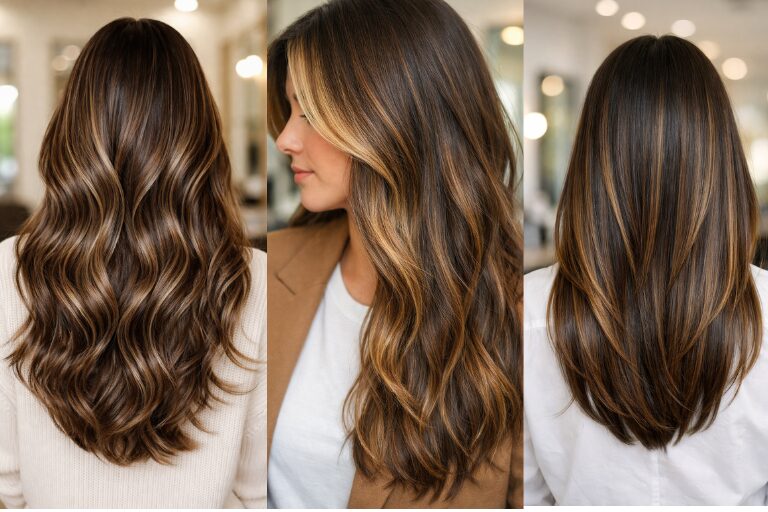
The 27 ideas below cover every version of this warm combination — from the subtlest micro-highlight that barely registers as color to a full caramel ribbon blend with a bold face frame — so you can find the exact placement and intensity that fits your hair, your face, and your actual salon appointment frequency.
How Honey and Caramel Differ on Dark Brown Hair
Understanding the distinction between honey golden blonde and caramel helps you communicate more precisely with your colorist and arrive at the exact result you’re visualizing.
Honey golden blonde is lighter and more saturated — a bright, warm yellow-gold that creates higher contrast against dark brown. It reads as more obviously blonde and more noticeably lighter than the base. Face-framing pieces and money pieces in honey golden blonde create an immediate, high-impact brightening effect.
Caramel is warmer and deeper — a rich amber-brown that reads as a darker, richer form of warmth rather than a lightened blonde. It creates lower contrast against dark brown but produces a more dimensional, depth-filled result. Caramel ribbons through dark brown hair look like depth and dimension rather than highlights.
The combination of both on the same head — honey golden blonde at the face-framing sections and caramel through the lengths — creates the most dynamic and expensive-looking result because the color story has range rather than being a single-tone event.
27 Honey Golden Blonde and Caramel Balayage Ideas
1. Honey-Gold Ribbons on Dark Waves
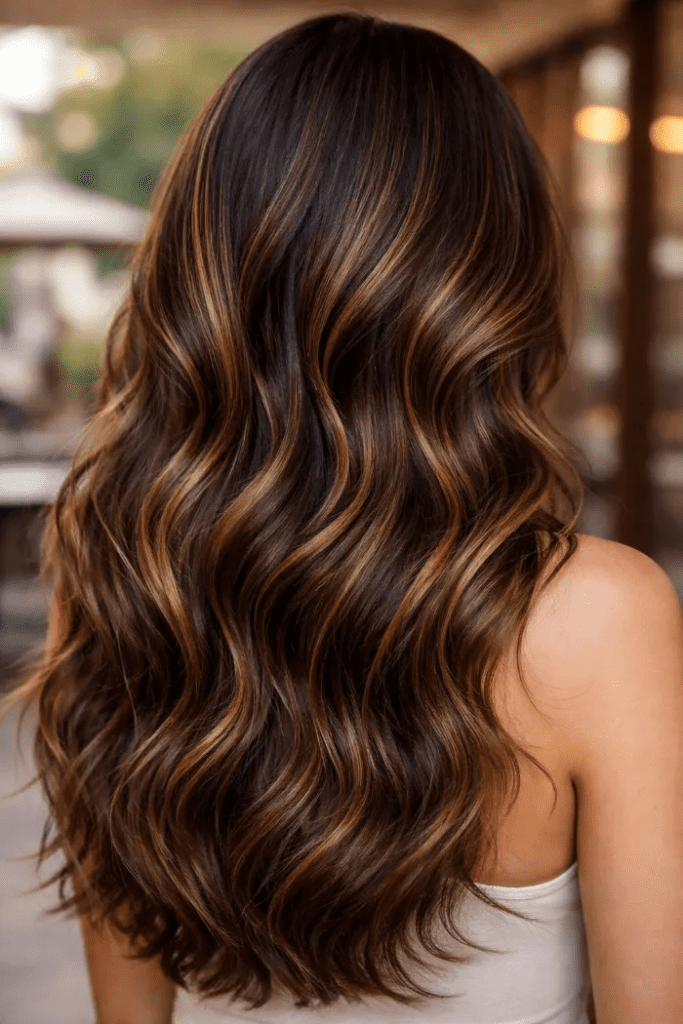
Warm honey-gold ribbons painted through the mid-lengths and ends of dark waves — the ribbon format specifically produces dimension rather than the striped quality that wider, more uniformly distributed highlights create. Each ribbon sits within the wave pattern naturally, appearing and disappearing as the hair moves for a genuinely dimensional effect.
Ask for: Ribbon balayage with a soft root melt rather than a defined starting point. The ribbons should be irregularly spaced — natural-looking distribution is what creates the expensive quality.
Best for: Wave wearers who want visible warmth that reads as naturally sun-kissed rather than obviously highlighted. Works across most brunette base tones.
2. Underlayer Caramel Balayage
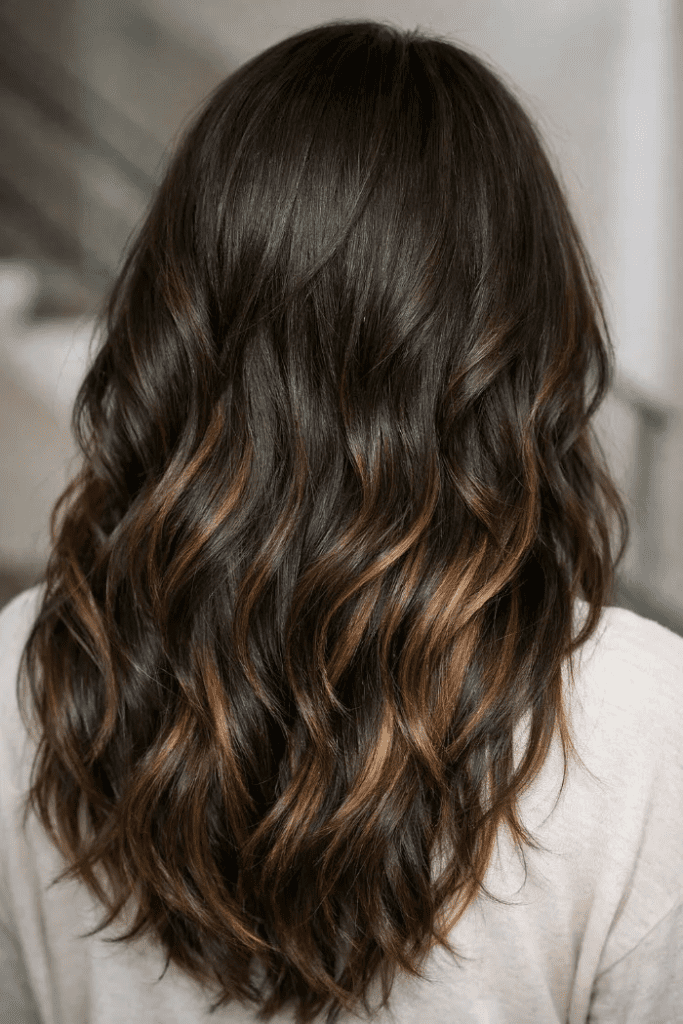
Caramel highlights placed specifically in the lower sections of the hair rather than through the surface layers — this placement keeps the crown naturally dark and allows the brightness to reveal itself when the hair moves, flips, or is styled in a way that exposes the lower layers. It’s specifically designed for those who want color without obvious visible highlights at the crown.
Ask for: Underlayer balayage with the placement staying below the top surface layer. A caramel gloss applied after to unify the tones and maximize warmth and shine.
Best for: Those who want color that’s a discovery rather than an announcement. Works well for professional environments where visible highlights at the crown might not be preferred.
3. Bronde Ribbon Balayage Waves
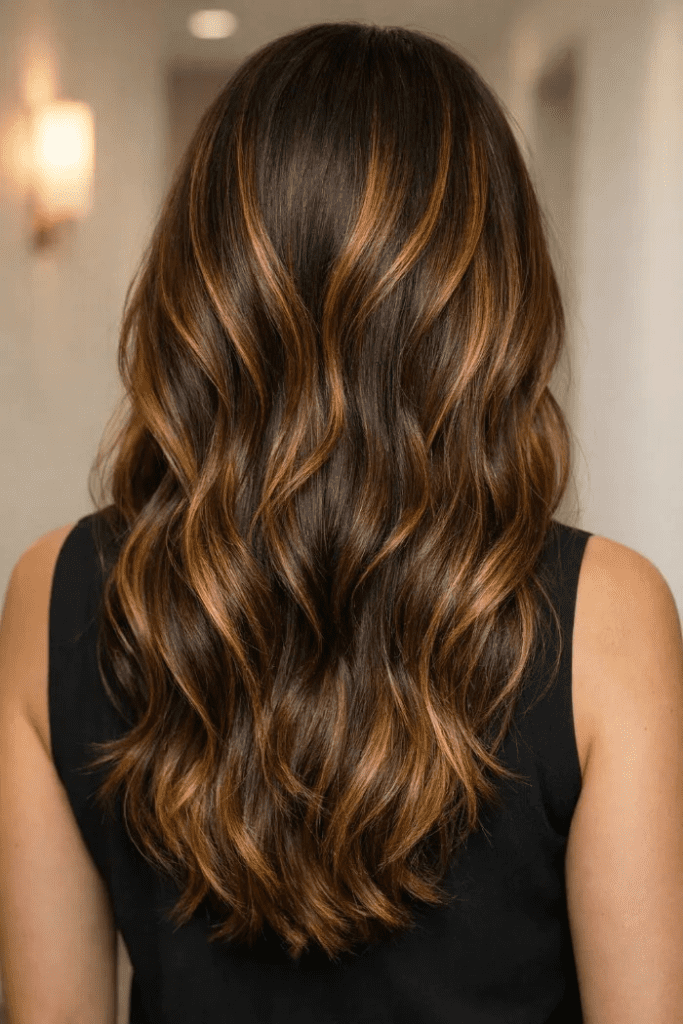
Bold caramel ribbons on a brunette base that create the bronde (brown-blonde) effect — the wider ribbon format creates more visible contrast than thin highlights, and the curves of the wave pattern give each ribbon a natural, organic quality. The bronde result reads as the midpoint between fully brunette and visibly blonde.
Ask for: Wider pieces rather than fine highlights — specifically request ribbon width rather than baby highlight width. A blended root rather than a starting line. A few lighter honey strands near the ends to keep the tips airy.
Best for: Those who want a clearly noticeable color change without going blonde. Works across most wave textures and hair densities.
4. Honey Pinstripe Highlights on Brunette
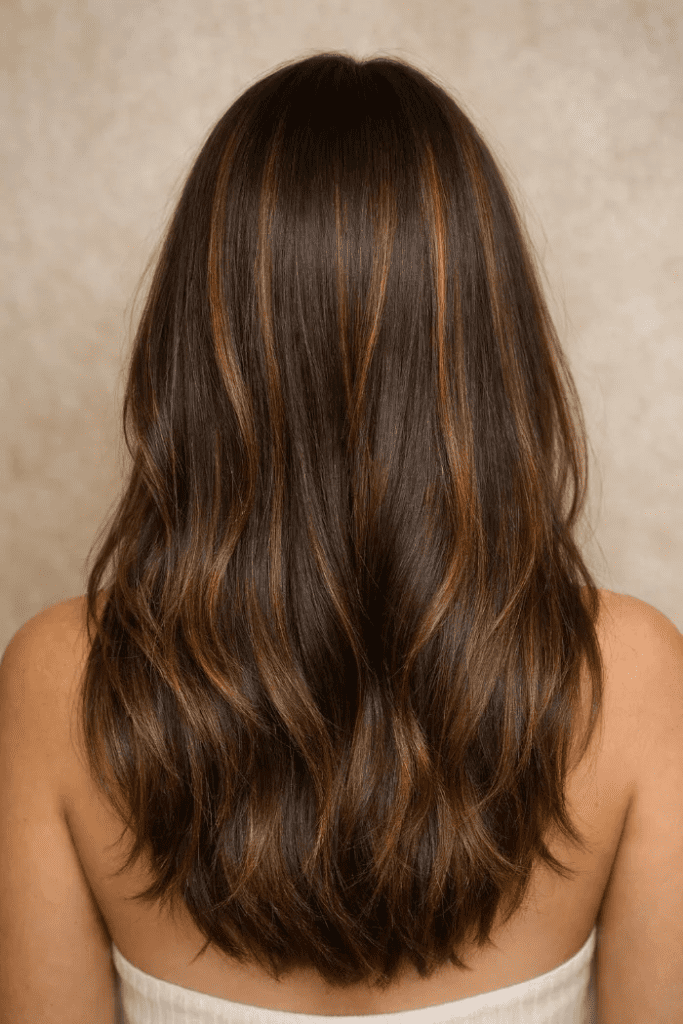
Fine, pencil-thin honey highlights scattered through dark brunette hair — the pinstripe width is what distinguishes this from standard micro balayage, creating highlights so fine they read as a warm sheen rather than individual strands of color. Most visible when the hair moves or catches direct light, nearly invisible otherwise.
Ask for: Micro or pinstripe width highlights — confirm the width specifically because “fine” means different things to different colorists. A warm golden toner that reads honey rather than orange.
Best for: First-time color clients, those in very conservative environments, and those who want dimension that reads as exceptional natural hair rather than obvious color.
5. Caramel Ribbons on Long Waves
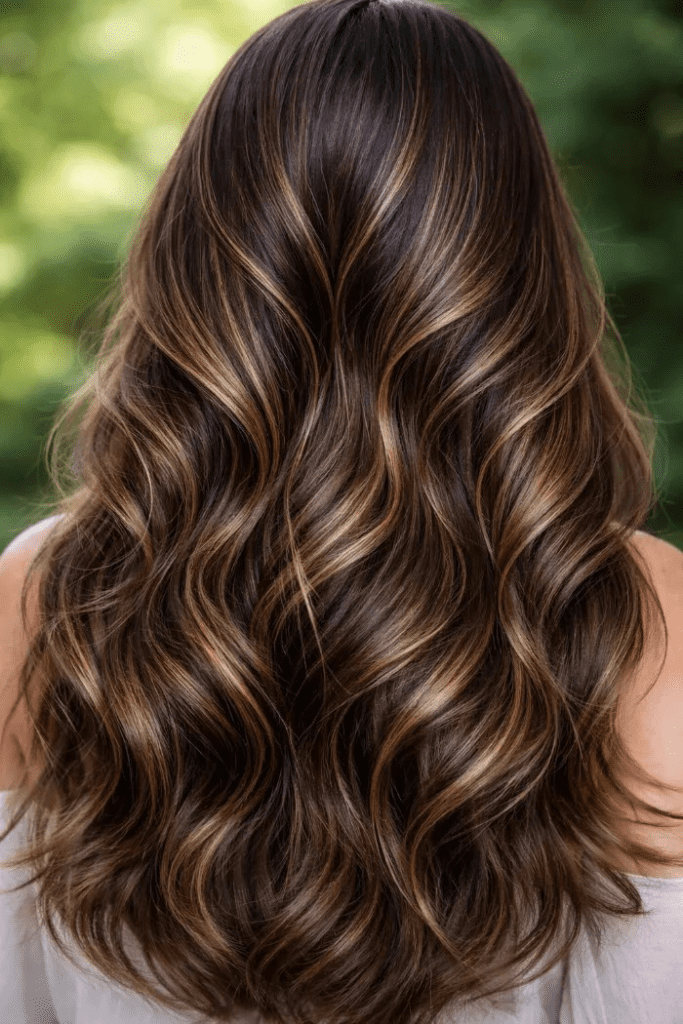
A long, wavy look with caramel ribbons placed through the mid-lengths for a soft, sunlit finish — the length of the hair and the looseness of the wave give the caramel ribbons significant room to develop and blend, producing the most naturally warm and dimensional result of any placement format on long hair.
Ask for: Medium contrast balayage rather than high contrast or ombré — the goal is dimensional brunette, not highlighted hair. A warm gloss every six to eight weeks to maintain the richness.
Best for: Long-haired women who want warm, rich dimension that reads as genuinely sunlit rather than colored.
6. Honey Face-Framing Balayage
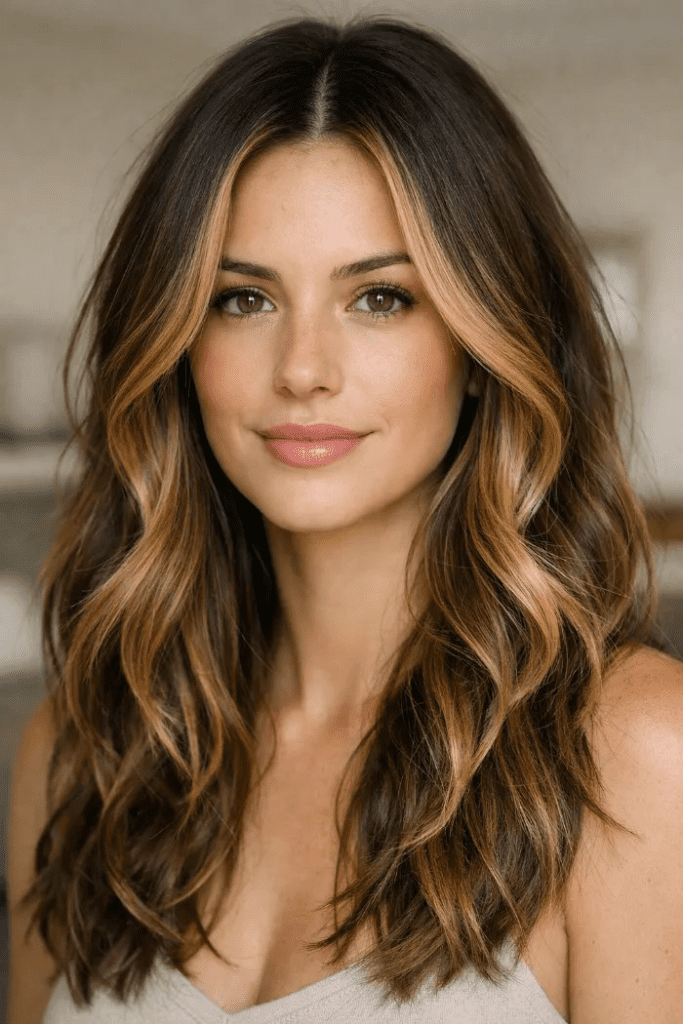
Honey-toned face-framing balayage pieces that brighten around the cheeks and eyes while the rest of the hair remains dark brown — face-framing placement is the single most flattering position for warm highlights on dark brunette hair because it puts the warmth exactly where it creates the most luminous effect on the face. The rest of the hair staying dark keeps the maintenance minimal.
Ask for: A honey money piece combined with soft caramel balayage through the ends of the lengths. A warm-safe shampoo rather than a purple one — purple neutralizes warm tones, which is the opposite of what honey and caramel placement needs.
Best for: Those who want maximum face-brightening impact with minimum overall color coverage. One of the most efficiently flattering placements on this list.
7. Sleek Caramel Melt on Dark Brown
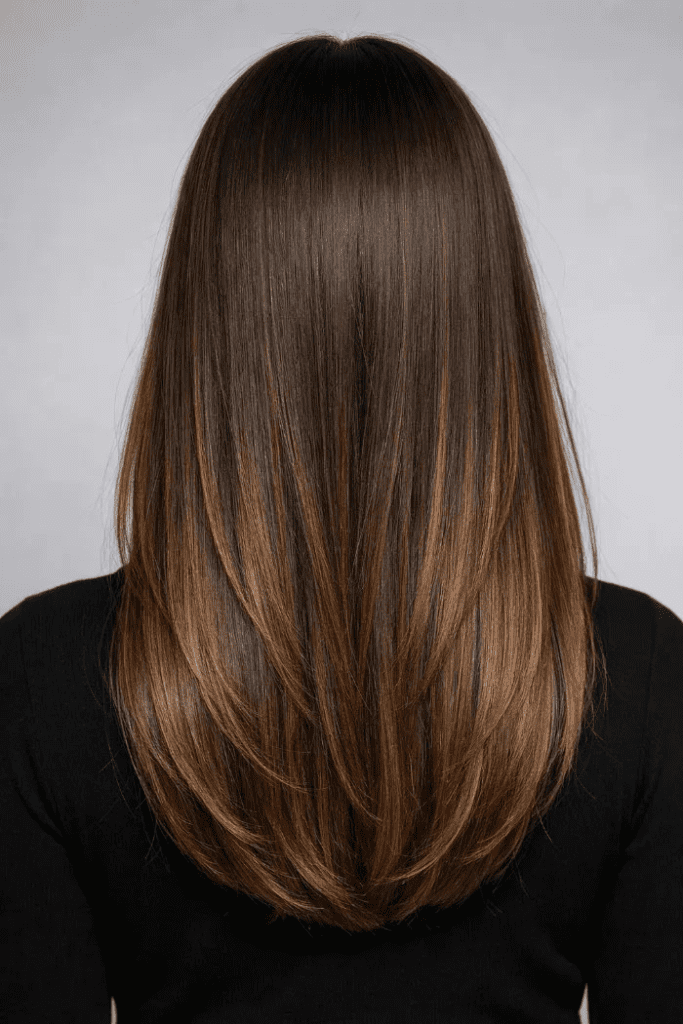
A smooth, gradient-like caramel melt where the dark brown base stays fully dominant through the crown and transitions gradually into warmer caramel tones through the lower half — the sleek styling shows this gradient most clearly because there’s no wave texture to obscure the transition. The overall look reads as polished, warm, and expensive.
Ask for: A soft balayage rather than a hard ombré line — the transition should be graduated and seamless. A caramel glaze applied after to unify the tones and produce maximum shine.
Best for: Those who wear their hair straight or sleek regularly and want a color that performs best in that styling context. Works particularly well on medium to thick straight hair.
8. Caramel Contour Highlights on Dark Brunette
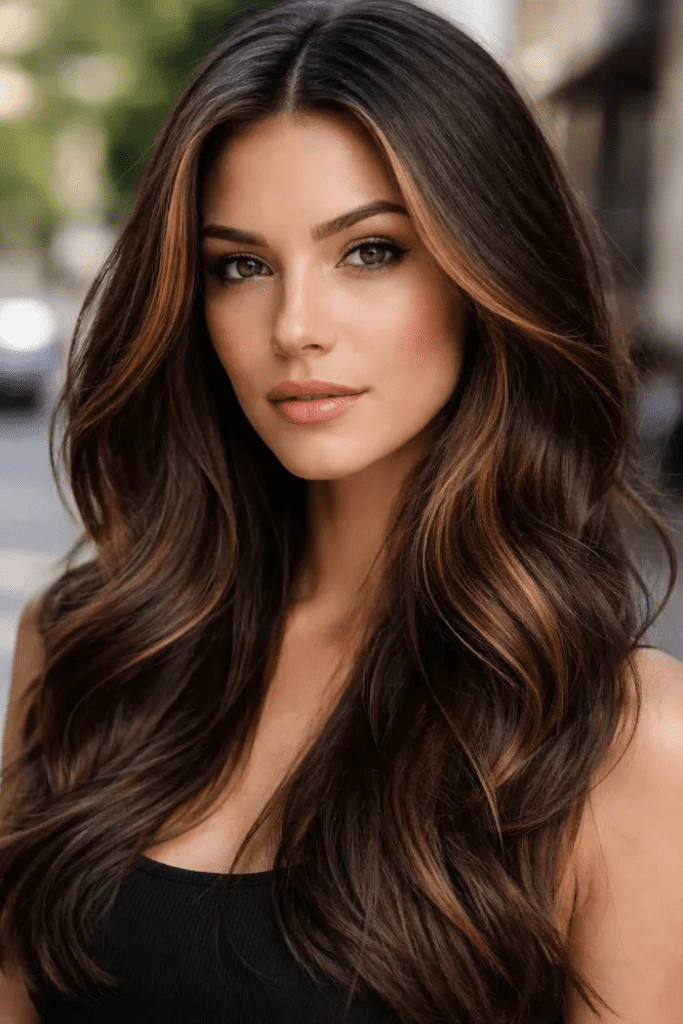
Warm caramel highlights placed specifically at the front face-framing sections to lift and brighten the face without changing the color throughout the rest of the length — the contour placement uses color the way contouring makeup uses shading, creating warmth and dimension at the most strategic and flattering position.
Ask for: Chunky, blended face-framing pieces rather than thin ribbons for the most visible contour effect. A caramel toner rather than a golden one for richness. Big, loose waves to maximize how the light catches the face-framing pieces.
Best for: Those who want the face-brightening impact of highlights concentrated where it’s most flattering without significant overall color coverage.
9. Honey Money Pieces on Dark Brown
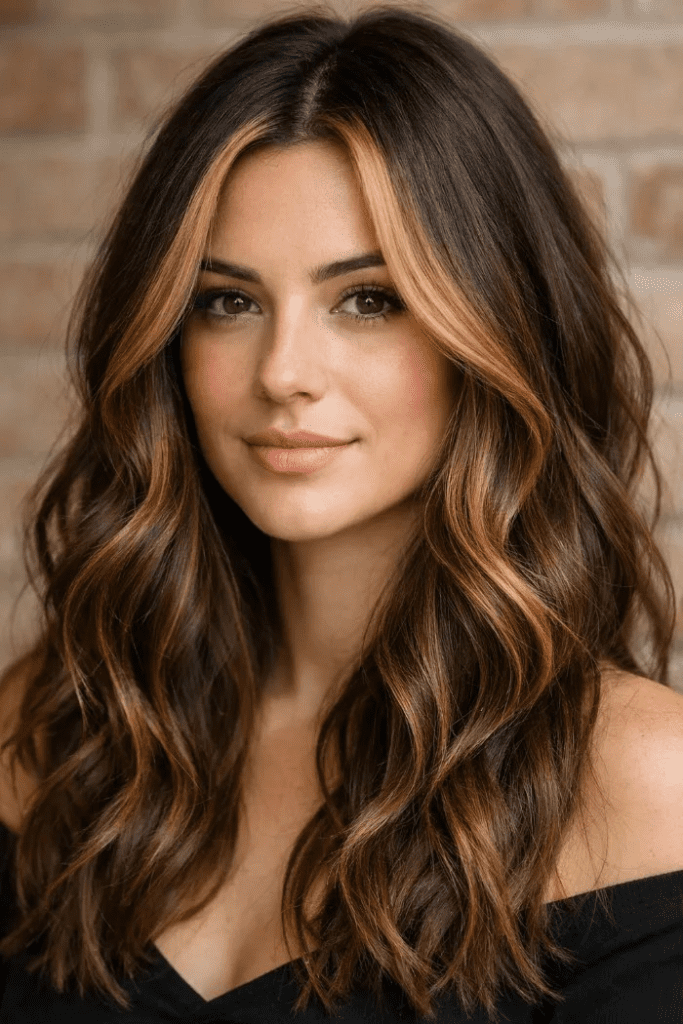
Classic honey money pieces — concentrated at the two front sections that frame the face — on a dark brown base where the rest of the hair remains at its natural depth. The brightness is focused specifically at the hairline and through the front sections where it creates the most immediate and visible impact.
Ask for: A soft root melt on the money piece sections specifically so the grow-out looks graceful. The honey placement should feel like a frame rather than a block — blended at both the root and the ends.
Best for: Those who want the most impactful face-framing change with the least overall color coverage. One of the lowest-maintenance warm highlight options for dark brunette hair.
10. Rooty Caramel Balayage With Loose Texture
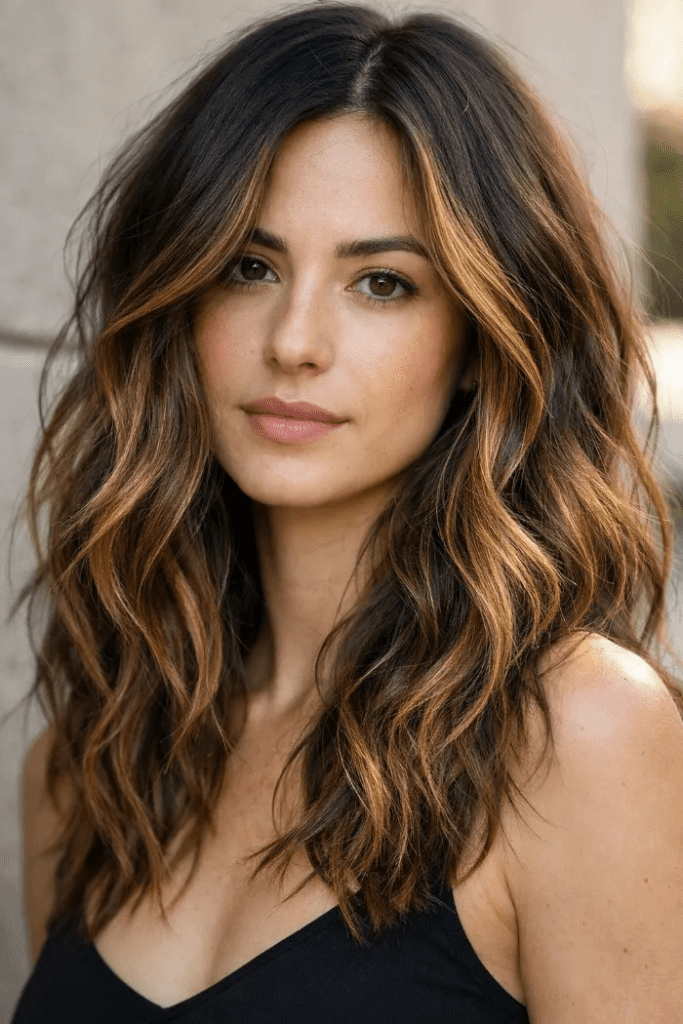
A balayage with a deliberately deep, prominent root shadow that allows the caramel and honey tones to live through the mid-lengths and ends while the crown stays naturally dark and completely untreated — this placement is specifically designed for those who want to stretch their appointment schedule as long as possible without any visible regrowth line.
Ask for: A deep shadow root that extends further down than the natural root — making the dark root area a deliberate design decision rather than simply untreated regrowth. Hand-painted ends for the most organic placement.
Best for: Those who want the longest possible time between appointments. The shadow root specifically makes the grow-out look intentional at every stage.
11. Golden-Glow Balayage Ends
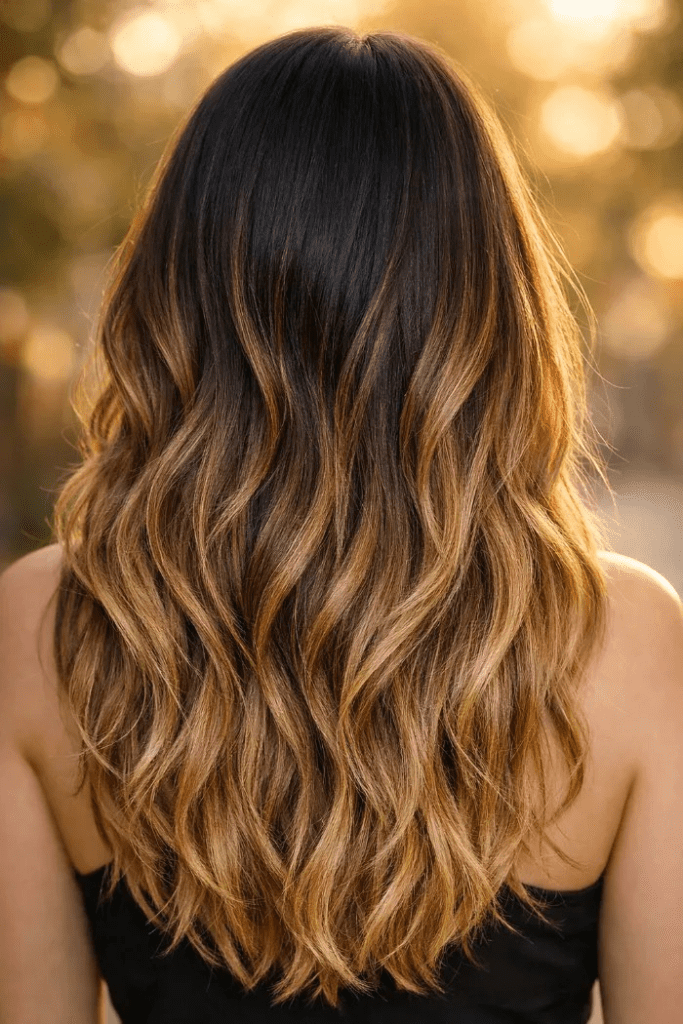
A warm, golden-glowing balayage that keeps the roots deep and melts into honey-gold through the mid-lengths and ends — slightly brighter than a standard caramel placement but not as high-contrast as a bold money piece. The glow quality comes from the honey-gold toner, which reads as warm and luminous rather than cool or neutral.
Ask for: A soft shadow root with hand-painted ends that graduate toward honey-gold rather than caramel. A warm gloss every six to eight weeks to keep the buttery quality fresh.
Best for: Those who want visible warmth and brightness through the lengths without a strong face-framing statement. A balanced, all-over warm glow.
12. Deep Brunette With Caramel Ribbons
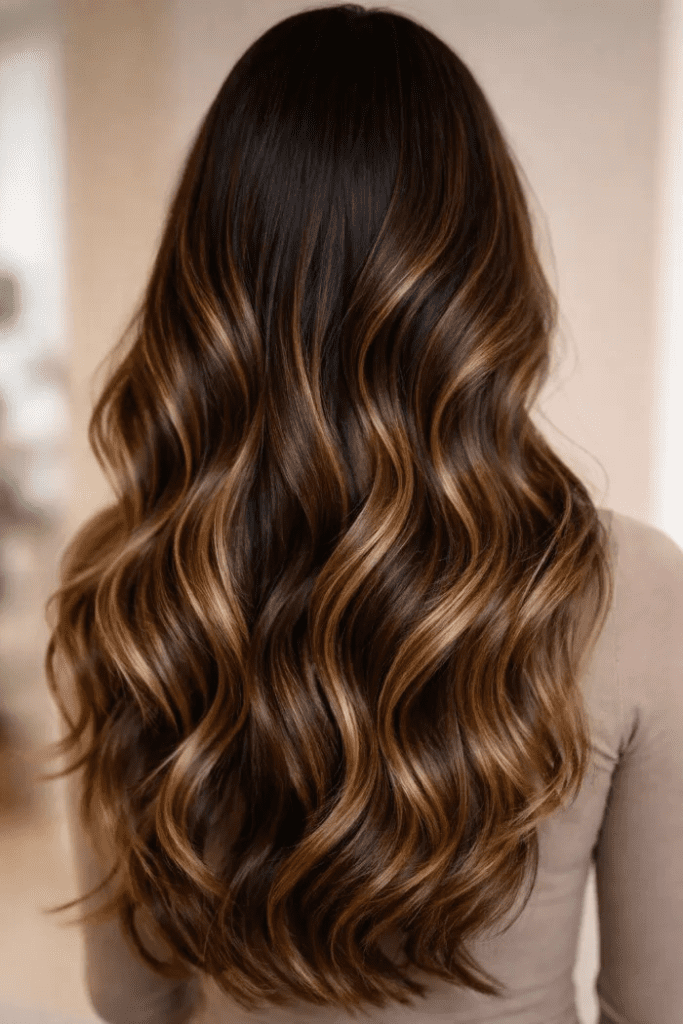
Caramel ribbons placed wide and well-blended through a dark brunette base that stays fully dominant — this placement reads as depth and richness rather than highlights, producing a color that looks like the most beautiful version of dark brunette rather than a colored version of it. The wide ribbons create dimension while the dark spaces between them maintain the brunette character.
Ask for: Wide ribbons specifically rather than fine highlights — the width is what creates dimension rather than stripes. A root melt that keeps the transition seamless. This placement grows out particularly gracefully.
Best for: Those who want their dark brown to look richer and more dimensional without looking obviously highlighted. One of the most naturally beautiful placements on this list.
13. Side-Swept Honey Face Frame
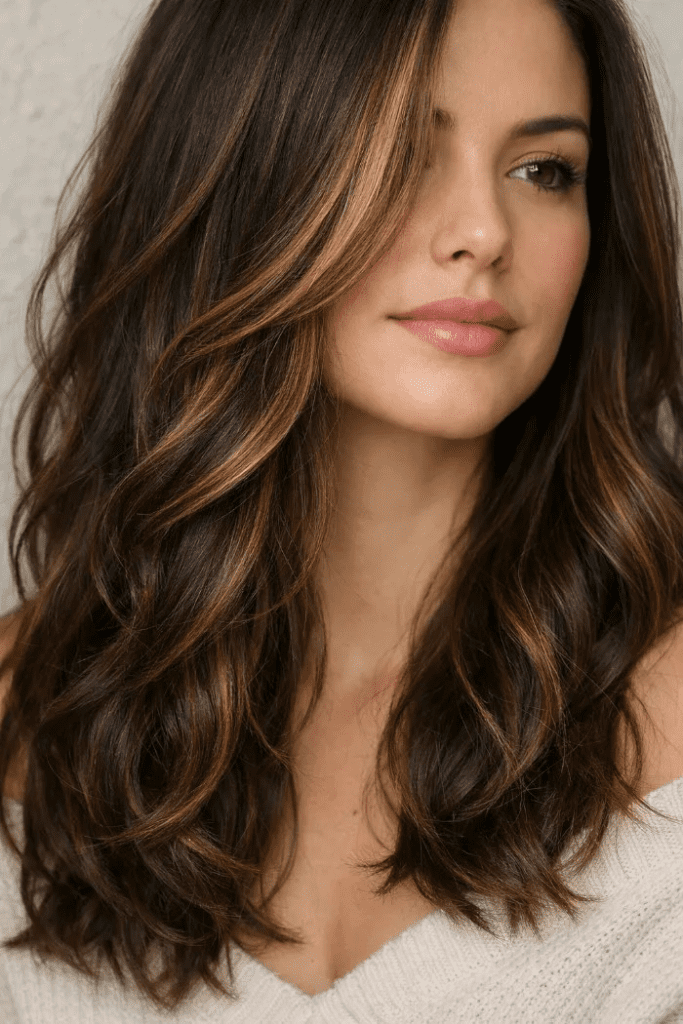
Honey pieces concentrated at the front sections of a side-swept style — the side sweep specifically brings these pieces across the forehead and cheekbone where they catch the most light and create the most flattering facial illumination. The rest of the hair remains deep dark brown with the brightness concentrated entirely at the face frame.
Ask for: Money piece placement on the side that the hair sweeps toward — the sweep direction determines which pieces will be most visible. A soft root melt so the face frame grows out gracefully.
Best for: Those who wear their hair in a side part or side sweep and want the color to work most effectively in that styling direction.
14. Curtain Bangs With Warm Contour Highlights
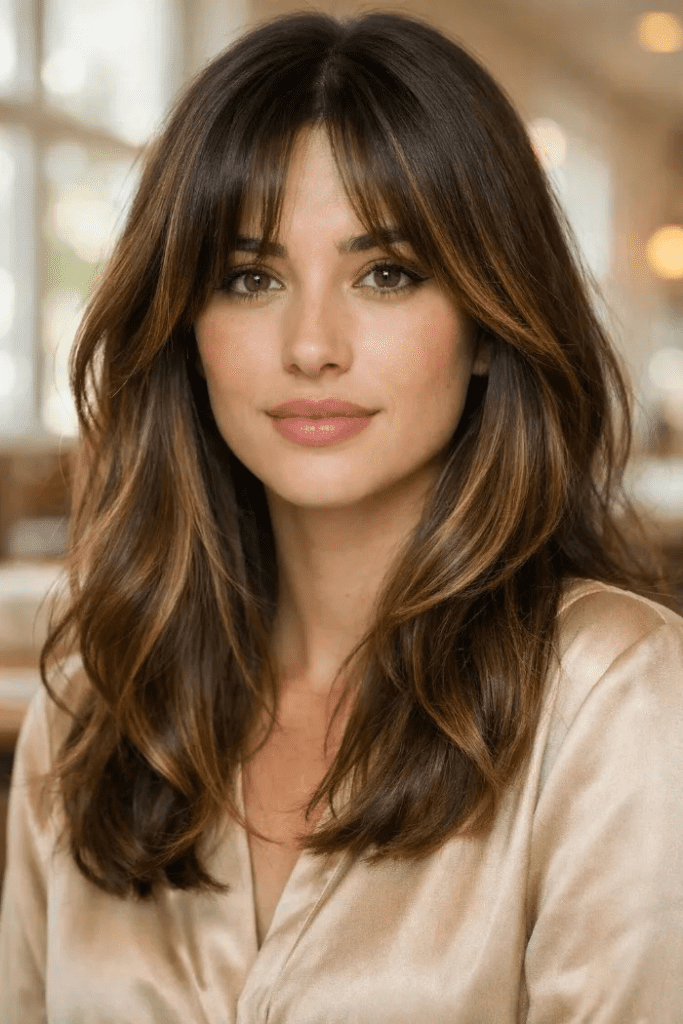
Warm honey-gold face framing combined with curtain bangs that sit at the brightest, most visible section of the face — the curtain fringe specifically benefits from warm highlights because the fringe-to-cheekbone area is where highlight placement is most flattering, and the curtain bang’s natural parting exposes that area. The honey-gold at the front sections lights up the eyes and cheekbones.
Ask for: Honey-gold face framing specifically through and around the curtain bang sections. A gentle root shadow so the color sits naturally within the fringe rather than making it look overworked.
Best for: Curtain bang wearers who want their color to complement and enhance the fringe’s face-framing function.
15. Soft Caramel Swirl Balayage
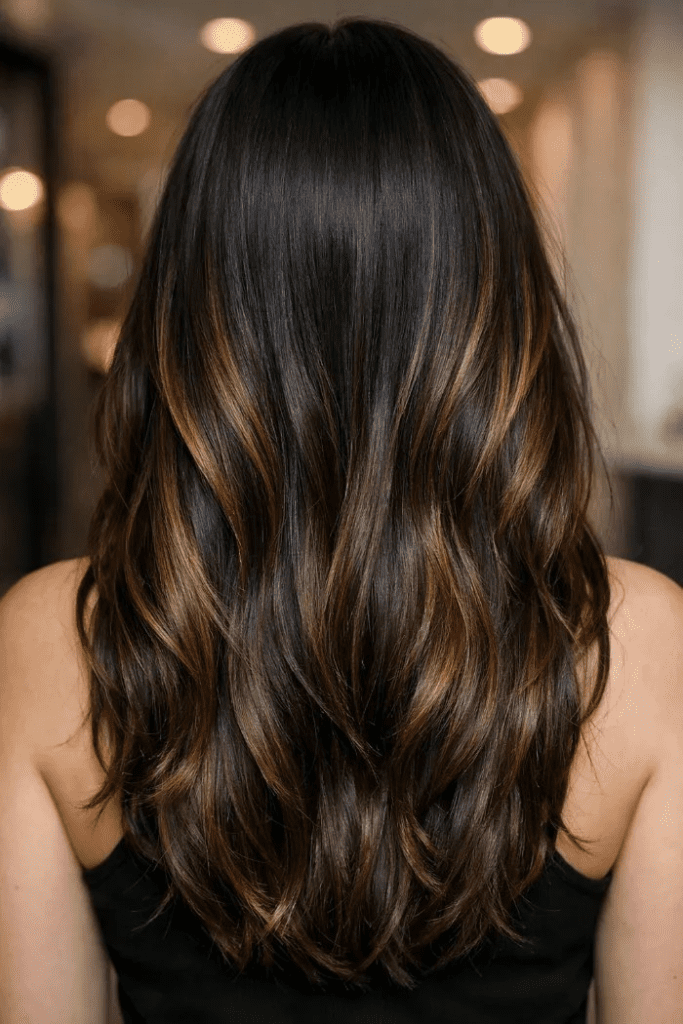
Fine, well-spaced caramel highlights through the mid-lengths that create a subtle swirl of warm dimension when the hair moves — this is a low-maintenance approach to warm dimension, with placement that’s visible in motion but subtle at rest. The thin, well-spaced application keeps the dark brunette dominant while adding warmth that reads as natural.
Ask for: Mid-length placement specifically — color that starts at the mid-length and graduates toward the ends rather than starting at the root area. A warm toner applied after to ensure the caramel reads as rich and warm rather than dull or flat.
Best for: Those who want work-appropriate, conservative warm dimension. One of the most frequently requested low-visibility warm balayage approaches.
16. Golden Caramel Waves With Brighter Tips
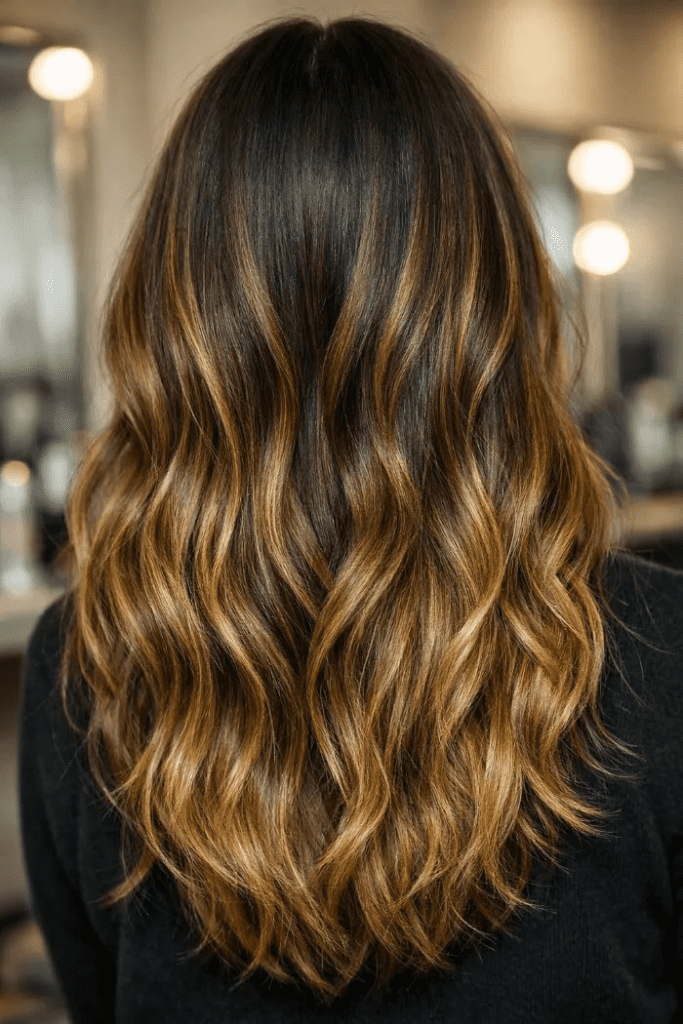
A warm brunette base with caramel through the mid-lengths that brightens progressively toward honey-gold at the very tips — the gradient from caramel mid-length to honey-gold tip creates a sunlit quality that reads like the hair has been naturally lightened by spending time in the sun. Regular trims keep the tips healthy and the lightest sections looking fresh.
Ask for: A blended root, caramel through the mid-section, and brighter honey-gold tips. The tips should be visibly lighter than the mid-section for the graduated effect to read clearly.
Best for: Those who want a sun-kissed gradient effect that’s more dimensional than a flat ombré. Works particularly well on long hair where the three-tone gradient — dark root, caramel mid, honey tip — has room to develop fully.
17. Fine Warm Lights on Dark Brunette
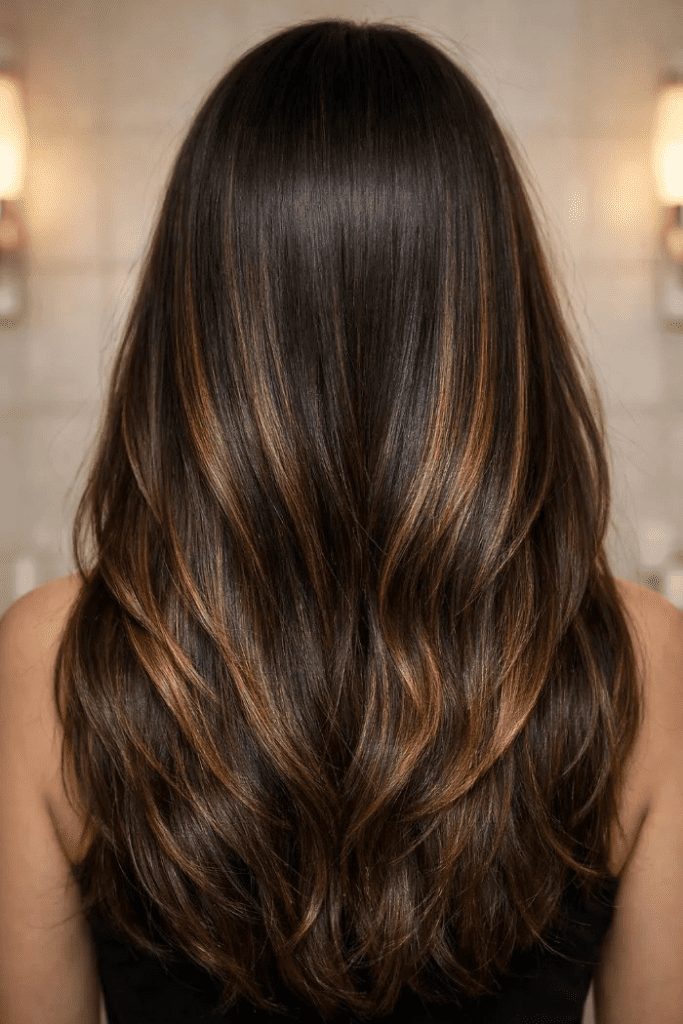
Very fine, almost invisible warm highlights distributed throughout dark brunette hair — the finest and most understated placement on this list. The warm lights add shine and the subtle impression of dimension without creating any visible highlight pattern. From most distances the hair reads as simply very healthy, rich dark brunette.
Ask for: Micro balayage and a caramel glaze rather than balayage and toner — the micro scale of the highlights combined with a glossy finish is what produces the warm-light-but-barely-there quality.
Best for: Those who want the experience of hair that simply looks better without any obvious color change. Works for the most conservative professional environments.
18. Deep Dark Brown With Toasty Highlights
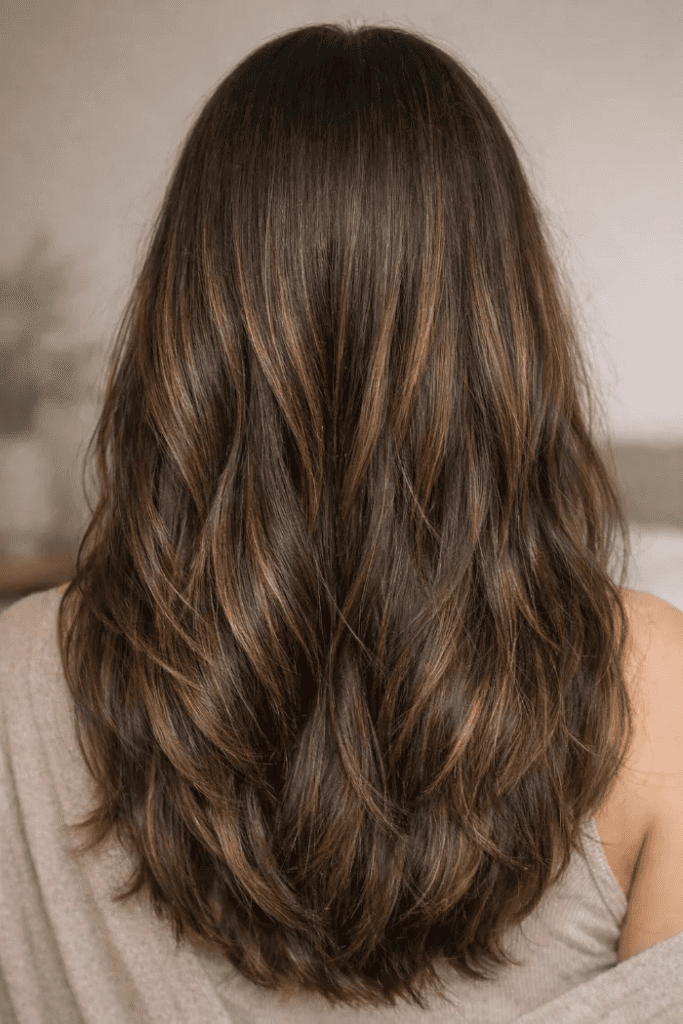
A rich, deep dark brown base with small, toasty warm highlights that peek through the depth — the “toasty” direction sits between caramel and amber, warmer than honey and deeper than standard caramel. It reads as an incredibly rich version of dark brunette rather than as highlighted hair.
Ask for: Subtle balayage pieces in a toasty amber-caramel direction and a warm gloss applied after. Loose waves for styling to give the toasty highlights the movement that shows them best.
Best for: Those who want the richest, deepest version of warm dimensional color — dimension that reads as depth rather than lightness.
19. Honey Money Piece on Soft Waves
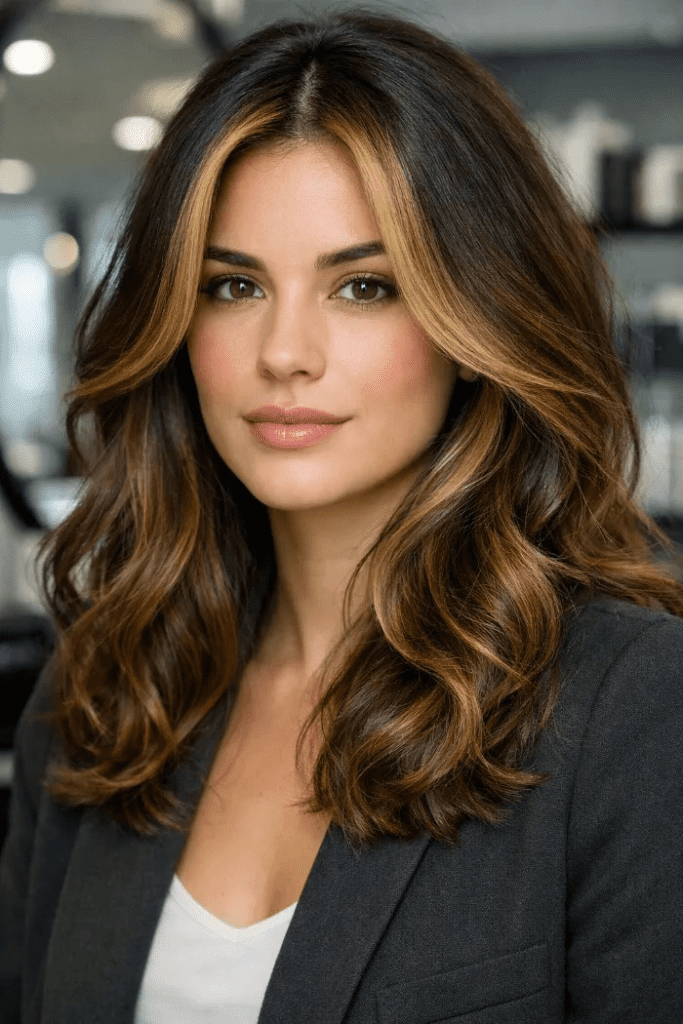
A honey money piece on a dark brown base with the rest of the lengths in caramel and natural brunette tones, styled in soft waves that show the color story from every angle — this is the warm balayage formula that most consistently photographs well because the contrast between the honey front pieces and the dark body creates immediate visual interest.
Ask for: A face frame that starts slightly below the root rather than at the hairline for a softer, more flattering grow-out. Bold enough to read clearly but not so chunky that it looks like a painted block.
Best for: Those who want their warm balayage to look consistently beautiful in photographs. Works across most hair textures and lengths.
20. Feathered Caramel Balayage Blend
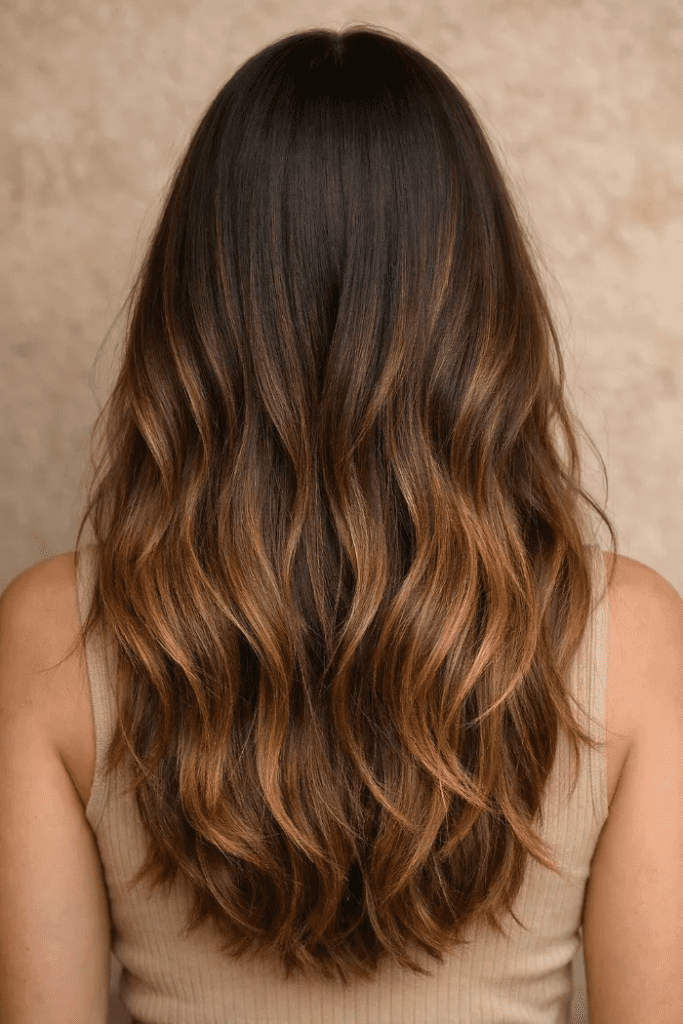
Caramel painted in fine, feathered strokes through the mid-lengths and ends — the feathering technique creates the softest possible edge to each highlighted section, producing a result that reads like natural light hitting the waves rather than applied color. No harsh lines anywhere through the length.
Ask for: Feathering specifically named as a technique — ask your colorist to feather the edges of each section as they apply rather than painting with a solid edge. A warm gloss for shine.
Best for: Those who want warm dimension in its most naturally blended and genuinely sunlit-looking form. Works on most wave textures.
21. Long Cascading Layers With Caramel Sweep
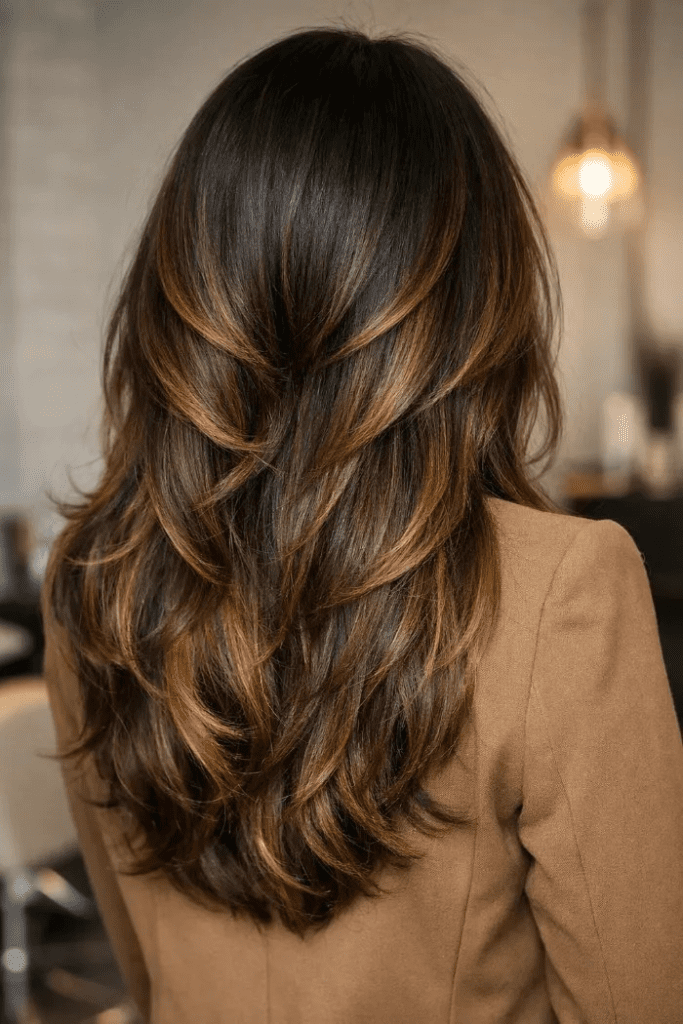
Long layers with caramel painted higher through the crown area for a soft, dimensional sweep that adds warmth where it’s most visible — the higher crown placement on a long layered cut is specifically effective because the top layers are what’s most visible when the hair is worn down, and warm caramel at the crown creates a luminosity that reads as an all-over warm glow.
Ask for: Long layers combined with ribbon balayage placed higher through the crown sections. A warm glaze to keep the overall finish glossy and unified.
Best for: Long-haired women who want visible crown warmth rather than depth concentrated through the mid-lengths and ends only.
22. Honey Caramel Ribbon Waves
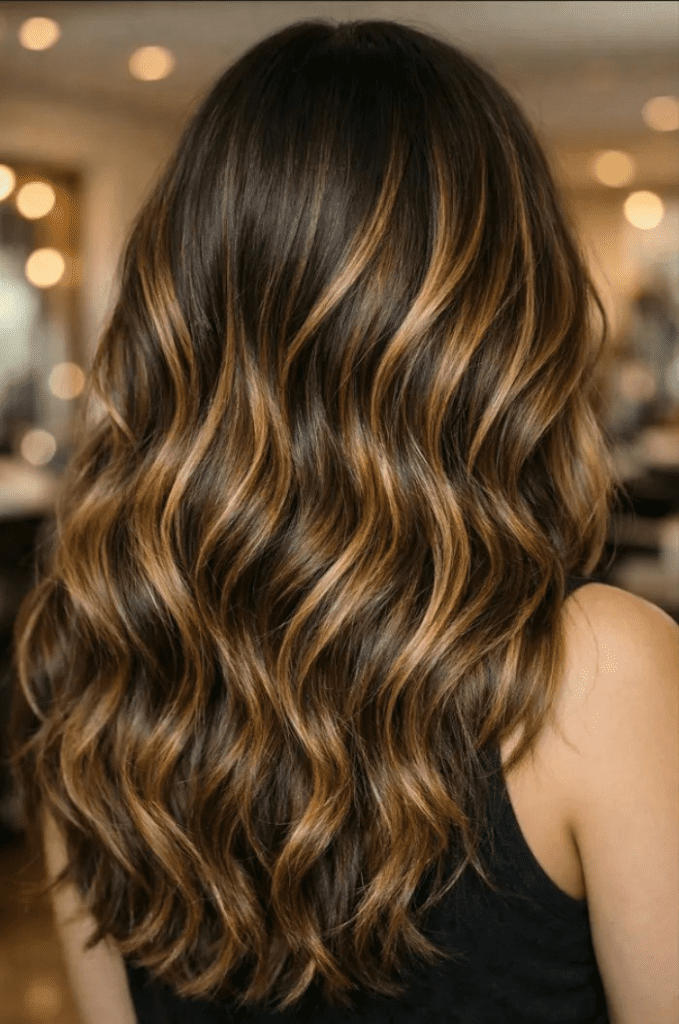
Wider, more spaced-out honey and caramel ribbons through waves — the wider spacing and greater ribbon width produce higher contrast than fine highlights but a more dimensional result than a single-shade balayage. The waves pull each ribbon in a slightly different direction, creating the impression of multiple tones even when the application was relatively straightforward.
Ask for: Medium contrast ribbon balayage with a blended root and lighter ends. The ribbon width should be wide enough to create noticeable warmth but spaced enough that dark sections remain visible between them.
Best for: Those who want a clearly warm, visibly highlighted result that reads as dynamic and intentional from across the room.
23. Honey-Gold Accents on Shaggy Waves
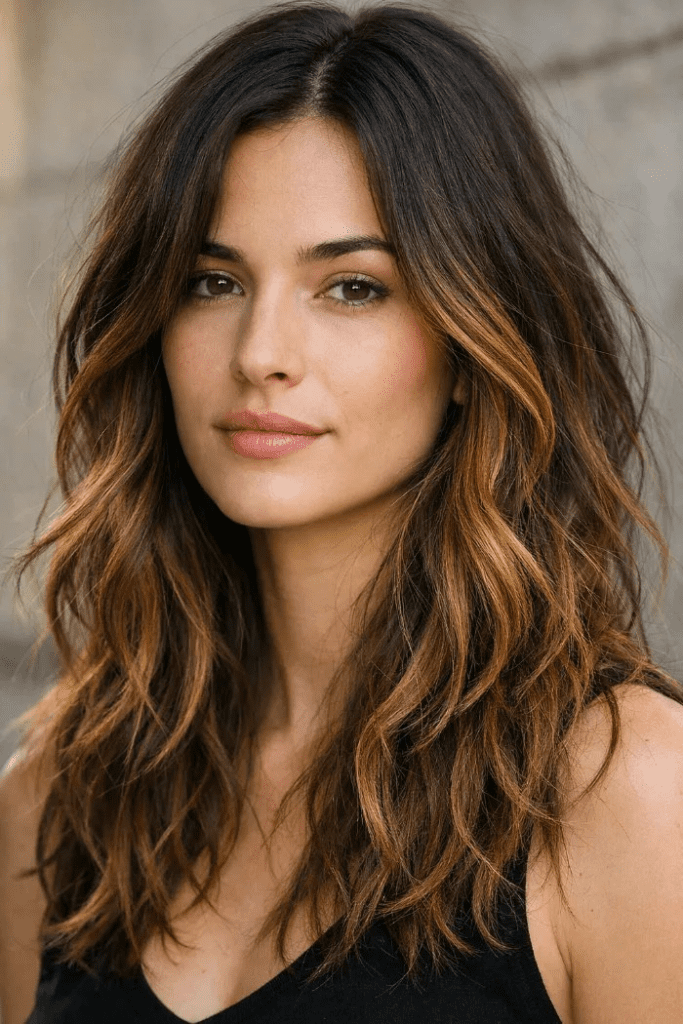
Soft honey-gold accents concentrated near the face and through the ends of a shaggy, textured wave style — the shag’s distributed layering brings highlighted sections to the surface from multiple levels, creating a color effect that looks more all-over than the actual placement coverage would suggest. The face and end concentration keeps it low-effort while delivering high visual impact.
Ask for: Face-framing honey-gold and caramel gloss throughout the rest of the length. The shag layering does significant work in distributing the color visually, so a relatively restrained placement produces a generous result.
Best for: Shag wearers who want warm color that complements and enhances their layered, textured cut.
24. Warm Caramel Ribbons on Glossy Waves
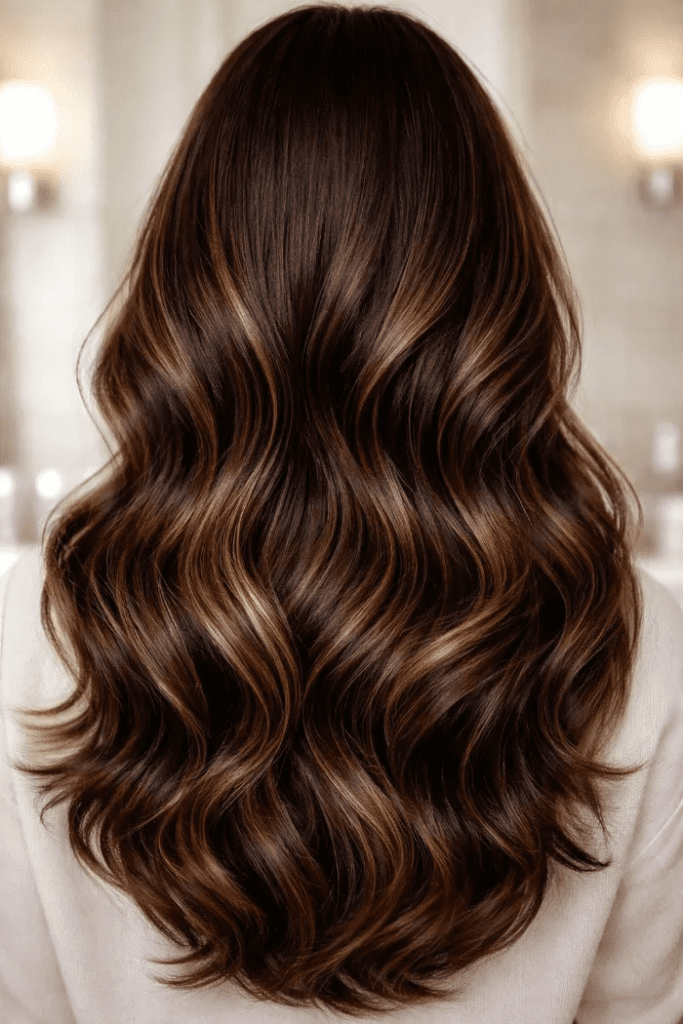
Caramel ribbons that curve through glossy, well-finished waves with a deep dark root shadow providing the grounding contrast — the gloss finish is as important as the color placement here. Matte or dry hair obscures the warmth and dimensional quality of caramel. A high-gloss finish amplifies the warmth and makes the ribbons read as luminous and expensive.
Ask for: A ribbon balayage with a root shadow and a clear gloss or glaze applied after every appointment. The combination of ribbon placement and consistent gloss maintenance is what produces the look in this style.
Best for: Those who are willing to invest in regular gloss maintenance in exchange for hair that consistently looks high-shine and salon-fresh.
25. Lived-In Warm Caramel Balayage
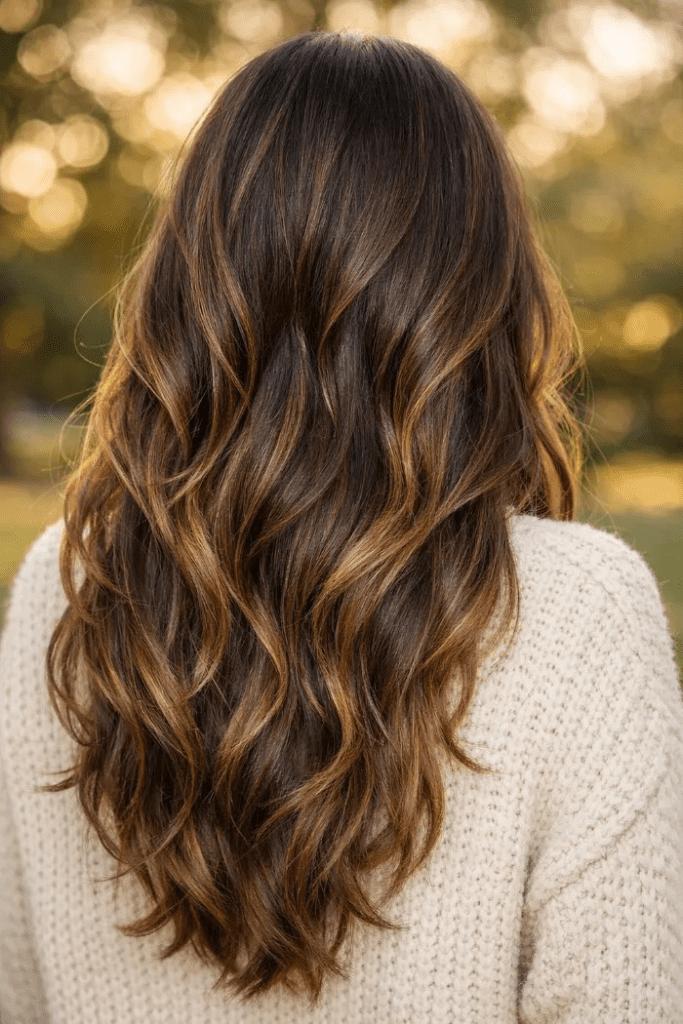
A balayage that starts slightly lower than usual — below the mid-length rather than at it — so the roots have maximum natural depth and the highlights feel grown-in and casual rather than freshly applied. This is specifically designed for those who want the most relaxed, most appointment-forgiving warm balayage available.
Ask for: Hand-painted caramel through the mid-lengths and ends with the starting point kept lower than a standard balayage — closer to the lower third of the length. A soft root melt that makes the transition completely seamless.
Best for: Those who want to go as long as possible between appointments without visible regrowth. The most stretched-appointment-friendly warm balayage placement on this list.
26. Thin Caramel Highlights on Dark Brunette
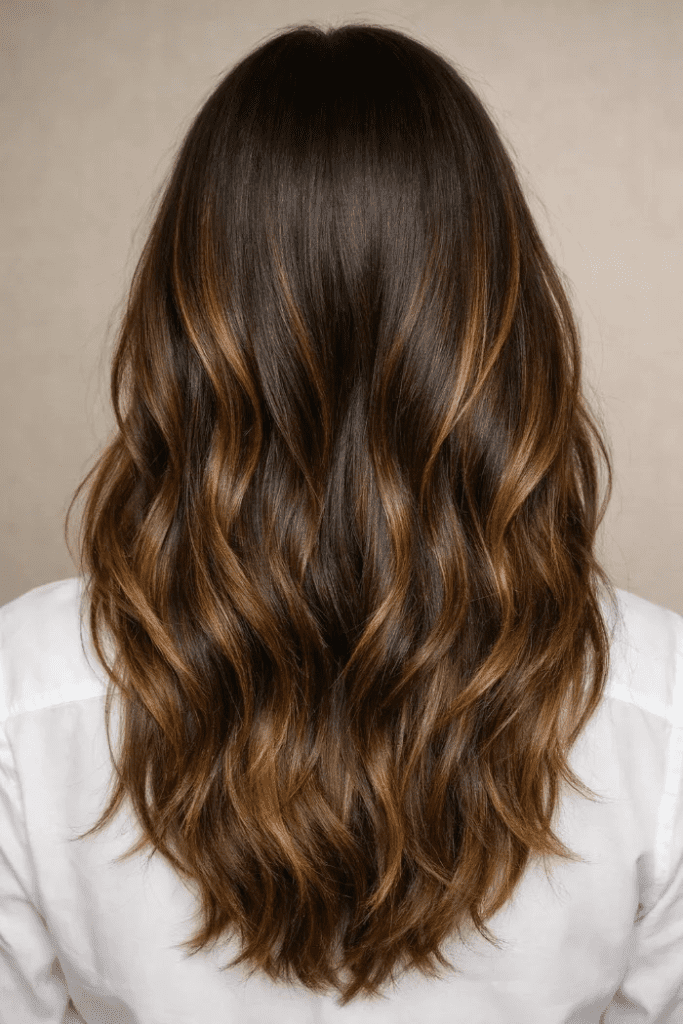
Thin, well-blended caramel highlights through dark brunette hair — the color reads as warm and dimensional while the overall impression remains solidly dark brunette. The thinness of the highlights is the critical specification: thin highlights read as dimension, while wide sections read as traditional blonde highlights.
Ask for: Micro balayage or thin caramel highlights with a warm caramel toner. Low heat styling to prevent the warm tones from shifting toward brassiness. Shine spray at the ends to show the dimension clearly.
Best for: Those who want caramel warmth without a visible departure from their dark brunette base. A reliable, broadly appropriate warm color approach for most lifestyles.
27. Wavy Lob With Caramel Balayage
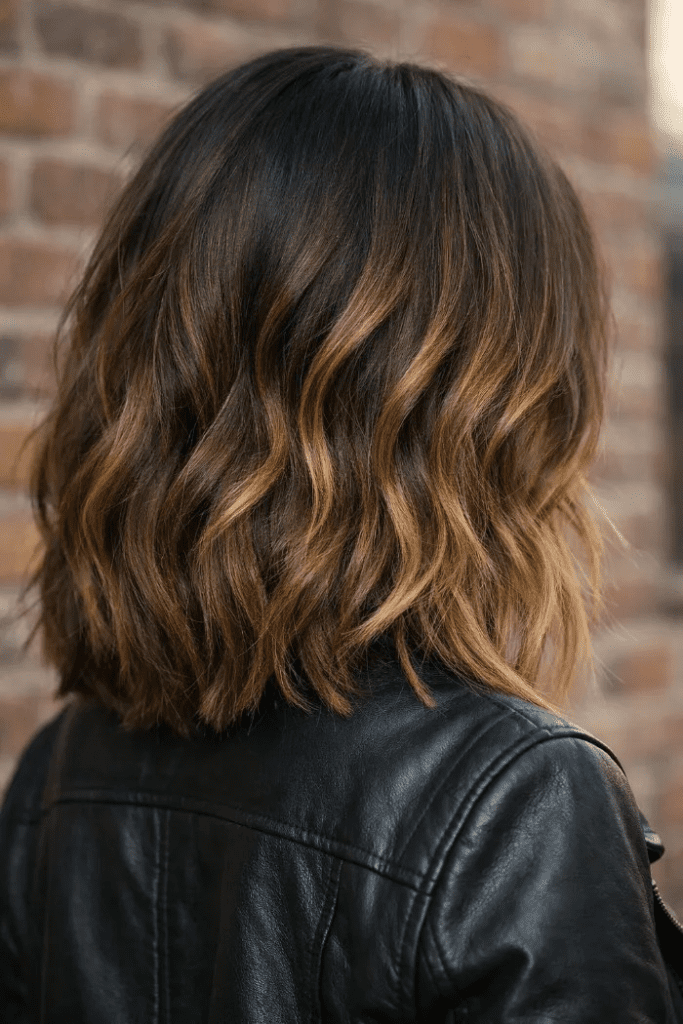
A wavy lob with caramel balayage placed through the mid-lengths and tips — the lob length is specifically effective for caramel balayage because the shorter length keeps all the color within close viewing range where it reads most clearly, and the blunt perimeter of the lob’s end makes the caramel tips look defined and intentional.
Ask for: A blunt lob with soft internal layers and a warm honey-caramel toner applied after balayage. The mid-length to tip placement on a lob ensures the color is visible throughout most of the hair’s visible length.
Best for: Lob wearers who want caramel that reads clearly and consistently through their length. The lob format consistently produces some of the most visible and most flattering caramel balayage results.
Final Thoughts
Honey golden blonde and caramel balayage on dark brown hair works because it asks the color to do what it was naturally designed to do — warm and brighten rather than transform and replace. The dark brunette foundation stays intact as the visual anchor, and the honey and caramel tones add exactly the warmth, dimension, and luminosity that make dark hair look genuinely exceptional rather than simply dark.
The right choice from this list depends on how visible you want the color, where you want the warmth most concentrated, and how often you’re able to maintain it. Face-framing placements give the most immediate impact. Mid-length ribbon placements give the most dimensional result. Shadow root and underlayer approaches give the most forgiving grow-out. A combination of all three — honey face frame, caramel ribbons through the lengths, and a soft root shadow — gives the most complete and expensive-looking warm balayage result available.
Save the ideas that match both what you want and what you’ll genuinely maintain. The color that looks beautiful at week fourteen is always a better choice than the color that only looks beautiful at week two.
Will honey and caramel balayage go brassy on dark brown hair?
Warm tones are susceptible to brassiness but significantly less so than cool tones because the warm underlying pigment of dark brown hair is already in the same color family as the honey and caramel you’re adding. The most effective brassiness prevention for warm balayage is a warm-toned gloss every six to eight weeks, a color-safe sulfate-free shampoo, consistent heat protectant use, and reduced heat styling temperatures. Purple shampoo specifically should be avoided on warm balayage — it neutralizes the warmth you’re specifically trying to maintain.
How long between appointments with this color?
Shadow root and underlayer placements extend comfortably to fourteen to sixteen weeks. Standard mid-length and face-frame placements typically look their best to ten to twelve weeks. A quick gloss appointment between full color visits refreshes the tone and adds shine without requiring relighting, which extends the comfortable appearance of the color without the full time and expense of a complete appointment.
What should I ask for so it looks blended rather than streaky?
The most important specifications to communicate are ribbon width (thin for subtle dimension, medium-wide for visible warmth), root treatment (soft melt or shadow root rather than a starting line), and tonal direction (warm honey or warm caramel rather than simply “blonde”). Bringing two or three photos that show the specific placement you like — not just the color — gives your colorist the clearest possible brief for the application approach.
Is this color suitable for very dark brown or near-black hair?
Yes, but the lifting required to achieve honey and caramel tones on very dark hair is more significant than on medium dark brown. Near-black hair typically requires two or more lightening sessions to reach caramel tones without orange brassiness in between. For very dark hair, a first appointment that achieves a warm amber or toasty toffee result is often the most realistic starting point, with subsequent appointments moving toward caramel and honey once the hair has been lifted to a manageable base level.
How do I maintain the warmth and shine between appointments?
A warm-toned color-depositing conditioner used once a week adds the honey and caramel tones back before they fully fade. A clear gloss applied at home (available as an at-home product) or by your colorist extends shine significantly. Reducing washing frequency — from daily to every two to three days — preserves both the color and the gloss finish longer. A final cool rinse after washing closes the cuticle and adds shine without any product at all.