15 Dark Caramel Balayage Ideas That Add Warmth, Depth, and a Genuinely Expensive Glow
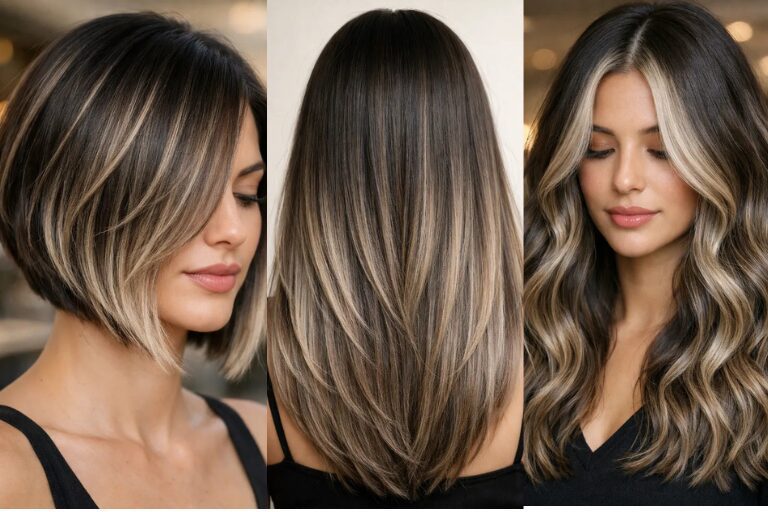
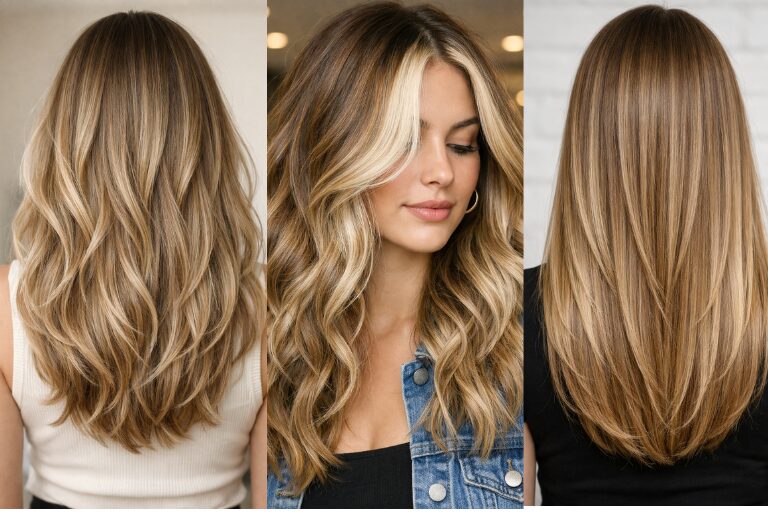
Dark caramel balayage is the haircolor decision that makes people assume you simply have exceptional hair rather than exceptional color. It sits deep enough to read as natural brunette in most lighting, warm enough to catch gold in sunlight, and dimensional enough that the overall impression is one of health and richness rather than obvious highlights. It’s the version of highlighted brunette that looks like your hair at its absolute best rather than like hair that’s been colored.
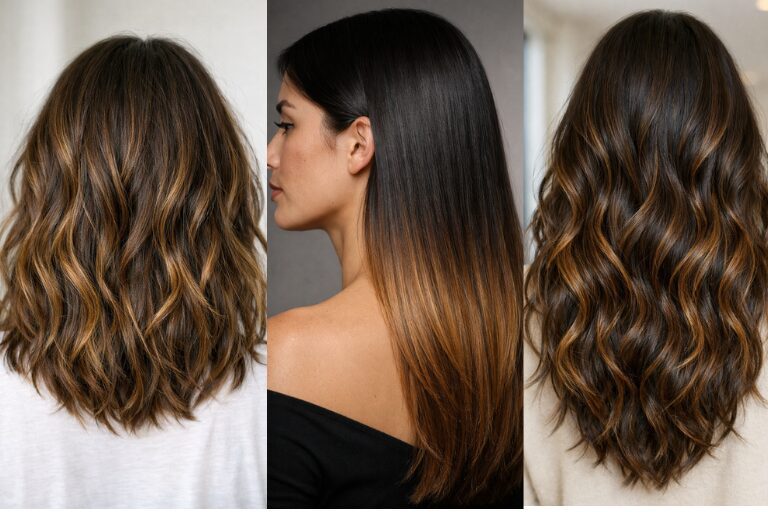
The difference between dark caramel balayage and regular highlights comes down to placement and blending. Traditional highlights are applied with a defined pattern and a definite starting point at the root. Balayage is painted freehand through the mid-lengths and ends, with a soft root that transitions naturally and a grow-out that never produces the harsh, obvious regrowth line that stamped-on highlights do. The result is color that looks like it belongs to the hair rather than something applied to it — and that quality of looking grown-in is exactly what makes dark caramel balayage look so naturally beautiful.
The 15 ideas below cover every version of that effect, from whisper-thin ribbons that barely register as color to a full caramel melt with maximum warm impact, so you can find the right intensity for your hair, your face, and your maintenance commitment.
Finding Your Dark Caramel Placement
Before choosing a specific style, two decisions significantly affect how the color reads and how it performs over time.
Intensity and contrast. Dark caramel balayage exists on a spectrum from barely-there dimension (where the color reads as simply very rich, healthy brunette) to noticeable caramel ribbons (where the warmth is clearly visible in most lighting) to a full caramel melt (where the shift from dark root to warm caramel end is the dominant visual feature). Where you want to sit on that spectrum should be confirmed with your colorist before application.
Tonal direction. Caramel reads differently depending on whether it leans toward golden-brown, honey, toffee, or auburn. Golden-brown caramel is the most universally flattering and the least likely to turn brassy. Honey caramel is slightly lighter and more visible. Toffee caramel reads as warmer and richer. Auburn-leaning caramel introduces a red-brown warmth that suits certain skin tones beautifully but can look orange on others if the toner isn’t right. Communicating which direction you want before the color is applied prevents the most common dark caramel balayage disappointment, which is ending up warmer or brighter than intended.
15 Dark Caramel Balayage Ideas
1. Shoulder-Length Waves With Caramel Ribbons
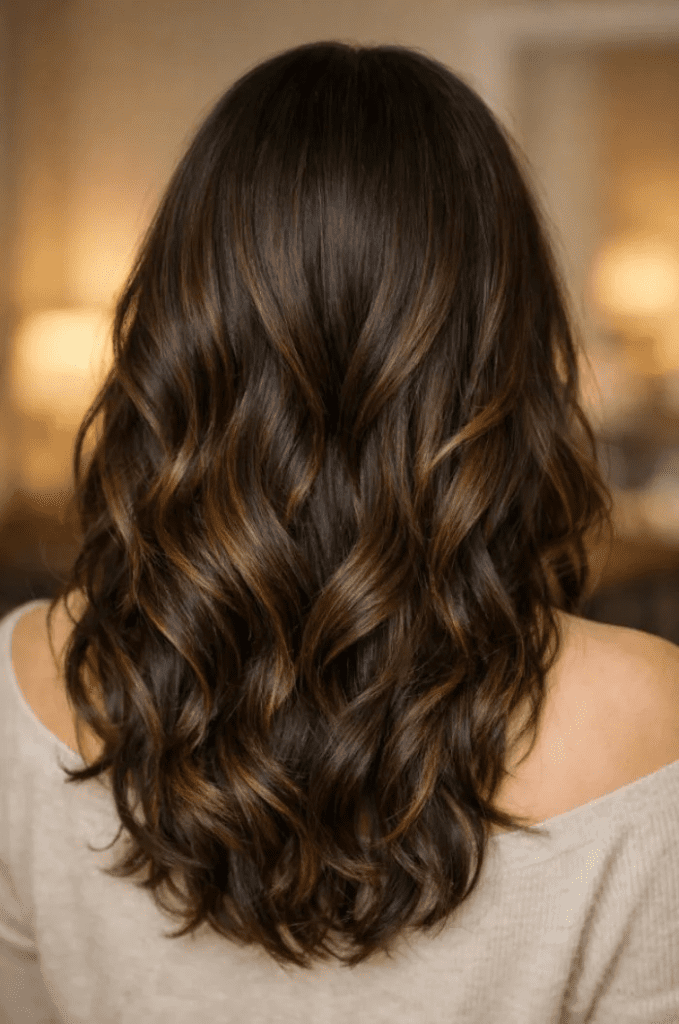
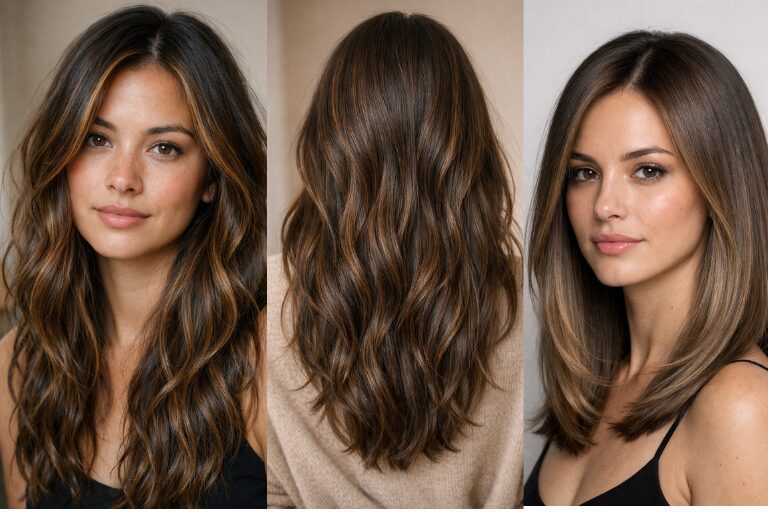
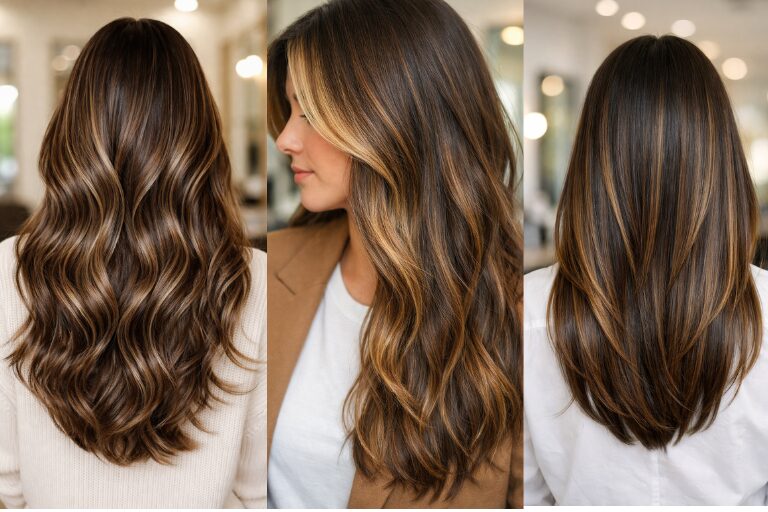
Loose S-waves on a shoulder-length cut with thin, irregularly painted caramel ribbons that appear most vividly at the bends of each wave — the wave pattern is doing as much visual work as the color here, creating the movement that shows each ribbon clearly and makes the overall look feel dimensional and intentional. The irregularity of the ribbon placement is what prevents this from looking like traditional highlights — the caramel appears naturally rather than in a pattern.
Ask for: Thin, soft ribbons painted at the mid-lengths with slightly brighter placement toward the ends. A soft root that allows grow-out to look graceful. A gloss refresh between appointments to maintain warmth and shine.
Best for: Those who want a clearly visible caramel effect on a wearable, everyday style. Works consistently well on most brunette base tones.
2. Sleek Long Layers With Fine Caramel Veiling
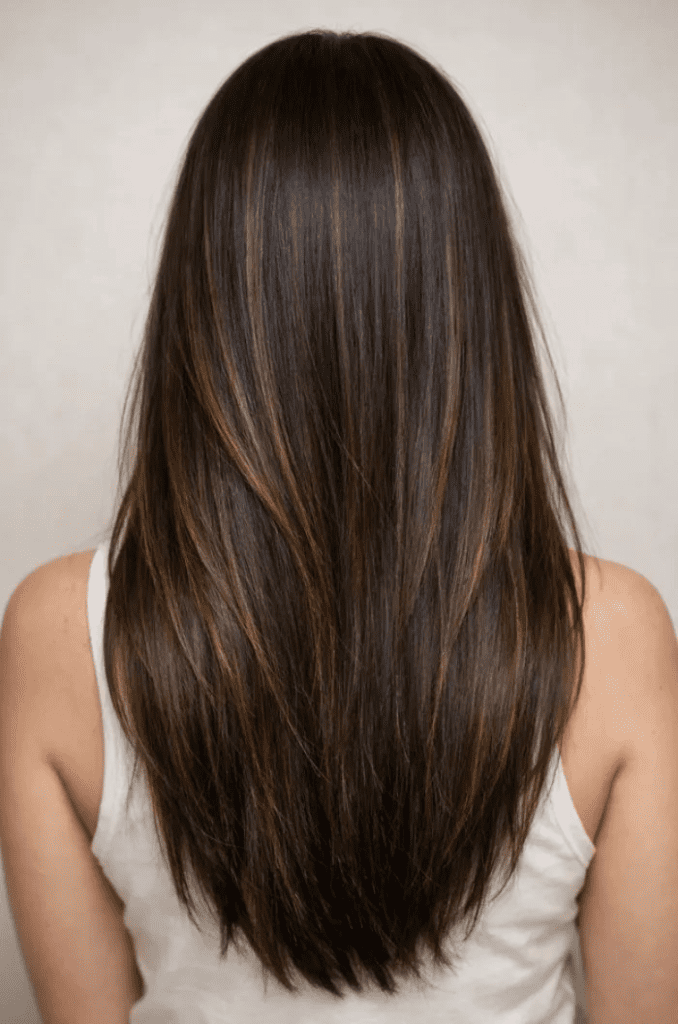
The most understated dark caramel balayage approach on this list — whisper-thin highlights spaced throughout straight, long-layered hair, creating a veil of warmth that reads as depth rather than color. The straight styling shows the blend most cleanly, particularly through the front sections where the fine ribbons are most visible. The brunette remains dominant and the caramel functions as enhancement rather than statement.
Ask for: Very fine, well-spaced ribbons rather than sections — the thinner and more scattered the placement, the more the result reads as natural dimension. No harsh lines anywhere through the length. A brunette-friendly gloss to keep the overall finish rich and smooth.
Best for: Women who want the warmth and dimension of dark caramel balayage in its most subtle possible form. Works for conservative professional settings where visible highlights might not be appropriate.
3. Silky Caramel Ombré With a Deep Root
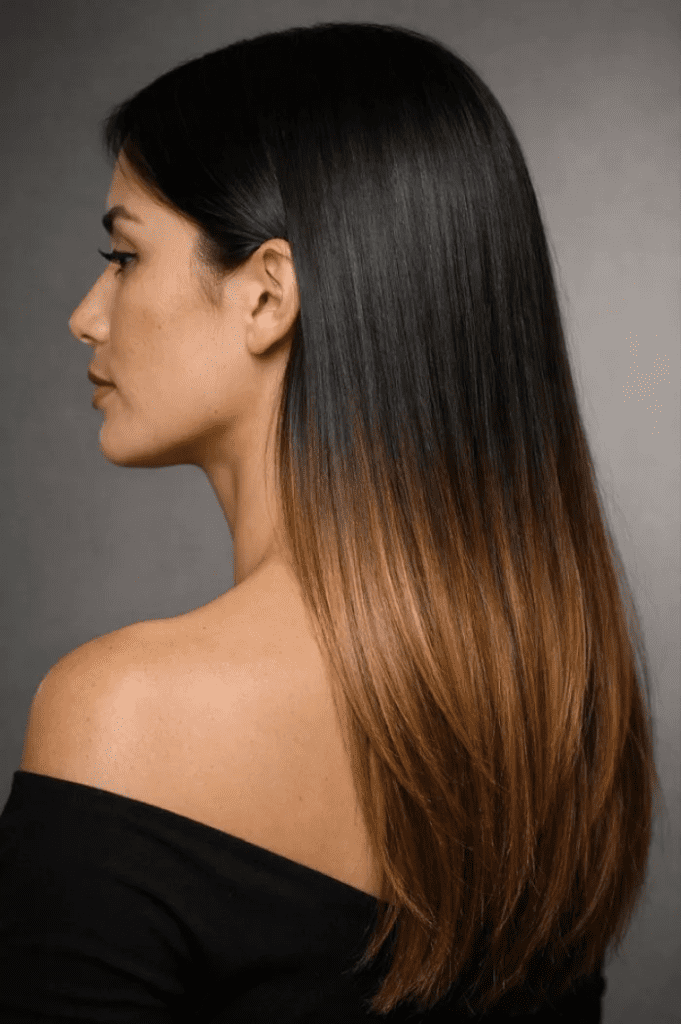
A clean color shift from an inky, seamless dark root through to warm caramel from the mid-lengths downward — the ombré-balayage hybrid produces a more visible color shift than ribbons or veiling, but the seamless root transition prevents it from looking like the chunky, obvious ombré of a decade ago. The shift reads as intentional and modern rather than simply grown-out.
Ask for: An inky, smooth root shadow with a gradual, seamless transition to caramel rather than a hard line. The caramel at the ends should be warm but not yellow — golden-brown caramel rather than a bright honey is typically more flattering on this type of placement.
Best for: Those who want a noticeable color shift without obvious striping or traditional highlight placement. Suits most brunette base tones from dark brown to near-black.
4. Defined Curls With Caramel Coil Highlights
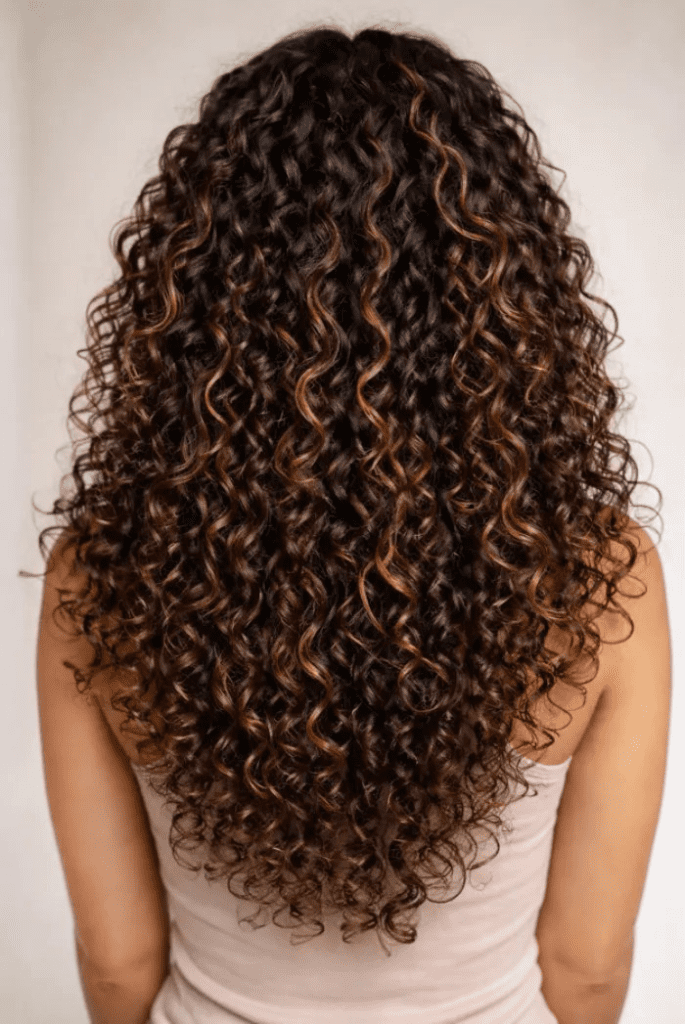
Caramel balayage painted specifically where natural curls catch light — on the outer surface of each coil rather than in uniform sections — producing the most natural-looking and most dimensional result available for curly hair. The curl-following placement means the color appears and disappears as the curls move, creating genuine movement rather than static color placement.
Ask for: Placement that follows the natural curl pattern rather than the parting. Ask your colorist to paint where the curl naturally separates and catches light rather than applying in traditional sections. Curl cream and diffuser styling after coloring to show the placement at its best.
Best for: Natural curl wearers who want caramel balayage that looks like it was made specifically for their curl pattern. One of the most beautiful and natural-looking approaches on this list.
5. Long S-Waves With Deep Caramel Melt
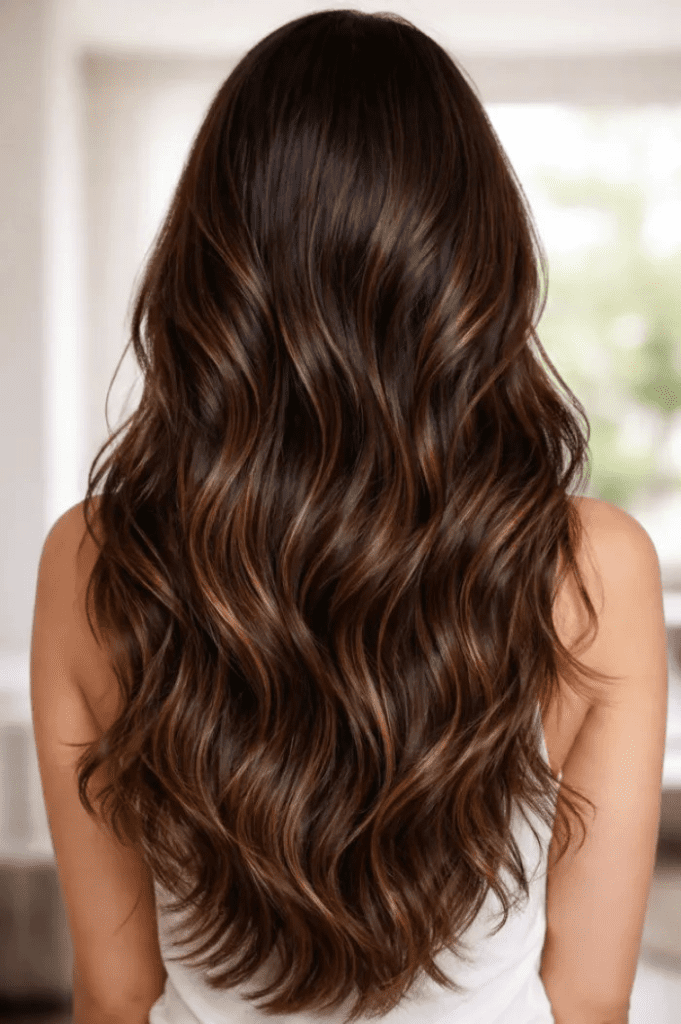
A rich, dark brunette crown that melts through caramel ribbons building progressively from the mid-lengths to the ends — this is the most deliberate and highest-impact caramel melt on the list, where the color shift is the clear focal point of the style. The long S-wave pattern separates the lengths just enough to show the graduated placement clearly without it ever reading as streaky.
Ask for: A deep, rich root that stays clearly brunette through the crown, with caramel ribbons that build in intensity and coverage from the mid-lengths toward the ends. The melt should feel progressive rather than abrupt.
Best for: Those who want a full, rich caramel melt that reads as the defining feature of the color. Works best on long hair where there’s enough length for the full melt to be visible.
6. Textured Curly Bob With Toasted Caramel Pieces
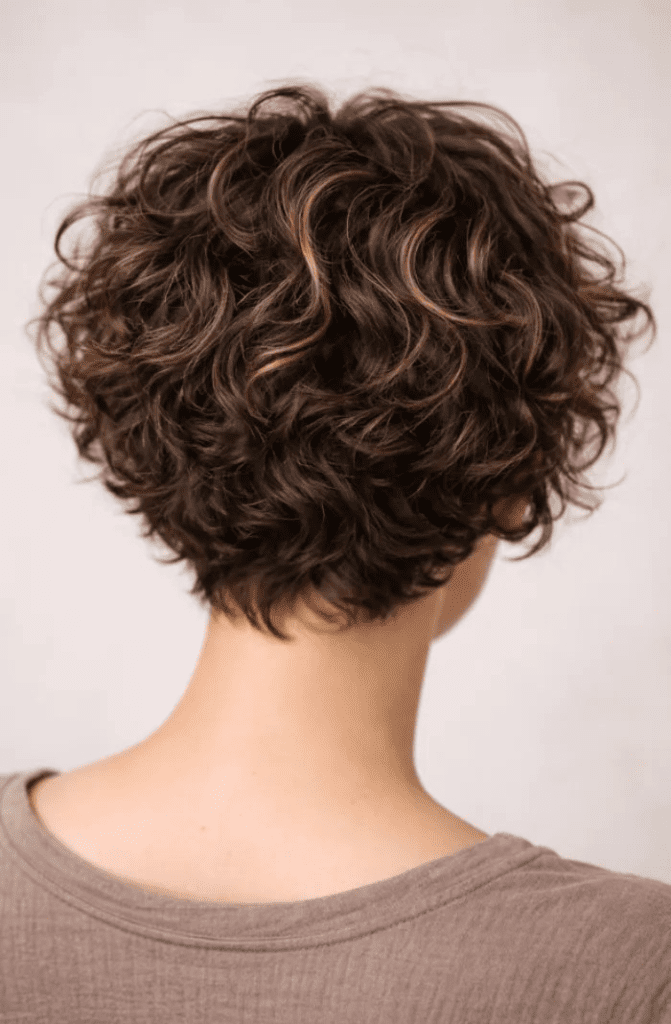
A short curly bob with toasted caramel pieces concentrated at the top layer where they lift the shape and add dimension without disrupting the clean nape or making the overall cut look heavy — the top-layer placement on a curly bob is specifically effective because it adds visual lift that makes the rounded bob silhouette look lighter and more dimensional from above.
Ask for: Caramel pieces concentrated in the top layers of the bob rather than distributed throughout. Light mousse before scrunching and diffusing for the softest definition. The nape section kept relatively darker for a clean, tidy finish.
Best for: Curly bob wearers who want a color that adds visual lift and dimension to their cut rather than simply adding warmth to the overall length.
7. Brunette Waves With Caramel Strands Through Outer Layers
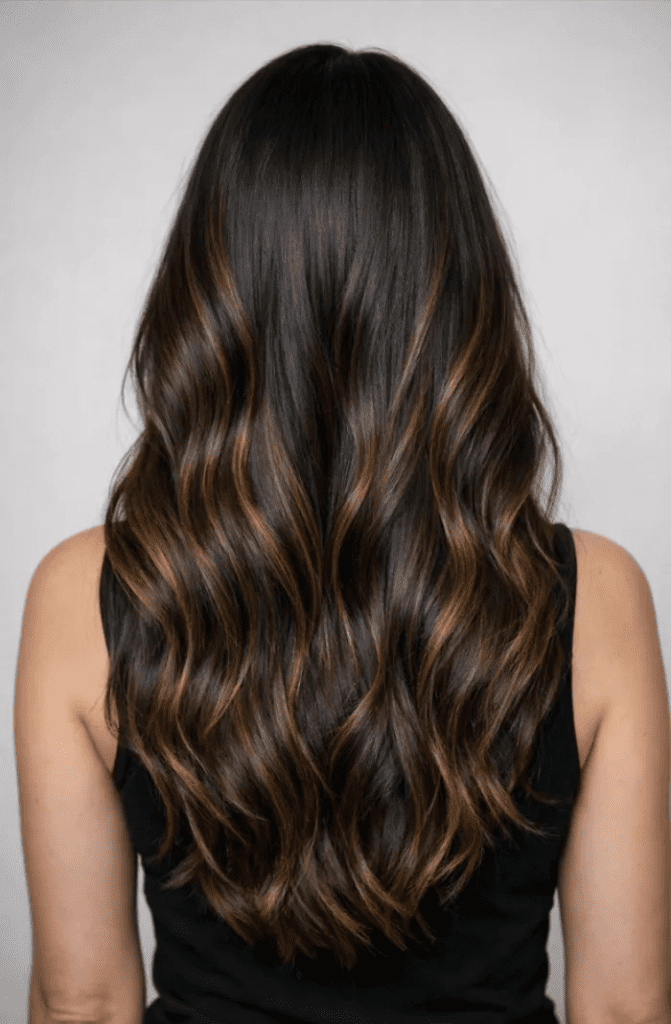
A natural brunette base with caramel strands specifically threaded through the outer layer and ends — plenty of dark left between each strand so the brunette reads as clearly dominant and the caramel functions as threading rather than overall coverage. The soft wave pattern makes each threaded strand look intentional and beautifully placed rather than simply scattered.
Ask for: Thin caramel strands through the outer layer specifically, with the inner layers left at the natural dark base. The contrast between the threaded caramel and the dark interior is what creates the dimensional quality.
Best for: Those who want visible caramel warmth without the color feeling like it’s taken over from the brunette base. Works across medium and longer lengths.
8. Moody Waves With Subtle Caramel Dimension
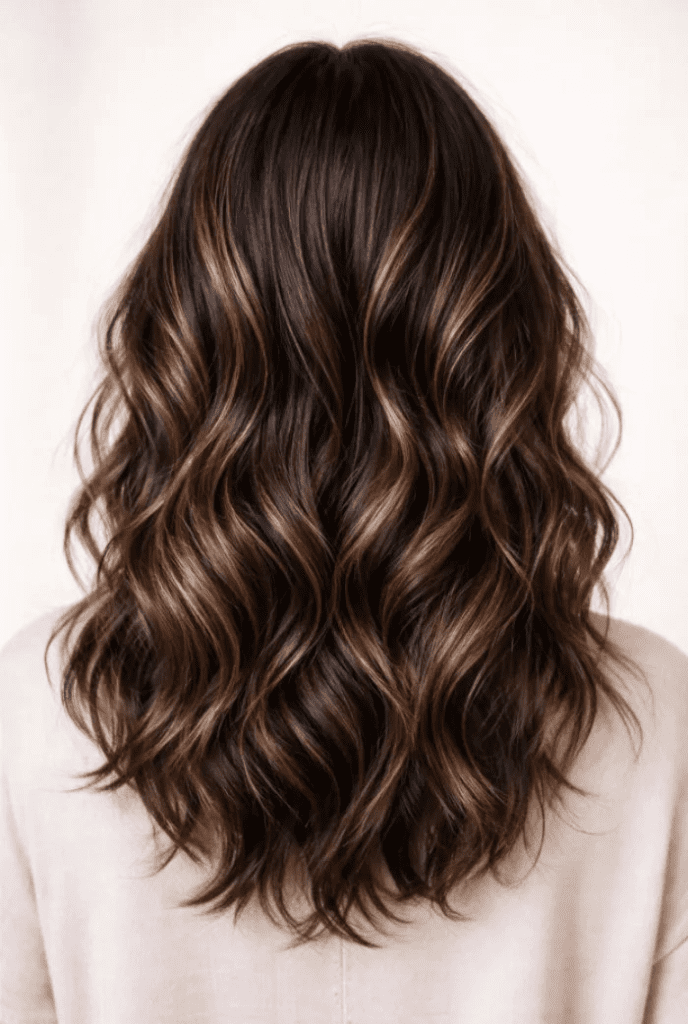
A muted, blended caramel through a wavy medium-length cut — subtle enough that it brightens the overall impression without becoming the obvious focal point. The muted quality specifically suits the moody, slightly undone wave styling, adding warmth that reads as natural light rather than applied color. The caramel lands at the bends where the waves are most visible.
Ask for: A subtler caramel — muted and blended rather than bright or saturated. Ask for the placement to land at the mid-lengths where the wave bends catch it most naturally. A gloss applied over the finished balayage refines the tone and adds shine.
Best for: Women who want their caramel to feel like it emerged naturally rather than was placed deliberately. A deeply flattering approach for those who prefer understated color.
9. Glossy Long Waves With Caramel Accents
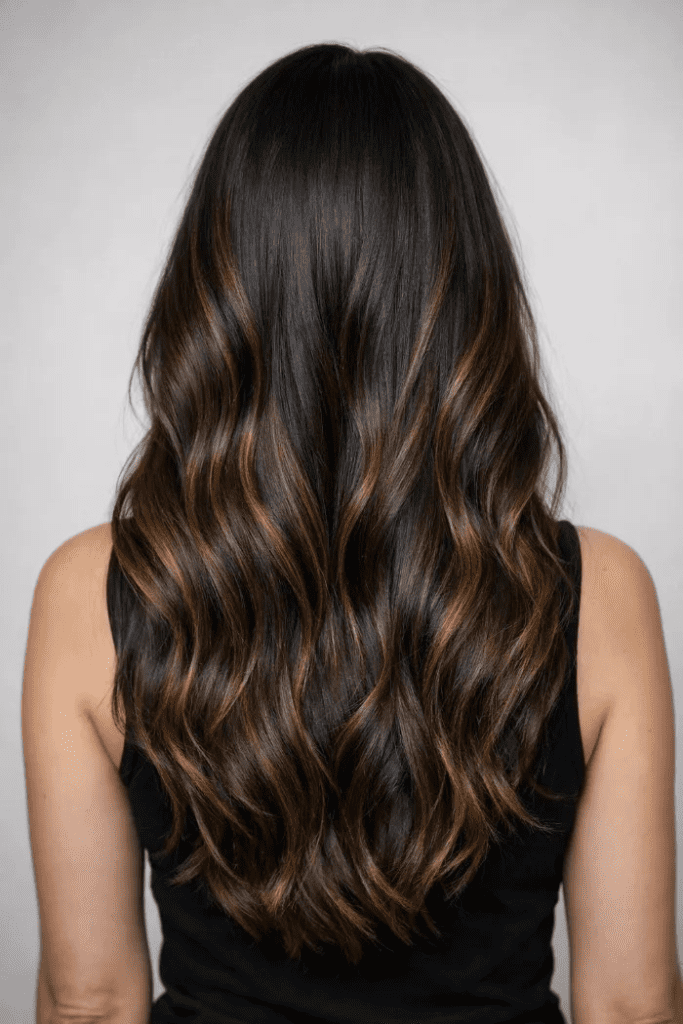
Fine caramel ribbons through the outer layer of long waves with a soft root shadow and brighter placement toward the ends — the glossiness of the finish is as important as the color placement here. A high-shine result makes the caramel tones look luminous and expensive rather than flat, and the long waves give each ribbon maximum visibility as the hair moves.
Ask for: A soft root shadow to maintain the dark base, brighter caramel placement toward the ends, and a glossy finish requested explicitly. A shine-enhancing styling product or light serum for the best result after styling.
Best for: Long-haired women who want caramel that looks its most luminous and polished. One of the most consistently beautiful placements for showcasing caramel balayage at maximum impact.
10. Deep Auburn Waves With Caramel Glow
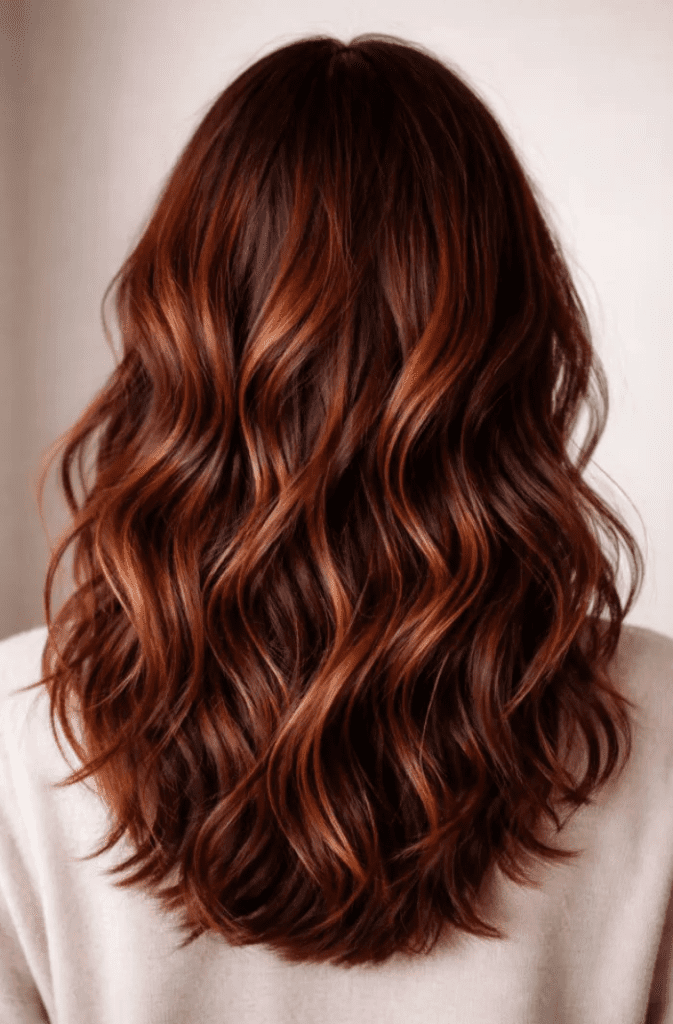
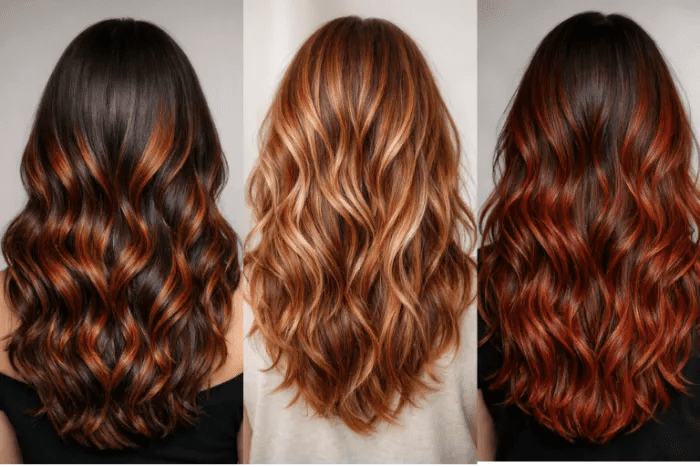
A base that leans red-brown rather than cool brunette, with caramel ribbons that add brightness and warm dimension to the already-warm auburn base — this combination is specifically flattering on warm and golden skin tones where the auburn base and caramel placement work together to enhance the skin’s warmth. The ribbons are placed brighter through the mid-lengths where the waves are most visible.
Ask for: An auburn-leaning base rather than a cool brunette, with caramel ribbons that stay golden-brown rather than drifting into orange territory — the toner choice after lightening is critical for keeping this in warm-but-rich rather than brassy territory.
Best for: Women with warm skin undertones who want their hair color to complement and enhance the warmth in their complexion. A distinctively beautiful combination for those it suits.
11. Dark Chocolate Waves With Caramel Dimension
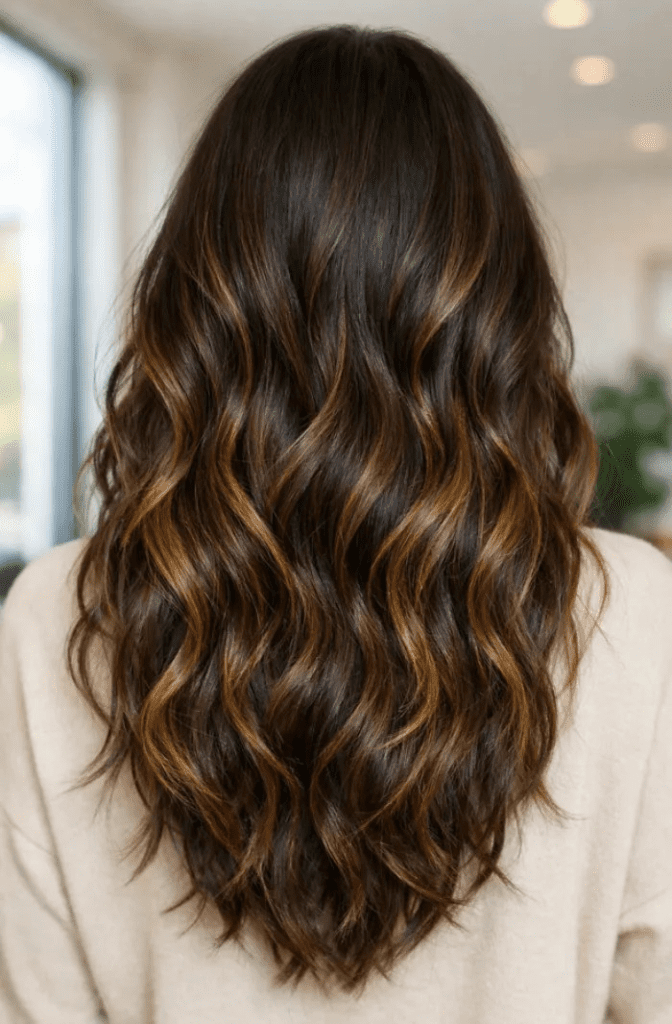
Deep, rich dark chocolate as the base with caramel ribbons placed through the mid-lengths where the waves bend and catch light — the dark chocolate base is rich enough that the caramel stands out clearly without being high-contrast, producing the most flattering balance between depth and warmth on this list.
Ask for: A true dark chocolate base — rich and deep without being black. Caramel ribbons placed in the mid-lengths with a soft graduation toward the ends. A large-barrel iron for styling, brushed out after curling for the soft, dimensional wave that shows the placement best.
Best for: Natural brunettes who want to enhance their existing base color with warm dimension rather than significantly changing it. The most naturally flattering base-to-caramel ratio for most dark brunette hair tones.
12. Shoulder-Length Waves With Honey-Caramel Weave
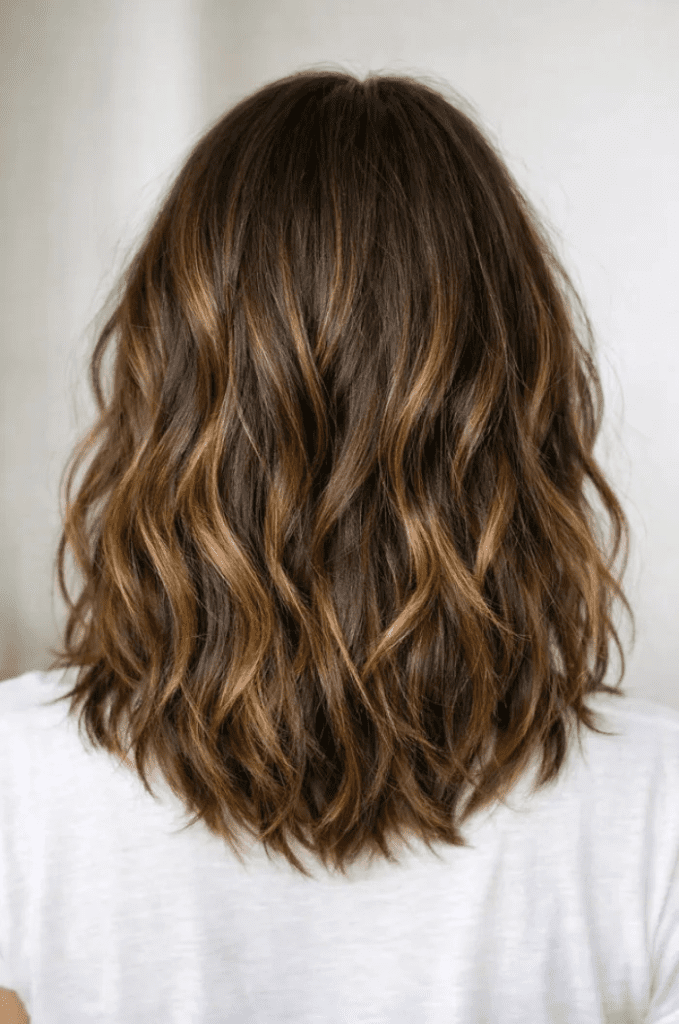
A shoulder-length cut with honey-caramel pieces woven through the top layer and mid-sections — the honey direction is slightly lighter and more visible than standard caramel, which makes this appropriate for those who want a more noticeable brightness without departing from the warm brunette family. The woven placement through the top layer specifically adds the visual fullness that makes waves look thicker and more dimensional.
Ask for: Honey-caramel rather than pure golden-brown caramel — warmer and slightly lighter for more visible brightness. Woven through the top layer specifically for the dimensional quality. A warm-toned gloss rather than a cool one to prevent the honey from reading as brassy.
Best for: Those who want a caramel that reads clearly as warm and bright rather than subtle and understated. Works well on medium brunette bases where the honey provides clear contrast.
13. Tousled Short Bob With Caramel Flicks
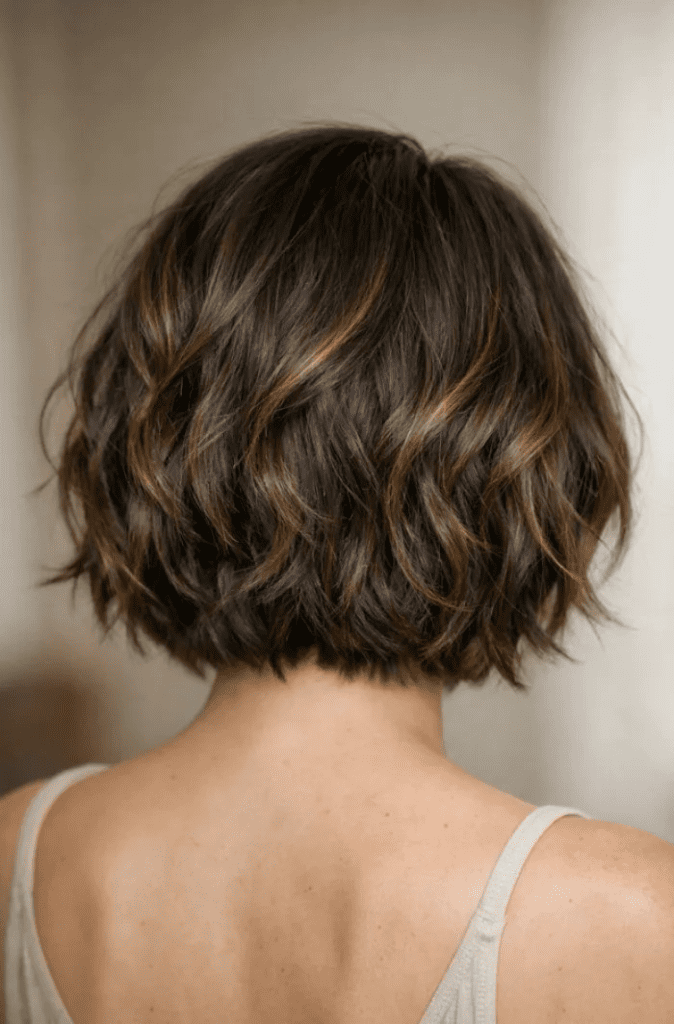
Scattered caramel highlights across the crown and ends of a short wavy bob — the tousled, slightly undone quality of the styling gives the scattered caramel placement a deliberately casual and modern quality that a more polished bob styling wouldn’t achieve. The highlights stay in the crown and ends rather than the nape, keeping the shape lifted where it matters most.
Ask for: Caramel scattered through the crown and ends rather than distributed evenly throughout. The nape kept darker for a clean finish. Texturizing spray and a light scrunch for the piecey wave that shows each caramel piece most naturally.
Best for: Short bob wearers who want caramel that looks effortlessly placed rather than carefully applied. The tousled styling approach consistently shows this placement at its most flattering.
14. Soft Caramel Melt on Glossy Waves
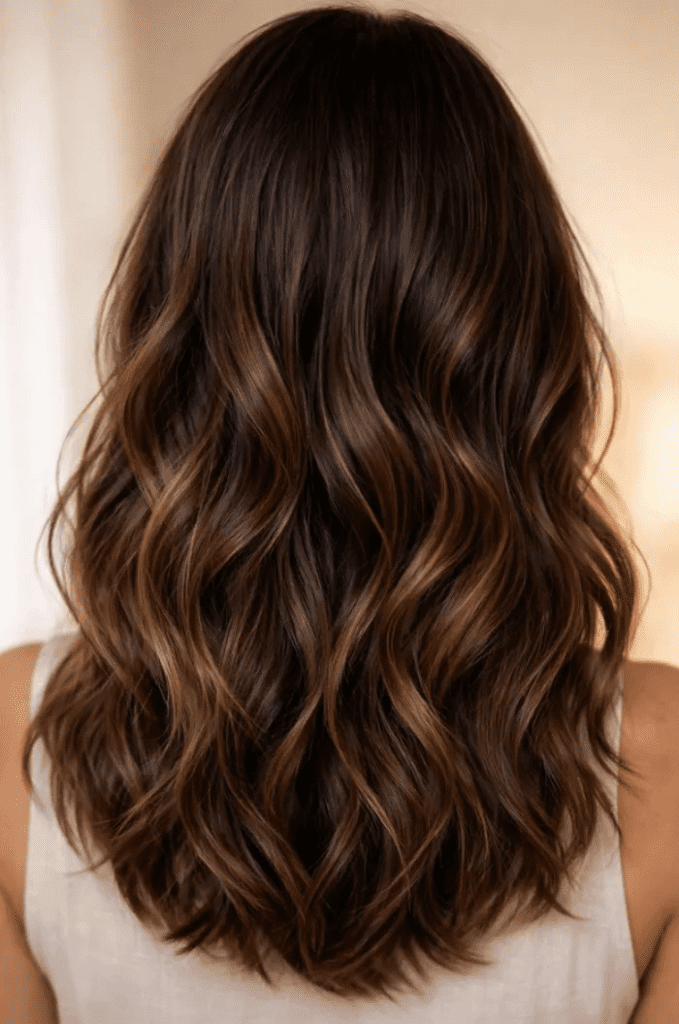
A soft caramel melt that starts low — below the mid-lengths — and stays well-blended with a smooth, glossy wave styling finish. The low starting point is specifically appropriate for those who want the caramel melt look without a dramatic root-to-end transition, and the gloss finish is what makes this version look polished rather than casual.
Ask for: A melt that starts lower than the mid-length — closer to the lower third of the hair length — for the subtlest melt effect. A glossy styling finish that makes the brunette base look rich and the caramel look luminous rather than flat.
Best for: Women who wear their hair down consistently and want caramel that looks beautiful at every growth stage. The most forgiving melt placement for those who want easy maintenance.
15. Textured Lob With Dark Caramel Tips
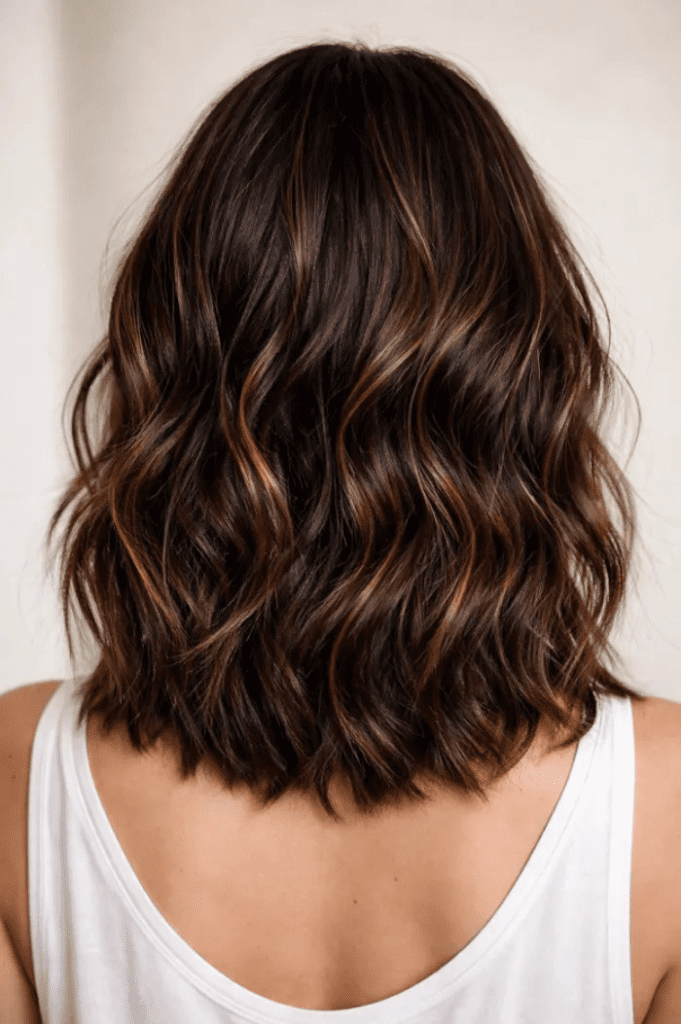
A slightly choppy, textured lob where the caramel is concentrated at the tips and ends — the choppy texture makes the caramel flick through the ends naturally rather than sitting in obvious stripes, and the tip-focused placement maximizes grow-out longevity because the color is at the ends furthest from the root.
Ask for: Choppy, textured ends rather than a blunt perimeter — the texture is what allows the caramel to flick rather than stripe. Deep root, brighter caramel concentrated at the tips. Loose waves for styling to show the tip placement’s movement.
Best for: Lob wearers who want a low-maintenance caramel that looks lived-in and modern rather than precisely applied. One of the easiest grow-out placements on this list.
Final Thoughts
Dark caramel balayage consistently produces one of the most beautiful and naturally flattering color results for brunettes because it works with the hair’s existing depth rather than trying to depart from it. The dark base does the foundation work. The caramel adds the warmth, dimension, and glow that make dark hair look genuinely rich rather than simply dark. And the balayage application method’s soft roots and seamless blending mean the result looks like better brunette rather than colored brunette.
The right choice among these 15 ideas comes down to how much warmth and contrast you want, how your hair is typically styled (waves show caramel placement better than straight styling for most placements), and how often you realistically want to sit in a salon chair. Subtle veiling and soft melts stretch appointments significantly longer than high-contrast ribbons and bright honey placements. Choosing the intensity that genuinely fits your maintenance commitment is what determines whether your caramel still looks beautiful at week twelve or only at week three.
How do I prevent dark caramel balayage from turning brassy?
A toner or gloss applied after the balayage lightening is the most critical step — specifically a toner that leans golden-brown or toffee rather than yellow. Sulfate-free shampoo and cool water washing slow the tonal shift significantly. A warm-toned color-depositing conditioner used once a week adds the golden caramel back before the brassy underlying pigment becomes visible. A professional gloss refresh every eight to ten weeks maintains the tone between full color appointments.
Is dark caramel balayage genuinely low-maintenance?
Yes — significantly more so than traditional highlights. The soft root means there’s no obvious regrowth line developing at a specific length, and most clients find they can stretch appointments to ten to fourteen weeks between full balayage sessions. The most frequent maintenance requirement is a gloss refresh every eight weeks rather than a full re-color, which is quicker and less expensive than starting from scratch. The tip-focused and mid-length placements on this list specifically extend the comfortable appointment gap.
What hair colors and skin tones does dark caramel balayage suit?
Dark caramel balayage works across a very wide range of brunette base tones — from near-black through dark brown to medium brunette. On cool brunette bases, it adds warmth. On already-warm or red-brown bases, it adds dimension and brightness. For skin tones, warm and golden skin tones are consistently flattered by caramel’s warmth. Cool and rosy skin tones generally do better with caramel that leans toward golden-brown or toffee rather than honey or auburn, which can read warm against cool complexions.
How does dark caramel balayage grow out?
The grow-out is one of the format’s most significant advantages. Because the color starts at the mid-lengths rather than the root, and because the transition is soft rather than stamped-on, the grow-out reads as intentional at every stage. A soft root shadow applied alongside the initial balayage makes the grow-out even more graceful by creating a deliberate transition zone from the natural root to the colored mid-length section. Most clients find they don’t see an obvious grow-out line until significantly longer than traditional highlights would produce one.
What’s the difference between dark caramel balayage and regular highlights?
Traditional highlights are applied using foils in a defined pattern, typically starting at or near the root and producing a relatively consistent highlighted result throughout the section. Balayage is painted freehand onto the mid-lengths and ends with a feathered root and irregular, organic placement. The result looks placed rather than patterned, dimensional rather than striped, and natural rather than obviously colored. The grow-out of balayage is also significantly more graceful — no hard regrowth line, no obvious demarcation between root and color.