28 Winter Highlights for Brown Hair: Color Ideas to Warm Up Your Look
Winter is the season most women instinctively go darker with their hair — and then spend the next four months wondering why everything feels a little flat.
The assumption that winter means going deep and staying there misses something important: dimension is what makes dark hair look rich, glossy, and alive. Without it, even the most beautiful brunette shade can read as one-note and dull in the low, grey light of winter months. A few well-placed highlights don’t brighten dark hair so much as they wake it up — adding the depth contrast that makes the base color look more intentional, the ends look fuller, and the overall effect look like the kind of hair that gets noticed.
The best winter highlights for brown hair aren’t necessarily the boldest ones. They’re the ones placed with intention — ribbons of caramel through the face frame, babylights through the mid-length, a soft balayage that melts from a deep root into something slightly warmer toward the ends. Placement is what separates highlights that look expensive from highlights that look like highlights.
This guide covers 28 options across the full spectrum of warm and cool tones — from rich cinnamon and toffee for women who want a cozy, golden glow, to smoky ash and mushroom brown for those who prefer a more modern, muted finish. Every style includes what to ask your colorist and how to maintain it through the dryest months of the year.
One thing to keep in mind before you choose: if low maintenance is a priority, look for styles with a deeper root and a blended mid-length. A root melt or root smudge built into the highlighting process means grow-out stays soft and gradual rather than creating a visible line of demarcation. You can stretch appointments significantly longer without the color looking neglected.
1. Soft Cappuccino Balayage Lob
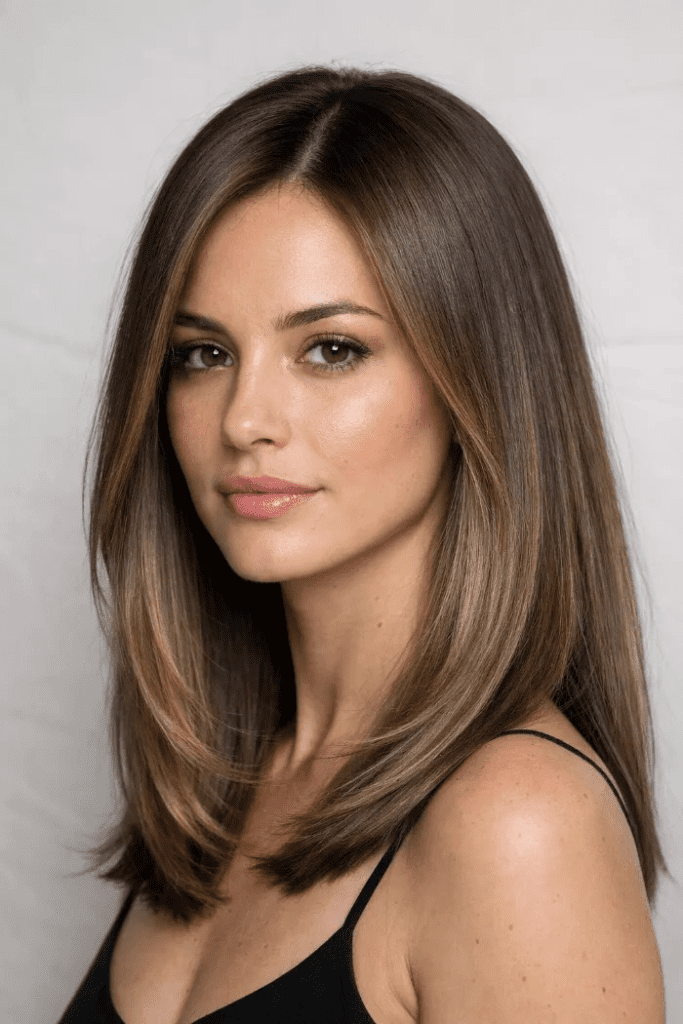
The cappuccino balayage lob is one of the most universally flattering winter highlight options for brown hair because the tone sits exactly at the intersection of warm and cool — not golden enough to look summery, not ashy enough to look cold.
The base stays a rich cool brunette while cappuccino highlights are painted through the front sections and ends in smooth, natural-looking sweeps. Because the blend is seamless rather than ribboned, the regrowth line stays soft and gradual — meaning you can go six to eight weeks between appointments without the color looking obviously grown out.
What to ask your colorist: Request a balayage application through the surface layers only, keeping the interior darker for depth. Finish with a beige or neutral gloss to unify the tone and add the creamy quality that makes cappuccino highlights look expensive rather than simply blonde.
Maintenance tip: Use a sulfate-free shampoo to protect the gloss and follow with a weekly deep conditioning mask. Dry winter air depletes moisture from highlighted ends faster than any other season — a mask isn’t optional if you want the tone to stay vibrant.
Best for: Women who want a natural, low-commitment highlight look that grows out gracefully and works equally well with warm and cool-toned makeup palettes.
2. Caramel Ribbon Blowout With Curtain Bangs
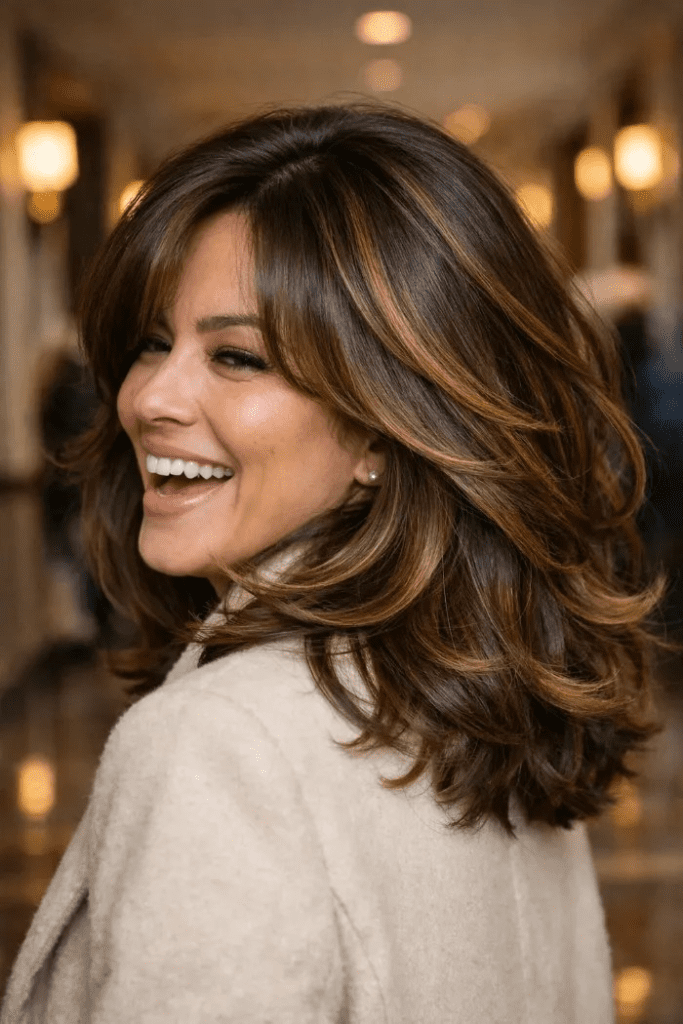
Caramel ribbons on a chocolate brown base are a combination that’s been consistently popular because it genuinely works — the warm caramel against the cool chocolate creates a contrast that reads naturally dimensional rather than obviously colored.
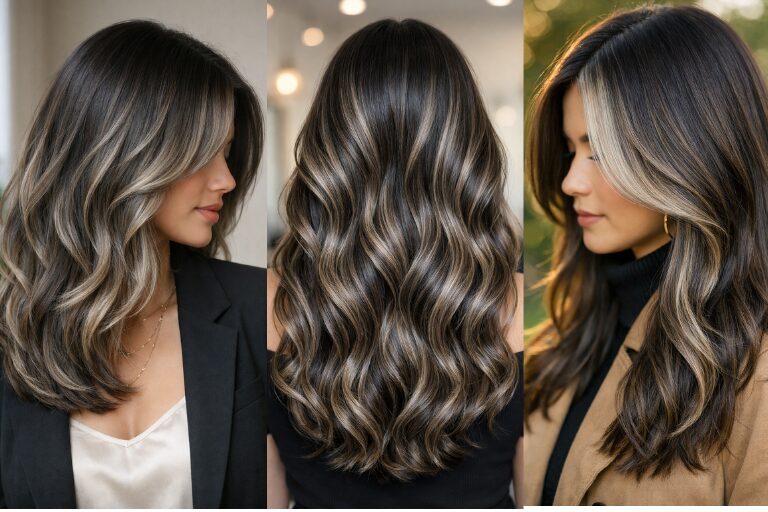
What makes this particular version distinctive is the pairing with curtain bangs, which position the brightest highlights exactly where they have the most face-brightening effect. Caramel pieces around the hairline and through the fringe catch light at close range, which creates that lit-from-within quality that no amount of strobing can fully replicate.
What to ask your colorist: Ask for the caramel ribbons to sit high enough in the section to brighten without creating a stripy, horizontal band effect. The highlights should look like they’re coming through the hair, not sitting on top of it. Tell your colorist you want fine-to-medium ribbons rather than chunky slices.
Maintenance tip: Blow dry with a round brush to bring the caramel ribbons forward and show the dimension at its best. A light mousse at the roots before blow drying gives the style the volume it needs to make the highlights visible rather than flat against the head.
Best for: Women who want a high-impact color result that looks noticeably brighter and more polished without requiring a dramatic color change from their natural brown.
3. Cozy Toffee Highlights on Cocoa Brown
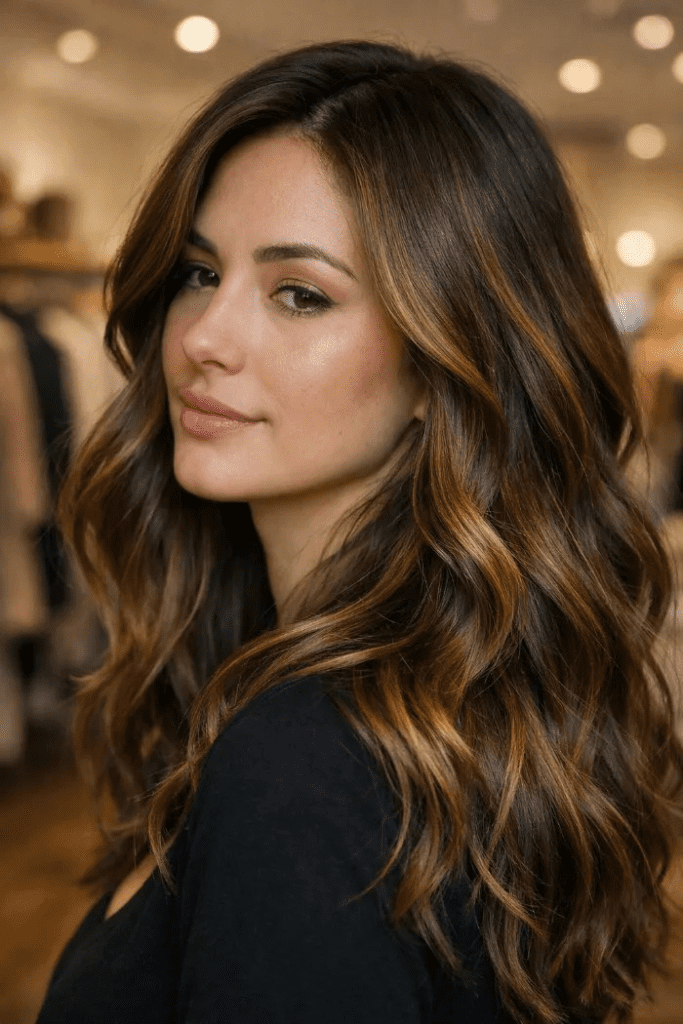
Toffee and cocoa brown is one of the most distinctly winter color combinations on this list — warm and rich without veering into the golden, summery territory that caramel can sometimes occupy. Toffee has a slightly darker, more amber quality that reads as intentional dimension in the lower light of winter rather than leftover summer color.
The placement through the mid-lengths and front layers is strategic. Concentrating the toffee pieces in those sections means the highlights appear when the hair moves — framing the face when it falls forward, catching light when it swings. The interior stays deep cocoa brown, which gives the overall color genuine richness.
What to ask your colorist: Ask for toffee highlights applied through a balayage or foilayage technique at the surface layers, keeping the interior sections dark for maximum contrast. If your ends tend to run dry in winter, ask for a clear gloss applied through the ends at the end of the appointment to add shine and seal the cuticle.
Maintenance tip: Trim the ends before adding highlights if they’re showing any dryness or splitting — toffee highlights on dry ends look dull regardless of the tone quality. Fresh ends reflect light better and make the color look significantly more vibrant.
Best for: Women who want a warm, cozy winter color that looks rich indoors and luminous in natural light without the maintenance commitment of brighter highlights.
4. Cool Ash Blonde Balayage Bob
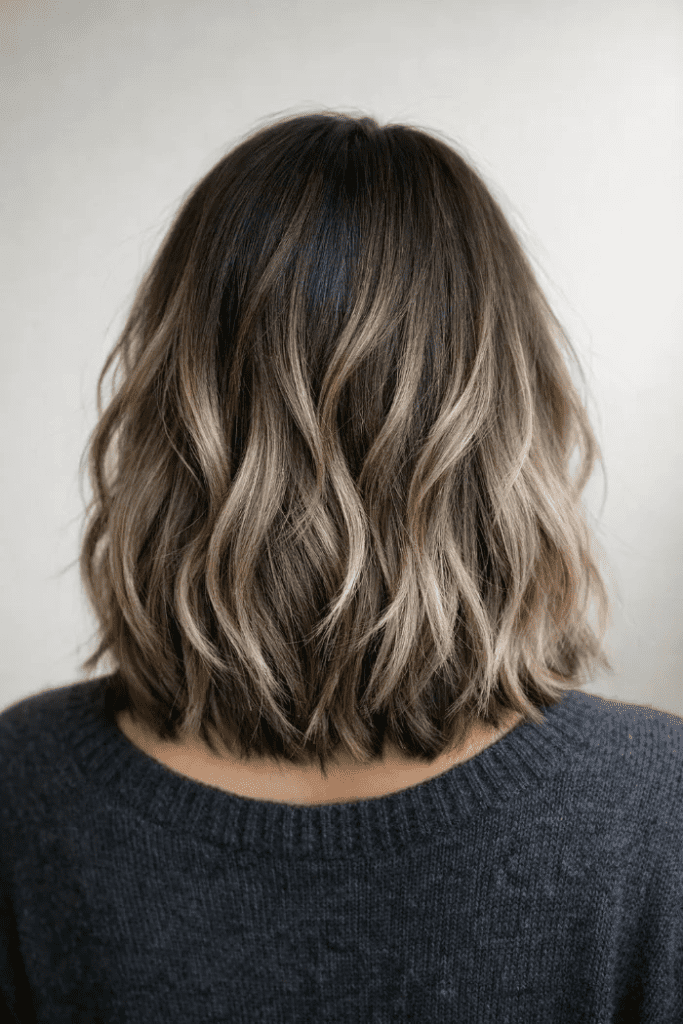
The cool ash blonde balayage bob is the winter alternative for women who want visible brightness in their highlights but specifically don’t want the warm, golden quality that caramel and toffee deliver. Ash blonde highlights on brown hair create a cool, modern contrast that reads as sophisticated and intentional — especially through the winter months when warm brass tones can make highlights look dated.
Concentrating the highlights on the surface layer while leaving the interior darker creates natural shadow and dimension without the flat, bleached-out look that can happen when highlights are distributed too evenly throughout.
What to ask your colorist: Request the ash blonde application through foils or a foilayage technique to control the lift and ensure the tone lands at the right level of cool rather than pulling warm. Ask specifically for an ash or violet-based toner after lightening — this is the step that prevents the classic brassy result and keeps the cool quality intact.
Maintenance tip: Use a purple shampoo once a week — not every wash — to neutralize any warm tones that develop between appointments. Over-using purple shampoo on brown hair can pull the overall tone too cool and grey, which looks less intentional than the balanced ash you’re going for.
Best for: Women who want a crisp, modern winter highlight look and specifically prefer cool tones over the warm caramel and toffee palette.
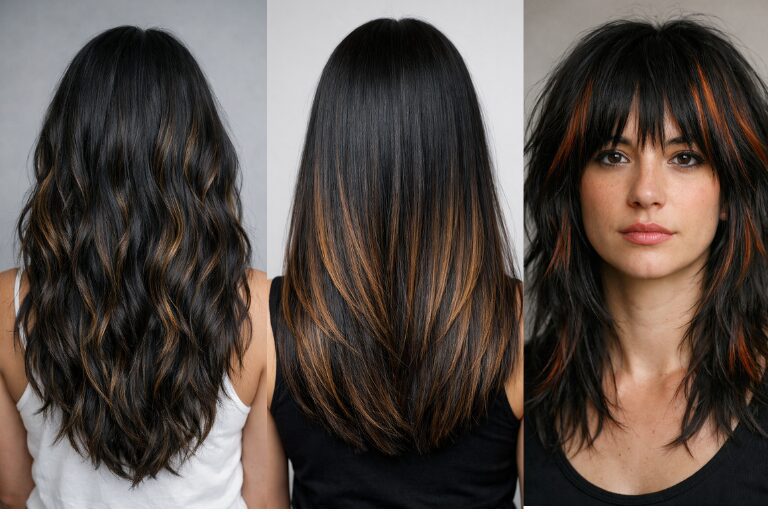
5. Copper Kissed Highlights on Curly Brunette
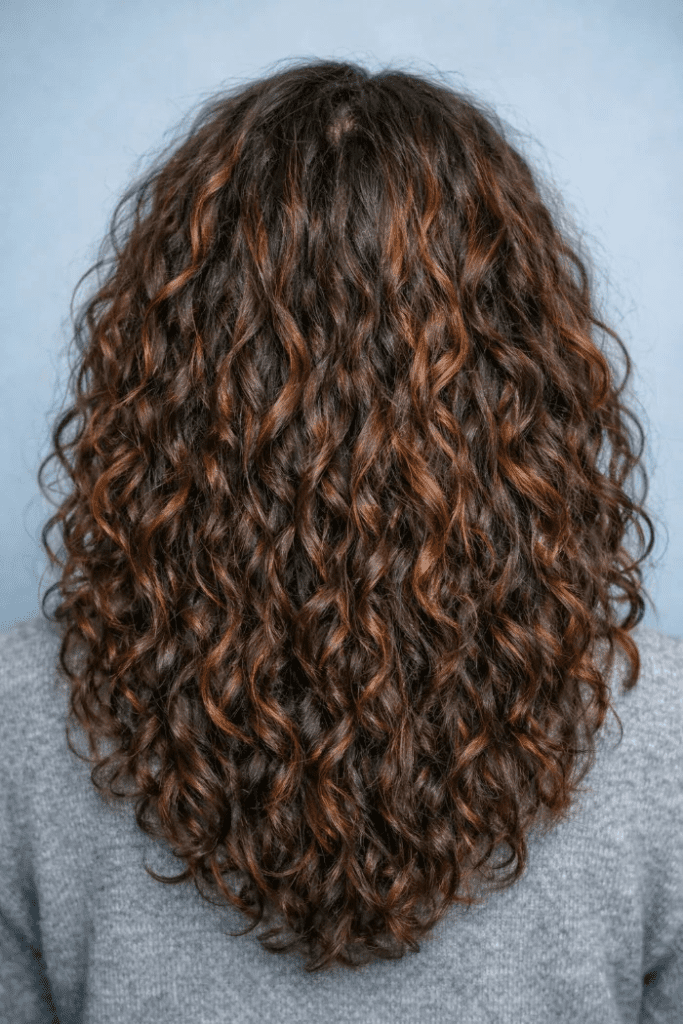
Copper highlights on curly brunette hair work differently than they do on straight hair — and more beautifully. Because curly hair naturally diffuses light through its spiral pattern, fine copper highlights don’t read as individual ribbons but as an overall warmth that glows through the curl, making the whole texture look richer and more luminous.
The key on curly hair is the placement being random rather than systematic. Precisely placed highlights on curls look artificial because the curl pattern disrupts the section lines. A more scattered, organic placement mimics how sun naturally lightens curly hair from tip to root.
What to ask your colorist: Ask for fine copper highlights applied in a scattered, random pattern through the curl sections — not in neat foils from root to end, but broken up and varied so the placement feels natural. Tell your colorist you want the copper to read as warmth within the curl rather than visible ribbons sitting on top of it.
Maintenance tip: Keep curl definition sharp with a leave-in conditioner applied to soaking wet hair and a light gel scrunched through on top. Well-defined curls show highlights at their best — dry, frizzy curls obscure the dimension and make the highlights invisible.
Best for: Women with naturally curly or coily hair who want to add warmth and luminosity to their dark brown base without the highlights looking obviously colored or out of place.
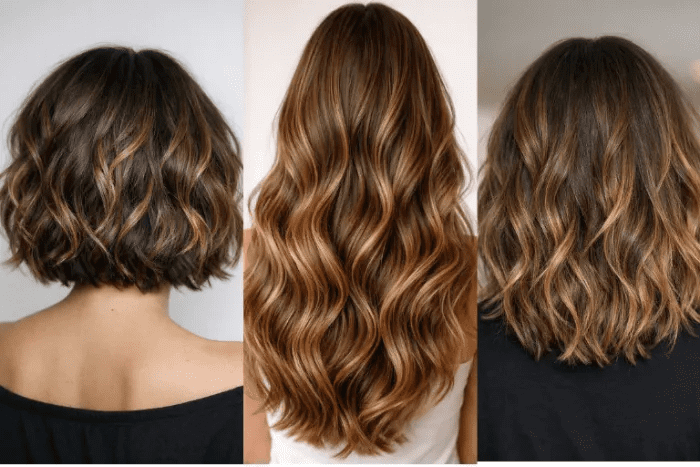
6. Golden Caramel Street Style Balayage
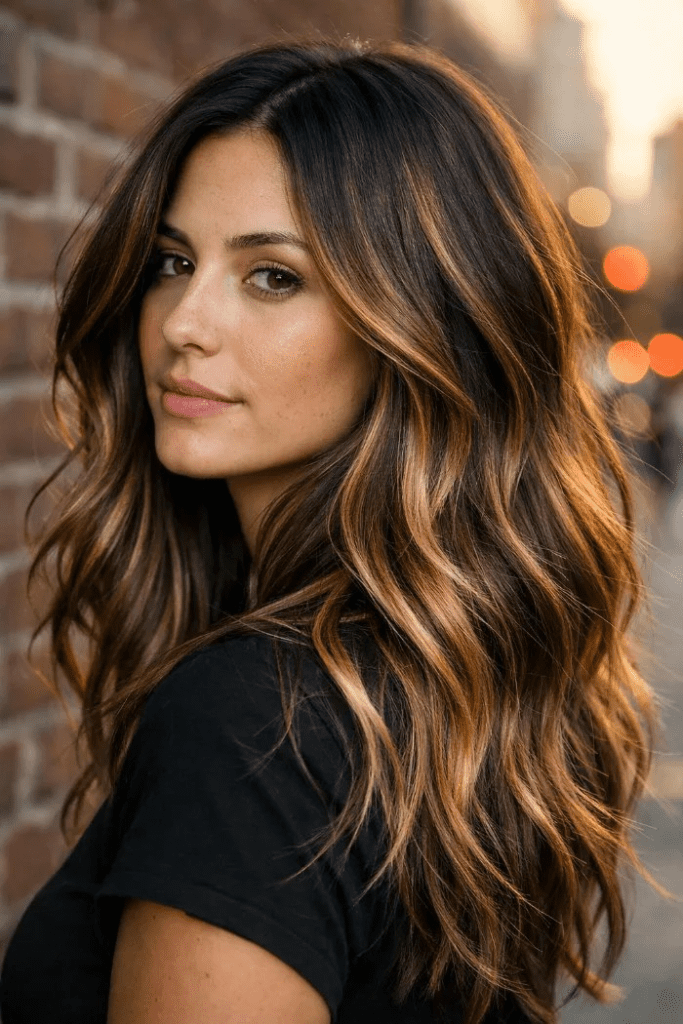
The golden caramel balayage is the most straightforwardly beautiful color on this list — warm, dimensional, and immediately flattering on almost every brown base from light to medium-dark. What makes the street style version distinctive is where the color starts: mid-shaft rather than closer to the root, creating a deeper, more natural-looking root with brighter, sun-kissed ends.
This placement is specifically what makes the grow-out so manageable. When the transition from dark root to lighter mid-length is gradual and starts well below the root, there’s no visible demarcation line to grow out — just a continuous melt that looks natural at every stage.
What to ask your colorist: Ask for the balayage to start mid-shaft and build gradually toward the ends, with the brightest golden pieces concentrated through the final third of the length. Request a warm caramel or honey toner rather than a neutral or cool one — this is what gives the finished color its golden quality rather than a flat, creamy blonde.
Maintenance tip: A large-barrel wand or soft curling iron brings the caramel ribbons forward and makes the color far more visible than wearing the hair straight. The wave pattern catches and reflects the highlight placement in a way that straight styling doesn’t — it’s worth two minutes of styling to see the color at its best.
Best for: Women who want the most natural-looking, grow-out-friendly highlight option on the list and prefer a warm, golden tone that looks flattering across all seasons, not just winter.
7. Espresso Brown With Cinnamon Face Frame
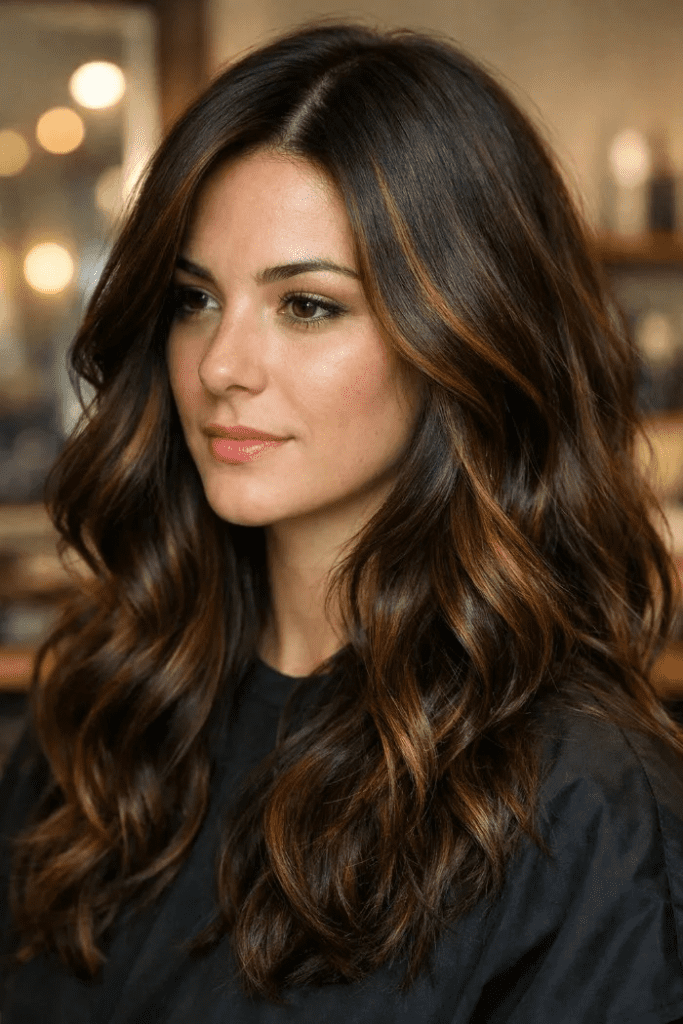
The cinnamon face frame on an espresso brown base is one of the most strategic highlight placements on this list because it delivers maximum visual impact from the minimum amount of color work. By concentrating the highlights exclusively around the hairline and face-framing sections, this technique brightens the skin, draws attention to the eyes, and adds dimension to the overall look without touching the rest of the hair.
Cinnamon is specifically the right tone for this application on espresso brown because it’s warm enough to contrast against the deep base but rich enough to look like part of the brown family rather than an obviously separate color sitting on top of it.
What to ask your colorist: Ask specifically for micro-highlights or baby lights around the hairline for the most natural lit-from-within effect. Standard foils through the face-framing section create a more deliberate, visible result — micro-highlights create something that looks like the espresso base is glowing rather than like highlights were added.
Maintenance tip: Face-framing highlights fade faster than highlights through the length because the sections around the hairline are washed and heat-styled more frequently. Budget for a toner or gloss refresh every six to eight weeks even if you’re not doing a full color appointment — it keeps the cinnamon tone from going brassy or fading to an unflattering orange.
Best for: Women who want the most minimal, targeted highlight application possible — the highest visible impact for the smallest amount of color work and the lowest maintenance commitment.
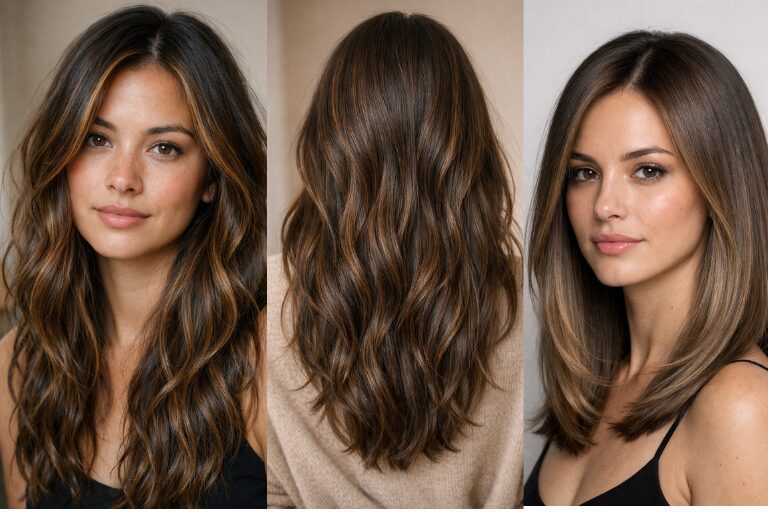
8. Glossy Chestnut Highlights on Soft Waves
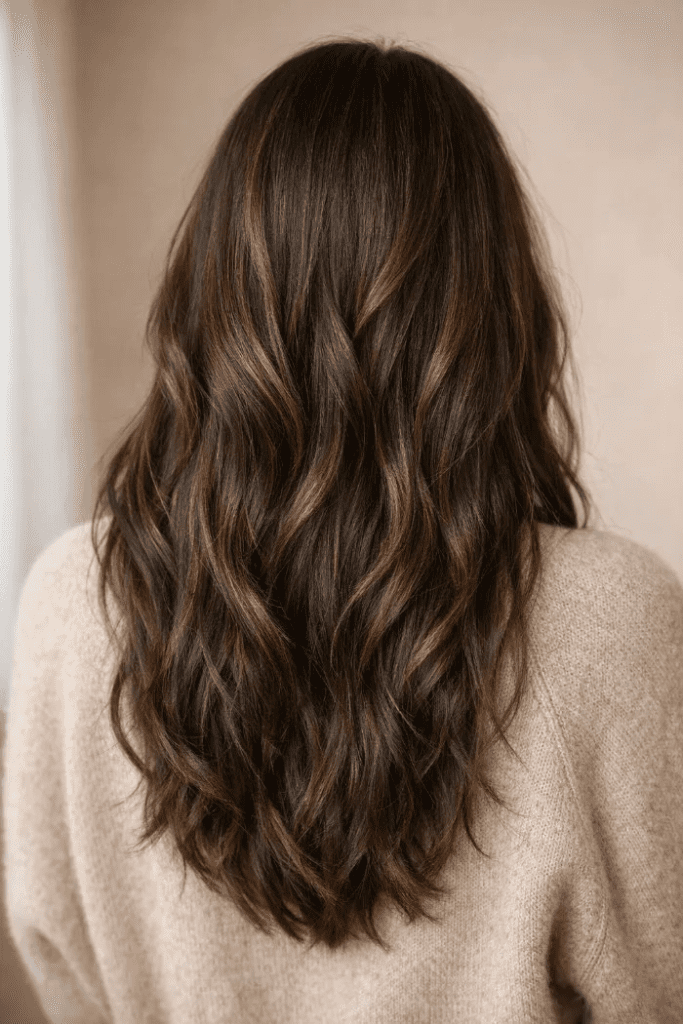
Chestnut highlights on a deep brown base are the most understated color option on this list — and for women who specifically don’t want their hair to look obviously highlighted, this is the right choice. The chestnut tone is close enough to the brown base that the highlights read as depth and movement rather than as a color contrast, but different enough to create genuine dimension.
The glossy finish is what elevates this from a subtle highlight to something that looks genuinely polished. On soft waves, a high-shine finish makes the chestnut pieces visible in a way that matte styling doesn’t — the light reflects differently off the highlighted sections, creating a natural-looking shimmer that reads as incredibly healthy hair.
What to ask your colorist: Ask for a glossing treatment in a warm chestnut or mahogany tone applied over your existing brown as a finishing step. For more definition, ask for fine babylights in a slightly lighter chestnut shade through the surface layers before the gloss is applied.
Maintenance tip: A lightweight oil applied to the ends before blow drying or air drying maintains the glossy finish between appointments. Apply just two or three drops — enough to add shine without weighing fine hair down or making the surface look greasy.
Best for: Women who want a color refresh that makes their hair look shinier and healthier without any obvious change in tone or visible highlighting effect.
9. Subtle Warm Ribbons on Brunette Waves
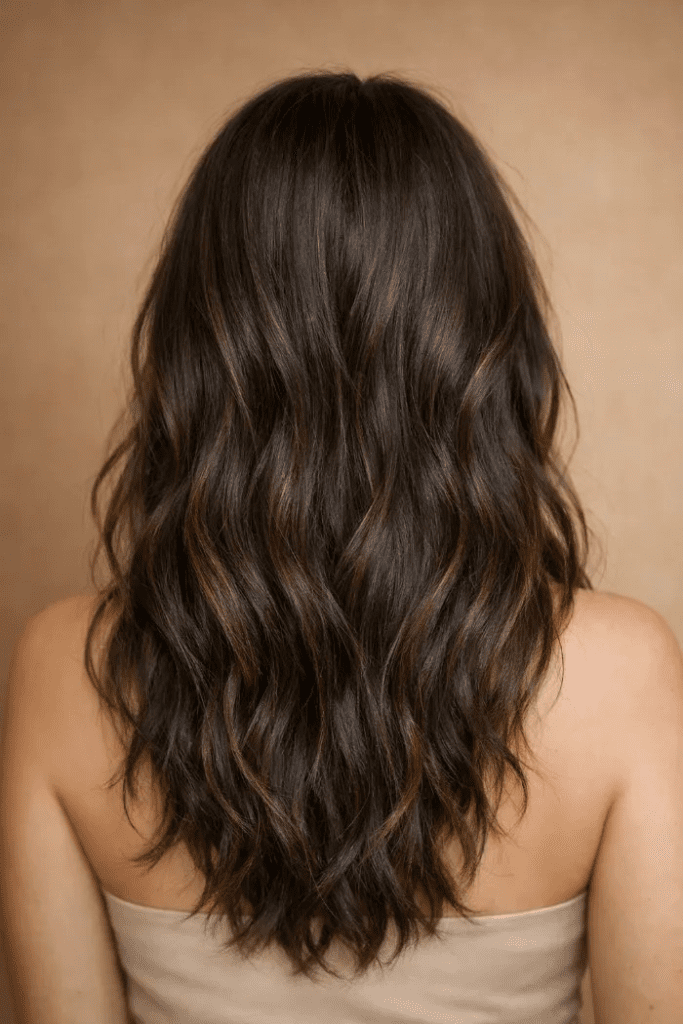
Warm ribbons on brunette waves are the definition of low-drama, high-reward hair color — and for women who want something different but hate the idea of obvious upkeep, this is genuinely one of the best options on the entire list.
The ribbons are thin enough that they blend into the brunette base rather than standing out against it, but spaced consistently enough that the overall hair reads as dimensional rather than flat. On a wavy texture, the ribbon placement disappears into the movement of the waves and resurfaces as the hair shifts — creating a natural-looking brightness that appears and disappears rather than sitting visibly on the surface.
What to ask your colorist: Ask for fine foil highlights in a warm, honey-adjacent tone through the mid-lengths and upper surface layers. Tell your colorist you specifically want the ribbons to blend rather than contrast — the goal is movement, not brightness.
Maintenance tip: Waves are the best styling choice for this highlight placement because they keep the ribbons in motion and prevent them from lying flat in a way that makes individual highlights visible. Use a light curl cream or wave spray rather than heavy styling products — anything that clumps the hair together will hide the ribbon effect.
Best for: Women who want the most subtle, natural-looking dimension possible and value a highlight result that’s invisible to anyone who isn’t looking closely.
10. Honey Caramel Dimension Bob
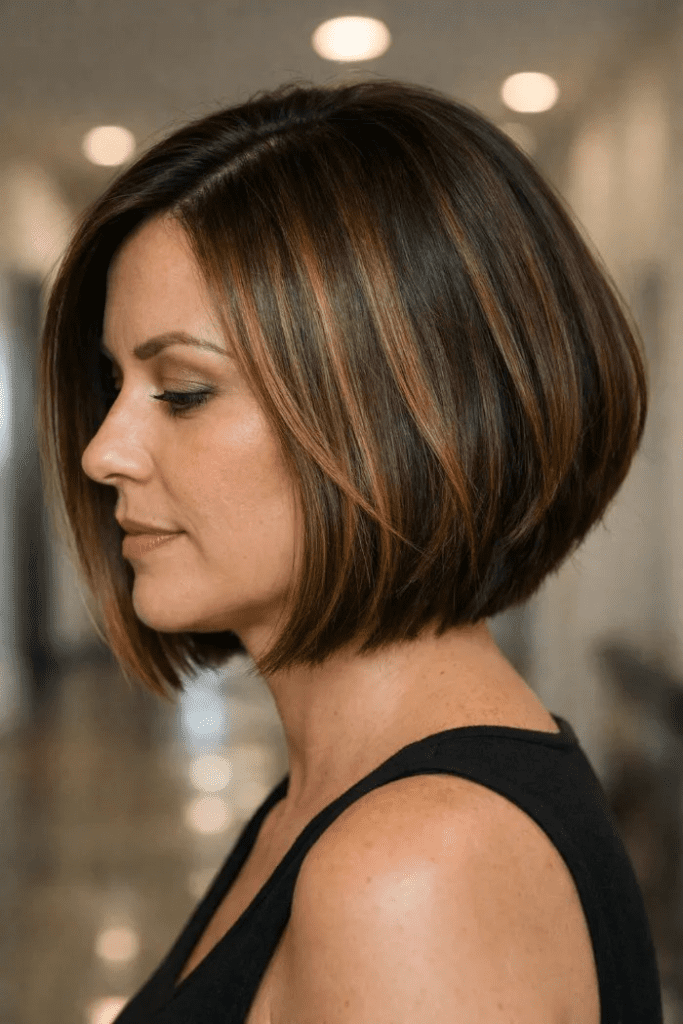
The honey caramel bob is one of the most photogenic color combinations on this list — the contrast between a sleek, structured bob shape and finely-sliced honey caramel highlights creates a polished, intentional look that reads as both classic and current simultaneously.
The key technical element is the fineness of the highlights. Chunky caramel pieces on a chin-length bob look heavy and dated — they draw attention to individual sections rather than creating overall dimension. Fine, sliced highlights on a bob blend with the shape of the cut and make the color look like part of the structural design rather than something added afterward.
What to ask your colorist: Ask for sliced highlights rather than standard foils — the technique produces finer, more precise results. Request the caramel pieces through the top layer and face-framing sections specifically, leaving the interior sections darker to maintain depth and avoid a washed-out result.
Maintenance tip: Blow dry with a slight inward bend at the ends to show off the dimension at its most flattering angle. Straight-styled bobs can flatten highlights against the head — a small bend in the ends lifts the highlighted sections slightly and makes the color more visible.
Best for: Women with a bob who want a color update that works with the structure of the cut rather than competing with it.
11. Face-Framing Caramel Highlights
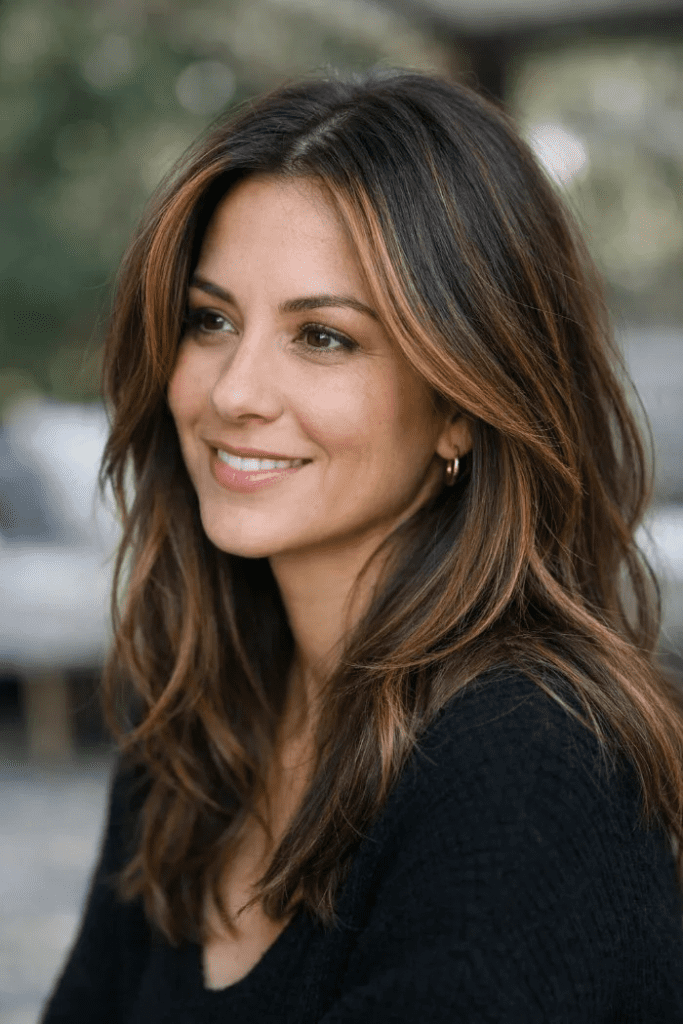
Face-framing caramel highlights are the most practical highlight technique on this list for women who want noticeable brightness without the full maintenance commitment of an all-over highlight application. Because the color is concentrated in the sections that frame the face, every glance in the mirror registers the brightest, most flattering version of the color — but the majority of the hair stays in its natural state.
The technique works especially beautifully on medium brunette bases because the caramel tone sits close enough to the natural warmth in the brown to look natural rather than applied.
What to ask your colorist: Ask for the face-framing highlights to start close to the root near the front sections rather than mid-shaft — root-to-tip placement in the face-framing sections creates the most pronounced brightening effect around the face. Through the rest of the length, ask for the highlights to melt into a softer, slightly darker caramel toward the ends.
Maintenance tip: This style looks especially pretty with loose, lived-in waves because the movement keeps the face-framing sections visible from multiple angles. A one-inch wand and a light flexible spray is the complete styling routine.
Best for: Women who want visible, flattering face-framing brightness with the minimum color application and the longest possible time between appointments.
12. Soft Amber Ribbons on Deep Brown
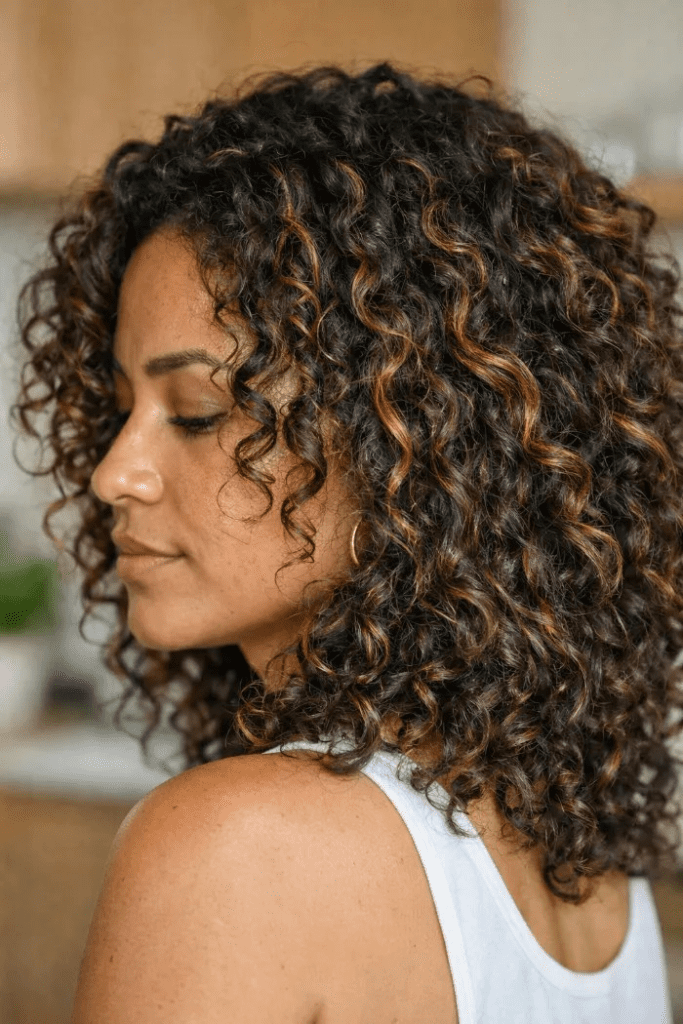
Amber is a tone that sits between copper and caramel on the color wheel — warmer than caramel, richer than copper, and deeper than honey. On a medium-deep brown base, soft amber ribbons create a warmth that reads as distinctly winter without looking rusty or orange, which is the common concern with copper-adjacent tones.
The placement through balanced sections across the length means the highlights add movement without concentrating brightness in one area — the color looks distributed and natural rather than targeted and deliberate.
What to ask your colorist: Ask for amber highlights through a balayage application, requesting that the tone be developed with a warm-amber rather than copper-based formula. The distinction matters — copper pulls more orange on dark brown bases, while a true amber formula stays in the richer, golden-brown range.
Maintenance tip: A warming gloss applied over the top of amber highlights every six to eight weeks keeps the tone from fading toward a washed-out, indeterminate brown. Ask your colorist for a DIY gloss recommendation you can apply at home between appointments.
Best for: Women who love warm tones but find caramel too golden and copper too bright — amber is the middle-ground that reads rich and intentional on deep brown hair.
13. Chocolate Length With Toasty Highlights
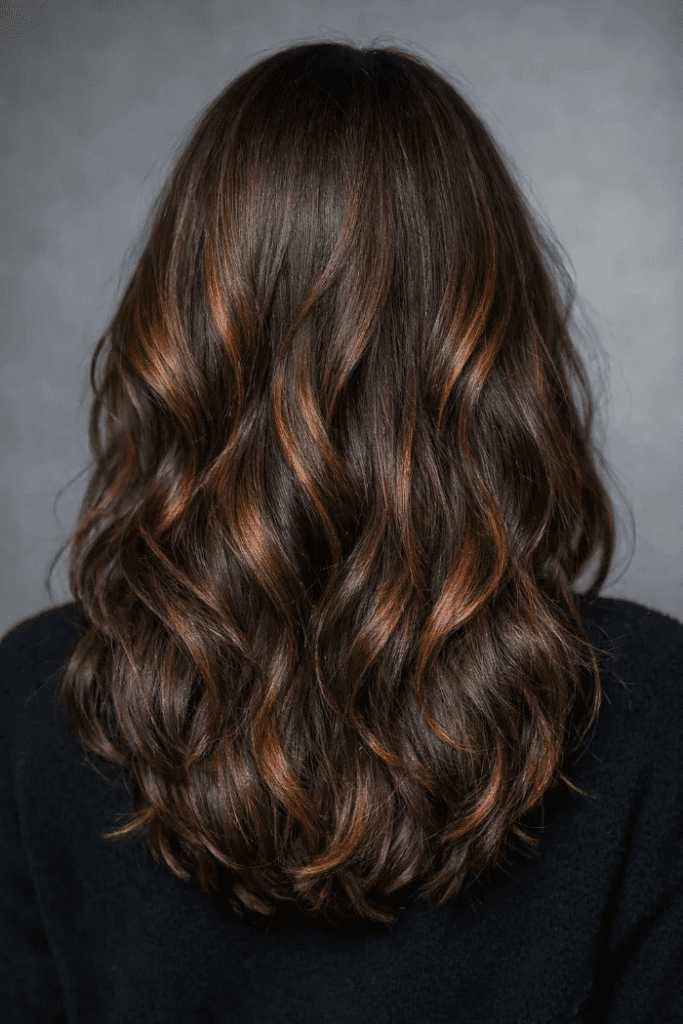
Long hair with a chocolate brown base and toasty, warm highlights is one of the most striking color results on this list because the length gives the highlights maximum visible surface area. Every time the hair moves, the toasty pieces catch the light from a different angle — the result is dynamic and dimensional in a way that shorter styles simply can’t replicate.
The spacing of the highlights is critical on long hair. Too frequent and the color looks streaky; too sparse and the long length reads as flat and one-dimensional. The goal is deliberate spacing that creates rhythm through the length — highlights that appear, disappear into the chocolate base, and reappear at regular intervals.
What to ask your colorist: Ask for the toasty highlights to be spaced out through foils with alternating sections left natural — a placement pattern that creates the balanced, not-too-heavy result long hair needs. Request that the ends be slightly brighter than the mid-lengths for a natural, sun-lightened effect.
Maintenance tip: Style long highlighted hair with a soft bend through the mid-lengths rather than tight curls or pin-straight styling. A medium bend catches the most light at the most angles and shows the color dimension most effectively.
Best for: Women with long brown hair who want a color result that makes their length look as full and glossy as possible without a dramatic departure from their natural base.
14. Smoky Ash Brunette for Winter
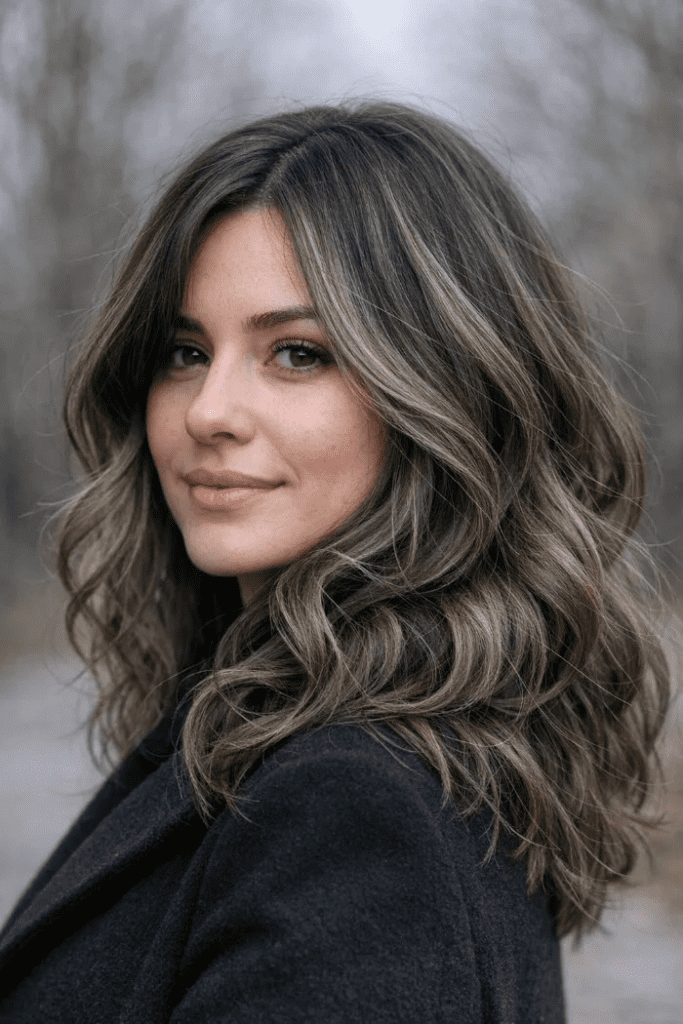
Smoky ash brunette highlights are the most sophisticated cool-tone option on this list — and for women who specifically want winter color that looks modern and deliberate rather than warm and glowy, this is the technique to request.
The highlights are subtle and carry a slightly greyed-out quality that distinguishes them from standard ash blonde highlights. The grey undertone in smoky highlights reads as intentional and fashion-forward in winter light rather than accidentally cool or faded-looking, which is the risk with lighter ash applications on brown hair.
What to ask your colorist: Ask for smoky or greige highlights rather than ash blonde — the distinction tells your colorist you want dimension with a grey undertone rather than straightforward coolness. Request a cool-toned gloss finish to unify the tone and add the shine that keeps smoky highlights from reading as dull.
Maintenance tip: Blue shampoo once a week maintains the smoky, cool quality without overcorrecting. Purple shampoo on brunette hair can create an overtly purple or lavender result — blue shampoo neutralizes warmth more subtly and keeps the smoky tone intact.
Best for: Women who want a cool, editorial winter color that looks genuinely different from standard balayage without requiring dramatic lightening or high-maintenance color care.
15. Bold Money Piece Glow
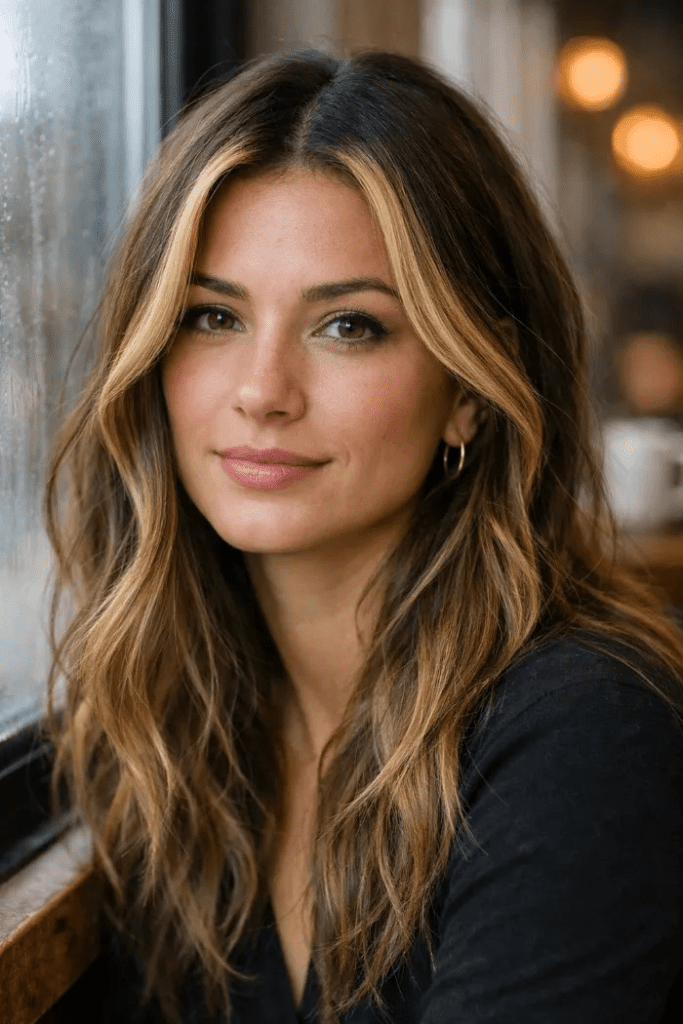
The money piece — a bright highlight concentrated at the very front sections framing the face — is the highest-impact, lowest-effort highlight technique available. One to two foils on each side of the face at the front hairline delivers a brightness that’s visible in every interaction, every photo, and every mirror glance without touching the rest of the hair.
The warm beige tone specifically is the most flattering money piece option on brown hair because it brightens without going platinum-cold or caramel-warm — it sits in a neutral space that’s universally flattering across skin tones.
What to ask your colorist: Ask for a soft root smudge applied at the base of the money piece sections — this blurs the connection between the bright piece and the darker root and makes the grow-out completely seamless. Without the root smudge, money pieces can develop a stark, high-contrast line at the root that becomes obvious within four to six weeks.
Maintenance tip: The money piece fades faster than any other highlight placement because those sections are exposed to the most washing, heat, and environmental factors. A toner or gloss refresh every six weeks keeps the tone from going brassy — budget for this as part of the ongoing maintenance cost rather than treating it as optional.
Best for: Women who want maximum visual impact from the minimum color application — the money piece delivers more face-brightening effect per foil than any other highlight technique.
16. Mushroom Brown Babylights Blend
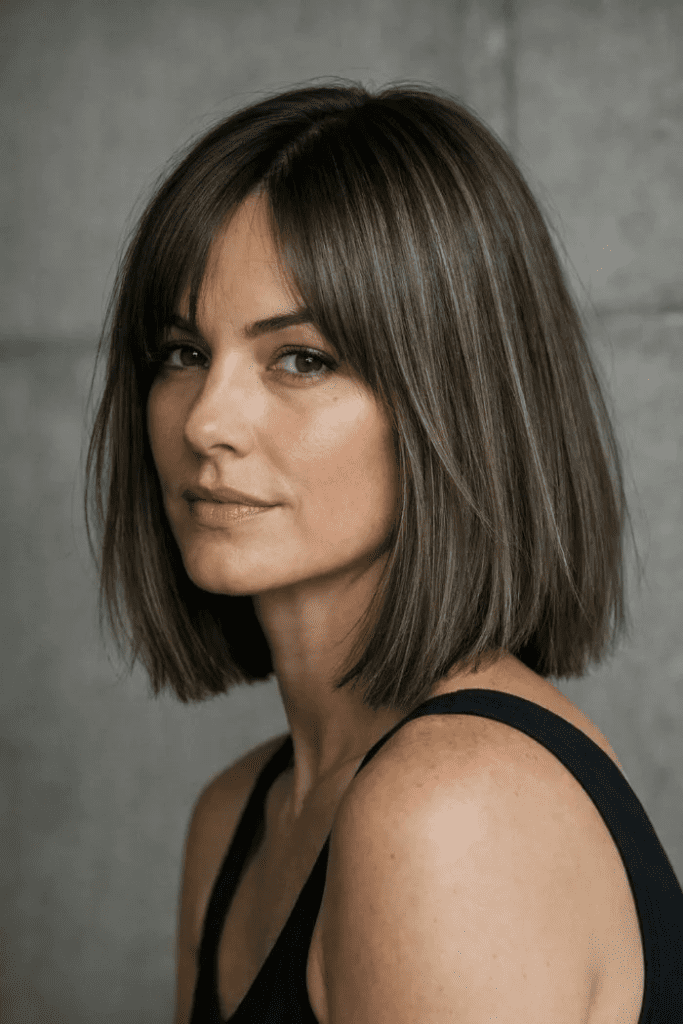
Mushroom brown babylights are one of the most refined highlight techniques on this list because the effect is so seamlessly blended that it reads as natural hair color rather than a highlighting application. The mushroom tone — a cool, greige brown with subtle ash undertones — is close enough to most natural brown bases to look like the hair’s own depth and dimension rather than something added by a colorist.
Babylights are ultra-fine highlights applied in very small sections, which creates an overall lightening effect that’s diffused rather than concentrated. The result is a smooth, dimensional tone across the entire head rather than visible ribbon or stripe placement.
What to ask your colorist: Ask specifically for babylights rather than balayage or standard foil highlights — the technique is more time-intensive and may cost more, but the result is categorically different. Babylights on mushroom brown tones require a skilled colorist who understands cool-toned brunette formulas — bring reference photos to be precise about the greige quality you want.
Maintenance tip: Mushroom brown babylights are naturally low-maintenance because the tone is close to natural hair color. A blue-based or cool-toned shampoo once every two weeks maintains the greige quality without overcooling. A clear gloss every eight weeks adds shine and keeps the tone from going flat.
Best for: Women who want the most natural-looking, seamlessly blended cool-toned dimension possible — the result that makes people comment on how beautiful your hair looks without being able to identify what’s different about it.
17. Neutral Balayage With Soft Waves
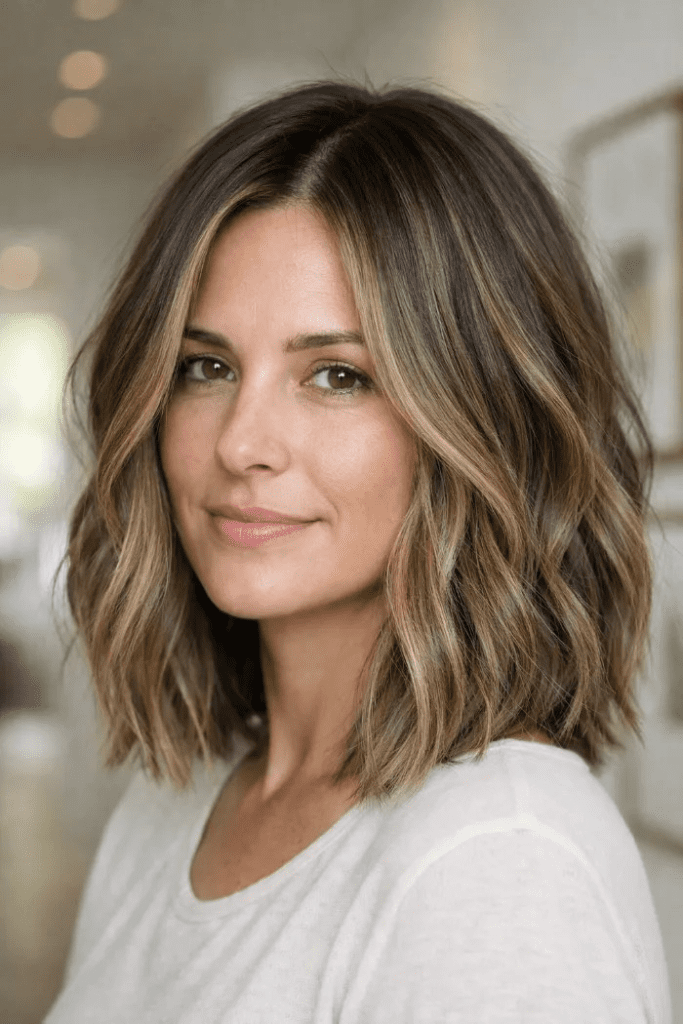
Neutral balayage sits in the color middle ground that warm-toned and cool-toned women both find universally flattering — it’s neither golden nor ashy, but exactly balanced between the two. On brown hair in winter, neutral balayage reads as a natural brightening of the base color rather than a deliberate highlighting treatment.
The soft wave styling is integral to this look rather than optional. Neutral tones are subtle by design — the wave pattern creates the movement and texture that keeps neutral highlights visible rather than disappearing into the brown base.
What to ask your colorist: Ask for a neutral balayage using a beige or natural-series toner rather than a warm or cool formula. Tell your colorist you want the result to look as close to natural sun-lightening as possible — that framing will guide the application placement and the toner choice toward the most natural-looking result.
Maintenance tip: A lightweight curl cream keeps soft waves defined and prevents the style from collapsing into straight sections that hide the balayage. Apply to damp hair and let it air dry rather than blow drying — heat styling on neutral highlights can subtly alter the tone toward warm over time.
Best for: Women who genuinely can’t decide between warm and cool and want a color that works harmoniously with both — the most universally flattering highlight option on this list.
18. Warm Cinnamon Shine on Shoulder Length
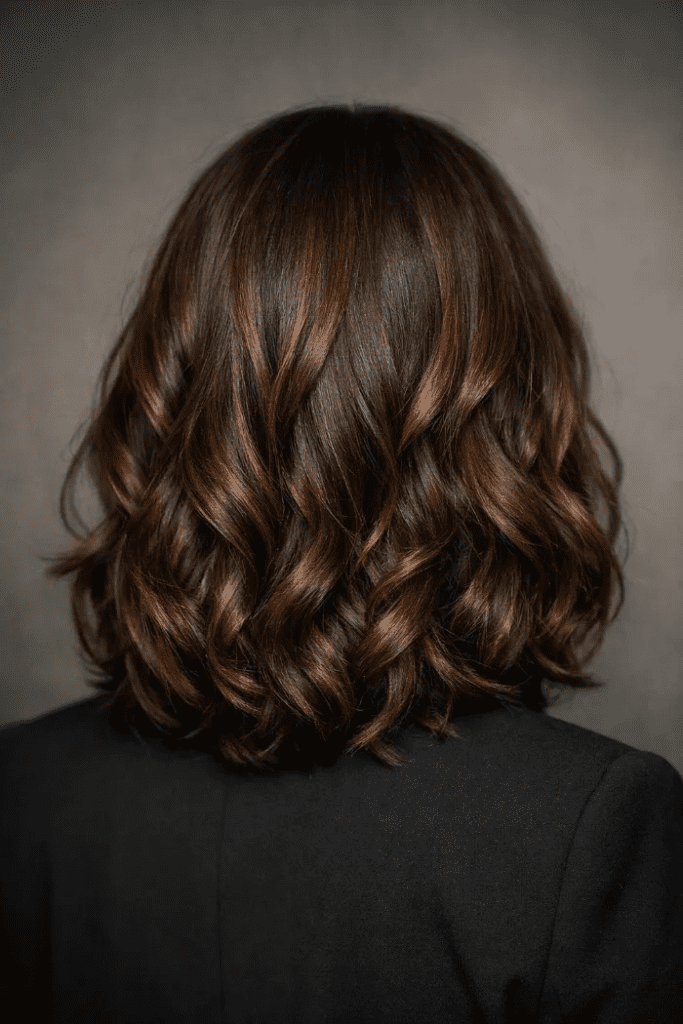
Cinnamon highlights are having a genuine moment as a winter color choice because they sit at an interesting point on the color spectrum — warm enough to look cozy and flattering in winter light, but specific enough in tone to read as a deliberate color choice rather than a generic caramel or honey application.
On shoulder-length hair, cinnamon highlights placed through the top layer add movement and fullness that makes the length look thicker and more textured than it actually is — a particular advantage for women whose hair has started to lose density at the ends.
What to ask your colorist: Ask for the cinnamon highlights to be placed primarily through the top layer and face-framing sections rather than evenly distributed throughout — top-layer placement maximizes visibility and face-brightening effect. Request a few brighter pieces near the front specifically if you air dry frequently, so the color reads well without heat styling.
Maintenance tip: Cinnamon can fade toward a copper-orange tone without proper care. Use a red-color-safe or warm-toned shampoo rather than a standard formula, and avoid blue or purple shampoo which will neutralize the warmth you specifically want to keep.
Best for: Women with shoulder-length hair who want a warm, distinctive winter color that stands out from the standard caramel-and-balayage palette.
19. Sleek Straight With Subtle Dimension
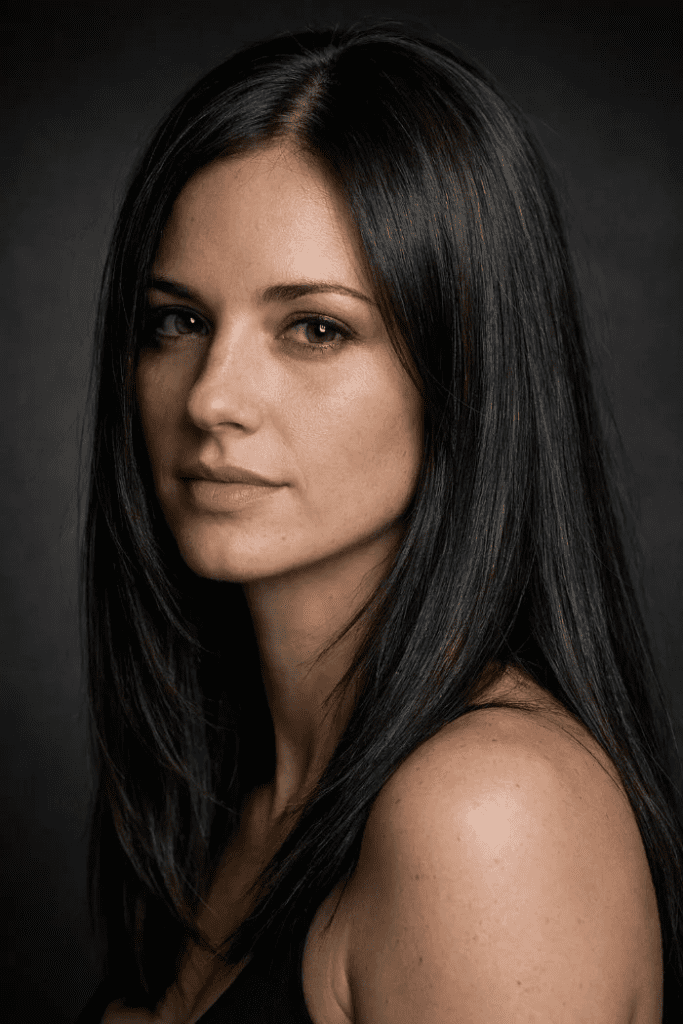
Straight, sleek styling is the most revealing way to wear fine highlights — because every individual ribbon is visible without the diffusing effect of waves or texture. This is either the styling choice to lean into or to avoid, depending on whether you want your highlights to be obviously visible or subtly dimensional.
For women who want visible, precise dimension, sleek straight styling with fine highlights is the ideal combination — the clean, smooth surface catches light at an even angle and shows each highlighted section clearly.
What to ask your colorist: Ask for highlights placed specifically around the face and through the top layer rather than distributed evenly throughout — on sleek straight hair, highlights through the interior sections are invisible, making the application a waste of time and money. Face and surface placement is the only placement that matters on this styling choice.
Maintenance tip: Heat protectant before every styling session is non-negotiable with this look — the flat iron and high heat required for sleek straight styling degrades highlighted hair significantly faster than air drying or low-heat methods. Use a bond-building treatment monthly to counteract the cumulative heat damage.
Best for: Women who prefer wearing their hair sleek and straight and want a highlight result that’s visible and precise rather than diffused and blended.
20. Cool Smoky Ash Highlights With Volume
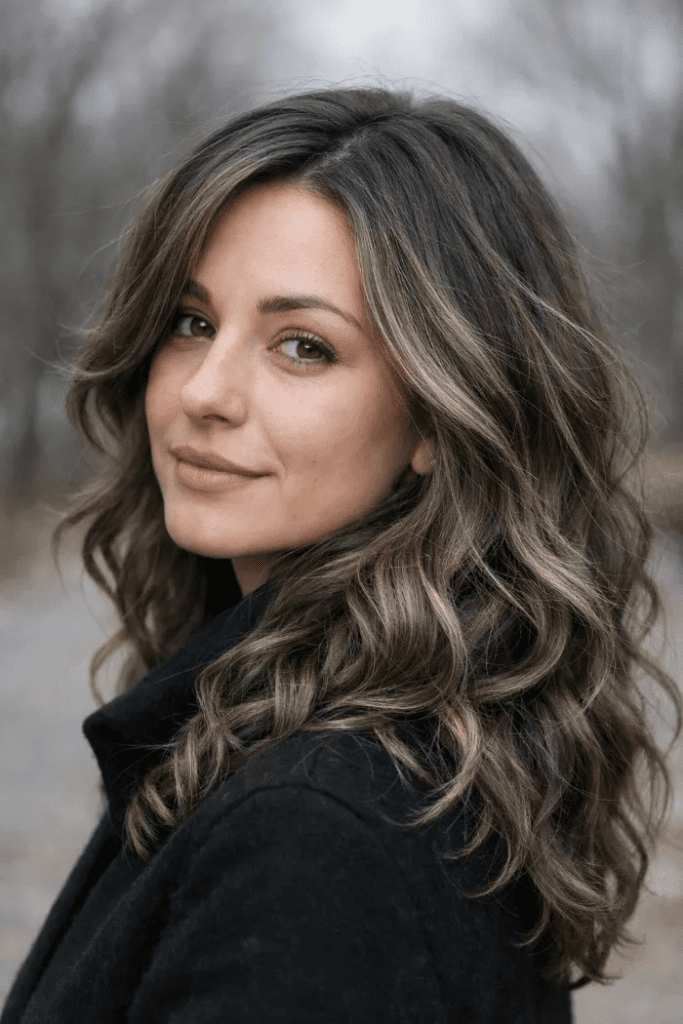
Smoky ash highlights with volume through the crown is the most dynamic cool-toned option on this list — because the lift at the root area makes the ash highlights visible from above and from the front simultaneously, creating a three-dimensional color effect that flat, sleek styling can’t replicate.
The volume is doing structural work here, not just aesthetic work. Lifted root sections show the progression from dark root to lighter ashy mid-length more clearly, which is the defining characteristic of a well-executed smoky ash result.
What to ask your colorist: Ask for a toner refresh every six to eight weeks rather than a full color appointment — smoky ash tones fade faster than warm tones because the cool pigment molecules are smaller and rinse out more quickly. Scheduled toner maintenance keeps the ash quality intact without repeated lightening.
Maintenance tip: Blow dry with a round brush to build crown volume that makes the ash highlights visible. Once the volume is set, apply a cool-toned, lightweight finishing spray to hold the lift without adding warmth to the tone.
Best for: Women who want a modern, editorial cool-toned result with visible dimension and aren’t intimidated by a slightly higher maintenance schedule to keep the tone fresh.
21. Smoky Ash Brunette Highlights
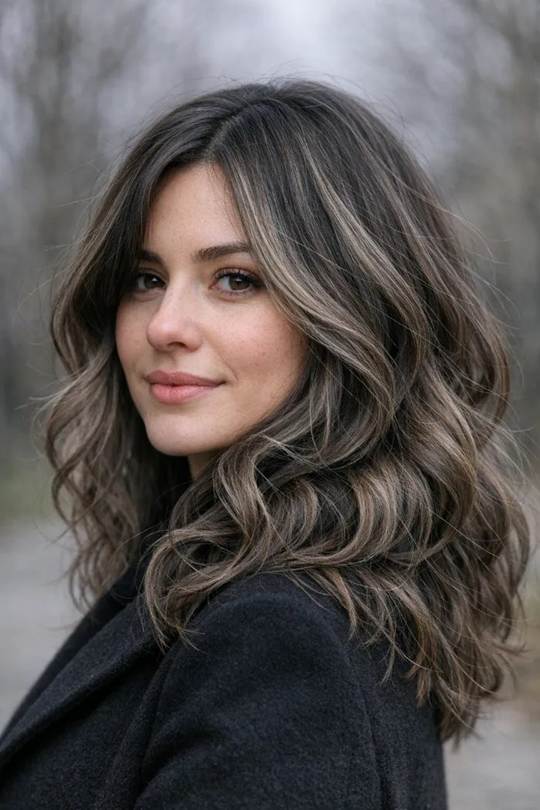
The distinction between this and the previous smoky ash option is subtle but important: this version prioritizes the brunette base quality over the highlight visibility. The ash highlights are soft and blended rather than defined — the goal is a cool, clean overall tone rather than visible lighter pieces.
This is the right choice for women who want their brown hair to look cooler and more modern in winter without wanting anyone to identify specific highlighted sections. The overall effect is a brunette that looks intentionally cool-toned rather than naturally warm.
What to ask your colorist: Ask for a cool brunette gloss applied over soft ash highlights — the gloss unifies the tone across highlighted and non-highlighted sections so the result reads as an all-over cool brunette rather than a highlight application. An ash toner as the final step is non-negotiable for achieving the clean, modern quality this look requires.
Maintenance tip: A quick gloss refresh at home every six weeks using a cool-toned, clear or tinted gloss maintains the clean quality between salon appointments. If your hair pulls warm fast, shampoo with cool water rather than hot — hot water opens the cuticle and accelerates toner fade.
Best for: Women who want to shift their overall brunette tone cooler for winter without a visible highlighting result — the color change you notice, not the highlights you can see.
22. Smooth Loose Waves With Golden Blend
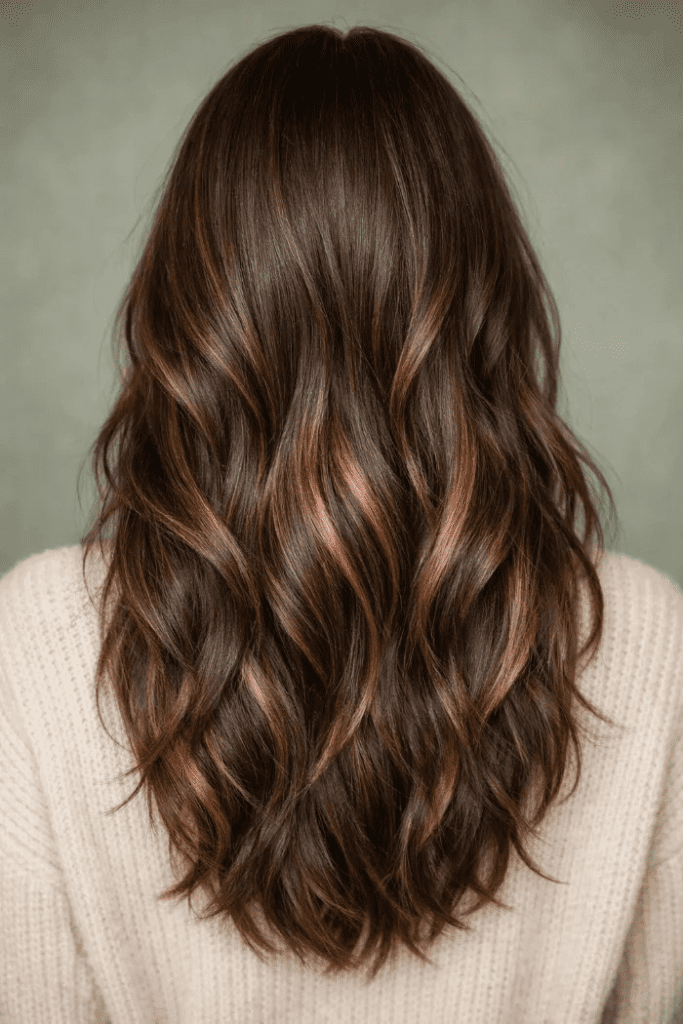
The golden blend on smooth, loose waves is the warmest, most luminous color result on this list — and for women who specifically want their winter hair to glow rather than look cool and muted, this is the direction to take.
The golden highlights are strongest through the mid-lengths and ends, which creates a natural-looking warm gradient from a deeper root. On smooth, loose waves, that gradient is visible at every angle as the waves move and catch the light.
What to ask your colorist: Ask for a golden rather than caramel formula — the distinction is the level of brightness. Golden highlights sit slightly lighter and more luminous than caramel, which has a richer, more amber quality. For smooth loose waves, the brighter golden tone is more visible and more flattering.
Maintenance tip: Style with a large-barrel iron, wrapping sections loosely around the barrel to create relaxed waves rather than tight curls. Brush through once with a soft-bristle brush after curling to blend the waves together — this is what creates the smooth, luminous quality rather than defined individual curls.
Best for: Women who want the warmest, most glowing winter color result on the list and aren’t concerned about keeping a cool or neutral tone.
23. Soft Waves With Natural Ribboning
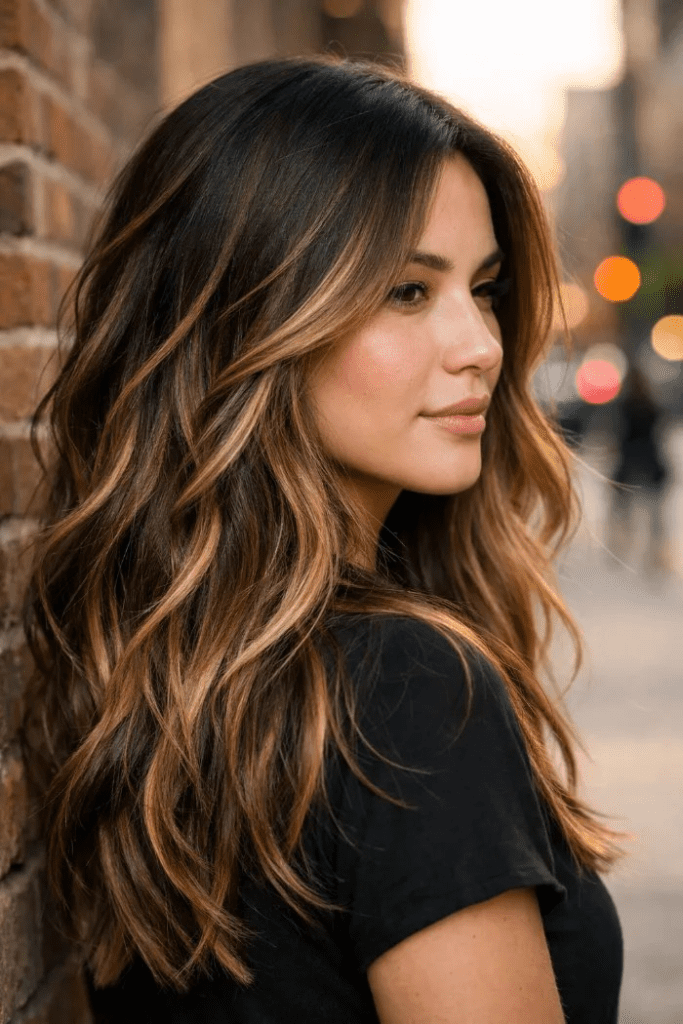
Natural ribboning is a highlighting technique that specifically mimics how the sun naturally lightens hair — touching the surface sections and the ends most, leaving the interior and roots deepest. On soft waves, this natural placement pattern is the most believable because waves already create the kind of light-and-shadow variation that makes the ribboning look organic.
The fine ribbons appear as the waves move and catch light, then disappear into the brunette base between waves — creating a constant, shifting dimension that’s genuinely beautiful without looking colored.
What to ask your colorist: Ask for natural ribboning through a freehand balayage technique with a warm, neutral tone formula. Tell your colorist the goal is dimension that looks like natural sun-lightening rather than a visible highlighting application.
Maintenance tip: Air drying with a light mousse or curl cream maintains the soft wave pattern that makes this color look its best. Blow drying straight collapses the waves and hides the ribboning effect — let the hair do what it naturally wants to do.
Best for: Women who want their highlights to be completely undetectable as highlights — color that makes people ask if you’ve been somewhere sunny rather than if you’ve visited your colorist.
24. Soft Waves With Balanced Dimension
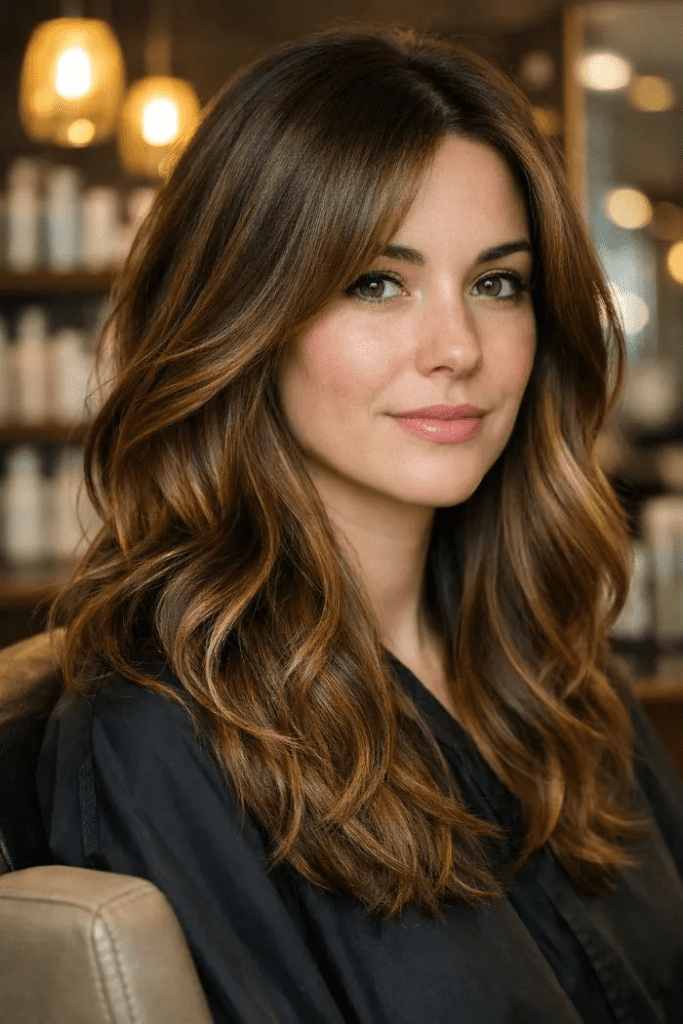
Balanced dimension means the highlights are distributed evenly enough that no single section reads brighter than others — the color looks consistent and polished across the entire style rather than concentrated in specific areas.
On soft waves, balanced placement creates a richly dimensional result because the wave pattern naturally varies the way light hits different sections. The highlights don’t need to do dramatic work because the texture is already creating depth — the balanced color simply enhances what the wave structure is already doing.
What to ask your colorist: Ask for highlights in alternating foils throughout the length rather than concentrated in surface layers or face-framing sections only. Balanced dimension requires even distribution — tell your colorist you want the highlights to be visible throughout the hair, not just near the face or on the surface.
Maintenance tip: A heat protectant and a light-hold flexible spray are the two products this style needs — the first protects the highlighted sections from heat degradation, the second holds the waves without the stiffness that would flatten them and reduce the visible dimension.
Best for: Women who want a polished, all-over highlighted result rather than a targeted or placement-specific look — dimension that reads from root to end rather than in specific sections.
25. Toffee Highlights on Deep Brunette
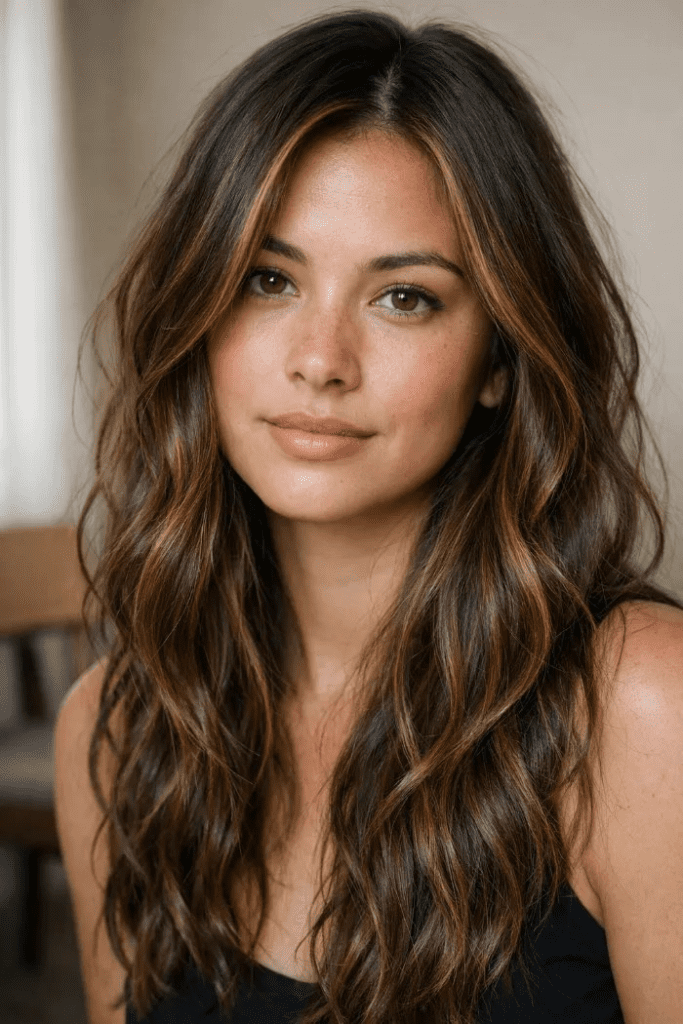
Toffee highlights on a deep brunette base create one of the most dramatic warm-tone contrasts on this list — because the depth of the base makes even moderately light highlights look significantly brighter. On a deep brunette, toffee isn’t a subtle accent; it’s a visible, warm, dimensional statement.
The placement strategy matters enormously here. Concentrating the brighter toffee pieces around the front and along the ends frames the face with warmth while keeping the overall look grounded and rich rather than washed out.
What to ask your colorist: Ask for the toffee highlights to be developed to a slightly lighter level than you think you need — deep brunette bases absorb and soften highlight formulas, so the finished result will read slightly darker than the formula shade suggests. Going one level lighter than your target ensures the highlights are visible against the deep base.
Maintenance tip: Toffee on deep brunette looks especially beautiful with neutral makeup — a nude lip, soft bronze eye — that doesn’t compete with the warmth of the color. This is one of those rare hair colors that genuinely pairs with your makeup to create a complete look.
Best for: Women with naturally deep, dark brunette bases who want warm highlights that are genuinely visible against their base rather than subtle and understated.
26. Winter Glow Brunette Balayage
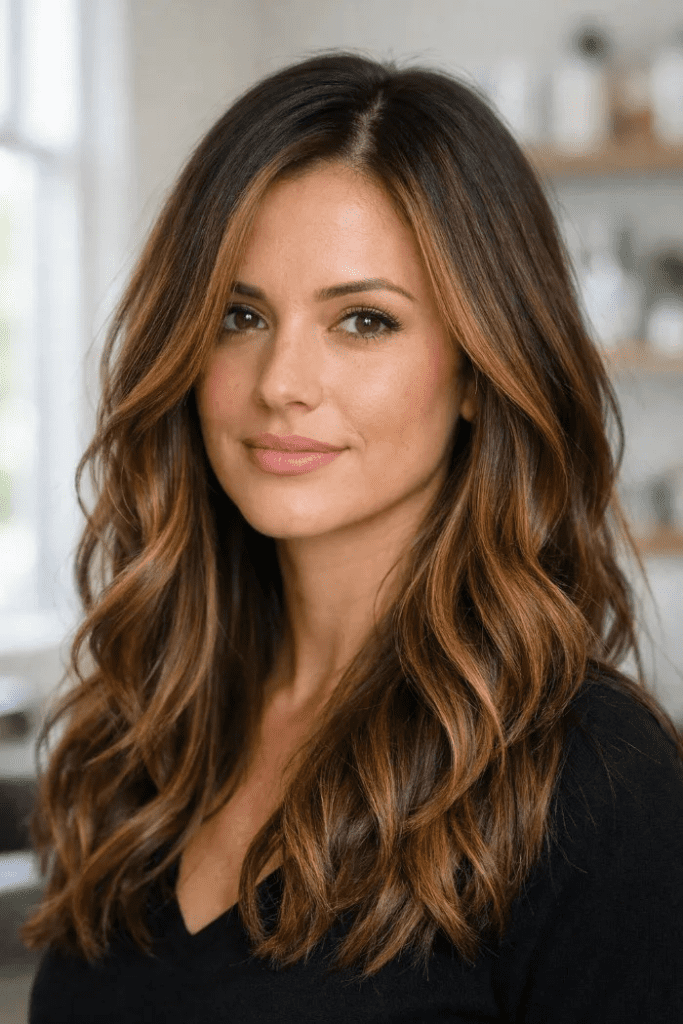
Winter glow brunette balayage is named precisely for what it achieves — a color result that looks luminous in every lighting context, from indoor artificial light to the low, diffused light of a grey winter day. The soft brown base stays warm and rich while golden pieces through the front and crown reflect light back toward the face in a way that reads as a genuine, inner glow.
The root melt is the technical element that makes this style so wearable — it creates a seamless gradient from the natural dark root to the golden mid-length that requires no maintenance line to be touched up.
What to ask your colorist: Ask specifically for a root melt as part of the application process — this is a shadow technique applied at the root of highlighted sections to blur the transition between the dark root and the lighter highlight. Tell your colorist you want the grow-out to stay smooth and gradual rather than creating a visible line.
Maintenance tip: A luminizing finishing spray or a very small amount of shine serum through the top layer maximizes the glow effect that makes this color look its most beautiful. Apply in the last step of styling, after any heat tools, to avoid baking the product onto the hair surface.
Best for: Women who want the most flattering, face-brightening winter color result on the list — a brunette that genuinely glows rather than simply looking well-maintained.
27. Winter Toned Color With Cool Beige Highlights
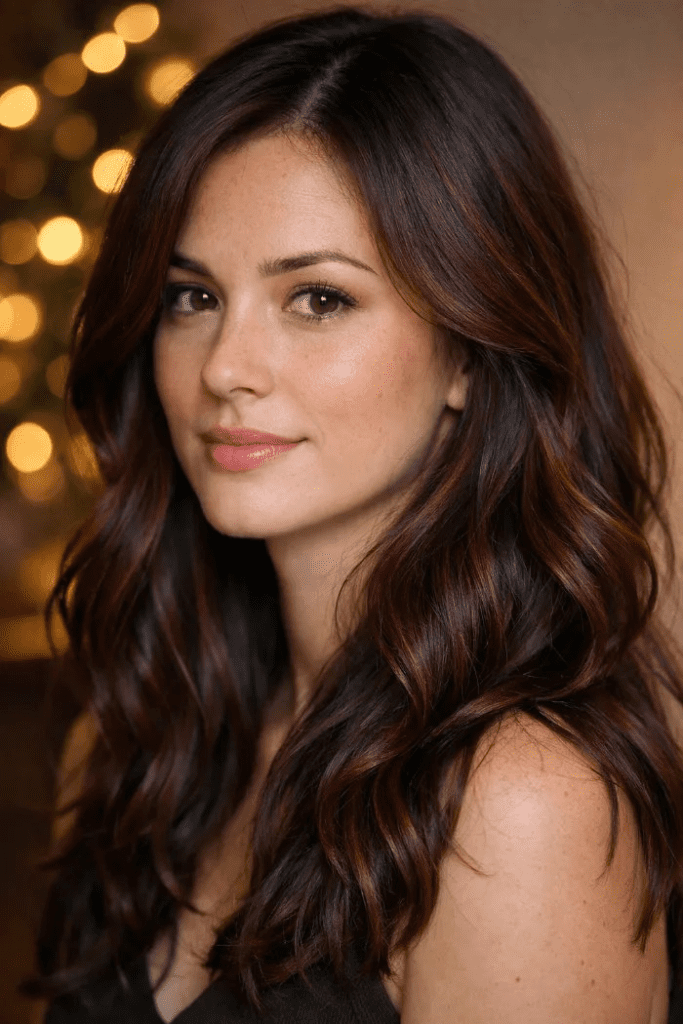
Cool beige is the most wearable neutral highlight tone on this list for brown hair — it sits exactly in the space between ashy grey and warm blonde, which means it reads as clean and modern without the harshness of ash or the warmth of caramel. In winter light specifically, cool beige highlights have a calm, polished quality that looks intentional rather than seasonal.
The finer the highlights, the more sophisticated the result — chunky cool beige pieces on brown hair can look stark and high-contrast in winter light. Fine babylights or sliced foils in a cool beige tone create a seamless, dimensional result that looks like it belongs in the hair rather than being placed in it.
What to ask your colorist: Ask for a neutral toner finish rather than a warm or ash-based formula — the neutral toner prevents the highlights from pulling either too warm or too cool and keeps the beige quality balanced. Tell your colorist you want low maintenance color with no obvious grow-out line.
Maintenance tip: Cool beige highlights on brown hair are the most forgiving option to maintain at home. A weekly rinse with a color-safe, sulfate-free shampoo and a monthly clear gloss application is genuinely all this color needs between appointments to stay fresh.
Best for: Women who want a genuinely low-maintenance winter highlight that looks polished and intentional without requiring frequent salon visits or complicated color care.
28. Mid-Length Dark Brown With Soft Caramel Lights
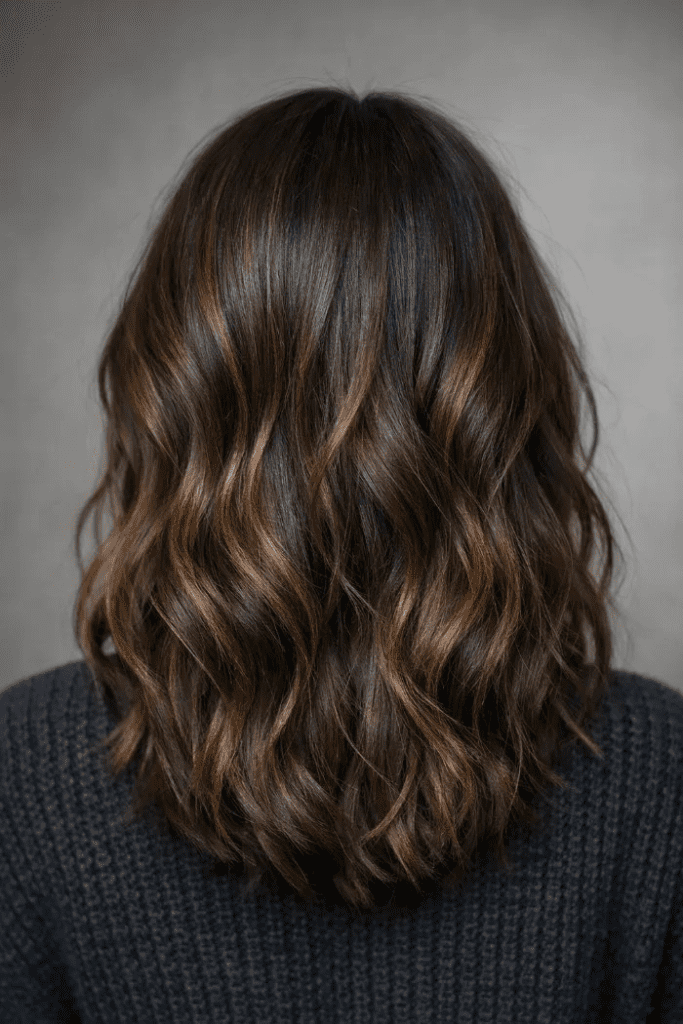
The mid-length dark brown with soft caramel lights is the most wearable entry point into winter highlights for women who are new to color or who have been resistant to highlights because they don’t want anything that looks obvious or requires significant upkeep.
The caramel lights are fine and spaced generously rather than applied densely — the goal is to give the dark brown base movement and richness rather than to visibly lighten the overall tone. On mid-length hair with natural wave or movement, the result reads as healthier and more dimensional rather than obviously highlighted.
What to ask your colorist: Ask for soft caramel lights applied through a foilayage or balayage technique, specifically requesting fine sections and generous spacing between highlighted sections. Tell your colorist you want the overall result to look like richer, more dimensional versions of your natural color rather than a separate highlighting treatment.
Maintenance tip: A clear gloss applied at home or in-salon every eight weeks is the single most effective maintenance step for this look. The gloss adds the shine that makes soft caramel lights look vibrant and healthy rather than faded and flat, and it extends the time between appointments without any visible degradation in the color quality.
Best for: Women who want a conservative, natural-looking first highlight experience — color that makes your dark brown look its absolute best without changing it in any obvious or irreversible way.
Final Thoughts
The most important thing to take from this guide isn’t a specific color or technique — it’s the idea that winter highlights for brown hair are about dimension and placement, not necessarily brightness.
The styles on this list that look most expensive and most flattering aren’t the boldest ones. They’re the ones where someone thought carefully about where to put the color, how to blend the root, and which tone would work with the natural base rather than fighting it. That thoughtfulness — communicated clearly to your colorist — is what separates a highlight result you love for six months from one you’re trying to correct by week eight.
Save two or three favorites from this list, note specifically what you like about the placement and the tone in each one, and bring that information to your colorist. The more specific you can be — not just the color but where it sits, how it’s blended, and how much contrast you want — the closer your result will be to the image in your head.
How do I choose between warm and cool highlights for winter?
The most practical answer is to look at what your natural brown does over time. If your hair consistently pulls warm or brassy between appointments, a cool-toned highlight formula with an ash or neutral toner will work with that tendency rather than against it — cool highlights that fight the natural warmth of your brown will always fade toward orange faster than cool highlights maintained with the right toner. If your brown stays neutral or cool naturally, warm highlights like caramel and toffee will add the warmth your natural color lacks without creating a maintenance battle. Beyond hair chemistry, consider your skin tone and makeup palette — warm highlights (caramel, toffee, cinnamon) are universally flattering but look most beautiful on warm or olive complexions; cool highlights (ash, mushroom, cool beige) suit neutral and cool complexions most naturally.
What should I ask my colorist for if I want highlights that grow out beautifully?
Three specific requests will get you there: a root melt or root smudge built into the highlighting application, a balayage or babylight technique rather than traditional root-to-tip foils, and brightness concentrated toward the face and ends rather than at the root. Together, these three elements create a grow-out that stays blurred and gradual rather than developing a visible demarcation line. The root melt is the single most important of the three — it’s the step most colorists skip unless you specifically request it, and it’s the difference between highlights that look good for eight weeks and highlights that look good for sixteen.
How do I keep winter highlights from going dull or dry?
Winter highlights fade and dry out faster than summer highlights because cold air, indoor heating, and hot showers all strip moisture and color tone simultaneously. A sulfate-free shampoo is the baseline — sulfates are the primary cause of color fade and are present in most standard drugstore formulas. A weekly deep conditioning mask replaces the moisture that winter conditions strip from highlighted ends. A heat protectant before every use of hot tools prevents the cumulative heat damage that makes highlights look frizzy and dull regardless of the toning quality. For cool-toned highlights specifically, purple shampoo once a week — not every wash — maintains the tone without overcooling the result.
Is there a highlight technique that requires the fewest salon visits?
Babylights with a root melt on a balayage application — combined with a deep root and lighter ends — can realistically stretch to four to five months between appointments without looking neglected. The key is the root melt, which eliminates the visible regrowth line that makes all other highlighting techniques look grown out at the six to eight week mark. The trade-off is that babylights are more time-intensive in the salon and therefore typically more expensive than a standard balayage. For women who want the longest possible time between appointments, that investment pays for itself in the appointments you skip.
Can I add highlights to very dark brown or almost black hair?
Yes, but the process requires more lightening sessions and more careful toner work to achieve a result that looks intentional rather than orange. Very dark brown hair typically needs to be pre-lightened before the highlight formula is applied — attempting highlights on dark hair in a single session usually results in brassy, uneven color rather than the clean, dimensional result you’re aiming for. Warm highlights (caramel, toffee, copper) are more achievable on dark brown in one session because they work with the warm tones that dark hair reveals during lightening. Cool highlights (ash, mushroom, cool beige) on dark brown almost always require two sessions to achieve a clean, non-brassy result.