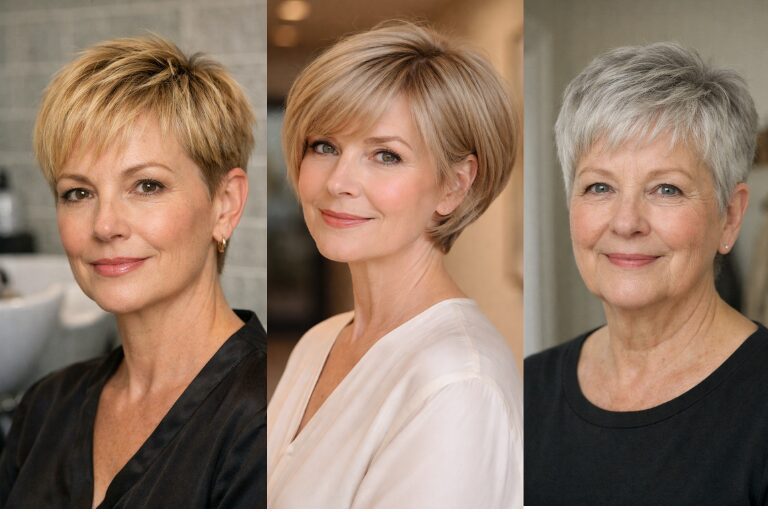
19 Lob Hairstyles for Thin Hair That Add Volume and Make Ends Look Fuller
The lob — that perfect length sitting somewhere between the collarbone and the shoulder — is genuinely one of the best haircuts for thin hair. Not because it performs magic, but because it hits the specific length where fine hair has enough natural weight to hold a shape without being so long that the ends become transparent and stringy.
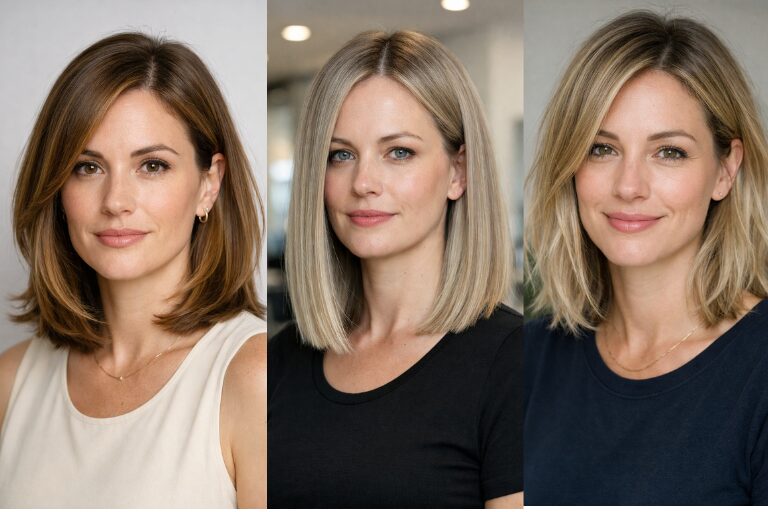
At lob length, thin hair can look full, healthy, and genuinely styled with very little effort. The ends sit with enough density to look present. The length is enough to move beautifully. And with the right shape, color work, and styling technique, a lob makes thin hair look significantly more substantial than it actually is.
The key principles are simple but important. Keep the perimeter as strong as possible — blunt or lightly textured ends create the illusion of density that wispy, over-thinned ends destroy. Use layers strategically rather than broadly — crown and face-frame layering adds lift and movement without removing the end weight that thin hair needs most. And consider color — a root shadow, root melt, or warm highlights create depth at the scalp level that makes thin hair appear denser even before styling begins.
These 19 lob hairstyles for thin hair are all built around those principles. Every look comes with what to ask for at the salon, a styling tip, and why it specifically works for thin or fine hair. Save the ones that match how you actually wear your hair day to day — the best cut is always the one that suits your real routine.
What Thin Hair Needs from a Lob Cut
Before choosing, understanding these four principles makes every salon conversation more productive and every result more satisfying.
Protect the perimeter. The ends are where thin hair is most visually vulnerable. A blunt or lightly beveled perimeter makes ends look dense and healthy. Heavy thinning shears through the ends do the opposite — they create the wispy, see-through finish that makes thin hair look its worst.
Layer strategically, not broadly. Crown layers add lift at the roots. Face-framing layers open the face and add forward interest. Layers distributed evenly throughout the entire cut remove end weight. For thin hair, the formula is always: layers at the crown and face frame only, perimeter as full as possible.
Use color for depth. Root shadows, root melts, and face-framing highlights all create depth and dimension at the scalp level that makes thin hair look denser than it actually is. Color is one of the most underused tools for making thin hair look fuller.
Place volume at the crown, not the ends. Thin hair looks fullest when the volume is at the top rather than the bottom. Crown lift through styling — root spray, round brush blowdry, part flipping — directs attention upward to where the hair is most present.
19 Lob Hairstyles for Thin Hair
1. Deep Side-Part Sleek Lob

The deep side part is one of the most reliable thin hair tools — it immediately adds lift at the roots on the part side, creates a visual sweep of hair across the top that adds perceived fullness, and moves the parting away from the center where thinning tends to be most visible. A sleek, blunt perimeter at the lob length does the end density work while the side part handles the crown volume.
What to ask for: A blunt-ish lob perimeter with tiny, minimal internal layering only — ask for the perimeter to stay as strong as possible. A deep side part built into the cut rather than being a daily styling decision.
Best for: Fine to very fine straight hair. The sleek finish works best on hair that lies naturally smooth.
Styling tip: A round brush directing the crown sections toward the part during blow-drying gives the most lift. Tuck one side behind the ear for instant polish. A light hold spray over the finished style maintains the side-swept shape.
Why it works: The deep side part adds lift and coverage over thin crown areas while the blunt perimeter maximizes end density. Two thin hair challenges addressed in one cut.
2. Soft Wavy Lob With Root Melt

A root melt — a color technique that adds slightly deeper, darker tone at the roots — is a genuine cheat code for thin hair at lob length. The added depth at the scalp creates the visual impression of density that styling alone cannot replicate. Paired with soft, spaced-out waves that give the lob movement and dimension, the combination looks effortlessly full even on second-day hair.
What to ask for: A collarbone-length lob with light face-framing and minimal layering — keep the perimeter strong. For color, ask for a root melt that adds depth at the scalp without creating a hard line. Loose, spaced waves rather than tight curls keep the shape airy.
Best for: Fine to medium-fine hair with any natural movement. The root melt is particularly transformative on lighter or gray-blending fine hair where the flat color at the roots can contribute to the hair looking less dense.
Styling tip: A texturizing spray through slightly damp hair, scrunched from ends upward, then finger-combed loose for the most natural wavy finish. The waves should look spaced and relaxed rather than tight and uniform.
Why it works: The root melt adds depth at the exact point where thin hair most reveals its lack of density — the scalp. That depth creates a visual contrast between roots and ends that makes the hair look fuller throughout its entire length.
3. Blowout Lob With Flipped Ends

Flipped ends on a lob give thin hair an upward, outward energy that makes the perimeter look stronger and fuller than it would lying flat. The flip adds visual weight at the ends through direction rather than through actual density — which is the most sustainable approach for thin hair that cannot afford to lose any perimeter weight to heavy thinning.
What to ask for: A strong, solid baseline with just enough internal layering to encourage the ends to bend outward during styling. Ask specifically for a strong perimeter — the flip only works beautifully when there is enough end weight for the bend to look intentional and full rather than sparse.
Best for: Fine to medium-fine straight to slightly wavy hair with enough natural movement to hold the flip with minimal product support.
Styling tip: A round brush or hot brush rolling the ends outward during blow-drying creates the flip most reliably. A light hold spray through the flipped ends sets them in place without stiffness. The flip should feel bouncy and alive rather than precisely set.
Why it works: Flipped ends create a sense of movement and direction at the lob perimeter that makes thin hair look genuinely styled and full of life. The outward energy draws the eye along the length of the hair in a flattering, energetic direction.
4. Clean Blunt Bob-Lob
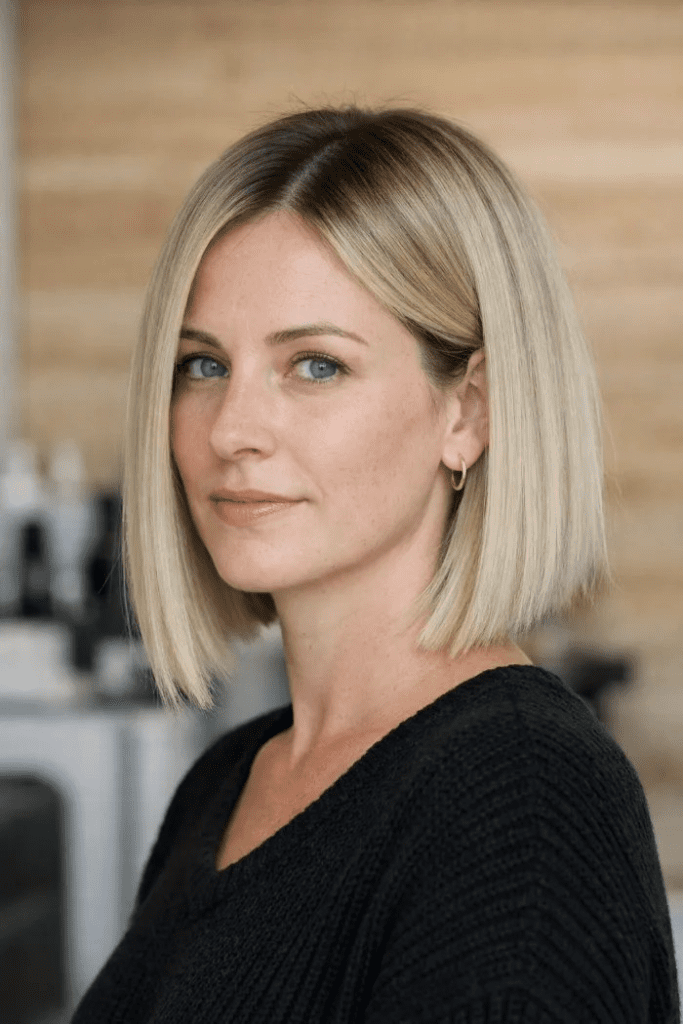
The blunt bob-lob is the thin hair approach at its most direct and most reliable. A crisp, even hem at the lob length creates the strongest possible perimeter line — the eye reads the solid edge as density and fullness regardless of how thin the individual strands actually are. No complex layering, no elaborate technique. Just a clean, precise line that does more for thin hair than almost any other single cut decision.
What to ask for: A clean, blunt perimeter at collarbone or just-above-collarbone length with minimal to no layering. Ask for a tidy, polished finish and specifically request no thinning shears through the ends. The line should be as crisp and even as possible.
Best for: Fine to very fine straight hair. The blunt bob-lob is the maximum-fullness option — ideal for the thinnest hair that needs every possible strand contributing to the solid perimeter line.
Styling tip: A smoothing cream worked through damp hair before blow-drying with a paddle brush, then the ends turned slightly under with a round brush for a contained, full finish. The ends-turned-under detail adds the final visual weight that makes the blunt line look its most substantial.
Why it works: The blunt perimeter is the most powerful optical illusion in hair cutting for thin hair. The solid, even line makes thin ends look dense — and at lob length, that illusion is at its most convincing because the hair has enough natural weight to support the clean line.
5. Layered Lob With Side-Swept Bang

A side-swept bang on a lob addresses the thin hair challenges at both ends of the cut simultaneously — the bang adds coverage and face-framing at the front while the lob length maintains end density at the bottom. The bang draws attention forward and upward toward the face, away from the ends where thin hair is most visibly sparse. And soft, long layers prevent the lob from going completely flat at the crown.
What to ask for: A lob with long, blended layers — not short choppy ones — for crown movement, and a side-swept bang that blends naturally into the front layers. Ask for the layers to be concentrated above the mid-length and for the perimeter to stay as full as possible.
Best for: Fine to medium-fine hair of most face shapes. The side-swept bang is particularly flattering for women who want forehead coverage and face-framing without the density commitment of a full fringe.
Styling tip: A root lift spray before blow-drying adds the crown volume that the layers then distribute naturally. The side-swept bang can be directed with a small round brush during blow-drying and maintained throughout the day with a light flexible cream.
Why it works: The side-swept bang creates a diagonal movement across the forehead that is one of the most universally softening and flattering elements in hairstyling. On thin hair specifically, it adds the visual interest and face-framing that redirects attention away from the ends toward the features.
6. Airy Layered Lob With Warm Highlights

Warm highlights do something for thin hair that no cutting technique can replicate — they create visual texture within the strands themselves, making the hair look more dimensional and textured even when it is completely straight. The warmth of the highlight tone also adds radiance that makes the overall look feel healthy and full of life. Combined with light layers that lift around the face, the result is a lob that looks genuinely volumized before any styling even begins.
What to ask for: Light face-framing layers lifted around the hairline and cheekbones — not layering through the body of the cut. A warm balayage or highlight placement that adds warmth and dimension through the mid-lengths and ends. Ask for a soft blowout shape at the appointment so you can see the full effect of the color and cut combination.
Best for: Fine to medium-fine hair. Warm highlights are particularly transformative on naturally mousy, flat, or gray-blending fine hair where the color flatness contributes to the overall appearance of thinness.
Styling tip: Flip the part to the opposite side from usual after blow-drying — the roots instantly push upward at the flip point, creating volume that lasts through the day. The warm highlights look best in natural light, so a light smoothing cream rather than heavy serum keeps the finish luminous rather than weighed down.
Why it works: Warm highlights with variation create light and shadow within the hair that makes it look denser than it is. The color does the visual density work that the fine hair cannot achieve through mass alone.
7. Mid-Length Lob With Subtle Layers

The mid-length lob with subtle, almost invisible internal layering is the most understated and most reliably wearable cut in this guide. It looks like a simple, clean lob from the outside while internal layering does its quiet work of adding movement and preventing the shape from sitting completely flat. It is the cut for women who want the result of layering without anything that looks obviously layered.
What to ask for: A mid-length collarbone lob with invisible internal layers — ask specifically for layering through the interior of the cut rather than short visible top layers that change the outer shape. The perimeter should stay smooth and clean. Ask your stylist to describe their approach to invisible layering before committing.
Best for: Fine to medium-fine hair. The invisible layering technique is particularly effective for fine hair that needs movement but cannot afford to lose end density to obvious surface layers.
Styling tip: A flat iron bend on the ends — one smooth pass that adds a subtle curve — gives the mid-length lob a polished, finished quality that distinguishes it from hair that was simply left to dry. A light shine serum through the ends adds the final luminous touch.
Why it works: Internal layering removes weight from within the cut without disrupting the full outer appearance — the hair moves and sits better than a completely one-length version, while maintaining all the perimeter density that makes thin hair look its fullest.
8. Piecey Blonde Lob With Soft Texture

The piecey lob is the thin hair style for women who want their hair to look like it has natural character and lived-in texture rather than being precisely styled. Light, point-cut texture through the ends creates natural separation and movement that makes thin hair look fuller and more dimensional than a smooth, uniform finish. The piecey quality also makes the hair look deliberately styled rather than simply dried.
What to ask for: A lob with soft point-cut texture at the ends — specifically ask for point-cutting rather than thinning shears, which remove weight rather than creating texture. Keep the ends full enough to look present rather than sparse. The piecey quality should come from separation, not from thinning.
Best for: Fine to medium-fine hair with any natural movement. Particularly good on blonde or highlighted hair where the color variation makes the piecey texture most visible and most beautiful.
Styling tip: A small amount of mousse at the roots before scrunching through the mid-lengths and ends, then air-drying completely without touching. The piecey quality develops naturally through air-drying — any brushing or smoothing destroys it. The style looks deliberately undone and beautiful.
Why it works: Point-cut texture creates separation and dimension through the structure of the cut rather than through hair density — each piece catches light independently, making the hair look more dimensional and full than a smooth, uniform finish on the same amount of hair.
9. Root-Shadowed Lob With Natural Waves

The root shadow is the color technique that most directly addresses the visual thinness problem at the scalp level. By adding slightly deeper tone at the roots, a root shadow creates the contrast and depth that makes thin hair appear denser — on camera, in natural light, and in mirrors. Combined with natural waves that add movement and dimension through the length, the root-shadowed wavy lob is one of the most complete thin hair solutions in this guide.
What to ask for: A collarbone-length lob with long face-framing pieces and a solid, lightly textured perimeter. A root shadow color technique that adds depth at the scalp without a hard line — the transition should be gradual and natural. Ask for loose, natural-looking waves rather than tight or precisely styled ones.
Best for: Fine to medium-fine hair. The root shadow is most transformative on lighter hair — blonde, silver, or highlighted — where the contrast between the deeper roots and the lighter mid-lengths is most visible and most flattering.
Styling tip: A loose wave with a large barrel iron, then running fingers through to separate and relax the waves. Keep the very ends slightly straighter than the mid-lengths — straight ends on wavy mid-lengths is a subtle trick that makes thin ends look more substantial.
Why it works: The root shadow adds visual density at the exact point where thin hair most reveals its lack of mass — the scalp. That added depth makes the hair look fuller throughout without any change to the cut or styling technique.
10. Shaggy Layered Lob With Wispy Fringe

The shaggy layered lob is the thin hair cut for women who want volume without teasing — the layers create genuine lift through the crown and mid-sections while the wispy fringe adds forward interest and face-framing that draws the eye upward away from the ends. The key for thin hair is keeping the layers light and the ends textured rather than shredded.
What to ask for: A shaggy lob with light, blended layers that create crown volume and movement — not heavy disconnected shag layers that leave ends looking sparse. A wispy fringe cut with thinning shears for maximum lightness. Ask for the ends to be textured rather than thinned — there is a meaningful difference.
Best for: Fine to medium hair with some natural wave or movement. The shaggy lob looks most natural on hair that has enough texture to express the layers independently without requiring heavy product support.
Styling tip: A light foam or mousse diffused on low heat brings out the layer separation and crown volume naturally. The wispy fringe should be left to dry naturally or lightly directed forward with a small round brush — minimal product keeps the wispy quality intact.
Why it works: The crown layers in a shaggy lob push upward rather than lying flat, creating lift that adds perceived volume at the top of the head. The wispy fringe frames the face and creates a complete, considered look that balances the lighter, more relaxed quality of the shaggy ends.
11. Sleek Center-Parted Lob
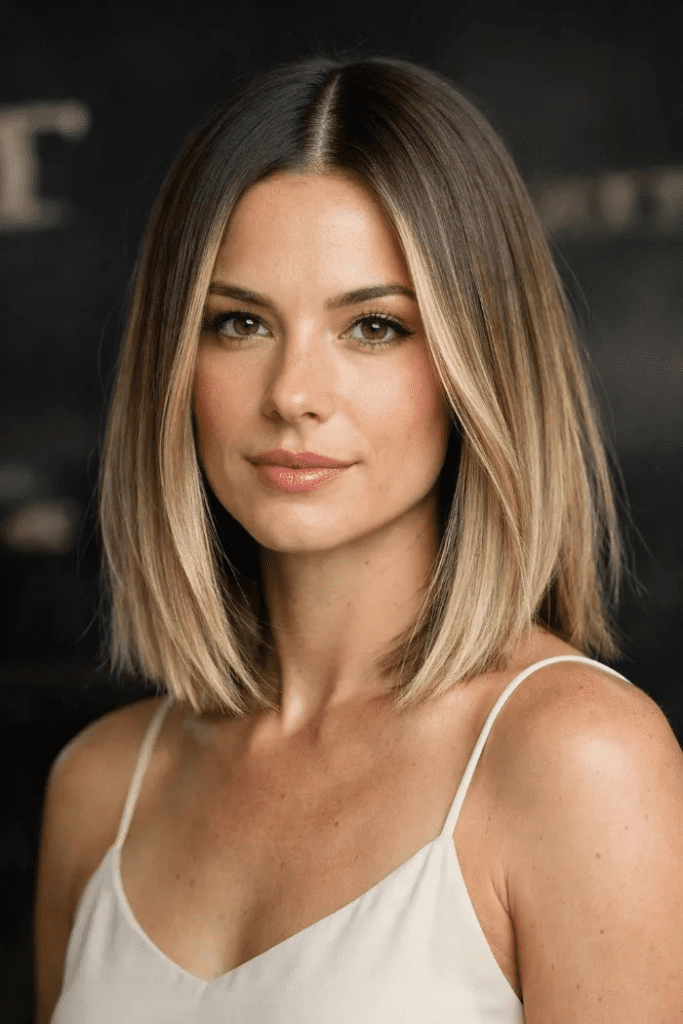
The center-parted lob is an exercise in precision and balance — both sides exactly even, the perimeter sharply defined, the overall impression one of intentional elegance. For thin hair, the clean, sharp hem is the crucial detail — it makes fine ends look dense and healthy in the most direct way possible. The center part creates symmetry that reads as confident and considered.
What to ask for: A clean, sharp perimeter at the lob length with minimal layers and a center part built into the cut. Ask for the ends to be as blunt as possible — no thinning shears. The sides should sit slightly forward toward the face for the most flattering framing effect.
Best for: Fine to very fine straight hair. The sleek center-parted lob works best on hair that lies naturally smooth and can be blown dry or flat ironed to a clean finish.
Styling tip: A lightweight smoothing serum worked through damp hair before blow-drying with a paddle brush, directing the hair smooth and straight. A flat iron through just the mid-lengths and ends sharpens the finish and makes the blunt hem look even more precise and dense.
Why it works: The center part with a clean, sharp hem creates one of the most graphic and deliberate looks in lob styling. The precision of the cut communicates that the thinness of the hair is a choice rather than a limitation — and that confidence reads as genuine fullness.
12. Sleek Long Lob With Blunt Ends

The sleek long lob pushes the length slightly further than the standard collarbone version — sitting at or just below the collarbone — while maintaining the blunt perimeter that makes thin hair look its fullest. At this length, the hair is approaching the range where weight starts to pull it flat, which is why the blunt ends are even more critical. The solid baseline creates enough visual density to counteract the natural transparency that fine hair develops at this length.
What to ask for: A solid, blunt baseline at the long lob length with tiny internal layers for movement — keeping the perimeter as strong as possible. Ask for no thinning shears through the ends or mid-lengths. A paddle brush blow-dry and shine spray on the finished ends gives the most polished result.
Best for: Fine to medium-fine hair. The long lob suits women who prefer slightly more length and are willing to prioritize the blunt perimeter to make it work for thin hair.
Styling tip: A paddle brush directing the hair smooth and straight during blow-drying gives the most polished, full finish for the long sleek lob. A light shine spray through the ends adds the luminous quality that distinguishes this from hair that was simply left to dry.
Why it works: The blunt ends at long lob length do the most work of any single detail in the cut — at this length, fine hair is genuinely at risk of looking stringy without a strong perimeter. The blunt hem prevents that outcome completely.
13. Soft Angled Lob With Face-Framing Layers
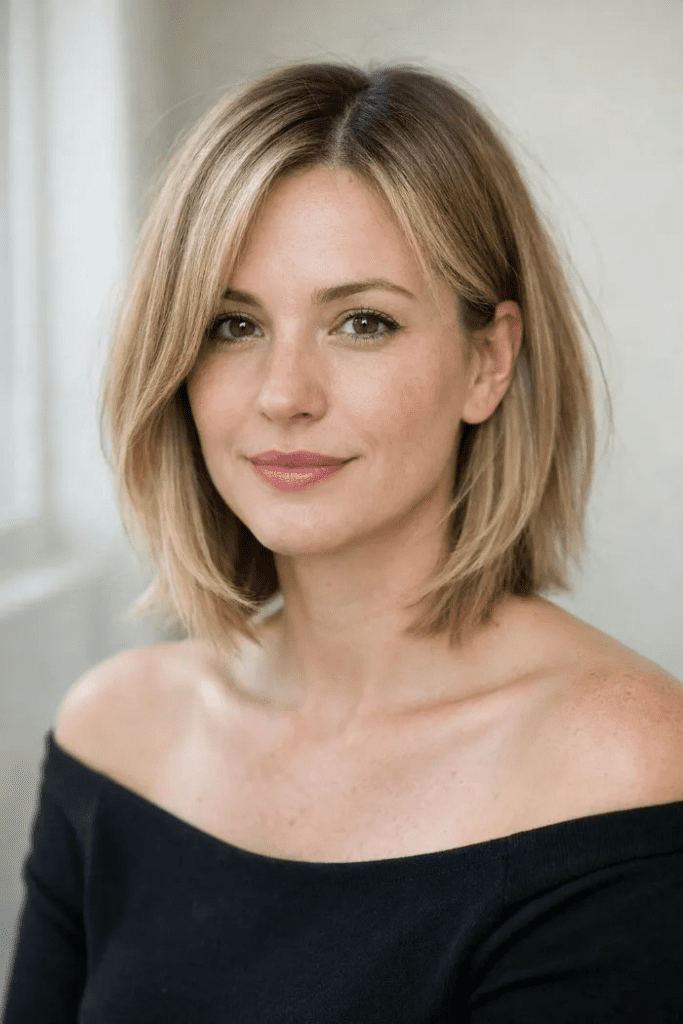
The soft angle on a lob — slightly shorter at the back and longer toward the front chin — creates a directional movement that brings visual weight toward the face and jaw. This forward emphasis makes the cut look thicker around the most visible area of the hair, and the face-framing layers reinforce that forward, face-adjacent fullness. The gentle bevel at the ends adds the final touch of movement.
What to ask for: A lob with a gentle angle from back to front — the front sections kept slightly longer — and face-framing layers concentrated at the front only. Ask for a gentle bevel at the ends rather than blunt cutting for the most natural angled movement. Keep any layering light and front-focused.
Best for: Fine to medium-fine hair. The angled lob is particularly flattering for women with round faces where the forward emphasis of the longer front sections adds length and direction.
Styling tip: A round brush directing the front sections slightly away from the face during blow-drying adds the volume and movement that the angled face-framing layers are designed to create. The bend should be outward rather than inward for the most flattering, open result.
Why it works: The angle creates visual weight at the front of the cut through geometry rather than through hair density — the longer front sections frame the jaw in a way that makes the hair look fuller and more substantial precisely where it is most visible.
14. Soft Natural Lob With Easy Volume
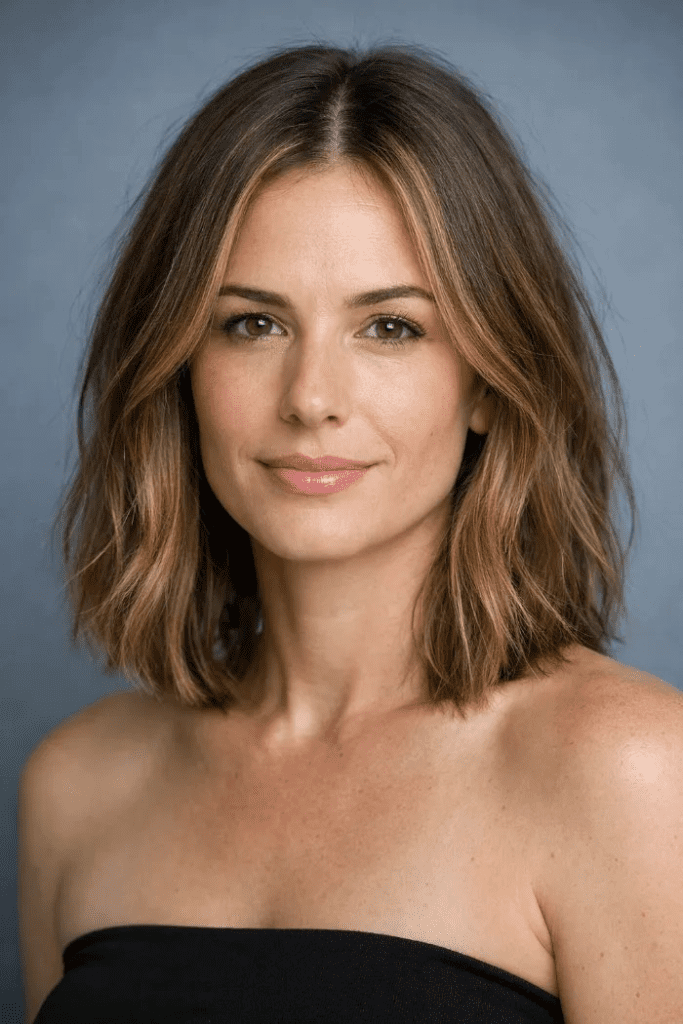
This is the low-maintenance thin hair lob — a soft, unfussy shape with light movement through the top and a perimeter that stays full enough to look present on days when the styling routine is minimal or nonexistent. It is the lob for women who want their hair to look naturally good rather than carefully constructed.
What to ask for: A collarbone-length lob with light movement through the top — not heavily layered, just enough to prevent the shape from sitting completely flat. Ask for a natural, relaxed finish rather than a precisely polished one. Keep the perimeter strong.
Best for: Fine to medium-fine hair with any natural tendency toward softness or movement. This cut works beautifully on hair that has some inherent character to work with.
Styling tip: A mousse worked through roots before air-drying gives natural lift and movement without any heat styling required. The soft, natural finish of the cut means that air-drying actually gives a better result than over-styling — this is one of the genuinely wash-and-go lob options.
Why it works: The soft natural lob works because it asks very little of thin hair while still giving it enough shape and movement to look intentional. It is the cut that makes thin hair look like it simply behaves this nicely naturally — which is always the most flattering impression a haircut can create.
15. Subtle Curved Lob

The subtle curved lob takes the tucked-under end concept and builds it into the cut itself — a soft under-bevel creates an automatic inward curve at the ends that looks polished and full without requiring precise daily blow-drying to achieve. The curve gives thin hair ends a contained, healthy-looking quality that makes them look denser than they actually are.
What to ask for: A blunt perimeter with a soft under-bevel — ask for the ends to be cut with a slight inward curl built into the cutting angle itself. The perimeter should remain strong and full. Ask your stylist to demonstrate the under-bevel technique before committing if you are unfamiliar with it.
Best for: Fine to medium-fine straight to slightly wavy hair. The under-bevel works best on hair that has a natural tendency to curl or bend at the ends.
Styling tip: A round brush rolling the ends under during blow-drying reinforces the built-in curve and gives the most polished, bouncy result. The curve should feel smooth and controlled rather than tight and flipped — a broad, gentle curve looks most flattering on thin hair.
Why it works: The inward curve at the ends creates visual weight through direction — the curving ends appear fuller and more present than flat, straight-hanging ends on the same amount of hair. The perimeter looks deliberate and healthy rather than simply cut.
16. Subtle Face-Framing Layers Lob
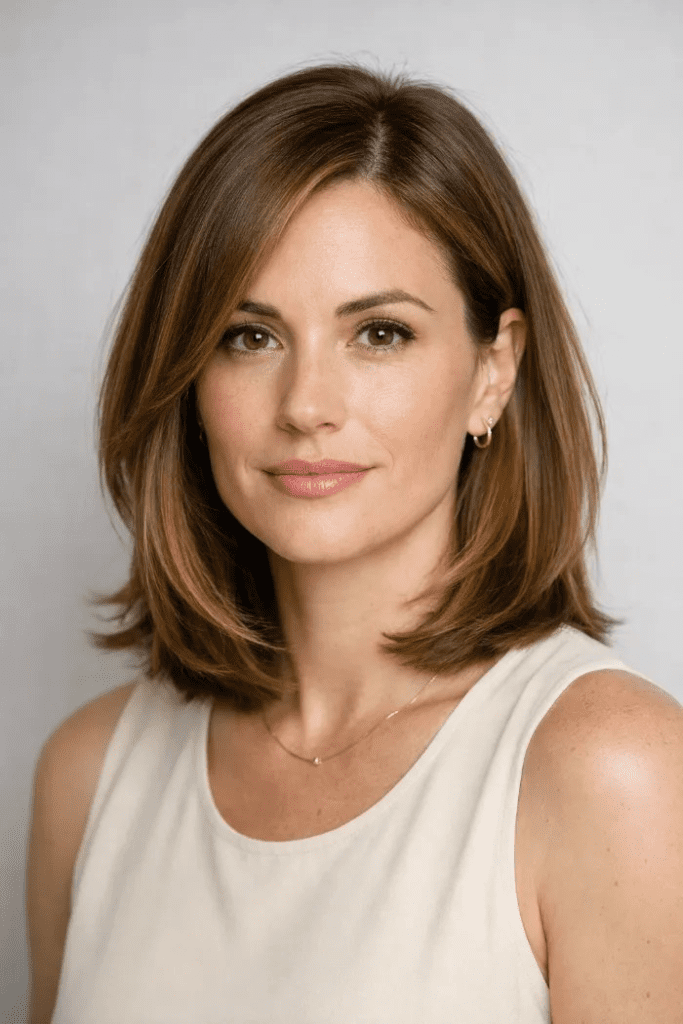
Face-framing layers on a lob add softness and visual interest at the most visible area of the cut — around the face — without removing the end density that thin hair needs. The back and sides stay full while the front sections are gently lightened for framing and definition. It is the compromise that gives thin hair the movement of a layered cut with the fullness of a more conservative one.
What to ask for: Long face-framing layers starting around the cheekbone level only — not distributed throughout the cut. Ask for the layers to be long rather than short and to blend naturally rather than being disconnected. The back and mid-section perimeter should remain as full as possible.
Best for: Most hair types within the fine category. Face-framing layers are one of the most universally flattering additions to a lob because they add visual interest through placement rather than through removing hair density.
Styling tip: A loose wave through the mid-lengths adds dimension that makes the face-framing layers look even more deliberate and beautiful. Keep the very ends slightly straighter than the mid-lengths — straight ends on wavy mid-lengths is a subtle trick that makes thin ends look more substantial.
Why it works: Face-framing layers draw the eye inward toward the face and upward toward the features — which is always the most flattering direction for visual attention to travel. On thin hair, this upward direction moves attention away from the ends where thinness is most visible.
17. Volumized Bob-Lob Hybrid

The bob-lob hybrid sits right at the upper edge of the lob range — shorter than a standard collarbone lob but longer than a traditional bob — and this specific length is genuinely the sweet spot for thin hair. The slight stack in the back creates structural volume through graduation while the clean perimeter maximizes end density. The result looks tidier and more polished than most lob options while having more movement than a standard bob.
What to ask for: A bob-lob hybrid with a slight stack in the back for volume and lift, and a clean, strong perimeter. Ask for the stacking to be soft rather than creating a dramatic wedge shape. A root spray and blowout gives the most polished, lasting volume result.
Best for: Fine to very fine hair. The bob-lob hybrid is particularly excellent for very fine hair that struggles to maintain fullness at a longer lob length — the shorter, stackier version is more forgiving and more reliably full.
Styling tip: A quick root spray at the crown before blow-drying, then a round brush lifting the top sections upward. The stacked back maintains its own volume through the graduation — the styling simply maximizes what the cut has built in.
Why it works: The graduation in the back creates structural volume that is far more reliable than product-created volume — it holds through the day regardless of humidity, activity, or how many times the hair has been touched. For thin hair that tends to fall flat by midday, structural volume is genuinely transformative.
18. Wavy Lob With Root Shadow
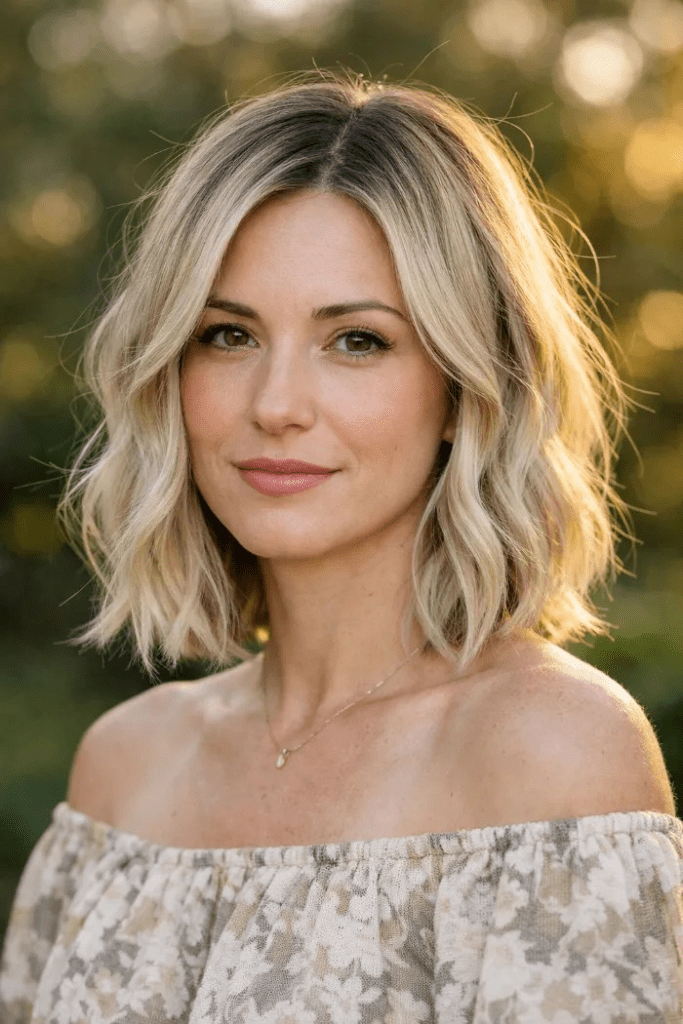
Combining a root shadow color technique with soft waves at lob length is one of the most complete and most effective thin hair transformations available without changing the cut dramatically. The root shadow adds depth and density at the scalp. The waves add dimension and movement through the length. Together they create a result that looks fuller, healthier, and more beautiful on camera and in person.
What to ask for: A blunt-ish baseline with light layers only, and a root shadow color technique that adds depth at the scalp with a gradual, natural-looking transition. Ask for the waves to be soft and spaced — loose and relaxed rather than tight or uniform. Finish with texture spray through dry hair.
Best for: Fine to medium-fine hair, particularly on lighter color bases where the root shadow contrast is most visible and most flattering.
Styling tip: A texturizing spray through dry hair after styling adds the final dimension and grip that makes the waves look their most natural and most lived-in. Scrunch the ends lightly to separate the wave pieces rather than letting them fall in one heavy shape.
Why it works: The root shadow plus waves combination addresses thin hair challenges at every level simultaneously — depth at the scalp makes it look denser, waves through the length make it look fuller, and the textured finish makes it look more present at the ends. It is the most comprehensive thin hair solution in this guide.
19. Wavy Lob With Soft Bangs

Soft bangs on a wavy lob create an immediate fullness effect at the front of the hairline that makes thin hair look significantly more present around the face. Wispy, brow-skimming bangs that open slightly at the center add forward coverage without requiring any density to look flattering — they are specifically designed to suit fine hair. Combined with the movement of a wavy lob, the whole cut has a warmth and completeness that thin hair without bangs sometimes lacks.
What to ask for: A wavy lob with wispy bangs that hit the brow and open slightly at the center — ask for the bangs to be cut with thinning shears for maximum lightness and to blend naturally into the front layers. Light internal layers for wave support. Ask specifically for the bangs to feel lightweight rather than full and heavy.
Best for: Fine to medium-fine hair. Wispy brow-skimming bangs are one of the most flattering fringe options for thin hair because they are specifically designed to be light — they do not require density to look intentional and beautiful.
Styling tip: A light diffuse through the waves first, then a small round brush on the bangs only to direct them forward and slightly down. A tiny amount of curl cream through the fingertips on the bangs pieces separates them lightly for the most flattering wispy finish.
Why it works: Soft brow-skimming bangs frame the eyes and add visual coverage at the hairline where thin hair most commonly reveals thinning. The wispy quality of the bangs suits fine hair’s natural lightness — they look like they belong to the hair rather than being imposed on it.
How to Choose the Right Thin Hair Lob
If end density is your biggest concern: The blunt bob-lob (#4), the sleek long lob with blunt ends (#12), the clean center-parted lob (#11), and the subtle curved lob (#15) all prioritize a strong, dense-looking perimeter above everything else.
If crown flatness is your biggest concern: The deep side-part sleek lob (#1), the volumized bob-lob hybrid (#17), the layered lob with side-swept bang (#5), and the airy layered lob with warm highlights (#6) all specifically address crown lift and volume.
If you want color to do extra work: The root melt wavy lob (#2), the root shadow wavy lob (#18), and the warm highlights lob (#6) all use color techniques to add perceived density that the cut alone cannot create.
If low maintenance is the priority: The soft natural lob (#14), the piecey blonde lob (#8), and the subtle face-framing layers lob (#16) all look good with minimal daily styling.
What to Tell Your Stylist
Three things that make the biggest difference for thin hair at a lob appointment.
Say “please keep the perimeter as strong as possible.” This single instruction prevents the most common mistake for thin hair — over-thinning the ends with thinning shears that leave the perimeter wispy and sparse.
Specify where you want layers. Crown only. Face frame only. Not throughout. Being explicit about placement prevents well-intentioned layering that removes end weight thin hair cannot spare.
Bring photos of thin hair specifically. A photo taken on thick or medium hair shows a lob that will behave very differently on your hair. Finding photos on similar density hair gives your stylist the most accurate reference for how the cut will actually perform.
Final Thoughts
A great lob for thin hair should make your hair feel easier and look fuller without requiring a complicated daily routine or elaborate styling technique. The right shape, the right perimeter approach, and a color technique if needed — those three things together do far more for thin hair than any product or styling tool.
At the collarbone length, thin hair is at its most naturally favorable point — enough weight for the ends to look present, enough length for the cut to have movement and face-framing softness. Start here. Keep the perimeter strong. Layer only where it genuinely helps — crown and face frame. And enjoy having a lob that looks genuinely full and beautiful on a regular Tuesday morning.
Should I get layers if my hair is thin?
Yes — but the type and placement matter enormously. Subtle, blended layers at the crown and face frame add lift and movement where thin hair needs it most without removing the end density that makes thin hair look full. If your hair is very fine, a mostly blunt perimeter with crown-only layering is the most reliable approach. The mistake to avoid is distributing layers evenly throughout the entire cut, which removes weight everywhere and leaves nothing dense enough to look present at the ends.
What lob length looks thickest on thin hair?
The collarbone is the sweet spot — at this length, thin hair has enough natural weight to hold a shape and maintain end density without being so long that it starts to look stringy and transparent. If you want even more fullness, slightly above the collarbone gives even stronger end density. Going significantly longer than the collarbone tends to reveal thinness at the ends on very fine hair.
How do I style a lob to look fuller all day?
Start with lift at the roots — a root spray or volumizing mousse applied before blow-drying is the most effective single step. Blow-dry with a round brush lifting the crown sections upward. Flip your part to the opposite side from usual for instant root volume. Keep any texture in the mid-lengths soft and spaced rather than tight — loose waves on a thin hair lob always look fuller than tight curls that emphasize how little density is in each strand. Finish with a light texturizing spray rather than heavy serum or oil.
Does color really make thin hair look fuller at lob length?
Yes — and it is one of the most underused tools for thin hair fullness. A root shadow or root melt adds depth at the scalp that makes the hair appear denser from the roots down. Warm highlights create light and shadow variation within the strands that makes the hair look more textured and dimensional even when completely straight. The visual depth that color creates is something the cut and styling alone simply cannot replicate.
How often should a lob for thin hair be trimmed?
Every six to eight weeks for most thin hair lob lengths. The blunt perimeters that make thin hair lobs look their best lose their defining edge as the hair grows, and a lob that has grown out by an inch often looks noticeably different from a freshly cut one on thin hair. Regular trims maintain the strong perimeter line that creates the fullness illusion — they are genuinely more important for thin hair than for thicker hair precisely because thin hair relies more heavily on the precision of the cut.