18 Chic Pixie Hairstyles for Black Women That Look Polished, Bold, and Completely You
A pixie cut is one of the most transformative haircut decisions available — and for Black women specifically, the range of what a pixie can be is exceptionally wide. Close-cropped TWAs with natural coils. Sleek side-swept cuts with a clean taper. Undercut pixies with a long, sweeping top. Finger-waved styles that look like something from a vintage fashion spread. Copper-highlighted crops that read as genuinely expensive the moment you walk into a room.
What unites all of them is a specific kind of confidence that a well-cut pixie produces. Less hair to manage means more face on display, which is exactly as flattering as it sounds when the cut is right. The right pixie doesn’t just remove length — it creates a shape that works with your specific features, your natural texture, and your actual daily routine.
The 18 styles below cover every version of that — from soft and feminine to sharp and editorial — so you can find the pixie that feels like your most natural and authentic self rather than a departure from it.
What Makes a Pixie Work for Black Hair
The conversation around pixie cuts on Black hair is more nuanced than the general conversation around pixie cuts because the texture range is so wide. What makes a coily TWA pixie look its best is different from what makes a sleek side-swept pixie perform well, and both are different from what makes an undercut pixie with a long top look sharp and intentional.
For natural texture pixies — TWAs, coily crops, curly fringe styles — the key is a shape that works with the curl’s natural growth pattern rather than trying to impose a silhouette the hair won’t hold naturally. A rounded outline that accommodates the coil’s natural direction, a hairline that’s left natural rather than over-sculpted, and products that define without flattening are the three elements that make natural texture pixies look their best.
For sleek and tapered pixies — side-swept styles, slicked styles, tapered nape cuts — the key is the precision of the taper and the cleanliness of the finish. A soft gradient at the nape rather than a harsh line, a natural hairline finish rather than an overly sculpted edge-up, and products that produce shine without a hard gel helmet are what separate these styles from looking overdone.
For editorial and dimensional pixies — undercuts, shaved sides, finger waves, platinum or copper color — the key is the one strong design element doing the work while everything else stays clean and secondary. A shaved side design needs a clean smooth top. Finger waves need smooth S-curves rather than stiff ridges. Platinum needs purple shampoo and leave-in protection.
18 Pixie Hairstyles for Black Women
1. Platinum Crop Pixie
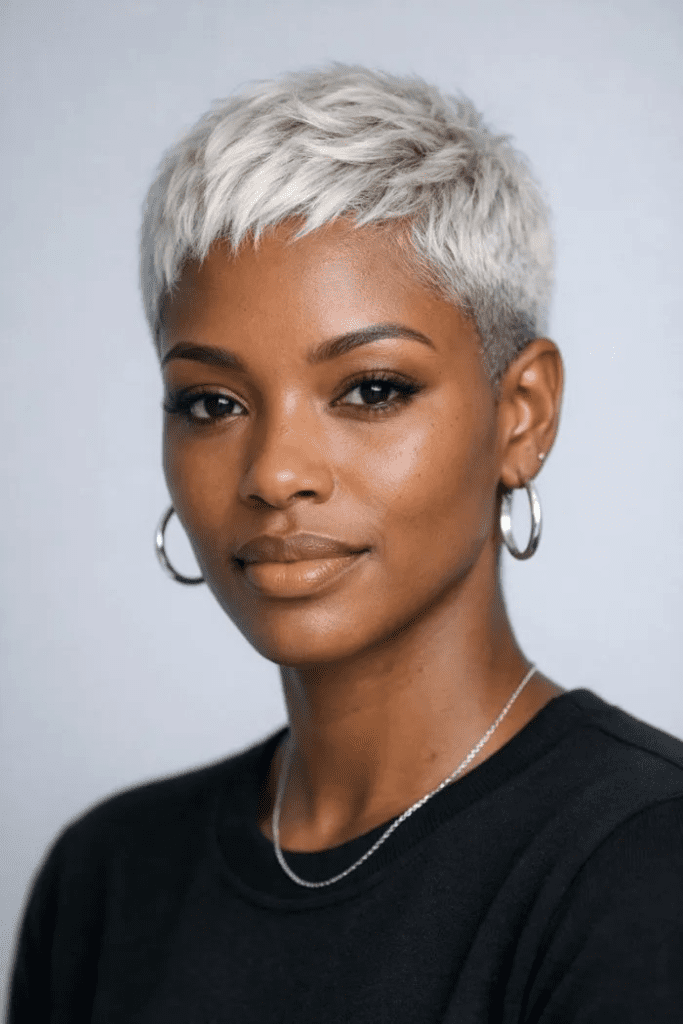
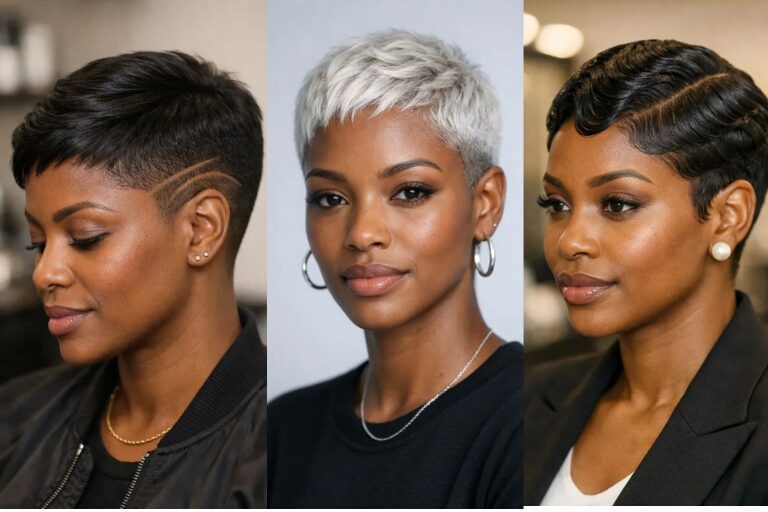
A platinum-blonde pixie that turns a clean, simple crop into an immediate statement — the lightness of the platinum against deeper skin tones produces one of the most striking contrasts available in short hair styling. The texture through the top should stay soft and slightly piecey rather than spiky, which keeps the dramatic color from reading as harsh rather than intentional.
Ask for: Light texture through the top rather than stiff or dramatically layered styling. Purple shampoo once a week and a leave-in conditioner to maintain the tone and prevent dryness — platinum hair needs consistent moisture attention that naturally darker shades don’t.
Best for: Women who want maximum visual impact from a single styling decision. Works across most face shapes and is particularly striking on warm and deep skin tones.
2. Classic Side-Part Pixie
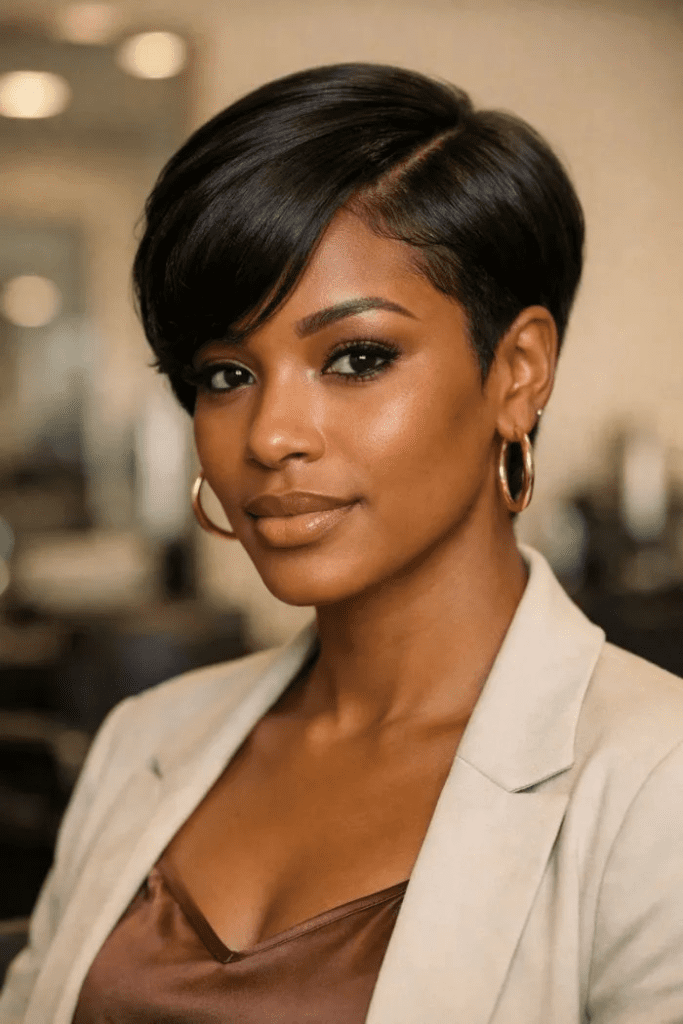
A neat, well-executed side part on a smooth pixie — this is the most timeless and professionally versatile pixie on this list. The side part creates immediate root lift and a directional shape that reads as deliberate and polished even when the styling routine behind it was minimal. This is the pixie for women who want their hair to look put-together without effort.
Ask for: A clean side part established before any styling, smooth top section without aggressive layering, and a subtle taper that allows the style to grow out neatly. Light mousse and a nightly wrap to maintain the sleek quality.
Best for: Professional environments, everyday wear, and women who want a pixie that looks consistently excellent with minimal daily attention.
3. TWA Coily Pixie
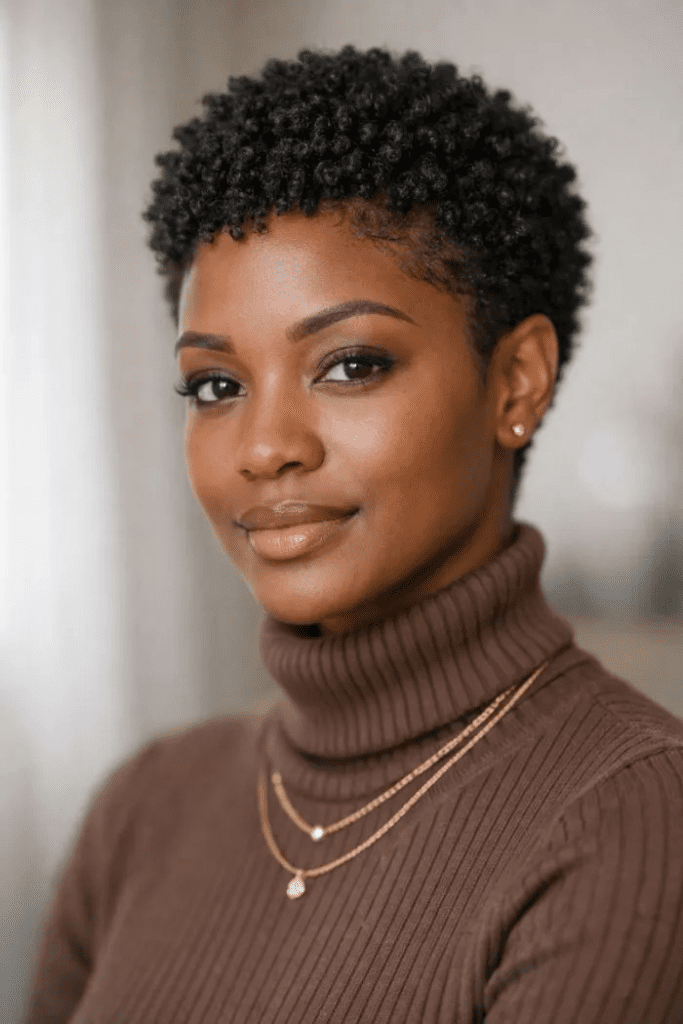
Short natural coils with a soft, rounded outline that follows the hair’s natural growth pattern — this style celebrates the coil’s inherent beauty rather than trying to alter it, and the result is a pixie that looks genuinely healthy, fresh, and intentional without requiring any heat styling or heavy product application. The hairline is kept natural rather than sculpted, which is specifically important for coil-textured hair’s health and appearance.
Ask for: A shape that accommodates the natural coil direction rather than working against it. A leave-in conditioner and a small amount of curl cream for moisture and definition, then air-dried for the most natural finish.
Best for: Natural hair wearers who want a truly low-maintenance pixie that looks better air-dried than styled. The most wash-and-go option on this list.
4. Curly Fringe Pixie
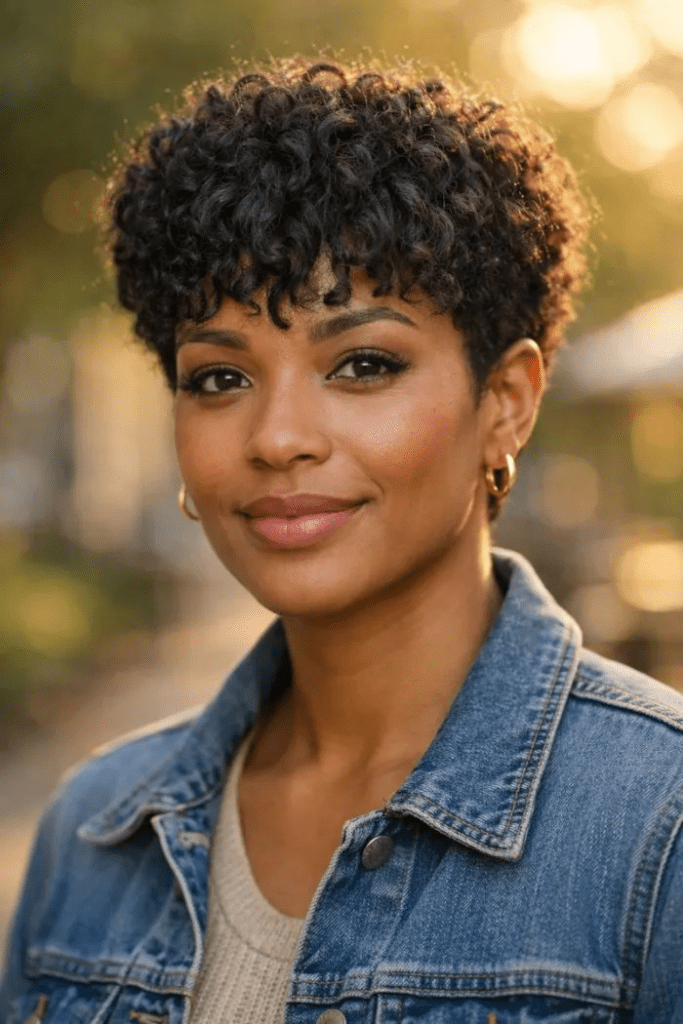
Curls concentrated and allowed to grow at the crown and front into a short, face-brightening curly fringe while the sides stay close and tidy — the contrast between the full curly top and the close sides creates the characteristic pixie silhouette while celebrating the curl pattern’s natural texture. The curly fringe frames the face in a way that a flat or straight fringe can’t replicate.
Ask for: Sides kept close to provide contrast with the full curly top. Diffuse after applying a light gel or curl cream for lift and definition rather than weight. The fringe should be left to curl naturally rather than stretched or flattened.
Best for: Women with defined curl patterns who want a short style that showcases their natural texture as the primary design element.
5. Piecey Textured Pixie
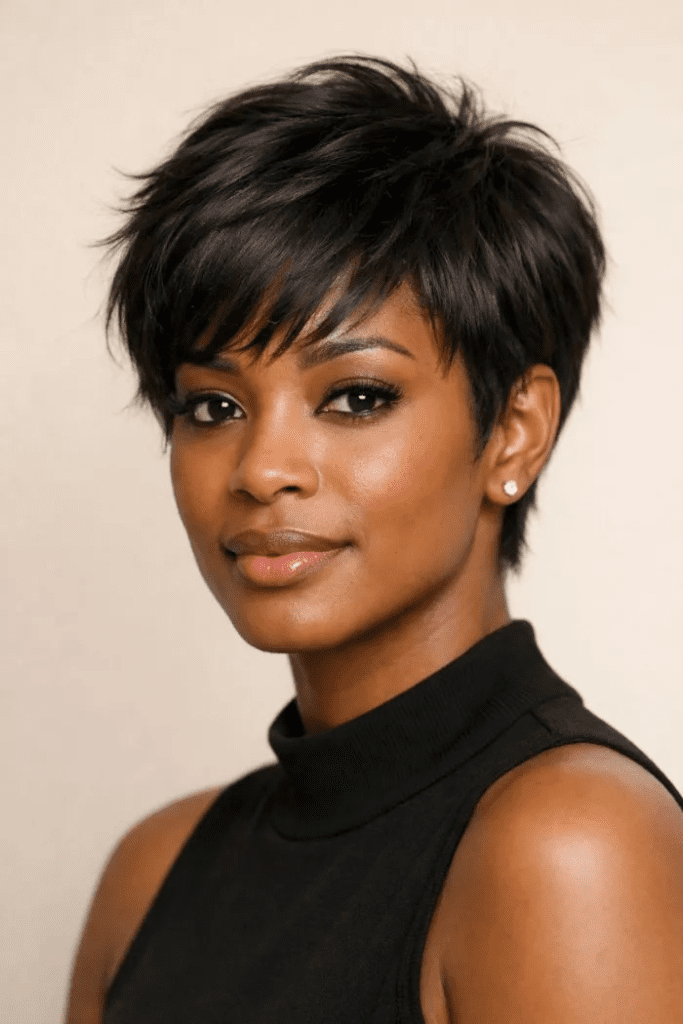
Feathered layers through a pixie that create a light, slightly undone finish — the piecey quality gives the pixie movement and personality that a smooth or sleek version doesn’t have, and for women who find heavily styled or stiff pixies uncomfortable or inauthentic, this textured version feels significantly more natural and wearable.
Ask for: Feathered layering through the top and crown for natural movement. A small amount of texture paste worked through with fingers, ends pinched for separation rather than combed smooth.
Best for: Women who prefer a relaxed, natural-looking finish. Works well on fine to medium textures that have enough natural movement to support the piecey quality.
6. Asymmetrical Fringe Pixie
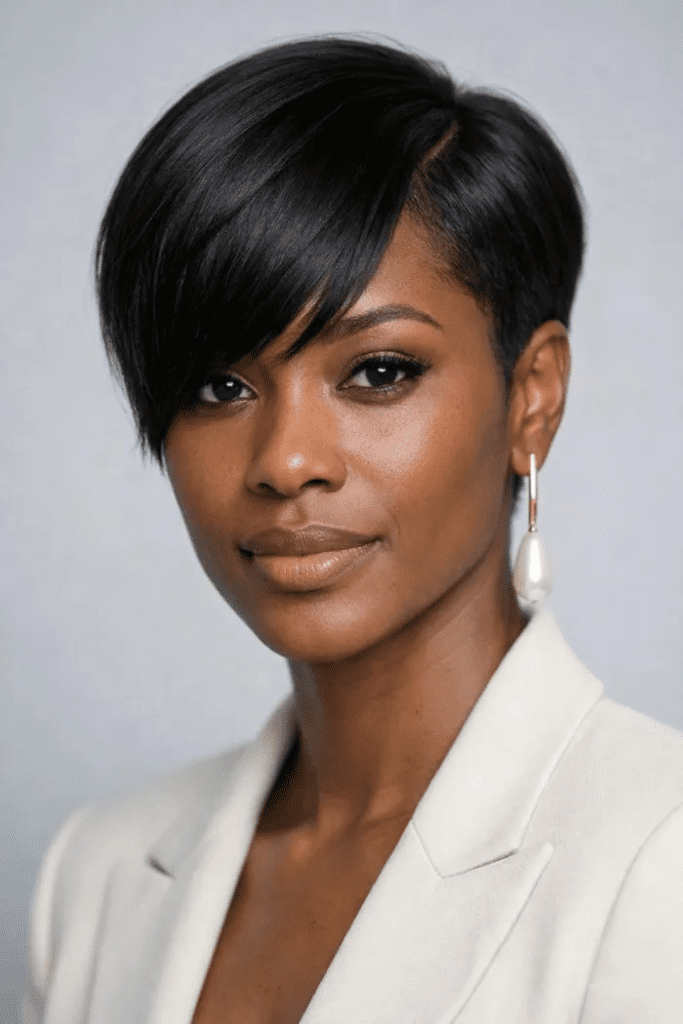
A longer front section that sweeps across the forehead on one side while the other side stays shorter and close — the asymmetry creates directional interest that draws the eye toward the face’s best features, and the longer front fringe specifically draws attention toward the cheekbones and eyes. For fine hair specifically, gentle layering through the fringe section prevents it from collapsing flat.
Ask for: A longer front fringe with gentle layering so it moves rather than sits flat. The shorter side kept close for the contrast that makes the longer fringe read as intentional. A deep side part to maximize the sweep effect.
Best for: Women who want a pixie with face-framing drama and a specifically modern quality. Works across most face shapes, particularly flattering on round faces where the diagonal sweep creates elongation.
7. Edgy Spiky Pixie
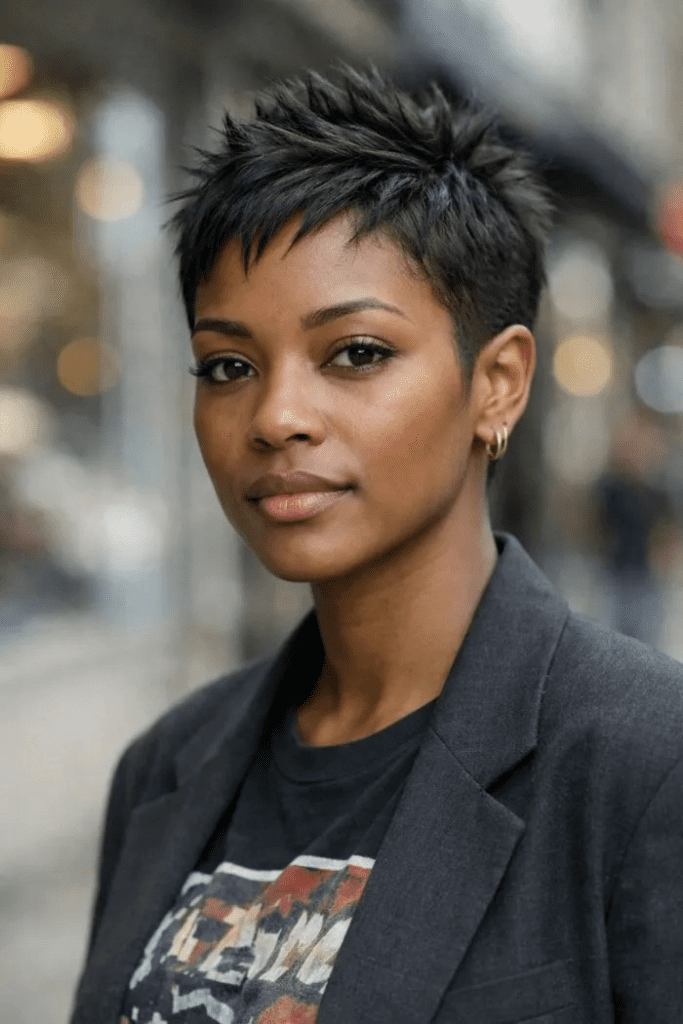
A choppy, lifted top section that creates upward movement and attitude while the sides stay tight and close for contrast — the spiky quality here should read as deliberate and textured rather than accidental or frizzy, which is entirely a product distinction. Matte clay rather than gel prevents the stiff, crunchy quality that undermines this style’s intentionally lived-in finish.
Ask for: Choppy layers through the crown for texture and lift potential, tight sides for contrast. Matte clay worked through with fingers and pulled upward for the lifted quality. Not gel — matte clay specifically produces the right finish.
Best for: Women who want a pixie with personality and edge. Works best on medium textures that can hold a lifted position without either collapsing flat or going stiff.
8. Finger-Wave Pixie
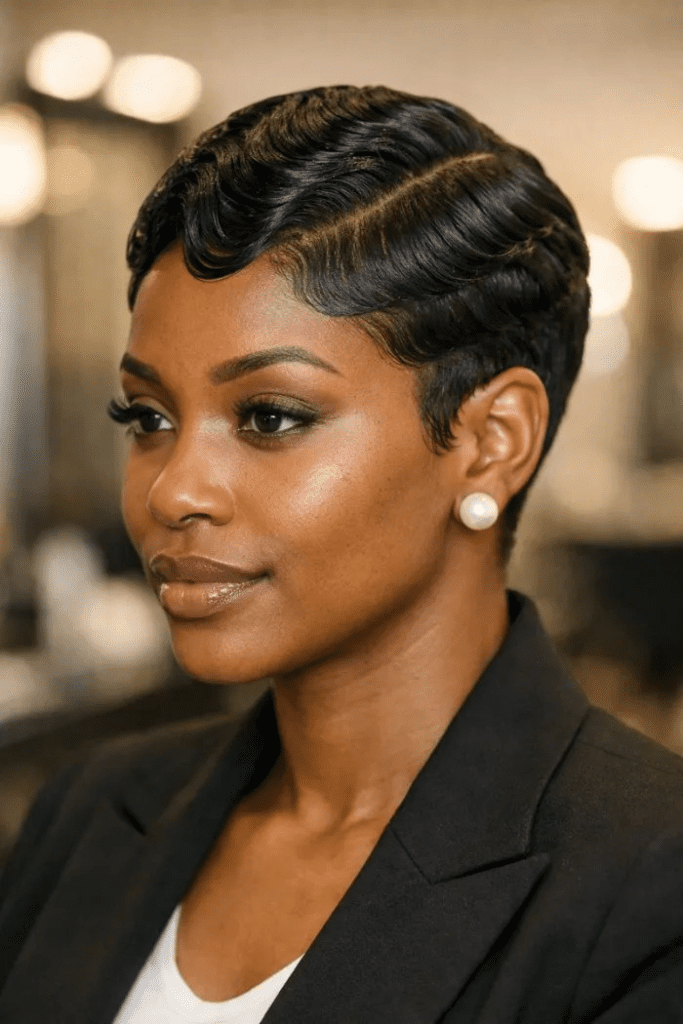
Smooth, defined S-curves across a short pixie — this style has the most formal and vintage-inspired quality of any pixie on this list, reading as genuinely dressed-up and special-occasion-appropriate without requiring length. The key distinction between elegant finger waves and stiff ones is the slight irregularity in the S-curves and a light rather than heavy setting product.
Ask for: S-curves with natural slight variation rather than perfectly uniform ridges. Light setting foam rather than heavy gel — the waves should be defined but not rigid. A satin scarf wrap to set and maintain the curves.
Best for: Events, formal occasions, and women who want their short hair to look unmistakably deliberate and sophisticated. One of the most photographically striking styles on this list.
9. Honey-Highlight Pixie
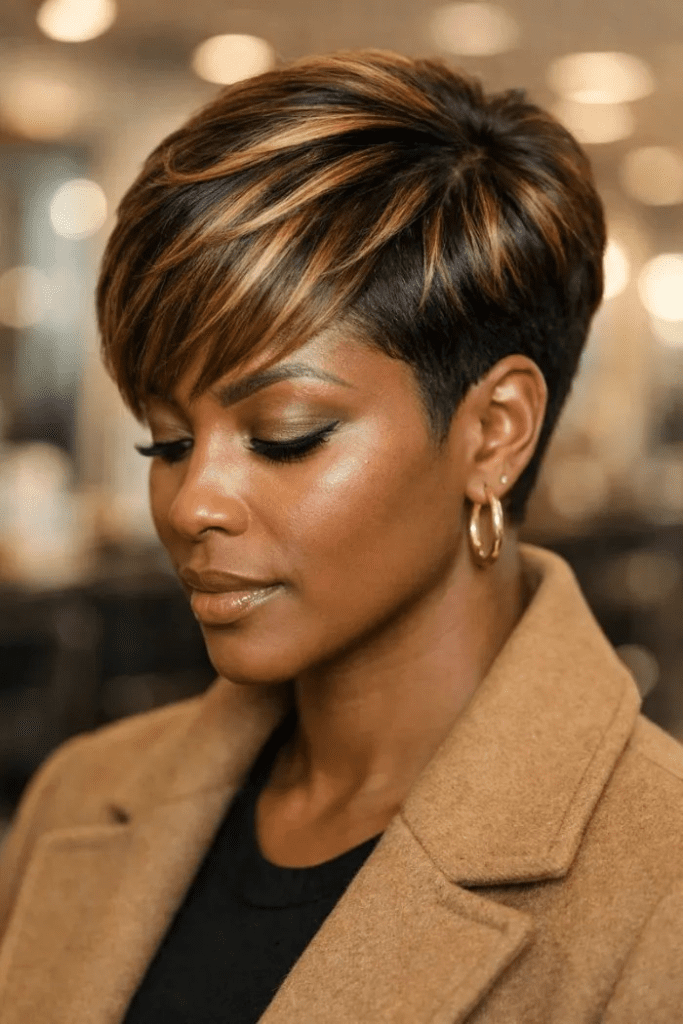
Warm honey-toned highlights ribboned through the top of a pixie cut — the honey highlights create dimension and a warm glow that specifically flatters a wide range of skin tones, and on a pixie’s shorter length, even thin highlights are immediately visible and impactful because every section of hair is within the close viewing range.
Ask for: Blended ribbon highlights rather than obvious sections — the honey tones should look like they’re built into the hair rather than placed on top of it. A darker base through the sides and back to create depth that makes the highlighted top read as more dimensional.
Best for: Women who want to add a color element to their pixie without going dramatically different from their natural color. Works as a softer alternative to full platinum or copper.
10. Soft Pixie-Bob Hybrid

A cut that sits between a pixie and a bob — the back and sides have pixie-length closeness while the front sections maintain enough length to frame the face and create softness. This is the ideal transition cut for women growing out a pixie or approaching a pixie from a bob, because it provides the lightness and ease of a short cut with the face-framing quality of a longer one.
Ask for: Pixie-length back and sides with longer face-framing front sections. A round brush blow-dry for a polished finish or air-dried for a relaxed one — this cut performs well with both approaches.
Best for: Women who want to go short without going fully committed pixie-short. A low-risk starting point that grows gracefully in either direction.
11. Rich Copper Side-Swept Pixie
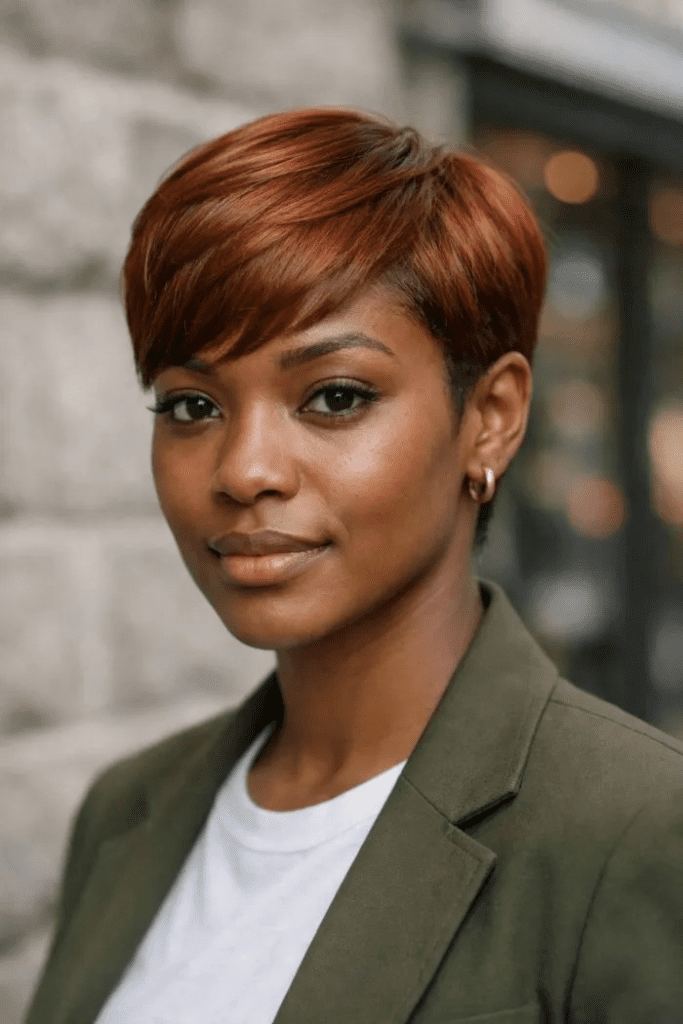
A deep, warm copper tone on a side-swept pixie with a clean taper around the ears — the copper shade specifically warms the skin tone it sits against, making this one of the most flattering color-plus-cut combinations on this list. The side sweep and deep side part show off the color’s richness, and the clean taper keeps the overall shape sharp.
Ask for: A deep copper rather than a bright orange-red — the richness is what makes it look expensive rather than simply colored. A lightweight serum for controlled shine rather than heavy oil, which can make copper tones look flat.
Best for: Women who want color that enhances rather than simply changes. Particularly beautiful on warm and medium-deep skin tones where the copper creates complementary warmth.
12. Shaved-Side Pixie With Design Lines
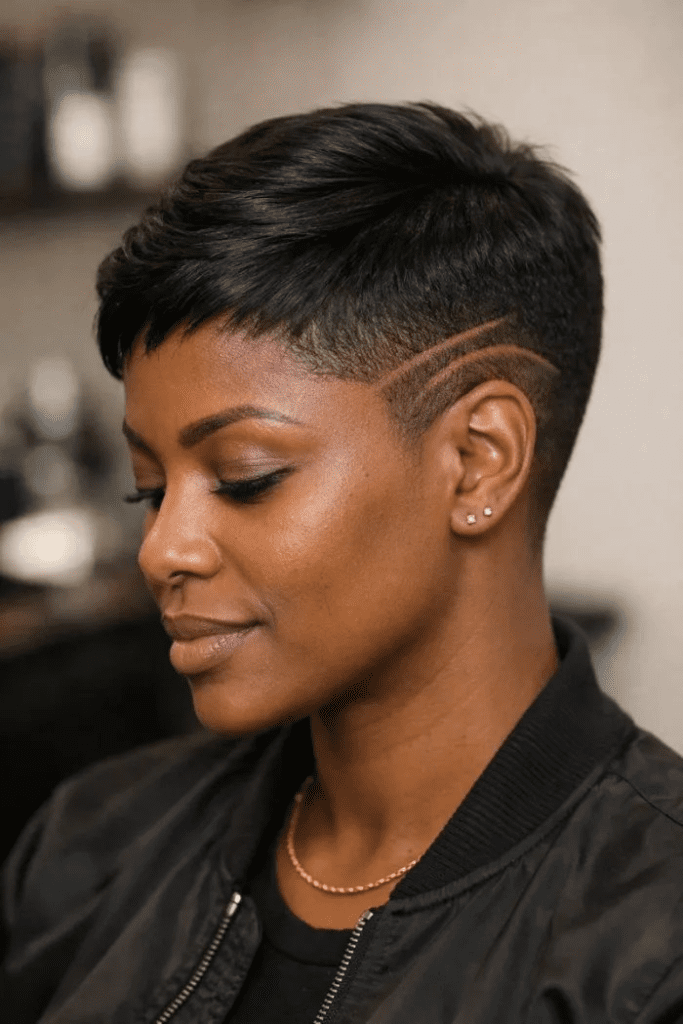
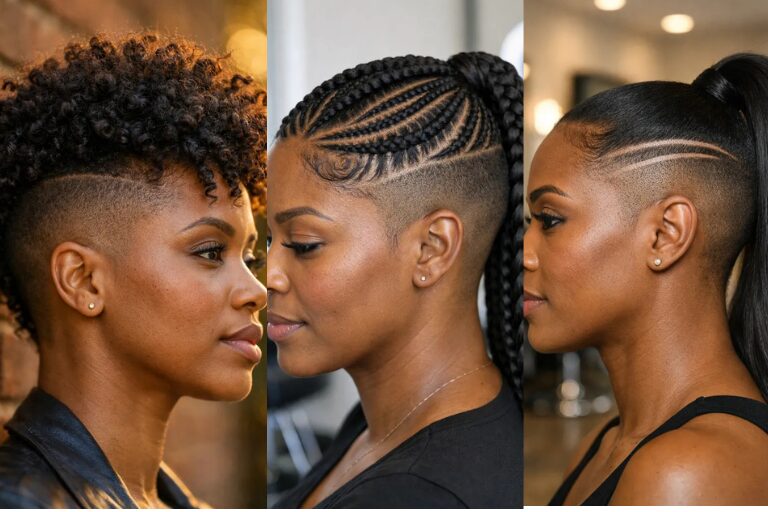
A shaved side section with custom razor design lines cut into it — this is the most bold and individualistic pixie on the list, creating a look that’s genuinely unique to the person wearing it. The design lines are the focal point, so the top stays smooth and relatively understated to give the side section visual space.
Ask for: Design confirmed and mapped before any shaving starts — this conversation is the most important one before this style begins. Clean, smooth top to provide contrast. Plan for frequent touch-ups since razor line designs blur quickly as the hair grows.
Best for: Women who want their haircut to function as genuine self-expression and individual artistry. The most distinctive and personally customizable option on this list.
13. Pixie With Micro Fringe
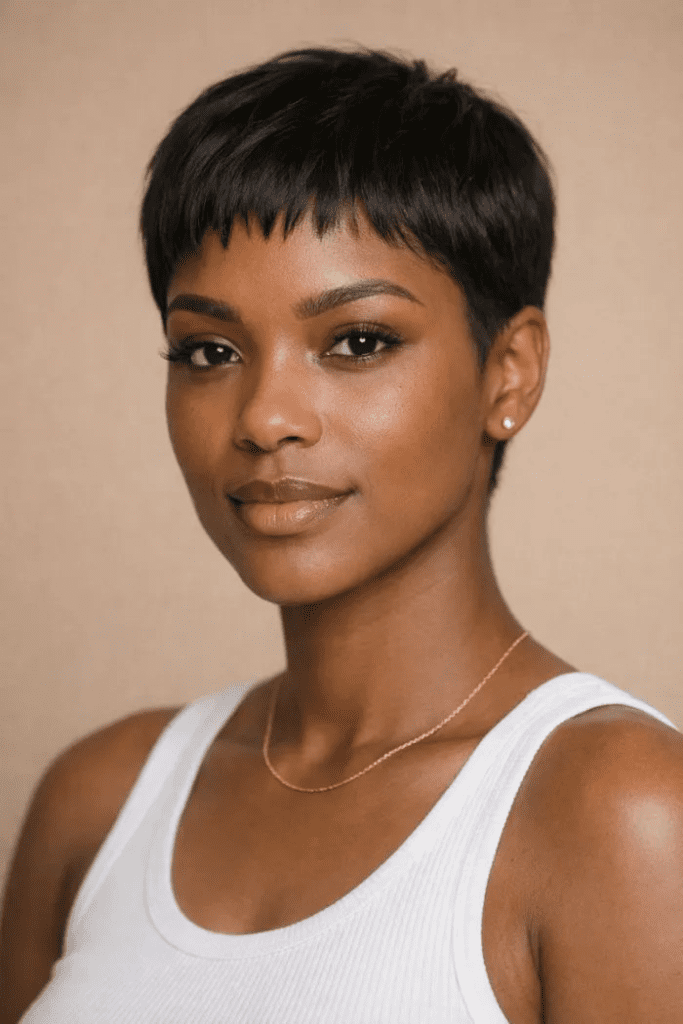
A tapered, close-cropped pixie with a short micro fringe that sits above the brows and draws immediate attention to the eye and brow area — the micro fringe makes the pixie feel modern and artsy, and the slight irregularity in the fringe (rather than a perfectly stamped-on hard line) is what makes it look genuine rather than theatrical.
Ask for: A micro fringe with slight irregularity rather than a perfectly blunt line. Tapered sides to keep the overall shape clean and the micro fringe as the clear focal point. A small flat brush to lay the fringe neatly if desired.
Best for: Women who want an unmistakably contemporary pixie with a fashion-forward detail. Works across most face shapes and hair textures.
14. Clean Tapered-Nape Pixie
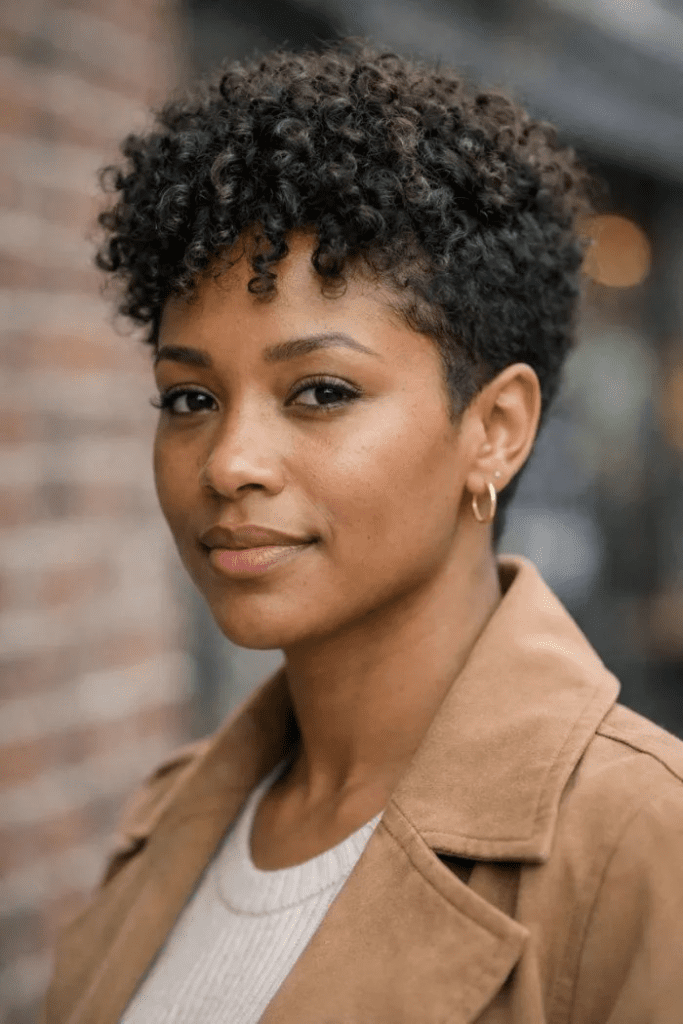
A pixie where the primary styling investment is in the nape — a soft gradient taper at the back that keeps the silhouette clean and intentional from every angle and grows out significantly more gracefully than a hard line would. This cut looks polished from behind as much as from the front, which is specifically valuable for shorter hair where the back is as visible as any other section.
Ask for: A soft gradient taper rather than a hard line — ask your stylist to blend the taper smoothly. The transition should look like the hair grows naturally shorter toward the nape rather than being cut to a specific point.
Best for: Women who want a consistently clean and professional pixie that looks as good growing out as it does immediately after the appointment.
15. Sleek Side-Swept Pixie
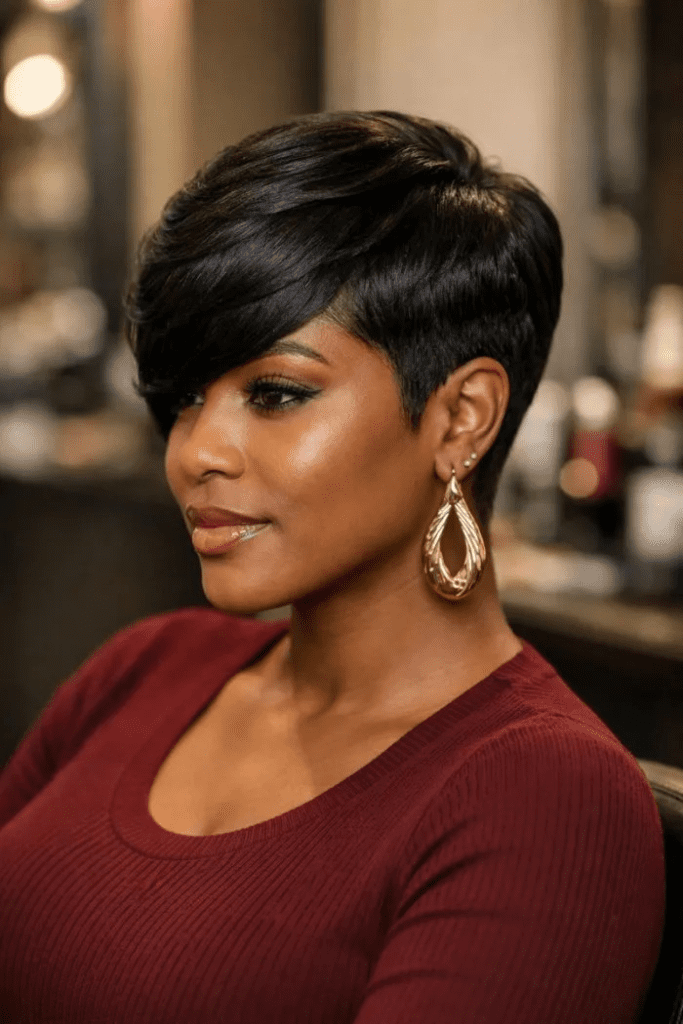
A close, clean side with the top section swept forward for face-framing drama — the side-swept top draws the eye directly toward the face’s most expressive features, and the subtle taper at the nape keeps the back of the cut as sharp as the front. This reads as polished and styled even when the actual styling time was minimal.
Ask for: Clean, close sides and a subtle taper at the nape. The top section given enough length to sweep forward convincingly. A light pomade or styling cream for hold without stiffness.
Best for: Professional settings and daily wear where looking polished and intentional is the priority. One of the most consistently flattering pixies across different occasions.
16. Ultra-Short TWA Pixie
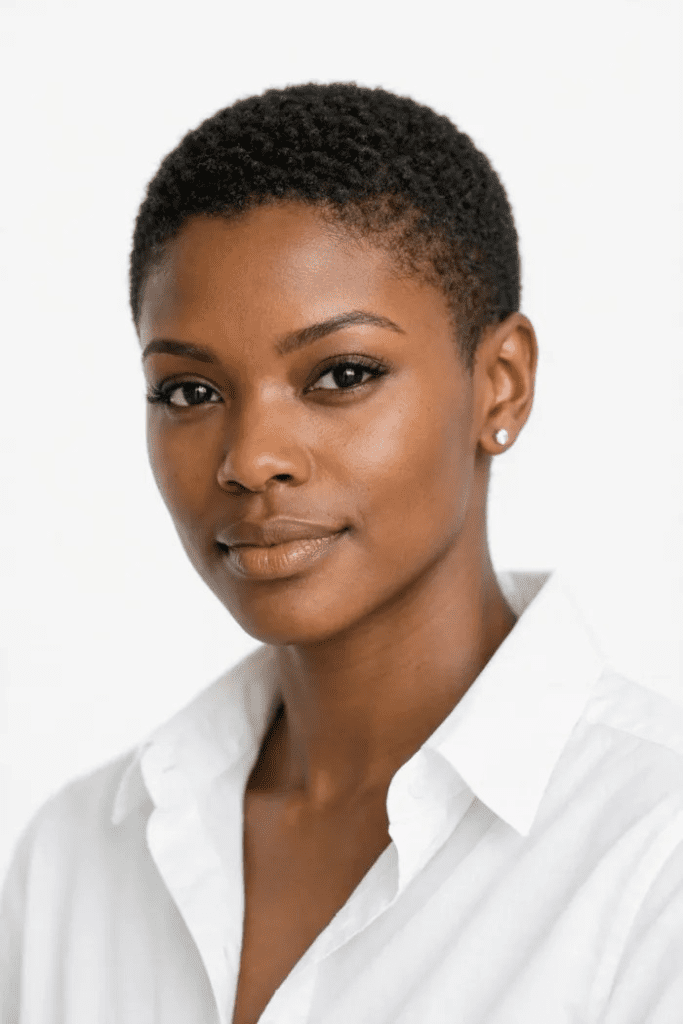
A very close, rounded TWA shape with a gentle taper at the sides — the definition of intentional simplicity. The shape is what makes this look deliberate rather than simply uncut: a soft rounded outline, consistent density, and edges that are finished naturally rather than overly sculpted. This is the lowest-maintenance option on the list and one of the most universally flattering for women with coily and tightly textured hair.
Ask for: A rounded shape with a gentle taper — not a harsh line. Edges kept natural rather than heavily sculpted. Daily moisture with a leave-in and a light oil to prevent dryness on the closely cut scalp.
Best for: Women who want the most minimal possible daily routine. The TWA pixie at its shortest and most effortless.
17. Undercut Pixie With Long Top
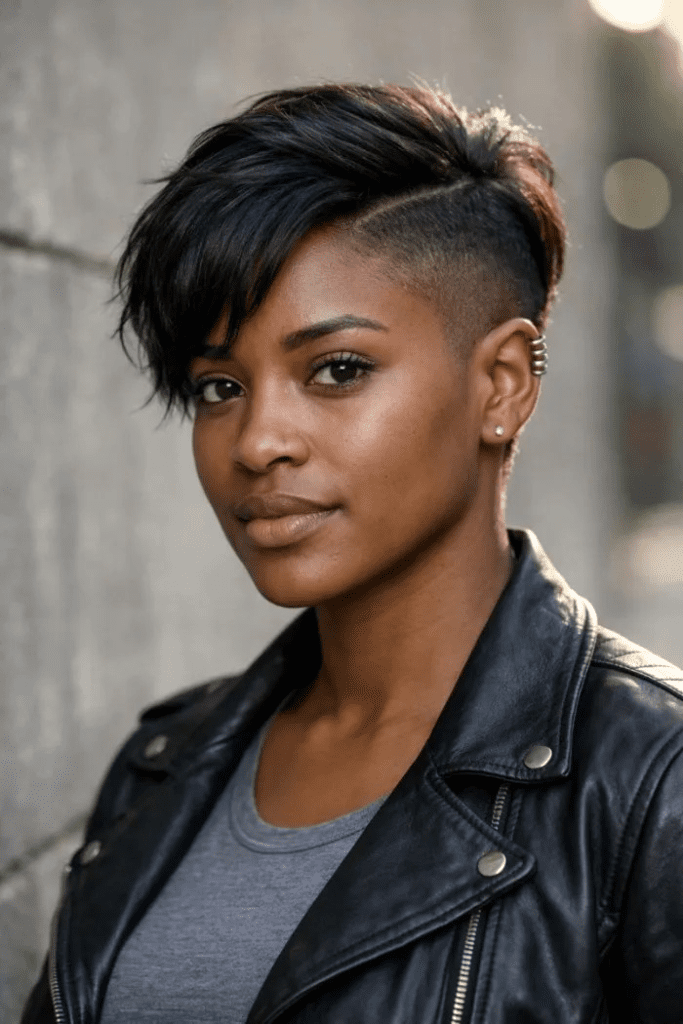
A closely buzzed or shaved undercut at the sides and back with a significantly longer top section that can be swept, styled, or directed in multiple ways — this is the boldest structural contrast on the list, and the contrast is what produces the pixie’s most dramatic visual impact. The longer top provides the femininity and styling flexibility while the undercut provides the edge.
Ask for: A clean undercut at the sides and back with enough top length to be styled forward, to the side, or lifted. A blow-dry with light pomade and one side tucked behind the ear for the most flattering everyday interpretation.
Best for: Women who want a pixie with the highest possible contrast and the most styling flexibility. Works for women comfortable with a definitively bold aesthetic statement.
18. Slicked Wet-Look Pixie
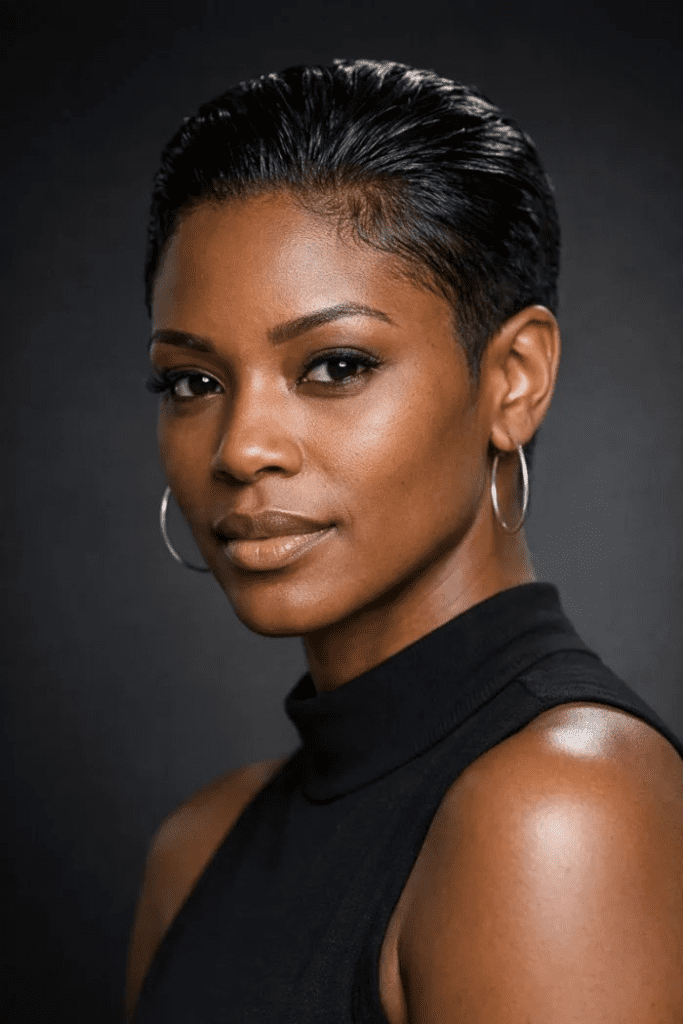
A high-shine, slicked-back or slicked-forward pixie with an editorial, fashion-forward quality — the wet-look finish transforms even a simple pixie into something that reads as special and deliberate. The key is using a water-based shine gel rather than a heavy product that creates crust, and pressing with a satin scarf after application to achieve the smoothest possible surface.
Ask for: A water-based shine gel rather than a heavy hold gel — the distinction significantly affects the final finish. Comb through for an even distribution, press with a satin scarf, and avoid touching after setting. The hairline should be kept soft rather than hard-edged.
Best for: Events, photographs, and any occasion where maximum visual impact is the goal. The most editorial and fashion-forward pixie on this list.
Final Thoughts
The right pixie for you is the one that fits your actual life rather than your best-case scenario. The trim schedule you can realistically keep. The product routine you’ll genuinely do every day. The boldness level that feels like you rather than a version of you that only shows up on occasion.
Every style on this list is genuinely beautiful and genuinely achievable for Black women across the full range of hair textures and skin tones. The differences are in maintenance, styling effort, and how much visible statement you want your hair to make. A tapered-nape coily TWA and a platinum undercut pixie are both excellent haircuts — they just represent very different commitments and very different aesthetics.
Save the two or three that feel genuinely like you. Take them to your stylist. Tell them about your actual daily routine, your trim budget, and any specific concerns about texture or hairline that affect your choices. That information produces better results than a photo alone every single time.
Do pixie cuts work on all Black hair textures?
Yes — the key is choosing a shape designed for your texture rather than trying to make your texture behave like something it isn’t. Coily and tightly textured hair looks best in rounded shapes that work with the natural growth direction. Looser textures and chemically processed hair can accommodate more of the sleek and directional pixie styles. Your stylist should be cutting for your texture’s natural behavior, not for a result that requires fighting against it daily.
How often does a pixie cut need trimming to stay looking sharp?
Every three to six weeks for most pixie styles. Sharper styles with tapers, shaved sides, or undercuts typically need the shorter end of that range — about three to four weeks — to maintain the contrast that makes them work. Softer, more textured pixies and natural coily pixies can stretch closer to six weeks. Razor line designs specifically blur within two to three weeks and are the highest-maintenance detail on any pixie.
What should I ask my stylist to avoid a pixie that looks too harsh or too severe?
The most important requests are: a natural hairline finish rather than an over-sculpted edge-up, a soft gradient taper rather than a hard line at the nape, and realistic density through the front sections rather than heavy thinning that makes the hairline look sparse. These three technical details determine whether a pixie reads as natural and flattering or overly sharp and unnatural.
Can I wear a pixie and still wear wigs or protective styles occasionally?
Yes — a pixie actually creates a clean, flat base that works well under wigs. A well-shaped pixie that lies flat and has clean edges at the hairline blends more naturally under a wig than longer hair that creates bulk or unevenness. Inform your stylist that wig compatibility is a consideration and they can shape the pixie accordingly.
What’s the best pixie style for growing out to a longer length?
The pixie-bob hybrid and the soft side-swept pixie are the most graceful grow-out options because they already incorporate some length variation that allows gradual growing-out without a lengthy awkward stage. The TWA-style pixies also grow out naturally without a defined grow-out line. Harder undercuts and shaved sides require more intentional management during grow-out as the contrast between the shaved and longer sections gradually reduces.