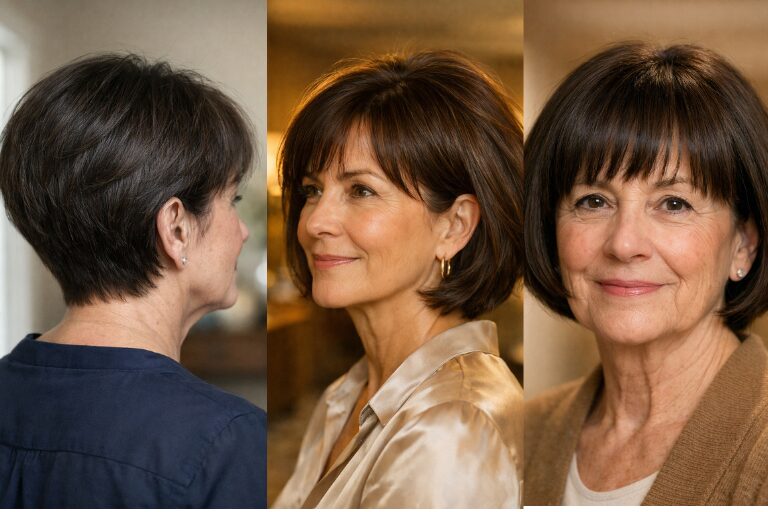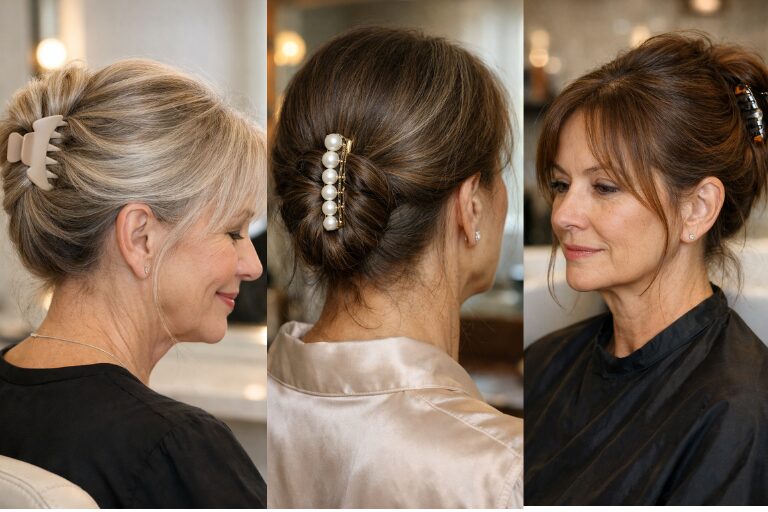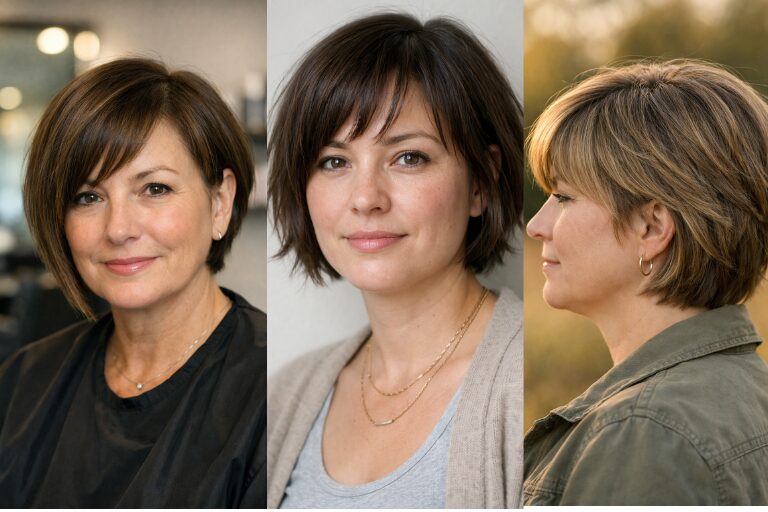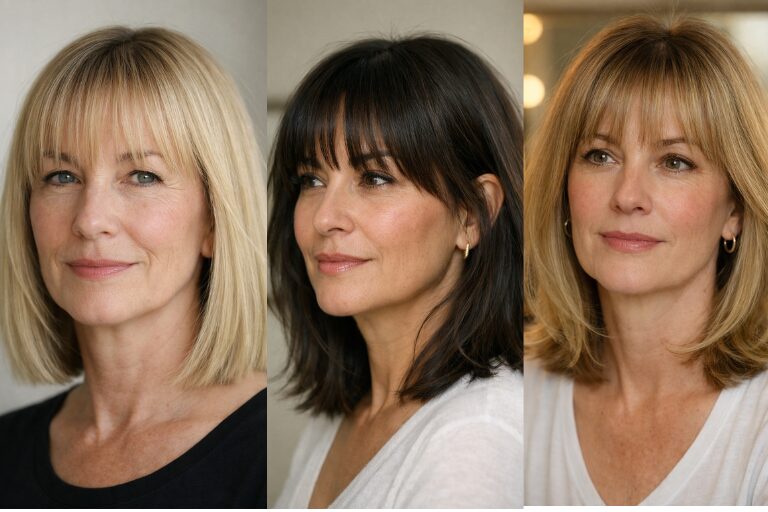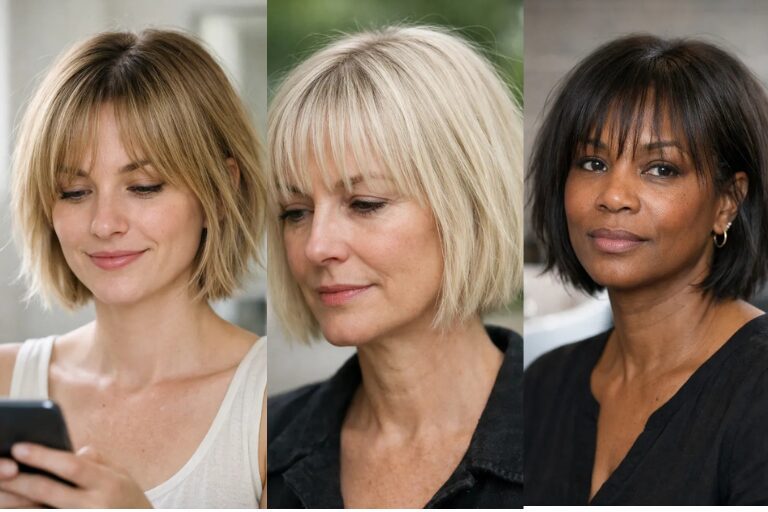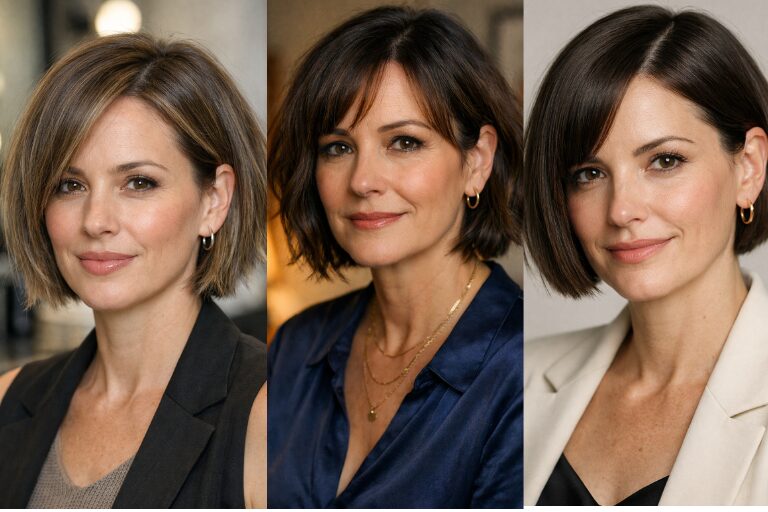
28 Short Hairstyles for Fine, Thin Hair That Actually Hold Volume All Day
You know the routine. You spend ten minutes styling your thin hair in the morning, it looks great, and then you catch a glimpse of yourself in a bathroom mirror three hours later and wonder where all that volume went. Fine, thin hair has a way of surrendering to gravity with quiet, consistent determination — and if you’ve been fighting that battle with dry shampoo and volumizing sprays alone, you’re working harder than you need to.
The real fix isn’t a product. It’s a haircut. The right short hairstyle for fine, thin hair builds volume into the structure of the cut itself — through blunt ends that look dense and healthy, crown layering that lifts the roots, and smart face framing that draws attention exactly where you want it. A well-designed short haircut looks intentional on your best hair days and your worst ones, with heat styling and without it.
These 28 short hairstyles for fine, thin hair cover every style personality — sleek and polished, effortlessly undone, bold and edgy, soft and romantic. Each one comes with what to ask your stylist and how to style it at home so you get the full result, not just a close approximation.
One rule before you scroll: when you go to your stylist, bring two photos — one for the shape and one for the texture and finish. Then say this sentence: “I want volume at the crown without thinning out the ends.” That single sentence will prevent more haircut regret than anything else on this list.
Why Short Hair Works So Well for Fine, Thin Hair
Fine hair is defined by the diameter of individual strands — each one is physically narrower than average. Thin hair refers to the overall density — fewer strands per square inch of scalp. Many women have both. And both benefit enormously from shorter lengths, for the same fundamental reason: gravity.
Long fine hair gets pulled downward by its own weight. The longer it grows, the flatter it lies against the head, and the more visible the scalp becomes. At shorter lengths, the hair doesn’t have enough weight to collapse — it holds upward and outward, maintaining the volume that longer fine hair simply can’t sustain.
Short styles also concentrate the hair’s density into a smaller area. Instead of spreading a limited number of fine strands across eight inches of length, you’re spreading them across three or four. That concentration is what creates the appearance of fullness — and it’s the primary reason short haircuts for thin hair are consistently recommended by professional stylists.
The structural details that matter most in any short cut for fine hair are these: a blunt or close-to-blunt hemline that creates density at the ends, light internal layering at the crown that lifts without thinning the perimeter, and face-framing elements that draw the eye upward and toward the face rather than downward toward sparse ends.
28 Short Hairstyles for Fine, Thin Hair
1. Asymmetrical Side-Swept Pixie
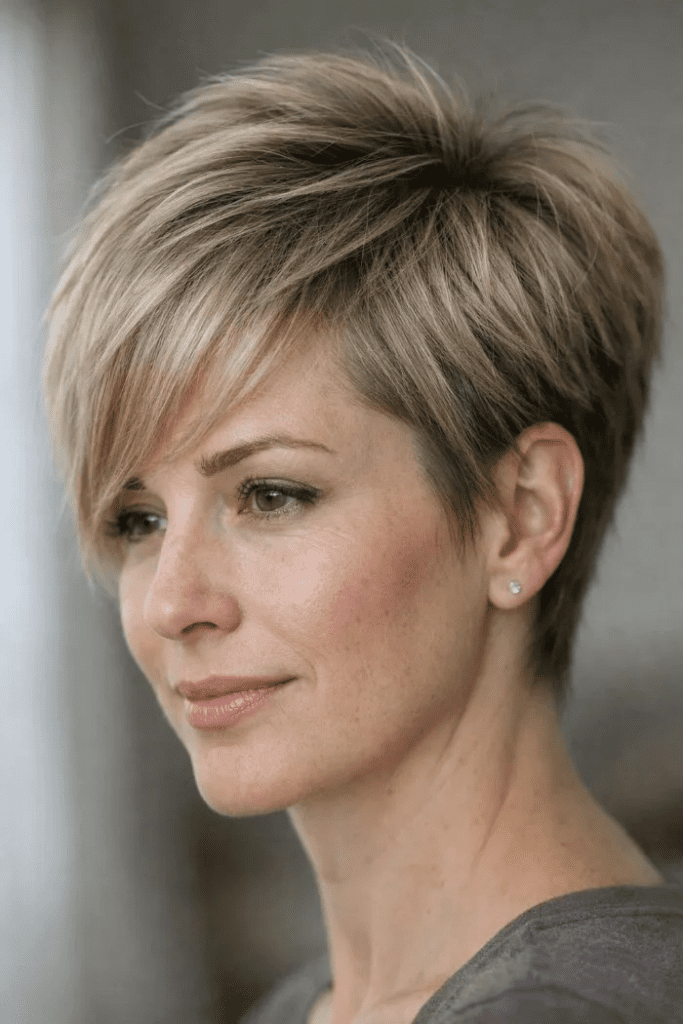
The asymmetrical pixie is one of the most strategically clever short haircuts for fine hair because it uses geometry to create the appearance of more hair. The longer side sweeps forward across the forehead, adding visual weight to the front where fine hair often looks most sparse. The shorter side stays neat and close, creating a clean contrast that makes the whole style look intentional and modern.
The key for fine hair is keeping the top section slightly lifted and textured rather than smoothed flat — the moment this style lies completely flat, it loses everything that makes it work. The texture at the crown is the engine that drives the whole look.
Ask your stylist for: A longer fringe section on one side that can sweep forward. Light point-cutting through the crown for texture and lift. A tapered, clean finish on the shorter side. Specify that you want the top to sit slightly elevated rather than close to the scalp.
Styling tip: A pea-sized amount of lightweight mousse worked through slightly damp hair at the crown, then blow-dried with your fingers lifting upward, gives this style its lifted, airy quality. Finish by sweeping the longer fringe section forward with a flat brush or your fingers.
2. Blonde Buzz Cut
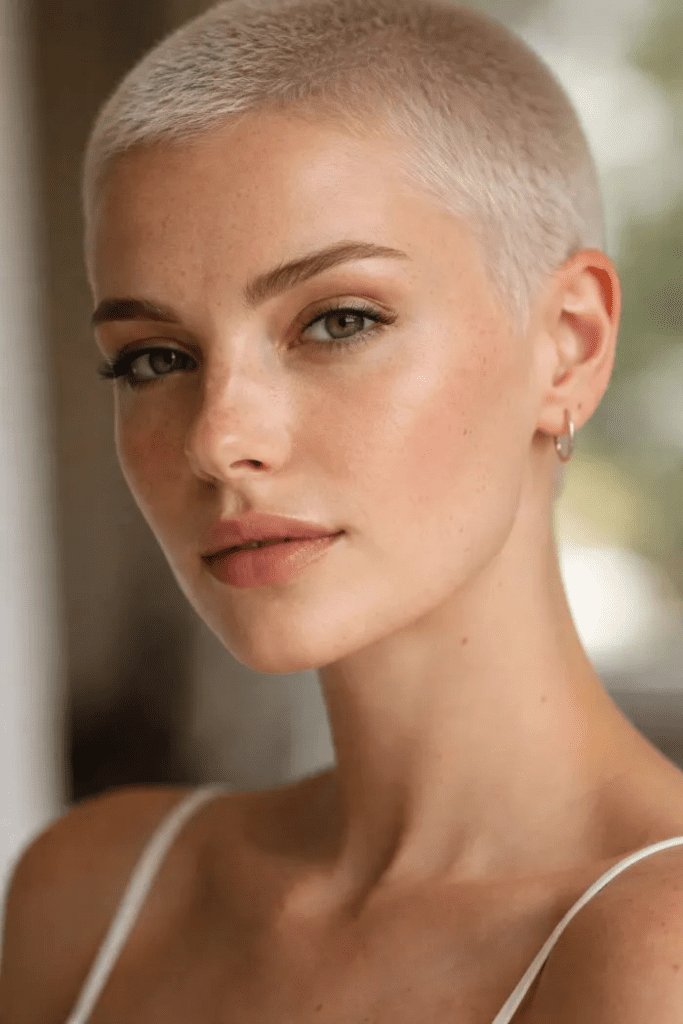
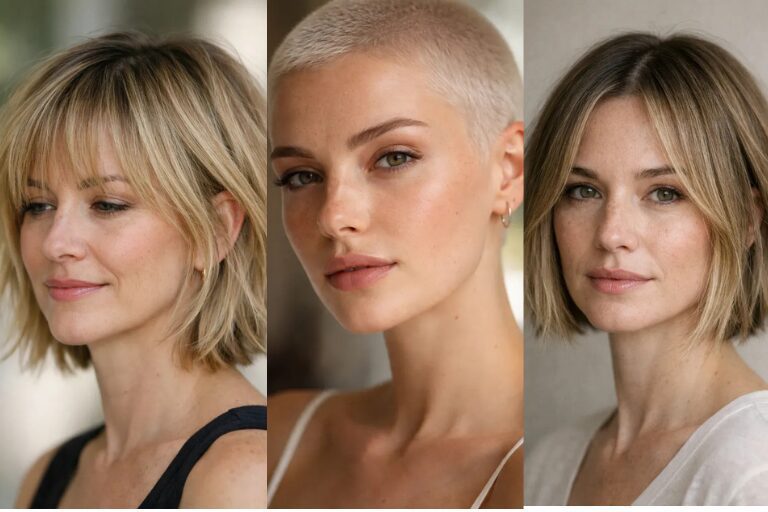
The buzz cut is the most counterintuitive fine hair recommendation on this list — and also one of the most genuinely brilliant ones. When hair is so fine that volume becomes almost impossible to maintain, removing the length entirely eliminates the problem at the source. There’s no weight to drag the hair flat, no length to reveal thinning, and no styling routine to maintain. What remains is an incredibly clean, confident silhouette that showcases the bone structure, brows, and eyes in a way that most hairstyles can’t.
The blonde tone amplifies the impact — it adds brightness around the face and softens the close-cropped look beautifully.
Ask your stylist for: An even, consistent length throughout — typically between a grade 2 and grade 4 depending on your preference. Ask your stylist about the most flattering length for your head shape before committing.
Styling tip: A hydrating scalp oil keeps the scalp healthy and adds a subtle sheen to the short hair. Purple shampoo used once a week prevents brassiness in blonde tones and keeps the color looking crisp and cool.
3. Bob with Curtain Bangs
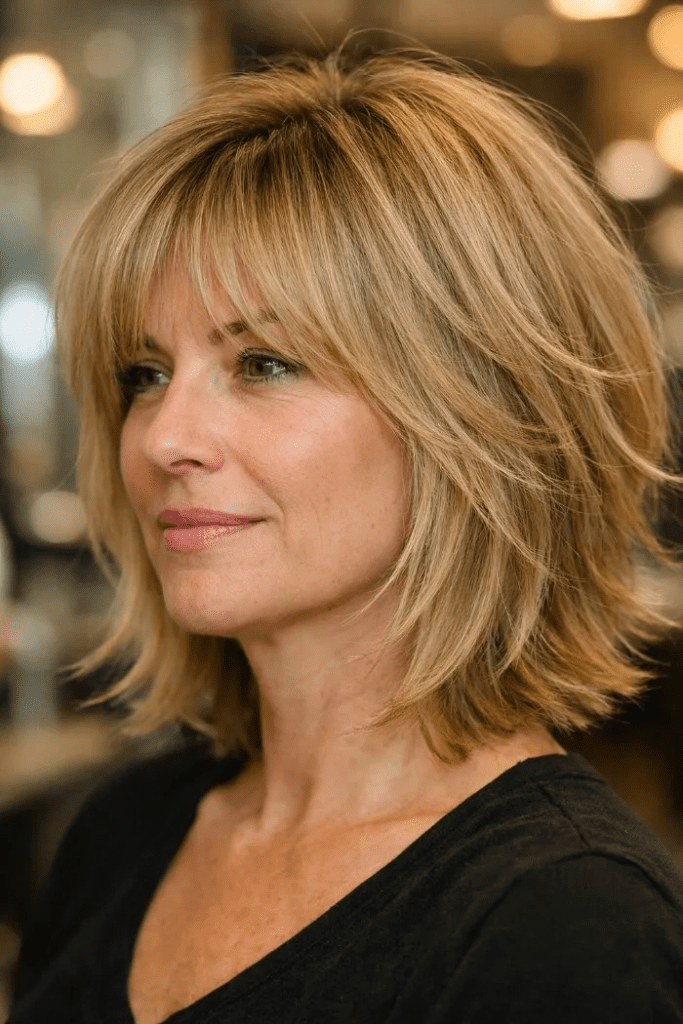
The bob and curtain bang combination is consistently one of the highest-performing hairstyles for fine, thin hair — and the reason comes down to what each element does. The bob keeps the length in the zone where fine hair holds its volume best. The curtain bangs add face-framing without concentrating too much hair across the full width of the forehead, which means they don’t look sparse the way thicker blunt bangs might on fine hair.
The result is a style that looks full at the front, full at the sides, and full at the ends — which is essentially the trifecta for fine hair styling.
Ask your stylist for: A bob that sits at or just below the jaw. Curtain bangs that part naturally in the center and fall to around the cheekbone on each side. Specify that you want the bangs blended softly into the lengths rather than cut as a separate, defined section.
Styling tip: A medium round brush through the crown section during blow-drying creates lift that lasts. Tuck the sides behind the ears after styling — this simple move creates an immediate illusion of more volume at the crown by pulling the sides away and letting the top section breathe.
4. Chin-Length Platinum Bob
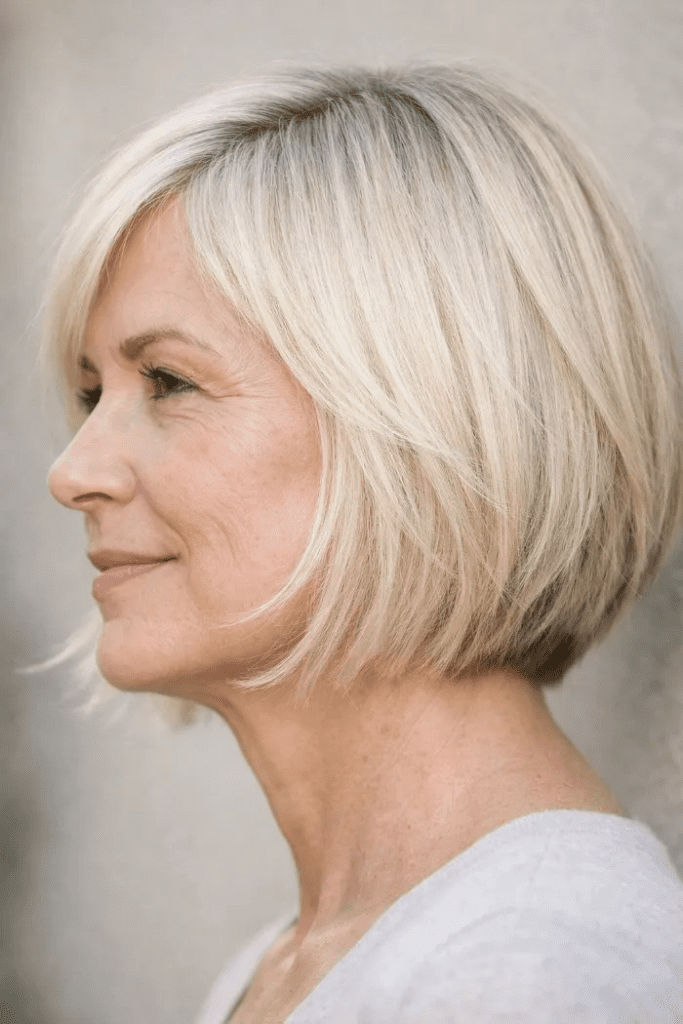
The chin-length bob is a powerhouse for fine hair because the chin is the exact point where short hair holds maximum volume — long enough to have presence and movement, short enough to avoid the weight-related collapse that longer fine hair suffers. Add platinum color and you’ve amplified that power significantly: platinum tones create high visual contrast against the scalp that adds a sense of depth and dimension, making the hair look thicker than it actually is.
The blunt perimeter does the density work, and the slight bend at the ends gives the silhouette a soft, modern quality rather than a rigid, boxy finish.
Ask your stylist for: A clean, blunt hemline at the chin. Minimal internal layering — just enough to prevent stiffness, not enough to thin the ends. A slight bevel underneath the hemline that encourages the ends to turn softly inward. For the color, ask about platinum toning that complements your skin’s undertone.
Styling tip: A lightweight smoothing cream applied to the mid-lengths and ends before blow-drying, followed by a round brush that rolls the ends gently under, gives this style its signature clean, polished finish. A flat iron passed once over just the ends reinforces the gentle inward bend.
5. Classic Bob with Blunt Bangs
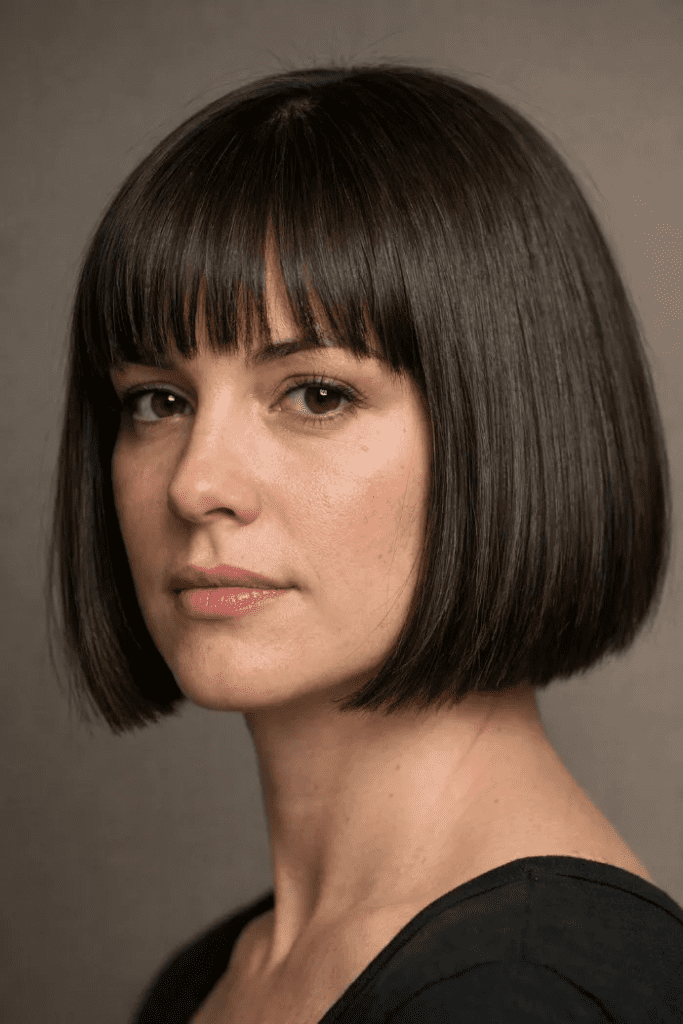
This is the fine hair style that operates on one of the most powerful optical principles in haircutting: aligned ends read as density. A classic bob with blunt bangs gives you aligned ends at the hemline and aligned ends at the fringe — so the visual impression of thickness is doubled. The blunt bang creates a dense, full line across the forehead that anchors the entire style and makes the front of the hair look genuinely thick.
For fine hair, the blunt bang requires enough hairline density to look intentional rather than sparse. If your hairline is thinning specifically, a lighter bang variation — wispy or curtain — will look fuller.
Ask your stylist for: A clean, blunt baseline at the bob length. Equally clean, blunt bangs — tell your stylist you want the bang to look “full and dense” at the forehead. Minimal internal layering. Keep both the hemline and the bang as strong and precise as possible.
Styling tip: Dry shampoo applied at the bang roots before styling gives fine strands the grip and friction they need to hold the blunt, full shape throughout the day. Trim the bangs every three to four weeks — blunt bangs on fine hair go from crisp to overgrown faster than any other style on this list.
6. Classic Bob with Soft Layers

The classic bob with soft surface layers is a masterclass in having it both ways: the layering adds movement and prevents the style from sitting like a helmet, while the strong perimeter beneath keeps the ends looking full and healthy. The layers in this style live on the surface rather than throughout the entire length — this is a crucial distinction for fine hair, where layers that go all the way through can thin the hemline dramatically.
It’s the bob that looks effortlessly great with a natural blowout, on second-day hair, and even partially air-dried — which makes it one of the most genuinely low-maintenance hairstyles on this list.
Ask your stylist for: Soft, surface-level layers — emphasize the word “surface.” The layers should affect the top portion of the hair and leave the perimeter strong and intact. A volumizing finish rather than a smoothed, flat finish.
Styling tip: A volumizing spray applied at the roots before blow-drying, followed by a rough-dry with your fingers lifting the crown section upward, gives this bob its signature natural, lived-in volume. No round brush required on low-effort days.
7. Curly Bob with Defined Curls
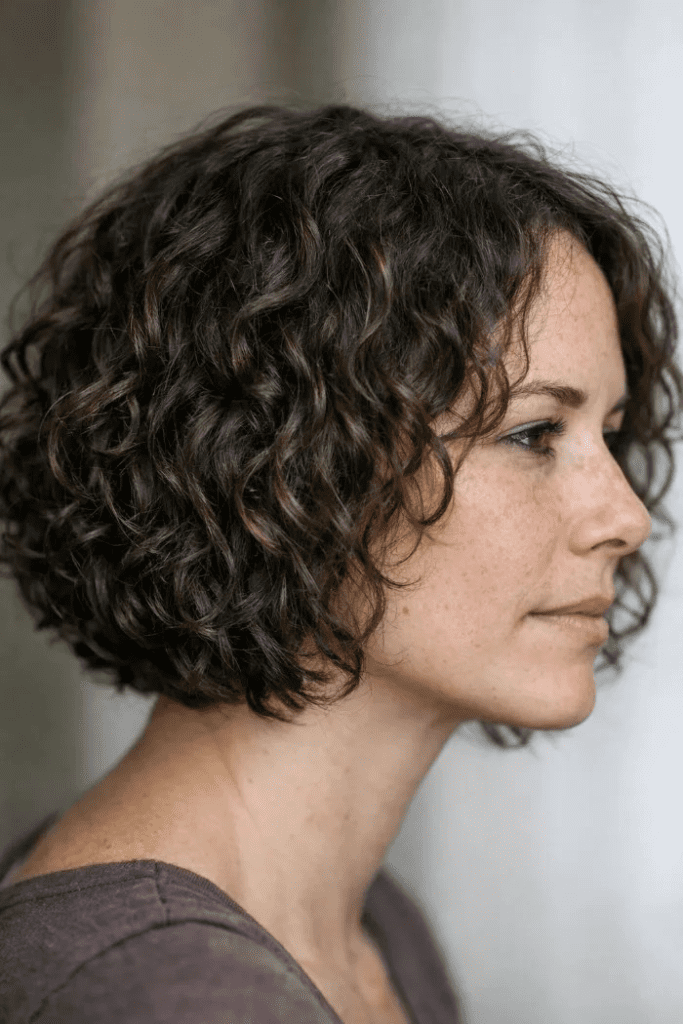
Natural curl texture is one of the most powerful volume-building tools available to fine-haired women — and a curly bob channels that power into an incredibly flattering, jaw-length shape that holds its volume consistently. The curl pattern creates bends in the hair shaft that add width and dimension from every angle, and the bob length prevents the curls from being weighed down by their own length.
The key is keeping the length right at the jaw so the curls have room to spring upward and outward rather than collapsing downward.
Ask your stylist for: A jaw-length bob cut specifically for your curl pattern. If possible, request a dry cut — cutting curly hair while it’s wet produces unpredictable results because of curl shrinkage. Ask for layers that support curl formation rather than fighting it.
Styling tip: A curl cream applied generously to soaking-wet hair, followed by a gel raked through for hold, then diffused on low heat until mostly dry, gives defined, bouncy curls that last. The “scrunch out the crunch” technique — scrunching the dried hair gently with your hands after diffusing — softens the gel cast without losing the definition.
8. Layered French Bob
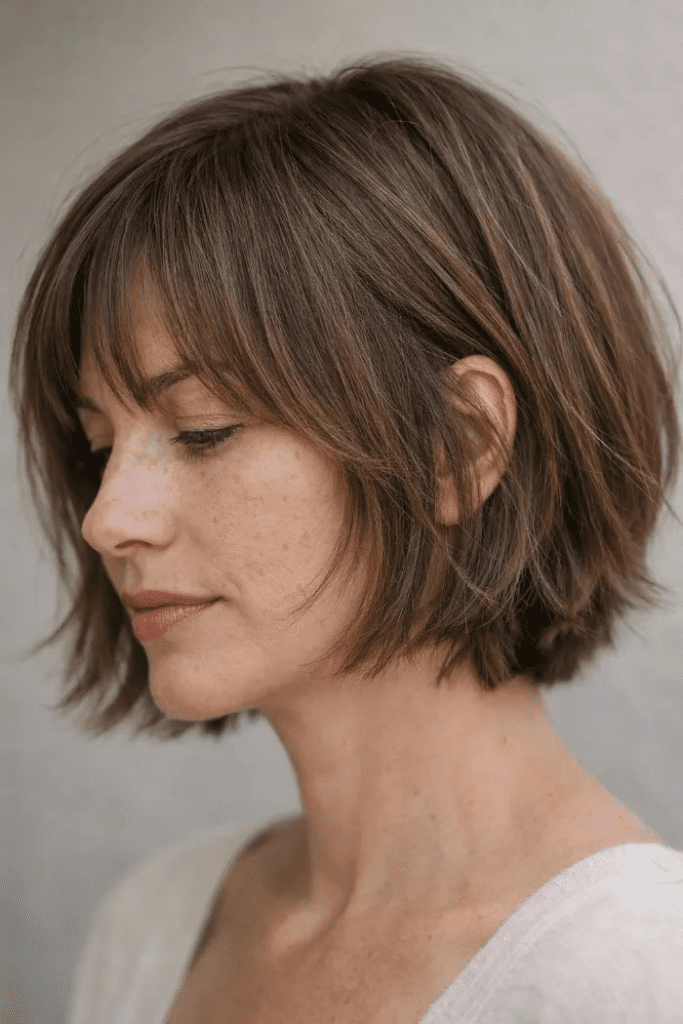
The French bob sits above the jaw — shorter than a classic bob, longer than most pixie cuts — and has a cultural legacy of looking effortlessly chic on almost every hair type. For fine hair, the French bob works because the shorter length maximizes volume retention while the subtle layering through the mid-lengths creates just enough texture to prevent the style from sitting flat.
The combination with a soft fringe is classic and deliberate — it frames the face beautifully and adds that Parisian, off-duty sophistication that makes this style so enduringly appealing.
Ask your stylist for: A length that sits between the chin and the jaw. Subtle internal layers through the mid-lengths — the key word being subtle. A soft fringe that blends naturally into the lengths rather than a sharp, precision-cut edge.
Styling tip: A sea salt spray scrunched into slightly damp hair and left to air dry gives the French bob its signature light, textured, lived-in finish. On days when you want a more polished result, a quick blow-dry with a small round brush through the fringe and a light-hold spray keeps everything sleek.
9. Messy Wavy Bob

The messy wavy bob is built on a genuinely clever premise: loose waves add width to fine hair. Rather than falling straight down and revealing every bit of thinness, waved hair moves outward at the mid-lengths, adding side volume that dramatically changes the overall silhouette. The intentionally imperfect, tousled quality of the styling removes the expectation of perfection and replaces it with something that looks better as it moves and shifts throughout the day.
Ask your stylist for: A bob length that sits between the jaw and the chin with soft, blended internal layering. Point-cut ends rather than a blunt hemline for this specific style — the slightly softer edge supports the messy wave aesthetic better than a precise blunt cut.
Styling tip: A one-inch curling iron used through the mid-lengths — alternating the direction of each wave for a natural, unstyled appearance — followed by a cool-air blast and a shake-out with fingertips, creates the wave. A light texture spray scrunched through the dry waves after styling maintains the volume without adding weight.
10. Tousled Layered Pixie
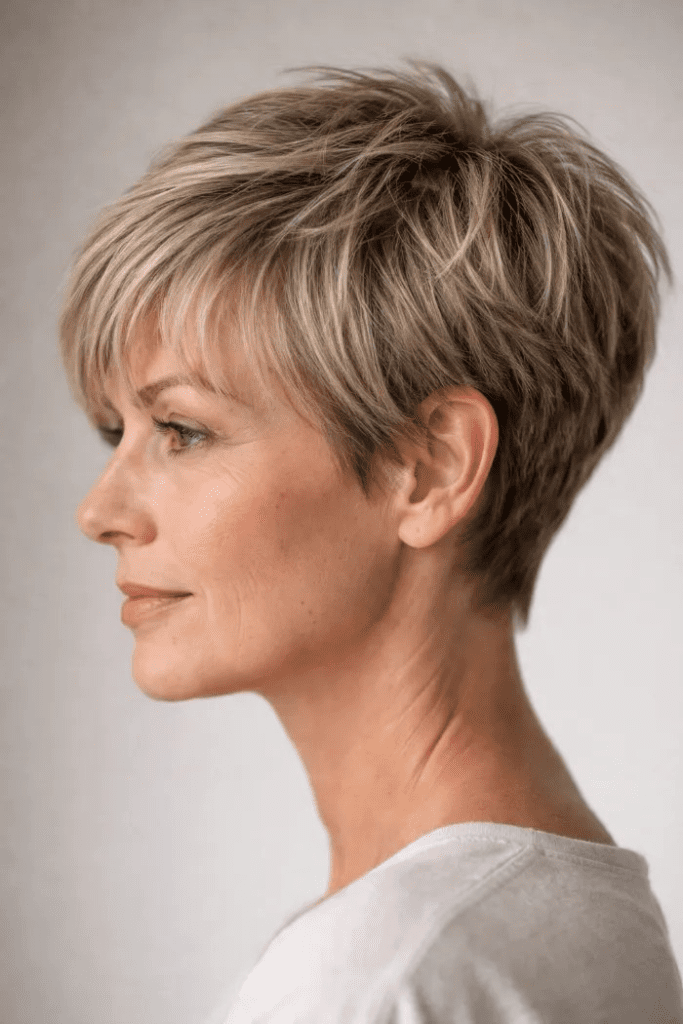
The tousled layered pixie is specifically engineered for one purpose: crown volume. The layering is concentrated at the top of the head, where fine hair most visibly collapses, and the choppy, textured quality of the layers creates separation between the strands that reads as fullness. The tapered back keeps the neckline clean and the overall shape structured while the tousled crown does all the expressive, volume-building work.
Ask your stylist for: Layering concentrated specifically at the crown — not throughout the entire style. A tapered, clean nape. Point-cut texture at the crown rather than blunt or razored layers. The back should stay tidy and precise as a counterpoint to the textured crown.
Styling tip: A matte paste rubbed between the palms and pressed gently through the crown section, then lifted with fingertips at the roots, gives this style its tousled, effortless texture. The matte finish is important — a glossy product will flatten the textured layers and make the crown look slick rather than voluminous.
11. Platinum Blonde Layered Bob
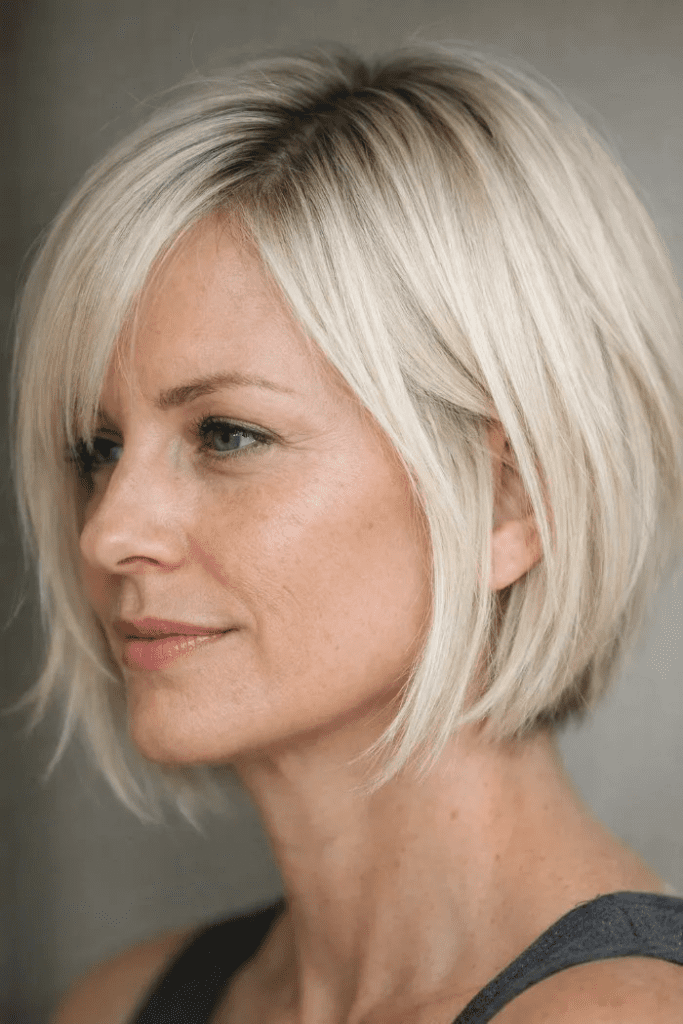
This style understands that color and cut work together — and on fine hair, a well-chosen color can visually transform the hair’s apparent density just as effectively as a structural cut change. Platinum blonde creates high contrast wherever the scalp is visible, but it does so in a way that reads as bright and intentional rather than sparse. The soft, airy layers add movement without over-thinning the ends, and a side part gives the crown an immediate lift.
Ask your stylist for: Soft, blended internal layers — nothing choppy or heavily textured at the ends. A clean side part built into the cut. For the color, ask about a platinum with slightly warm undertones if your complexion is warm — it’s more flattering than a cold, stark platinum.
Styling tip: A root-lifting spray applied directly to the crown before blow-drying, followed by a quick pass of a round brush through the top section, creates the lift this style needs. Smooth the surface lightly afterward — you want volume at the roots and smoothness at the surface, not lift all the way through.
12. Platinum Mohawk Pixie
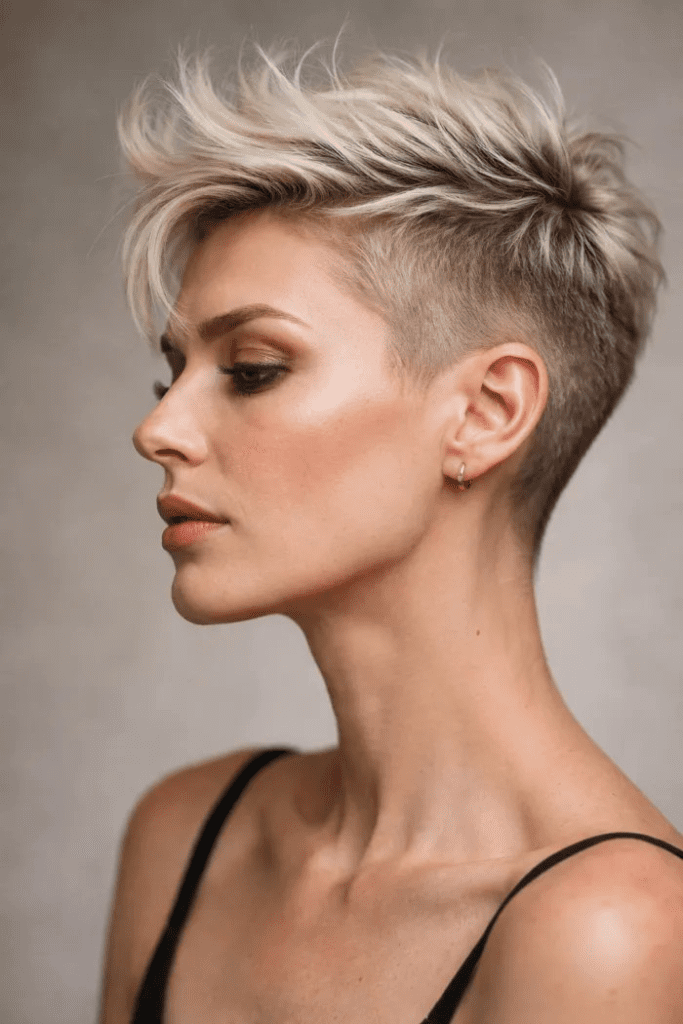
Height through the center of the head is one of the most dramatic and effective volume tricks available to fine-haired women — and the mohawk pixie uses it as its entire design principle. The center strip of elevated, textured hair creates a raised ridge that makes the overall silhouette look significantly fuller and more dramatic. The clean, close sides provide the contrast that makes the height on top look even more pronounced.
Ask your stylist for: A longer center strip with clean, close sides. Soft texture at the center rather than extremely short or blunt cutting, which is too harsh for fine hair. The sides should be tapered smoothly rather than shaved sharply for the most wearable result.
Styling tip: A matte styling powder dusted at the roots of the center strip and then pinched upward with fingertips gives maximum height with the least product weight. This is the one style where working dry product into completely dry hair produces a better result than applying it to damp hair.
13. Romantic Bob with Wispy Ends
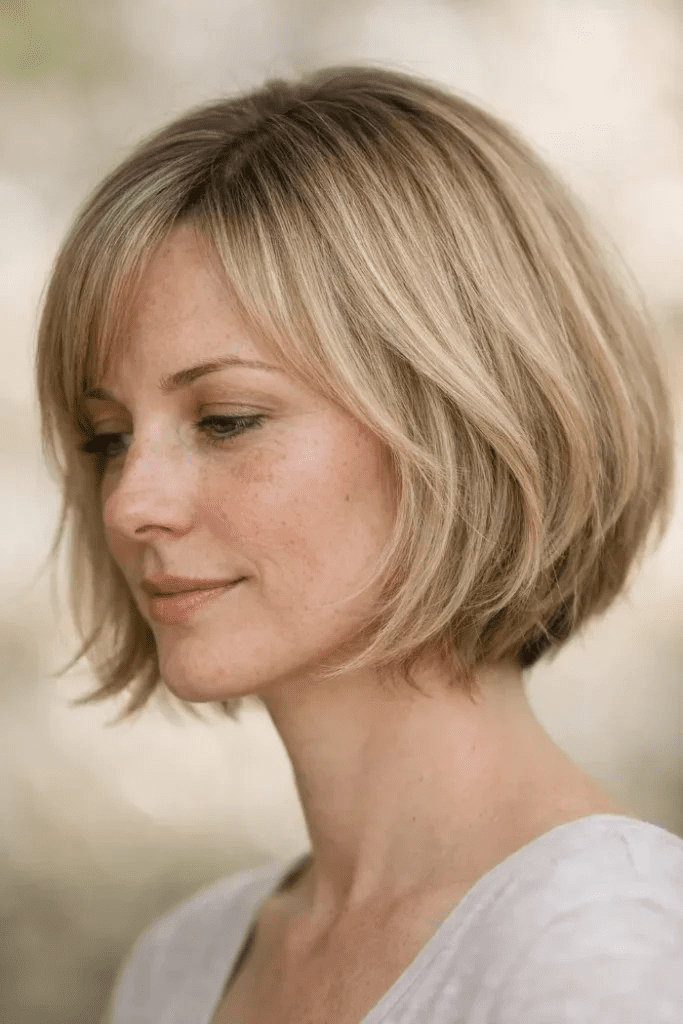
Not every fine hair style needs to be a structural workout. The romantic bob with wispy ends is gentle, pretty, and soft — it leans into the natural lightness of fine hair rather than trying to disguise it. The wispy ends keep the bob from feeling heavy or boxy at the jaw, and loose, brushed-out curls through the mid-lengths add the movement that makes this style look full without looking forced.
Ask your stylist for: A bob at or just below the jaw with lightly point-cut ends that have a naturally airy quality. Avoid heavy texturizing or razoring, which can make fine wispy ends look unintentionally sparse. Soft internal layers through the mid-lengths for movement.
Styling tip: A medium or large-barrel curling iron used through just the mid-lengths, followed by a gentle brush-through to soften the curl into a wave, gives this style its romantic, softly undone quality. A light flexible spray keeps the waves in place without stiffening them.
14. Short Textured Pixie Bob
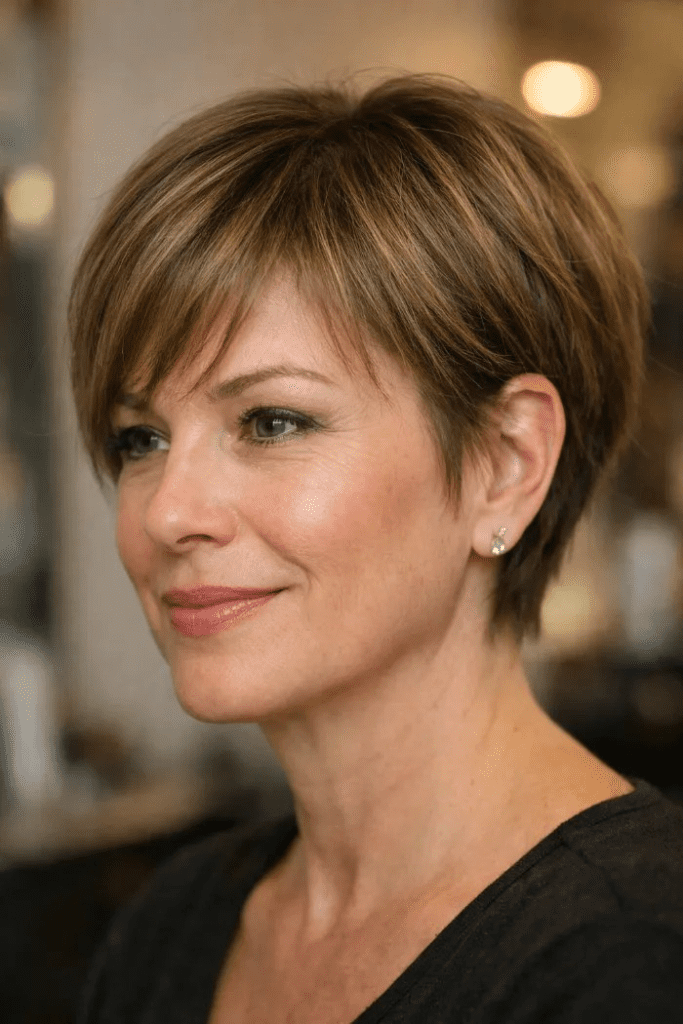
The pixie bob sits in the exact sweet spot between a traditional pixie and a classic bob, and that middle ground is genuinely valuable for fine hair. The extra length at the face and sides keeps the style feeling soft and feminine, while the shorter back maintains the clean structure that prevents the overall shape from drooping or losing definition. Extra texture through the crown gives fine hair the lift it needs without over-layering the perimeter.
Ask your stylist for: A longer front section that falls around the ears or slightly past them. A shorter, neater back. Texture built into the crown through point-cutting rather than thinning shears. Avoid over-layering the sides, which can expose how little density fine hair has at the perimeter.
Styling tip: A tiny amount of lightweight paste pressed through the crown section and ends with fingertips separates the pieces and creates the textured, dimensional quality that makes this style look so full. Keep the roots relatively product-free — the lightness at the roots is what creates the lift.
15. Side-Swept Pixie Layers
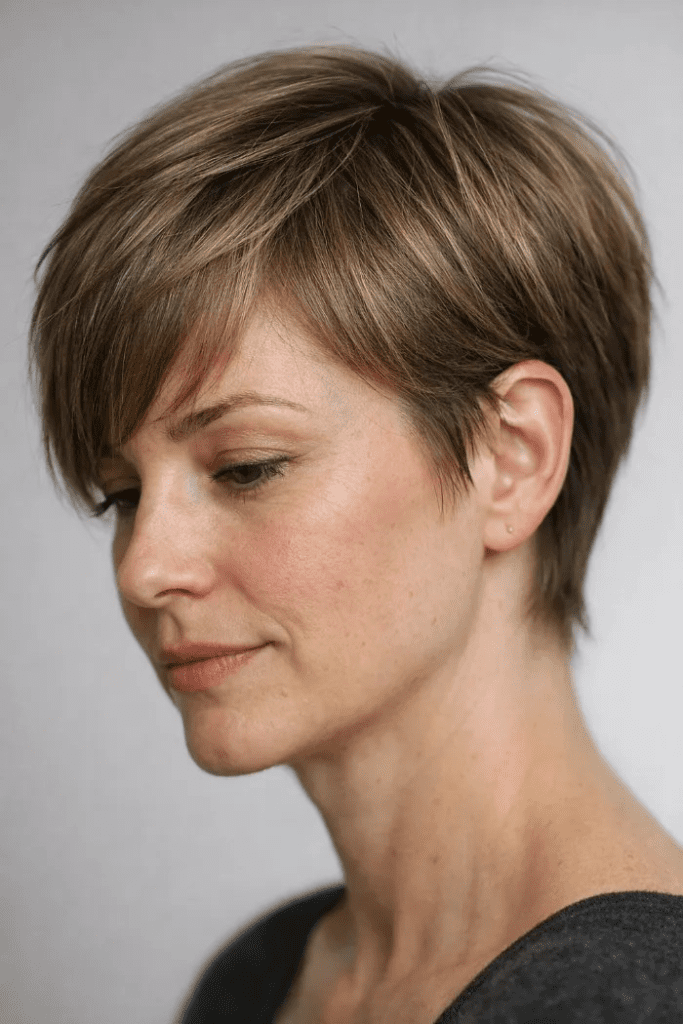
The side-swept pixie is one of the most clever coverage styles available for fine hair. The longer top section is directed across the forehead in a sweeping motion that covers sparse areas at the hairline and temples while simultaneously adding visual weight at the front of the style. It’s face-framing, it’s flattering, and it works on virtually every face shape.
Ask your stylist for: A tapered, clean nape. A longer top section that has enough length to sweep across the forehead comfortably. A soft fringe rather than a blunt-cut bang edge — it should blend naturally into the swept-over direction. Light internal layering through the top section only.
Styling tip: A light mousse worked through damp hair at the crown, then finger-styled with the top section swept across the forehead and the roots lifted slightly, gives this style its maximum volume and coverage. A quick mist of flexible-hold spray locks everything in place.
16. Sleek Angled Bob
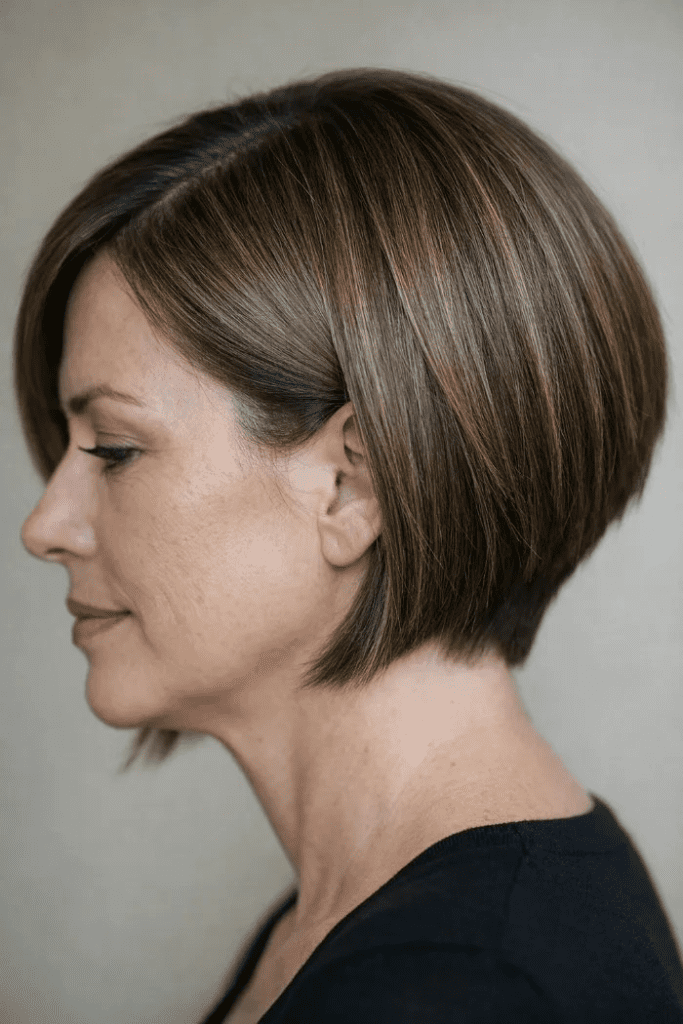
The angled bob — longer in front, shorter in back — is a structural masterpiece for fine hair. The longer front sections provide presence and face-framing coverage, while the shorter, often stacked back creates fullness right where fine hair is most likely to fall flat. The clean, deliberate angles give the style a polished, intentional quality that disguises fine hair beautifully.
Ask your stylist for: A clearly defined angle from the longer front to the shorter back. A stacked back that creates fullness and shape. Specify a smooth, sleek finish rather than a textured one — the power of the angled bob is in the precision of its lines.
Styling tip: Heat protectant applied to damp hair, followed by blow-drying with a flat paddle brush for a smooth surface finish, then a flat iron passed lightly over just the ends to reinforce the angle direction. A shine spray applied afterward gives the sleek finish that makes this style look so polished.
17. Slicked-Back Undercut
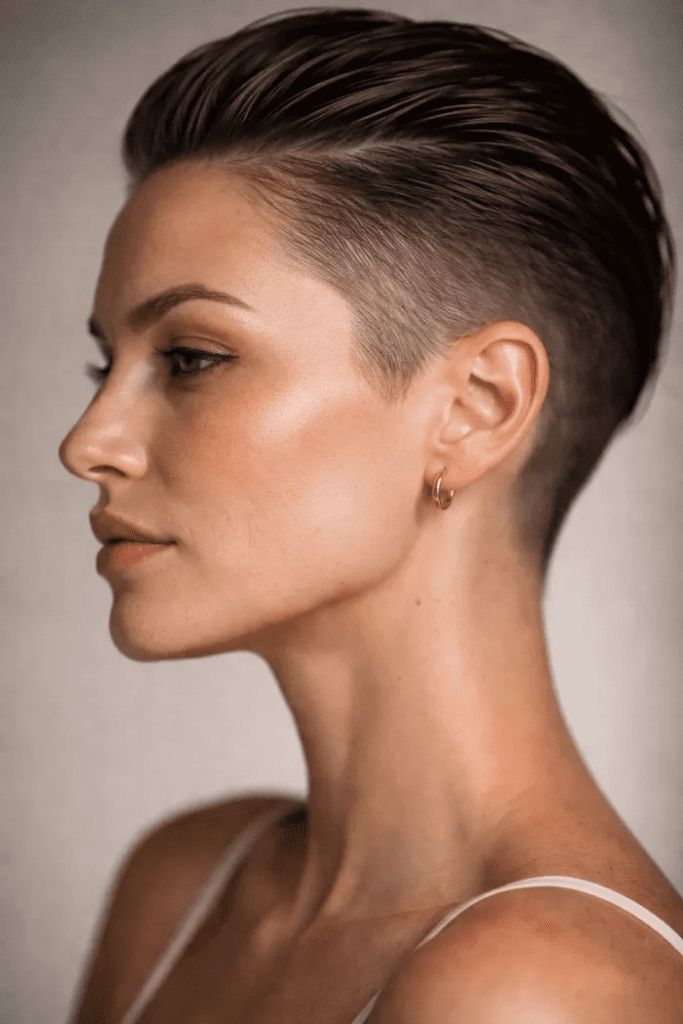
The slicked-back undercut is the bold, low-maintenance option for fine-haired women who are done fighting with volume and ready to make a structural statement instead. The closely cut sides remove all the hair that tends to go flat and lifeless first, while the longer top section is directed backward for a clean, confident silhouette that uses the hair’s natural fineness as a feature rather than a flaw.
Ask your stylist for: Closely cut sides — a grade 1 or 2 clipper cut is typical. A longer top section that has enough length to be slicked back cleanly. The transition from sides to top should be gradual rather than harsh for the most wearable result.
Styling tip: A lightweight gel worked through the top section while slightly damp, then combed cleanly backward with a fine-tooth comb, gives this style its signature sleek, intentional finish. A light mist of hairspray over the surface sets everything in place without crunchiness.
18. Soft Shag with Bangs
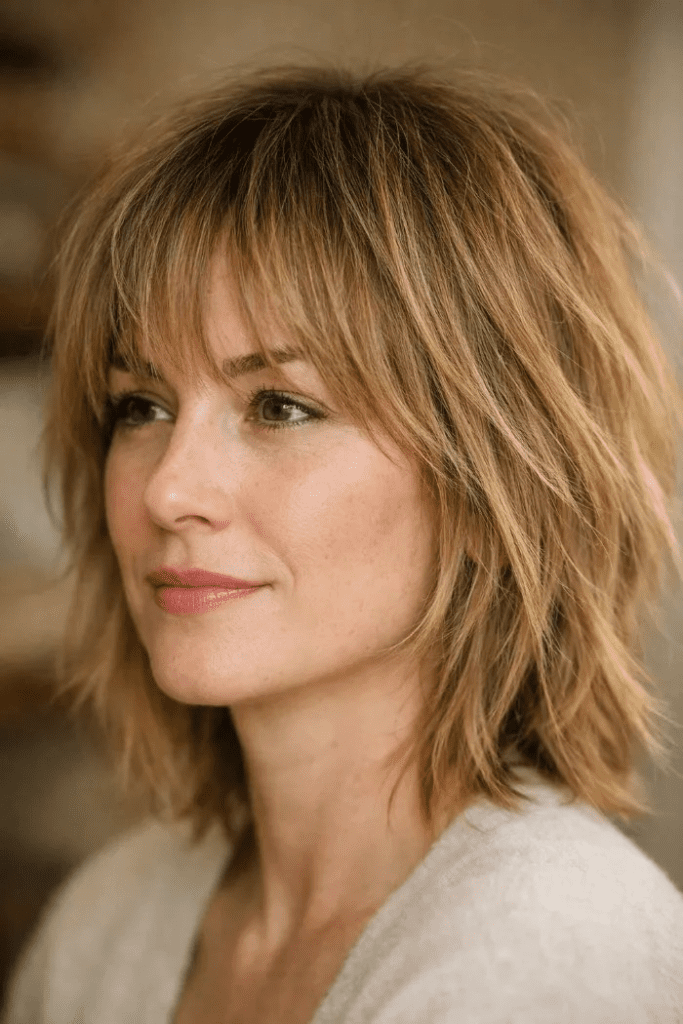
The soft shag is the style that took the best parts of the 1970s shag haircut — the layers, the movement, the effortless cool — and filtered them through a modern, wearable sensibility. For fine hair, the key is keeping the layers long rather than short and concentrating them at the crown and face-framing sections rather than distributing them evenly throughout. The bangs add the essential front element that completes the shag’s framing quality.
Ask your stylist for: Long, blended layers — not short, choppy ones. Light layering concentrated at the crown and face-framing sections. Wispy, blended bangs rather than a blunt, heavy fringe. Specify “soft shag” or “shag-lite” — the distinction from a full shag is important on fine hair.
Styling tip: A texturizing cream scrunched through damp hair and left to air dry gives this style its organic, effortless texture. For more defined results, use a diffuser on low heat while scrunching the hair upward. This style is one of the few that actually looks better the day after washing.
19. Shaggy Bob with Bangs
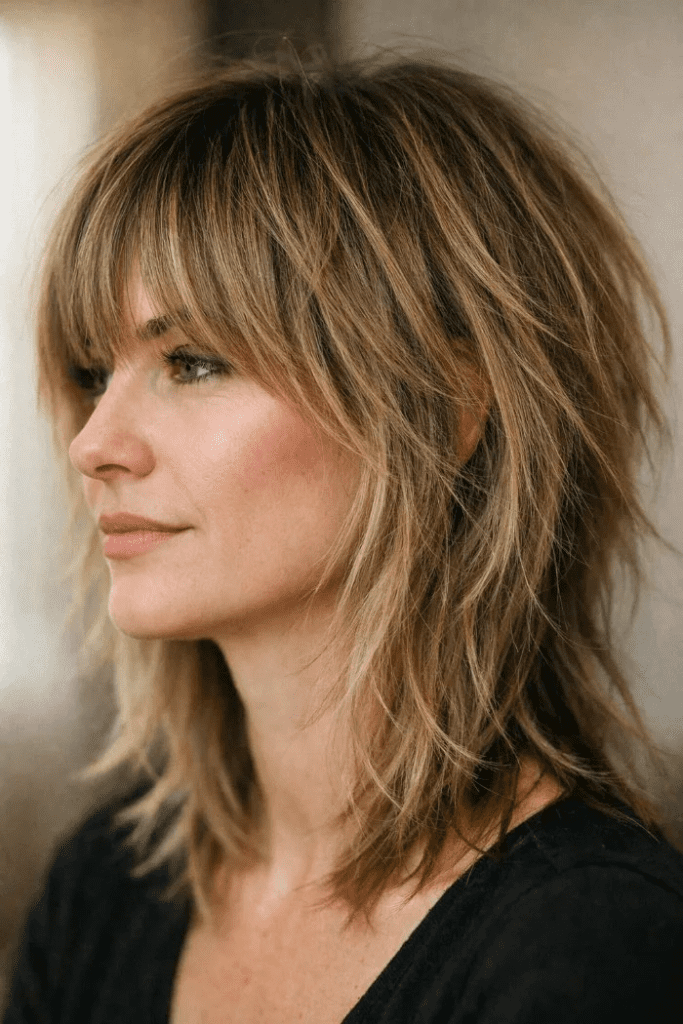
The shaggy bob is the relaxed, piecey cousin of the classic bob — and for fine hair that tends to look flat in more structured styles, the intentional imperfection of the shaggy bob is genuinely liberating. The layers break up the flat sections of fine hair and give the whole style a sense of movement and body that a smooth, precise bob can’t always achieve. Wispy bangs at the front keep the fringe light and non-heavy.
Ask your stylist for: Wispy, point-cut bangs — explicitly ask for wispy rather than full. Piecey, slightly undone layers through the lengths rather than polished, blended ones. The perimeter should still maintain some strength — the shag effect comes from surface texture, not from thinning the hemline.
Styling tip: Dry shampoo applied at the roots before any styling — not after — gives fine hair the grip and friction that makes the shaggy texture last through the day. Work it in, let it sit for 60 seconds, then build the style on top of that texturized base.
20. Soft Waves with Natural Texture

Soft waves are one of the most consistent and reliable volume solutions for fine, thin hair — and the simplest version requires no heat tools at all. The twist-and-dry technique creates a gentle, natural-looking wave that adds width and body to fine strands without any of the potential heat damage that styling tools can cause over time.
Ask your stylist for: A cut that supports wave formation — internal layers through the mid-lengths, a length that sits between the jaw and shoulder, and a slightly textured finish at the ends. Tell your stylist you want the cut to look good air-dried with natural wave.
Styling tip: Twist damp hair into two large buns secured with soft fabric ties. Let it dry fully — ideally overnight. Release, rake through gently with a light oil on your fingertips for shine, and shake out with your fingers for volume. The waves that result are soft, natural, and last all day.
21. Textured Bob with a Middle Part
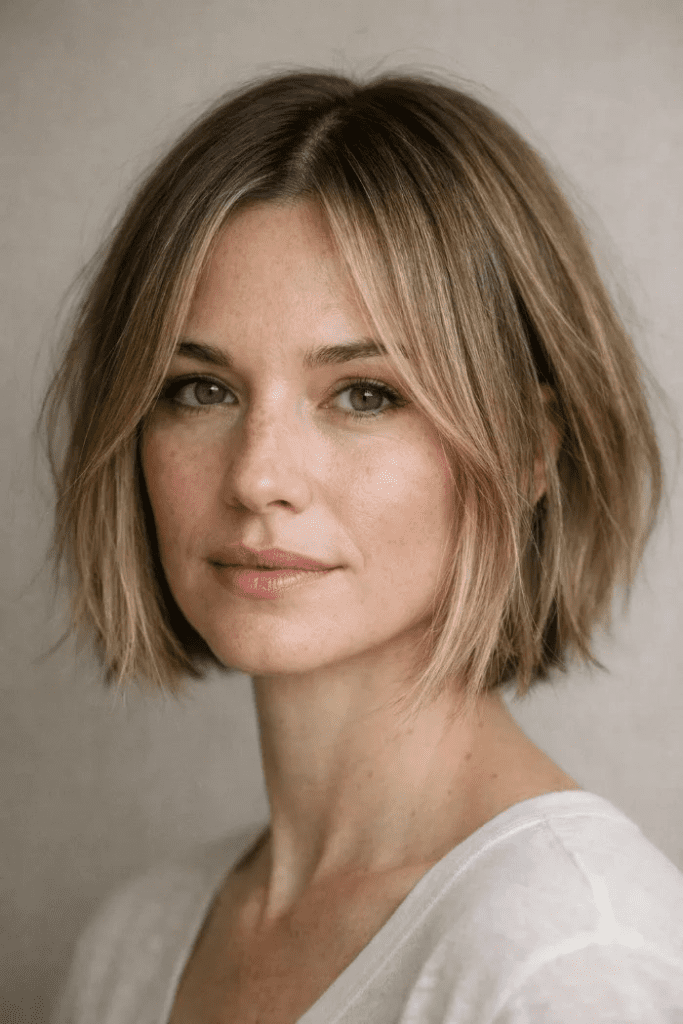
The middle part has made a significant style comeback, and on a textured bob with fine hair, it works beautifully — because it creates symmetrical face-framing that draws the eye to the center and forward, away from any thinness at the sides. The soft wave through the sides adds the width that a center-parted style needs on fine hair to avoid looking flat.
Ask your stylist for: A bob length that falls between the chin and jaw. A center part built into the cut. Soft internal layers that support a natural wave or bend at the sides. A modern, slightly undone finish rather than a sleek, polished one.
Styling tip: A light mousse through damp hair at the crown and mid-lengths, then a quick pass with a large-barrel iron through just the sides to create a gentle outward wave, followed by separating pieces with fingertips — this gives the style its full, dimensional quality without looking over-styled.
22. Textured Crop with Volume
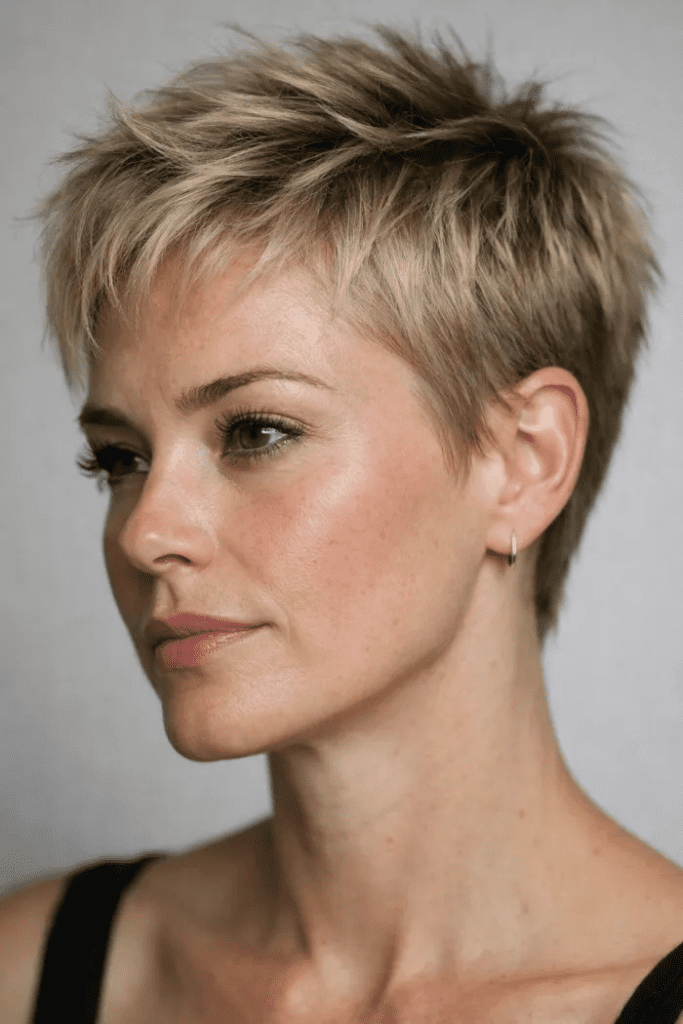
The textured crop is the short style for fine-haired women who want something with genuine edge and personality. Cut close overall with deliberate texture through the crown, it’s a style that’s designed to stand up and stay up — literally. The crown is cut specifically to create height and separation, which means it actively works against fine hair’s tendency to collapse flat.
Ask your stylist for: A crop that’s close through the sides and back with a longer, deliberately textured crown section. Point-cutting through the top for texture and separation. The sides and back should be tapered smoothly.
Styling tip: A matte styling powder applied at the roots of the crown section and worked through with fingertips gives fine hair maximum lift with minimum weight. The powder absorbs oil and adds friction simultaneously, which is exactly what fine, flat-prone hair needs. Work it in, then build the height upward with fingertips.
23. Tousled Asymmetrical Platinum Bob
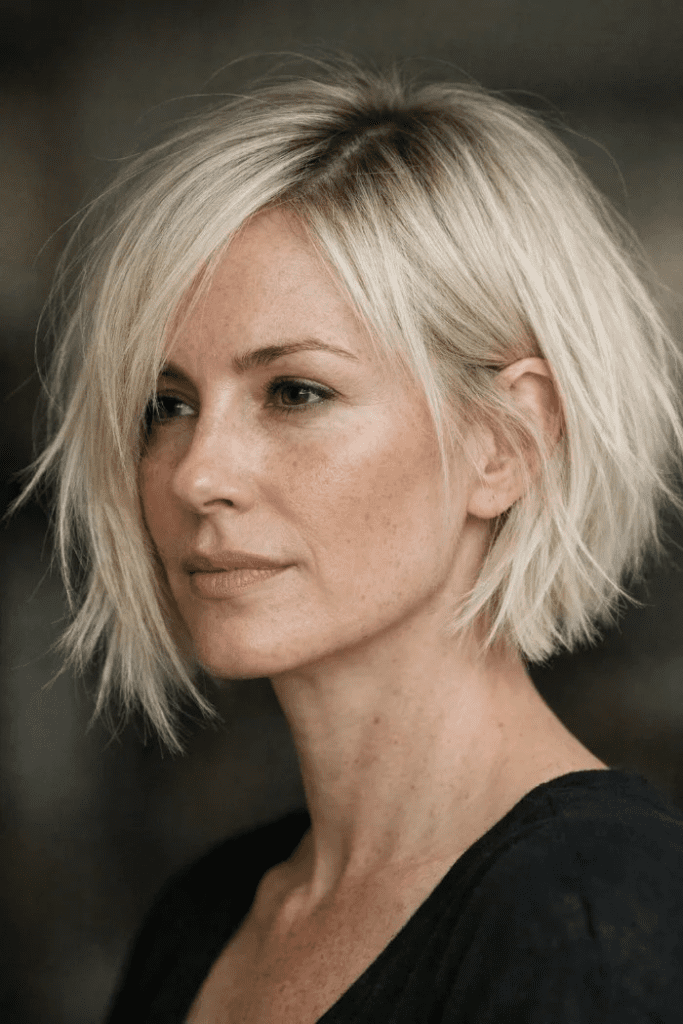
The asymmetrical bob creates visual interest through uneven length — and for fine hair, that uneven length is a gift. The eye follows the diagonal line from the longer front to the shorter back rather than scanning the hair’s density, which means thinness registers far less than it would in a symmetrical style. The platinum tone amplifies the visual drama and adds the depth that makes fine hair look richer.
Ask your stylist for: A clearly defined asymmetrical angle — longer on one side, shorter on the other. A tousled rather than sleek finish, which means slightly textured ends rather than precision-blunt ones. Platinum color that’s been toned to complement your skin tone.
Styling tip: A light texture spray applied to dry hair, followed by bending a few strategic sections with a flat iron for that effortless tousled quality, gives this style its dimensional finish. Work quickly and imprecisely — the more effortless the styling looks, the better this style reads.
24. Tousled Bob with Soft Bangs
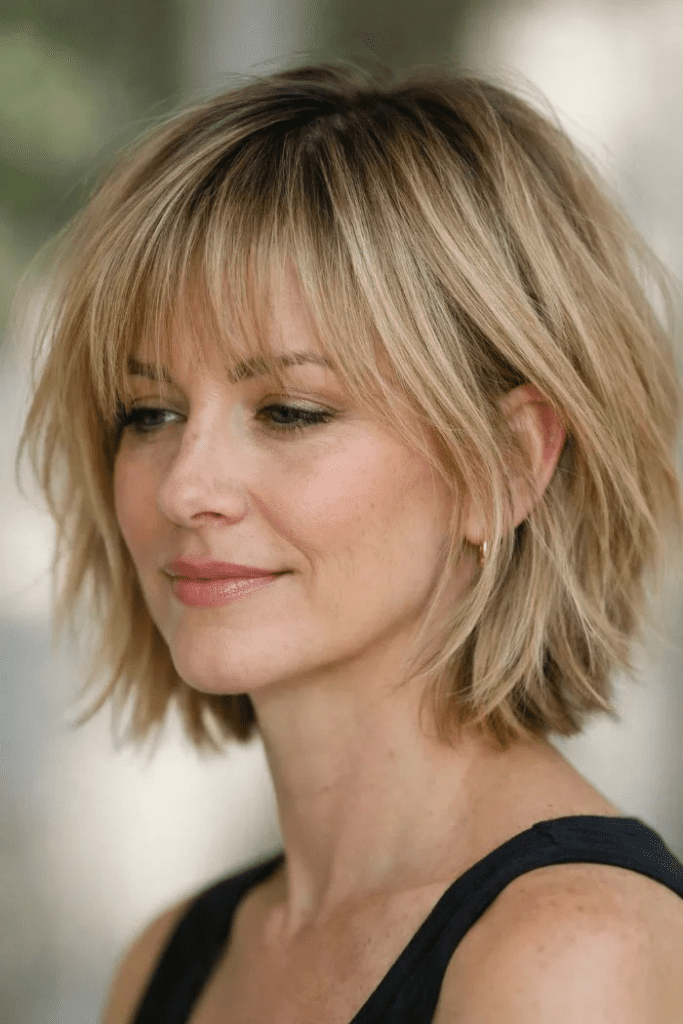
Soft bangs paired with a tousled bob give fine hair coverage at the front and volume through the body of the style simultaneously — and that combination solves two of the most common fine hair complaints in a single cut. The bangs draw attention to the eyes and create a focal point that reduces the visual emphasis on any thinning at the temples or crown. The tousled bob body adds the width and movement that makes fine hair look full.
Ask your stylist for: Soft, lightly point-cut bangs that aren’t heavy or blunt. A bob with enough texture to tousle — not a smooth, sleek baseline. Internal layering through the mid-lengths for movement.
Styling tip: Blow-dry the fringe section first, directing it forward with a small round brush. Then apply a light texture spray through the rest of the bob and work it through with fingertips for the tousled finish. Always style the bangs first — they set the tone for the whole look.
25. Tousled Bob with Wispy Bangs

The wispy bang version of the tousled bob is even lighter and more effortless-feeling than soft bangs — and for fine hair that’s particularly thin at the hairline, wispy bangs are often the more flattering choice because they don’t require the density that a fuller fringe does to look intentional. The tousled bob body keeps everything moving and textured so the overall style never looks sparse.
Ask your stylist for: Airy, barely-there wispy bangs — point-cut at the edges for the most natural finish. A tousled bob with choppy surface texture rather than a smooth, precise finish. The combination should feel effortless and slightly undone from the moment you leave the salon.
Styling tip: Dry shampoo at the roots combined with a light twist of a few sections of the bob while it’s slightly damp — then letting them air dry — creates an easy, organic tousle that lasts. This is a style that actively benefits from not trying too hard.
26. Undercut Pixie with Textured Top
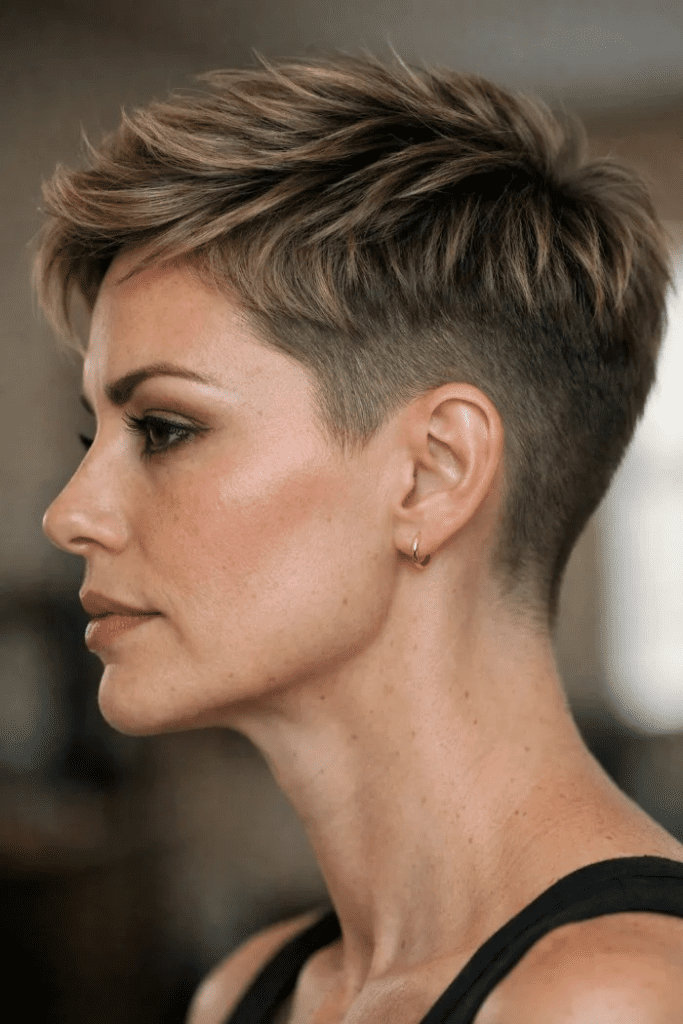
The undercut pixie solves the fundamental fine hair problem with elegant simplicity: remove the hair that goes flat and focus all the attention on the hair that can be made to look full. The closely cut sides eliminate the flat, limp sections that drag fine hair down, while the longer, textured top section is free to hold volume, texture, and height without competition from the sides.
Ask your stylist for: A closely cut undercut at the sides — discuss the grade with your stylist based on how dramatic you want the contrast. A longer top section with deliberate texture — point-cut rather than blunt or razored. The transition from the undercut to the longer top should be gradual for the most wearable, flattering result.
Styling tip: A matte paste raked through the top section and then lifted upward with fingertips at the roots gives this style its textured, lifted quality. Pinching the ends with product-covered fingertips adds the separation that makes the texture look deliberate rather than random.
27. Wet-Look Pixie
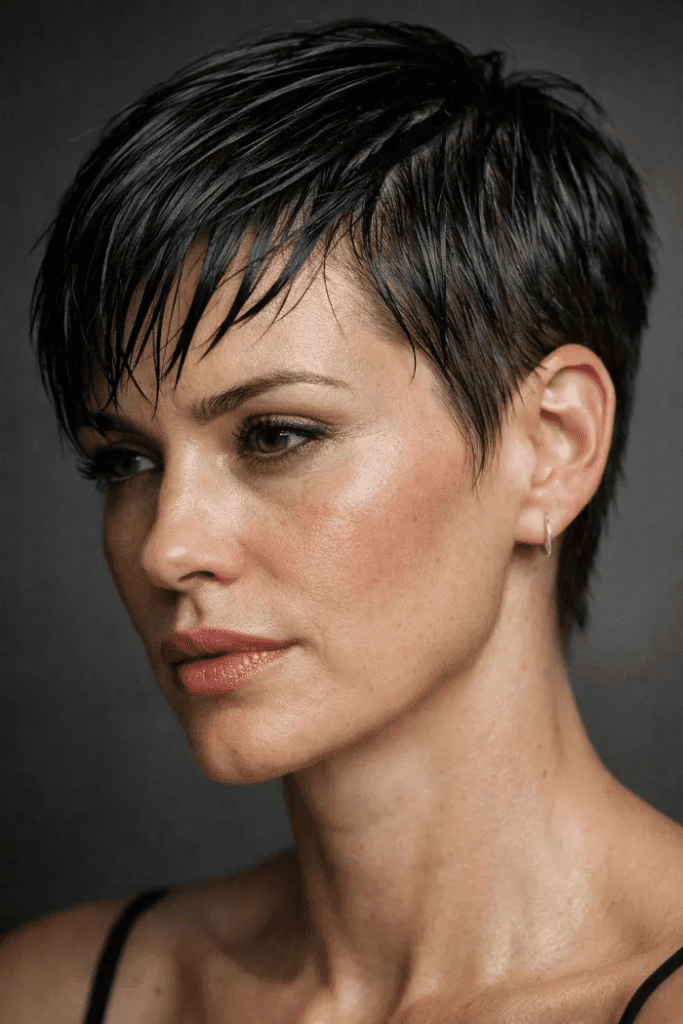
The wet-look pixie flips the conventional fine hair styling script in the most refreshing way: instead of chasing volume you can’t maintain, it leans fully into a sleek, directed, intentional finish that looks polished and confident. The shine and deliberate direction of the style make it look full and purposeful, and the fringe direction — combed forward or swept to one side — adds a graphic quality that gives fine hair genuine visual impact.
Ask your stylist for: A pixie length that suits your face shape. A slightly longer fringe section that can be directed forward or to one side. A clean, precise cut throughout — the wet-look effect requires a well-executed underlying structure to look intentional.
Styling tip: A lightweight gel worked through slightly damp hair — not soaking wet — then combed carefully in the desired direction while the hair is still wet, gives this style its signature finish. A touch of liquid gloss or shine serum applied on top of the set gel adds the reflective quality that makes the wet-look finish look deliberate and polished rather than just unwashed.
28. Windswept Layers
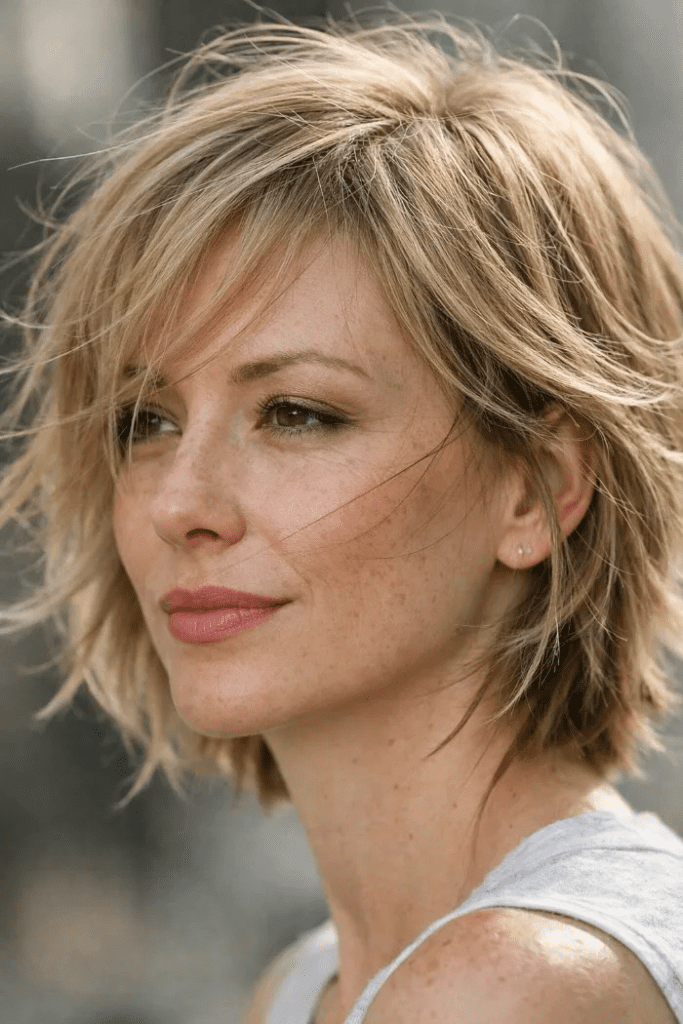
Windswept layers are the antithesis of stiff, over-styled fine hair. The feathered texture lifts the crown and creates a natural, organic movement through the lengths that makes fine hair look airy and dimensional rather than thin and flat. The key word in this style is “windswept” — it should look like the hair was caught in a flattering breeze and held there, not like it was meticulously arranged.
Ask your stylist for: Feathered layering that’s light and gradual rather than heavy and step-cut. Internal layering at the crown for lift. A slightly textured surface that moves rather than a polished, smoothed finish. Tell your stylist you want the final result to look “effortlessly tousled, not styled.”
Styling tip: Blow-dry forward first with a round brush — this sets the internal structure and lift at the crown. Then sweep the top section back and to the side with the round brush on a final pass, which creates the signature windswept direction. A flexible-hold spray applied with the dryer still running locks the movement in place.
How to Style Fine, Thin Short Hair for Maximum Volume
The right haircut creates the foundation, but technique takes it the rest of the way. Here’s what consistently makes the biggest difference for fine, thin short hair:
Start at the roots, not the ends. Volume for fine hair lives at the root — that’s where lift originates and where it needs to be built and set. Always apply volumizing products at the roots first.
Use a root-lifting spray or lightweight mousse on damp hair. Applied before blow-drying, these products create a structural scaffold of volume that the dryer then sets in place. Applied to dry hair after styling, they do very little. The sequence matters.
Blow-dry upside down for the first 90 seconds. This sounds almost too simple — but directing heat toward the roots while the hair hangs downward lifts the roots away from the scalp before they can set flat. It’s the single most effective blow-drying technique for fine hair volume.
Use a round brush through the crown section. A paddle brush smooths and flattens. A round brush lifts, adds bend, and creates movement. Even a quick 10-minute blowout with a medium round brush produces significantly more volume than the same amount of time with a paddle brush.
Set with cool air before releasing the brush. After drying each section, hit it with cool air from your dryer before releasing the brush. The cool air sets the shape in place — hair that’s released while still warm will fall flat as it cools.
Flip your part. This is the fastest volume hack available. Wearing your hair on the opposite side of its natural part creates instant lift at the roots because the hair follicles are directed against their default direction.
Dry shampoo at the roots is a styling tool, not just a refresh. Applied proactively to dry roots before a style starts to look flat, dry shampoo absorbs oil, adds texture and friction, and keeps the style lifted for hours longer. Use it as a base layer, not a rescue product.
Best Products for Short Fine Thin Hair
Root-lifting spray: The most targeted volumizing product available. Applied directly to damp roots before blow-drying. Look for formulas that dry clear and don’t leave residue.
Lightweight volumizing mousse: Works through damp hair from roots to ends. Adds body and hold without the weight of creams or gels.
Matte styling paste: Essential for textured and pixie styles. Separates strands and adds grip and lift without shine or weight.
Matte styling powder: The lightest volumizing product available. Dusted at the roots on dry hair, it absorbs oil and adds friction that holds fine hair upright. Ideal for crown lift on the most delicate fine hair.
Dry shampoo: Both for oil absorption and proactive volume. Used at the roots before styling, it transforms the texture of fine hair and dramatically extends the life of any short style.
Flexible-hold finishing spray: The essential finishing step. Holds the shape without flattening the volume. Always choose flexible over maximum-hold for fine hair.
Shine serum: Used sparingly at the ends only — never the roots. Adds healthy-looking gloss without weighing fine strands down.
Final Thoughts
Thin, fine hair is not a hair problem. It’s a hair type — one that responds beautifully to the right short cut, the right styling technique, and the right understanding of what makes it look its absolute best.
The cuts on this list are not tricks or illusions. They’re structures designed to work with the natural properties of fine hair — its lightness, its movement, its tendency to lift when not weighed down. When you find the right one, the result isn’t “fine hair that looks thick.” It’s fine hair that looks genuinely great — on its own terms, in its own way.
Choose the style that feels most like you. Bring the photo to your stylist. Say the sentence. And then stop fighting your hair and start working with it.
Save your favorites and bring them to your next appointment — the more specific your reference, the better your result.
What short haircut makes thin hair look thickest?
A blunt bob or clean one-length cut consistently produces the most “thick-looking” result on fine hair, because the aligned hemline creates a visual density at the ends that reads as fullness. If you prefer a pixie, ask for light texture at the crown only — not heavy layers throughout — and keep the ends strong and clean.
Should thin hair be layered or blunt?
Most thin hair benefits from primarily blunt ends with a few strategic soft layers at the crown. A mostly blunt hemline keeps the perimeter looking dense and healthy. Light internal layers at the crown add lift and movement without compromising end density. Heavy layering throughout — especially at the perimeter — is the most common cause of fine hair looking wispy and thin-ended.
How do I style fine, short hair for more volume without heat?
The twist-and-dry method creates gentle waves without heat: twist damp hair into two buns, secure with soft ties, sleep on them or let them dry fully, release and rake through with fingertips. A dry shampoo at the roots before this process gives even more lift. Alternatively, a diffuser on low heat is significantly less damaging than a flat iron or curling tong and still produces excellent volume for fine hair.
What products should I avoid on fine, thin hair?
Heavy oils and serums applied at or near the roots flatten fine hair almost immediately. Rich, thick styling creams throughout the lengths add weight that fine strands can’t support. Alcohol-heavy products can dry out fine hair and cause breakage over time. Hard-hold gels create stiff, unnatural finishes that emphasize rather than disguise fineness. The rule for fine hair is always: the lighter the product, the better.
How often should fine, thin short hair be trimmed?
Every four to six weeks for pixie cuts and very short styles. Every six to eight weeks for bobs and slightly longer short styles. Fine hair reveals growth and split ends faster than coarser hair types, and a short style that’s overdue for a trim can lose its shape quickly — which is when flat, shapeless fine hair makes its unwelcome return.