24 Strategic Pixie Bob Haircuts for Thin Fine Hair: Volume-Amplifying Silhouettes That Fake Instant Density
Short pixie bob haircuts—often called “bixies”—are the ultimate architectural solution for hair experiencing a loss of structural mass. When individual follicle diameter is fine, longer styles tend to pull the hair downward, causing it to fall completely flat by midday. Transitioning to a structured hybrid cut introduces automatic crown elevation, collapses weight at the nape, and creates a dense perimeter that simulates natural thickness.
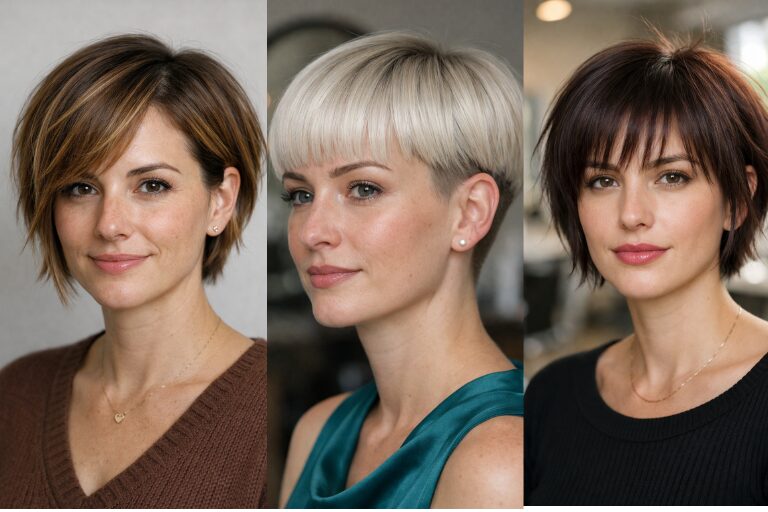
The secret to mastering this silhouette lies in engineering a solid baseline. While fine hair requires texturizing to generate multi-directional movement, over-thinning the perimeter will render the style fragile and see-through. By combining a clean, tailored taper at the base of the skull with longer, volumetric layers on top, you build a self-supporting shape that works with your texture instead of fighting it.
Diagnostic Selection Framework:
- Temple Sparse Deficits: If your hair is thinning predominantly along the forward hairline or temples, prioritize variations utilizing a deep lateral part or a sweeping side fringe to maximize facial camouflage.
- Occipital Flatness: If your crown collapses instantly, select a spherical, softly stacked back to establish built-in gravity defiance.
- Fragile Ends: If your lengths look thin and wispy, strictly avoid razor cutting and instruct your stylist to implement clean, blunt perimeter cuts.
1. Dimensional Highlighted Side-Swept Bixie

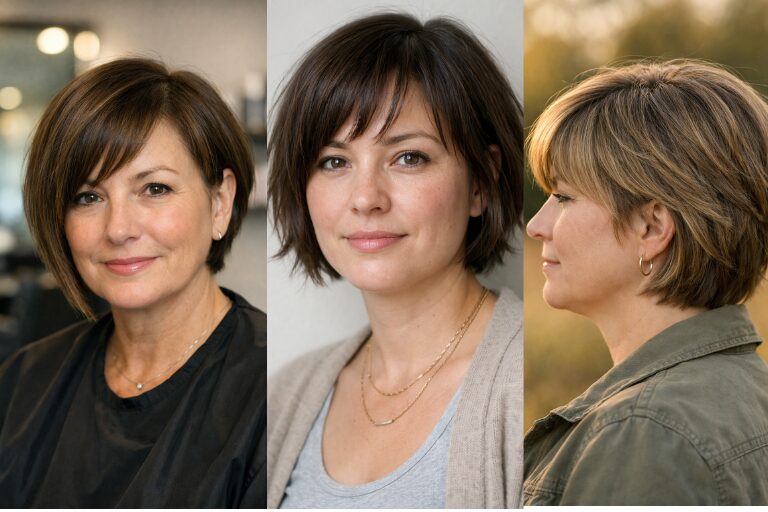
Shifting the hair into a deep lateral parting redirects the hair’s natural weight distribution, instantly masking sparse areas along the hairline. Woven multi-tonal highlights introduce optical depth, while soft point-cutting at the tips ensures the sweeping fringe stays fluid rather than heavy.
2. Polished Ear-Tuck Pixie Bob

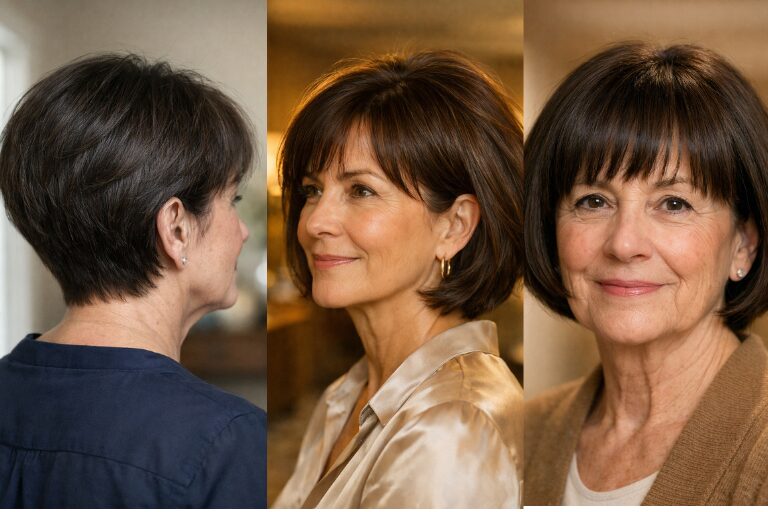
This sophisticated look balances the neatness of a short crop with the soft framing of a bob. The lateral lengths tuck seamlessly behind the ears to broaden the facial structure, while the vertex is blown forward to maximize visual density across the canopy layer.
3. Spherical Crown-Lift Stacking
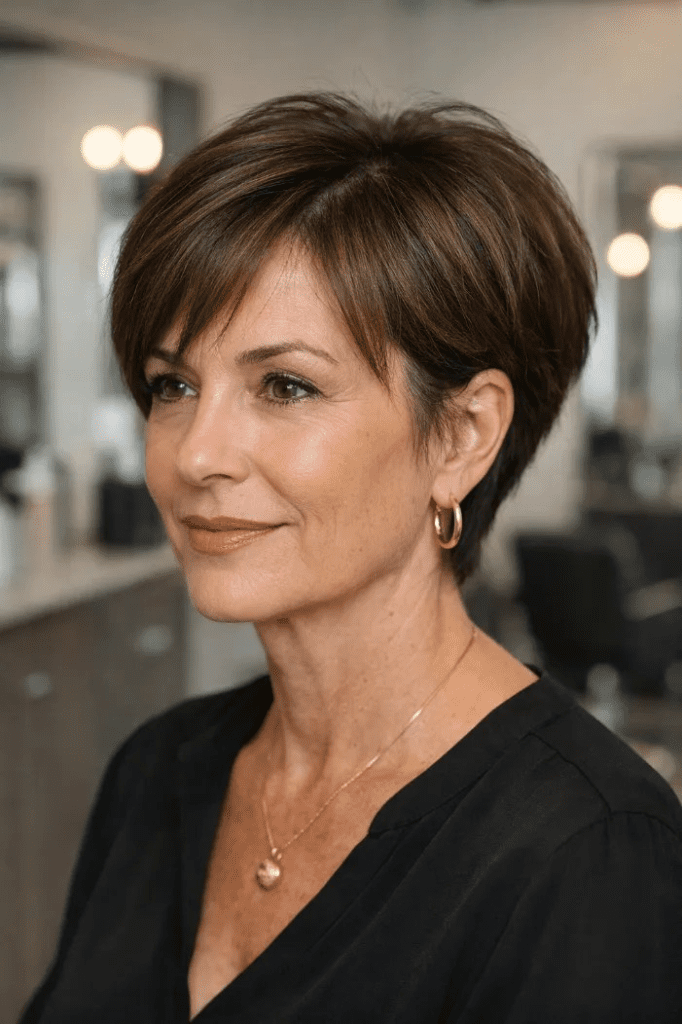
Perfect for women who want a self-contained volume boost without aggressive backcombing. The occipital bone is supported by a soft graduation of stacked layers, while the perimeter remains strictly blunt to preserve the illusion of a thick, uniform hair mass.
4. Soft Asymmetric A-Line Profile

An A-line perimeter provides the elegance of longer, face-cradling angles without the structural weight that drags down fine strands. Keep interior layering to an absolute minimum and utilize a ceramic hot brush to infuse a gentle, light-reflecting curve into the front panels.
5. Fragmented Piecey Fringe Hybrid

This highly texturized bixie uses choppy interior layers to eliminate flat spots across the cranium. The piecey, separated ends allow the style to maintain its memory between shampoo cycles. Define the tips with a micro-dab of water-soluble matte paste.
6. Feathered Aerodynamic Crop
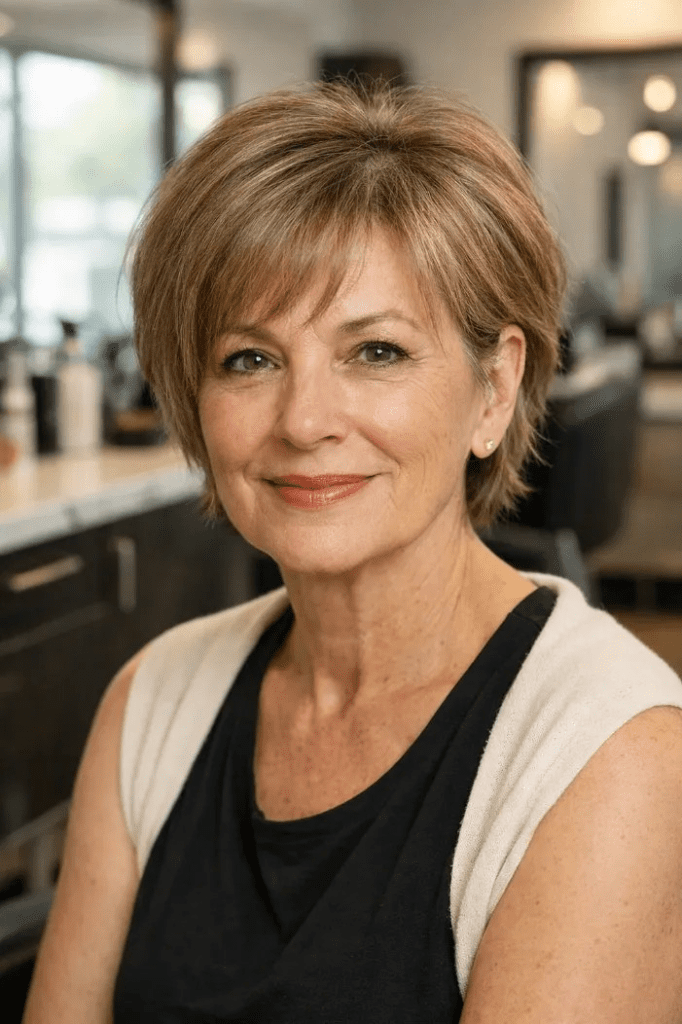
Soft, overlapping layers lift effortlessly away from the scalp while the sides hug the head shape closely. This scissor-over-comb technique ensures a flawless, organic grow-out phase that resists looking choppy or disconnected.
7. Ice-Blonde Tapered Silhouette
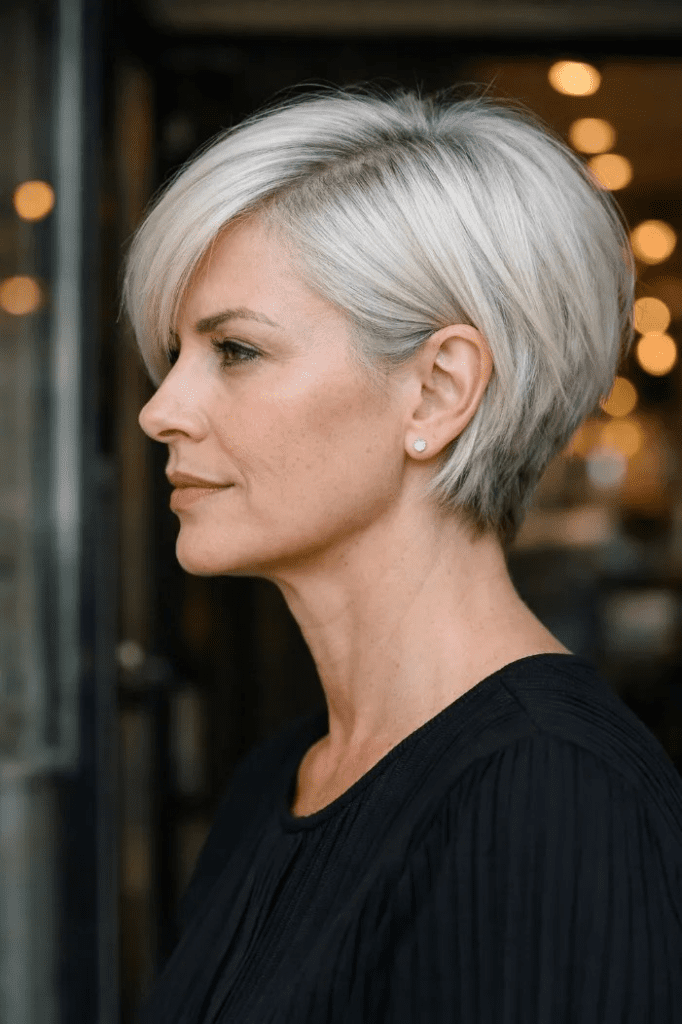
Cool-toned platinum shades expand the hair cuticle slightly during the coloring process, creating built-in texture. Pairing this expansion with a closely manicured nape pushes the visual focus upward, resulting in a clean, high-density appearance.
8. Multi-Textural Brunette Crop

Deep espresso and brunette tones look incredibly rich when given a piecey, multi-directional texture. These targeted interior layers generate a full-bodied silhouette without sacrificing the perimeter thickness. Style by finger-drying with an ultra-light spray wax.
9. Concealed Nape Undercut Bixie
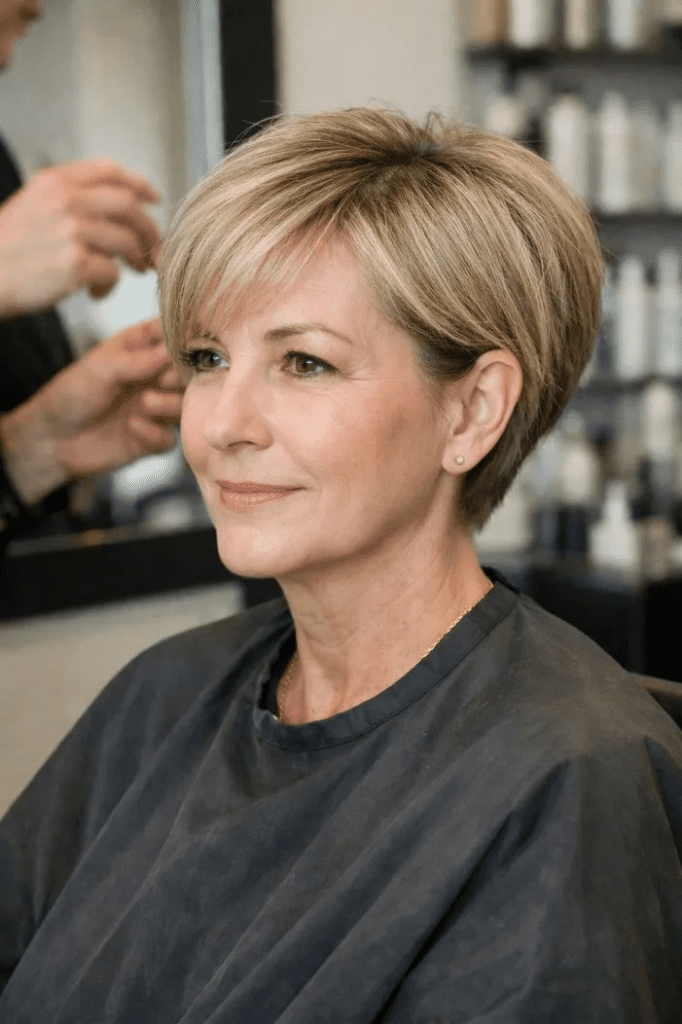
A brilliant choice for fine hair that becomes frizzy or unmanageable in high humidity. A hidden undercut removes fuzzy weight at the very base of the neck, allowing the smooth canopy layer to fall evenly into a crisp, controlled line.
10. Fashion-Forward Micro Fringe Bixie

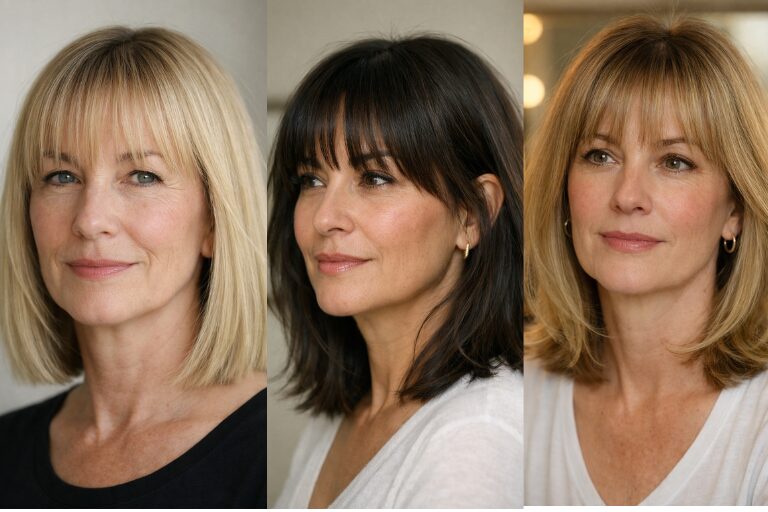
An avant-garde choice that makes a powerful style statement. Cutting a blunt, ultra-short micro fringe instantly establishes a solid structural line at the forehead, making the surrounding fine lengths appear drastically denser by comparison.
11. Blunt Platinum Baby Bang Crop
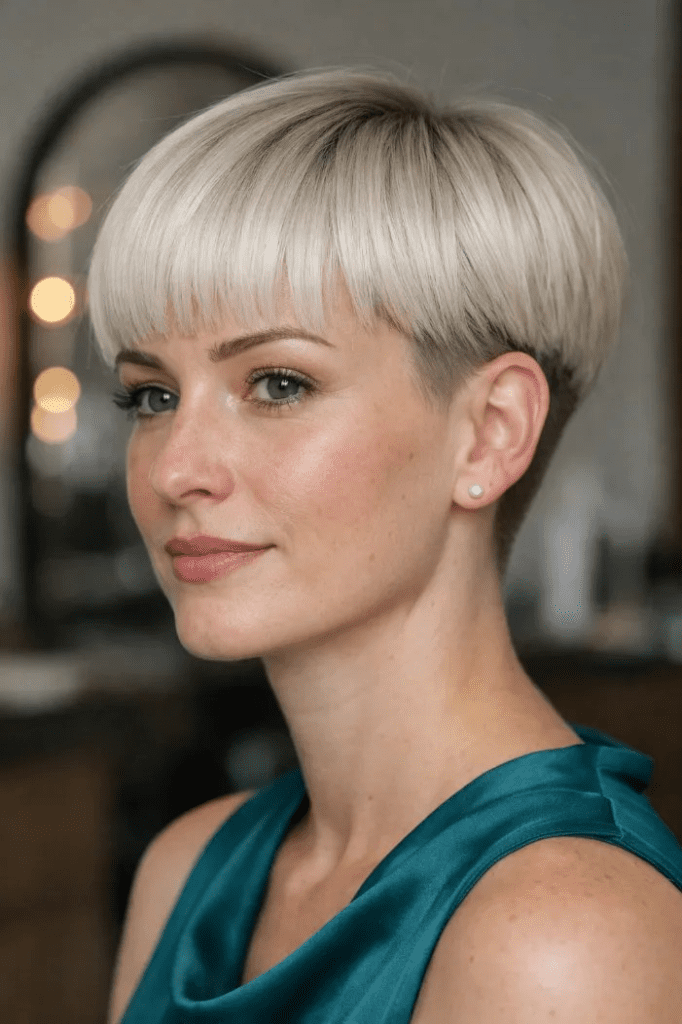
This pristine style maximizes structural weight distribution by pairing a short, blunt fringe with a perfectly spherical crown. Keeping the lateral areas closely cropped ensures the crown looks incredibly full. Elevate with a silica-based root-volumizing powder.
12. Swept Vertex Undercut Profile
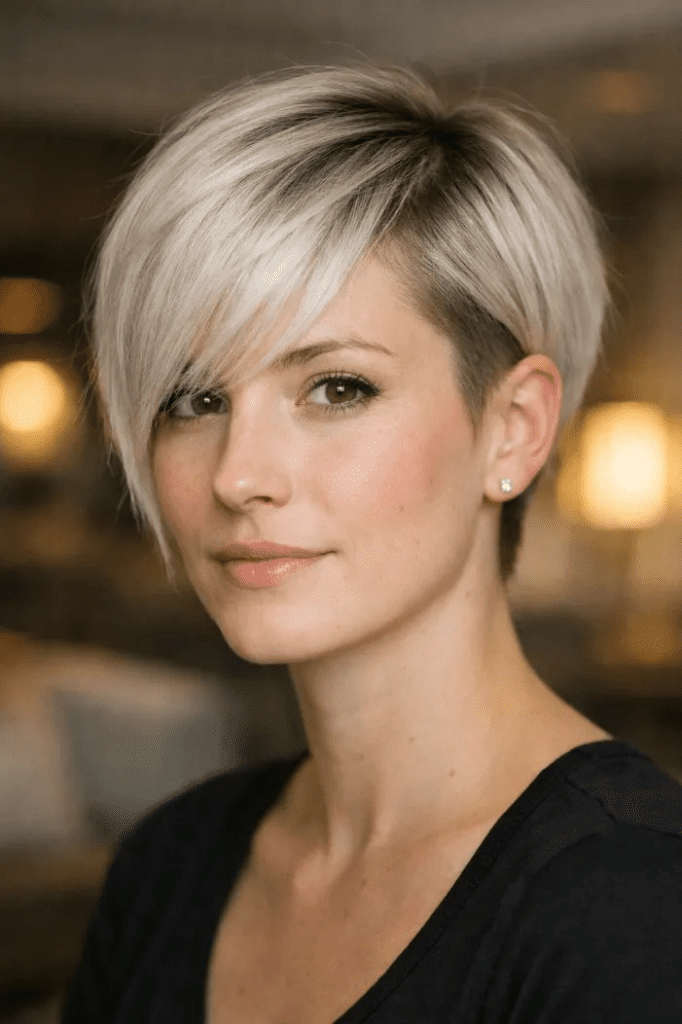
Eliminate the bulk that often causes short fine hair to stick out awkwardly above the ears. A soft side undercut creates a tailored canvas, allowing the elongated vertex layers to sweep over seamlessly for elegant facial framing.
13. Classical Rounded Perimetric Bixie
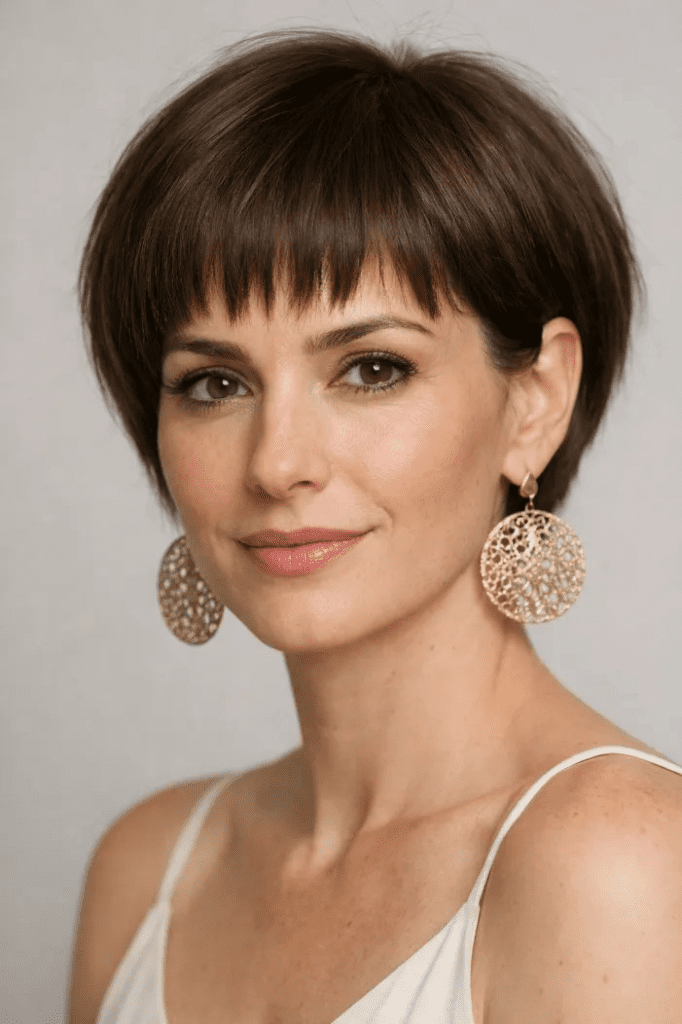
The ultimate safe bet for women transitioning to shorter lengths. The hair is cut to mimic the smooth contour of the head, combining polished sides with a built-in root-lift cushion at the vertex. Use a flat brush to smooth the top layer down for a glossy finish.
14. Lived-In Shaggy Disconnected Cut

Introduce effortless, multi-directional movement with soft, broken interior layers that prevent fine hair from laying flat against the cheekbones. Distribute a weightless volumizing foam through damp strands and scrunch thoroughly prior to diffusing.
15. Deep Lateral Parting Illusion

A deep side part provides rapid camouflage for a receding or thinning front hairline while drawing immediate attention to the eyes. A slightly stacked back anchors the silhouette, ensuring it doesn’t collapse or lose its shape as the day progresses.
16. High-Contrast Sleek Tapered Nape
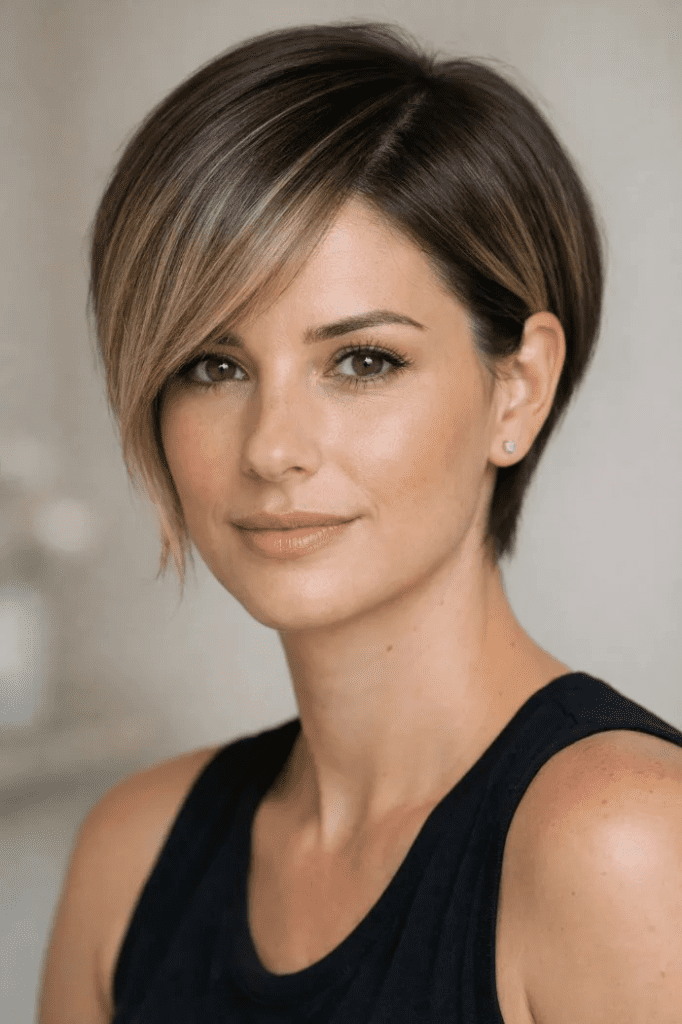
By cropping the nape area tightly against the neck, the remaining hair at the crown looks significantly thicker and more voluminous by contrast. Mist the roots with a weightless body-building spray prior to executing a directional blow dry.
17. Softly Graduated Cloud Feathering

This technique keeps the perimeter lines completely intact while introducing ultra-fine, cloud-like layers through the top. This placement ensures the ends stay beautifully polished and cohesive rather than wispy or separated.
18. Structural Stacked Occipital Pivot

This cut focuses entirely on building gravity-defying height at the back of the head. Graduated, interlocking layers prop each other up, creating a permanent shelf of volume that instantly balances out an elongated or oval facial profile.
19. Contour-Hugging Tapered Vertex
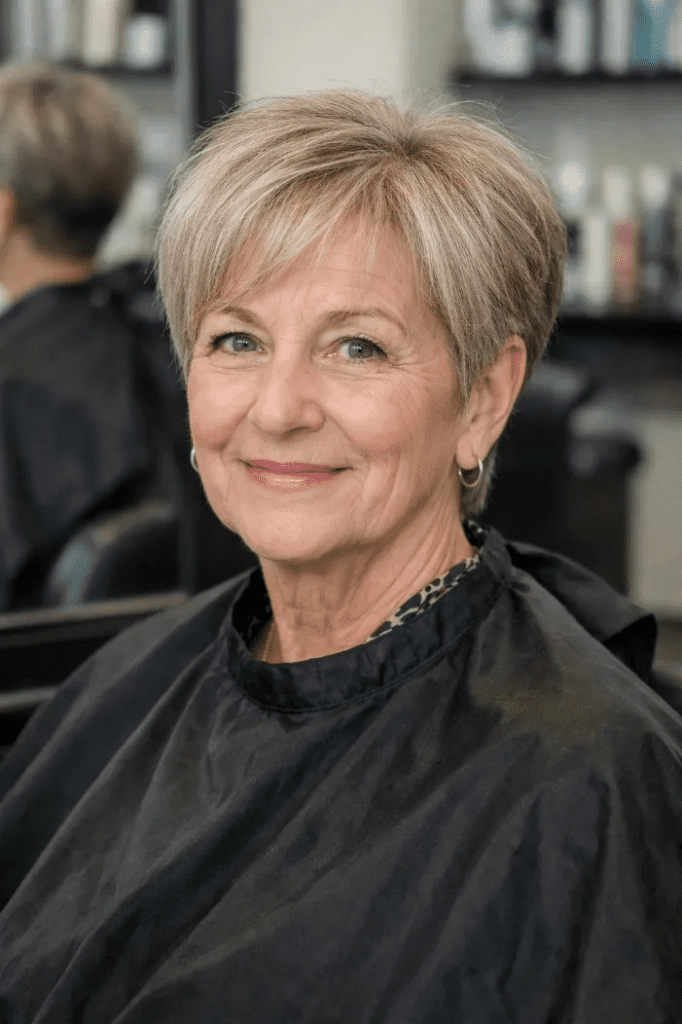
A low-maintenance masterpiece that looks pristine from every angle. The tapered back hugs the neck line closely, while the longer crown area creates soft height. Incorporate a delicate side-swept fringe to diffuse light around the temples.
20. Clean Precision-Tapered Crop

An intentional, crisp crop that relies on strict geometric perimeters to simulate maximum follicle density. Use a classic vent brush to lift the roots upward and backward during your drying routine to establish an enduring, morning-to-night shape.
21. Chromatic Silver Strut Taper

Embrace natural salt-and-pepper or silver wire textures with a tailored bixie that sweeps forward to blur any visible scalp show-through. The airy perimeter keeps the style modern, fresh, and completely free of flat spots.
22. Focal-Point Highlight Fragment

By positioning deliberate, high-contrast blonde or caramel highlights exclusively along the front fringe, the eye is drawn forward and away from a thinning crown. Keep the structural layers chunky and solid rather than heavily texturized.
23. Tousled Espresso Muted Shag

A lived-in, effortless cut that celebrates soft texture. The elongated top layers allow for customizable movement, making it incredibly simple to conceal lower-density patches. Style by scrunching with a lightweight mousse and air-drying.
24. High-Altitude Crown Elevation Crop

This silhouette concentrates all texturizing and layering at the absolute apex of the skull, leaving the lateral and lower profiles sleek and tucked. Shifting your parting line slightly after drying creates an instant explosion of root volume.
Final Wrap-Up
When navigating lower hair densities, the smallest details dictate the success of your final look. If your crown deflates instantly under the weight of your hair, lean heavily toward an occipital stack or a rounded bixie silhouette. If your temple area requires strategic camouflage, a deep side part paired with a sweeping fringe is your absolute best defense.
The primary directive when treating fine hair at the salon is to protect the perimeter bulk. Never allow a stylist to over-thin your ends with texturizing shears or slide-cutting razors, as a solid, blunt edge is what ultimately translates to health and thickness in everyday life. Commit to a routine maintenance trim every four to six weeks to keep your nape clean, your edges crisp, and your built-in volume floating exactly where it belongs. Save your favorite visual concepts from this guide to serve as a precise blueprint for your next salon visit!
What specific terminology should I use with my stylist to ensure my fine hair looks thicker?
Instruct your stylist to focus on a structured silhouette with a blunt perimeter and a clean taper at the nape. Explicitly request internal texturizing or point-cutting at the crown to build lift, while stipulating that the perimeter lines should remain square and free of heavy thinning shears or razor shredding to protect your remaining tensile density.
Will transitioning to a shorter pixie bob expose a sparse or thinning hairline?
Not if the architectural layout is customized correctly. A bixie cut is actually highly effective at masking low density. By retaining extra length through the vertex and implementing a deep side part or a sweeping side fringe, you can effortlessly drape hair across the temples and hairline, creating the optical illusion of a dense, full canopy.
What is the most effective styling routine to prevent a fine bixie from deflating?
Sustainable volume requires product friction at the roots. Begin by applying a weightless volumizing mousse or root-lift spray directly to damp scalp areas. Blow-dry the crown by directing the hair upward and opposite its natural growth pattern to lock in height. Finish the style by pinching the tips with a pea-sized amount of matte pomade or texturizing powder for piecey separation, completely avoiding heavy oils or silicone serums near the scalp.