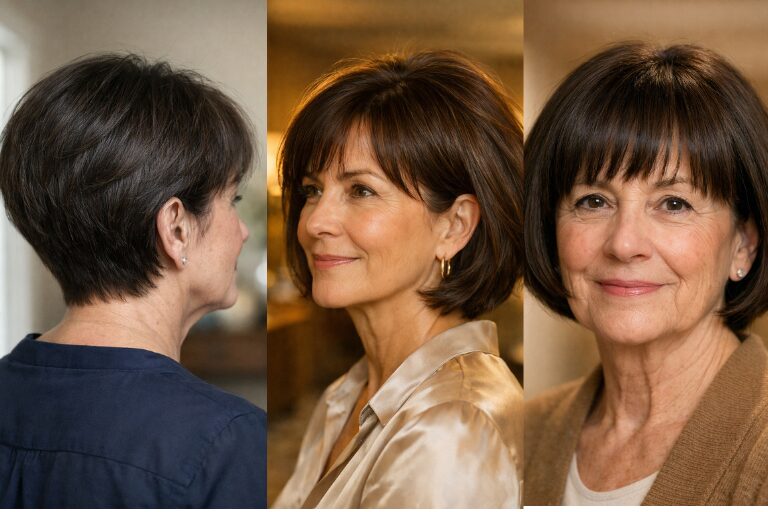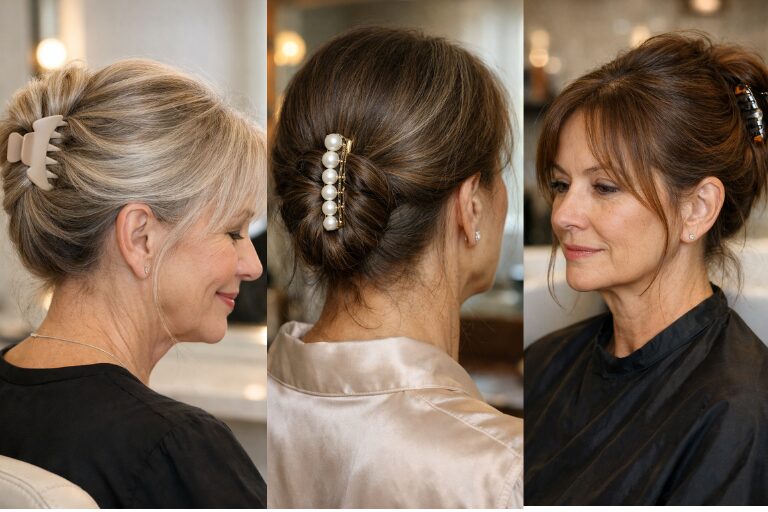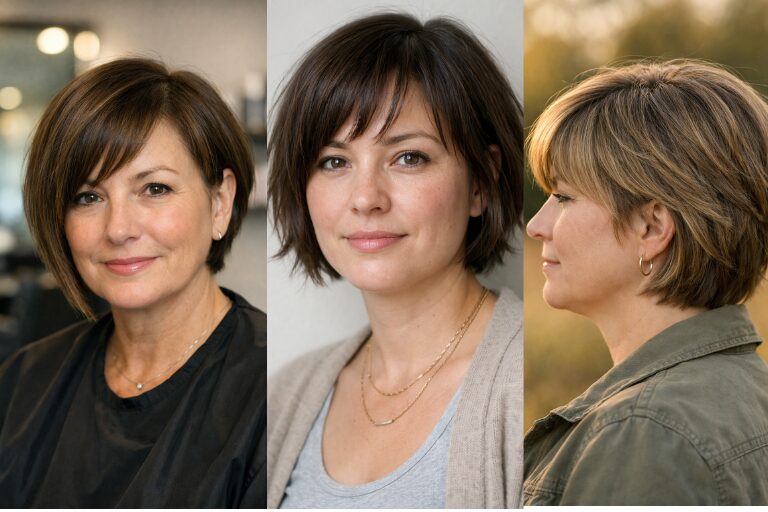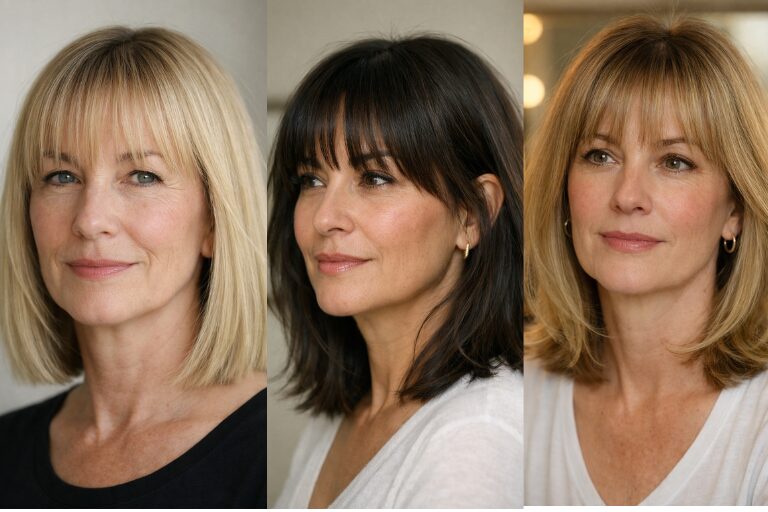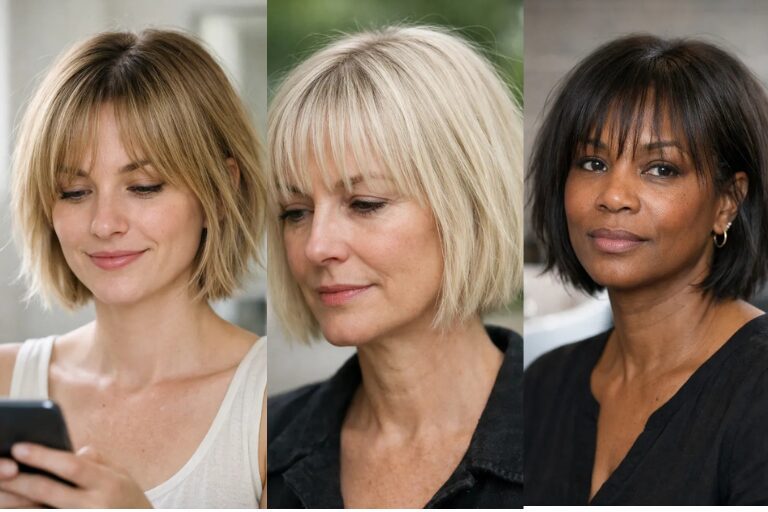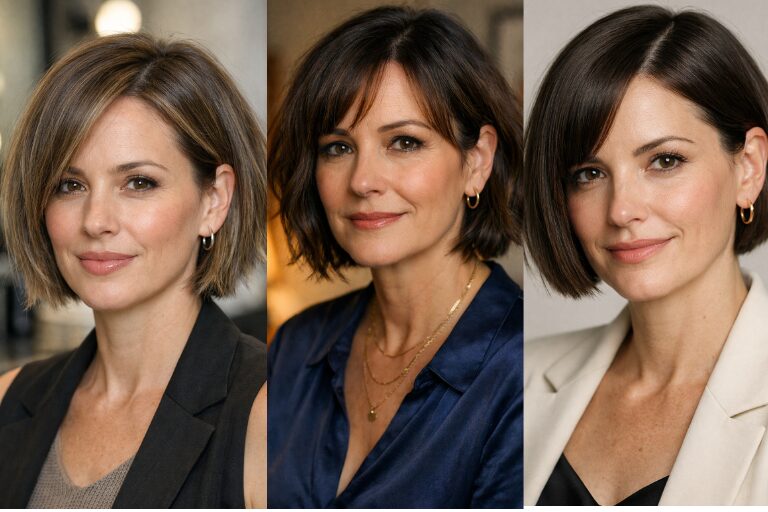
20 Bob Hairstyles for Fine Hair That Keep Their Shape All Day
Fine hair has one consistent need that overrides almost every other styling consideration: shape that holds itself. Not volume created through teasing or heavy product, not layers piled on in the hope that more cutting means more fullness — just a clean, well-proportioned outline that does the structural work the hair cannot do through density alone.
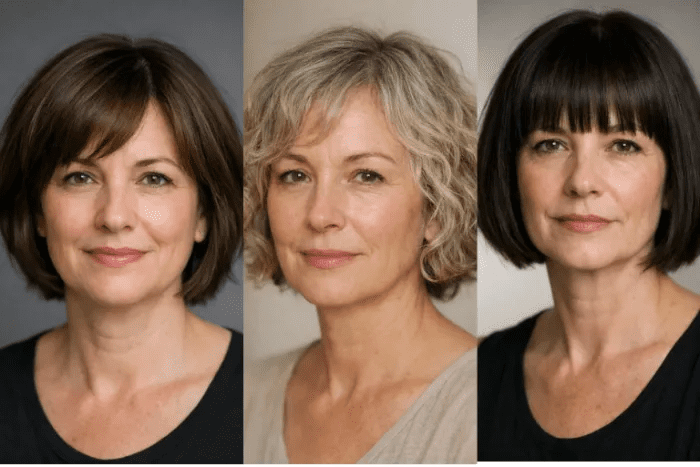
The bob is genuinely the best answer to that need. The length itself creates an illusion of solidity that longer or shorter cuts struggle to match. Clean lines at the perimeter read as density regardless of how fine the individual strands actually are. And because a bob’s shape comes from precision rather than from layering or texture, it holds its structure through the day and through the growing-out process far better than cuts that rely on more elaborate technique.
What makes the difference between a bob that works for fine hair and one that does not usually comes down to where the weight sits and how much (or how little) layering is involved. Too much layering removes the density that makes the perimeter look solid. Too little structural variation makes the cut feel flat and lifeless. The best bobs for fine hair find the precise middle point — clean enough to look dense, varied enough to have movement.
These 20 bob hairstyles for fine hair are all built around that balance. Every look comes with what to ask for at the salon, a styling tip, and why it works specifically for fine hair.
What Makes a Bob Work for Fine Hair
Before the looks, these four principles explain why certain bob details consistently flatter fine hair while others work against it.
The perimeter is the foundation. A clean, well-defined outline at the ends creates the single most powerful illusion of density available to fine hair. Blunt or lightly textured ends read as solid; heavily thinned ends read as sparse.
Length matters more than people expect. Bobs sitting at the jaw or just below tend to work best for fine hair — this length has enough weight to fall with shape and structure but is not so long that the ends become transparent under their own weight.
Layers should add movement, not remove mass. Light internal layering or subtle face-framing pieces add the movement fine hair needs without thinning out the perimeter that creates the density illusion. Heavy, distributed layering throughout the cut removes the very thing fine hair cannot spare.
Small details change everything without changing the cut. A side part instead of a center part. Curtain bangs instead of no fringe. A slightly different finish. These details shift the entire impression of the bob without requiring a different haircut — which is part of why the bob is so versatile for fine hair specifically.
20 Bob Hairstyles for Fine Hair
1. Asymmetrical Bob With Soft Side Part

The asymmetrical bob uses a slightly longer front section to sharpen the overall outline while keeping the ends light and easy to manage. The unevenness between the front and back length creates a quiet structural interest that makes fine hair appear fuller — not through any added bulk, but through the geometry of the cut itself.
What to ask for: A bob with a noticeably longer front section and a shorter back, blended smoothly rather than creating an abrupt step. Minimal layering — the asymmetry itself provides the visual structure, so heavy texturing is not necessary.
Best for: Fine to very fine hair. The directional weight of the asymmetry adds visual interest that a perfectly even bob cannot achieve at the same density.
Styling tip: A soft side part deepens the asymmetry and adds a small amount of root lift on the deeper side. A round brush directing the longer front section slightly forward completes the framing effect.
Why it works: The uneven length creates a sense of deliberate design that distracts from any lack of density — the eye reads the asymmetry as a stylistic choice rather than noticing how fine the hair actually is.
2. Bob With Curtain Bangs

Curtain bangs are one of the most universally flattering fringe additions for fine hair because they add forward interest and face-framing without requiring the density that a full blunt fringe needs to look present. On a softly cut bob, the curtain bangs blend into the sides seamlessly, creating balance and gentle movement across the front of the face.
What to ask for: A soft bob with curtain bangs that part naturally in the center and graduate longer toward the temples, blending into the front sections of the bob. Ask for the bangs to be cut with thinning shears for maximum lightness.
Best for: Fine to medium-fine hair. Curtain bangs are specifically designed to be light, which makes them one of the most fine-hair-friendly fringe options available.
Styling tip: A small round brush in a C-shape during blow-drying, sweeping each side of the curtain outward, gives the most flattering, face-opening result. A light flexible cream keeps the bangs separated without weighing them down.
Why it works: The curtain bangs frame the face symmetrically and draw the eye upward toward the eyes — exactly the kind of visual redirection that makes fine hair’s overall appearance feel more substantial and considered.
3. Bob With Double High Knots

This is the most playful and unexpected styling option in the guide — a bob worn with double high knots that lift the crown and reveal the natural texture and shape of the cut underneath. It is a temporary styling choice rather than a different cut, which makes it an excellent demonstration of how much variety a single well-cut bob can offer.
What to ask for: A bob cut with a light, controlled base that holds its shape well when partially gathered — ask your stylist about how the cut will behave when sectioned for updo styling, particularly around the crown.
Best for: Fine to medium hair with enough length to gather into small knots — typically jaw-length or slightly longer.
Styling tip: Section the top portion of the bob and twist into two small, high buns, securing with soft pins or small clear elastics. The remaining length stays down, showing the cut’s baseline. This look works particularly well on day two or three hair, which holds the knots more securely than freshly washed hair.
Why it works: Lifting the crown into double knots creates instant volume and reveals the texture and movement built into the cut — it is a way of styling fine hair that adds genuine height without any product or heat styling required for the base itself.
4. Bold Inverted Bob
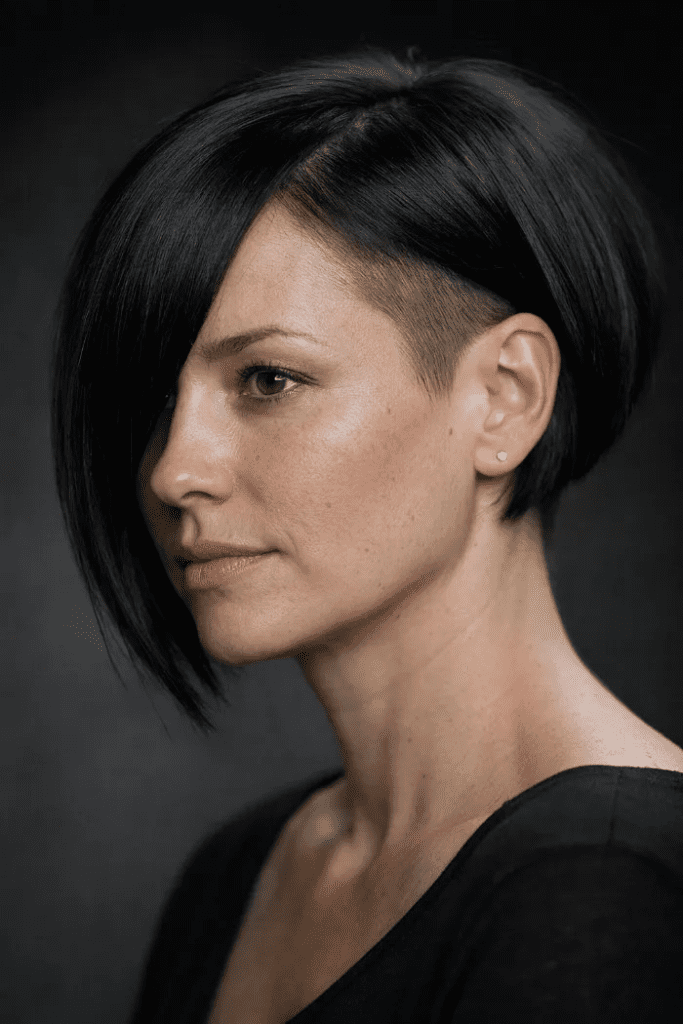
The inverted bob — shorter at the back, longer at the front — is one of the most structurally powerful options for fine hair because the angled geometry creates visual density specifically along the jawline, which is the most visible part of the cut. The sharp definition of the angle gives fine hair a stronger, more deliberate outline than a straight, even bob can achieve.
What to ask for: A clearly inverted bob with a noticeably shorter back and extended front sections — ask for the angle to be confident rather than subtle for the most striking structural effect. A clean, polished finish with minimal additional layering.
Best for: Fine to medium-fine hair. The inverted shape is one of the most effective options for adding perceived density specifically around the jaw and face.
Styling tip: A flat iron through the front sections gives the inverted bob its sharpest, most defined line. A paddle brush blow-dry through the back maintains the clean, controlled finish at the nape.
Why it works: The dramatic length difference between the front and back creates a strong directional line that the eye follows — that visual movement and the concentration of length at the jaw both contribute to a perception of fullness that a uniform-length bob does not achieve.
5. Choppy Bob With Bangs

Choppy, uneven ends combined with lightly textured bangs prevent a bob from ever looking flat or static — there is movement built into every part of the cut, from the fringe through to the perimeter. For fine hair, this constant low-level texture creates visual interest that distracts from any lack of density while keeping the overall shape relaxed and genuinely wearable.
What to ask for: A choppy bob with point-cut, uneven ends throughout, and lightly textured bangs that blend into the choppy perimeter. Ask for the choppiness to feel organic rather than aggressively cut — soft irregularity rather than sharp disconnection.
Best for: Fine to medium hair with some natural movement. The choppy texture is most effective when the hair has enough natural body to express the unevenness clearly.
Styling tip: A texturizing spray or sea salt spray through damp hair, scrunched and air-dried, brings out the choppy texture most naturally. Avoid heavy smoothing products, which work against the textural quality the cut is designed to create.
Why it works: The combination of choppy ends and textured bangs means there is no smooth, flat surface anywhere in the cut for the eye to register as sparse — the constant low-level movement creates an overall impression of texture and presence.
6. Choppy Textured Bob

This short bob takes choppiness even further, with deliberately irregular ends that break up the outline throughout the entire perimeter. The added texture introduces real softness and dimension, which on fine hair is particularly valuable because it makes the hair appear less uniformly flat without sacrificing the overall structure of the cut.
What to ask for: A short bob with deliberate, throughout-the-perimeter choppiness — ask specifically for point-cutting rather than thinning shears, which create texture through separation rather than through weight removal.
Best for: Fine hair that tends to look uniform or static. The choppy texture creates dimension that flat fine hair otherwise lacks.
Styling tip: A light mousse worked through damp hair before air-drying, then a tiny amount of matte texturizing paste through the dry ends for definition, gives the most authentic choppy result.
Why it works: Deliberate irregularity through the entire perimeter rather than just at isolated points creates a cohesive textural quality throughout the cut — every section of the hair has some variation, which prevents any part of the bob from looking flat by comparison.
7. Classic Bob With Full Fringe

The classic bob with a full, straight fringe is one of the most direct and most effective fullness strategies for fine hair. Both elements — the solid jaw-length bob outline and the blunt fringe — work through the same principle: a clean, even line reads as dense regardless of the actual hair density. Together they create a strong, confident frame around the entire face.
What to ask for: A classic bob sitting neatly at the jawline with a full, straight fringe cut at or just above the brow. Ask for both the perimeter and the fringe to be cut with scissors only — no thinning shears — to maximize the density-reading effect of the blunt lines.
Best for: Fine to medium-fine hair. The combination of a blunt perimeter and a blunt fringe is one of the strongest fullness strategies available in bob hairstyling.
Styling tip: A paddle brush blow-dry, smoothing the bob to its cleanest possible finish, maximizes the visual impact of the blunt lines. The fringe should be blow-dried flat with a flat brush for the crispest, most defined edge.
Why it works: Two blunt lines — the perimeter and the fringe — working together create the strongest possible density illusion available to fine hair. The strong frame around the entire face leaves no soft, undefined edges for the eye to register as sparse.
8. Classic Bob With Wispy Bangs

This is the softer alternative to the full fringe bob — a traditional bob shape paired with wispy bangs that skim the forehead lightly rather than sitting as a solid block. The fringe adds genuine lightness and movement without disrupting the clean lines of the rest of the cut, which means fine hair stays structured at the perimeter while feeling visually airy at the front.
What to ask for: A classic jaw-length bob with wispy bangs cut using thinning shears for maximum lightness. Ask for the bangs to blend gently into the sides rather than sitting as a heavy, distinct section.
Best for: Fine to very fine hair. Wispy bangs are specifically designed for hair that cannot support a heavier, fuller fringe — they are one of the most fine-hair-appropriate fringe styles available.
Styling tip: Allow the wispy bangs to air-dry naturally or use a small round brush only on the fringe section to direct it gently forward. The rest of the bob can be blow-dried smooth with a paddle brush.
Why it works: The wispy bangs add visual softness and movement at the front while the clean perimeter of the rest of the bob maintains the structural density. The combination gives fine hair both the airiness and the solidity it needs simultaneously.
9. Classic Layered Bob

This layered bob relies on subtle internal layering — placed within the cut rather than at the surface — to create movement without thinning the visible ends. The shape stays balanced and controlled throughout, offering fine hair the lift and movement that comes from layering while protecting the perimeter density that makes the cut look full.
What to ask for: A bob with internal layering only — ask specifically for the layers to be cut within the interior of the hair rather than as visible surface layers that change the outer shape. The perimeter should remain clean and largely unaffected by the internal layering.
Best for: Fine to medium-fine hair that needs some movement without sacrificing end density. The internal layering technique is one of the most sophisticated approaches to balancing these two competing needs.
Styling tip: A volumizing mousse through damp hair before blow-drying with a round brush, lifting gently at the roots, brings out the internal layering’s movement without disturbing the clean outer shape.
Why it works: Internal layers do their work invisibly — they remove just enough weight from within the cut to allow natural movement, while the outer shape remains completely full and dense-looking. It is the layering approach that gives fine hair the most benefit with the least visible compromise.
10. Classic Silver Bob With Glasses

A refined silver bob at chin length with minimal layering creates a composed, sophisticated silhouette that suits fine hair beautifully — the clean lines highlight the natural texture and the cool tone of silver hair without requiring any elaborate styling technique. It is a particularly excellent option for women who wear glasses, as the chin-length frame complements rather than competes with the frames.
What to ask for: A chin-length bob with minimal layering and a clean, smooth perimeter, styled to highlight the natural texture and tone of silver hair. Ask for a cool-toned gloss or toner to maintain the brightness and clarity of the silver color.
Best for: Fine to medium-fine silver or gray hair. The minimal layering approach suits silver hair particularly well because it lets the color and natural texture be the visual focus rather than competing with elaborate cutting technique.
Styling tip: A smoothing cream through damp hair before air-drying or a gentle blow-dry with a paddle brush gives this bob its most composed, calm finish. A purple or silver toning shampoo used weekly maintains the cool brightness of the color.
Why it works: The combination of clean lines, minimal layering, and silver tone creates a look that is calm, modern, and genuinely understated — exactly the quality that makes a haircut feel timeless rather than trend-dependent, which is particularly valuable for fine hair that benefits from a stable, low-maintenance shape.
11. Classic Straight Bob
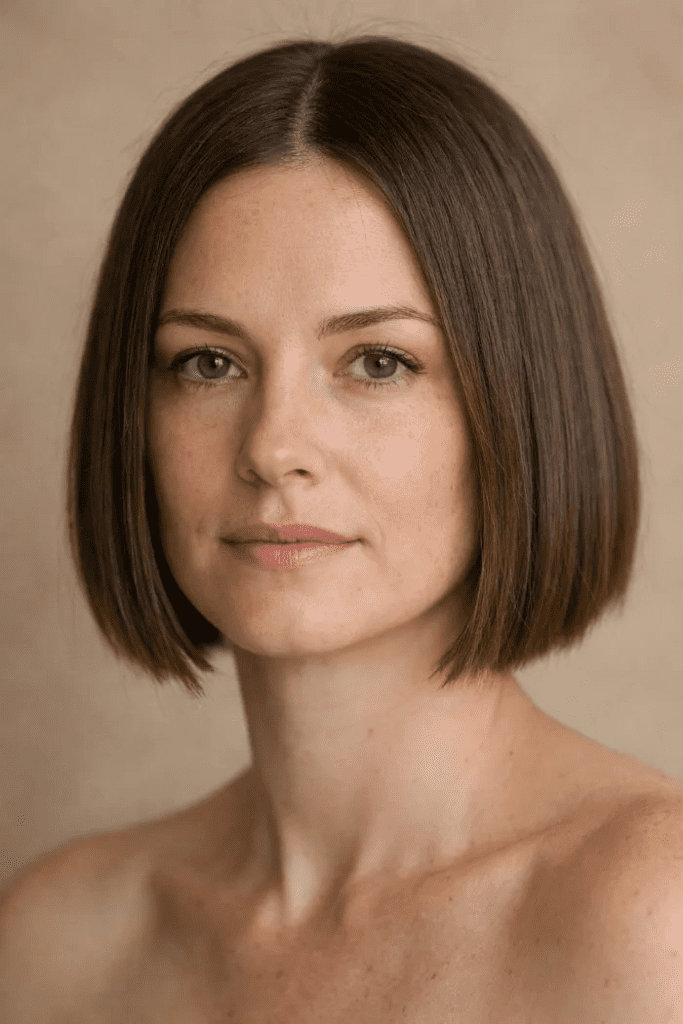
The classic straight bob is the most direct expression of the density-through-precision principle that makes bobs so effective for fine hair. A clean perimeter, a centered part that keeps the shape perfectly symmetrical, and a blunt finish throughout create the strongest possible visual impression of solid, dense hair — even when the actual density is quite fine.
What to ask for: A straight bob sitting at the jaw with a completely clean, blunt perimeter and a centered part. Ask specifically for no thinning shears anywhere in the cut — the entire density-illusion strategy depends on the perimeter staying as solid as possible.
Best for: Fine to very fine straight hair. This is the maximum-density-illusion bob in the guide and works best on hair that lies naturally smooth.
Styling tip: A smoothing cream through damp hair before blow-drying with a paddle brush, pulling the hair smooth and straight in long strokes, gives this bob its sharpest, most polished finish. A light shine spray over the finished style adds the final glossy touch that makes the blunt perimeter look its most substantial.
Why it works: The combination of a centered part, a completely blunt perimeter, and smooth styling creates the cleanest, most symmetrical silhouette possible — and symmetry combined with a solid outline is one of the most effective fullness illusions in all of hairstyling.
12. Curly Bob With Natural Volume

For fine curly hair, this rounded curly bob solves a problem that straight-hair cuts cannot address — the tendency of fine curls to collapse into a flat, shapeless outline rather than holding their shape and volume. Soft curls create natural lift through the sides, and the rounded silhouette specifically prevents the bottom-heavy, deflated look that fine curly hair can develop without the right shape.
What to ask for: A curly bob shaped to sit around the jaw, cut dry so the stylist can see the natural curl pattern and shrinkage. Ask for the shape to be rounded rather than blunt, with attention paid to maintaining balance between the crown and the sides so the silhouette does not collapse at the bottom.
Best for: Fine to medium-fine naturally curly hair. The rounded silhouette is specifically designed to prevent the flattening that fine curls are prone to at bob length.
Styling tip: A lightweight curl cream applied to soaking wet hair, scrunched gently from ends toward roots, then diffused on low heat gives the most natural volume without weighing down fine curls. Avoid heavy oils or butters, which can flatten fine curl patterns significantly.
Why it works: The rounded shape works with the natural tendency of curls to want to expand outward rather than fighting it — by cutting for a rounded silhouette from the start, the cut supports rather than resists the curl’s natural volume, which reads as genuinely natural rather than forced.
13. Feathered Silver Bob

Feathering is one of the most flattering cutting techniques available for fine silver hair specifically — the soft, tapered ends move freely and catch light in a way that blunt cutting cannot replicate, giving the bob a lifted, airy quality. The slight outward flip at the ends adds a sense of movement and energy that makes fine hair feel alive rather than simply present.
What to ask for: A bob with feathered layering throughout — ask specifically for feathering with thinning shears applied to the surface of the ends. The ends should be cut to encourage a slight outward flip rather than lying flat or curling under.
Best for: Fine to medium-fine silver or gray hair. Feathering is one of the most effective techniques for fine hair because it creates movement and the appearance of fullness without removing the structural weight at the perimeter.
Styling tip: A round brush flicking the ends outward during blow-drying gives the feathered bob its most lifted, flattering finish. A light volumizing mousse at the roots before drying amplifies the lift that the feathering creates throughout.
Why it works: Feathered, slightly flipped ends create a sense of upward and outward movement that makes fine hair appear to have more body and life than a flat, straight-down finish would suggest. The lightness of the feathering specifically suits the natural delicacy of fine silver hair.
14. Half-Up Bob

Styling a classic bob half-up is one of the simplest and most effective ways to add height and openness to fine hair without changing the cut at all. Pulling the crown section back creates gentle lift right at the root, where fine hair most commonly needs help, while the remaining length stays down to show off the bob’s baseline shape.
What to ask for: A classic bob cut with enough length and density at the crown to gather comfortably into a small half-up section. No specific technique is required beyond a well-balanced standard bob cut.
Best for: Fine to medium hair at jaw length or slightly longer. The half-up styling technique works on virtually any bob shape, which makes this one of the most versatile entries in this guide.
Styling tip: Gather a small section from the crown and secure with a soft scrunchie or small clip, leaving the section slightly loose rather than pulled tight for the most natural, casual lift. A texturizing spray through the gathered section before securing adds grip and prevents it from sliding flat.
Why it works: The half-up style creates immediate volume at the crown — the area where fine hair most commonly goes flat — through pure mechanics rather than product or cutting technique. It is the fastest and most reliable lift solution available for fine hair in a bob.
15. Layered Bob With Blunt Bangs
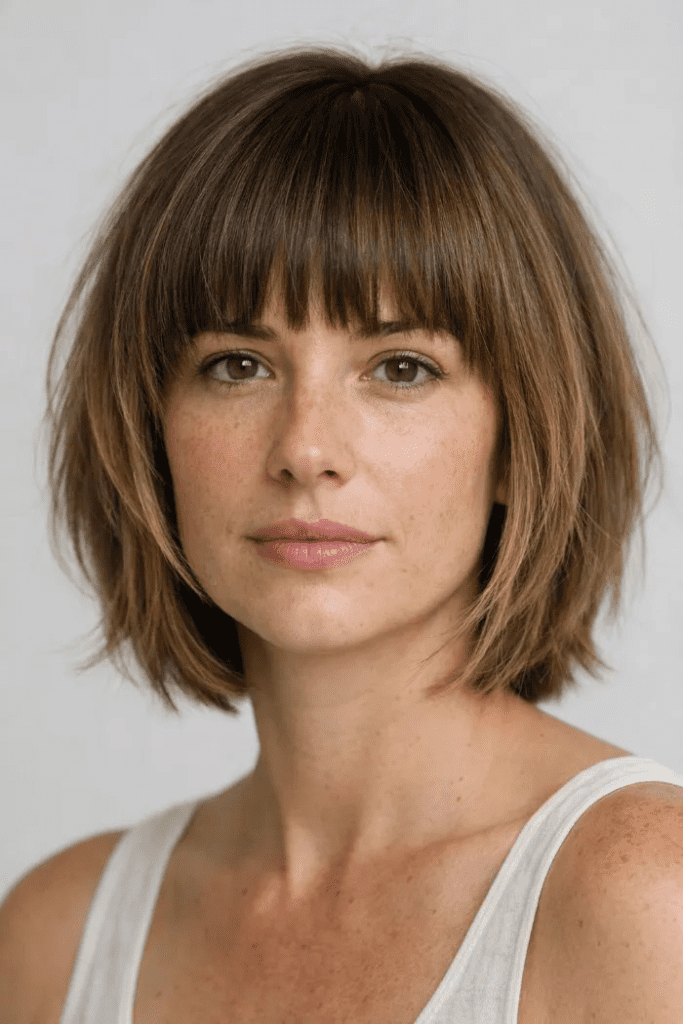
This combination uses contrast deliberately — clean, blunt bangs that sit straight across the forehead paired with softer, layered sides and back. The blunt fringe adds weight and density specifically at the front, the most visually prominent area, while the layers through the rest of the cut keep the sides from feeling heavy or static.
What to ask for: A layered bob with blunt bangs cut straight across at or just above the brow. Ask for the layers through the body of the bob to feel soft and blended rather than choppy, creating a contrast between the precision of the bangs and the movement of the rest of the cut.
Best for: Fine to medium-fine hair. The contrast between the blunt front and the softer sides addresses two different fine hair needs simultaneously — density at the front, movement through the body.
Styling tip: Blow-dry the bangs flat with a flat brush for maximum density and precision, then use a round brush through the rest of the cut for soft, natural movement. The two different techniques on the same head create the intentional contrast this style is built around.
Why it works: Blunt bangs draw immediate attention to the front of the face with a strong, dense line, while the layered sides prevent the overall cut from feeling rigid or one-dimensional. Fine hair benefits from both qualities working together rather than choosing one approach for the entire cut.
16. Layered Bob With Side-Swept Bangs

The diagonal movement of side-swept bangs softens the hairline and adds genuine visual interest without removing any of the density that the rest of the bob’s layering preserves. Blending naturally into the front sections, the side sweep creates a cohesive, flowing line from the fringe through the length of the cut.
What to ask for: A layered bob with side-swept bangs that blend naturally into the front sections rather than being cut as a distinct piece. Ask for the layers through the ends to stay light rather than heavily thinned, so the overall density of the cut remains intact.
Best for: Fine to medium-fine hair of most face shapes. The diagonal movement of side-swept bangs is one of the most universally flattering fringe choices available.
Styling tip: A small round brush sweeping the bangs to one side during blow-drying, continuing the same directional brush stroke through the front layers, creates the most seamless, cohesive movement from the fringe through the length.
Why it works: The diagonal line of side-swept bangs adds movement and softness without requiring any reduction in hair density — it works through direction and placement rather than through removing weight, which is exactly the right strategy for fine hair.
17. Layered Bob With Soft Texture

This bob sits slightly below the jaw with gentle texture distributed through the ends — enough to create natural movement without significantly thinning the perimeter. Volume stays evenly distributed throughout the cut, which prevents fine hair from looking flat in any one section while maintaining an overall relaxed, easy-to-wear outline.
What to ask for: A bob sitting just below the jaw with soft texture through the ends — ask for the texturing to be light and evenly distributed rather than concentrated in any one area, and to avoid significant thinning at the perimeter.
Best for: Fine to medium-fine hair of most textures. The soft texture approach is one of the most balanced options in this guide, suiting a wide range of hair types and styling preferences.
Styling tip: A light mousse through damp hair before air-drying or a gentle blow-dry with a round brush brings out the soft texture naturally without requiring elaborate technique.
Why it works: Evenly distributed soft texture means no single part of the bob looks noticeably different from the rest — the cut reads as consistently full and well-proportioned from every angle, which is a quietly effective strategy for fine hair.
18. Layered Platinum Bob
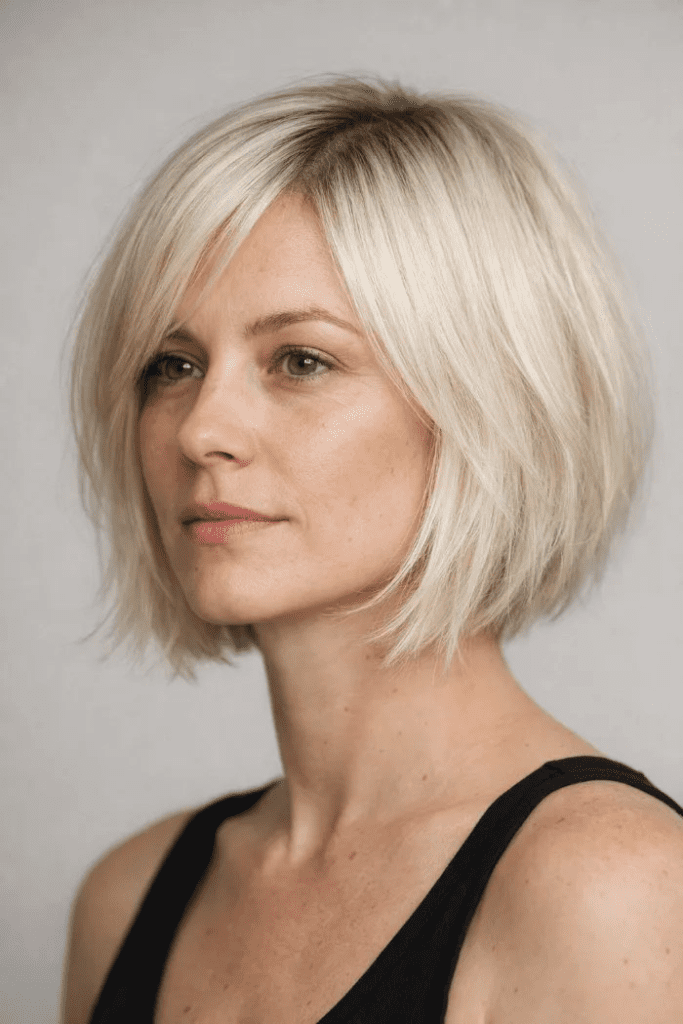
Platinum coloring on a layered bob amplifies every detail of the cut — every layer, every textural variation, and every proportion decision becomes more visible against the pale tone. Subtle stacking at the back adds genuine structural lift, which on fine hair prevents the cut from sitting too close to the head and looking flat from behind.
What to ask for: A layered bob cut just below the jaw with subtle back stacking for lift, in a platinum or near-platinum blonde tone. Ask for a cool ash toner to maintain the brightness and clarity of the platinum color over time.
Best for: Fine to medium-fine hair. Platinum makes every layer and texture detail in the cut highly visible, which means a well-executed layered bob looks particularly impressive in this tone.
Styling tip: A root-lifting spray at the crown before blow-drying and a round brush lifting the stacked back sections gives this bob its most polished, lifted finish. A purple toning shampoo used weekly keeps the platinum cool and bright.
Why it works: The combination of structural stacking and platinum color creates a bob that looks genuinely dimensional and full — the stacking provides actual lift while the pale color makes every bit of that lift and movement clearly visible.
19. Sleek Bob With Subtle Bangs

This is the most understated and most quietly polished option in the guide — a straight, sleek bob with minimal, softly tapered bangs that add just a small amount of framing without any heaviness. The smooth, controlled finish keeps the entire silhouette clean, while the blunt baseline does the structural work of supporting fine hair’s appearance of density.
What to ask for: A sleek, straight bob with subtle bangs that taper softly at the brow — ask for the bangs to be minimal in both width and weight, adding a slight frame rather than a defined fringe. The rest of the bob should have a clean, blunt baseline with minimal layering.
Best for: Fine to very fine straight hair. The sleek, minimal approach works best on hair that lies naturally smooth and benefits most from a clean, undisturbed perimeter.
Styling tip: A smoothing cream through damp hair before blow-drying with a paddle brush gives this bob its sleekest, most controlled finish. The subtle bangs need only a small round brush pass to settle into their soft taper.
Why it works: The understated approach to both the bangs and the overall cut means nothing distracts from the clean lines of the silhouette — the blunt baseline gets to do its full density-illusion work without competing visual elements.
20. Sleek Silver Bob
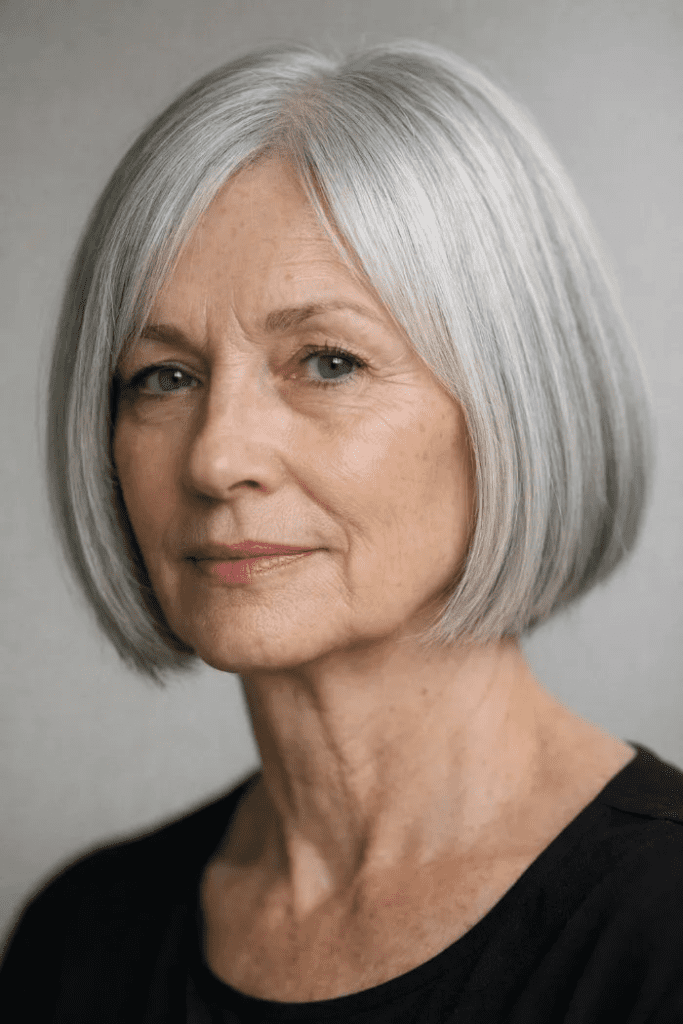
Closing the guide with the most polished and most editorial-feeling option — a sleek silver bob with a crisp jaw-length line and minimal layering. The smooth styling emphasizes the natural shine and clean geometry of the cut, and the precision of the ends helps fine hair look genuinely more substantial than its actual density would suggest.
What to ask for: A crisp, jaw-length bob with minimal layering and a clean, precise perimeter in a silver or cool grey tone. Ask for the styling to emphasize shine and geometric precision rather than texture or volume.
Best for: Fine to medium-fine silver or gray hair. The sleek, minimal-layering approach is one of the most flattering ways to wear silver hair at bob length because it lets the color and the clean lines be the primary visual focus.
Styling tip: A smoothing serum or oil through damp hair before blow-drying with a paddle brush, finishing with a flat iron through the ends for maximum sleekness, gives this bob its most polished, editorial finish.
Why it works: The combination of geometric precision and a cool silver tone creates a restrained, modern impression that reads as deliberately considered rather than simply short or simple. The clean lines do the density work while the silver tone and shine create a sense of richness and substance.
How to Choose Your Bob Based on Your Fine Hair Priorities
Maximum density illusion: The classic straight bob (#11), the classic bob with full fringe (#7), and the bold inverted bob (#4) all prioritize clean, blunt lines that create the strongest possible perception of solid, dense hair.
Movement without losing weight: The classic layered bob (#9), the layered bob with soft texture (#17), and the feathered silver bob (#13) all add movement through technique that protects rather than removes end density.
Face-framing without heaviness: The curtain bangs bob (#2), the side-swept bangs layered bob (#16), and the sleek bob with subtle bangs (#19) all add fringe interest specifically designed for fine hair’s need for lightness.
Color-amplified structure: The layered platinum bob (#18), the sleek silver bob (#20), and the feathered silver bob (#13) all use pale or cool tones to make every detail of the cut more visible and more impactful.
Quick styling variety: The double high knots bob (#3) and the half-up bob (#14) both demonstrate how a single well-cut bob can be styled multiple ways for instant variety without requiring a different cut.
Final Thoughts
A bob works for fine hair because it relies on the things fine hair can actually deliver — clean lines, precise proportion, and a length where the natural weight of the hair can hold a shape — rather than asking fine hair to fake a density it does not have. That is the entire philosophy behind every cut in this guide.
The best bobs for fine hair are never overdone. They keep weight exactly where it matters, they avoid removing density through unnecessary texturing, and they let the hair fall and move the way it naturally wants to. That restraint is what makes a bob look consistent and intentional as it grows, rather than requiring constant maintenance to keep looking right.
Save the version that felt most like the hair you actually want to live with day to day. Take it to your stylist, describe the specific qualities that drew you to it — the bang style, the length, the finish — and trust that a well-cut bob does not need to change your fine hair. It simply needs to work with it.
What length of bob works best for fine hair?
Bobs that sit at the jaw or just below it consistently work best for fine hair. At this length, the hair has enough natural weight to hold its shape without being so long that the ends become thin and transparent under their own weight. Shorter bobs can work well too, particularly for very fine hair where minimizing length maximizes the density illusion. Longer bobs require more careful attention to the perimeter to avoid looking sparse at the ends.
Are layers bad for fine hair in a bob?
Not inherently — it depends entirely on the type and placement of the layers. Light, internal, or strategically placed layers (through the crown for lift, or as soft face-framing) can add welcome movement without compromising the cut’s overall density. Heavy layers distributed evenly throughout the cut, or aggressive thinning through the ends, remove the weight that fine hair needs most and often result in an uneven, sparse-looking finish. The safest rule: ask for fewer, longer layers rather than many short ones, and always protect the perimeter.
How often should a bob be trimmed to keep fine hair looking full?
Every six to eight weeks is ideal for most bob lengths on fine hair. The clean perimeter that creates the density illusion loses its precision as the hair grows, and fine hair in particular relies on that precision to look its fullest. Blunt, structurally simple bobs (like the classic straight bob) can sometimes stretch to eight weeks. More precisely shaped versions — the inverted bob, the asymmetrical bob, anything with a defined angle — tend to need attention closer to the six-week mark to maintain their shape.
What styling products work best for bobs on fine hair?
A volumizing mousse applied to damp roots before blow-drying is the most universally useful product for fine hair bobs — it adds lift without weight. A root-lifting spray targeted specifically at the crown addresses flatness directly. A light smoothing cream or serum, used sparingly through the mid-lengths and ends, adds shine without flattening the hair. Avoid heavy oils, thick creams, or strong-hold gels applied throughout the lengths — they weigh fine hair down and undo the structural lift the cut is designed to create.
Can a bob with bangs work for very fine hair?
Yes, with the right fringe choice. Wispy bangs, curtain bangs, and subtle side-swept bangs are all specifically designed to be light enough for very fine hair to support without looking sparse or overworked. A full, dense, blunt fringe can work too, but it requires enough hair density at the front to fill the section convincingly — for very fine hair, the lighter fringe options consistently deliver a more flattering, natural-looking result.