How to Grow Long, Healthy Nails Naturally — A Complete Guide That Actually Works
Long, healthy nails aren’t primarily a genetics question. They’re mostly a habits question. The women whose nails grow long and stay strong consistently are typically doing a handful of specific things right — in their daily care routine, in their diet, in how they treat their hands during everyday tasks. The women whose nails break, peel, and struggle to gain length are usually missing one or more of those same things.
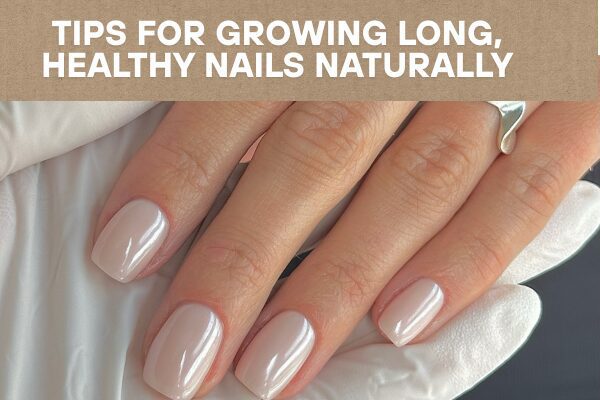
The encouraging reality is that all of it is learnable and adjustable. Natural nails that grow long and stay strong don’t require any specialized products or elaborate routines. They require consistency with a small number of genuinely impactful habits applied over the weeks and months that nail growth actually takes.
1. Hydration Is the Foundation of Nail Health
The nail plate itself doesn’t have sebaceous glands — it can’t produce its own moisture the way skin does. Everything that keeps a nail flexible, resilient, and resistant to splitting and peeling comes from external moisture and internal hydration. A dry nail plate is a brittle nail plate, and a brittle nail breaks long before it gets long.
Cuticle oil daily, without exception. This is the single highest-impact habit in any nail growth routine. Cuticle oil penetrates both the cuticle and the nail plate itself, providing the flexibility that prevents the nail from becoming brittle and prone to peeling. Applied to the cuticle and massaged in, it also stimulates blood flow to the nail matrix — the growth center of the nail — which supports healthy, consistent growth. Any oil works: jojoba, almond, vitamin E, argan, or a blended cuticle oil product. What matters is daily application, not the specific formula.
Hand cream throughout the day. The cuticle oil handles the nail plate and cuticle specifically. Hand cream maintains the overall skin condition of the hands and fingers, which affects nail health indirectly — dry, cracked skin around the nail creates pathways for moisture loss and bacterial entry that affect the nail’s growing environment.
Water intake matters. Dehydration affects nail health in the same way it affects skin health — from within. Consistent daily water intake supports the nail’s internal hydration, which contributes to flexibility and growth rate.
2. Nutrition Builds Nails From the Inside Out
The nail plate is composed almost entirely of keratin — a structural protein. The nail’s strength, thickness, and growth rate are all determined at the matrix level, which means they’re determined by what the body has available to build with. No topical treatment compensates for nutritional deficiencies that affect nail construction at the source.
Protein is the fundamental building block. Since nails are keratin and keratin is a protein, dietary protein is the raw material the body uses to build nail tissue. Eggs, lean meats, fish, legumes, and dairy all contribute. Women who eat low-protein diets frequently experience slower nail growth and weaker nail plates regardless of their topical care routine.
Biotin (vitamin B7) is the most researched nutrient for nail strength. Multiple studies have shown that biotin supplementation improves nail hardness and reduces brittleness in women with documented deficiency. Biotin is found naturally in eggs, nuts, seeds, sweet potato, and salmon. Supplementation is an option for those who don’t get sufficient dietary biotin, though consulting a doctor before beginning any supplement is advisable.
Zinc plays a role in nail plate formation and repair. Deficiency is specifically associated with white spots on nails, slow growth, and brittleness. Sources include meat, shellfish, legumes, and seeds.
Iron deficiency is one of the most common causes of nail problems in women — spoon-shaped nails, unusual ridging, and slow growth can all indicate low iron levels. If nail health isn’t responding to external care improvements, iron levels are worth checking with a healthcare provider.
Vitamins A, C, and E support different aspects of nail health: vitamin A for nail cell production, vitamin C for collagen synthesis that supports the nail bed, and vitamin E as an antioxidant that protects nail tissue. A varied diet with vegetables, fruits, and healthy fats covers all three without supplementation for most people.
3. Protect Nails During Everyday Activities
The majority of nail breakage and damage that prevents length retention happens during routine daily activities rather than during dedicated nail care moments. Protecting nails in these everyday contexts makes a more significant difference to nail length than almost any active nail care step.
Wear gloves for cleaning and washing up. Hot water, dish soap, and household cleaning products are among the most damaging substances regularly encountered by nails. Hot water repeatedly softens the nail plate, and the subsequent drying cycle stresses the nail repeatedly. Soap and cleaning product exposure removes the nail’s natural moisture. A pair of rubber or latex gloves worn for dishwashing and cleaning eliminates this damage almost entirely.
Don’t use nails as tools. Opening packages, popping can tabs, scratching off stickers, and prying lids are all activities that apply lateral stress to the nail — the exact type of stress that causes breakage. The habit of reaching for an actual tool instead of a nail protects length significantly over time.
Be conscious of nail contact with hard surfaces. Typing technique affects nail health meaningfully — typing with the pads of the fingers rather than the nail tips reduces the repeated impact stress that contributes to nail breakage over time.
4. Be Selective About the Chemicals Nails Encounter
Use acetone sparingly and moisturize after. Pure acetone is effective for nail product removal but is significantly dehydrating to both the nail plate and surrounding skin. Limiting acetone use to when it’s genuinely needed — and always following with cuticle oil and hand cream immediately after — reduces its cumulative impact on nail flexibility.
Acetone-free removers for regular polish removal. For routine polish changes where acrylic or gel isn’t involved, acetone-free removers are gentler options that accomplish the same removal task with less dehydration of the nail plate.
Allow recovery time between artificial nail applications. Gel and acrylic nails, when applied and removed correctly, don’t inherently damage natural nails. But continuous back-to-back applications without recovery periods can prevent the nail plate from rehydrating fully and recovering its natural flexibility. Even two weeks of bare nail time with consistent cuticle oil between applications makes a meaningful difference to long-term nail health.
Harsh sanitizers and hand soaps. The significant increase in hand sanitizer use in recent years has had a corresponding impact on nail health for many people. Alcohol-based sanitizers are as dehydrating to nails as they are to skin. Following sanitizer use with hand cream when possible reduces the cumulative dehydrating effect.
5. File Correctly — Technique Matters More Than Frequency
Filing is both a nail care tool and a potential source of nail damage, depending on the technique.
File in one direction only. The back-and-forth sawing motion that most people use instinctively creates micro-fractures along the nail edge — tiny splits that propagate under the stress of everyday use and become the breaks and peels that prevent length retention. Filing in a single consistent direction, from the outer edge toward the center, eliminates this damage source. It takes more passes to achieve the same shaping, but the nail edge integrity is significantly better.
Use a fine-grit file. Coarse files are for artificial nails. Natural nails require a fine or medium-fine grit file that shapes without roughening the nail edge. A glass or crystal file is the gentlest option for natural nails and can be sanitized between uses.
File when nails are dry. Wet nails are temporarily softened and more vulnerable to the micro-fractures described above. Filing after a shower or bath, before nails have returned to their normal state, produces rougher edges than filing dry nails.
Choose a practical shape. Nail shape affects breakage risk significantly. Rounded and oval shapes distribute stress evenly and have no sharp corners or points to catch on fabric or surfaces. Square nails with sharp corners and stiletto shapes with their pointed tip both create specific vulnerability points that promote breakage. For growing nails, a soft oval or almond shape protects length better than any other option until nails have achieved good length and strength.
6. Natural Treatments That Genuinely Support Nail Health
Several accessible, inexpensive treatments provide meaningful support for nail health without requiring specialized products.
Vitamin E oil. Applied directly to the nail plate and cuticle, vitamin E oil provides antioxidant protection and deep moisturization. Breaking open a vitamin E capsule and massaging the oil into the nail and surrounding area two or three times a week is a simple, effective routine addition.
A biotin supplement. For those whose diet doesn’t consistently provide adequate biotin, a supplement is one of the best-evidenced options for improving nail hardness and reducing brittleness. Standard supplementation doses are generally well-tolerated, but consulting a healthcare provider before beginning is advisable as with any supplement.
Olive oil soak. Soaking nails in warm olive oil for ten to fifteen minutes once a week provides deep moisturization for both the nail plate and the cuticle. Olive oil’s fatty acid composition is particularly well-suited to penetrating the nail plate. This is a particularly good treatment for nails recovering from acetone exposure or artificial nail removal.
Garlic rubbed on the nail surface. This traditional remedy has anecdotal support for strengthening brittle nails — garlic’s organosulfur compounds may contribute to keratin strengthening when applied topically. The evidence is informal, but the treatment is harmless and inexpensive.
7. Consistency Over Time Is the Real Strategy
Nail growth is slow and non-negotiable in its pace — the average nail grows approximately three to four millimeters per month. No product, supplement, or treatment meaningfully accelerates this beyond what optimal nutrition and health support can achieve. The primary variable under your control isn’t growth speed; it’s retention — how much of the nail that grows manages to stay intact rather than breaking before it achieves any length.
Every habit described in this guide is fundamentally a retention strategy. Moisturizing prevents the brittleness that causes breakage. Protecting from chemicals and physical stress prevents the damage events that cause breakage. Correct filing prevents the micro-fractures that become breakage. Adequate nutrition ensures the nail plate is built to be strong enough to retain length.
Applied consistently over eight to twelve weeks — two to three full growth cycles — these habits produce genuinely visible results in nail length and health. Applied sporadically, they produce sporadic results. The consistency is the strategy.
Final Thoughts
Growing long, healthy nails naturally is a realistic goal for almost anyone willing to apply consistent care over an adequate timeframe. The list of what genuinely matters is shorter than most nail care content suggests: daily cuticle oil, adequate dietary protein and key micronutrients, consistent protection from dehydrating chemicals and physical damage, correct filing technique, and patience.
None of this requires expensive products or significant time investment. A bottle of cuticle oil, a fine-grit nail file, a pair of rubber gloves, and a consistent daily thirty-second oil application routine addresses the majority of what stands between most people and the nails they want.
Start now, stay consistent, and give it the time it actually needs. The results compound.