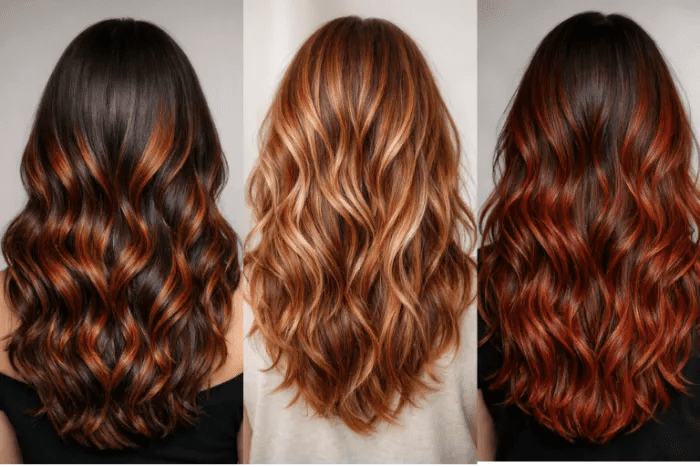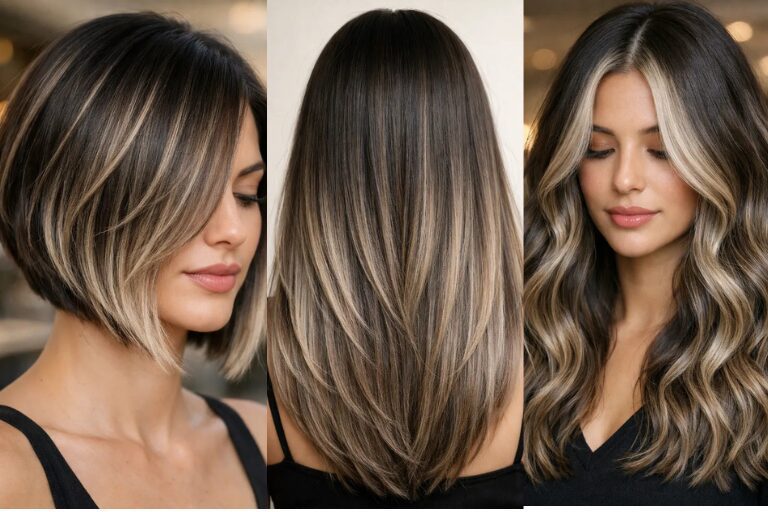
17 Warm Caramel Balayage with Honey Highlights: Wearable Hair Color Ideas
If there’s a hair color that consistently bridges the gap between rich and light, dimensional and natural, polished and effortless — it’s warm caramel balayage with honey highlights.
The reason this combination keeps appearing in salons year after year isn’t trend momentum. It’s that the tonal relationship between caramel and honey is genuinely flattering on a wide range of brunette bases. Caramel adds depth and richness — it grounds the look in a warm brown family that reads as intentional rather than obviously lightened. Honey adds brightness and luminosity — it catches light in the sections where movement is most visible without creating a stark, high-contrast result that needs constant maintenance to stay looking intentional.
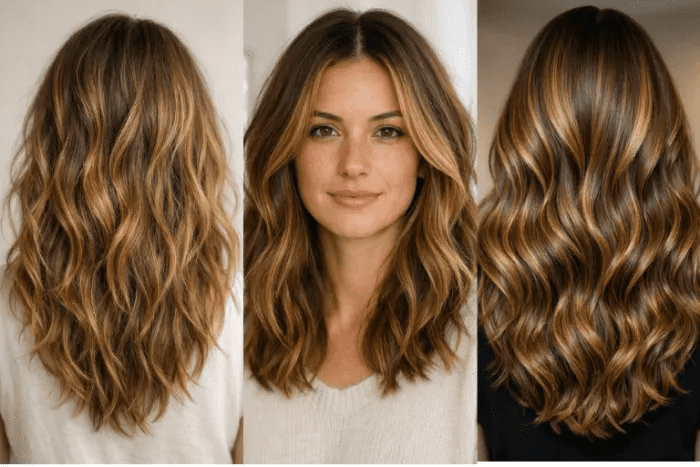
Together, they create the kind of color that makes hair look its most naturally beautiful version: warmer, shinier, more dimensional than your natural base alone, but never so far from it that the maintenance becomes a burden.
The styles in this guide cover the full range — from subtle, barely-there dimension for women who want the most understated refresh possible, to fuller, more visible honey and caramel combinations for those who want the warmth to be genuinely noticeable. Every style includes what to ask your colorist and how to keep the result looking balanced rather than brassy between appointments.
One technical note worth knowing upfront: the difference between a caramel balayage that goes brassy and one that stays beautifully warm comes down almost entirely to the toner. Ask your colorist specifically for a warm-neutral toner formula rather than a vivid warm or a cool formula — the warm-neutral sits in the space that reads as rich caramel rather than either orange or beige, and it’s the step that separates a great result from a mediocre one.
1. Soft Layered Length With Honey Ribbons
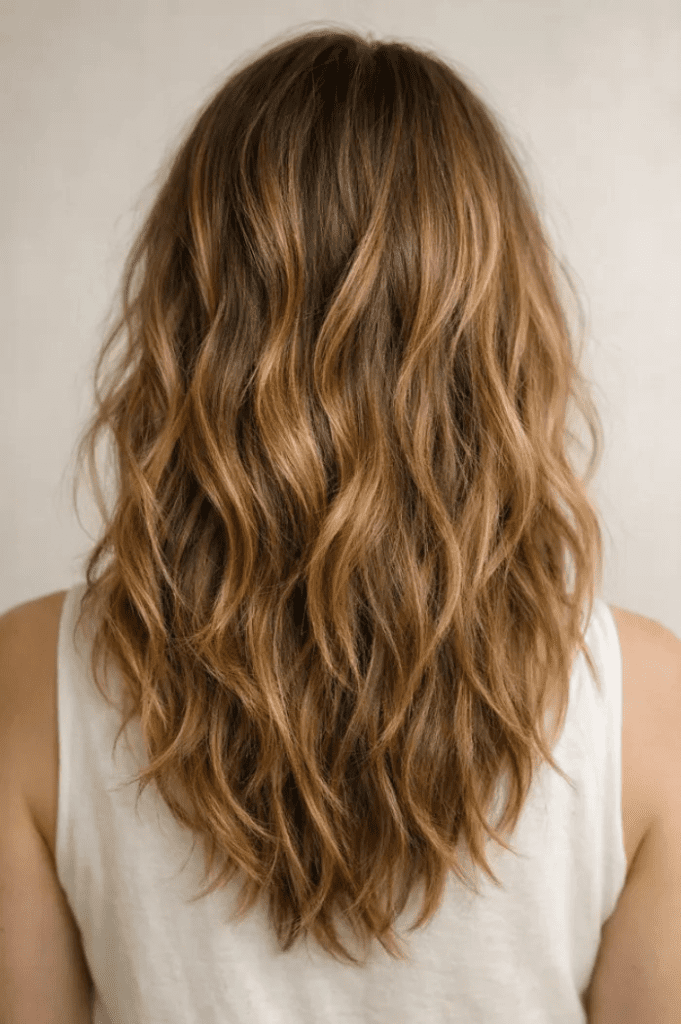
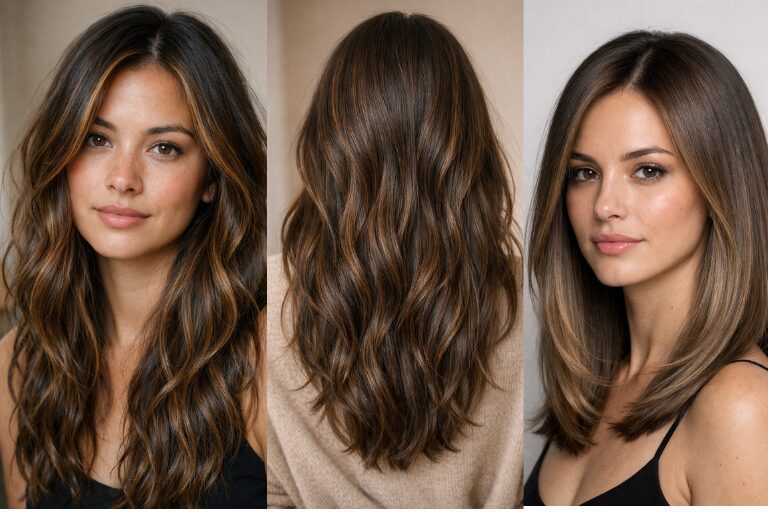
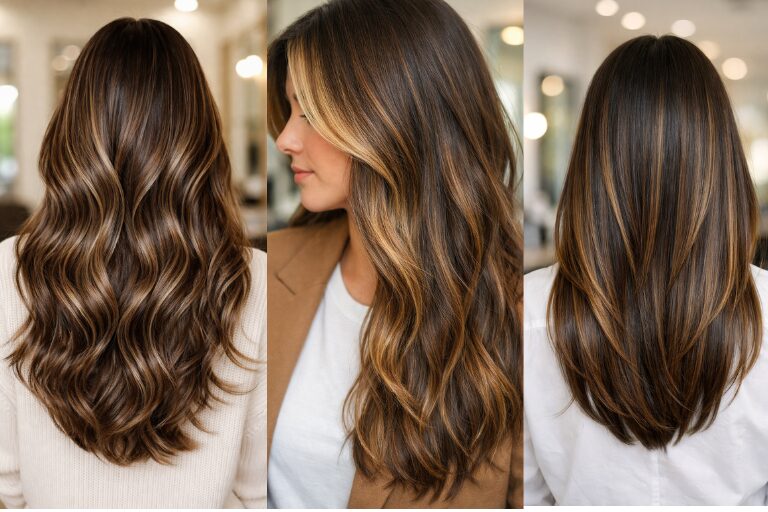
Long, softly layered hair is one of the most flattering canvases for warm caramel balayage with honey highlights because the layers create multiple surface levels that catch light at different angles simultaneously — which means the color looks dimensional and alive as the hair moves rather than sitting flat on a uniform surface.
The honey ribbons concentrated through the mid-lengths rather than the full length are doing something specific here: they create contrast in the section of the hair that’s most visible when it falls forward over the shoulders, framing the face from a comfortable distance rather than sitting in a concentrated bright strip right at the hairline.
The warm brunette base stays grounded and natural through the root and upper section, which means the grow-out is genuinely seamless rather than requiring touch-up every six weeks.
What to ask your colorist: Ask for honey highlights applied through a balayage technique in the mid-length to lower sections, with the root and upper shaft left in the natural base color. Request a warm-neutral toner on the highlighted sections — not a vivid warm, which would tip the honey toward orange, and not a cool formula, which would remove the warm quality entirely.
Maintenance tip: Long layered hair with caramel and honey balayage looks its most dimensional styled with loose waves — a large-barrel wand on low heat and a light flexible spray, then finger-combed rather than brushed. Brushing collapses the layers together and reduces the multi-angle light catch that makes the color look three-dimensional.
Best for: Women with long layered hair who want warm, natural-looking dimension that grows out gracefully and looks beautiful without daily styling effort.
2. Blended Waves With Warm Caramel Dimension
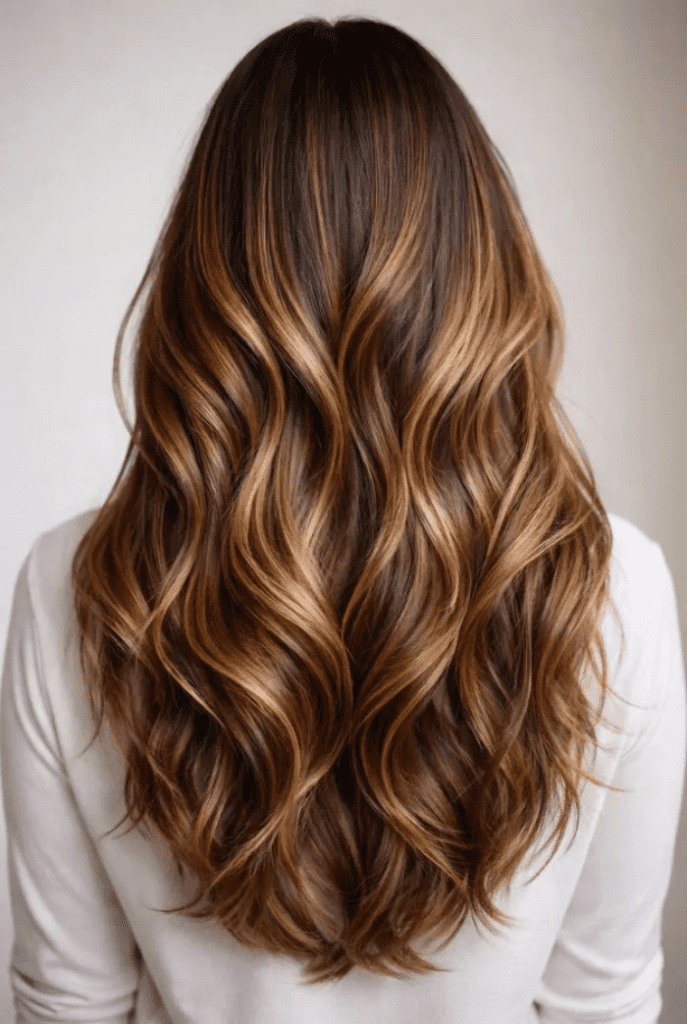
The seamlessly blended caramel balayage on waves is one of the most technically refined results on this list — because achieving a genuinely seamless blend between the natural base and the caramel highlights requires precise application technique and deliberate toner formulation, not just painting highlights and hoping the transition softens.
On waves specifically, the blending is naturally assisted by the wave pattern — each wave creates a slight variation in the angle of the hair surface, which means the transition between highlighted and non-highlighted sections catches light differently at every point. This natural variation is what makes a blended caramel balayage look so effortlessly dimensional on wavy hair: the wave is doing half the blending work.
What to ask your colorist: Ask for a color melt technique rather than standard balayage — the melt involves overlapping the caramel formula into the natural root section at the transition point, creating a gradient that genuinely fades rather than having a visible starting line. Tell your colorist you want the result to look seamless from root to end.
Maintenance tip: The blended quality of this style is best maintained with a clear gloss applied every eight weeks — the gloss unifies the tonal relationship between the natural base and the caramel highlights, keeping both looking equally rich and polished rather than allowing the highlighted sections to fade separately from the base.
Best for: Women with natural wave who want the most seamlessly blended, low-contrast warm dimension possible — color that reads as a beautiful, dimensional brunette rather than an obvious highlight application.
3. Boho-Inspired Loose Waves With Caramel and Honey
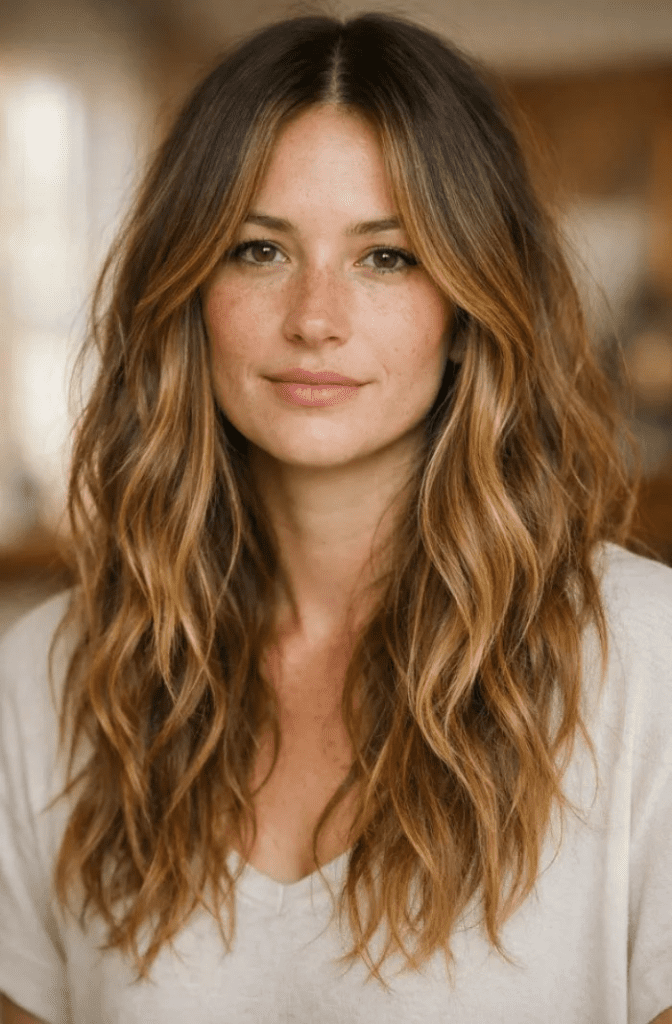
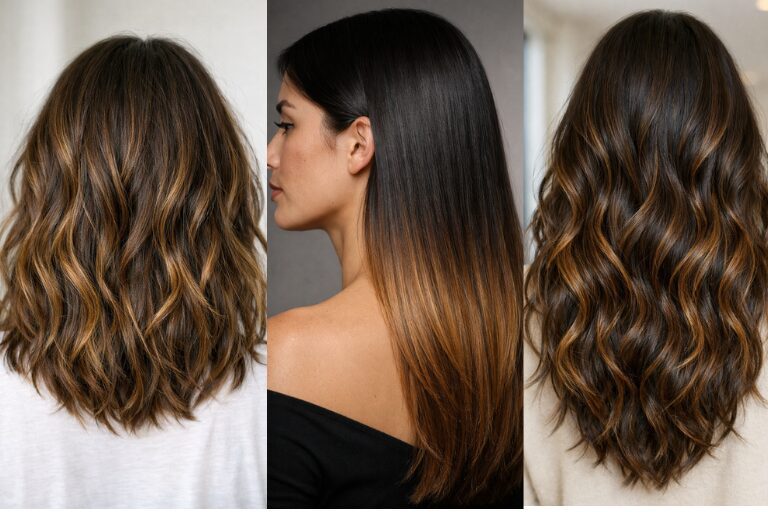
The boho-inspired version of caramel balayage with honey highlights leans into the relaxed, slightly undone quality that makes this color combination look effortless rather than engineered. Where a sleek or polished application makes the warm tones look structured, the boho approach lets the caramel and honey sit loosely through the hair in a way that looks like it developed naturally over time.
The technique that creates this quality is a more scattered, organic highlight placement — the caramel sections are applied with a freer, less systematic hand so the color appears in varying widths and densities through the hair rather than in evenly spaced sections. On hair that already has natural texture or soft bends, this scattered placement blends into the existing movement in a way that’s genuinely beautiful.
What to ask your colorist: Tell your colorist you want a loose, freehand balayage application rather than a systematic or even placement. Ask specifically for varied section widths — some slightly wider, some very fine — to create the organic, sun-kissed quality rather than an evenly highlighted result. A warm caramel toner with slightly more yellow-orange warmth than a neutral formula enhances the boho, sun-touched quality.
Maintenance tip: This style looks better slightly undone than perfectly styled — a sea salt spray or light texturizing product on damp hair and air drying is the ideal routine. The natural texture does the blending work, and heat styling toward a more polished finish undermines the relaxed quality that makes this color look most flattering.
Best for: Women with natural texture, bends, or soft waves in their hair who want a color that enhances their existing movement in the most relaxed, low-effort way possible.
4. Glossy Caramel With Luminous Honey Accents
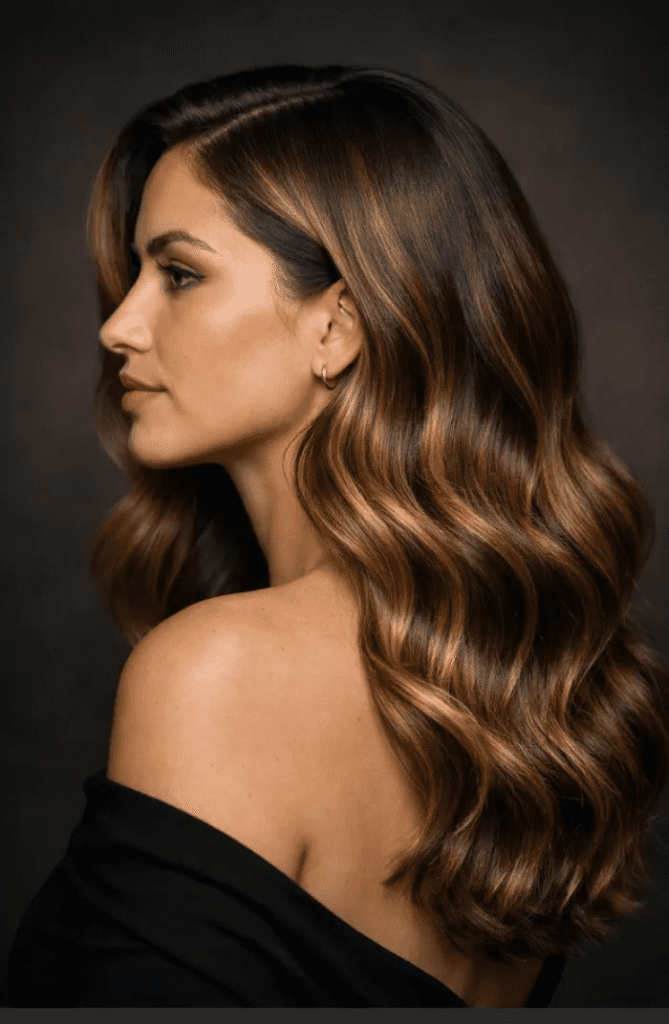
The glossy caramel with honey accents is the most polished, high-shine version of this color combination on the list — and the distinction between a glossy result and a standard balayage result is entirely in the finishing step. The glossing treatment applied at the end of the appointment seals the cuticle across both the caramel highlighted sections and the natural base simultaneously, unifying the surface reflectivity so the entire color looks equally glossy rather than having dull base sections next to shinier highlighted ones.
The luminous quality that glossing creates on caramel and honey tones specifically is remarkable — warm tones are inherently more reflective than cool or neutral tones because the yellow and red pigments in warm formulas interact with light more dynamically. A gloss on top of warm caramel takes that inherent reflectivity and amplifies it into something genuinely luminous.
What to ask your colorist: Ask specifically for a warm caramel gloss finish applied over the highlights at the end of the appointment — not just a toner, but a proper shine gloss. Tell your colorist you want the finished color to look reflective and healthy across the entire surface, not just in the highlighted sections.
Maintenance tip: Maintain the glossy finish at home with a lightweight shine oil applied to the ends of dry hair — two to three drops worked between the palms and smoothed through the lower half only. Reapply the gloss in salon every eight to ten weeks rather than waiting for the full appointment cycle to keep the luminous quality intact.
Best for: Women who want the most polished, high-shine version of warm caramel and honey highlights — a color that looks genuinely luminous and reflective rather than simply warm and dimensional.
5. Long Layers With Subtle Bends and Caramel Placement
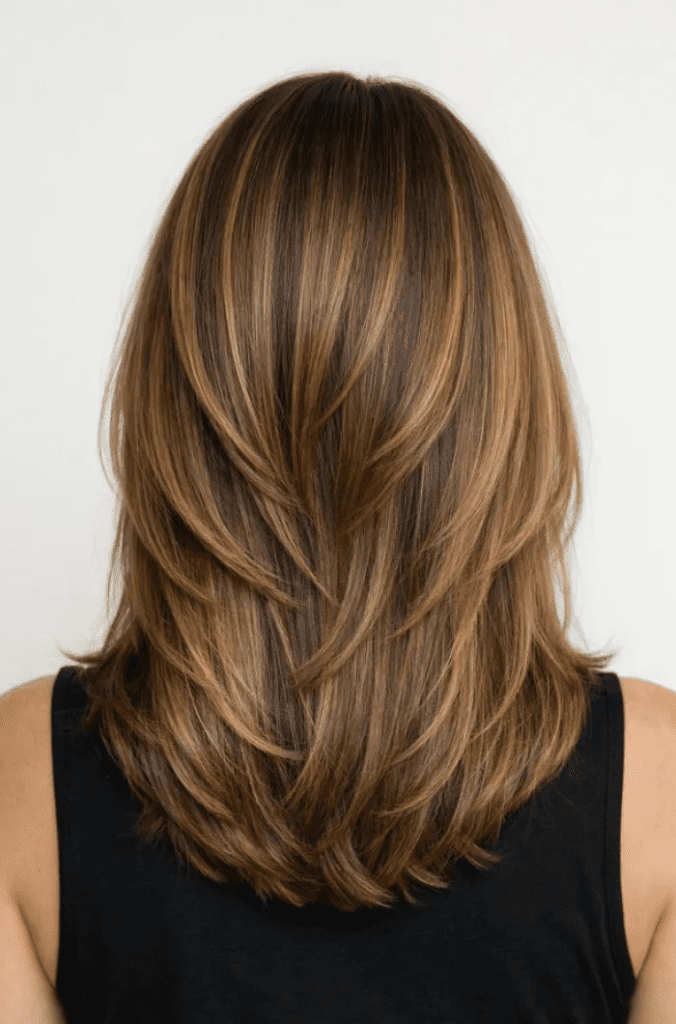
Long layers with subtle bends create one of the most naturally flattering structures for caramel and honey highlights because the layers generate the movement and the bends generate the light catch — leaving the color to provide the tonal dimension without needing to do the structural work that the cut is already handling.
The honey highlights placed lightly around the face and ends are specifically positioned to do face-brightening work near the skin while keeping the color’s visual weight in the lower section of the style where it looks most natural. Honey near the face in the mid-length section frames the cheekbones and jaw in warmth rather than concentrating brightness at the crown where it would read as root-adjacent highlighting.
What to ask your colorist: Ask for honey highlights applied in fine sections specifically around the face-framing layers and through the end sections — keep the upper sections in the natural base. The cut’s layers will show the color naturally as the hair moves, so the placement doesn’t need to be dense or broadly distributed to create visible dimension.
Maintenance tip: The subtle bend on long layers is best maintained with a large round brush during blow drying rather than a curling iron — the round brush creates a softer, more natural-looking bend that integrates with the layer structure more organically than a wand or iron.
Best for: Women with long layered cuts who want a color treatment that works in harmony with the structure of the haircut rather than independent of it — dimension that the cut reveals naturally rather than the color having to generate its own visibility.
6. Medium-Length Waves With Soft Warm Contrast
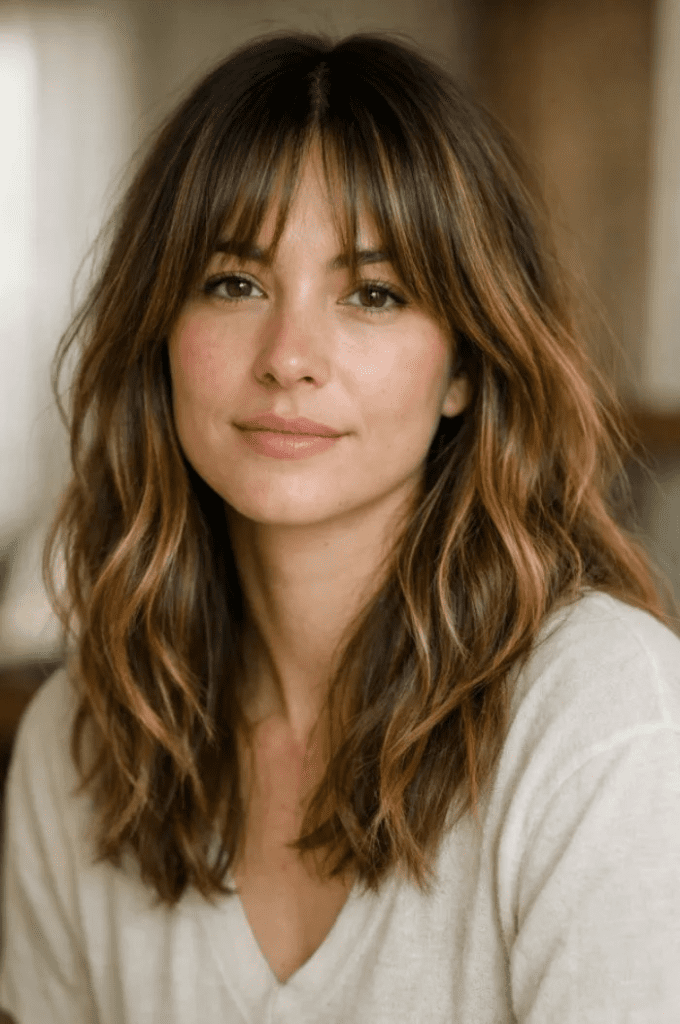
Medium-length hair — falling between the chin and the collarbone — occupies one of the most versatile length zones for caramel and honey balayage because the length keeps the highlights close enough to the face to create a genuine brightening effect while giving the color enough distance from the root to develop a visible gradient.
The soft contrast between the caramel depth and the honey brightness in this length range specifically benefits from wave styling — the alternating peaks and valleys of the wave pattern create natural shadow and light that amplifies the contrast between the two tones, making the dimension look more pronounced than it actually is.
What to ask your colorist: Ask for the caramel balayage to be placed through the mid-lengths with a slightly lighter honey tone concentrated at the front sections and through the waves’ outer surface. The two-tone approach — richer caramel through the body, lighter honey at the surface and face frame — creates the soft contrast that makes this length look most balanced.
Maintenance tip: A medium-barrel wand creates the wave size that shows caramel and honey dimension most effectively at this length — loose enough to look natural but defined enough for the tonal variation between peaks and valleys to be visible. Set the waves with a light flexible spray while still warm, then let cool before touching.
Best for: Women with medium-length hair who want warm, dimensional color that grows out gracefully and looks polished with minimal styling effort.
7. Natural Flowing Waves With Warm Highlights
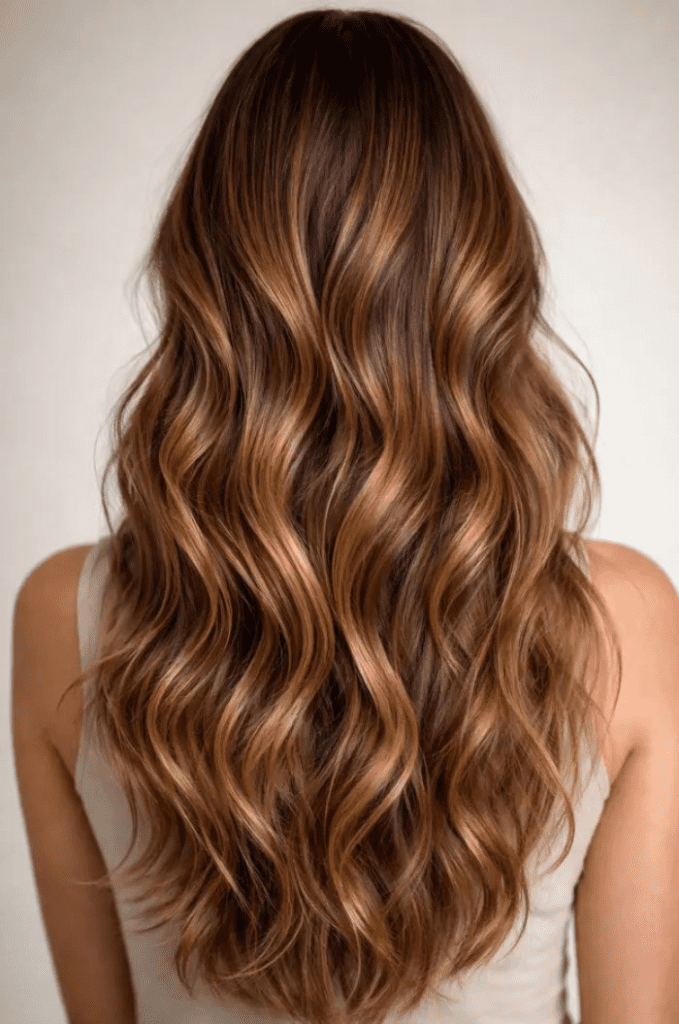
Natural, flowing waves are the styling approach that shows warm caramel and honey highlights at their most effortless — because the natural wave pattern of the hair does all the blending work, allowing the highlights to look like they appeared organically rather than being placed by a colorist.
The color placement in this version follows the natural movement of the hair rather than a systematic section structure. Highlights painted along the natural movement lines — following the direction the waves fall rather than cutting across them — integrate with the hair’s movement pattern in a way that looks genuinely sun-kissed rather than deliberately placed.
What to ask your colorist: Tell your colorist you want the balayage to follow the natural movement direction of your waves rather than being applied in geometric sections across the wave pattern. Ask for the highlights to be placed on the sections that naturally rise to the surface as the hair falls — these are the sections that catch the most light in wear, so they’re the sections where color placement has the most visible impact.
Maintenance tip: Natural flowing waves are best maintained with a leave-in conditioner on damp hair as the only product — it adds the moisture and definition that keeps waves looking natural rather than frizzy, without the product weight that would flatten the movement and reduce the visible dimension of the balayage.
Best for: Women whose hair has natural wave or movement and want a color that enhances that natural quality rather than requiring a specific styling routine to look good.
8. Naturally Curly Hair With Caramel Dimension
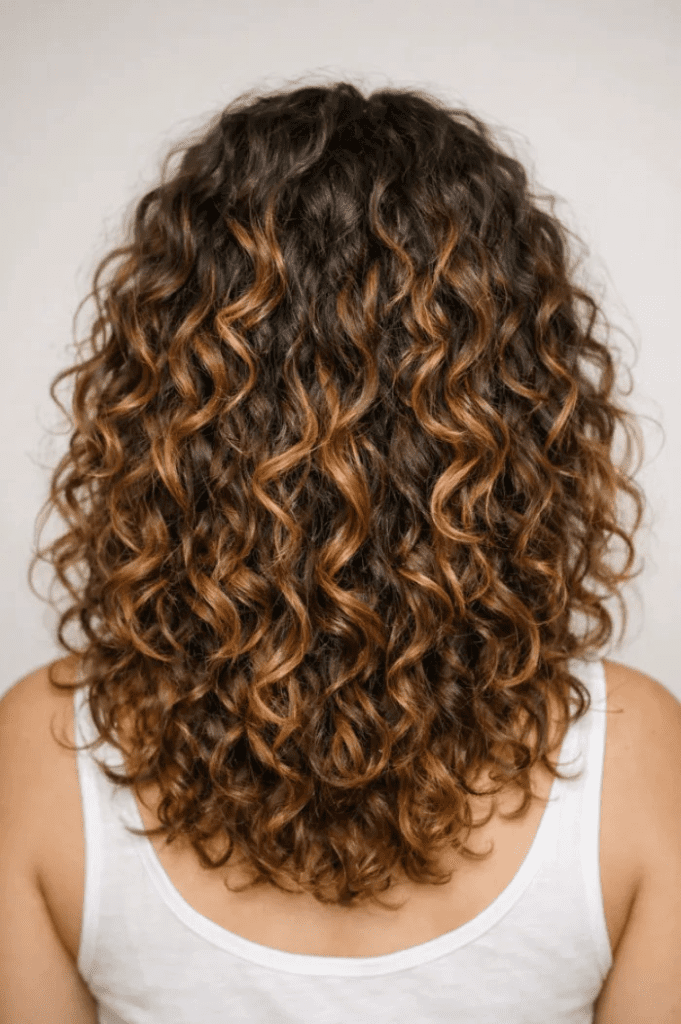
Caramel balayage on naturally curly hair creates a color effect that’s distinctly different from caramel on straight or wavy hair — and in many ways more beautiful — because the three-dimensional structure of curly hair catches light at the outside of each curl, the inside of each curl, and the bend of each curl simultaneously, creating a multi-point shimmer that flat hair simply can’t replicate.
The honey highlights sitting on the outer curves of the curls do specific work: they brighten the sections that catch the most light in natural conditions, which means the curls appear to glow from within rather than having obvious lighter sections placed on top of them.
What to ask your colorist: Ask for caramel balayage applied freehand following the natural curl sections — not in foils placed against the flat of the head, which creates color placement that doesn’t align with how the curls actually sit. The highlights should target the outer surface of the curl sections where light hits most directly, leaving the interior curl sections in the natural base for depth and contrast.
Maintenance tip: Maintaining the curl definition that makes this color most visible is the priority — a leave-in conditioner on soaking wet hair followed by a curl cream or light gel scrunched upward keeps curls defined enough for the caramel and honey tones to show at every bend. Dry or frizzy curls close in on themselves and make the balayage invisible.
Best for: Women with naturally curly hair who want warm dimension that works with their curl texture rather than sitting on top of it — color that glows through the curls rather than sitting as visible ribbons against them.
9. Shoulder-Length Bob With Soft Caramel and Honey
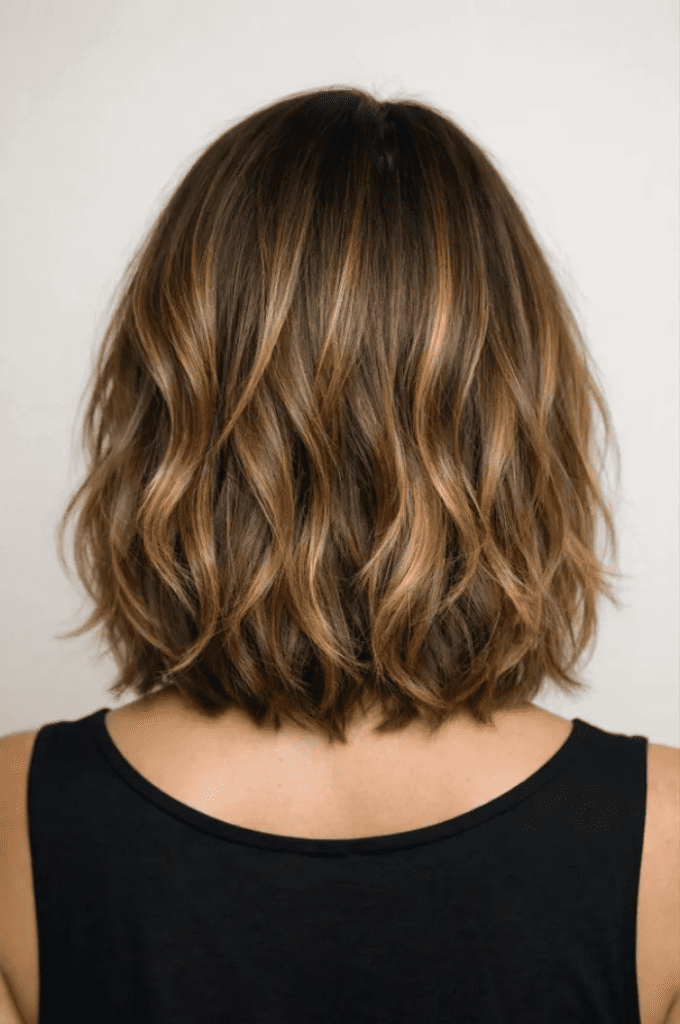
A shoulder-length bob with caramel and honey highlights is one of the most practically effective pairings on this list because the length keeps all the dimension close to the face where it’s most visible — and the clean structure of the bob gives the color a polished backdrop that makes even subtle highlights look deliberate and intentional.
The key technical consideration on a bob is avoiding highlights that start too close to the root — the reduced length of a bob means that mid-shaft placement on a longer style becomes close-to-root placement on a bob, which can create a result that looks more like traditional highlights than the soft, blended balayage you’re aiming for.
What to ask your colorist: Ask for honey highlights applied in the lower half of the bob length only — from mid-shaft downward — with the upper sections left in the natural base. A caramel gloss applied over the full length unifies the tone and gives the bob the polished, cohesive finish that makes this color combination look most appropriate on a structured cut.
Maintenance tip: A bob with caramel and honey highlights looks best with a slight bend at the ends — either inward or outward — rather than perfectly straight. The bend lifts the highlighted end sections slightly, which catches light and makes the honey warmth most visible. One pass with a medium-barrel iron is the complete styling routine.
Best for: Women with shoulder-length bobs who want a color update that makes the cut look warmer, fuller, and more dimensional without adding visual complexity or requiring significant maintenance.
10. Relaxed Waves With Warm Caramel Finish
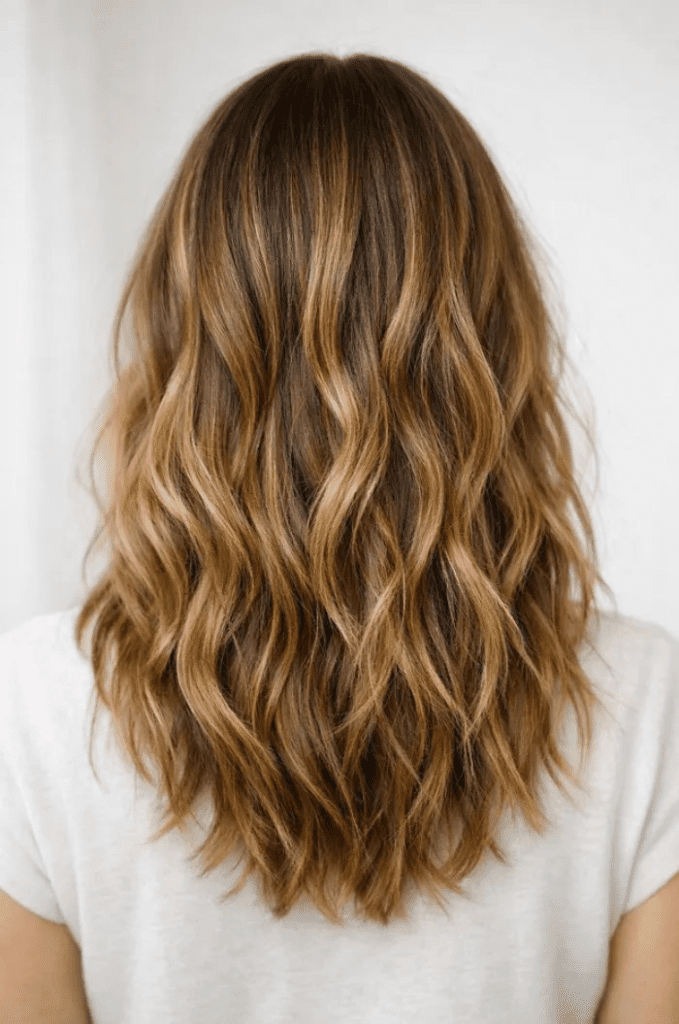
Relaxed waves and warm caramel balayage are a pairing built on the same principle — both are designed to look effortless rather than engineered, natural rather than precise. When the styling and the color share the same aesthetic direction, the result has a coherence that makes everything look more flattering than either element would on its own.
The honey highlights adding lightness to this style are applied conservatively — just enough to prevent the warm caramel from reading as a single flat tone rather than a dimensional warmth. This restraint is the right approach: the goal is caramel with brightness, not caramel and blonde in equal measure.
What to ask your colorist: Ask for a caramel-forward balayage with honey used sparingly as an accent rather than as an equal component of the color — tell your colorist you want the caramel to be the dominant tone and the honey to provide subtle lightness rather than visible contrast.
Maintenance tip: A light mousse at the roots on damp hair, scrunched through the lengths, and air dried creates the relaxed wave quality that shows this color most naturally. Over-styling with heavy products or excessive heat compresses the wave pattern and reduces the light variation that makes warm caramel balayage look its most dimensional.
Best for: Women who want a genuinely low-effort color that looks intentional and polished from a distance but requires very little daily maintenance to achieve that quality.
11. Straight Hair With Warm Caramel Blend
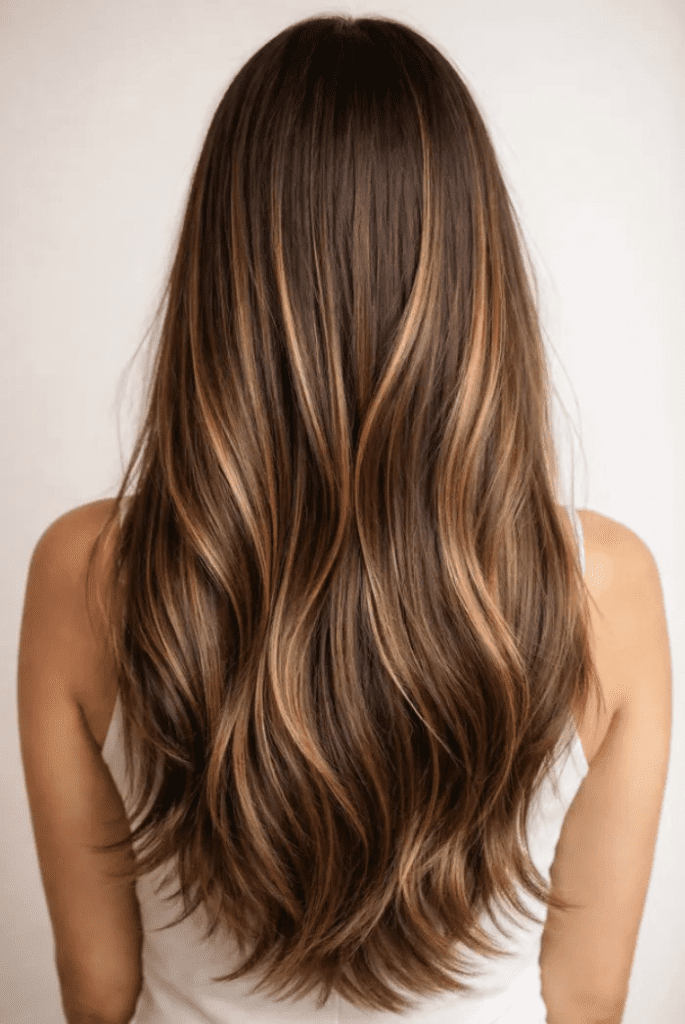
Straight hair is the most revealing styling choice for caramel and honey balayage — the flat, smooth surface shows every ribbon and every transition point with complete clarity. On straight hair there’s no wave pattern to diffuse the highlights or blend the transitions naturally, which means the precision of the color application matters more than it does on any other texture.
This is a feature rather than a limitation when the balayage is well-executed. On straight hair, fine caramel highlights running smoothly through the lengths create a crisp, high-definition color result where every ribbon is visible and the tonal variation between the natural base and the highlighted sections reads as deliberate and sophisticated.
What to ask your colorist: Ask for fine, evenly-spaced highlights rather than wide balayage sections — on straight hair, width reads as chunkiness and dated placement rather than natural dimension. Fine ribbons on a smooth surface look precise and intentional. Request a smooth root-to-end blending technique with no visible start point for the highlights.
Maintenance tip: Heat protectant before every flat iron or blow dry session is the most important maintenance step for this look — straight styling requires the most frequent and direct heat application of any styling approach, and repeated heat on fine highlighted sections accelerates both damage and brassiness. A bond-building treatment used monthly counteracts the cumulative heat exposure.
Best for: Women who prefer wearing their hair sleek and straight and want a precise, clearly defined highlight result rather than a blended or diffused one.
12. Voluminous Flowing Waves With Caramel Depth
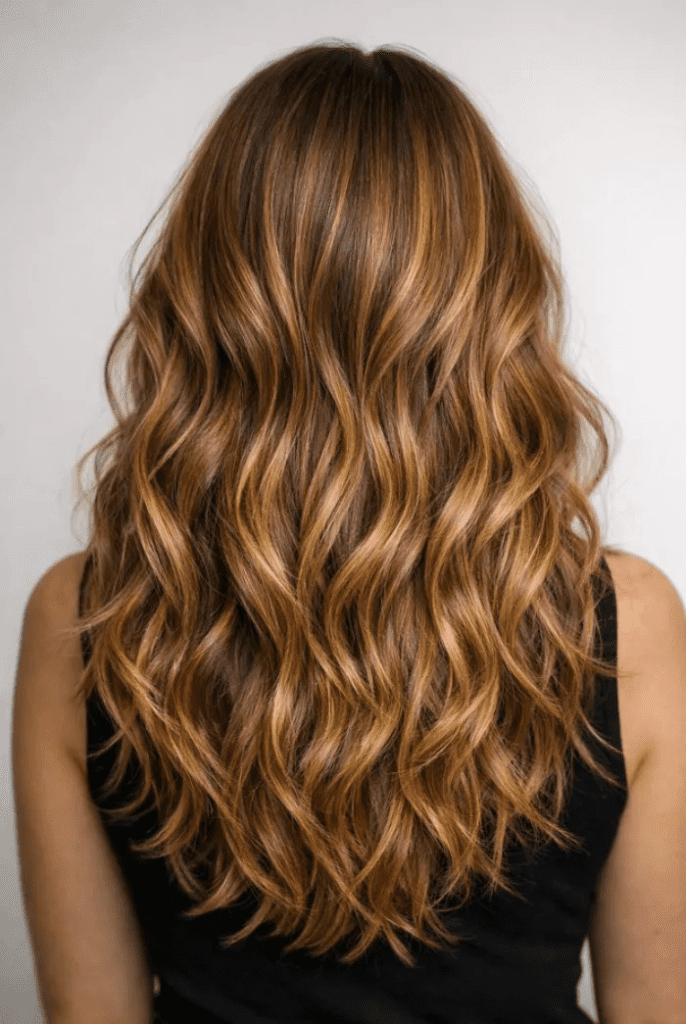
Volume in waves creates a three-dimensional structure that amplifies the visual impact of caramel and honey balayage more than almost any other styling approach — because the additional height and fullness of voluminous waves creates more surface variation, more light angles, and more visible contrast between the peaks and valleys of the wave pattern.
The honey highlights in a voluminous wave style are specifically effective because the volume spreads the highlighted sections outward across more visible surface area. Where fine, flat hair might have highlights that are close together and difficult to distinguish individually, voluminous waves spread the hair outward and upward so each highlighted section is individually visible from every angle.
What to ask your colorist: Ask for honey highlights placed specifically through the outer layers and face-framing sections — these are the sections that expand most with volume and become most visible when the hair is styled with fullness. Interior highlights on voluminous styles are largely hidden by the volume itself.
Maintenance tip: Volume is built at the root — a lightweight volumizing mousse applied to the roots on damp hair before blow drying creates the foundation for the full, bouncy wave that shows this color at its most dramatic. Once the root volume is set, the rest of the styling routine is straightforward.
Best for: Women with naturally full or thick hair who want warm caramel and honey dimension that takes full advantage of their hair’s natural volume and visual presence.
13. Rich Caramel Base With Delicate Honey Highlights
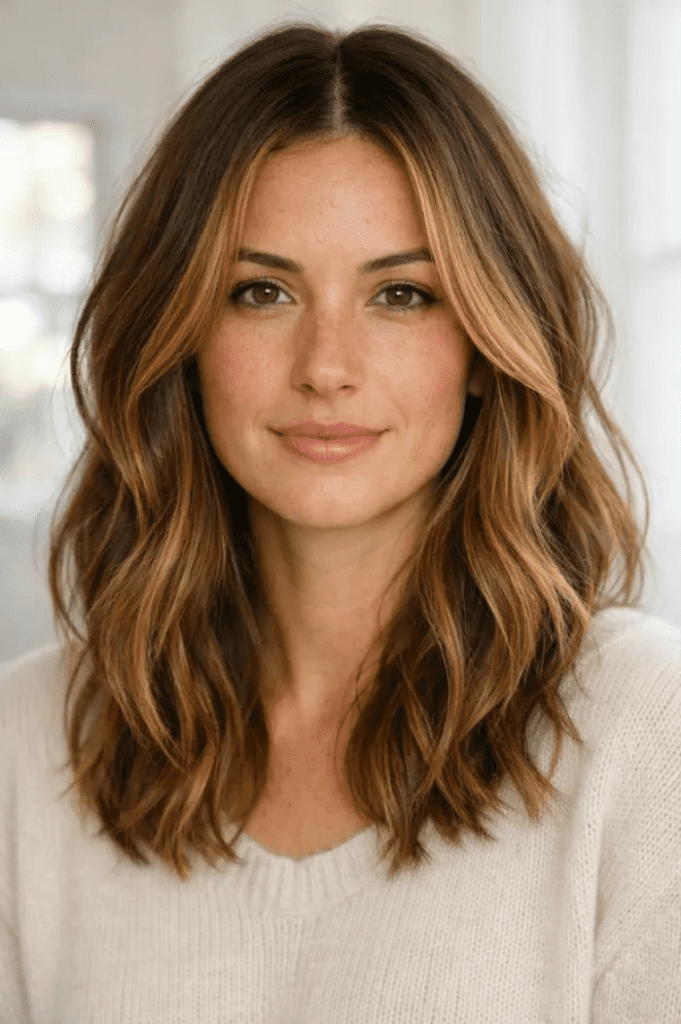
The rich caramel base with delicate honey highlights is the version of this color combination that specifically prioritizes the depth and richness of the caramel over the brightness of the honey — the honey is present but restrained, adding just enough lightness to prevent the caramel from reading as a single flat tone without creating a visible two-color contrast.
This approach is the right choice for women who want warmth and shine without any perception that they’ve had their hair lightened. The delicate honey placement is so subtle that the result reads as a naturally gorgeous brunette with exceptional warmth and dimension rather than as a colored look.
What to ask your colorist: Ask for honey highlights applied in the finest possible sections — babylights rather than standard balayage — through the surface layers only. Tell your colorist you want the honey to be barely detectable as individual highlights but present enough to add overall warmth and luminosity to the caramel base.
Maintenance tip: A warm caramel or golden-tinted gloss applied every eight weeks keeps the caramel base rich and the honey highlights warm simultaneously. Without periodic gloss maintenance, the honey sections will fade toward a cooler, less warm tone while the caramel base remains deeper — creating a tonal inconsistency that the gloss prevents.
Best for: Women who want the most subtle, natural-looking version of this color combination — warmth and dimension that reads as exceptional hair rather than an obvious color treatment.
14. Warm Caramel Balayage Base With Tonal Variation
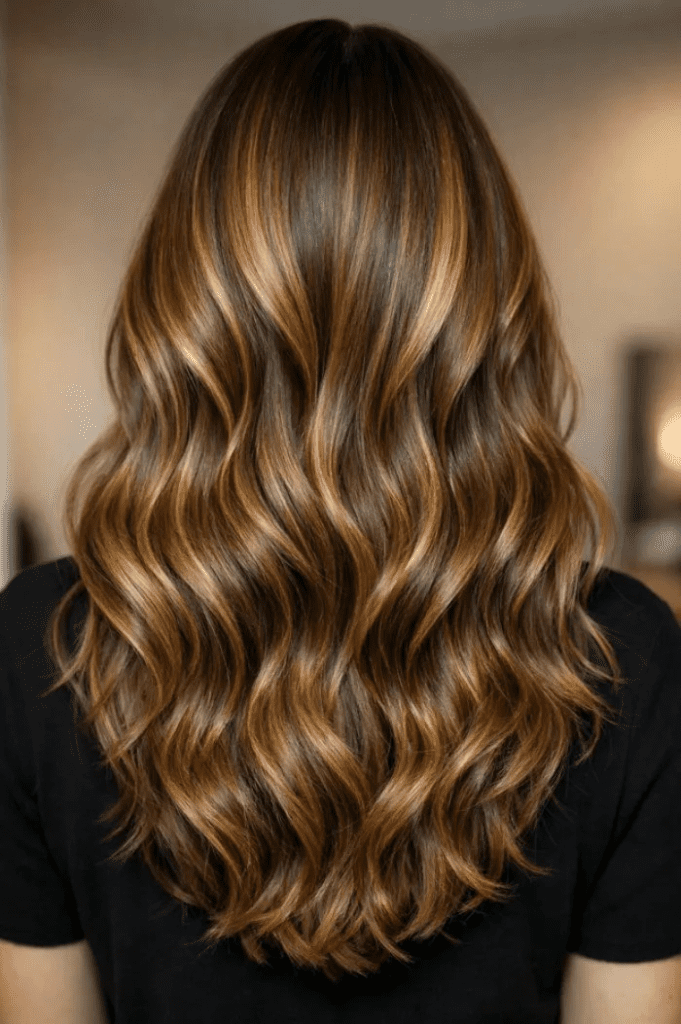
A strong, rich caramel base with slight tonal variation through the lengths rather than distinct honey highlights is the most understated color direction on this list — and it’s specifically effective for women who want their color to look like a natural variation within the brunette family rather than a separate highlighting treatment.
The tonal variation is achieved through the balayage application itself rather than a separate highlight formula — lighter and darker caramel tones applied in alternating sections create depth and movement that reads as natural dimensional color rather than highlights placed on a flat base.
What to ask your colorist: Ask for a caramel balayage using two slightly different formula shades — one slightly richer and one slightly lighter within the caramel range — alternated through the sections to create tonal variation rather than a uniform caramel application. Tell your colorist you want depth and movement within the caramel family rather than a caramel-and-honey contrast.
Maintenance tip: This color is the most forgiving to maintain of all the styles on this list — the tonal variation is within the same color family, so grow-out reads as natural depth returning rather than an obviously different color appearing at the root. A clear gloss every ten weeks is genuinely all the maintenance this style needs.
Best for: Women who want a low-drama, high-impact color that looks genuinely natural and requires the least maintenance commitment of any style on the list.
15. Seamless Warm Caramel Blend

The seamless blend prioritizes smooth transition over visible contrast — the caramel tones melt into one another through the length of the hair with no visible start point, no obvious highlighted sections, and no readable transition line between the natural base and the caramel.
The result is depth and warmth that appears to exist within the hair rather than on top of it. Women who look at this color result from a foot away cannot identify specific lighter or darker sections — they simply see a warm, dimensional brunette that looks more beautiful than a single-tone color.
What to ask your colorist: Ask specifically for a seamless or diffused balayage application rather than a ribbon or section-based technique. Tell your colorist the goal is a result where no individual highlight section is visible — just a warm, smooth graduation of tone from root to end. A warm-neutral toner is the finishing step that creates the seamless quality by unifying the tonal value across all sections.
Maintenance tip: A clear gloss every eight weeks maintains the seamless quality by keeping the tonal relationship between the natural and colored sections consistent. Without periodic maintenance, the lighter sections fade faster than the darker sections and the seamless quality gradually degrades into a more visible two-tone result.
Best for: Women who want dimension that is entirely invisible as a color treatment — warmth and depth that reads as exceptional natural hair color rather than anything that was achieved in a salon.
16. Caramel Balayage With Face-Framing Honey Highlights
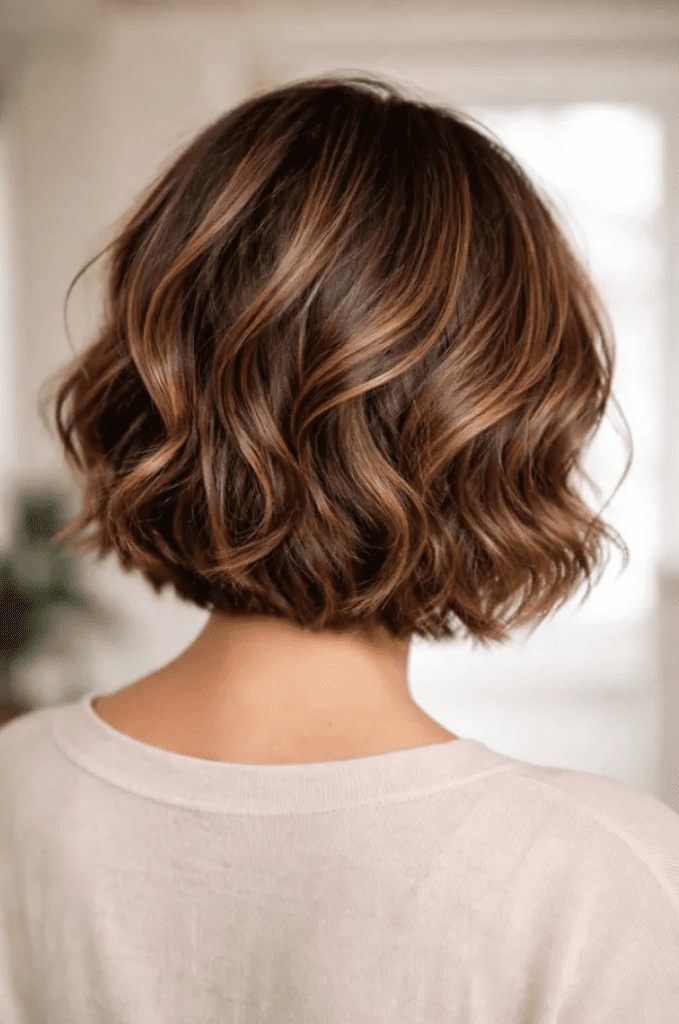
Face-framing honey highlights on a caramel balayage base is the most targeted, strategic color application on this list — all the honey brightness concentrated in the sections immediately around the face where it has the maximum brightening effect on skin tone and overall appearance, with the caramel providing warm context through the rest of the length.
The distinction between honey highlights that flatter the face and honey highlights that look isolated at the hairline is the blend at the connection between the face-framing sections and the rest of the hair. When the honey face frame melts into the caramel lengths rather than sitting as a separate, distinctly different color strip, the overall result looks cohesive rather than like two separate color applications.
What to ask your colorist: Ask for honey highlights in the face-framing sections with a blended or feathered connection into the caramel balayage through the rest of the hair. The face-framing sections should be the lightest point of the entire color, but not so dramatically lighter that they look disconnected from the warm caramel behind them.
Maintenance tip: Face-framing sections fade fastest because they’re washed and heat styled most frequently. Budget for a toner refresh on the face-framing sections specifically every six to eight weeks — a full appointment isn’t necessary, just a targeted gloss on the front sections to maintain the honey warmth where it matters most.
Best for: Women who want their color investment concentrated where it has the most visible, face-brightening impact — the most efficient application of caramel and honey for maximum return on the least amount of color work.
17. Warm Caramel Balayage With Honey Glow
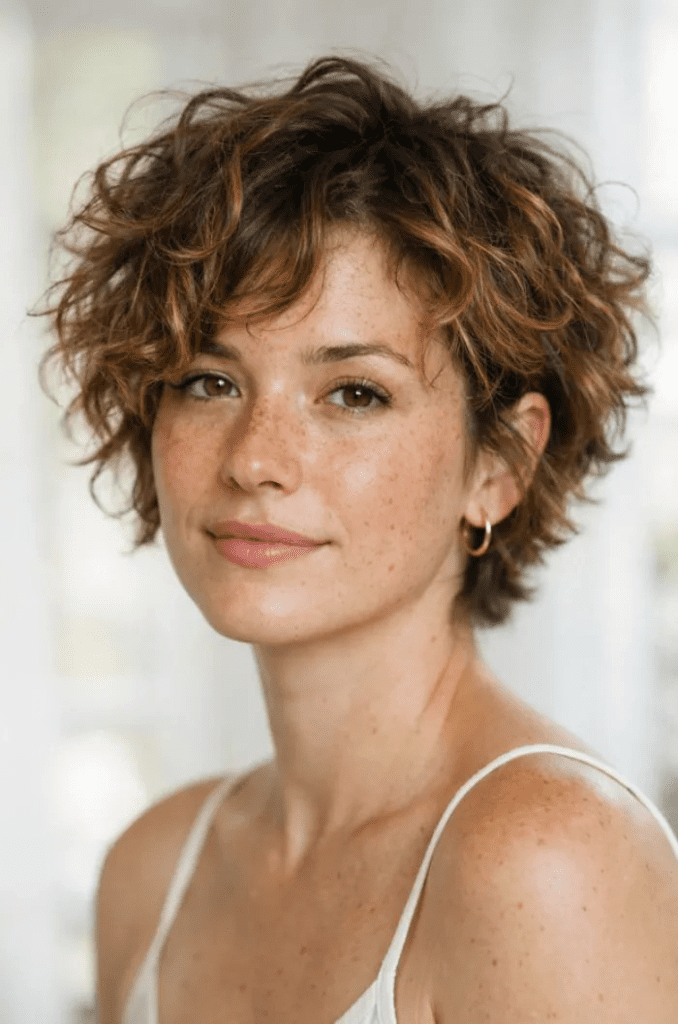
The honey glow version is the warmest, most luminous finish on this list — a result that reads as genuinely glowing hair in natural light because the honey highlights are developed at a slightly brighter, more saturated level than the other styles on the list and the finishing gloss amplifies the warm reflectivity of the tone.
The caramel base stays rich and grounded, providing the depth that makes the honey glow look luminous rather than simply blonde. It’s the contrast between the rich caramel depth and the bright honey surface that creates the glow effect — single-tone honey blonde doesn’t have the same quality because there’s no darker backdrop for the brightness to glow against.
What to ask your colorist: Ask for the honey highlights to be developed slightly lighter than a standard honey formula — tell your colorist you want a bright honey rather than a subtle honey, while keeping the caramel base rich and deep. The finishing gloss should be warm rather than neutral — a warm golden gloss amplifies the glow effect rather than softening it.
Maintenance tip: A warm-tinted gloss at home every six weeks maintains the honey glow quality between appointments. The glow effect is toner-dependent — as the warm toner fades, the honey sections lose their luminous quality and start to read as simply lighter rather than genuinely glowing. Regular gloss refresh is the single most impactful maintenance step for this style.
Best for: Women who want the most visibly warm, glowing version of caramel and honey highlights — hair that looks genuinely luminous in natural light and photographs as warmly beautiful as it looks in person.
Final Thoughts
Warm caramel balayage with honey highlights is a color that earns its ongoing popularity the right way — not through trend cycles but through consistently delivering flattering, low-maintenance results across a wide range of hair types, textures, and lifestyles.
The key to getting the best version of this color for your specific situation is understanding which element of the combination matters most to you. If warmth and richness are the priority, lean toward a caramel-dominant application with honey used as a subtle accent. If brightness and face-framing glow are the priority, let the honey highlights take a more visible role and concentrate them specifically in the sections closest to the face.
Either direction grows out gracefully, requires less frequent maintenance than most other color treatments, and adapts to your styling preferences rather than dictating them. Save two or three favorites from this guide, note what specifically appeals to you about the contrast level and placement in each one, and bring that information to your next appointment. The more specific your brief, the closer the result will be to the warm, dimensional color you’re looking for.
Is warm caramel balayage with honey highlights high maintenance?
It’s one of the lower-maintenance color options available, but the level of commitment depends on two things: how close to the root the highlights are placed and how dramatic the contrast is between the caramel and honey tones. A deep-root application with highlights starting three or more inches below the scalp can go four to five months between appointments without looking neglected — the natural root growth simply extends the darker section in a way that looks intentional. Higher-contrast versions with honey highlights closer to the root will need a refresh every eight to ten weeks. In both cases, a toner or gloss refresh every six to eight weeks is the ongoing maintenance step that keeps the warm quality looking rich rather than fading toward brassiness.
Does this color work on dark or naturally brown hair?
It’s one of the best color options for brunette bases because the caramel and honey tones sit within the same warm family as natural brown — they enhance rather than dramatically depart from the existing base. On medium brunette, caramel highlights add visible warmth and dimension without requiring significant lifting. On darker brunette, honey highlights may need a pre-lightening step to achieve the right level of brightness against a deep base, but the result is worth it — the contrast between a deep dark brunette and warm honey highlights creates some of the most beautiful dimensional color results available.
Will honey highlights go brassy over time?
They can without proper maintenance, but it’s entirely preventable. The primary tools are a sulfate-free shampoo used for every wash, a warm-toned gloss or toner refresh every six to eight weeks, and consistent deep conditioning to maintain the moisture that keeps warm tones looking rich rather than dry and orange. A blue-tinted shampoo used once every two weeks can manage any warm excess that starts to tip toward brassiness — blue shampoo neutralizes orange-brassiness in brunette hair without overcooling the warm tone the way purple shampoo sometimes does. Hot water during washing accelerates toner fade significantly — washing with warm rather than hot water extends the life of both the caramel and honey tones between appointments.
What’s the difference between caramel highlights and honey highlights?
They exist on the same warm color spectrum but at different points. Caramel is richer, slightly deeper, and more amber — it reads as a warm brown rather than a warm blonde. Honey sits lighter and more golden — it reads as a warm, yellowish blonde that’s clearly distinct from the brunette base. The combination of the two works because caramel provides the warm-brunette dimension that looks natural against a dark base, while honey provides the brightness and lightness that creates the glow effect caramel alone can’t achieve. Using both tones rather than either one separately creates the tonal range that makes this combination so flattering and dimensional.
How do I choose between a subtle and a more visible version of this color?
Two variables determine the visibility: contrast level and placement. Low contrast — caramel and honey tones that sit close to the natural base in depth — creates subtle dimension that reads as a beautiful, warm brunette from a distance. High contrast — honey highlights that are noticeably lighter than the base — creates visible dimension that reads as clearly highlighted at every distance. Placement determines where the contrast is most visible: face-framing and surface placement makes the highlights obvious and face-brightening; interior or mid-length-only placement keeps the dimension visible in movement but not when the hair is still. Decide on the contrast and placement combination that matches how much you want the color to be noticed before discussing formula with your colorist.