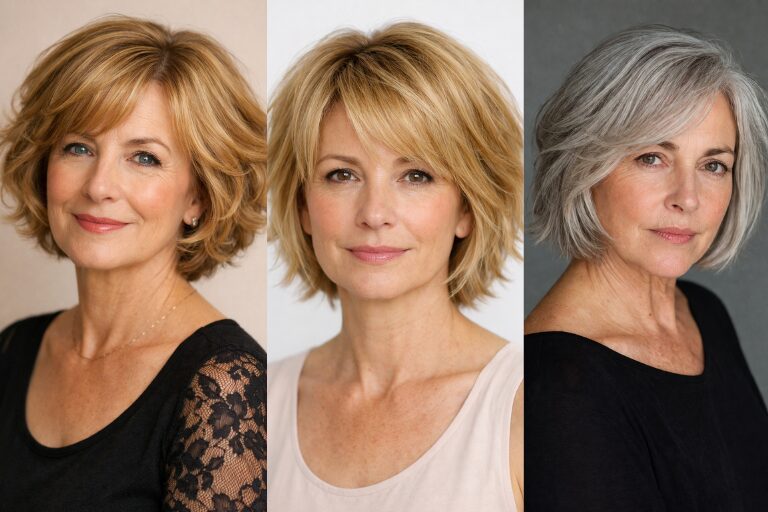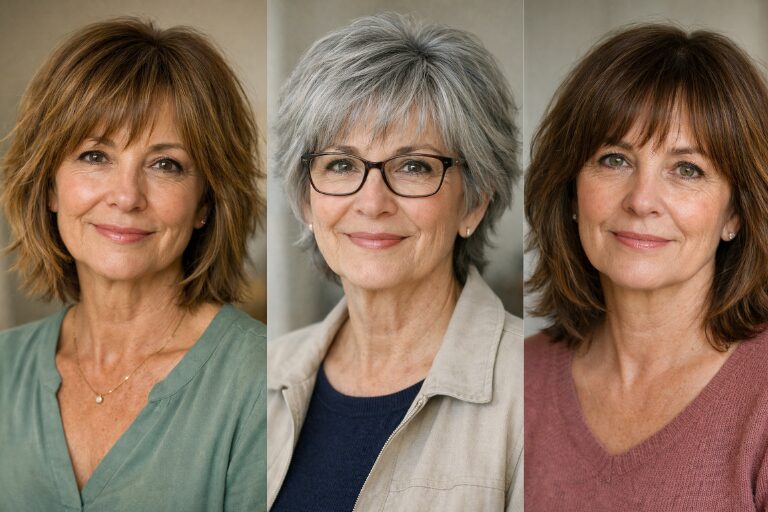
20 Bob Hairstyles for Women Over 60: Low Maintenance Cuts With a Fresh Finish
A great bob does something most haircuts can’t — it simultaneously simplifies your morning routine and makes your hair look more intentional than it did before. For women over 60, that combination matters more than it does at any other stage of hair life.
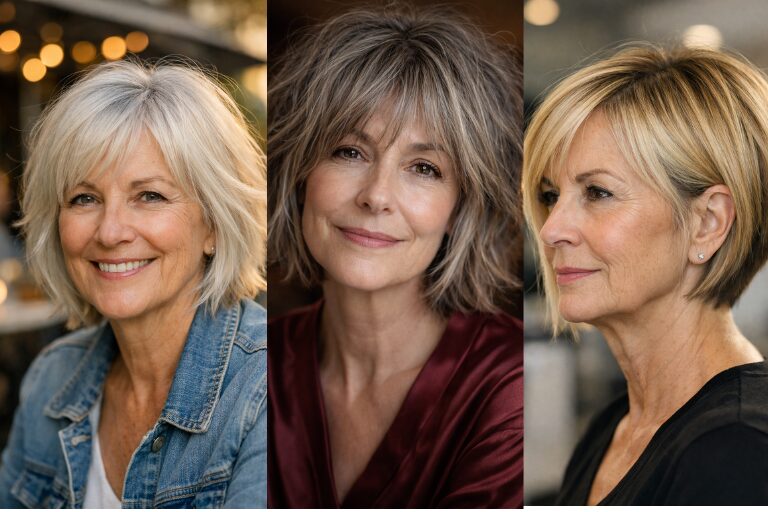
Hair texture shifts with age. It gets finer, softer, and sometimes patchier at the ends. Styles that worked beautifully at 40 can start to feel limp, heavy, or aging rather than flattering. The bob, when chosen correctly for your specific hair density and face shape, addresses most of those concerns in a single cut.
But not all bobs are created equal — and the wrong bob can emphasize exactly what you’re trying to minimize. A cut that’s too blunt at the wrong length frames the widest part of your face. Too many layers on fine hair leaves see-through, wispy ends that look sparse rather than styled. The styles in this guide were selected specifically because they perform well on the hair texture and styling preferences most common after 60, whether you want something sleek and polished or loose and lived-in.
Before you choose: think through three things that will determine which cut actually works for your life. First, how much daily styling time you’re genuinely willing to give it — a five-minute routine and a twenty-minute routine lead to very different cut choices. Second, whether you prefer volume at the crown or a flatter, more streamlined shape. Third, where you want the length to fall — jaw, chin, or shoulder. That single decision changes the entire character of the style.
A quick note to bring to your stylist: ask specifically for a shape that grows out gracefully, avoid heavy thinning shears at the ends, and keep layering soft unless you have thick hair that genuinely needs weight removal. These three requests will save you from the most common over-60 bob pitfalls.
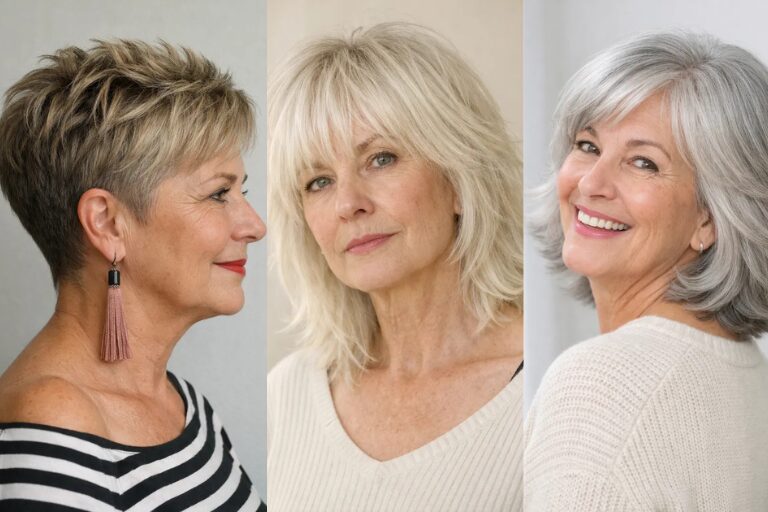
1. A-Line Pixie Bob
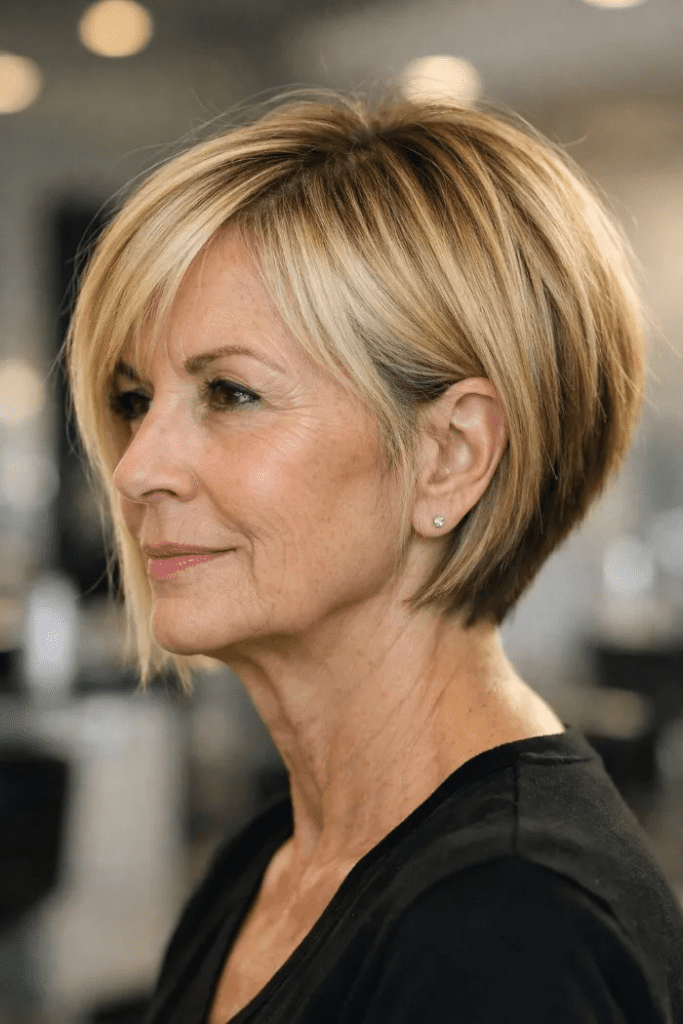
The A-line pixie bob is one of the most structurally intelligent cuts on this list for women over 60 because it creates lift exactly where aging hair tends to lose it — at the crown — while keeping the length that softens and frames the face.
The back is cut short and neat, while the front pieces angle forward and fall longer near the jaw. That diagonal line draws the eye toward the cheekbones and chin rather than across the widest part of the face, which is one of the most flattering effects a haircut can produce.
For fine or thinning hair, the A-line also concentrates the visible density at the front where it’s most needed. The shorter back never looks sparse because there’s less length for thinning ends to reveal themselves.
Stylist note: Ask for a clean neckline rather than a tapered one — a crisp nape finish keeps the A-line looking intentional and avoids the soft, undefined back that can make the cut look grown out prematurely.
Styling tip: Blow dry the back smooth and tight, then use a round brush on the front pieces to direct them forward and slightly under. A light smoothing serum through the ends keeps the angled line sharp without stiffening fine hair.
Best for: Women who want a structured, face-framing cut that lifts the crown and elongates the face without requiring a full blowout every morning.
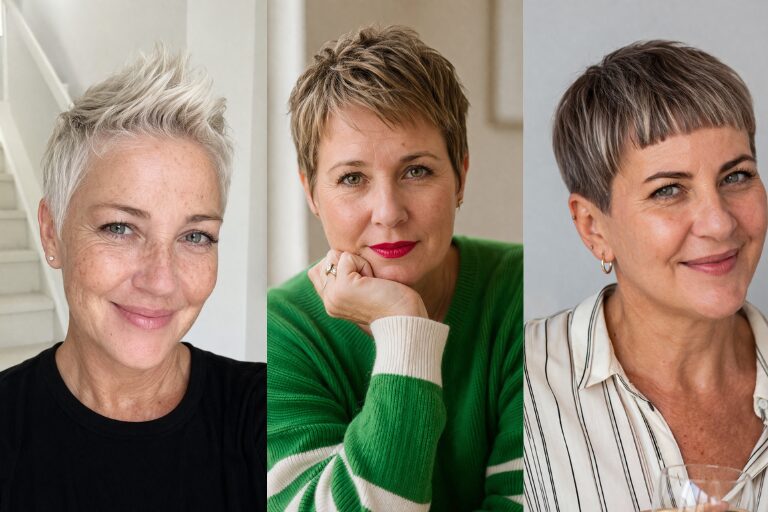
2. Brunette Pixie Bob With Soft Side Fringe
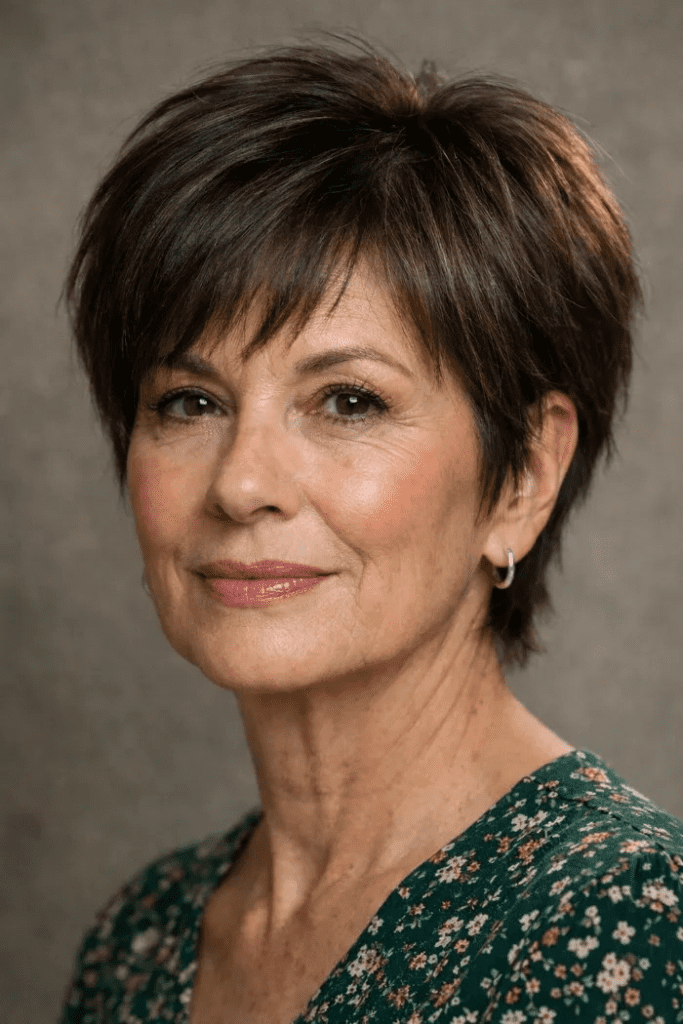
The brunette pixie bob with a soft side fringe is one of the most wearable short cuts for women over 60 because it manages to look polished without looking severe — a balance that becomes increasingly important as face shape changes with age.
The tidy nape keeps the back neat and manageable, while the soft side fringe is doing important facial work at the front. A fringe that sweeps gently to one side softens the forehead area, directs attention toward the eyes, and creates an asymmetry that prevents the cut from looking too uniform or boxy.
The subtle layering through the top means the cut never sits completely flat, which is a particular advantage for women whose hair has started to lose natural volume.
Stylist note: Keep the fringe long enough to sweep rather than sit across the forehead — a fringe that’s cut too short on fine hair tends to lift and separate rather than lying gracefully to the side.
Styling tip: Blow dry the fringe with a small round brush, sweeping it to one side while directing the airflow in the same direction. Finish with a flexible-hold spray just on the fringe to hold the sweep without stiffness. The rest of the cut can air dry or be quickly shaped with fingers.
Best for: Women who wear glasses and want a polished, easy-to-style cut that doesn’t fight their frames or require complicated styling to look finished.
3. Straight Bob With Full Fringe
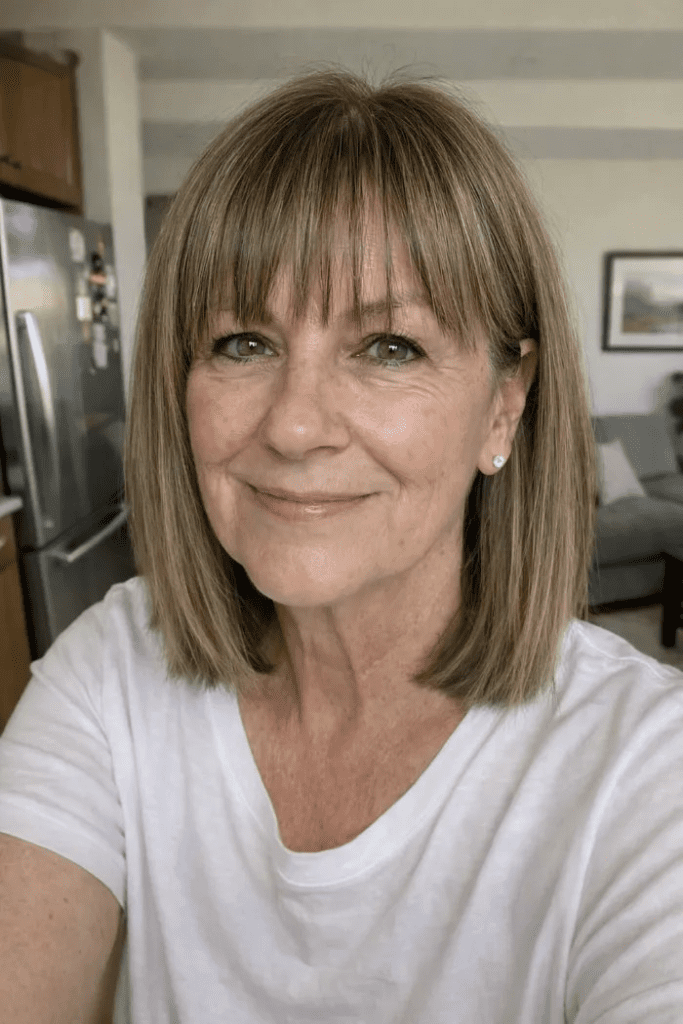
A classic straight bob with a full fringe is one of the most powerful face-framing cuts available — and for women over 60 who are comfortable maintaining bangs, it delivers a level of instant polish that few other styles can match.
The full fringe immediately draws attention to the eyes, which is where most women want visual focus. The blunt ends of the bob create the optical illusion of thicker, denser hair, which is especially valuable when hair has become finer over time. Together, the fringe and the blunt perimeter create a frame within a frame — defined, clean, and deliberate.
The key is avoiding a fringe that’s cut too thick or too heavy. Fine hair needs a fringe that has a little lightness built in at the ends so it swings naturally rather than sitting in a rigid block.
Stylist note: Ask for light texture at the very tips of the fringe — not heavy thinning, just enough point-cutting to give the bang some movement so it swings rather than lying flat and block-like against the forehead.
Styling tip: Blow dry the fringe first before the rest of the hair, using a flat brush and directing air downward. This sets the fringe in the correct position and prevents it from drying at an angle you’ll spend the rest of the morning fighting.
Best for: Women who want strong, structured face-framing and are comfortable with the slight maintenance commitment of a full fringe trim every three to four weeks.
4. Feathered Fringe Bob
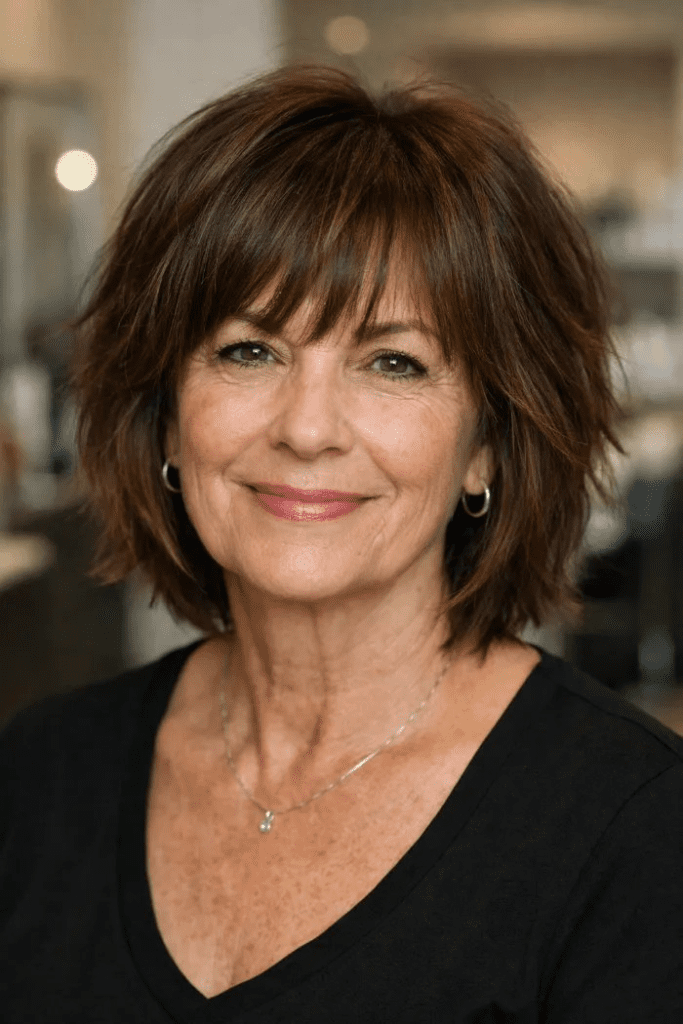
The feathered fringe bob gives you the face-softening benefit of a fringe without the weight or commitment of a full bang — which makes it an excellent middle-ground option for women over 60 who want softness at the forehead without the daily styling requirement of traditional bangs.
The feathered fringe is cut lightly and with movement built in, so it blends into the sides of the cut rather than sitting as a separate, defined strip of hair. The result is softer and more organic than a structured fringe, and it grows out much more gracefully — which matters when you’re working with hair that may already be on the finer side.
The bob itself stays clean and simple, letting the fringe do the facial work without competing with heavy layering or texture through the rest of the cut.
Stylist note: The feathering technique should be applied with scissors rather than thinning shears on fine hair — thinning shears can leave fine bangs looking sparse rather than airy.
Styling tip: Blow dry the fringe with minimal product and let the feathering do its natural thing. A very light pass with a flat iron on just the tips can help the ends sit softly rather than flipping up. This is one of the few styles that actually looks better with less styling effort.
Best for: Women who prefer minimal heat styling and want a fringe element that softens the face without requiring precise daily maintenance.
5. Feathered Layered Bob
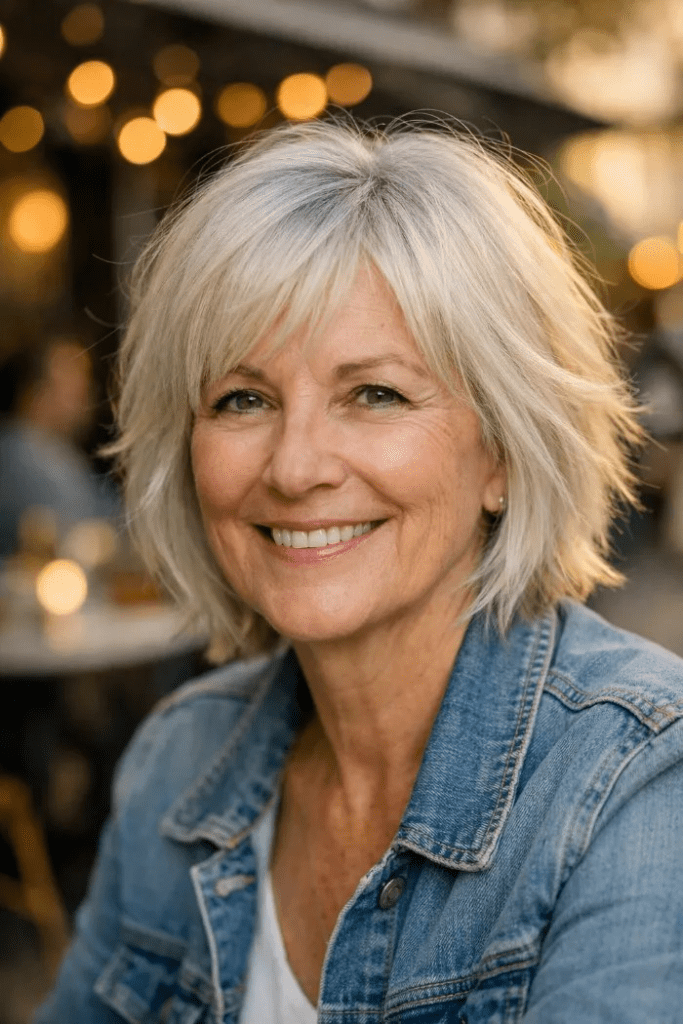
The feathered layered bob is the answer for women whose hair has started to lose density at the ends and feel limp or flat through the mid-lengths — because the feathered layering adds the appearance of lightness and movement without actually removing the volume you need at the perimeter.
What makes feathered layers different from standard layers is the technique. Rather than cutting into the hair horizontally and removing bulk, feathered layers are created by softly texturizing the surface in a way that allows sections to move independently. The result looks fuller and airier rather than thinned out.
For women over 60 with fine to medium hair, this is one of the most technically effective cuts on this list because it addresses the flatness problem without creating the wispy ends problem.
Stylist note: Ask specifically for feathered layers, not thinning shears, and not standard blended layers. Bring a reference image if possible, because the technique varies significantly between stylists.
Styling tip: A medium round brush during blow drying lifts the feathered sections and sets the movement into the layers. Finish with a light-hold spray rather than serum — serum can flatten the feathered sections and undo the airy quality that makes this cut work.
Best for: Women with fine to medium hair who want visible movement and fullness in their bob without a complicated daily styling routine.
6. Icy Blonde Chin-Length Bob
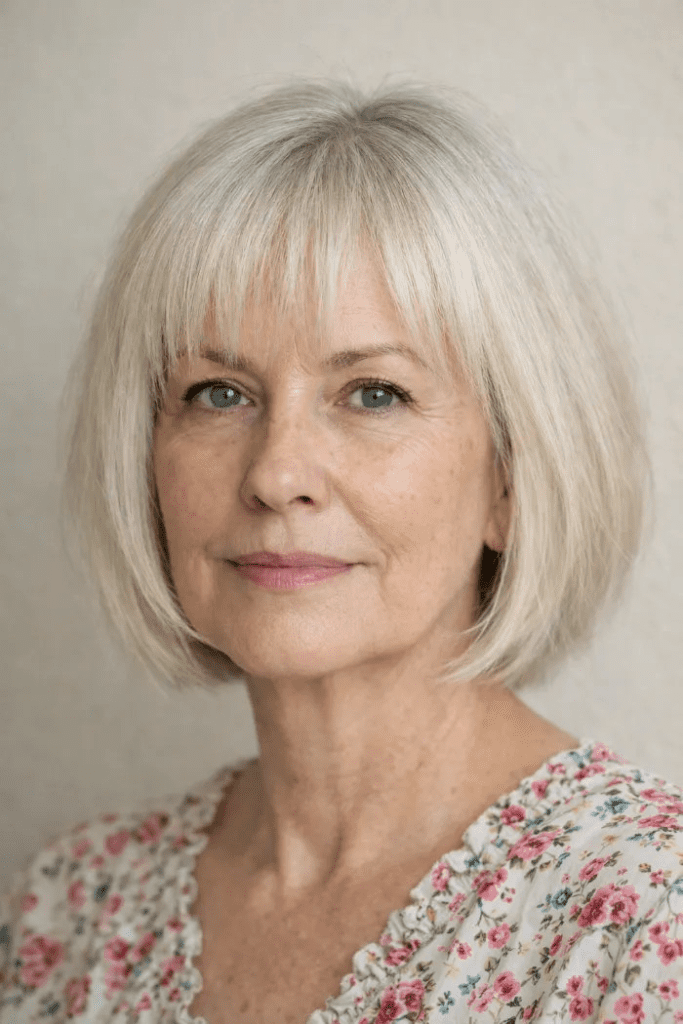
The chin-length bob is one of the most flattering lengths for women over 60 because it falls in the facial zone that creates the most natural elongation without requiring length that becomes difficult to manage or style.
The icy blonde tone does significant work here beyond just the color itself. Cool, light tones at chin length create a brightness near the face that draws the eye upward and adds a lifted, refreshed appearance to the overall look. Combined with a clean perimeter that keeps the neckline sharp and a soft fringe that maintains approachability, this is a style that looks deliberately modern rather than simply short.
For women with naturally straight hair, the chin-length blunt bob is also one of the lowest-maintenance styles on the list — it holds its shape through most of the day with minimal intervention.
Stylist note: The fringe should be cut slightly longer than you think you want it — chin-length bobs tend to shrink slightly after the first wash as the hair settles, and a fringe that’s cut at exactly the right length in the salon can end up slightly short once the hair is styled at home.
Styling tip: A flat iron run through the length from root to mid-shaft, with a slight inward rotation at the ends, gives the clean perimeter its signature sharp finish. A light shine spray held at arm’s length adds the polished quality that makes this style look as crisp on day three as it did on day one.
Best for: Women with straight hair who want a genuinely modern, low-effort style that holds its shape through the day without a complicated product routine.
7. Lob With Side-Parted Bangs
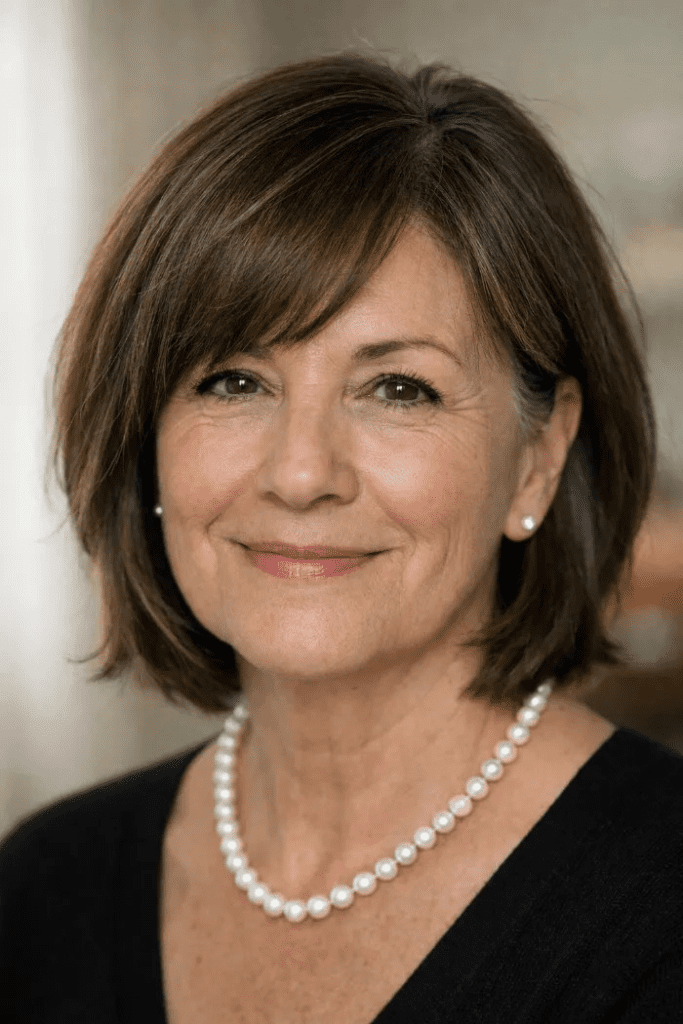
The lob — long bob — is consistently the easiest overall bob choice for women over 60 who aren’t ready to commit to a shorter cut but want the cleaner, more intentional shape that a bob provides.
The shoulder-adjacent length means the hair has enough weight to fall cleanly and evenly, which naturally helps thicker or medium-density hair that can look triangular or boxy in a shorter cut. The side-parted bangs blend seamlessly into the front of the lob, which solves one of the most common fringe frustrations: the awkward grow-out phase. Because they’re parted and angled rather than blunt, they grow out as a natural-looking face-framing piece rather than an obvious line of regrowth.
Stylist note: Ask for the side-parted bangs to be cut long enough to tuck behind the ear on days you don’t want fringe — versatility is one of this style’s greatest strengths, and a bang that can be worn multiple ways extends the life of the style significantly.
Styling tip: Blow dry the bangs first and set them in the direction of the part. Let the lob air dry naturally or add a soft bend with a large-barrel wand on days when you want more movement. This is genuinely one of the most low-intervention styles on the list.
Best for: Women with medium to thick hair who want maximum styling flexibility and a cut that grows out gracefully without requiring frequent trims.
8. Loose Silver Waves Bob
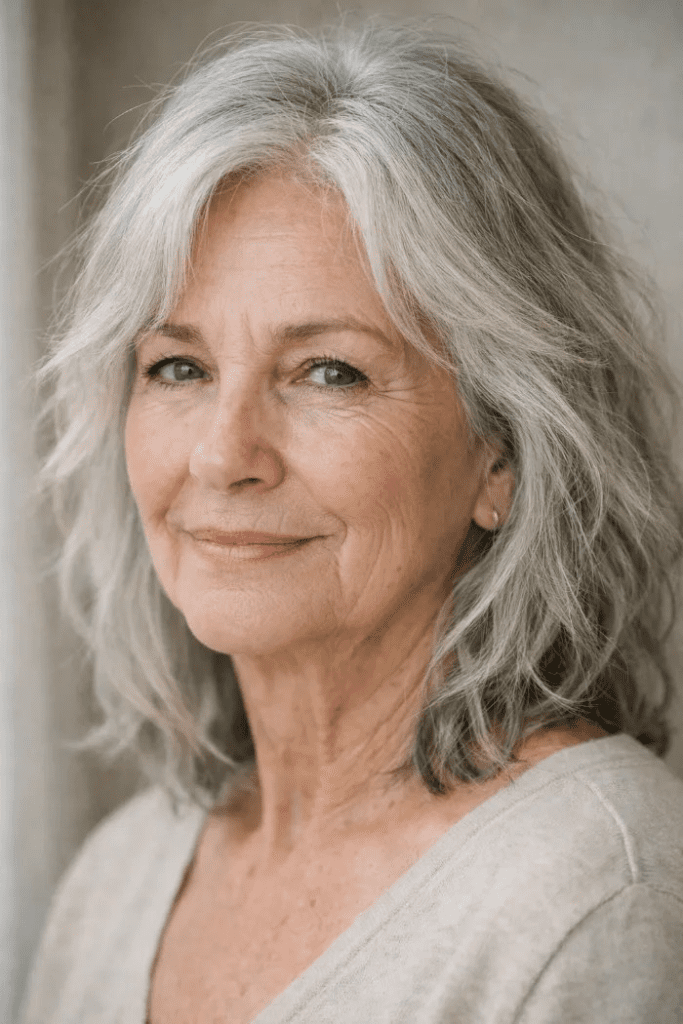
Silver and grey hair has become one of the most celebrated and photographed hair aesthetics — and loose waves are one of the most flattering ways to wear it at bob length because the wave pattern adds width and softness in a way that straight silver hair at the same length can’t.
The gentle bend in loose silver waves creates a dimensional quality that makes the hair look fuller and more textured, which is particularly valuable when hair has become finer or lost its natural wave pattern over time. The waves add width through the sides in a balanced way — not poofy or voluminous, just soft and full.
For women whose hair is naturally wavy, this style is genuinely as close to wash-and-go as a bob gets.
Stylist note: Ask for soft internal layering to support the wave pattern rather than blunt layers that can create disconnected sections in wavy hair. The layering should work with the wave, not cut across it.
Styling tip: On naturally wavy hair, scrunch a light mousse through damp hair from the ends upward and let it air dry completely before touching. On straight hair that needs wave, use a large-barrel wand and wrap sections loosely before brushing through with a soft-bristle brush for movement without definition.
Best for: Women embracing their natural silver or grey who want a style that makes the color look as deliberate and beautiful as it actually is.
9. Long Bob With Side-Swept Bangs
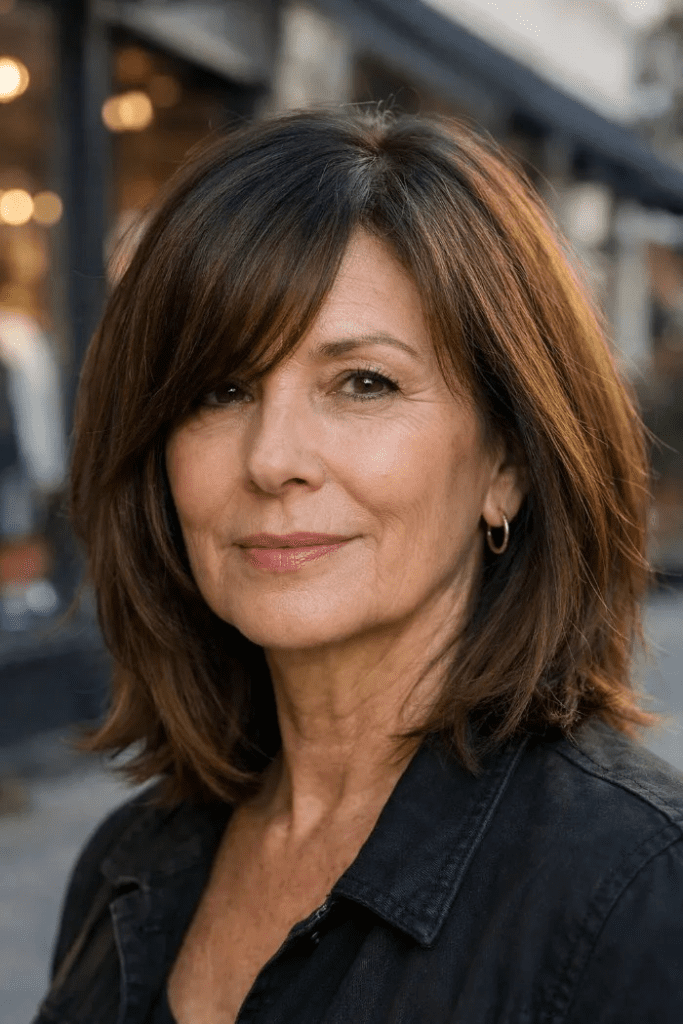
The long bob with side-swept bangs is one of the most reliably flattering hairstyles for women over 60 across a wide range of face shapes and hair textures — and its longevity as a recommended style is directly related to how universally it performs.
The side-swept bangs skim the cheekbone and blend into the length of the lob, which creates a continuous face-framing line rather than a sharp, defined bang. That seamlessness makes the style look polished without looking styled — an important distinction for women who want to look put together without looking like they spent significant effort getting there.
For medium-density hair specifically, this cut distributes weight evenly enough that the hair falls smoothly without requiring constant reshaping.
Stylist note: Ask for the sweep to start slightly back from the natural part rather than directly at the part line — this gives the bang more natural movement and prevents it from sitting flat against the forehead on humid days.
Styling tip: Blow dry the swept section with a round brush, directing the airflow in the sweep direction. Once set, this bang maintains its direction with minimal product. A light flexible spray is enough to keep it in place through the day.
Best for: Women who want a polished, occasion-appropriate lob that works as well for a dinner out as it does for a regular Tuesday.
10. Piecey Shag Bob With Wispy Bangs
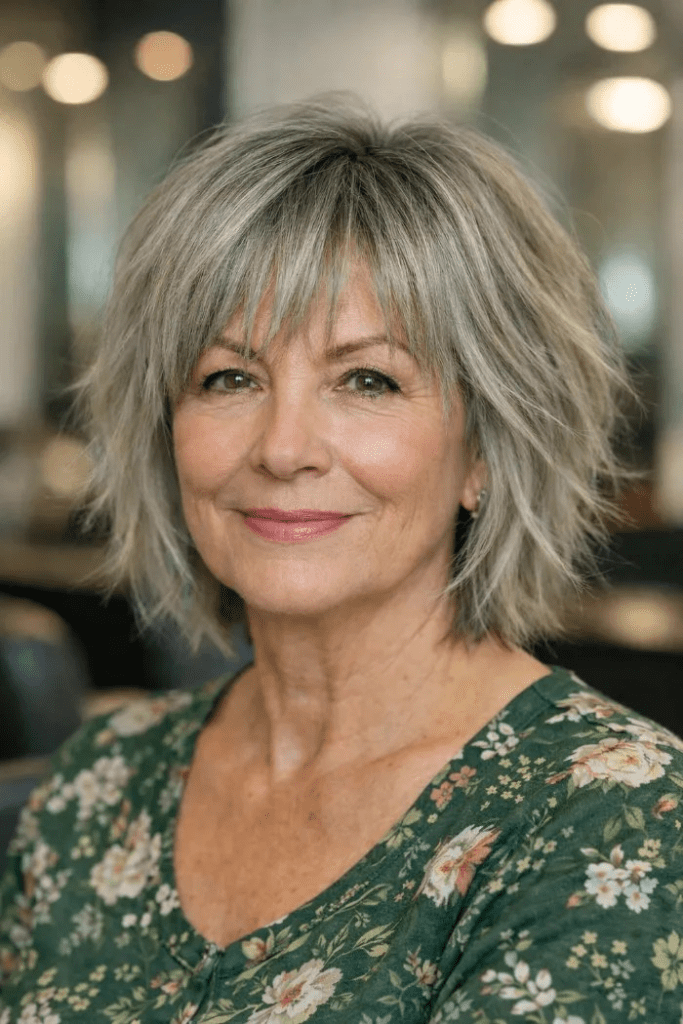
The piecey shag bob is the most textured, movement-forward style on this list — and for women over 60 with thick or slightly wavy hair, it’s one of the most liberating cuts available because it works with natural texture rather than against it.
The shag structure creates lift through the crown via internal layers, while the piecey ends add dimensional texture that makes the hair look deliberately styled even when it’s been left mostly to its own devices. The wispy bangs keep the front of the style light and soft, which prevents the shag’s volume from feeling heavy or overwhelming around the face.
This cut is especially effective for women whose hair has significant natural texture — it channels that texture into something intentional and modern rather than trying to smooth or suppress it.
Stylist note: A shag on thick hair over 60 needs to be approached differently than a shag on younger, thicker hair — ask for weight removal through the interior sections rather than the perimeter to keep the ends looking full rather than stringy.
Styling tip: Scrunch a curl cream or light texturizing cream through damp or dry hair and let the natural texture set. The less you touch a piecey shag while it dries, the better the texture looks when it’s finished.
Best for: Women with thick or naturally wavy hair who want volume, movement, and texture built into the cut without a daily styling routine that fights the hair’s natural behavior.
11. Platinum Bob With Glasses

The challenge with wearing a bob and glasses together is that the wrong cut and the wrong frames can compete for visual attention rather than complementing each other. The platinum bob at jaw length solves this by keeping the ends light and the overall silhouette clean enough that the glasses and the hair read as a coordinated look rather than two separate strong elements.
The jaw length is key — it keeps the bob from sitting above the frames (which creates a proportional imbalance) or extending significantly below them (which can make the face look wider). The soft internal layering gives movement without adding the kind of volume that overwhelms smaller or delicate frames.
Stylist note: Ask for a slightly longer front section if you prefer your cheekbone area to have extra coverage — this creates a soft framing element on both sides of the face that works beautifully with most frame shapes.
Styling tip: Blow dry smooth with a round brush, then finish with a light serum on the surface for shine without weight. Avoid heavy oils near the roots — they flatten fine platinum hair quickly, especially in the crown area where glasses can compress volume.
Best for: Women who wear glasses and want a bob that enhances their frames rather than competing with them.
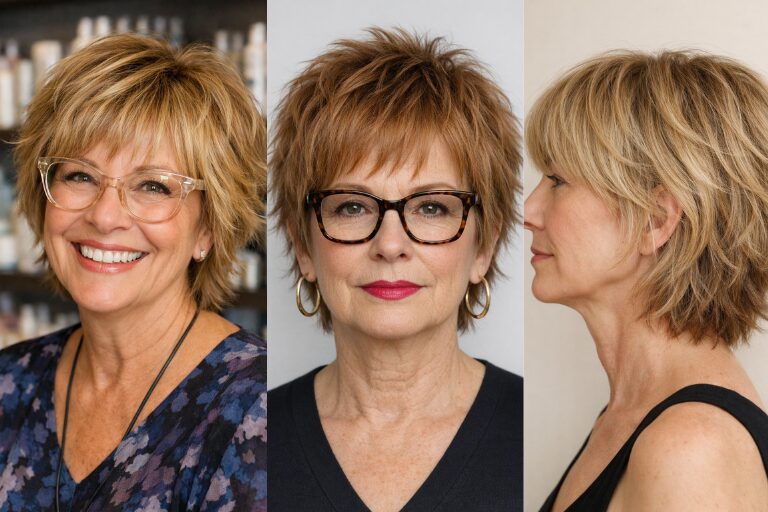
12. Textured Shag Bob
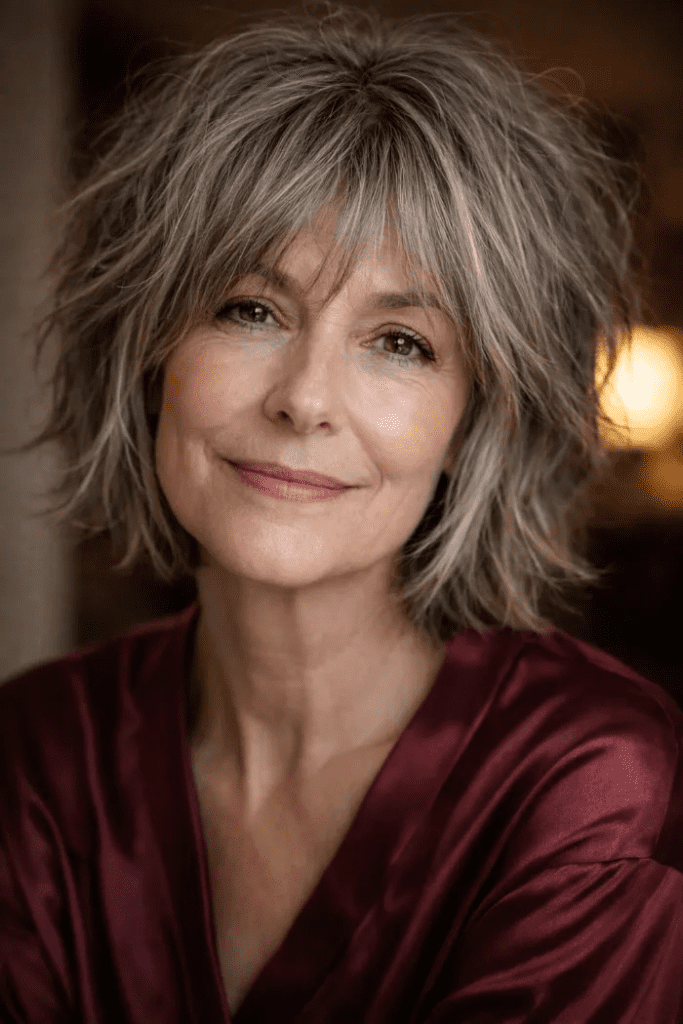
The textured shag bob is the highest-volume style on this list, and it earns that distinction because the layering structure is designed to create lift at the crown and lightness through the mid-lengths simultaneously.
Where a standard layered bob often creates a triangular silhouette that’s flat at the top and wider at the ends, the shag’s interior layering reverses that profile — fuller at the crown, lighter through the length. For women over 60 whose hair has lost crown volume, this structural advantage is significant.
The lived-in texture also means the style looks intentional at multiple points through the day, not just immediately after styling. A textured shag that’s been slept on still reads as textured rather than simply flat.
Stylist note: Ask specifically for a shag with curtain bangs or soft fringe rather than a blunt fringe — the wispy fringe integrates with the shag’s texture far more naturally than a blunt cut fringe, which can look mismatched against the softness of the layers.
Styling tip: Use a diffuser on medium heat, scrunching sections upward as you dry. Once fully dry, apply a very small amount of light paste or wax between your fingers and work through the ends to separate and define the texture.
Best for: Women with wavy or thick hair who want the most volume and movement from their cut and prefer a style that looks better slightly undone than perfectly smooth.
13. Shaggy French Bob
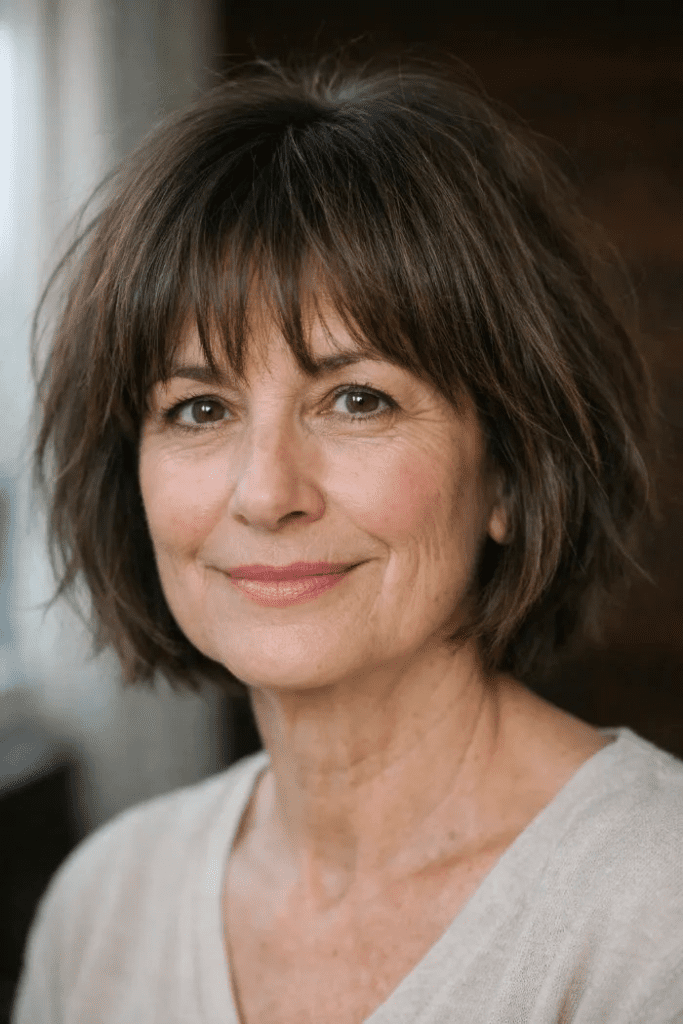
The French bob sits right at cheekbone length — shorter than most bobs on this list — and its shaggy version is especially flattering for women over 60 because the soft fringe and the cheekbone-grazing length draw attention to the upper face where the eyes and cheekbones are the visual focus.
The slightly playful, artsy quality of the shaggy French bob is one of its less tangible but very real advantages — it reads as confident and expressive in a way that a perfectly neat, structured bob sometimes doesn’t. For women who want their haircut to communicate something about their personality, this is one of the more distinctive options on the list.
Stylist note: The length needs to be precise for this cut to work — too long and it becomes a regular shag bob, too short and it approaches a pixie without the structure to support it. Bring a clear reference image.
Styling tip: Work a small amount of texture cream through the ends and let them flip naturally as the hair dries. The slightly undone finish is the point of this style — don’t fight it toward neatness.
Best for: Women who want something distinctly individual and don’t mind a shorter length that requires slightly more frequent trims to maintain its character.
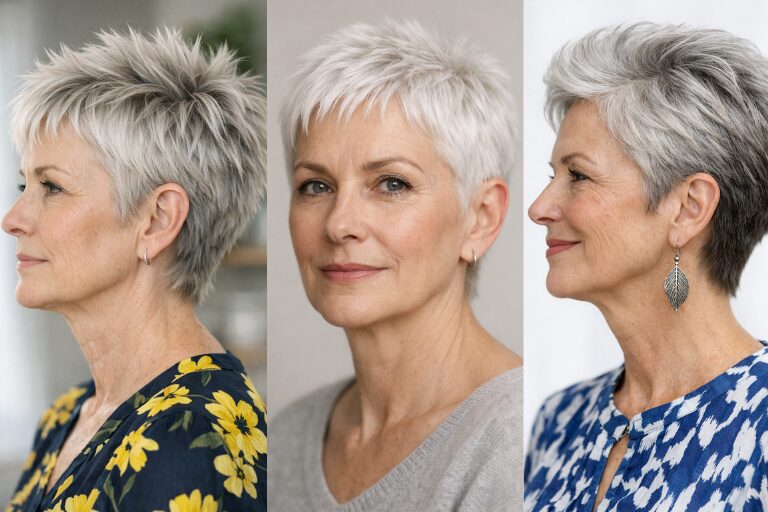
14. Short Shag Bob
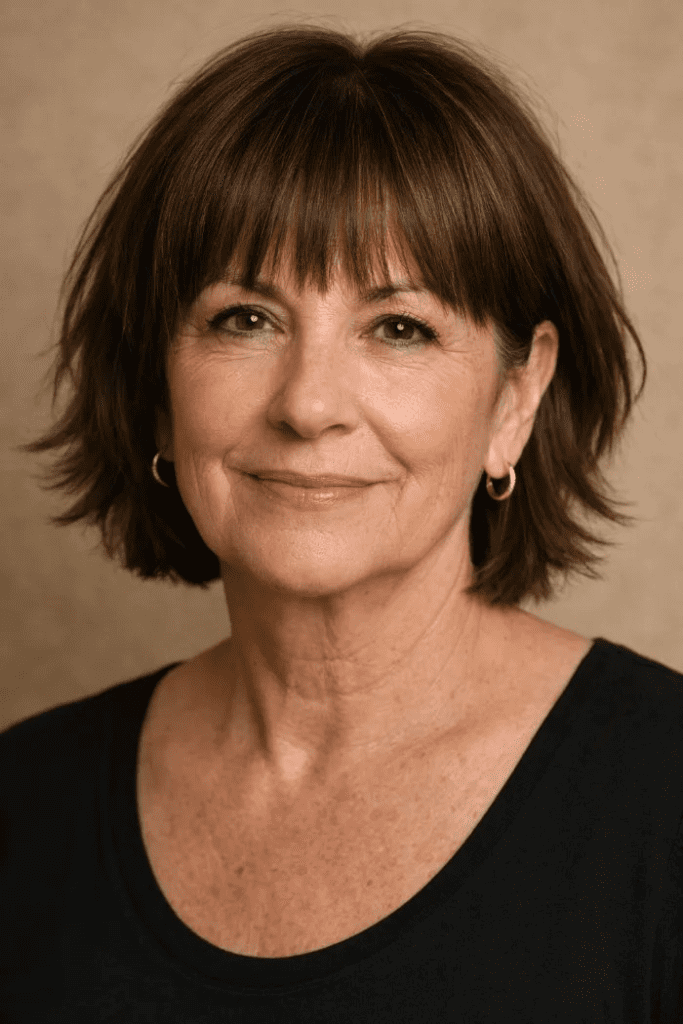
The short shag bob delivers more volume per inch than almost any other style on this list — because all of the lift, texture, and movement are concentrated into a shorter length, which means there’s nowhere for flat, lifeless hair to hide and no length to weigh the shape down.
The choppy layers at the crown create immediate visual fullness. The piecey ends add the modern, deliberately undone quality that distinguishes a current shag from an older, dated layered cut. For women whose hair has some natural wave or texture, the short shag genuinely works better with minimal styling than with a lot of it.
Stylist note: On hair that’s fine or thinning, a short shag needs to be cut with interior weight removal rather than perimeter thinning. Thinning the ends of a short shag on fine hair creates a see-through finish that undermines the volume the cut is supposed to create.
Styling tip: Scrunch texture spray into damp hair, tousle with your fingers while it dries, and finish with a quick shake. The styling routine for this cut should take under five minutes — if it’s taking longer, the product or the technique needs adjusting, not the effort level.
Best for: Women with natural wave or light texture who want a short style with genuine volume and movement and prefer a thoroughly effortless daily routine.
15. Shoulder-Length Lob
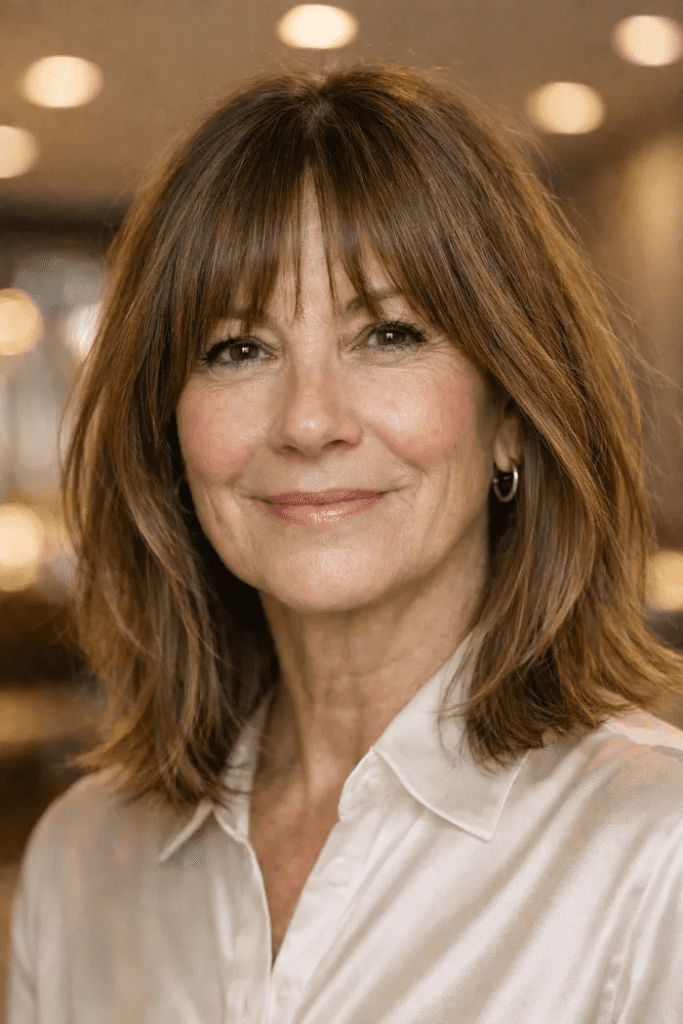
The shoulder-length lob is the most flexible option on this list in terms of styling versatility — it can be worn straight, bent, tucked behind the ears, half-up, or accessorized without any of those approaches looking like it wasn’t the intended style.
For women with thinner hair, the shoulder length specifically is a strategic choice. The extra length compared to a chin-length bob means there’s more hair contributing to the overall silhouette, which makes the sides look fuller without any additional layering or volume techniques. The hair has enough weight to fall with intention rather than wisping out at the ends.
Subtle layers for movement through the mid-length are the only styling prescription this cut needs — anything more aggressive risks removing the density that makes the shoulder-length lob work on finer hair.
Stylist note: Keep the layers conservative — ask for movement layers rather than volume layers. On a shoulder-length lob for fine hair, the goal is swing and fall, not lift or texture.
Styling tip: Air dry to about 80 percent and then finish with a paddle brush to smooth the surface. On days when you want more body, blow dry with a large round brush directing the ends under. Both approaches take under ten minutes.
Best for: Women who want maximum versatility from a single cut and prefer a style they can wear multiple different ways without restyling from scratch.
16. Side-Swept Layers Bob
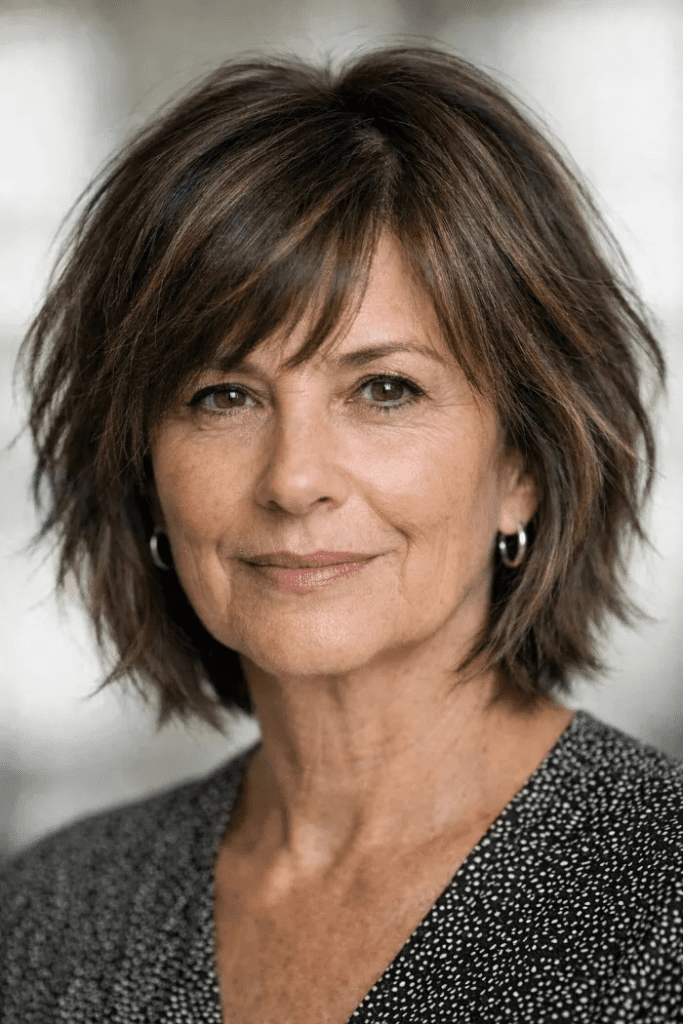
Side-swept layers give a bob softness and direction that a blunt or uniformly layered cut can’t replicate — because the layers are cut to fall in a specific direction rather than landing wherever gravity takes them.
The front pieces skim the cheekbone and blend into the length, creating a continuous face-framing element that flatters nearly every face shape. The side-swept quality also adds a subtle asymmetry that prevents the overall style from looking too uniform or boxy — which is a common issue with shorter bobs on faces that are wider through the cheek area.
Stylist note: The side-swept element should be cut into the shape rather than blow-dried into position — ask your stylist to build the direction into the cut itself so the layers fall correctly on air-dried hair as well as styled hair.
Styling tip: Blow dry the front sections in the sweep direction with a round brush to reinforce the fall. Finish with a light flexible spray on the swept section only — the rest of the bob can be left natural or smoothed lightly with a paddle brush.
Best for: Women who want a soft, flattering style that requires minimal daily product and holds its shape through most of the day without intervention.
17. Silver Bob With Feathered Layers
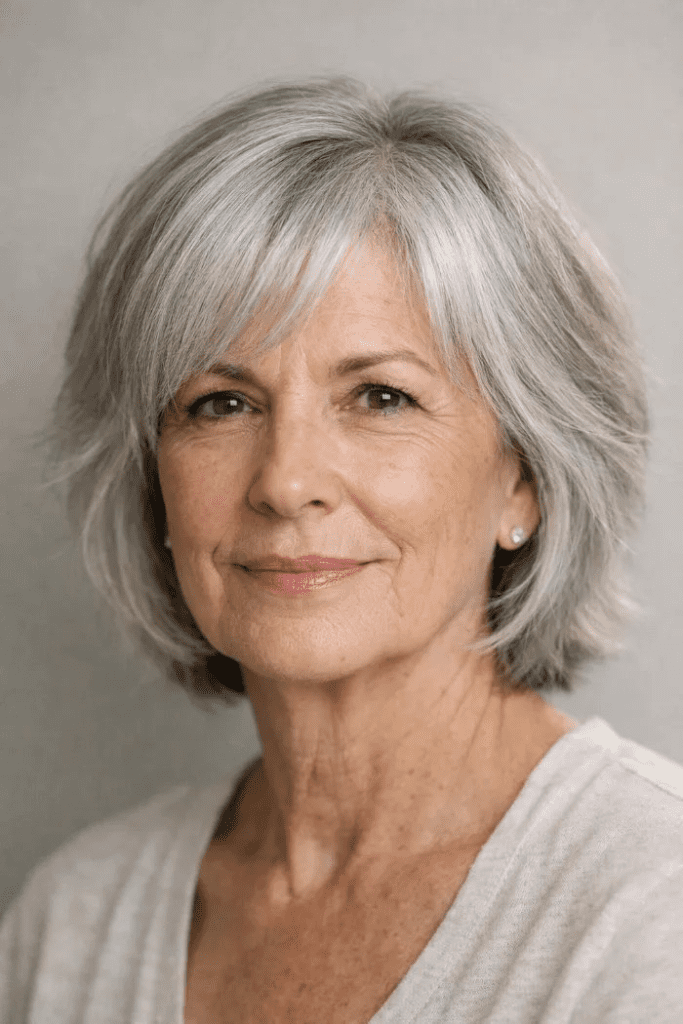
Silver hair has a naturally finer texture than pigmented hair, which means it benefits enormously from cuts that prioritize the appearance of fullness at the ends. The feathered layer technique does exactly that — it adds the impression of lightness and movement without actually thinning the ends, so the perimeter stays full enough to read as healthy and dense.
On silver hair specifically, feathered layers interact beautifully with light — the multiple angled surfaces catch and reflect light differently at each point, creating a dimensional quality that makes silver look luminous rather than flat.
Stylist note: Feathered layers on silver hair should be approached conservatively — silver hair is often more fragile than darker hair and benefits from a lighter hand with any texturizing technique. Ask for soft feathering rather than aggressive razoring.
Styling tip: A quick blowout with a round brush sets the feathered layers at their most flattering angle. On air-dry days, scrunch a small amount of light mousse through the ends to encourage the feathered sections to move rather than clump flat.
Best for: Women with fine silver or grey hair who want a style that makes their hair look as full and luminous as possible with minimal product and daily effort.
18. Sleek Straight Lob With Fringe
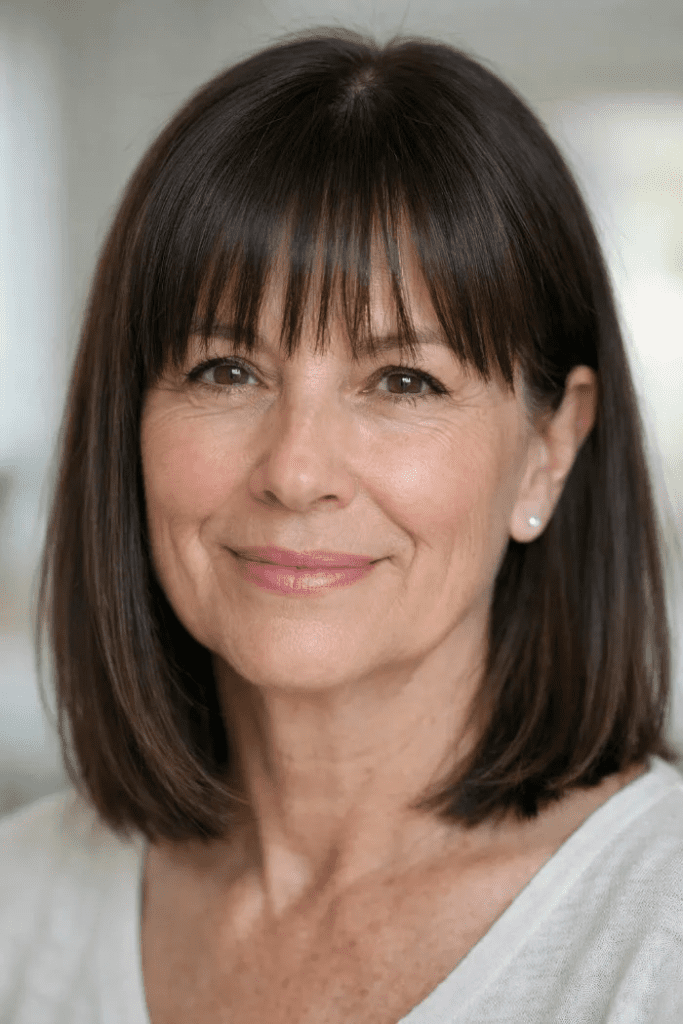
The sleek straight lob is the most polished, disciplined option on this list — and it’s worth noting that polish and discipline in a haircut often translate directly to effort saved at home. When the cut has a strong, clean shape, there’s less daily styling needed to make it look intentional.
The soft fringe frames the eyes and adds the one element of visual detail that prevents the sleek lob from reading as too plain or corporate. The combination of the clean length and the fringe creates a look that’s simultaneously simple and put-together.
For women whose hair tends toward frizz or humidity-related volume, the sleek straight lob channels that tendency into the shape rather than fighting it — the length adds natural weight that suppresses the kind of volume that doesn’t sit well.
Stylist note: Ask for blunt ends rather than slightly textured ends if your primary goal is thickness at the perimeter. On a sleek straight lob, blunt ends make a more significant difference to the overall density impression than almost any other technical decision.
Styling tip: Keep a lightweight smoothing serum on hand for humidity days — it’s the single most useful product for maintaining the sleek quality of this style. Apply a small amount to the mid-lengths and ends only, never the roots, before blow drying.
Best for: Women who want a clean, sophisticated style that looks polished with minimal daily effort and holds its shape reliably across different weather conditions.
19. Soft Choppy Bob
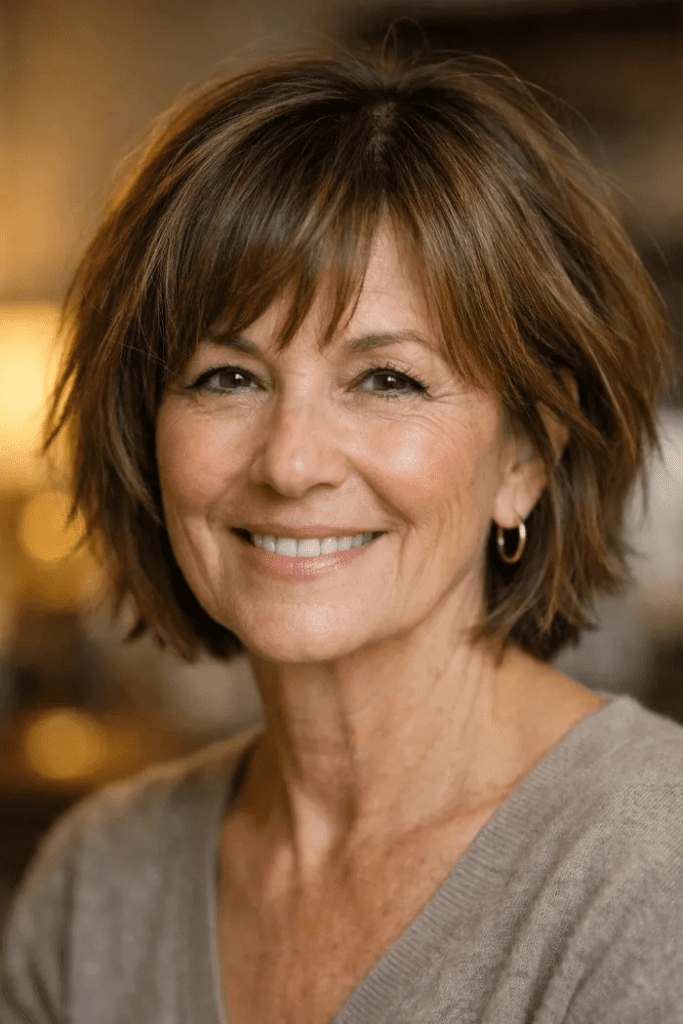
The soft choppy bob sits in a useful middle ground between a structured blunt bob and a fully textured shag — it has the clean overall shape of a classic bob but with enough texture at the ends to prevent the flat, one-dimensional look that blunt cuts on fine hair can sometimes produce.
The chopping technique at the ends adds lift at the perimeter rather than just at the crown, which means the shape has fullness distributed throughout rather than being heavy at the bottom and flat at the top. For medium-density hair specifically, this distribution creates one of the most balanced silhouettes on the list.
Stylist note: Soft chopping is different from aggressive razoring — ask specifically for soft point-cutting at the ends rather than a razor cut, which can be too aggressive on finer hair and create fraying rather than clean texture.
Styling tip: A quick tousle with fingers after blow drying, followed by a light-hold spray, is the complete styling routine for this cut. The texture does the visual work — your job is to set it and step away.
Best for: Women with medium-density hair who want a textured finish without committing to the full volume and movement of a shag, and prefer a style that looks naturally effortless.
20. Soft Shag Layers Bob
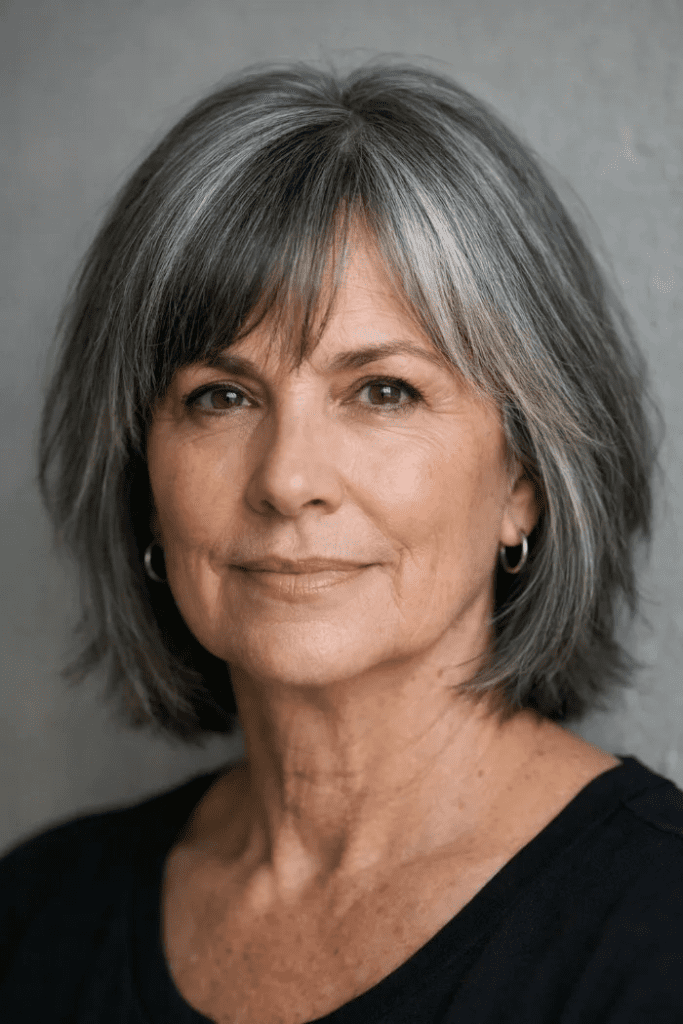
The soft shag layers bob is the most wearable version of the shag for women over 60 because it takes the structural benefits of the shag — crown lift, distributed layering, natural movement — and softens them into a shape that reads as elegant rather than edgy.
The crown stays lifted through the interior layering, the sides stay light and manageable, and the overall silhouette moves with you through the day rather than requiring reshaping. For women with wavy hair, this style air dries into its best version without any heat styling required.
Stylist note: The soft shag should be cut with the final texture in mind — ask your stylist to work with your natural wave pattern or cowlick placement rather than cutting across it. A soft shag that works with the hair’s natural behavior is far easier to maintain than one that requires constant product to behave correctly.
Styling tip: Scrunch a lightweight mousse through damp hair from the ends upward, then diffuse or air dry. On days you want a slightly more polished version, blow dry the crown section only with a round brush and let the rest air dry. Two minutes of targeted effort gives you a significantly more finished result.
Best for: Women with naturally wavy or lightly textured hair who want their cut to celebrate that natural texture with a style that genuinely looks better the less work they put into it.
Final Thoughts
The right bob after 60 is the one that suits the hair you actually have — not the hair you had at 35 — and the lifestyle you actually live. Both of those things matter equally.
If you want the safest, most versatile starting point, the lob is where to begin. It gives you flexibility, grows out cleanly, and works across more face shapes and hair types than any other bob length. From there, you can always go shorter at your next appointment once you’ve seen how the length sits.
If fullness is your primary concern, the feathered layered bob, the soft shag, or the blunt chin-length bob are the three cuts most technically designed to create the appearance of more hair than you’re working with.
Whatever you choose, take two photos to your stylist — one showing the overall length you want, one showing the finish or texture you prefer. Tell them how much time you’re willing to spend styling each morning. Those two pieces of information will get you to a bob that actually fits your life, not just one that looked good in a photo.
What is the most low-maintenance bob for women over 60?
The lob is consistently the easiest option. The shoulder-adjacent length gives you styling flexibility — it looks good worn straight, waved, or tucked — and it grows out gracefully without the obvious overgrown look that shorter bobs can develop between trims. If you prefer a shorter option, a soft shag bob or feathered layered bob are both forgiving because the built-in texture hides the early stages of grow-out naturally.
What bob is best for fine or thinning hair after 60?
A chin or jaw-length bob with a blunt or lightly textured perimeter is consistently the most effective choice. The clean line at the ends creates the optical illusion of thickness that fine hair can’t generate on its own. Avoid aggressive layering through the mid-lengths and ends — it creates the wispy, transparent finish that makes fine hair look sparser rather than fuller. A side part and a small amount of root lift product go a long way in this length range.
How often should I trim a bob to keep it looking its best?
Most structured bobs look best with a trim every six to eight weeks. Shorter or very precise cuts — a pixie bob, a blunt chin-length bob — may benefit from a refresh closer to four to six weeks, especially if the neckline or fringe starts to lose its shape. Lobs and softer styles can typically stretch to eight to ten weeks because the grow-out phase is naturally softer and less obvious.
Should women over 60 avoid short bobs?
Not at all — but the choice of short bob matters more than the length itself. The pixie bob, A-line bob, and short shag bob on this list all work specifically well for women over 60 because they’re designed around the way hair texture and face shape typically evolve after 60. The cuts that tend to be less flattering are very blunt, very uniform short bobs that sit at the widest part of the cheeks — those create the boxy, aging effect that gives short bobs an undeserved bad reputation.
What’s the best bob for women over 60 who wear glasses?
Side-swept fringe or a wispy, light bang is almost always the most flattering fringe choice with glasses. Heavy, blunt bangs can compete with the frame for visual attention. A wispy or swept fringe complements the frames rather than fighting them. For the bob length itself, jaw length or slightly below gives you the most proportional relationship between the hair and the glasses — too short and the hair disappears above the frame; too long and it extends the face in a way that can look heavy.