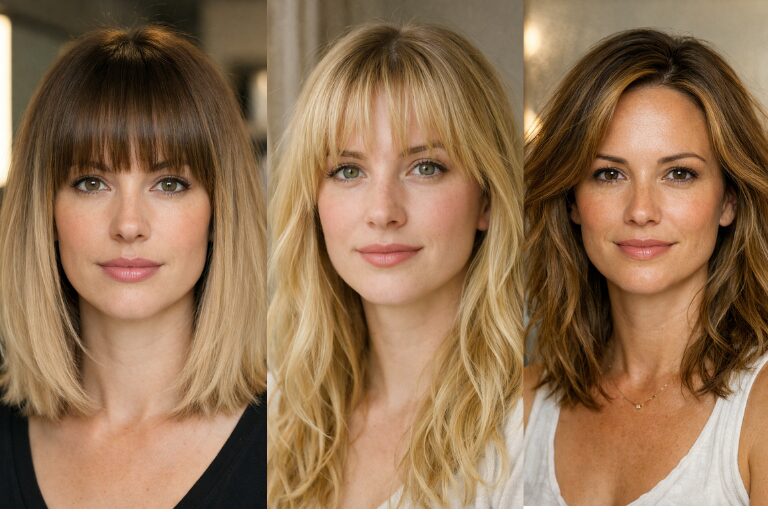
19 Gorgeous Updo Hairstyles for Women With Thin Hair That Actually Look Full
Thin hair and updos have a complicated relationship — and if you have fine hair, you have probably experienced the specific frustration of an updo that looked beautiful in the reference photo and completely flat in the mirror. The bun that refuses to stay round. The braid that looks thin and stringy rather than full and romantic. The French twist that slides down by noon.
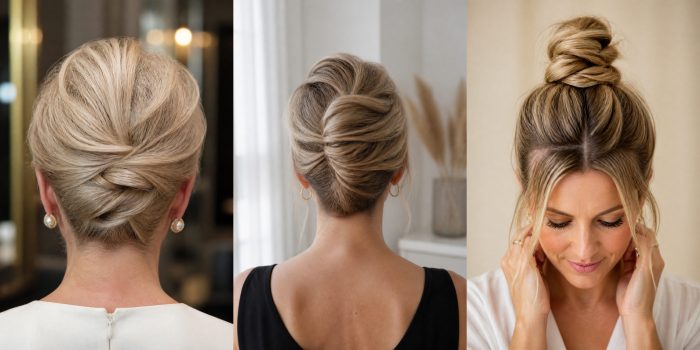
Here is what most updo guides do not tell you: thin hair is not actually a barrier to beautiful updos. It is a different set of constraints that requires a different set of techniques. And those techniques — teasing, texturizing, twisting, backcombing, braiding for visual bulk — can produce results that look genuinely stunning on thin hair, sometimes more so than on thick hair where everything happens with less intention.
The key is understanding which styles play to thin hair’s natural strengths. Styles that create texture through technique — braids, twists, rope effects — all add the visual bulk that fine hair lacks naturally. Styles that deliberately look loose and undone hide any lack of density behind intentional imperfection. And styles that use a single beautiful architectural element — a clean chignon, a sleek bun, a precise French twist — lean into the elegance of simplicity rather than trying to fake volume.
These 19 updo hairstyles for women with thin hair are all built around those principles. Every look comes with what to ask for or how to do it, a specific styling tip for thin hair, and why it works — so you can find the version that suits your hair, your occasion, and your patience level.
The Thin Hair Updo Toolkit
Before choosing your style, these are the products and techniques that make the biggest difference for updos on fine hair.
Dry shampoo or texturizing spray applied before any updo gives fine hair the grip and grit it needs to hold pins, stay in braids, and resist the slipping that causes most thin hair updos to fall apart. This is the single most effective pre-updo step for fine hair.
Volumizing mousse applied at the roots before blow-drying creates a foundation of body that styling on dry, product-free fine hair cannot replicate. If you have time to blow-dry before an updo, mousse at the roots makes an enormous difference in the final result.
Gentle backcombing at the crown section before any updo creates hidden volume that the smooth top layer conceals — it makes the crown look genuinely full rather than flat without any visible evidence of teasing.
Bobby pins that match your hair color are surprisingly important for thin hair updos — visible bobby pins on fine hair are far more noticeable than they are on thick hair, which can absorb them visually.
A fine-tooth comb for smoothing the top layer over any teased sections creates the polished look that prevents backcombing from reading as messy.
19 Updo Hairstyles for Women With Thin Hair
1. Textured Messy Bun
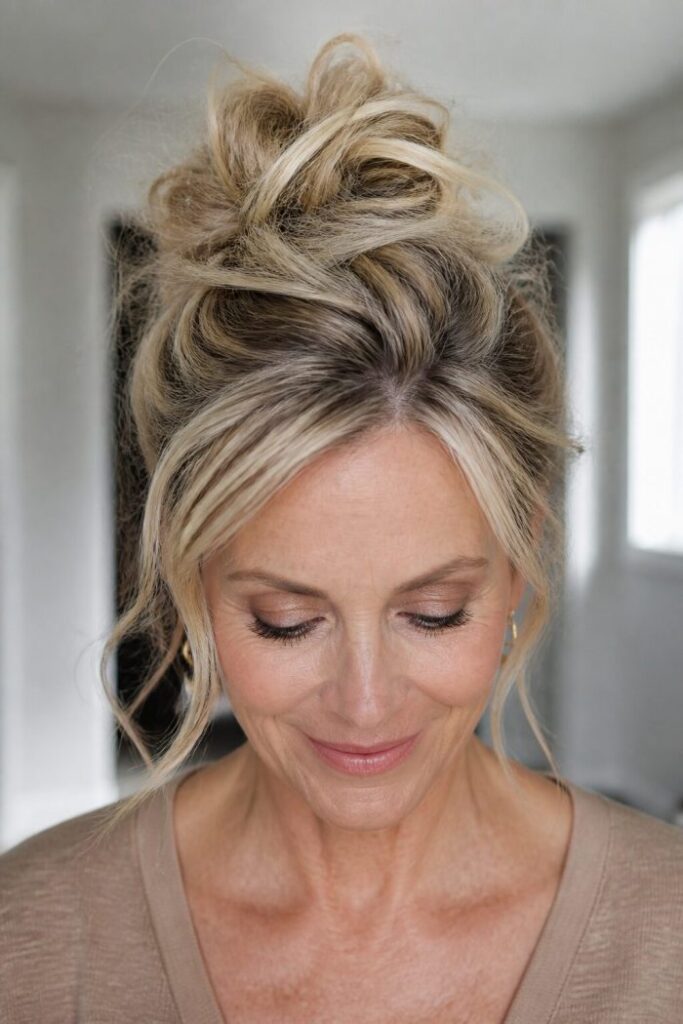
The textured messy bun is the updo most specifically designed for thin hair’s needs — because its entire aesthetic principle is intentional imperfection, it turns the qualities that thin hair naturally has (resistance to precise styling, tendency to slip loose) into features rather than problems. The loosened strands, the deliberately imprecise shape, the slightly undone quality — all of these look like choices rather than limitations.
How to achieve it: Apply a texturizing spray or dry shampoo throughout the hair before starting. Gather the hair into a high or mid-height ponytail, then twist loosely and coil into a bun rather than wrapping neatly. Secure with an elastic and bobby pins, then pull several sections gently outward to loosen the shape and add volume. Leave a few face-framing pieces loose.
Thin hair tip: Apply volumizing mousse at the roots before blow-drying and then apply dry shampoo through the lengths before styling — the combination gives fine hair enough grip and body to hold the messy shape without collapsing.
Best for: Casual occasions, everyday styling, office days, or any time you need a quick updo that looks deliberately relaxed rather than hastily assembled.
Why it works: The messy bun’s entire aesthetic is built around the qualities that thin hair naturally has. Rather than fighting the tendency toward imprecision, it embraces it — and the result genuinely looks like a style choice rather than a thin hair compromise.
2. Low Chignon With Twisted Sections
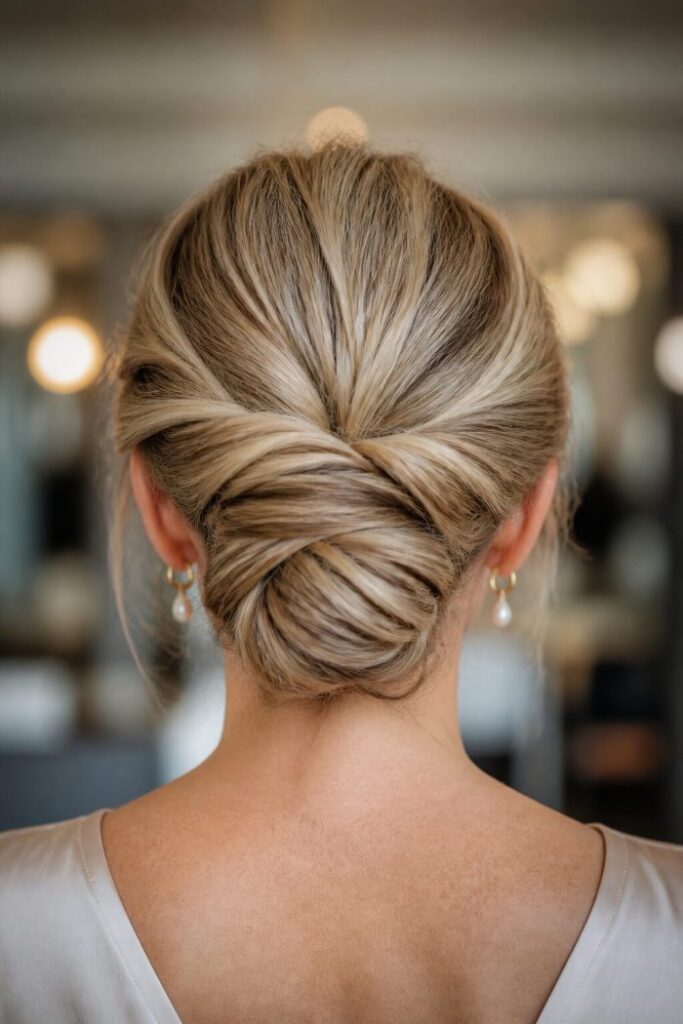
A low chignon with twisted sections is one of the most elegant and most effective fine hair updo formulas — the twisting technique adds texture and visual bulk to each section before it is incorporated into the chignon, making the final result look significantly fuller than a simple smooth-gathered version would. The sophistication of the style also reads as polished precision rather than as simplicity disguising thinness.
How to achieve it: Divide the hair into several sections. Twist each section gently before bringing it into the chignon at the nape. Pin each twisted section as it arrives, overlapping them to build the shape. Finish with the crown section, teased gently before being swept back and into the chignon.
Thin hair tip: Tease the crown section gently with a fine-tooth comb before sweeping it back — the hidden volume at the crown gives the entire chignon a lifted, more substantial appearance that the smooth top layer conceals completely.
Best for: Weddings, formal events, polished office settings, or any occasion where the most refined and most elegant updo is the goal.
Why it works: Twisting adds visual texture and apparent thickness to each section before it is gathered — it is the simplest and most effective technique for making thin hair look fuller in a low gathered style.
3. French Twist With Volume at the Crown
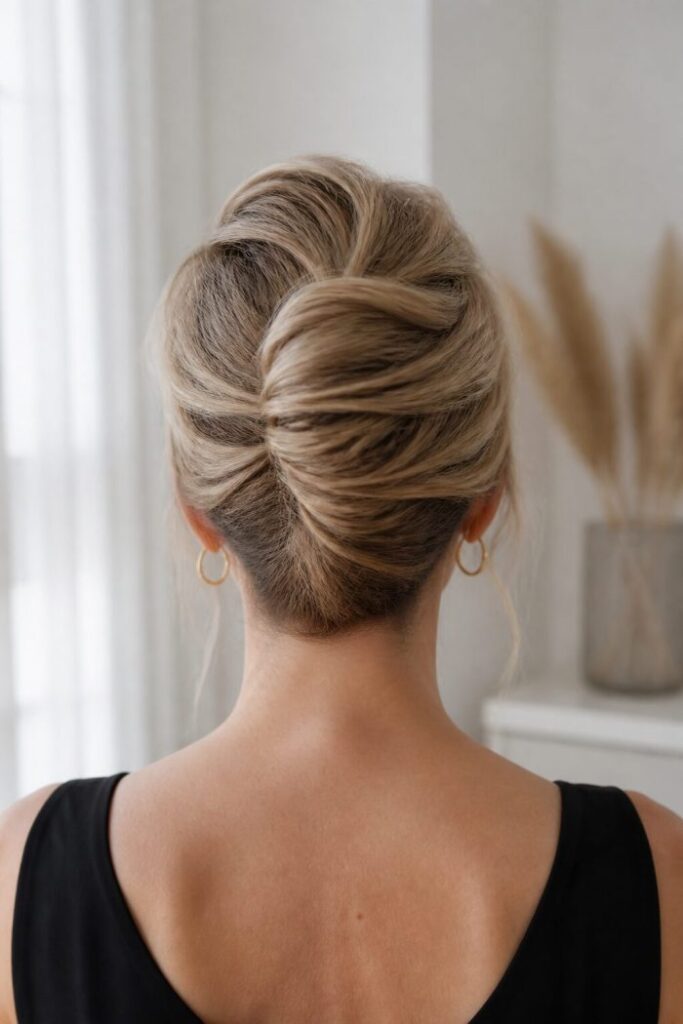
The classic French twist is one of the most architecturally interesting updos — and it requires less hair than most people expect, which is why it suits thin hair so consistently well. The secret is focusing on building crown volume before rolling the hair back — backcombing the top section creates the lifted, full appearance at the crown that makes the French twist look luxurious rather than sparse.
How to achieve it: Gently backcomb the crown section with a fine-tooth comb, working in small sections from the roots upward. Smooth just the top layer over the teased base. Gather all the hair toward the back of the head, roll upward and inward, and secure with vertical bobby pins. Tuck any loose ends into the roll.
Thin hair tip: The backcombing is the essential step — without it, a French twist on thin hair looks flat at the crown. With it, the lift at the top creates a silhouette that reads as genuinely full and polished.
Best for: Special occasions, formal events, work presentations, or any time you want the most sophisticated and most traditionally elegant updo available.
Why it works: The French twist creates a structural silhouette that reads as deliberate and precise — which means the eye registers the intention of the style rather than the volume of the hair. The backcombed crown amplifies this by adding real lift.
4. Half-Up Twisted Top Knot
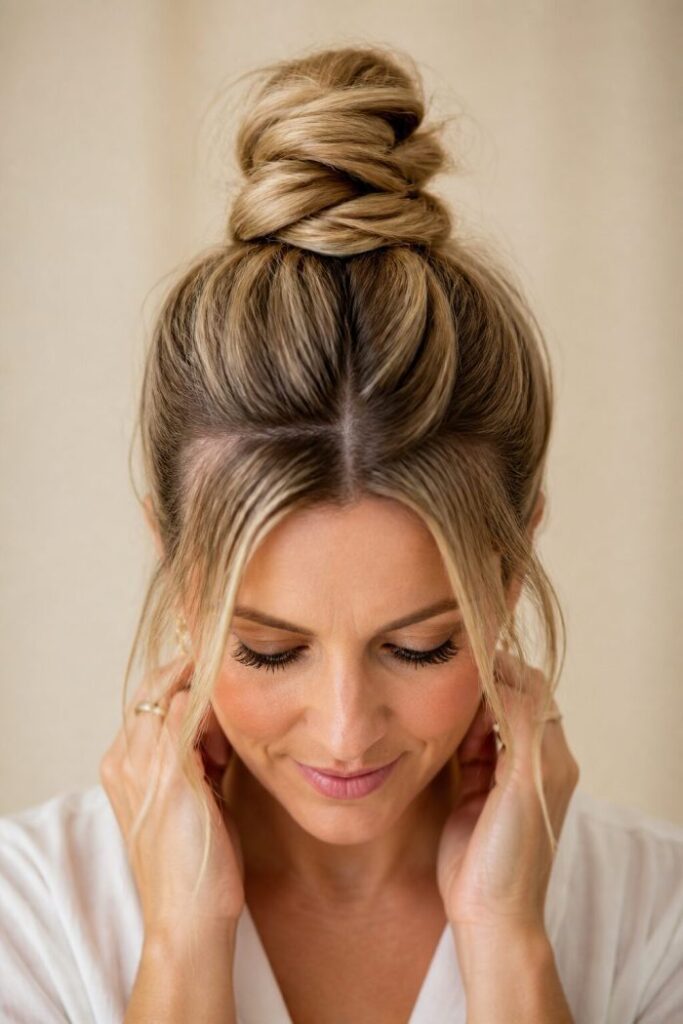
The half-up top knot is the ideal updo for thin-haired women who want crown volume without fully committing to a complete updo — the twisted top section creates height and the appearance of thickness at the crown, while the remaining length falls freely below and makes the overall style look substantially more full than a full updo would. It is also genuinely one of the fastest and most versatile styles available.
How to achieve it: Section off the top half of the hair from ear to ear. Twist this section gently before gathering and coiling into a small top knot, securing with an elastic and pins. Loosen the knot slightly by pulling sections gently outward.
Thin hair tip: Leave a few face-framing pieces loose and curl them slightly with a small wand — the soft curled pieces around the face add visual interest and draw attention forward and away from the thinness of the gathered top section.
Best for: Casual days, work from home, brunch occasions, or any time when a quick, effortless style that looks genuinely polished is needed.
Why it works: The half-up format means the bottom half of the hair’s length is visible, contributing to the overall visual fullness of the style. The twisted section adds texture and apparent thickness at the crown where the gathering is most visible.
5. Braided Crown Updo
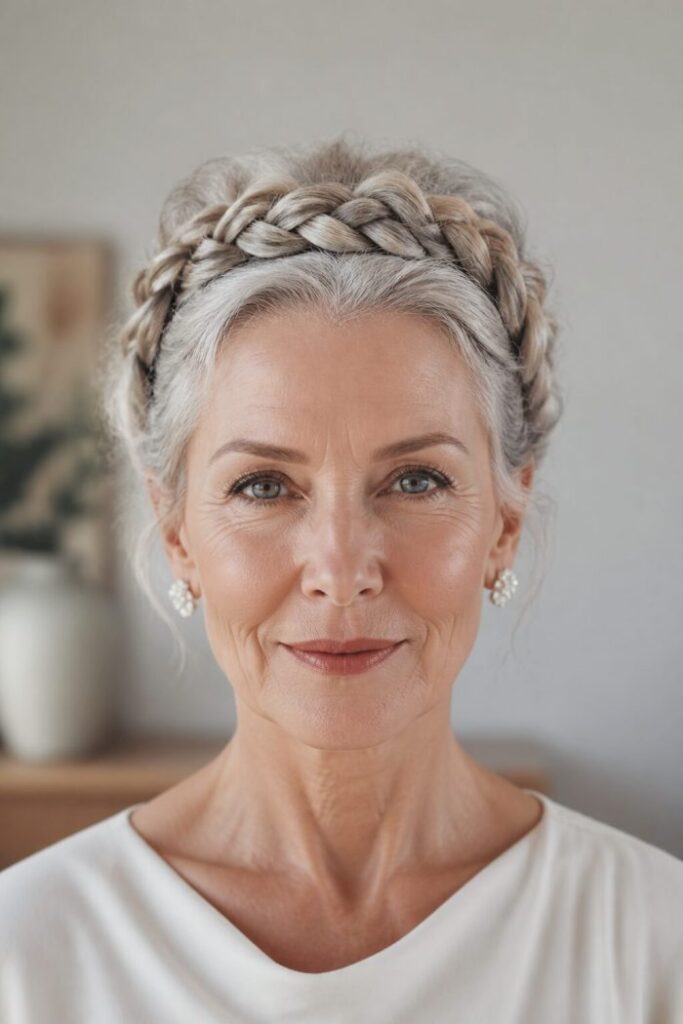
A braided crown is the single most effective thin hair updo technique available — braiding naturally adds visual bulk to fine strands through the weaving pattern, and the halo placement around the head means the braid is visible from every angle. Even very fine hair looks genuinely abundant in a well-executed braided crown because the braided structure creates the impression of thickness at every visible point.
How to achieve it: Create a center or side part. Braid each section from in front of the ear, angling the braid along the hairline, and pin it in place as it reaches the opposite side. The two braids should meet at the back or one braid can wrap fully around the head. After braiding, gently tug the outer loops of the braid to widen and loosen it.
Thin hair tip: The gentle pulling of the outer loops is the most important step for thin hair — it widens each section of the braid and makes the crown look significantly fuller than a tight, narrow braid would. Do this throughout the entire braid before pinning.
Best for: Weddings, bohemian occasions, outdoor events, festivals, or any time you want the most romantically beautiful and most voluminous-looking updo available for thin hair.
Why it works: Braiding is the updo technique that does the most work for thin hair — the weave creates visual complexity that reads as thickness regardless of how fine the individual strands are. The halo placement means this illusion is visible from every angle simultaneously.
6. Sleek Low Ponytail Bun
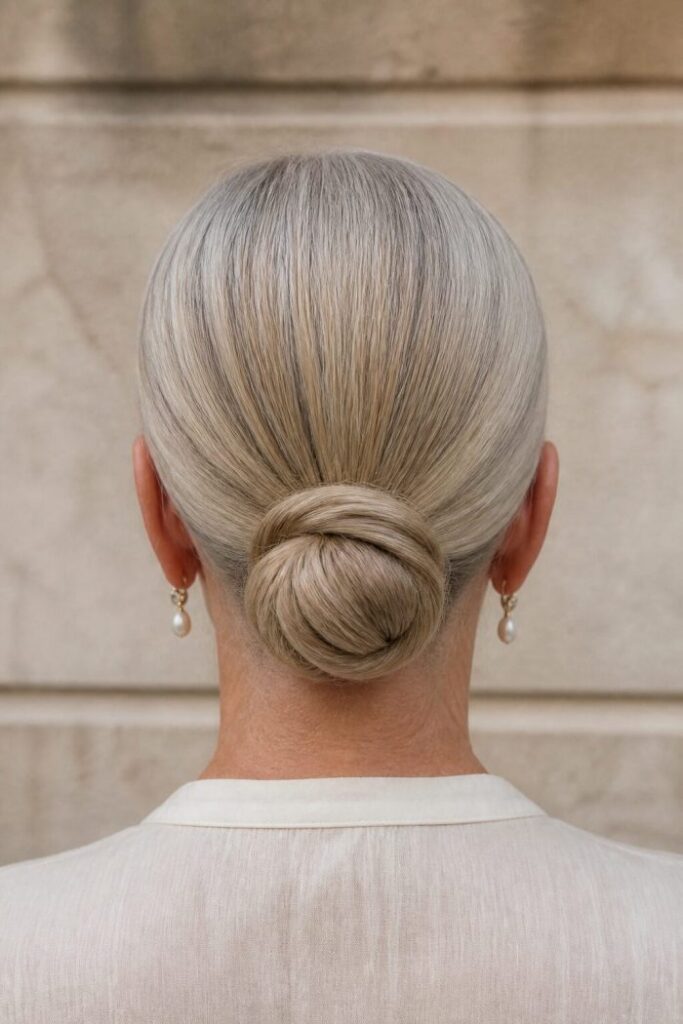
The sleek low ponytail bun is the minimalist’s thin hair updo — rather than fighting the lack of volume with texturing and teasing, it leans into the clean, precise aesthetic where the deliberateness of the smooth lines communicates intention rather than limitation. On thin hair, a sleek bun looks polished and considered; a messy bun with thin hair looks underdone. The key is committing fully to the sleekness.
How to achieve it: Apply a smoothing cream through damp hair before blow-drying smooth. Gather all the hair into a low ponytail and secure with an elastic. Wrap the ponytail around its base and pin into a neat bun. Wrap a small section of hair from the ponytail around the elastic to conceal it.
Thin hair tip: The elastic concealment is the finishing detail that elevates this from simple to genuinely polished — a visible elastic on thin hair looks casual in the wrong way, while a perfectly concealed one looks deliberate and refined.
Best for: Professional environments, formal settings, minimalist aesthetics, or anyone who prefers an understated elegance approach to their updo.
Why it works: The sleek low bun creates elegance through precision rather than volume — it communicates that the lack of bulk is a stylistic choice rather than a constraint. The cleaner and more precise the execution, the more beautiful the result.
7. Vintage Pin Curl Updo
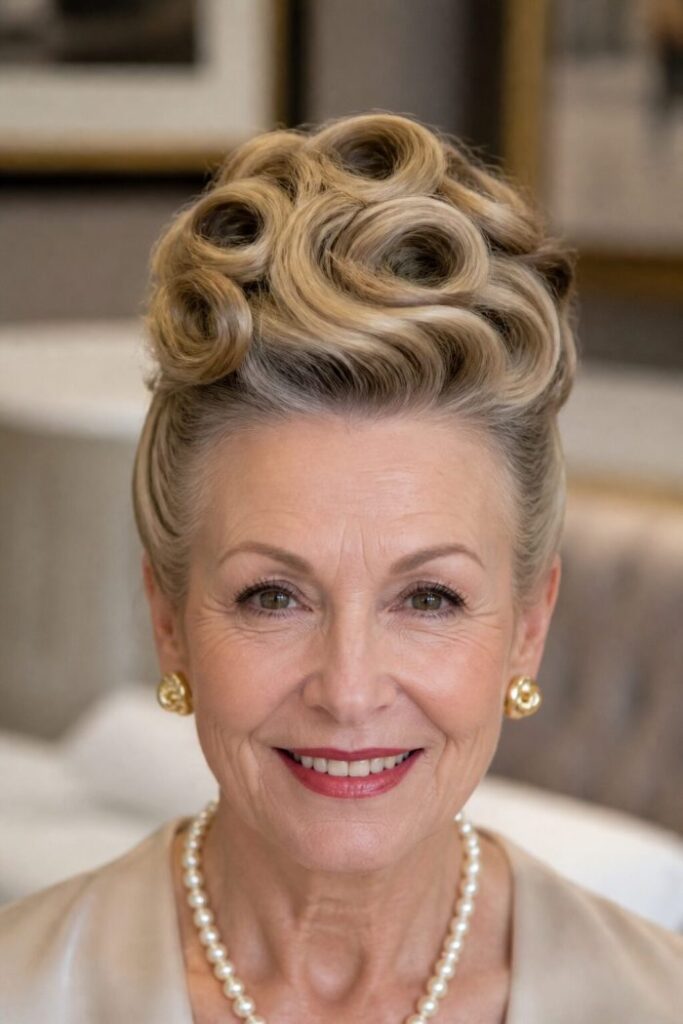
Pin curls create more texture and more apparent volume from thin hair than almost any other technique — the individual setting of each curl builds a foundation of fullness that gathered, straight hair simply cannot replicate. A pin curl updo looks genuinely abundant because the curls create both height and dimensional texture throughout the entire style.
How to achieve it: Section the clean, blow-dried hair into small sections. Roll each section into a flat pin curl and secure with a clip. Set with a light-hold setting spray and allow to dry completely before releasing the curls. Pin the released curls into an updo arrangement, allowing the shape of the curls to create the volume.
Thin hair tip: Setting the pin curls on freshly blow-dried hair — not damp hair — creates the crispest, most defined curl shape. The drier the hair when set, the more body and shape each curl holds.
Best for: Weddings, formal events, vintage-themed occasions, or any time the most glamorous and most volumized-looking updo is the priority.
Why it works: Pin curls multiply the apparent volume of thin hair through the dimensional structure of each curl — the three-dimensional shape of curled hair occupies significantly more space than the same hair would lying flat, creating genuine fullness rather than the illusion of it.
8. Loose Boho Fishtail Braid Updo
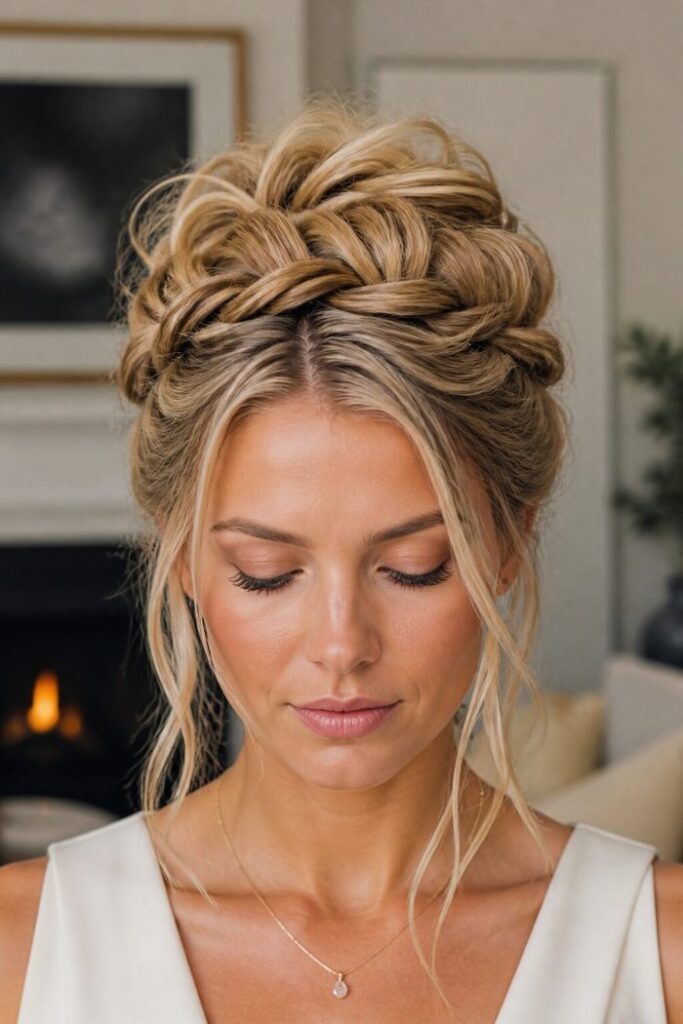
A loose fishtail braid pinned at the nape is the updo that most successfully creates the impression of abundant, rich hair from very fine strands. The fishtail pattern — with its intricate, interwoven appearance — adds so much visual complexity that the fineness of the individual strands becomes completely invisible within the overall design.
How to achieve it: Apply dry shampoo generously throughout the hair for grip before braiding. Divide the hair into two sections and create a fishtail braid by taking small pieces from the outer edge of each section and crossing them to the opposite section. Braid loosely rather than tightly, then pin the end of the braid up at the nape.
Thin hair tip: Dry shampoo before braiding is genuinely transformative for thin hair fishtail braids — without it, fine hair slips out of the fishtail pattern and the braid loosens completely. With it, the braid holds its form and the loosened pieces stay in place rather than falling free.
Best for: Outdoor events, garden parties, bohemian occasions, or any situation where a romantically beautiful, effortfully-effortless look is the goal.
Why it works: The fishtail weave creates an intricate visual pattern that the eye reads as complex and abundant — fine hair within a fishtail braid reads as a detailed, textured surface rather than as simply fine hair in an updo.
9. Rope Twist Bun
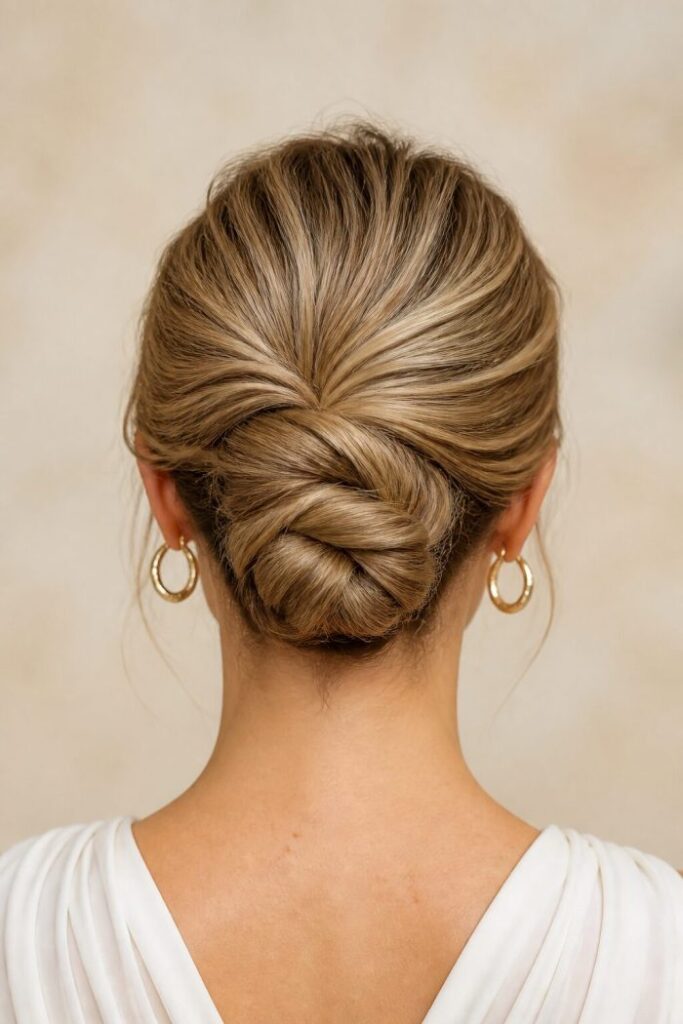
Two sections of hair twisted around each other to create a rope effect, then coiled into a bun — this simple technique adds significantly more texture and dimension than a standard gathered bun because the twisting creates a structural ridging on the surface that reads as thickness and body.
How to achieve it: Divide the hair into two sections. Twist each section tightly in the same clockwise direction, then wrap the two twisted sections around each other in the opposite direction to create the rope effect. Coil the rope into a bun shape and pin securely. After pinning, gently loosen the bun by pulling outward from the center.
Thin hair tip: Twist the sections tightly to start — the tight foundation creates the rope structure. The loosening after pinning then creates the voluminous, relaxed appearance that makes the bun look full rather than small.
Best for: Casual to smart-casual occasions, everyday wear, or any time you want an updo with more character and visual interest than a simple gathered bun.
Why it works: The rope twist adds structural ridging to the bun that flat-gathered styles do not have — the twisted surface creates light and shadow across the bun’s surface, giving it a dimensional quality that reads as significantly more hair than is actually present.
10. Waterfall Braid Into a Low Bun
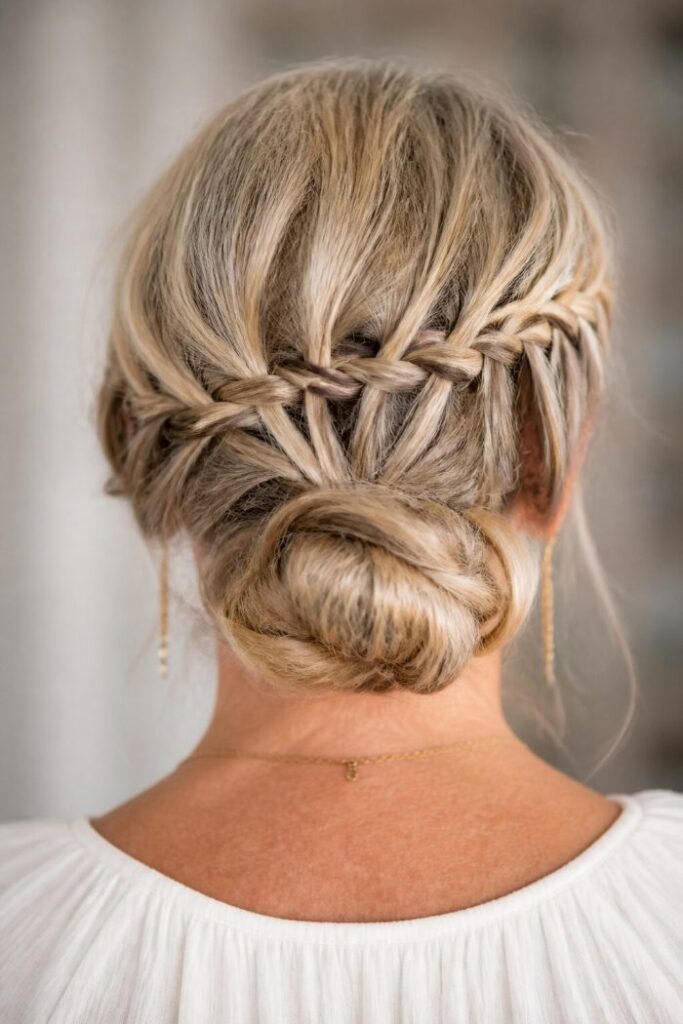
A waterfall braid cascading along one side of the head and transitioning into a soft low bun is one of the most beautiful and most sophisticated thin hair updo combinations — the braid adds the textured, detailed element that makes the style look genuinely elaborate while the low bun gathers everything elegantly at the nape.
How to achieve it: Begin a waterfall braid at the temple on one side, dropping strands through the braid as you progress rather than incorporating them — this creates the cascading waterfall effect. Continue to the nape area, then gather the braid and any remaining loose hair into a soft low bun. Secure with bobby pins that match the hair color.
Thin hair tip: Bobby pins that match the hair color exactly are critical at the braid-to-bun transition point — the transition between the braid and the bun needs to look seamless, and visible pins on thin hair break the illusion completely.
Best for: Bridal looks, anniversaries, romantic occasions, or any event where a genuinely beautiful, elaborately detailed updo is wanted.
Why it works: The waterfall braid creates the most visually interesting section of any updo — the cascading pattern adds complexity and apparent abundance to thin hair in a way that gathered styles cannot replicate, while the low bun provides an elegant, contained finish.
11. Voluminous Teased Updo
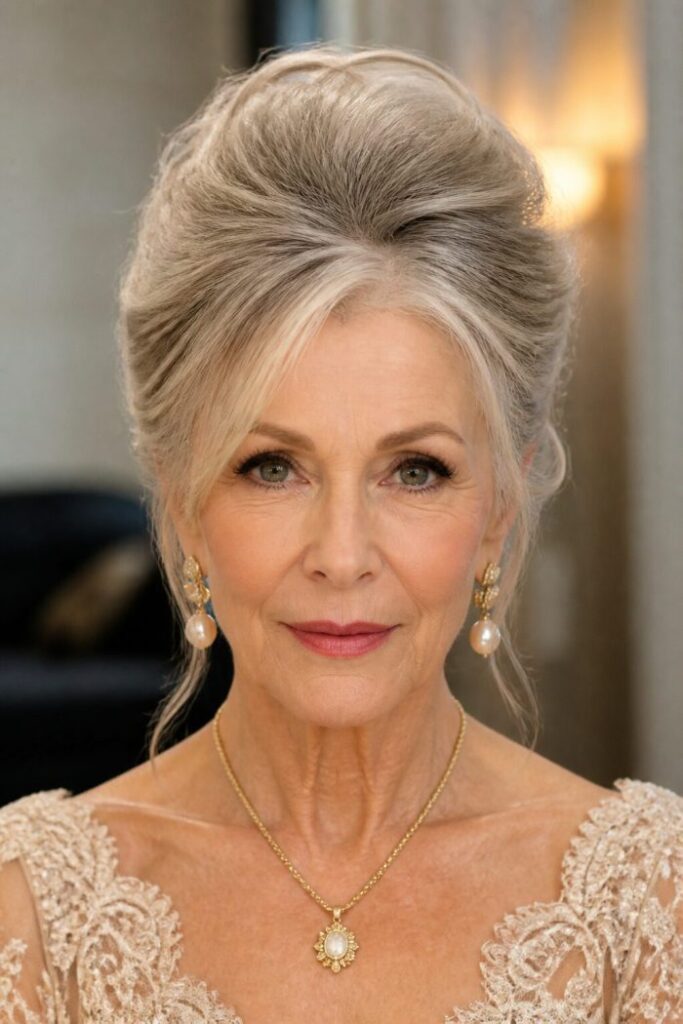
The most dramatic volume transformation available for thin hair — backcombing sections before pinning them into place can genuinely make fine strands look two to three times their natural volume. This technique is transformative for special occasions when you need the most impactful updo result possible.
How to achieve it: Divide the hair into sections and backcomb each one from mid-length to the roots using a fine-tooth comb. Smooth just the top layer of each section over the teased base before pinning. Build the updo by pinning sections into the desired shape, maintaining the height created by the backcombing.
Thin hair tip: Smoothing the top layer over the teased base before pinning is the essential finishing step — without this, backcombed thin hair looks unkempt rather than voluminous. The smooth top layer is what creates the polished, deliberately full appearance.
Best for: Special occasions, events where you want to make a statement, weddings, or any time the most dramatically full updo is the priority.
Why it works: Backcombing creates genuine structural volume by roughing up the hair cuticle and tangling the strands intentionally — the result is real lift and real fullness rather than simply the illusion of it. When the top layer is smoothed over, the effect looks completely natural.
12. Twisted Side Updo With Accessory

A twisted side updo with a statement accessory is a particularly smart approach for thin hair because the accessory provides visual distraction that moves attention away from the volume of the hair and toward the decorative element instead. The twist adds texture and the accessory adds character — together they create a complete, beautiful style where the thinness of the hair is completely irrelevant.
How to achieve it: Gather the hair to one side, twist it into a soft roll, and secure with decorative pins or a jeweled clip. Position the accessory where it will be most visible — typically at the point where the twist is pinned.
Thin hair tip: Choose a genuinely statement-making accessory — a jeweled barrette, a decorative pin, a floral clip — that draws the eye immediately and completely. The larger and more beautiful the accessory, the less the hair volume matters.
Best for: Weddings, formal events, or any occasion where a single beautiful decorative detail is the focal point of the style.
Why it works: A beautiful accessory is genuinely eye-catching — when the eye goes immediately to the jeweled clip or decorative pin, it does not have the opportunity to register the volume of the hair around it. The accessory reframes the entire style.
13. Dutch Braid Into a Top Bun
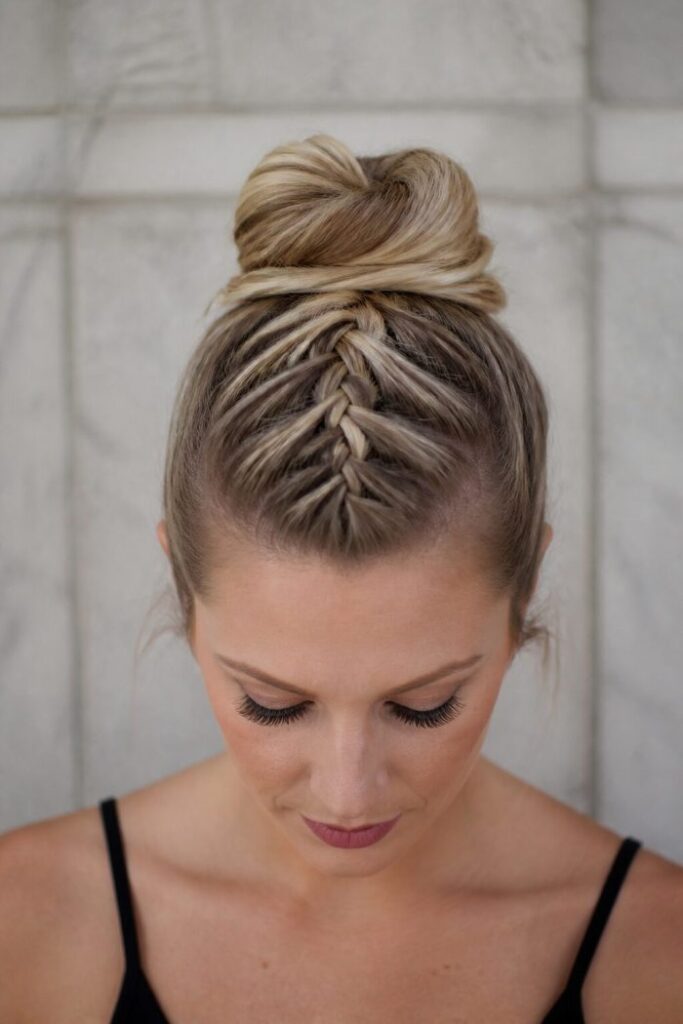
A Dutch braid starting at the crown and transitioning into a top bun combines two of the most effective thin hair updo techniques — the raised, three-dimensional quality of a Dutch braid with the crown height of a high bun. The result has both the visual interest of detailed braid work and the lifted silhouette that makes thin hair look its most full.
How to achieve it: Begin a Dutch braid (where sections cross under rather than over) at the crown, working toward the back of the head. When the braid reaches the mid-back or nape area, gather the braided section and the remaining loose hair into a ponytail and coil into a top bun.
Thin hair tip: Pull small pieces of the Dutch braid gently outward along both sides as you progress — loosening the braid before it is gathered into the bun creates the appearance of more volume and a more relaxed, casual finish.
Best for: Sporty occasions, casual outings, festival looks, or any time you want a stylish, practical updo with genuine textural interest.
Why it works: The Dutch braid sits on top of the hair rather than underneath it, creating a raised, three-dimensional ridge that adds real visual bulk to thin hair. The transition into a top bun uses this braided volume as the foundation for the updo.
14. Soft Gibson Tuck
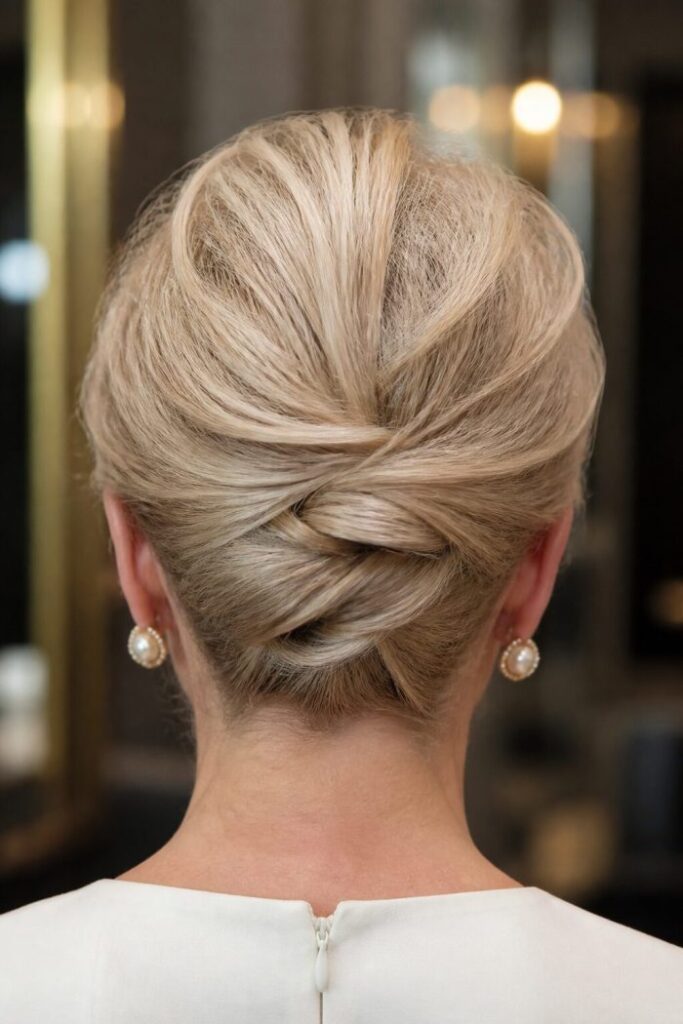
The Gibson tuck is one of the most under-known and most perfectly suited updos for thin hair — it requires genuinely very little hair to look elegant and complete, making it the updo that works most reliably on the finest hair. The rolling and tucking technique creates a deceptively full-looking gathered nape that is entirely self-supporting.
How to achieve it: Pull the hair into a loose low ponytail and secure with an elastic. Fold the ponytail up and under itself, tucking the ends through the elastic band or pinning them at the nape. Adjust the rolled section to distribute evenly around the nape.
Thin hair tip: Mist the hair with a light-hold hairspray before tucking — this gives fine strands enough body and grip to stay rolled in place without the style gradually slipping down through the day.
Best for: Work settings, smart-casual occasions, women with very fine or very short hair, or anyone who needs a quick elegant updo that requires minimal hair.
Why it works: The Gibson tuck creates a clean, contained rolled shape at the nape that looks polished and deliberate regardless of how fine the hair actually is. It is one of the few updos where very fine hair is genuinely no disadvantage.
15. Pinned Back Curly Updo

Curling thin hair before pinning it up is one of the most effective volume transformations available for an updo — the curls add genuine three-dimensional body that styling flat, straight thin hair simply cannot create. The pinned arrangement allows the curls to contribute their volume to the overall updo shape rather than hanging loose.
How to achieve it: Curl all the hair with a medium barrel curling iron, curling away from the face for the most flattering result. Apply a flexible-hold hairspray to set the curls. Gather and pin sections at the back in a soft, romantic arrangement, allowing the curl shapes to contribute to the overall volume of the pinned style.
Thin hair tip: Set the curls with a flexible-hold spray before pinning — this maintains the curl structure through the pinning process and prevents the curls from relaxing into straight sections as they are gathered.
Best for: Weddings, galas, formal events, or any occasion that calls for the most romantically beautiful and most abundantly full updo possible on thin hair.
Why it works: Curls create genuine three-dimensional volume from thin hair by adding shape and body at the strand level. Pinned curly hair reads as luxuriant and abundant in a way that pinned straight hair on the same head cannot — the curl is doing real volumizing work.
16. Ballerina Bun With Teased Base
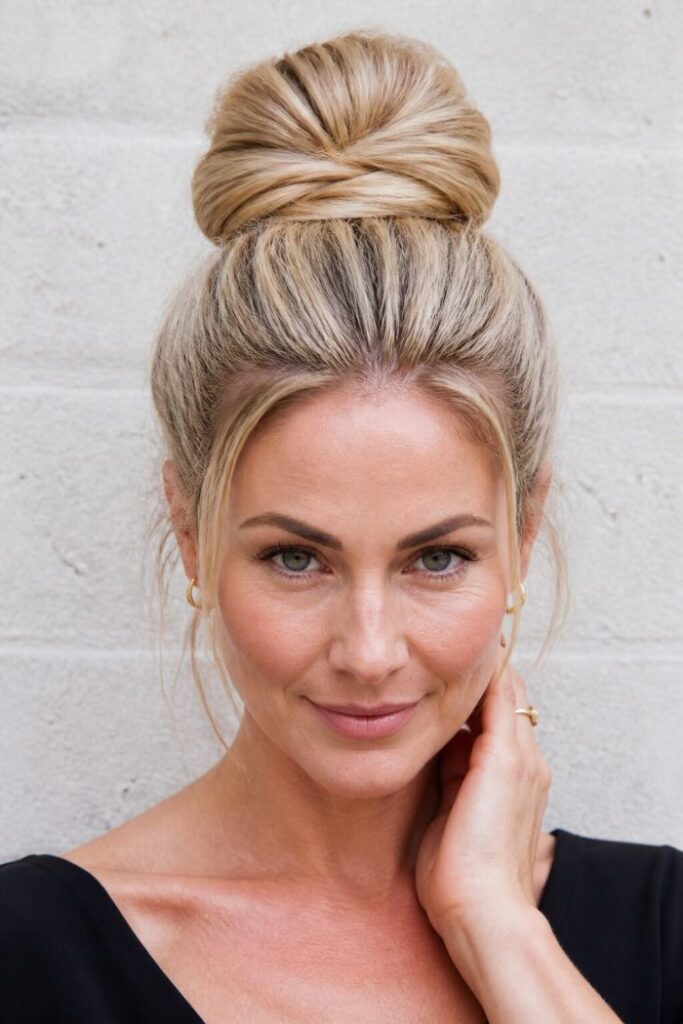
The ballerina bun is the updo that communicates the most confidence and the most physical presence — it is direct, strong, and elegant in a way that deliberately emphasizes the precision of its construction. For thin hair, the teased base at the crown is the technique that transforms a potentially flat, small bun into a properly proportioned, impactful style.
How to achieve it: Backcomb the crown section gently before gathering the hair. Smooth the top layer of the crown section over the teased base. Pull all the hair into a high, tight ponytail. Wrap the ponytail around the base and pin into a smooth bun. Wrap a section of hair from the ponytail around the elastic before pinning.
Thin hair tip: The hair wrap around the elastic is the detail that makes this bun look thicker — the wrapped section adds visual mass to the bun’s base and conceals the elastic completely, giving the bun a seamless, polished appearance.
Best for: Dance events, formal occasions, athletic-to-formal crossover settings, or anyone who wants the most clean, architectural updo available.
Why it works: The high placement and the teased base work together to create a bun with genuine presence — it sits with height and confidence that the face-level positioning and the structural volume combine to make look significantly fuller than a low gathered bun on the same hair.
17. Boho Knot With Face-Framing Tendrils
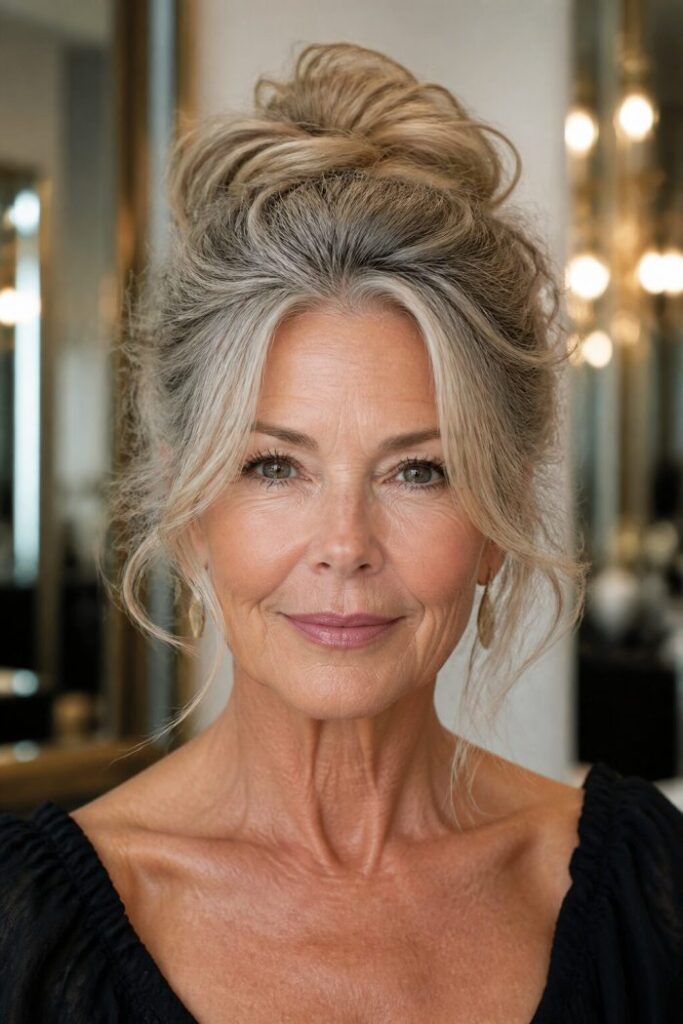
The boho knot with face-framing tendrils is the most relaxed and most flattering everyday updo for thin hair — the deliberately loose, casual knot turns any thinness into an intentional aesthetic quality, and the tendrils around the face create a softness and visual interest at the most visible area of the style.
How to achieve it: Gather the hair into a loose low knot at the nape, securing with an elastic and pins. Leave two or three sections loose around the face and temples, and curl these with a small wand to create soft, face-framing waves.
Thin hair tip: Curl the face-framing tendrils specifically with a small wand for soft, romantic waves — the curled tendrils add visual interest and draw the eye forward to the face, away from the thinness of the gathered knot at the back.
Best for: Everyday wear, casual occasions, romantic settings, or any time you want an updo that looks genuinely effortless and genuinely flattering without any significant effort.
Why it works: The loose, casual knot and the soft tendrils together create a complete facial frame and a style that reads as intentionally relaxed rather than limited. The tendrils reframe the updo as a deliberate aesthetic choice.
18. Headband Tuck Updo
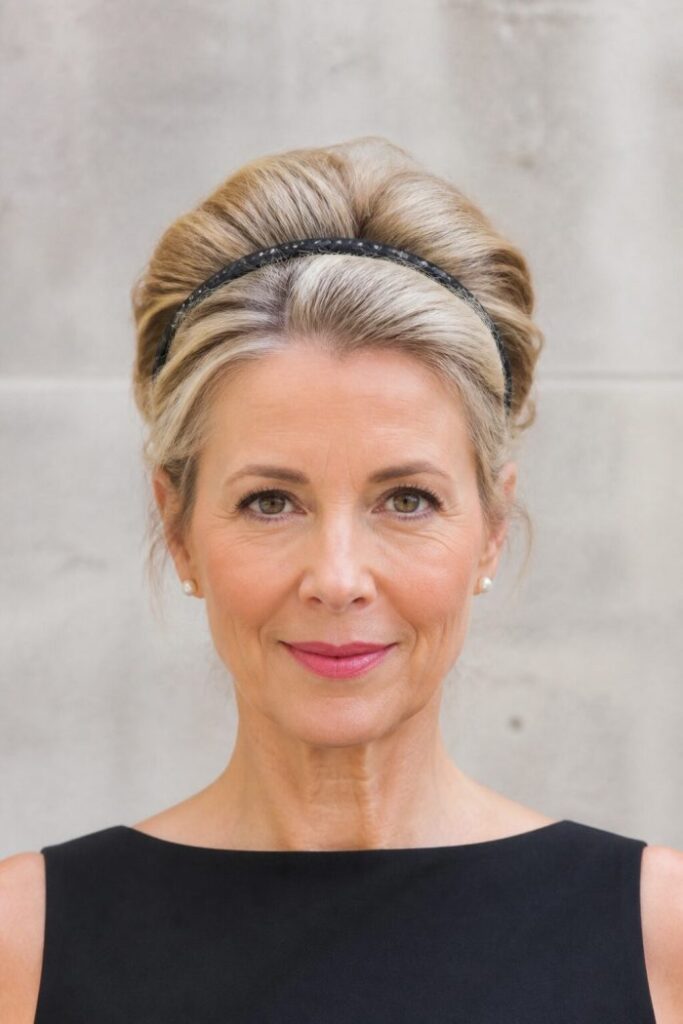
The headband tuck is possibly the most transformative thin hair updo technique in terms of the ratio of apparent fullness to actual hair density — the rolling and tucking action around the headband creates a style that looks significantly more abundant than a gathering and pinning approach would on the same hair. It is also one of the fastest and most beginner-friendly updos available.
How to achieve it: Place an elastic headband over the head at the hairline. Section the hair from the back and begin rolling it upward and under the headband, working from the nape toward the top of the head. Roll additional sections as you progress until all the hair is tucked into the headband. Adjust the rolled sections for evenness.
Thin hair tip: Apply a light texturizing spray throughout the hair before starting the tuck — this adds the grip that fine hair needs to stay rolled in the headband rather than slipping loose throughout the day.
Best for: Work days, casual occasions, days when you need a complete updo in under five minutes, or any time the fastest possible thin hair updo is needed.
Why it works: The rolling action of the headband tuck creates a dimensional, wrapped appearance that reads as full regardless of actual hair density — the multiple overlapping rolled sections create visual complexity that looks like abundant hair rather than fine hair in a technique.
19. Knotted Low Updo With Hair Wrap
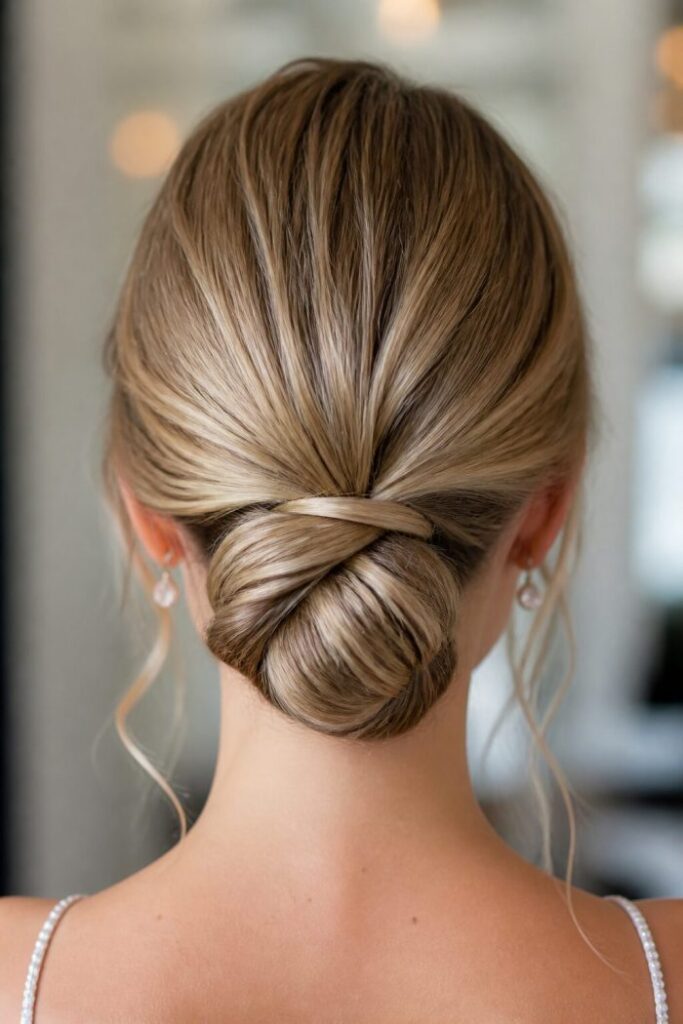
A knotted low updo with a wrapped section at the base combines two of the most effective thin hair updo visual techniques — the knot adds structured texture and the wrap adds a layered, intricate detail that makes the overall style read as more complex and more abundant than a simple gathered approach would.
How to achieve it: Gather the hair into a low ponytail. Take a small section from the ponytail and set it aside. Loosely knot the remaining ponytail and pin at the nape. Wrap the reserved section around the base of the knot and secure with a pin, tucking the end underneath. Finish with a shine serum through the wrapped section.
Thin hair tip: A shine serum or glossing spray specifically through the wrapped section gives it a polished, intentional quality that makes the wrapping detail read as a deliberate design element rather than simply a finishing touch.
Best for: Workplace settings, elegant evening events, formal occasions, or any time a sophisticated and inventive updo is wanted without requiring elaborate technique.
Why it works: The wrapped section adds a visual layer that creates the impression of more complexity and more hair than the simple knotted base alone would suggest — it makes the updo look designed rather than simply gathered.
How to Choose the Right Thin Hair Updo for Your Occasion
For the most volume: The voluminous teased updo (#11), the vintage pin curl updo (#7), and the pinned back curly updo (#15) all create the maximum apparent fullness from thin hair. These are the styles for occasions where the most dramatic transformation is the priority.
For the most elegance: The low chignon with twisted sections (#2), the French twist with crown volume (#3), and the soft Gibson tuck (#14) are the most refined and most sophisticated options.
For the most romantic look: The braided crown updo (#5), the waterfall braid into a low bun (#10), and the boho fishtail braid updo (#8) are the most romantically beautiful thin hair updo choices.
For the most everyday wearability: The textured messy bun (#1), the half-up twisted top knot (#4), and the boho knot with tendrils (#17) are the fastest and most casual-appropriate options.
For the most creative detail: The rope twist bun (#9), the headband tuck (#18), and the knotted updo with wrap (#19) are the most inventive techniques and the ones most likely to generate genuine compliments.
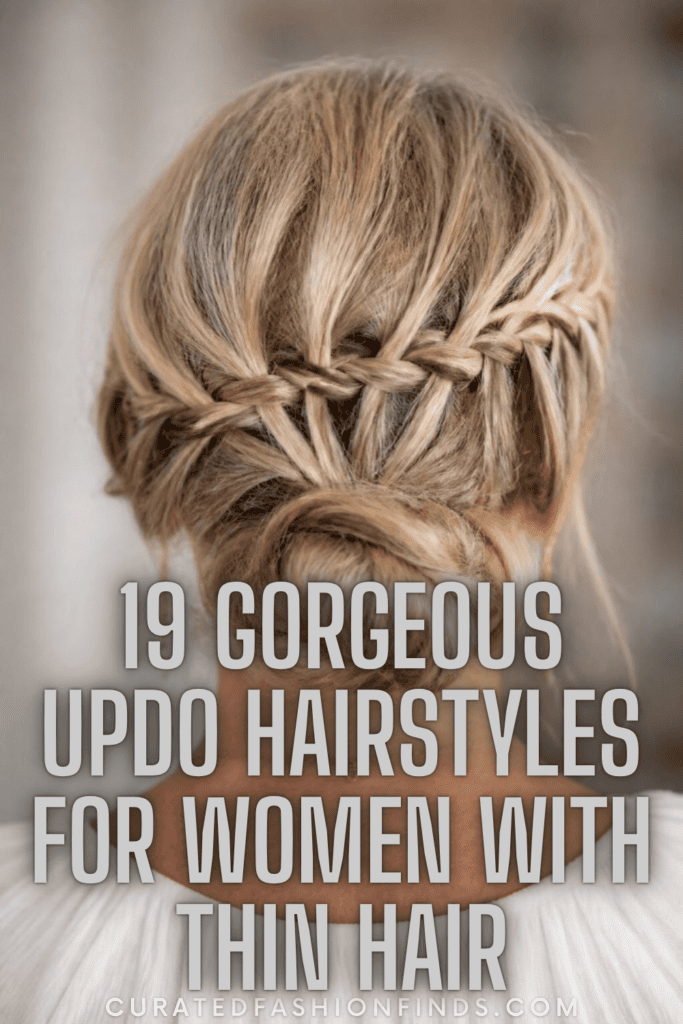
Pin it to find it later!
Final Thoughts
Thin hair is not an obstacle to beautiful updos — it is a different set of parameters that calls for techniques specifically suited to it. Braiding adds the visual bulk that fine hair lacks. Twisting adds the texture that thin hair needs to look dimensional. Backcombing creates the volume that thin hair cannot generate through density alone. And the right approach to any updo for thin hair is the one that works with the hair’s natural qualities rather than fighting them.
Every style in this guide is achievable on fine hair with the right preparation — dry shampoo for grip, volumizing mousse at the roots for body, gentle backcombing for crown lift, and accessories for visual interest. Start with the dry shampoo. It genuinely changes everything. Save the styles that resonated. Try them in low-stakes situations before important occasions. And trust that your best updo day is genuinely within reach.
Can thin hair really look good in an updo?
Absolutely — and with the right techniques it can look genuinely beautiful. Braiding, twisting, backcombing, and curling before styling all add the texture and apparent volume that thin hair needs for a full-looking updo. The key is choosing a style designed to work with fine hair’s specific qualities rather than against them.
What products work best for updos on thin hair?
Dry shampoo or texturizing spray before styling is the single most useful product for thin hair updos — it adds grip and grit that fine hair needs to hold pins, stay in braids, and resist slipping. Volumizing mousse at the roots before blow-drying creates the body foundation that all subsequent styling builds on. A light-hold hairspray sets the finished style without weighing fine hair down.
What updo styles work best for thin-haired brides?
Romantic braided styles, soft pinned curly updos, and classic chignons with twisted sections are all excellent bridal choices for thin hair. The braided crown is particularly popular for weddings because it looks most abundant and most romantic of any updo available for fine hair. A skilled bridal stylist can also use hair padding or extensions to add extra volume if needed for the occasion.
What updo styles should thin-haired women avoid?
Very sleek, tightly gathered styles with nothing to add visual interest can make thin hair look sparse rather than elegant. Extremely small, flat buns without a teased base are best avoided. Generally, any style that emphasizes the lack of volume rather than working around it will be unflattering — opt instead for styles with texture, braiding, or intentional looseness that create the appearance of fullness.
How do I keep an updo from falling apart on thin hair?
Start with dry shampoo or texturizing spray for grip. Use bobby pins that match your hair color and insert them in an X-pattern for maximum hold. Apply a light-hold hairspray over the finished style. For updos that need to last all day, consider using a small amount of pomade or hair wax at the base of the updo to anchor the pins more securely.