16 Chic Beanie Hairstyles for Women: Frizz-Free Protective Winter Styles
Beanies are an indispensable cold-weather accessory, but they present unique styling challenges. Without a strategic approach, heavy knitwear can flatten root volume, distort your parting line, and subject delicate hairlines to severe mechanical friction by midday. Fortunately, you never have to sacrifice thermal comfort for aesthetic appeal.
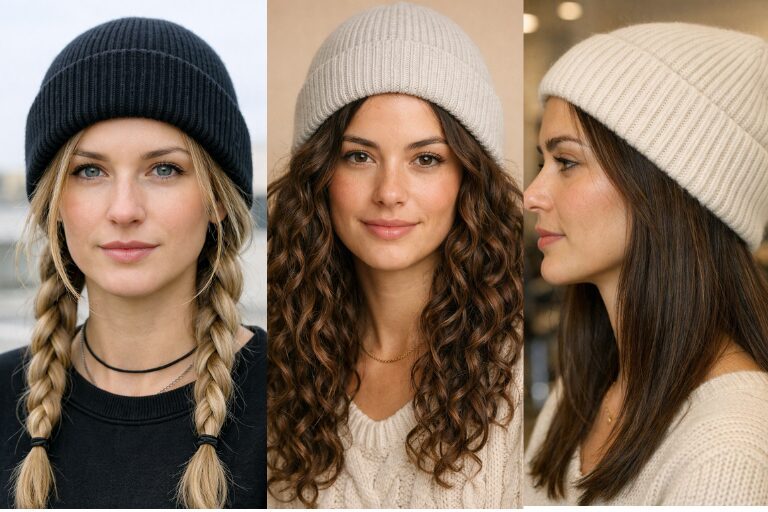
The secret to mastering winter headwear lies in selecting base styles that sit low and distribute structural weight smoothly beneath the cap. Whether your hair is natural, relaxed, or transitioning, implementing protective low-manipulation styles allows you to maintain clean definition when transitioning indoors.
Essential Trichological Protection Tips:
- Satin-Lined Preservation: Whenever possible, choose a beanie lined with satin or silk, or wrap a silk scarf over your hair before putting on the hat. This simple barrier eliminates cuticle friction and prevents moisture depletion caused by absorbent wool or acrylic fibers.
- Eliminate Localized Tension: Avoid pulling the perimeter of the beanie tightly against your hairline. Prioritizing a loose, comfortable fit prevents traction alopecia along the edges while preserving your style’s structural form.
1. Minimalist Low-Slung Braid
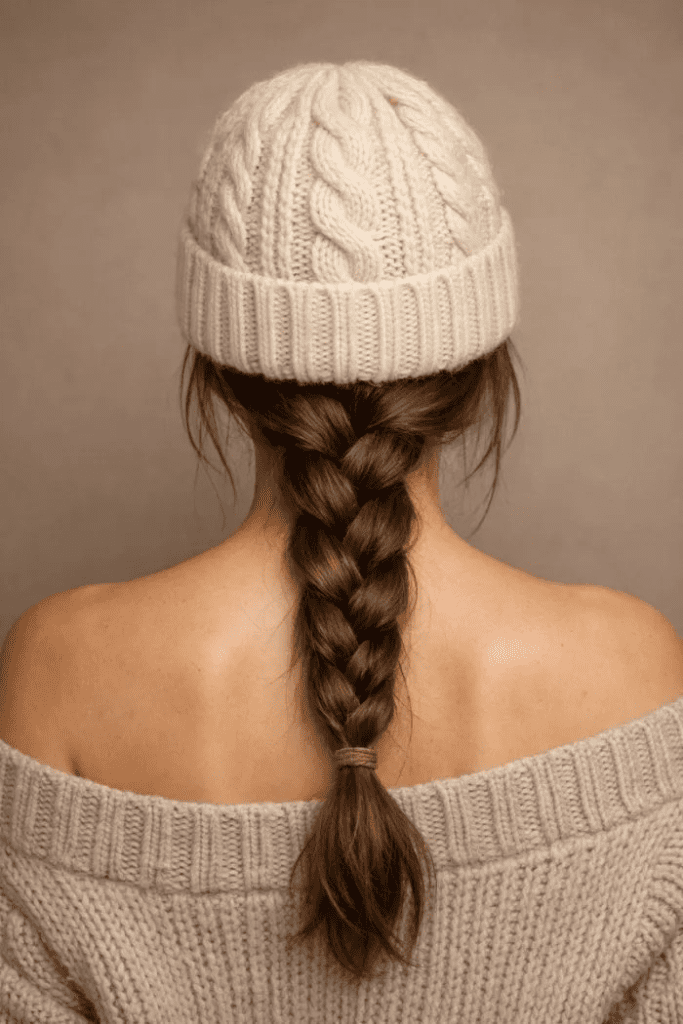
Gathering the hair into a singular, relaxed braid at the nape of the neck ensures a perfectly flat profile beneath the cap. This positioning prevents an awkward, bulky silhouette at the crown. Allow a few wispy face-framing layers to escape along the sides for an approachable finish.
2. Voluminous Curly Halo

Celebrate your natural curl pattern by using the beanie as a functional headband rather than a full covering. Position the band slightly behind the natural hairline to protect fragile edges from compression. Apply a light layer of defining cream to keep the exposed ringlets bouncy and full.
3. Box Braids with a Forward Cascade
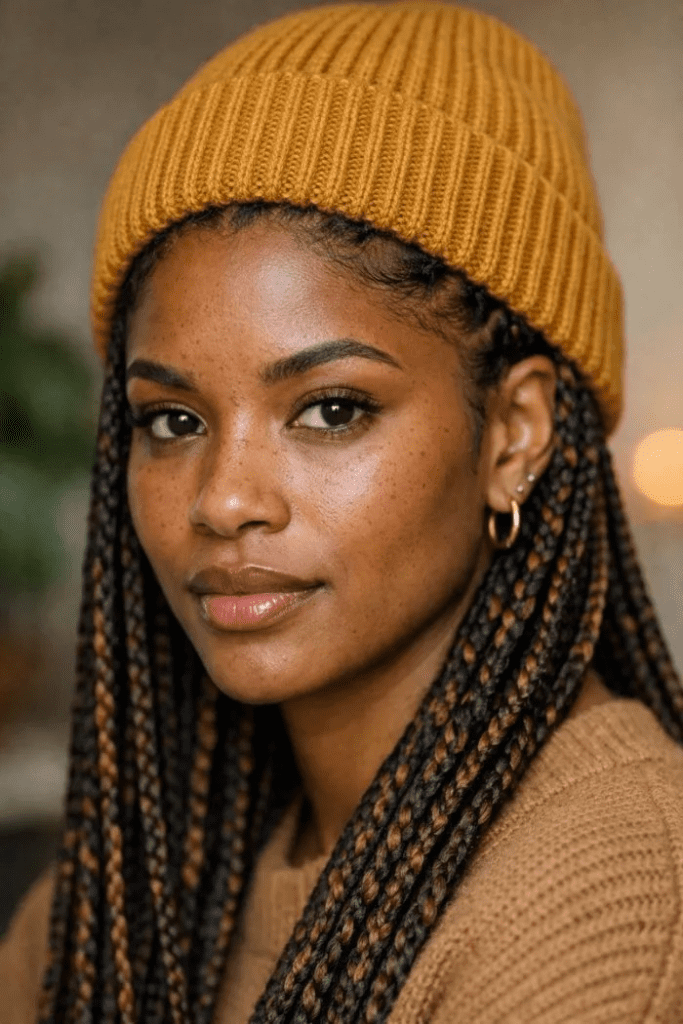
Box braids and knit beanies offer an exceptionally stylish and protective winter combination. Cascade the lengths forward over both shoulders to frame the face, allowing the cap to glide onto the head without disrupting or flattening your parting grid.
4. Knotless Braids with Exposed Perimeter
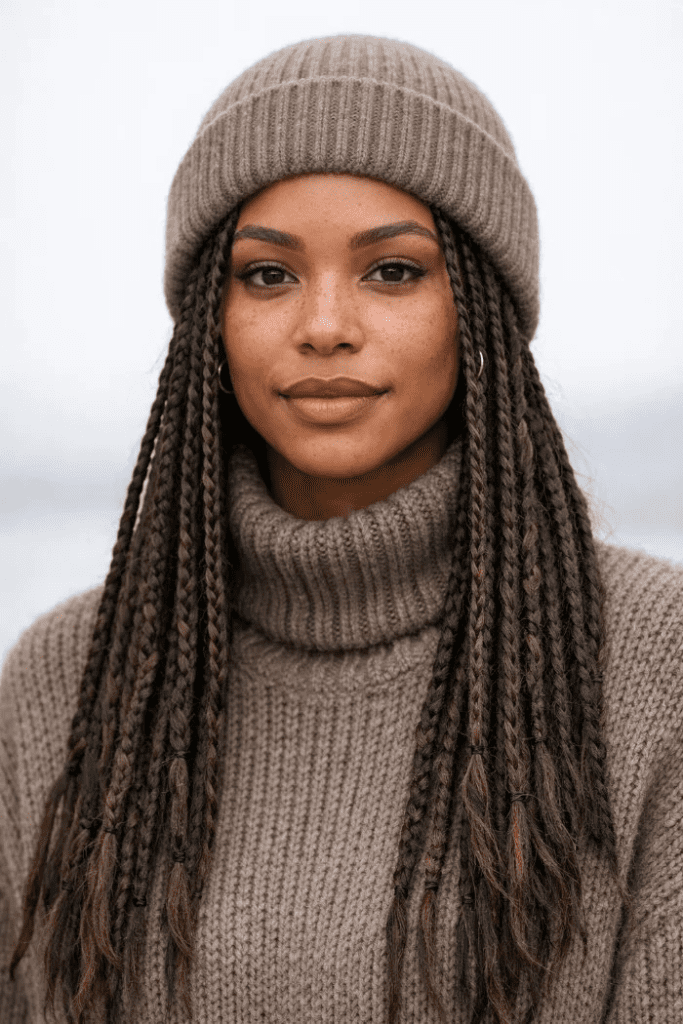
Because knotless braids sit completely flush against the scalp, they minimize root bulk under winter headwear. Directing the majority of the braid weight forward allows the beanie to rest securely without shifting. A satin under-layer preserves the health of the scalp and edges.
5. Asymmetrical Side Plait

A loose side braid offers an elegant, highly polished aesthetic that keeps your lengths from rubbing against coarse coat collars all day. Initiate the weaving pattern loosely below the earlobe to prevent the cap from pressing hard against the scalp.
6. Sporty Double Braids
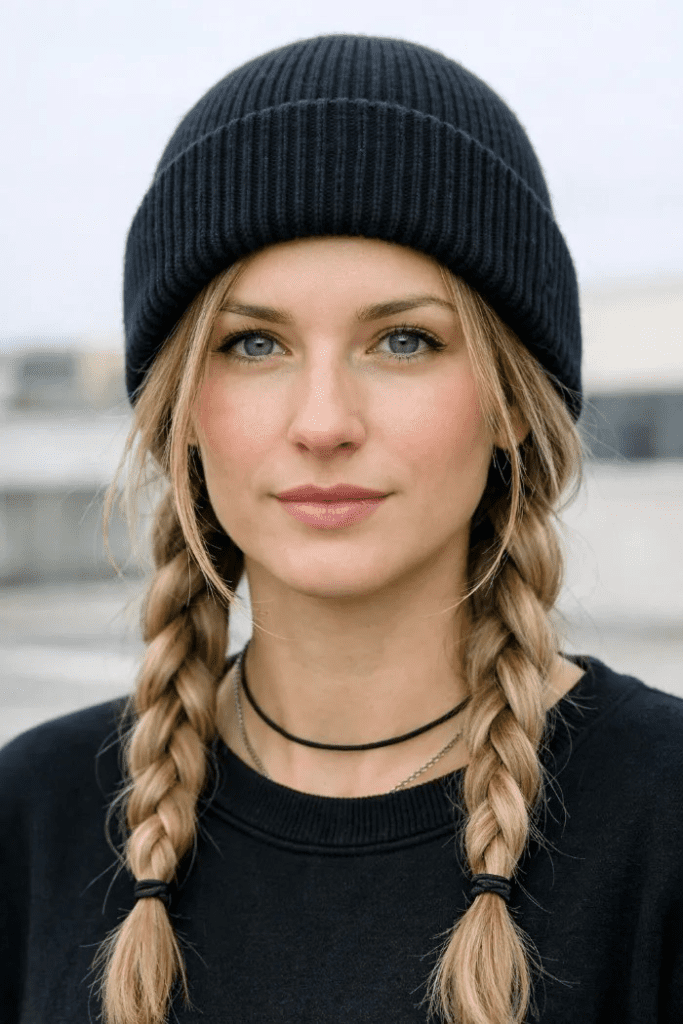
Two symmetrical plaits are excellent for securing the hair completely during outdoor winter activities. This flat configuration fits comfortably beneath snug-fitting athletic beanies while protecting the hair tips from environmental dryness. Seal the ends with a nourishing leave-in conditioner.
7. High-Sitting Beanie with Defined Curls

For those who want to showcase maximum curl definition, choose a beanie with a looser knit and wear it perched higher on the vertex. This preserves your natural bounce and volume while framing the face. Ensure curls are fully dry before donning the cap to prevent frizz.
8. Sleek Straight Strands with Anti-Static Shielding
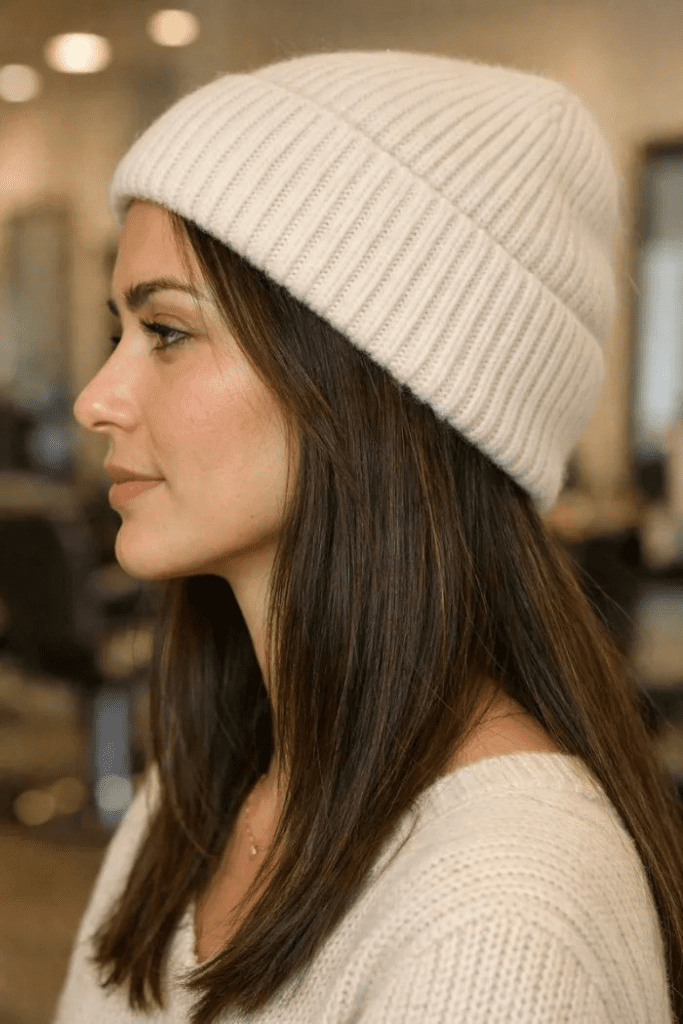
Straight hair looks best when the beanie is worn relaxed toward the back of the head. Keep the lengths draped smoothly behind the shoulders for clean lines. Apply a drop of weightless serum to the canopy layer to neutralize winter static and flyaways.
9. Geometric Blunt Bob Framing
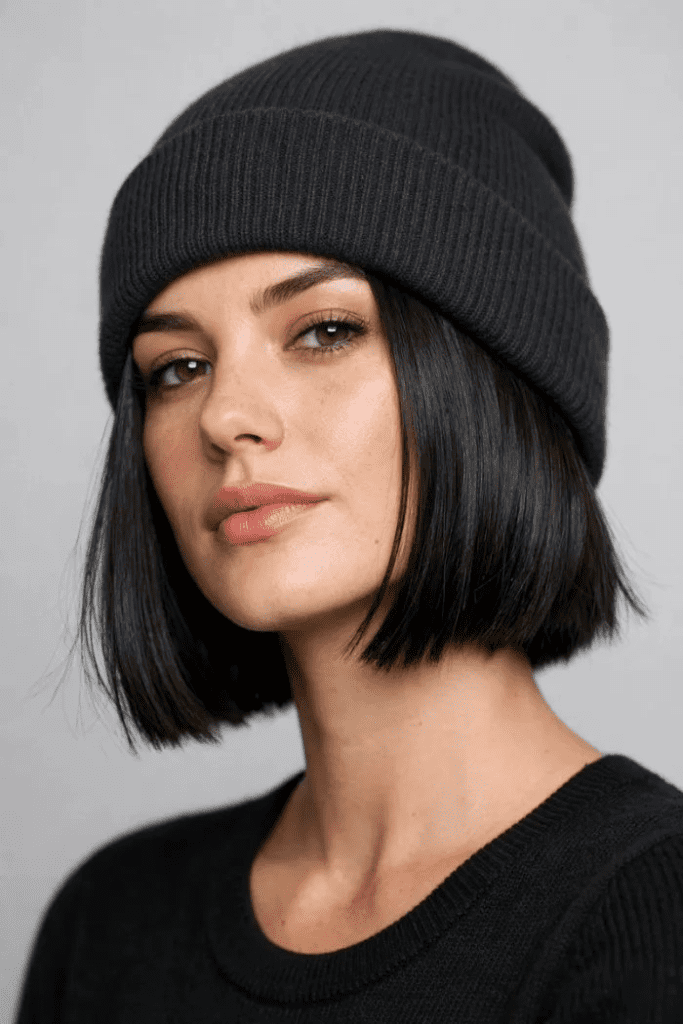
A sharp, horizontal bob paired with a modern beanie creates a striking, high-contrast look. Position the hat slightly back to keep the face open and ensure the clean perimeter line remains fully visible. A quick pass with a flat iron on the tips keeps the silhouette crisp.
10. Tapered Pixie with an Exposed Fringe

Styling a pixie cut with winter headwear is fast and highly flattering. Avoid a completely hidden hairline by allowing your cropped fringe to peek out from beneath the front edge. Define the short pieces with a micro-dab of texturizing paste to keep them from laying flat.
11. Coiled Ringlets under a Slouchy Cap

Achieve a balanced, effortless look by pairing defined coils with an oversized, slouchy knit. Setting the cap back allows the front coils to retain their springy elasticity. Always allow your styling mousse to dry completely prior to wearing the hat to prevent friction frizz.
12. Deconstructed Low Ponytail

Securing a low ponytail at the exact nape of the neck allows it to exit comfortably beneath a slouchy beanie. Smooth the top layer with a lightweight styling cream to maintain a sleek look, and leave two symmetrical front strands out to soften the facial features.
13. Effortless Nape Bun with a Soft Fringe

This relaxed low bun keeps your hair contained without looking overly manicured. Twist the hair gently at the base of the skull and secure loosely with pins. The beanie completely conceals the foundation of the bun, giving the look an organic, cozy texture.
14. Curly Cropped Bob with Beanie Bangs

A short, curly bob maintains a gorgeous, rounded shape when paired with winter headwear. Push the brim of the hat back just far enough to showcase your curly fringe. If the curls undergo compression, simply mist with water and a touch of curl gel to reactivate the bounce.
15. Ribbed Beanie with a Side-Tucked Lob

Shoulder-length curls pair beautifully with heavy, textured knitwear when volume is balanced horizontally. Create a deep, off-center part, then tuck one side cleanly behind the ear. Work a drop of botanical oil into the ends to counteract harsh winter air.
16. Wispy Fringe and Texturized Shag

A delicate, airy fringe adds immediate modernity to winter wear, provided it isn’t crushed flat against the brow. Wear the beanie higher on the cranium, allowing the shaggy layers to fall naturally. A 30-second blast with a blow dryer easily restores the volume of the bangs.
Final Wrap-Up
If you have ever removed a winter hat only to find flattened roots and unruly static, remember that the goal isn’t absolute perfection. It is about choosing a strategic base style that looks entirely intentional from the moment you step indoors.
Build a rotating wardrobe of two or three reliable techniques: a low plait for casual errands, a sleek nape ponytail for hectic days, and structured curls or protective braids for an elevated look. Keep a compact kit of styling essentials in your bag—such as a travel-sized mist bottle, a lightweight foam, or a small edge brush—to make quick adjustments on the go. Ultimately, the beanie should function as a stylish accessory while your hair remains the focal point.
How can you prevent headwear from flattening your hair’s root volume?
To preserve root volume, avoid pulling the beanie down tightly over the cranium. Position the brim higher on the forehead to allow the hair roots to breathe. Wearing a satin bonnet or a silk scarf underneath provides a low-friction barrier that prevents the knit fibers from compressing the hair cuticles. For textured and curly hair types, ensure the styling products have dried completely before wearing the hat to minimize compression flattening.
Which hairstyles are most sustainable for all-day wear under a winter hat?
Low-manipulation styles secured at the nape of the neck are the most sustainable options for extended wear. A low braid, an architectural low ponytail, or a deconstructed nape bun allows the beanie to sit naturally against the head shape without creating a bulky, uncomfortable bump at the crown. If you are sporting protective extensions or box braids, directing the lengths forward over the shoulders ensures the cap remains secure without shifting.
What measures should be taken to protect the hairline from winter headwear friction?
Safeguarding your edges requires minimizing constant mechanical friction along the hairline. Position the band of the beanie slightly behind your natural baby hairs. If the interior of your hat consists of rough wool, acrylic, or cotton, sew a satin lining into the band or wear a silk headband underneath. Additionally, avoid high-tension elastics under the hat, as the combined pressure of the beanie and a tight hair tie can stress the hair follicles.