Poetcore Capsule Wardrobe: 22 Thrifted & Budget Pieces to Build the Literary-Chic Aesthetic
Poetcore is one of the few aesthetics that genuinely rewards a limited budget — and not just because thrifting fits the ethos. The visual language of the aesthetic is specifically built around things that look like they’ve lived: fabric that’s been washed many times, leather that’s been worn to softness, jewelry that arrived with a history already attached. A brand-new item from a fast-fashion retailer often looks wrong for this aesthetic precisely because it looks new. A secondhand corduroy skirt with a slightly faded hem looks exactly right.
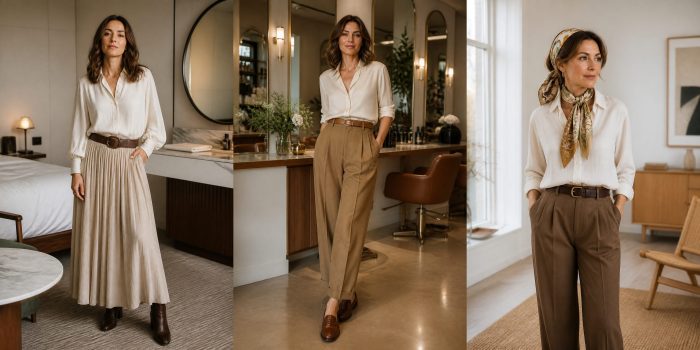
The aesthetic itself draws from the visual world of 19th-century literary culture — think Brontë heroines, candlelit libraries, ink-stained writing desks, pressed botanical illustrations, autumn walks with a dog-eared novel in a coat pocket. It translates into a contemporary wardrobe through natural fabrics, muted and earthy tones, romantic silhouettes that feel like they have narrative weight, and the kind of layering that looks like it happened organically rather than being assembled with a specific formula.
For women in their late 20s through 40s, poetcore is particularly wearable because the aesthetic’s emphasis on quality material and layered complexity aligns naturally with a more developed sense of personal style. The challenge is calibrating the balance between its more whimsical elements — lace collars, prairie dresses — and grounding pieces that keep the look feeling sophisticated rather than costume-like. The 22 pieces below do exactly that, covering the full wardrobe from foundation layers to finishing accessories, all sourced from thrift stores, estate sales, and budget retailers.
1. Oversized Cream Linen Blouse
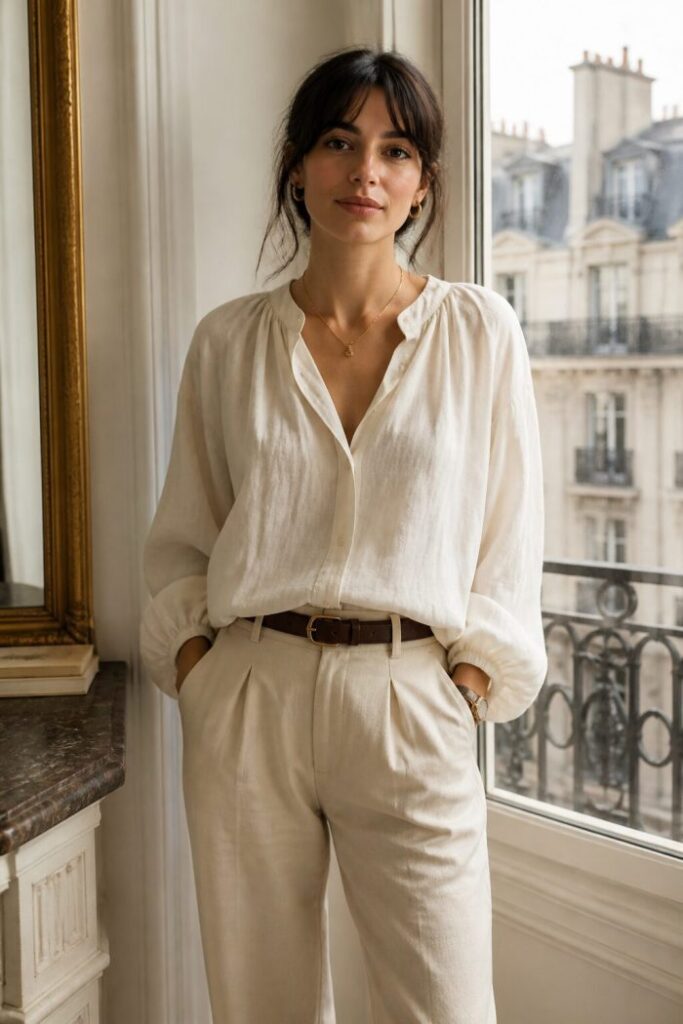
A loose, billowing linen blouse in cream or oat is the single most foundational poetcore piece you can own — it works as a standalone top, as a layering piece under cardigans and blazers, and as a dress substitute when worn long enough. The fabric is essential: linen has a natural crumple and weight that synthetic fabrics can’t replicate, and that slightly imperfect texture is precisely what gives the poetcore aesthetic its authenticity.
Look specifically for a slightly open collar, a gathered neckline, or subtle tuck detailing — these design elements create the romantic, slightly undone quality that a plain button-down doesn’t have. Thrift stores are genuinely exceptional sources for linen blouses from the 1980s and 1990s that translate directly into this aesthetic.
Why it works for poetcore: Linen reads as natural, historical, and textural in a way that cotton-synthetic blends don’t. The fabric’s tendency to wrinkle is an aesthetic feature rather than a flaw in this context.
Styling tip: Tuck the blouse loosely into a long midi skirt and leave the bottom two buttons undone — the slight dishevelment at the hem is part of the look rather than something to correct.
Where to find it: Thrift store women’s tops sections, especially in the blouses and dress shirts area. Estate sale clothing racks. ThredUp and Poshmark filtered by “linen blouse.”
2. High-Waisted Corduroy Midi Skirt
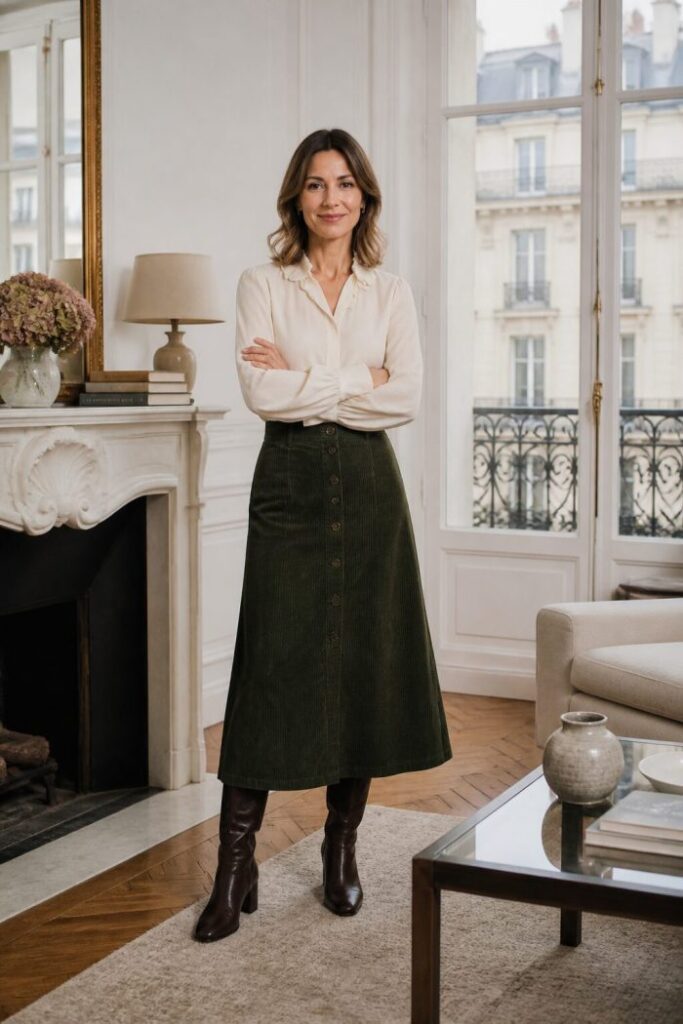
Corduroy is the poetcore fabric that does the most work per piece — it has warmth, texture, depth, and a tactile quality that reads as both scholarly and romantic simultaneously. A midi-length corduroy skirt in forest green, warm brown, or dusty burgundy is one of the most versatile pieces in this entire capsule: it layers with every top, works across multiple seasons, and looks better with age and washing rather than worse.
Midi lengths specifically are the right silhouette for this aesthetic — they hit the space between the knee and ankle that references the modest romanticism of the aesthetic’s historical inspirations without looking like a costume.
Why it works for poetcore: The corduroy texture creates its own visual interest without needing pattern or embellishment. The earth-toned palette options sit naturally within the aesthetic’s color language.
Styling tip: Pair with a tucked-in ribbed knit turtleneck and cognac ankle boots for a complete autumn-scholar outfit that requires no additional accessories to feel finished.
Where to find it: Thrift store skirt sections — corduroy midi skirts from 1970s and 1990s revival periods are abundant and typically underpriced. Depop filtered by color and fabric type.
3. Worn-In Leather Belt With Vintage Buckle
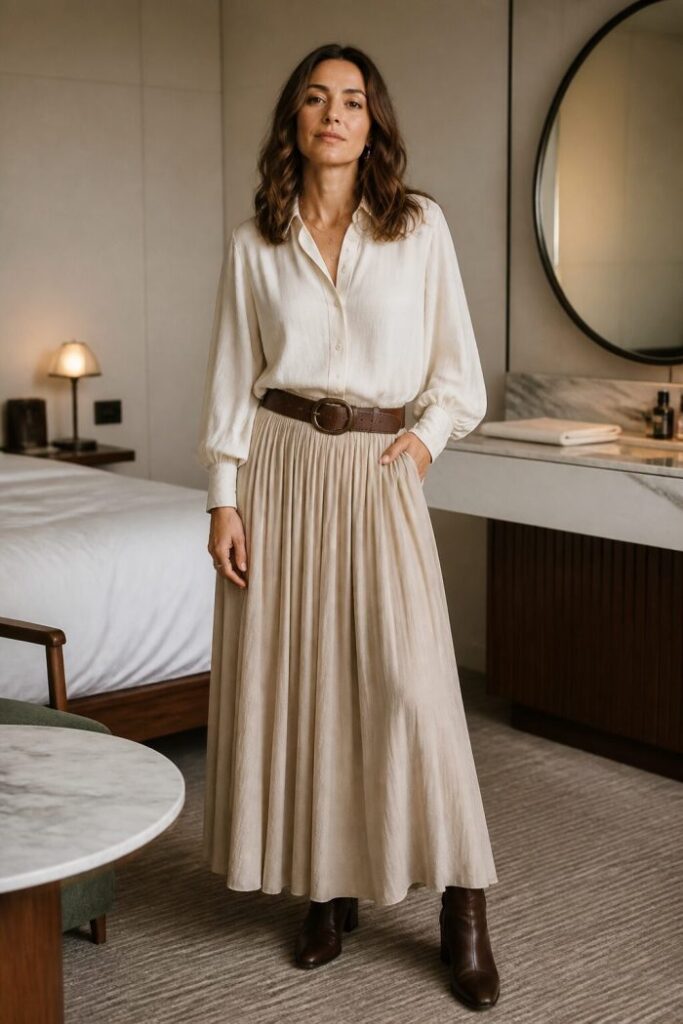
A genuine leather belt with a tarnished or antique-style buckle is the poetcore detail that transforms silhouettes without demanding attention. Its job is structural — cinching oversized blouses and flowing dresses — but the worn leather and aged buckle add a quiet visual story that a modern clean belt doesn’t have.
The specific quality to look for is character: a belt that shows evidence of previous wear reads as authentic within the aesthetic. A brand-new belt with an artificially distressed finish reads as costume. Thrift store belt bins are one of the best hunting grounds for real leather at a fraction of retail price, and the natural aging process of thrifted belts is genuinely superior to manufactured distressing.
Why it works for poetcore: Leather is one of the few materials that becomes more beautiful as it ages — and poetcore specifically values the kind of beauty that comes with history.
Styling tip: Choose a belt that’s slightly larger than your waist measurement so it can sit loosely on your hips over a long cardigan — the loose, slightly drooping placement is more romantically nonchalant than a tightly cinched waist.
Where to find it: Thrift store accessories and belt bins. Estate sales. Leather belts specifically are one of the highest-quality thrift finds because vintage leather is often far more durable than modern versions.
4. Chunky Knit Cardigan in Oatmeal or Warm Taupe
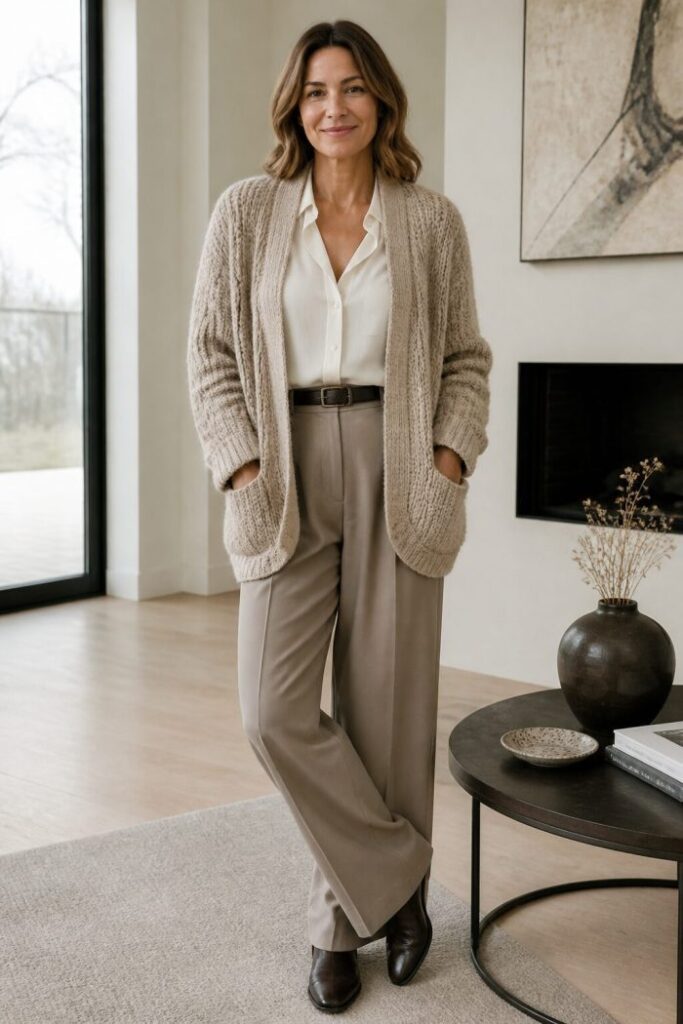
The oversized chunky cardigan is the piece that makes every poetcore outfit feel inhabitable rather than assembled. It needs to be large enough to cocoon in, textured enough to have visible weight and warmth, and in a color that reads as natural and undyed-looking — oatmeal, warm taupe, camel, or a faded cream all work.
Cable-knit and open-knit textures are the most authentic choices for this aesthetic. Smooth, fine-gauge knitwear reads as too refined and deliberate; chunky, visibly textured knitwear reads as the kind of thing a person actually lives in, which is exactly right.
Why it works for poetcore: The cardigan is the literary heroine’s defining garment — it implies she was too absorbed in something to reach for a proper coat. The oversized, enveloping quality is deliberately impractical in the most appealing way.
Styling tip: Drape it off one shoulder over a linen dress rather than wearing it symmetrically — the deliberate asymmetry looks more romantically effortless than a perfectly positioned cardigan.
Where to find it: Thrift stores, where chunky cardigans soften and look better with washing — a slightly pilled thrifted cardigan often looks more authentically poetcore than a crisp new one. Uniqlo and H&M for budget new options.
5. Slip Dress in Dusty Rose or Sage
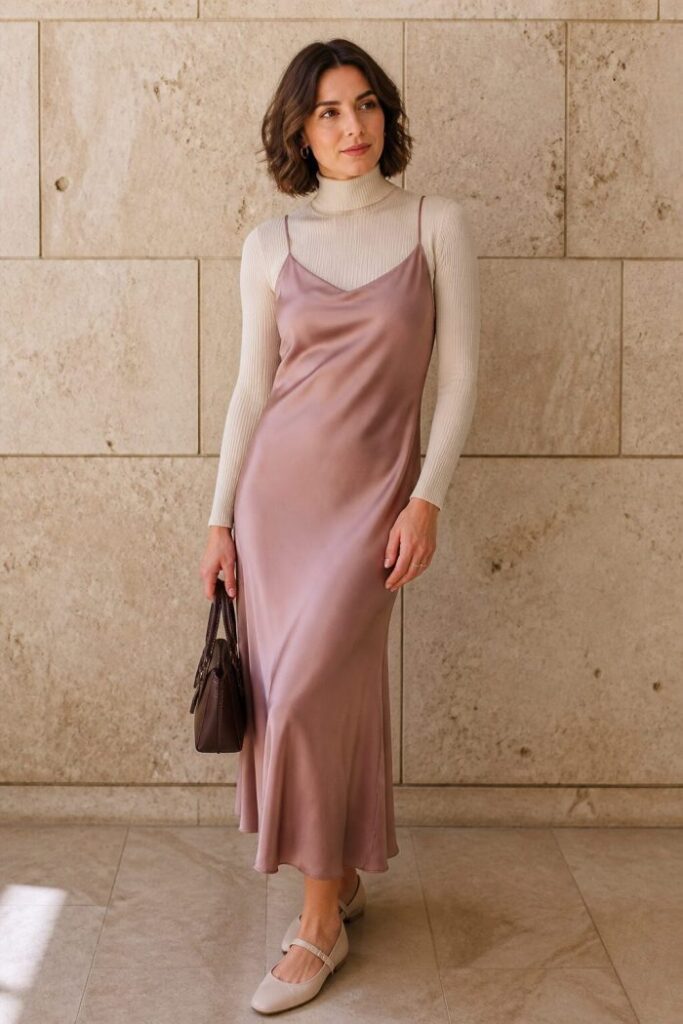
A bias-cut or straight-cut slip dress in muted, desaturated tones is an essential poetcore layering piece specifically because of how it functions in combination with other garments. Worn alone it’s too simple; worn over a ribbed turtleneck or fitted long-sleeve top, it creates the kind of layered, romantically undone look that is the visual heart of the aesthetic.
The color desaturation is important — a vivid, saturated pink or bright emerald doesn’t read as poetcore regardless of the silhouette. Dusty rose, sage, muted lilac, faded terracotta — colors that look like they’ve been washed many times and are gently fading toward something softer — are exactly right.
Why it works for poetcore: The slip dress carries a literary quality in its very name — it’s a garment designed for underneath being worn as the garment itself, which implies a romantic carelessness about dressing conventions.
Styling tip: Layer over a slim ivory ribbed turtleneck and add a longline cardigan over everything — the three-layer combination reads as complete and sophisticated rather than like three separate pieces put together.
Where to find it: Budget retailers frequently stock slip dresses that need only the right styling to feel elevated. Thrift stores for genuine satin or silk versions that photograph beautifully.
6. Pleated Trousers in Camel or Warm Charcoal
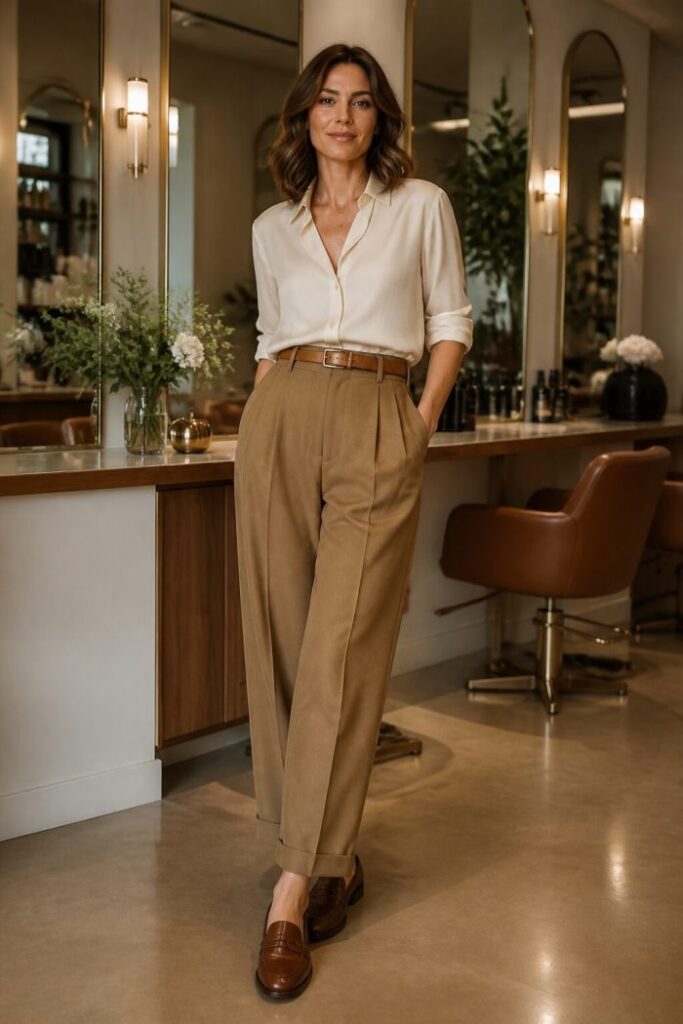
High-waisted pleated trousers introduce a slightly more scholarly, structured dimension to the poetcore wardrobe — the kind of piece a literature professor or a poet with a university fellowship might wear, giving the aesthetic some intellectual grounding alongside its romantic elements.
Camel, warm grey, and faded black tones keep the palette within the aesthetic’s color range. The pleated front specifically is the detail that matters most for poetcore — flat-front trousers read as modern workwear, while pleats reference the period tailoring that the aesthetic draws from.
Why it works for poetcore: Pleated trousers suggest someone who is serious and scholarly but not concerned with contemporary fashion — they wear what is comfortable and works, rather than what is current.
Styling tip: Cuff the hem slightly (once or twice, not rolled up to the shin) and pair with a loosely tucked-in blouse and leather loafers for a campus-library-chic outfit that works from coffee shop to bookstore without adjustment.
Where to find it: Thrift stores are exceptional for pleated trousers because the style was widely produced in high-quality fabrics during the 1980s and 1990s and is currently unfashionable enough to be overlooked and underpriced. These are consistently excellent quality-per-dollar finds.
7. Velvet Blazer in Jewel or Ink Tones
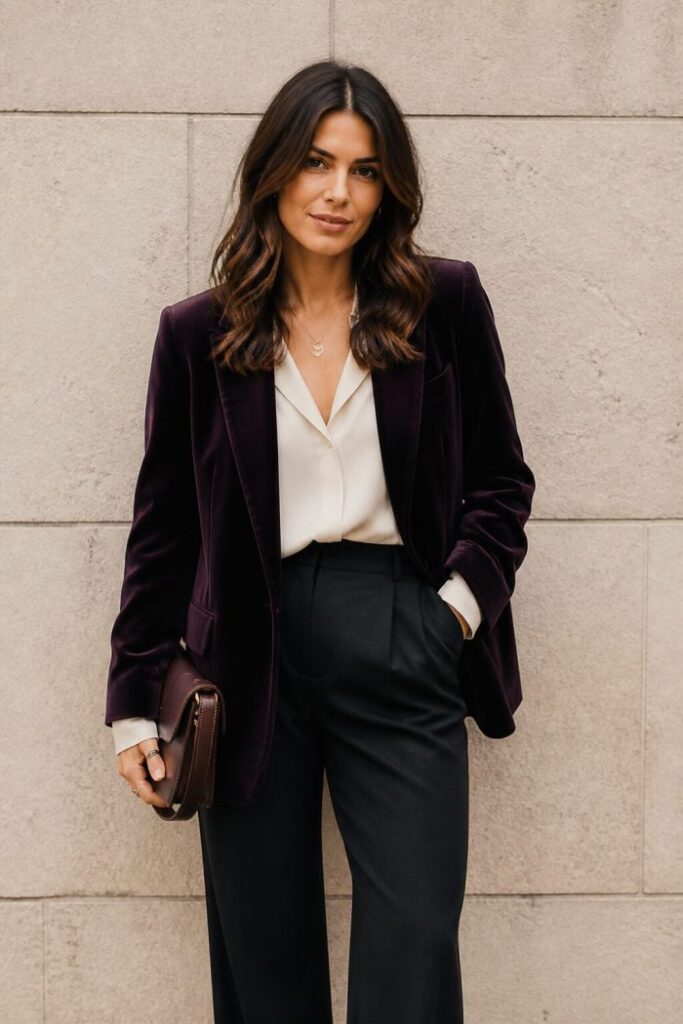
A velvet blazer is the single piece in this capsule with the highest transformation-to-effort ratio. A simple blouse-and-midi-skirt combination becomes a complete literary look the moment a deep plum, midnight navy, or forest green velvet blazer is added over it. The fabric does everything the aesthetic needs: it’s rich, slightly moody, and looks like it carries history.
Slightly oversized fits are specifically more flattering for this aesthetic than fitted blazers — the extra room creates a more romantically nonchalant quality and makes layering underneath easier.
Why it works for poetcore: Velvet is a historically rich fabric that reads as belonging to a different era, which is precisely the temporal quality the aesthetic values. The jewel and ink tones specifically evoke candlelit interiors, ink, and autumn.
Styling tip: Wear unbuttoned over a white blouse and midi skirt with the sleeves pushed up slightly — the pushed sleeves prevent the look from feeling formal while the unbuttoned front keeps the silhouette fluid.
Where to find it: Thrift stores, specifically in the blazers and suit jackets section — velvet blazers from the 1990s are abundant, often in exactly the right jewel tones, and dramatically undervalued. This is one of the best thrift finds in the entire capsule.
8. Ribbed Turtleneck in Ivory or Warm Black
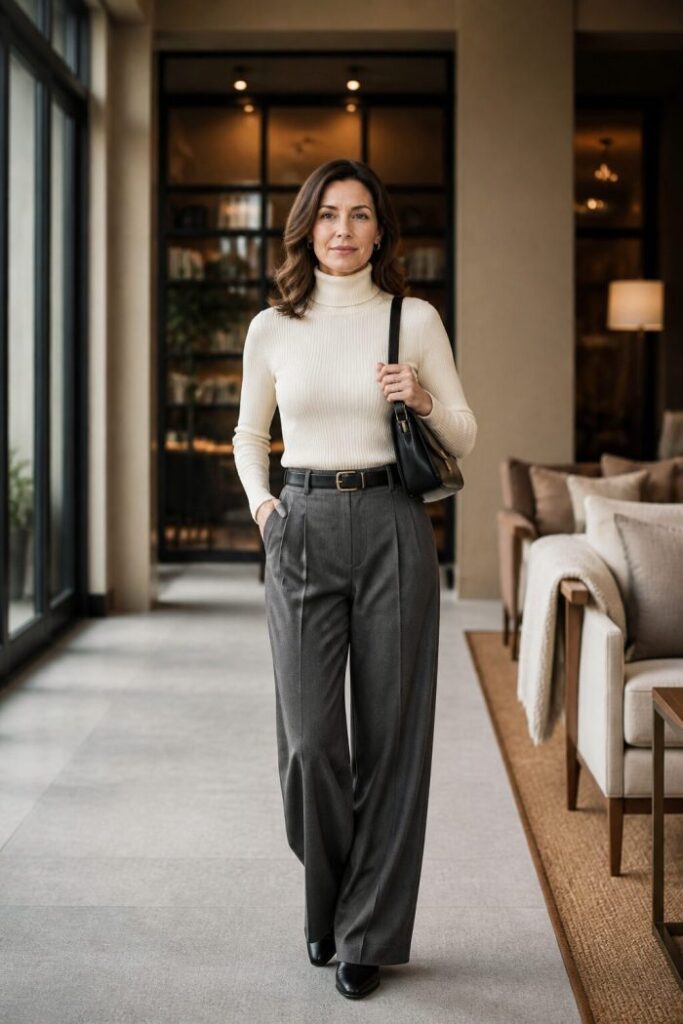
A slim ribbed turtleneck is the most versatile layering piece in this entire capsule. It works under slip dresses, beneath velvet blazers, alone tucked into high-waisted skirts, and underneath prairie dresses for a styling combination that’s both unexpected and completely right. Ivory and warm black are the essential two colors — one reads like manuscript pages, the other like ink.
The ribbed texture is specifically important for poetcore over a smooth jersey turtleneck — the ribbing adds visual texture and a handmade quality that makes even a budget garment look more considered.
Why it works for poetcore: The turtleneck is the garment of the writer who is too busy thinking to worry about being cold — a utilitarian piece elevated by the aesthetic’s color palette and layering context.
Styling tip: A warm black turtleneck tucked into camel pleated trousers with a thin leather belt at the waist is a complete poetcore outfit that requires no additional layers — the combination’s simplicity is its sophistication.
Where to find it: H&M, Uniqlo, and Zara all offer ribbed turtlenecks at very accessible price points. Also findable in thrift stores in both new and well-worn conditions.
9. Vintage Floral Prairie Dress
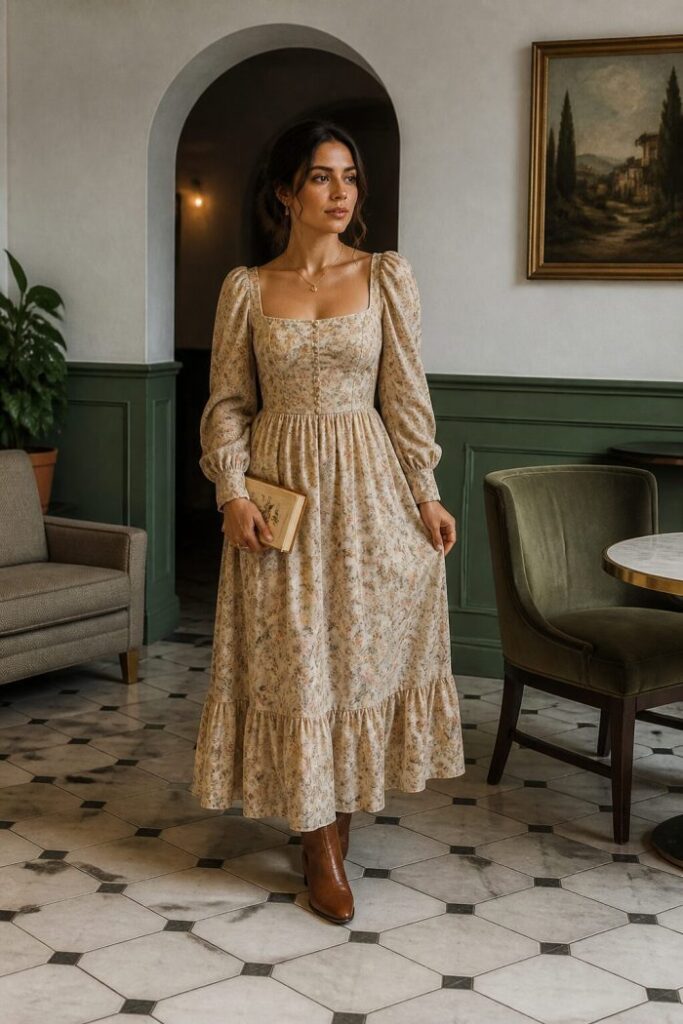
A prairie dress — fitted bodice, gathered or A-line skirt, either puffed or long sleeves, in a small-scale or botanical floral print — is the most iconic silhouette in the poetcore vocabulary. The key is the specific quality of the floral: muted, slightly aged-looking, faded rather than vivid. Think small roses that look like they’ve been pressed in a book, delicate wildflowers in colors that have softened with washing, botanical prints that reference field guides and herbarium collections.
Thrift stores are the single best source for genuine vintage prairie dresses precisely because the style was produced extensively in the 1970s and 1990s and currently sits at a price point that doesn’t reflect how perfectly it translates to the aesthetic.
Why it works for poetcore: The prairie dress references both the historical period the aesthetic draws from and the natural, botanical world that poetcore consistently references in both literature and visual culture.
Styling tip: Layer a longline knit cardigan over the dress and choose ankle boots over sandals — the boot-cardigan combination grounds the prairie dress in something that reads as wearable by a thoughtful adult rather than as a costume.
Where to find it: Thrift store dress sections, particularly in sizes that skew larger where vintage prairie dresses are more abundant. Etsy vintage sellers. Depop filtered by “prairie” and “floral.”
10. Long Wool or Wool-Blend Coat in Camel or Cognac
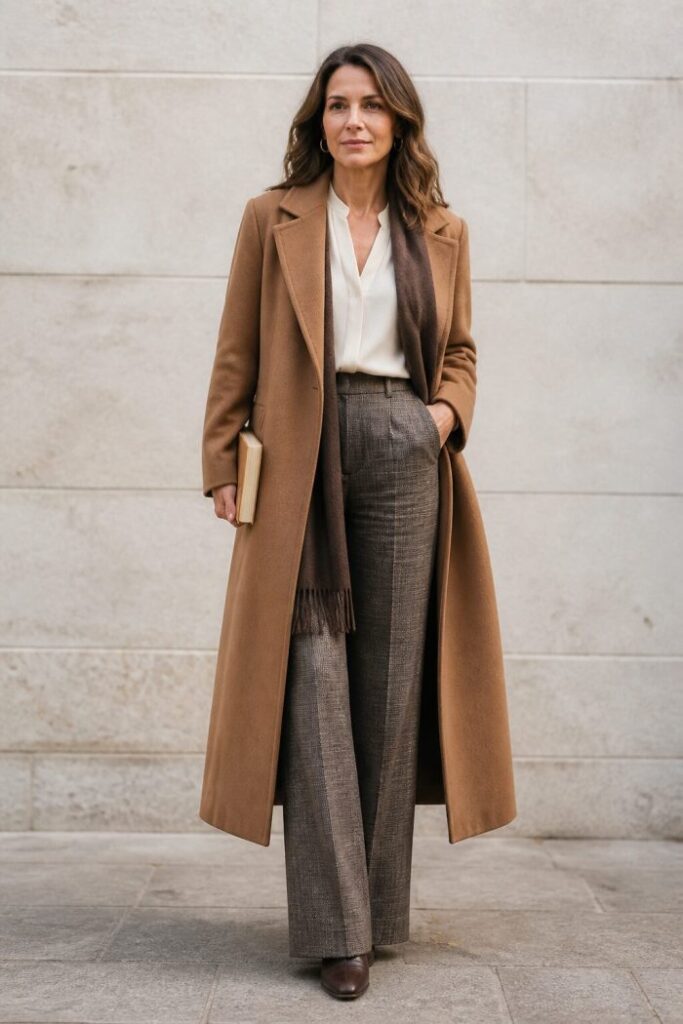
A longline wool coat in camel, cognac, or warm brown is the poetcore outer layer that makes every outfit it covers feel complete and intentional. The sweep of a long coat over a midi dress or wide-leg trousers has an immediately literary quality — it’s a garment associated with movement, with being about to go somewhere or just returning from somewhere interesting.
Vintage wool coats are consistently some of the highest-quality thrift store finds in the entire capsule — they were made from far better wool than most contemporary budget options, they age beautifully rather than pilling and degrading, and they tend to be dramatically underpriced relative to their actual value and quality.
Why it works for poetcore: The longline coat references the great-coat silhouette that appears in period literature and painting — it implies both seriousness of purpose and romantic wandering.
Styling tip: Belt loosely at the waist over a floral dress using the vintage leather belt from this capsule — the belted coat creates an hourglass-friendlier silhouette than an unbelted one while maintaining the flowing, dramatic quality of the long length.
Where to find it: Thrift stores in autumn and winter, particularly in the coats section — vintage wool coats from the 1970s through 1990s are the specific decades to look for. Estate sales for the highest-quality examples.
11. Leather or Faux Leather Oxford Shoes
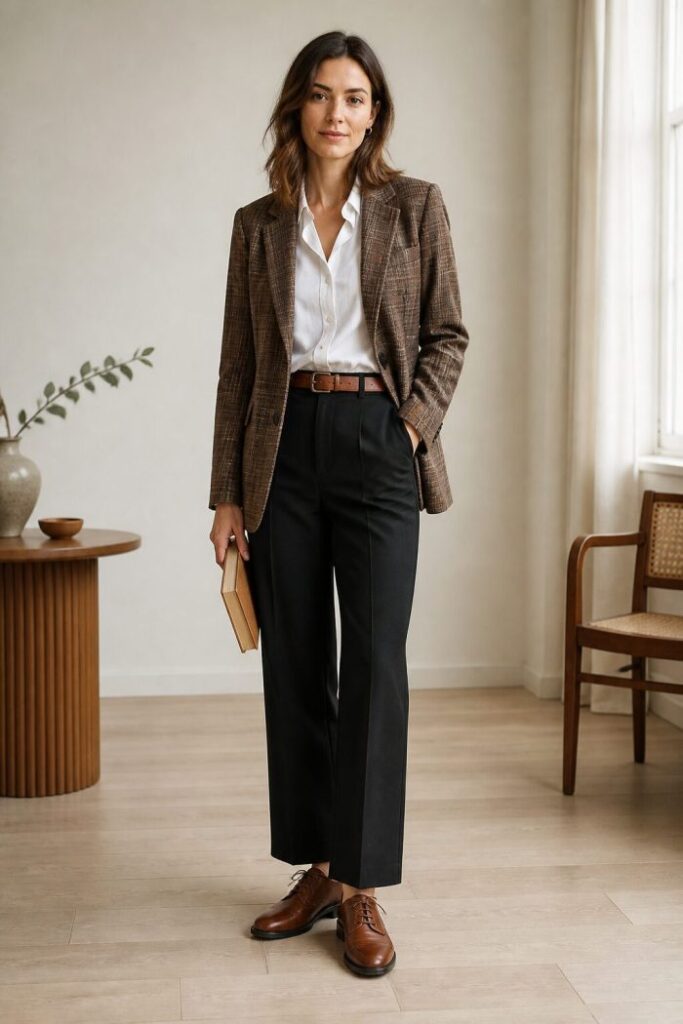
Oxford shoes ground the poetcore aesthetic in something scholarly and practical — they reference the literary institution (the actual Oxford University) that the aesthetic borrows its intellectual romanticism from, and they work with both dresses and trousers in a way that ankle boots don’t always manage.
Tan, cognac, or a slightly worn black are the right colors. Block-heeled versions are significantly more wearable for all-day wear than flat-soled versions, which can feel too utilitarian, or thin-heeled versions, which tip too far toward formal.
Why it works for poetcore: The oxford is the shoe of the scholar and the reader — it implies someone who walks to libraries and bookshops and doesn’t worry about whether their footwear is fashionable.
Styling tip: Deliberately choose a slightly worn-looking version over a polished one — the worn quality reads as authentically poetcore in a way that pristine shoes don’t. A scuff or two is an aesthetic feature.
Where to find it: Budget shoe retailers like ASOS and Target. Thrift stores for genuine leather versions at significantly reduced prices. Look specifically in the women’s dress shoes section.
12. Crocheted or Lace Collar Overlay
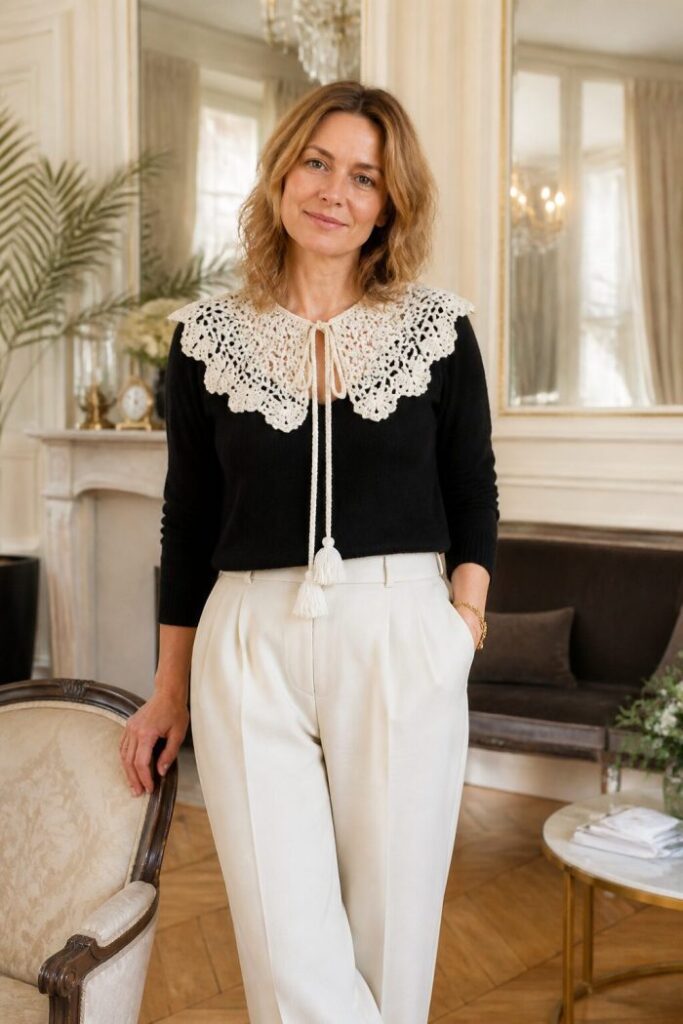
A detachable crocheted or lace collar is the highest-impact, lowest-cost poetcore accessory — a piece that costs a few dollars at a thrift store or vintage fair and immediately transforms whatever it’s worn over. A plain dark sweater becomes something from a Victorian novel; a simple blouse becomes a literary heroine’s finishing touch.
This is specifically the kind of accessory that looks better secondhand than new — a crisp, bright-white lace collar reads as costume, while a slightly aged, cream or off-white crocheted collar reads as genuinely romantic and historical.
Why it works for poetcore: The detachable collar references the Dickensian and Victorian-era garment construction where collars were separate, laundered individually, and considered a specific element of an outfit rather than part of a garment.
Styling tip: Wear over a plain dark turtleneck specifically — the contrast between the dark knit and the delicate cream lace is one of the most complete single-accessory poetcore looks available.
Where to find it: Thrift stores, vintage fairs, and estate sales. Etsy sellers specializing in vintage textiles. Crocheted collars specifically tend to be abundant and extremely underpriced at thrift stores.
13. Ankle Boots in Cognac or Dark Brown
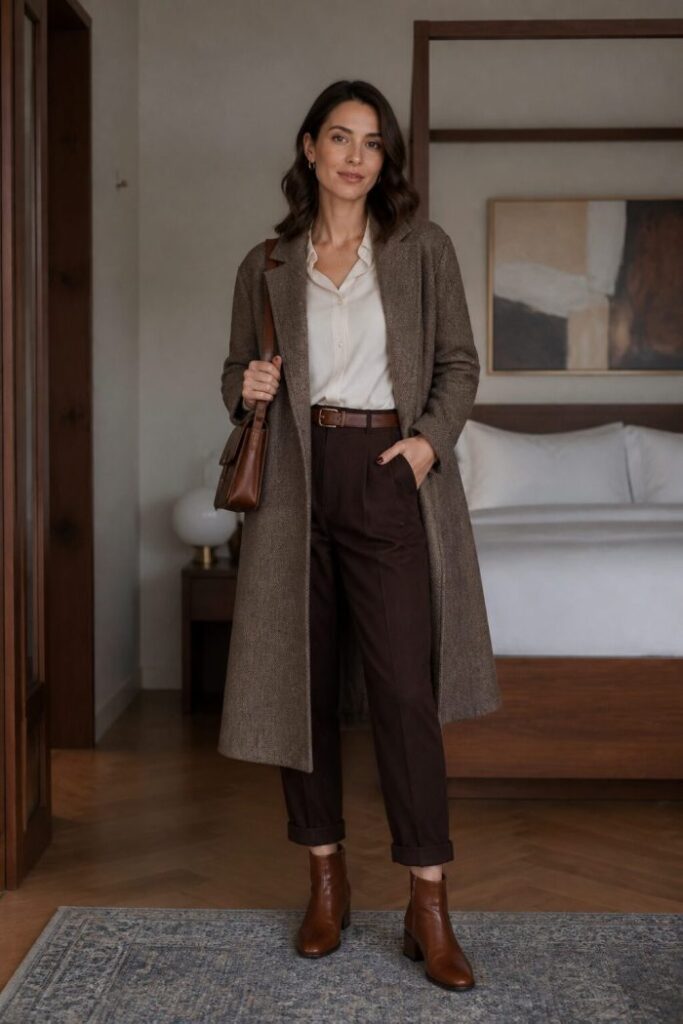
A versatile pair of ankle boots in warm brown or cognac are the most worn piece in this entire capsule — they go under midi skirts with ribbed tights in autumn, under trousers in winter, and with prairie dresses into cooler spring weather. The ankle boot is the poetcore shoe that requires no styling consideration because it’s always correct.
Look for a modest block heel rather than a stiletto or a flat — the block heel adds enough height to be flattering under longer skirts without the impracticality of a thin heel on cobblestone or uneven pavement (relevant for anyone who spends meaningful time walking between bookshops and coffee shops).
Why it works for poetcore: The warm brown leather boot is the walking boot of someone who moves through the world actively — it implies outdoor exploration as much as indoor reading, which is the balance the aesthetic strikes.
Styling tip: Wear with ribbed tights under a midi skirt rather than bare legs or sheer tights — the ribbed texture of the tights creates visual continuity with the ribbed turtleneck and the textured skirt fabrics in the capsule.
Where to find it: Budget retailers including ASOS, Target, and Amazon. Thrift stores for genuine leather versions at dramatically reduced prices.
14. Ribbed Knit Midi Skirt in Cream or Warm Grey
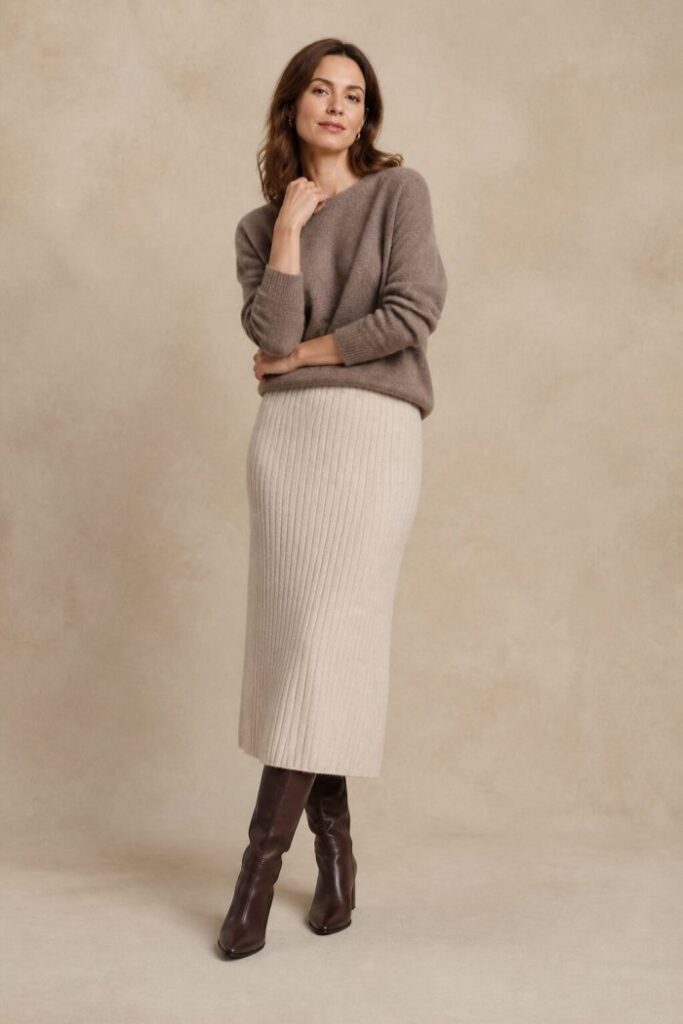
A ribbed or textured knit midi skirt brings a different kind of warmth and softness to the capsule than woven fabrics do — it’s cozy rather than structured, fluid rather than stiff, and has a tactile quality that photographs well and feels comfortable to wear for extended periods. Cream and warm grey are the most versatile poetcore neutrals in this format.
The ribbed texture specifically creates visual continuity with the ribbed turtleneck in the capsule — wearing both together (turtleneck tucked into ribbed skirt) creates a tonal, textural outfit that reads as deliberately considered.
Why it works for poetcore: The ribbed knit midi occupies the space between a casual and a dressed-up piece — it’s too considered to be purely casual but comfortable enough to suggest the wearer prioritizes the experience of being in their clothes over the appearance of their clothes.
Styling tip: Tuck in a loose blouse, add the leather belt, and layer the velvet blazer over everything — this combination produces a fully resolved poetcore outfit that requires no additional thought or accessories.
Where to find it: H&M, Zara, and ASOS all offer ribbed midi skirts regularly at accessible price points. This is one of the pieces in the capsule where budget new is often better than thrifted, simply because quality and fit are easier to control.
15. Worn-In Denim Jacket in Faded or Dark Wash
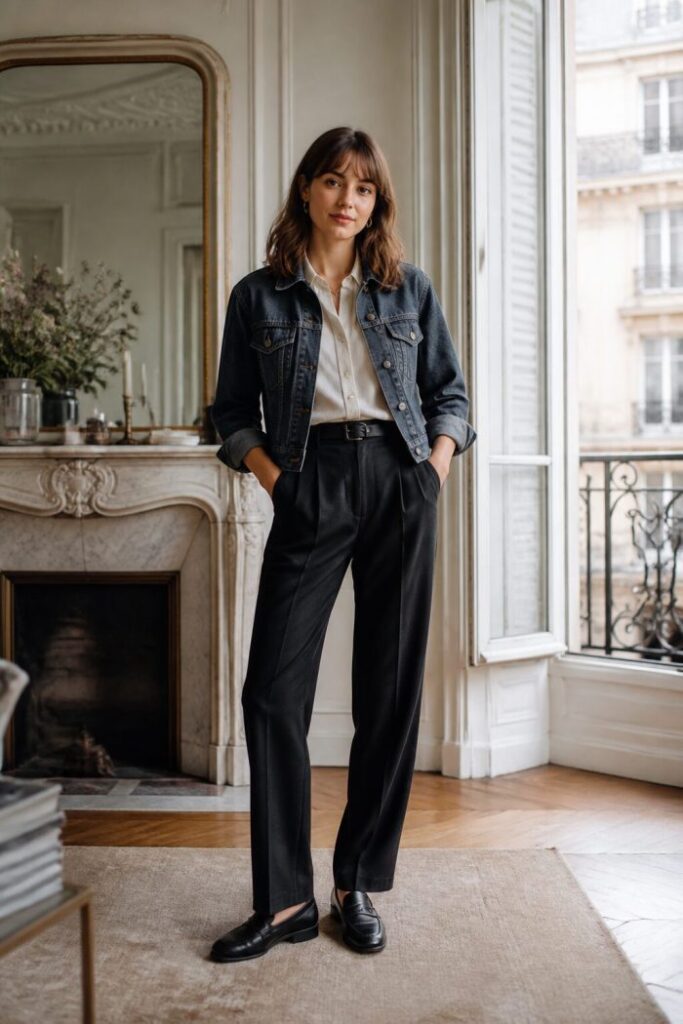
A thrifted denim jacket — particularly one that’s already softened from many years of washing, with slight fading at the seams and a comfortable lived-in quality to the fabric — functions as the casual grounding layer in the poetcore capsule. It takes more romantic pieces and brings them into everyday wear without disrupting the aesthetic.
Dark indigo reads as more scholarly and deliberate; pale faded denim reads as more bohemian and literary-wanderer. Both work within the aesthetic — the choice depends on which register of poetcore you’re building toward.
Why it works for poetcore: The denim jacket occupies a specific space in the aesthetic as the garment that says the wearer has priorities beyond their appearance — the kind of person who grabs a practical layer before heading to the library rather than planning an outfit.
Styling tip: Wear over a floral prairie dress with ankle boots and a stack of thin rings — the combination of the denim jacket’s casualness against the dress’s romance is one of the most effortlessly poetcore looks in the capsule.
Where to find it: Thrift stores specifically — a thrifted denim jacket with genuine aging is far superior to a new version with artificial distressing. This is one of the most reliable high-quality thrift finds in this entire capsule.
16. Printed Silk or Satin Scarf
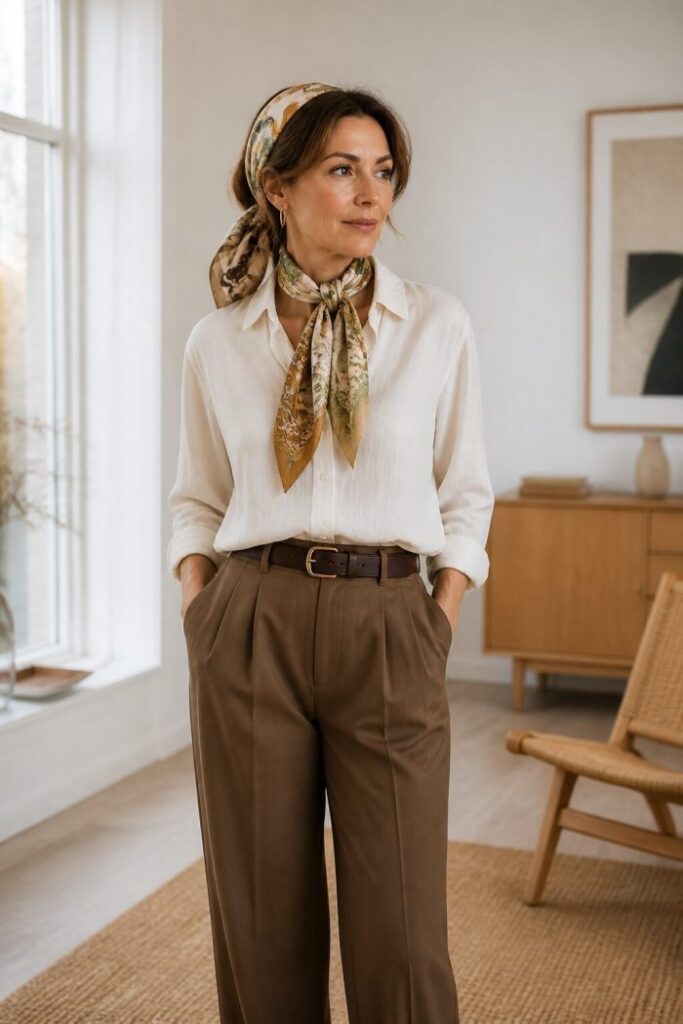
A vintage-style printed scarf — in botanical, paisley, or painterly patterns — is the poetcore accessory with the most styling versatility in the entire capsule. It works worn loosely in the hair, tied at the neck, knotted around the handle of a tote bag, or folded and worn as a neckerchief. Each of these placements creates a different aesthetic register from the same piece.
The pattern and color matter more than the placement — look for prints that reference the natural world (botanicals, florals, birds) or that feel like something from a traveling artist’s collection (painterly, slightly abstract, in aged or muted tones).
Why it works for poetcore: The printed scarf references the accessories of Parisian literary culture — the piece worn by someone who has been somewhere interesting and brought it back with them.
Styling tip: Tie loosely in a knot at the nape of your neck over a simple blouse rather than wearing it precisely tied — the loose knot reads as effortless and romantic rather than deliberate and styled.
Where to find it: Thrift stores almost always have abundant supplies of printed scarves, particularly from the 1960s through 1980s, in exactly the right patterns and colors. Estate sales for genuine silk versions.
17. Thick-Framed Vintage-Style Reading Glasses

Whether prescription or non-prescription, a pair of thick tortoiseshell, dark horn-rimmed, or warm-framed glasses is the single most immediately effective poetcore accessory — the visual shorthand for the literary, intellectual, slightly bookish quality that the aesthetic builds its identity around.
Round or oval frames specifically reference the eyewear of the aesthetic’s historical inspirations most directly. Rectangular frames can work but have a more contemporary reading that slightly disrupts the period quality.
Why it works for poetcore: Glasses carry an entire narrative in a single accessory — they imply a reader, a scholar, someone who prioritizes seeing clearly over looking fashionable, which is precisely the poetcore persona.
Styling tip: Allow them to sit slightly low on your nose rather than perched at the bridge — the low placement creates an intellectually engaged quality (reading, peering over the frames at something) that reads as genuinely bookish rather than simply accessorized.
Where to find it: Warby Parker for affordable prescription options with period-appropriate frames. Amazon and ASOS for non-prescription fashion glasses at very low price points. Thrift stores occasionally for genuine vintage frames.
18. Wide-Brimmed Felt Hat in Warm Brown or Black
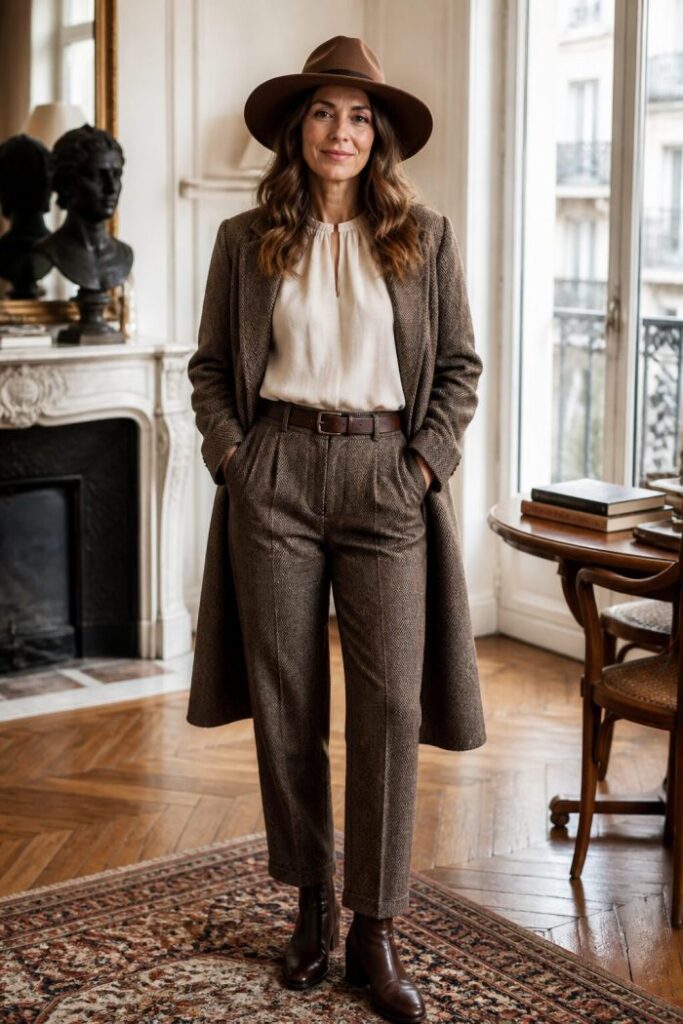
A wide-brimmed felt hat in rich brown, warm black, or cognac adds a wandering-writer, romantic-outdoors quality to poetcore looks that no other accessory achieves. It references the poet on the moor, the writer walking between villages — someone who is outside and thinking, the hat slightly buffeted by wind.
Quality felt hats age beautifully — a hat that shows a little character, perhaps a slight shaping variation or a worn band, looks more authentically poetcore than a pristine new version.
Why it works for poetcore: The wide-brimmed hat carries specific cultural references within the aesthetic — it’s the hat of Sylvia Plath, of the Brontës, of every literary heroine who was impractically romantic about the outdoors.
Styling tip: Tilt it very slightly to one side over loose hair rather than wearing it perfectly centered and level — the slight tilt reads as artfully undone rather than precisely placed, which is the correct register.
Where to find it: Thrift stores for quality vintage felt hats that already have character. ASOS and H&M for budget new versions. Estate sales for the best-quality vintage examples.
19. Stack of Thin Gold and Brass Vintage Rings
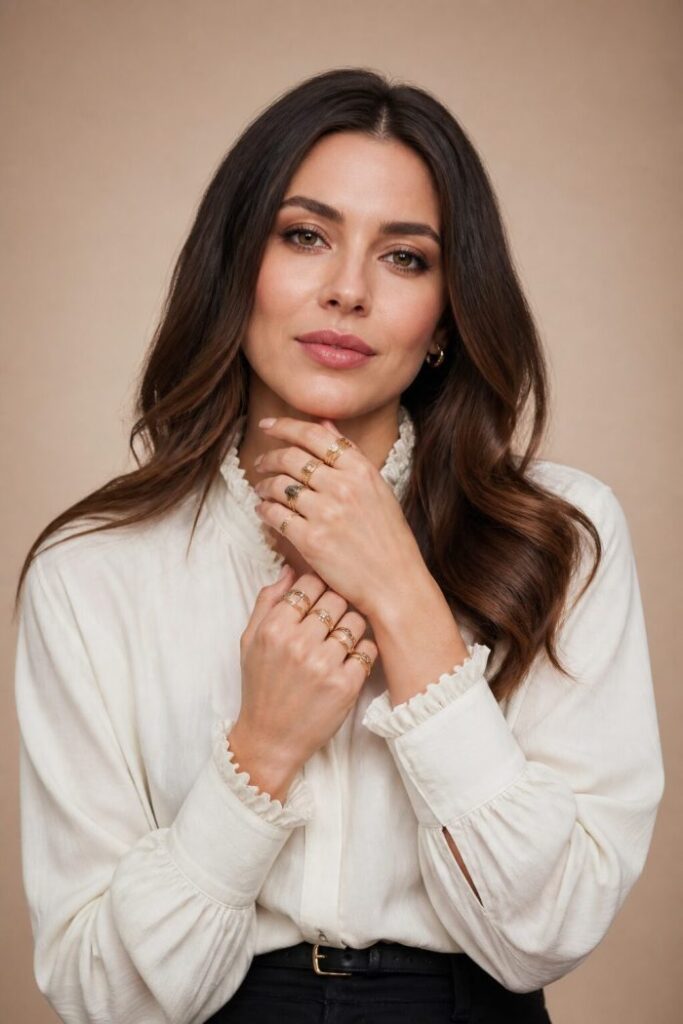
A collection of delicate rings — signet styles, thin bands, small stone-set pieces in antique settings — worn stacked across multiple fingers is one of the most recognizable poetcore jewelry signatures. The key to the poetcore ring stack is that it looks accumulated over time rather than assembled at once — different metals, different styles, different eras all coexisting.
This is specifically the poetcore aesthetic’s approach to jewelry: pieces that look like they carry stories rather than pieces that were chosen from a coordinated collection.
Why it works for poetcore: Rings are intimate jewelry — worn on the body’s most active extremities, touched by everything, carrying the history of their previous wearers. This intimacy is central to the aesthetic’s relationship with objects and their narratives.
Styling tip: Mix metals deliberately — a silver signet ring among mostly brass and gold bands adds to the curated-over-time quality that makes a ring stack look collected rather than coordinated.
Where to find it: Thrift stores and estate sales specifically — these are the best sources for rings that genuinely carry history. Poshmark and eBay for specific vintage styles. Budget jewelry brands like ASOS and Mejuri for affordable new pieces that fit the aesthetic.
20. Canvas or Worn Leather Tote Bag
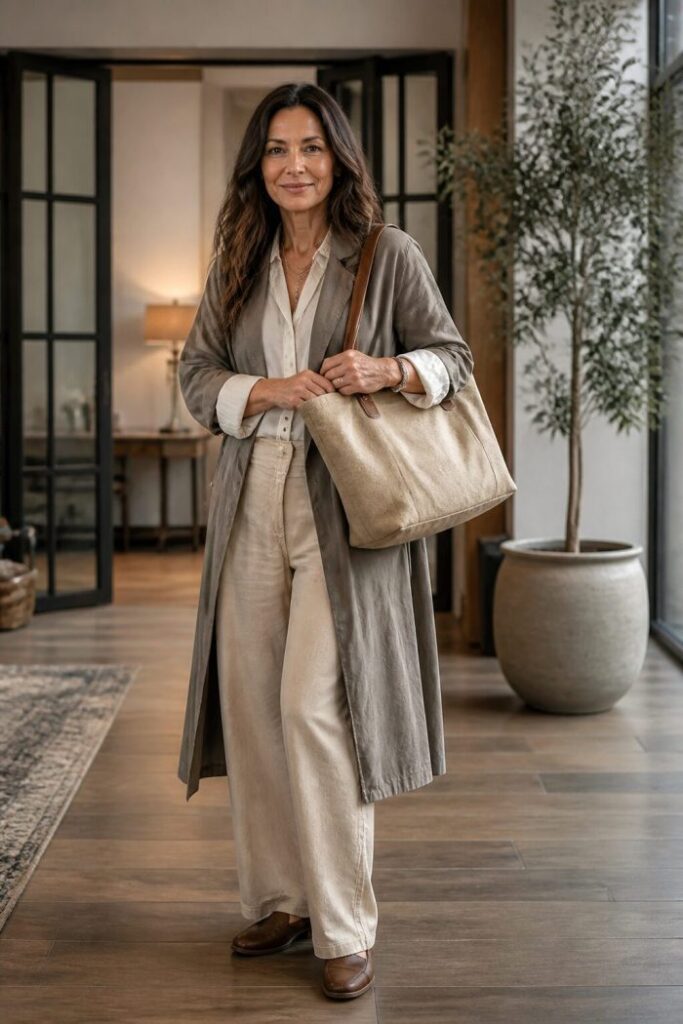
A large canvas tote or a slightly worn leather tote — with visible character rather than pristine condition — is the poetcore carry-all: practical enough for books, notebooks, a water bottle, and a cardigan, and beautiful enough to function as a visible part of the overall look.
Natural canvas, cognac leather, and faded tan are all within the correct color range. The condition matters — a perfectly pristine leather tote reads as too deliberate, while a tote that shows evidence of regular use reads as the bag of someone who actually reads in cafes and carries actual books.
Why it works for poetcore: The tote bag is implicitly a reading bag — it’s large enough for serious books, practical enough for a regular reader, and casual enough to suggest someone who is more concerned with what they’re carrying than how they’re carrying it.
Styling tip: Let the corner of a paperback or a slim notebook peek visibly from the top of the bag — it’s an effortless detail that requires no effort but adds significant poetcore credibility to the overall look.
Where to find it: Canvas totes are available everywhere at low price points. Leather totes specifically are excellent thrift store finds — quality leather tote bags are dramatically underpriced secondhand.
21. Ribbed Wool or Cashmere-Blend Beanie in Warm Neutral
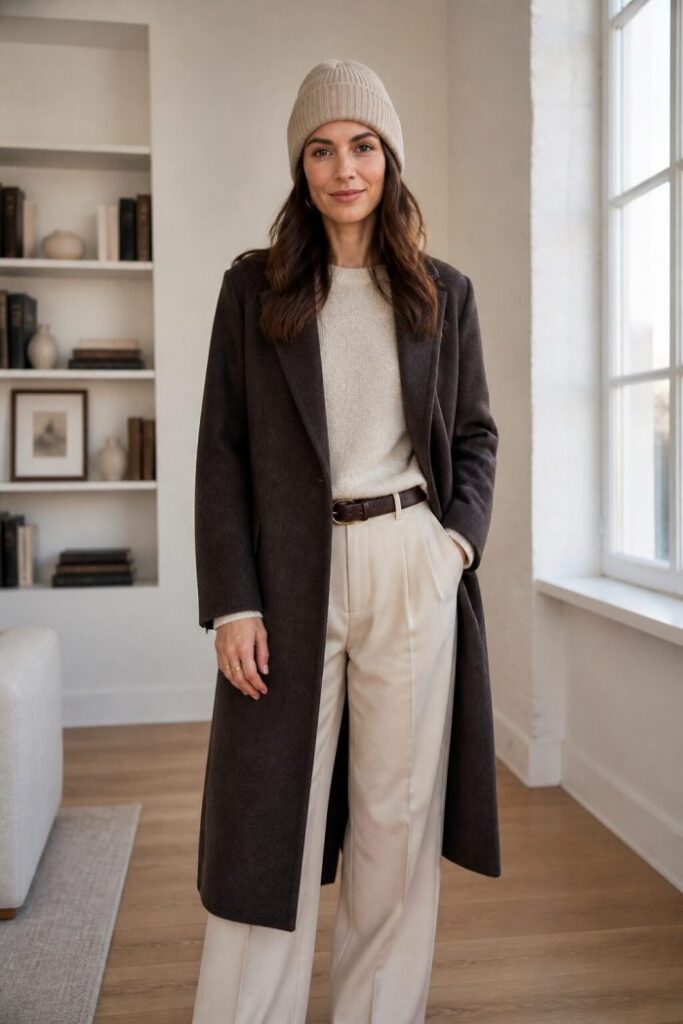
A simple ribbed beanie in oatmeal, camel, or mushroom grey is the practical cold-weather poetcore hat — the piece that keeps the cozy, scholar-in-autumn aesthetic intact when the temperature genuinely demands a hat rather than simply suggesting one aesthetically.
The beanie creates continuity with the other ribbed and knitted textures in the capsule — turtleneck, midi skirt, cardigan — which means it integrates naturally rather than appearing as a separately considered seasonal addition.
Why it works for poetcore: The beanie is anti-vanity headwear — someone wearing a beanie is prioritizing warmth over appearance, which is precisely the kind of pragmatic-romantic attitude the aesthetic values in its persona.
Styling tip: Pull it down slightly over the ears and leave some hair loose around your face rather than tucking everything underneath — the loose hair maintains the romantically soft quality that a completely tucked version loses.
Where to find it: Uniqlo and Target both offer ribbed beanies in exactly the right colors at very accessible price points. This is one of the capsule pieces where budget new is perfectly adequate and thrifting adds no meaningful advantage.
22. Aged Parchment-Toned Linen Midi Dress
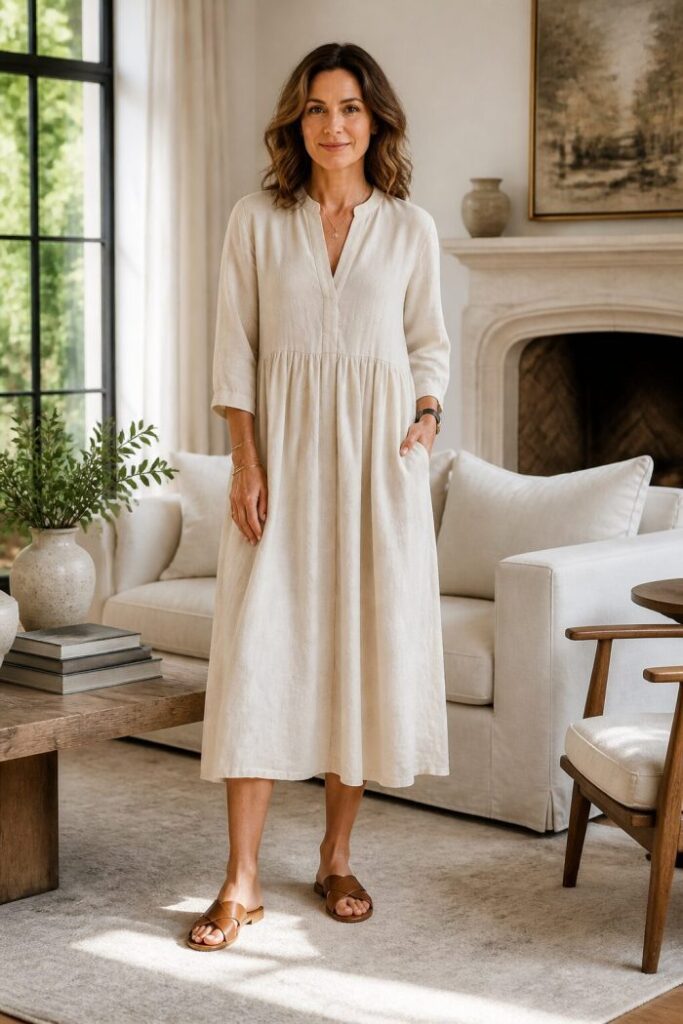
The parchment or aged ivory linen midi dress is the capsule’s showpiece — the single piece that most fully captures the poetcore aesthetic in isolation. Its simplicity is its entire point: a loose, flowy silhouette in aged natural fabric with no embellishment, no graphic, no statement detail beyond the quality of the material and the softness of the drape.
It works across seasons because it’s a layering garment — in summer it stands alone, in autumn it goes under cardigans and over turtlenecks, in winter it functions as a dress-layer under longline coats. That versatility, combined with how perfectly it photographs in natural light, makes it arguably the highest-value single piece in the entire capsule.
Why it works for poetcore: A plain linen dress in aged tones references the simplicity and directness of someone who dresses for comfort and beauty simultaneously rather than for fashion or trend — the garment that looks like it was worn because it was the right thing to wear, not because anything else was considered.
Styling tip: Dark leather belt at the waist, chunky oatmeal cardigan over everything, cognac ankle boots — this three-piece combination with the linen dress produces the most complete, most immediately recognizable poetcore outfit in this entire capsule, and it takes about ninety seconds to put together.
Where to find it: Vintage linen dresses are abundant and dramatically undervalued at thrift stores — they’re frequently overlooked because they read as plain, but within this aesthetic their plainness is their value. This is the single best thrift find on the entire list.
Pin it to find it later!
Final Thoughts
The poetcore wardrobe rewards patience and an eye for the overlooked. Its most prized pieces are the ones that thrift stores undervalue and fast fashion ignores — genuine linen, real leather, vintage velvet, aged wool — because the aesthetic’s entire value system runs contrary to what most shopping culture prioritizes. Newness is not the goal. Coherence, texture, and the quality of narrative that objects carry with them are.
The 22 pieces in this capsule give you a complete, seasonally flexible, stylistically coherent wardrobe that can be assembled for genuinely very little money if you’re willing to thrift with patience and buy budget where thrifting isn’t practical. Every piece works with every other piece by design — the palette, the textures, and the silhouettes are all chosen to create a wardrobe where getting dressed is a pleasure rather than a problem.
Take one piece at a time, start with the foundation layers, and let the accessories and statement pieces accumulate naturally. That gradual, story-building quality is not just practical advice — it’s the entire point of dressing this way.
What exactly is the poetcore aesthetic?
Poetcore is a romantic, literary-inspired aesthetic that draws its visual language from 19th-century poetry and the physical culture that surrounded it — candlelit libraries, ink-stained writing desks, moody autumnal landscapes, pressed botanical collections, and the personal style of women who read and wrote seriously. In wardrobe terms, it translates to natural fabrics (linen, wool, velvet, corduroy), muted and earthy tones that reference aged paper, autumn leaves, and ink, romantic silhouettes with historical references (prairie dresses, pleated trousers, longline coats), and accessories that look accumulated over time rather than coordinated. The Brontë sisters, Sylvia Plath, and the imagined occupant of a cottage with overflowing bookshelves are the aesthetic’s primary reference points.
Where are the best places to thrift for poetcore pieces?
Local thrift stores like Goodwill and Salvation Army are the most accessible starting points and are specifically excellent for linen blouses, prairie dresses, velvet blazers, corduroy skirts, and wool coats — all of which were produced in high quality during the 1970s through 1990s and are currently unfashionable enough to be underpriced. Estate sales are the best source for vintage rings, silk scarves, leather belts, and felt hats. Online platforms — ThredUp, Poshmark, and Depop — allow you to search specifically by color, fabric, and era, which is particularly useful for building a cohesive palette across multiple pieces without visiting multiple physical locations.
Is poetcore actually wearable as a daily aesthetic for women in their late 20s through 40s?
Not only is it wearable — it’s one of the most practically sustainable aesthetics for this age range specifically. The emphasis on quality fabrics and natural materials means the clothes wear well and last. The muted color palette means everything in the capsule works together without extensive styling consideration. The layering approach accommodates changing temperatures throughout the day. The key to keeping it wearable rather than costume-like for women in this age range is balancing the more whimsical elements — the lace collar, the prairie dress — with grounding pieces like the pleated trousers, the velvet blazer, and quality footwear that signal sophistication and intentionality rather than whimsy for its own sake.
What is the poetcore color palette?
The palette is built around colors that evoke specific materials and environments from the aesthetic’s source world: aged paper (cream, oat, parchment, warm ivory), pressed botanicals (dusty rose, sage, faded terracotta), ink (warm black, midnight navy, deep plum), autumn landscapes (forest green, warm brown, cognac, camel, burgundy), and candlelight (amber, warm gold). The unifying quality of all these tones is desaturation — colors that look like they’ve faded slightly toward something softer and more aged rather than colors at their most vivid and saturated.
How do you build this capsule without spending significantly if starting from nothing?
Start with three pieces that immediately establish the aesthetic and work together: a chunky cardigan, a linen blouse, and one midi skirt — this foundation creates multiple complete outfits within itself. Then add pieces one at a time in order of versatility: the ribbed turtleneck (which layers with everything), the leather belt (which transforms silhouettes), the ankle boots (which complete every outfit from the bottom). The lace collar and the vintage rings can be acquired gradually at thrift stores for almost nothing and added to the capsule whenever encountered rather than sought specifically. The poetcore aesthetic specifically rewards a gradual, accumulated approach over a one-time shopping trip — the wardrobe should feel like it grew rather than was assembled.