21 Asymmetrical Bob Hairstyles for Black Women That Look Stunning
The asymmetrical bob has maintained its position as one of the most consistently flattering and versatile cuts for Black women — and the reasons are structural rather than trend-driven.
The angled line of an asymmetrical bob does facial work that a symmetrical cut can’t. It creates a diagonal visual element that draws the eye along the face rather than across it, which is specifically flattering for a wide range of face shapes. Combined with the way the cut interacts with melanin-rich skin — the contrast between a sharp, precise line and a rich complexion reads as genuinely striking in a way that softer, more diffuse cuts often don’t — it’s a style that looks intentional and powerful in an almost effortless way.
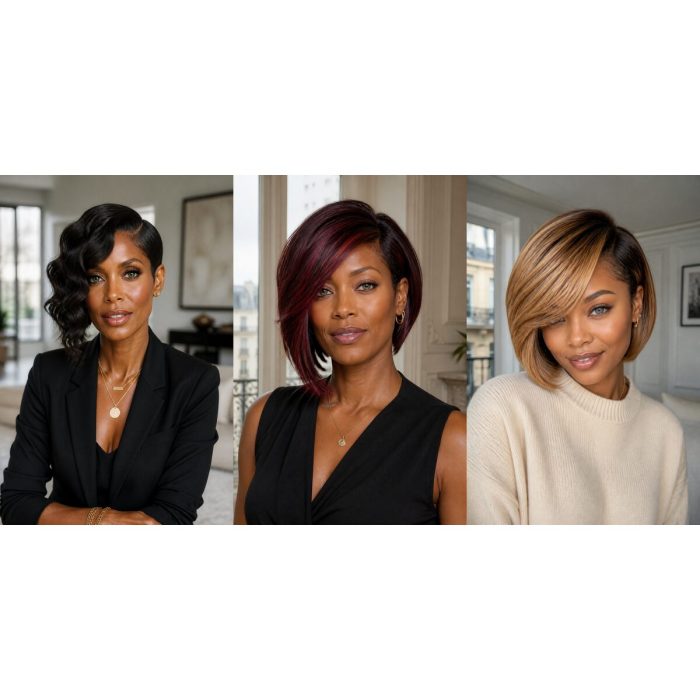
What makes the asymmetrical bob particularly well-suited to Black women is its adaptability across the full range of hair textures and finishing approaches that Black women work with. A silk-pressed bob, a natural coil-defined version, a protective style interpretation, a color-treated finish — each produces a distinctly different aesthetic within the same foundational cut structure. The asymmetry remains the constant; everything else can be customized to the individual.
The 21 styles below cover that full range — from the most classic, refined interpretations to bold color stories and natural texture celebrations. Every entry includes what specifically makes the style work, salon guidance for achieving it correctly, and styling tips grounded in the actual maintenance realities of Black hair care.
1. Sleek Silk-Pressed Asymmetrical Bob
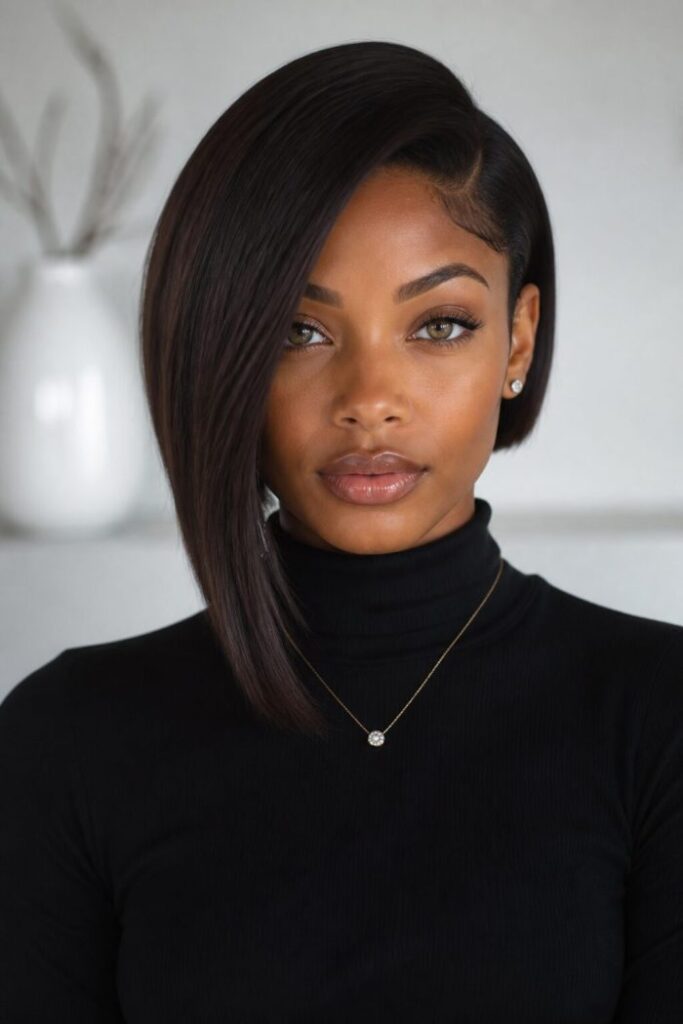
The silk-pressed asymmetrical bob is the most polished, high-shine version of this cut — and it’s specifically the precision of the silk press that makes the asymmetry most visible and most impactful. When every strand is smooth and reflective, the angled line of the bob reads with perfect clarity from every distance.
The dramatic angle — longer on one side sweeping past the chin, shorter on the other grazing just above the ear — creates a visual tension that a symmetrical bob simply can’t replicate. The longer side functions as a face-framing element while the shorter side reveals the ear and neck, creating two distinctly different visual registers within a single cut.
What to ask your stylist: Ask for the angle to be cut with scissors rather than a razor for the cleanest possible line — the silk-pressed finish reads its best against a sharp, precise edge. Request that the shorter side be cut to reveal but not expose the ear completely, which is the most universally flattering placement for the short side.
Styling tip: Apply a light serum — not a heavy oil — through the ends after pressing to enhance the mirror-shine quality without weighing the pressed strands down. A pea-sized amount worked between the palms and smoothed through the bottom third of the hair is sufficient.
Best for: Women who love a high-polish, refined aesthetic and want the asymmetrical bob at its most fashion-forward and precise. Works across professional and social contexts without adjustment.
2. Tapered Nape Asymmetrical Bob With Defined Curls
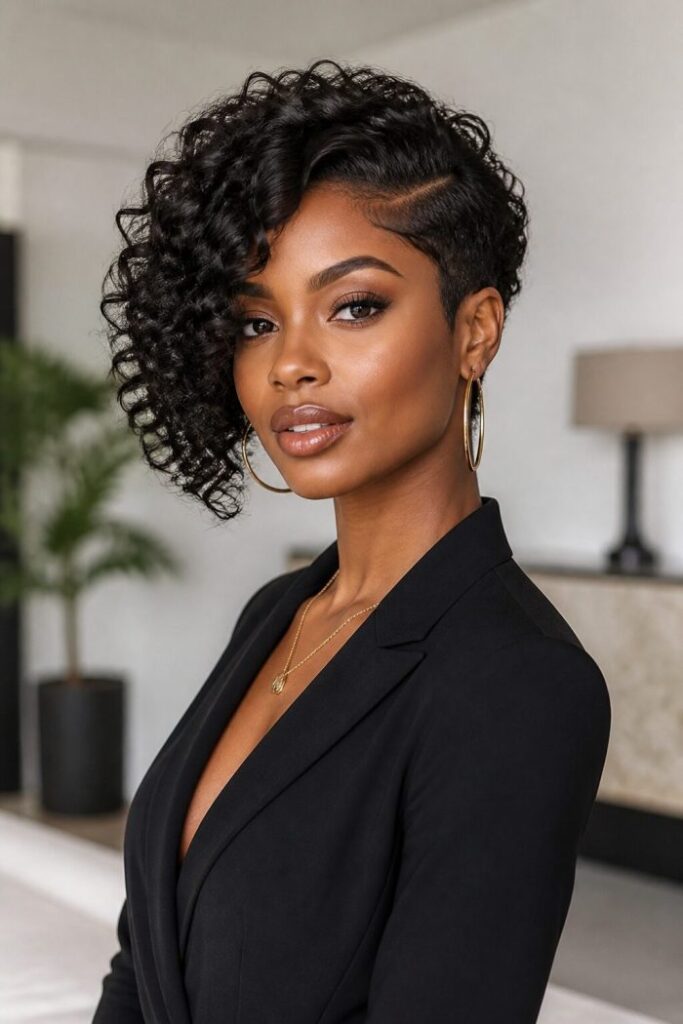
The combination of a clean, close taper at the nape with a longer, curl-defined front section on one side is one of the most structurally elegant natural hair asymmetrical bobs available — because the precision of the taper and the organic beauty of the defined curls create a deliberate contrast between structure and nature that reads as genuinely sophisticated.
This style works specifically well for 3C and 4A curl patterns because those patterns have enough definition and spring to hold a shaped, longer section without collapsing under their own weight. The taper at the nape and sides keeps the silhouette clean and modern, preventing the fuller section from looking unstructured.
What to ask your stylist: Ask for the taper to be gradual rather than dropping abruptly — a smooth blend from close-cut at the nape to fuller at the crown creates a more refined silhouette than a sharp contrast between the two lengths. Ask for the longer front section to be shaped specifically for your curl pattern rather than simply left long.
Styling tip: Apply curl-defining cream to the longer section in individual sections on wet hair, working from root to tip, before diffusing on low heat with the diffuser cupped upward rather than pressed flat against the hair. This preserves the curl formation rather than disrupting it during drying.
Best for: Women with 3C to 4A curl patterns who want a cut that celebrates their natural texture while having genuine structural precision. One of the most flattering options for natural hair in an asymmetrical format.
3. Bold Burgundy Asymmetrical Bob
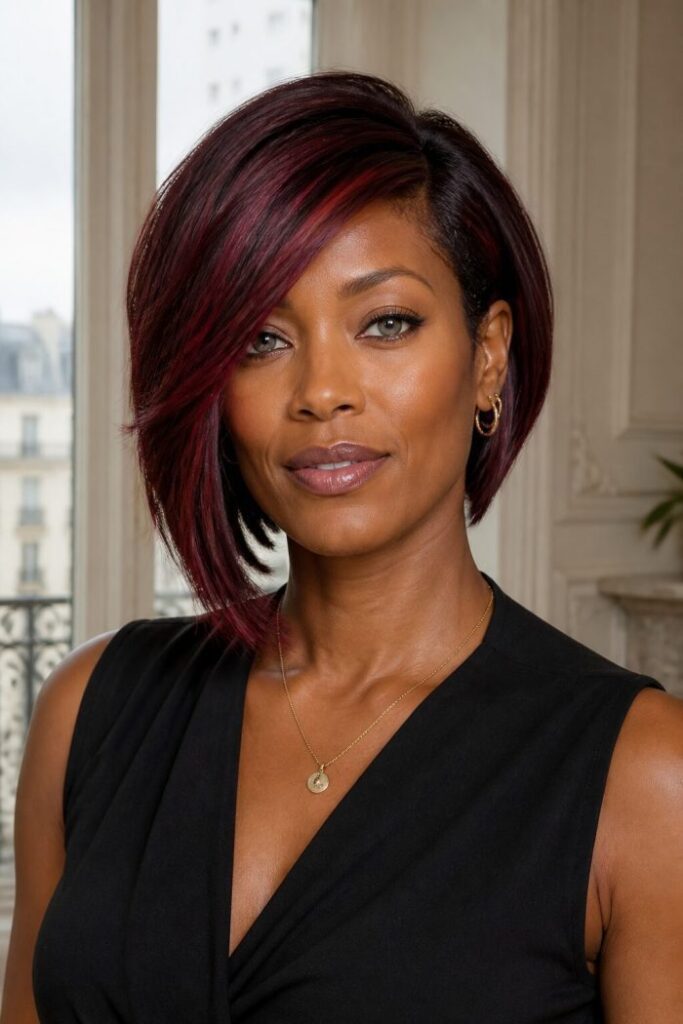
Color and the asymmetrical bob are natural partners because the angled line of the cut creates a canvas that shows color dimension differently at every angle — and a rich, deep burgundy specifically has the warmth and depth to look stunning against medium to deep skin tones in a way that cooler or lighter colors sometimes don’t achieve.
The burgundy tone adds a layer of drama to the cut’s angles without requiring the cut itself to be more extreme — the color does the statement-making work while the cut provides the structural framework. Worn sleek, the burgundy reads as refined and sophisticated; with soft waves, it reads as rich and romantic.
What to ask your colorist: Ask for the burgundy to be applied over a dark base rather than pre-lightening to a light tone first — on dark hair, a deep burgundy overlay produces a rich, multidimensional result that sits within the dark hair family and looks intentional. Pre-lightening to a very light base before applying burgundy tends to produce a brighter, more saturated result that reads differently against deep skin tones.
Styling tip: Use a color-depositing conditioner in a burgundy or red tone weekly — not a color-safe shampoo alone, which preserves but doesn’t refresh. The depositing conditioner adds a small amount of pigment back with each use, which significantly extends the vibrancy between salon appointments.
Best for: Women with medium to deep skin tones who want a color statement that feels sophisticated and warm rather than shocking or high-maintenance. One of the most universally flattering color choices for the asymmetrical bob on Black women.
4. Asymmetrical Bob With Finger Waves
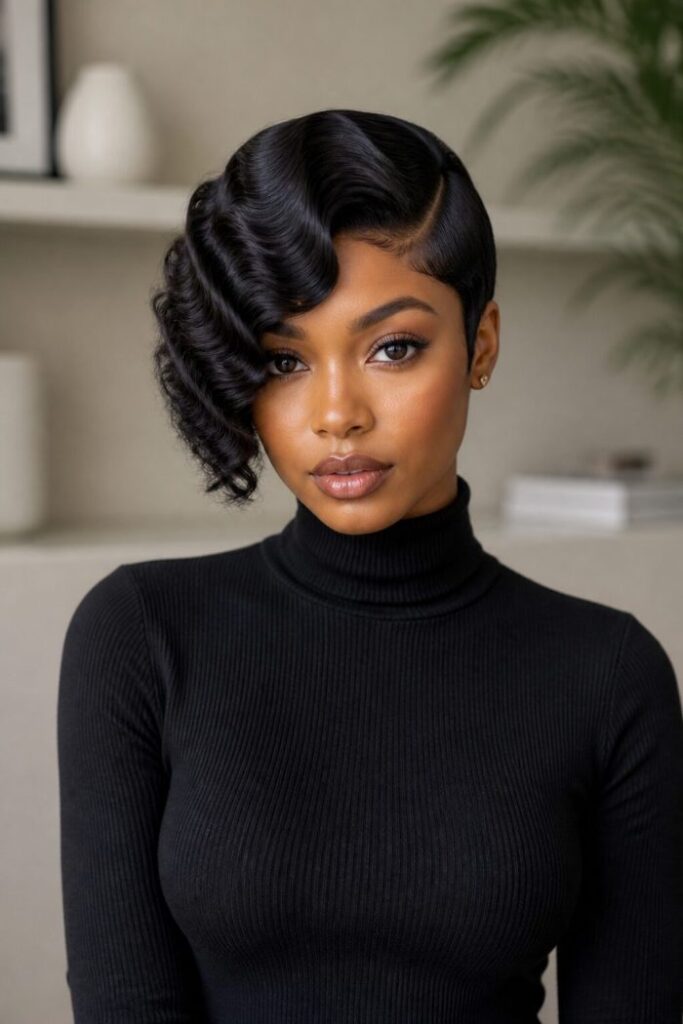
Finger waves on an asymmetrical bob are a direct reference to the rich tradition of classic Black hairstyling — the sculpted, precise wave pattern has been a signature of Black beauty culture for nearly a century — interpreted here in a thoroughly contemporary context. The waves are laid on the longer front section where they have the most visible surface area, while the shorter side stays smooth for contrast.
The sculptural quality of a well-executed finger wave set makes the asymmetrical bob feel almost architectural — the rigid, defined wave pattern against the precision of the angled cut reads as a deliberate work of hair artistry rather than simply a hairstyle.
What to ask your stylist: Finger waves require a specific skill set that not all stylists have at the same level — ask to see examples of previous finger wave work before the appointment rather than assuming the result will match your reference image. The wave should be uniform and precisely defined, not loose or casual.
Styling tip: Set finger waves with a strong-hold gel — not a medium or light formula, which won’t maintain the crisp definition through humidity or movement — and cover with a wave cap or silk scarf for a minimum of thirty minutes after setting, or overnight for the sharpest possible waves. Remove the cap gently without disturbing the set pattern.
Best for: Women who want a style that references classic Black beauty culture in a sophisticated, contemporary way. Also excellent for events and occasions where a more sculptural, deliberate aesthetic is appropriate.
5. Natural 4C Asymmetrical TWA Bob
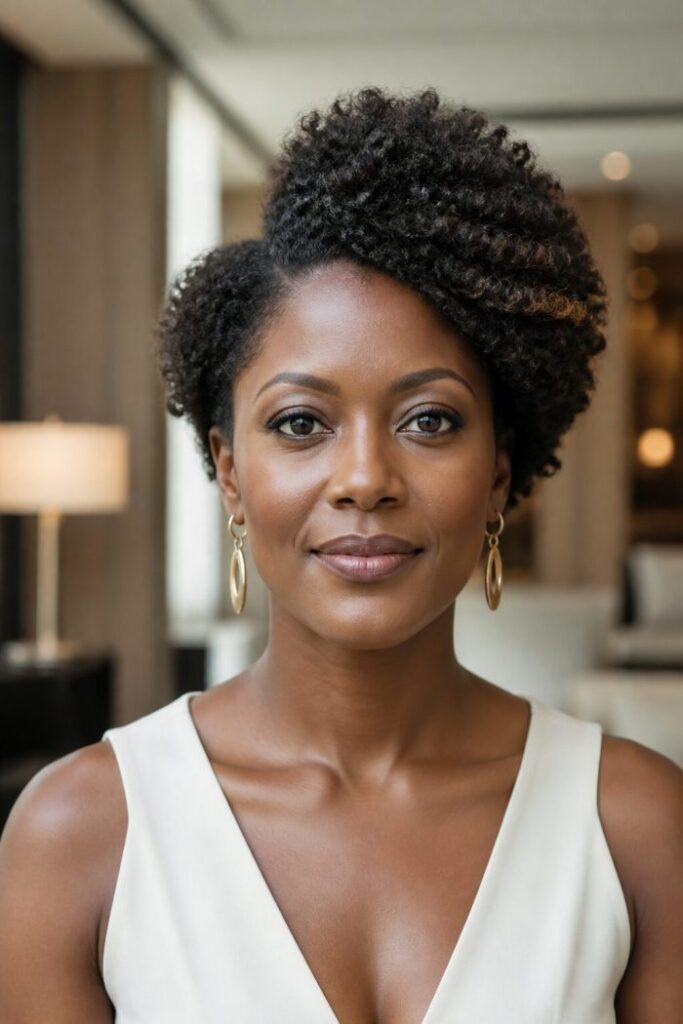
A teeny-weeny afro shaped into an asymmetrical silhouette is one of the most powerful expressions of natural hair on this list — because it requires no length, no product-dependent definition, and no texture alteration to be striking. The asymmetry comes entirely from the shape of the cut: one side shaped lower and closer to the head, the other allowed to bloom with the full, rounded volume that 4C hair naturally produces.
The result is a sculptural, modern cut that celebrates 4C texture in its most authentic form — tight, dense, and full — while the asymmetry gives it a precision and intentionality that distinguishes it from an unshaped TWA.
What to ask your stylist: Ask specifically for the shaping to be done on dry hair rather than wet — 4C hair experiences significant shrinkage when wet, and a shape cut on wet 4C hair will look dramatically different once dry. The silhouette should be shaped based on how the hair actually sits when fully dry and natural.
Styling tip: Moisturize daily using the LOC method — liquid (water or leave-in), oil (a lightweight natural oil like jojoba or grapeseed), cream (a light moisturizing cream) — applied in that order to the fuller side specifically. This maintains the moisture that keeps 4C shrinkage manageable and the shape looking intentional rather than compressed.
Best for: Women with 4C natural hair at any length who want a cut that works with the hair’s natural behavior rather than requiring heat or chemical alteration to achieve the shape. One of the most confidence-projecting styles on the list.
6. Honey Blonde Highlighted Asymmetrical Bob
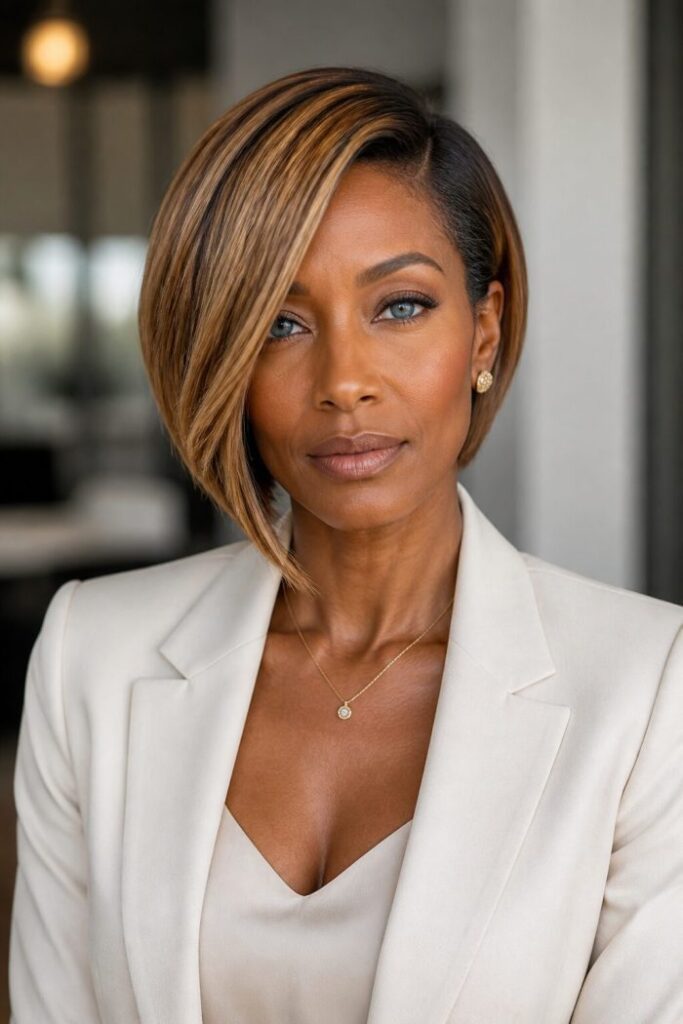
Honey blonde highlights on a dark asymmetrical bob create a multidimensional warmth that’s specifically flattering on Black women because the honey tone sits at a warmth level that complements rather than contrasts with melanin-rich skin — it adds luminosity without creating the stark, cold contrast that platinum or ash highlights can produce.
The asymmetrical bob’s angled line and layered surface ensure that every highlighted section catches light from a different angle as the hair moves — which is why highlighted bobs on Black women look so alive and dimensional compared to the same highlights on a single-length cut.
What to ask your colorist: Ask for a balayage technique rather than traditional foil highlights — balayage places the color in sections that mirror the hair’s natural movement, which creates a more organic, face-brightening result than systematically placed foils. Ask specifically for the warmest, brightest highlights to be concentrated in the face-framing front section.
Styling tip: A weekly glossing treatment at home — or a clear gloss at the salon every six to eight weeks — maintains both the honey tone’s warmth and the dark base’s richness simultaneously. Without periodic gloss maintenance, the highlighted sections fade toward a cooler, brassier tone while the base can look flat and dull.
Best for: Women who want a color upgrade that feels warm, luminous, and flattering without a dramatic departure from their natural base. Also a strong choice for anyone who wants visible color dimension without a significant maintenance commitment.
7. Razor-Cut Asymmetrical Bob With Textured Ends
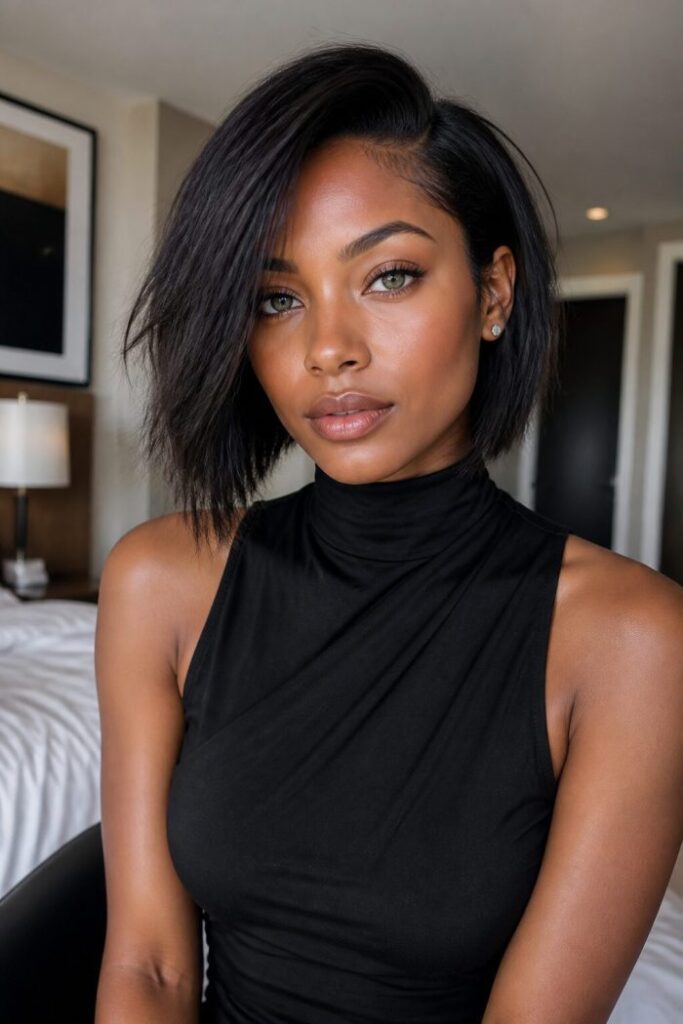
The razor cut gives the ends of an asymmetrical bob a feathered, wispy texture that moves differently from scissor-cut ends — each strand ends at a slightly different point, creating a diffused edge rather than a clean line, which allows the hair to move in separated pieces rather than as a single wall of hair.
On an asymmetrical bob specifically, the razor-cut texture adds a deliberately effortless quality to what is otherwise a very precise, intentional cut. The contrast between the sharp asymmetric angle and the soft, feathered ends creates an interesting visual tension that reads as both modern and relaxed simultaneously.
What to ask your stylist: Specify that you want a razor cut on the ends specifically rather than a razor cut throughout — razoring through the mid-lengths on fine or medium hair can create too much internal thinning that reduces the fullness you need for the bob to sit correctly. End-only razoring creates the textured quality without compromising the density.
Styling tip: Scrunch a lightweight mousse — not a cream, which can be too heavy for razored ends — into damp hair before air-drying or diffusing. The mousse encourages the natural texture of the feathered ends to emerge as intentional movement rather than frizz.
Best for: Women with fine to medium hair who want a bob with visible movement and a deliberately casual, lived-in quality without sacrificing the structural precision of the asymmetrical cut.
8. Jet Black Asymmetrical Bob With Undercut
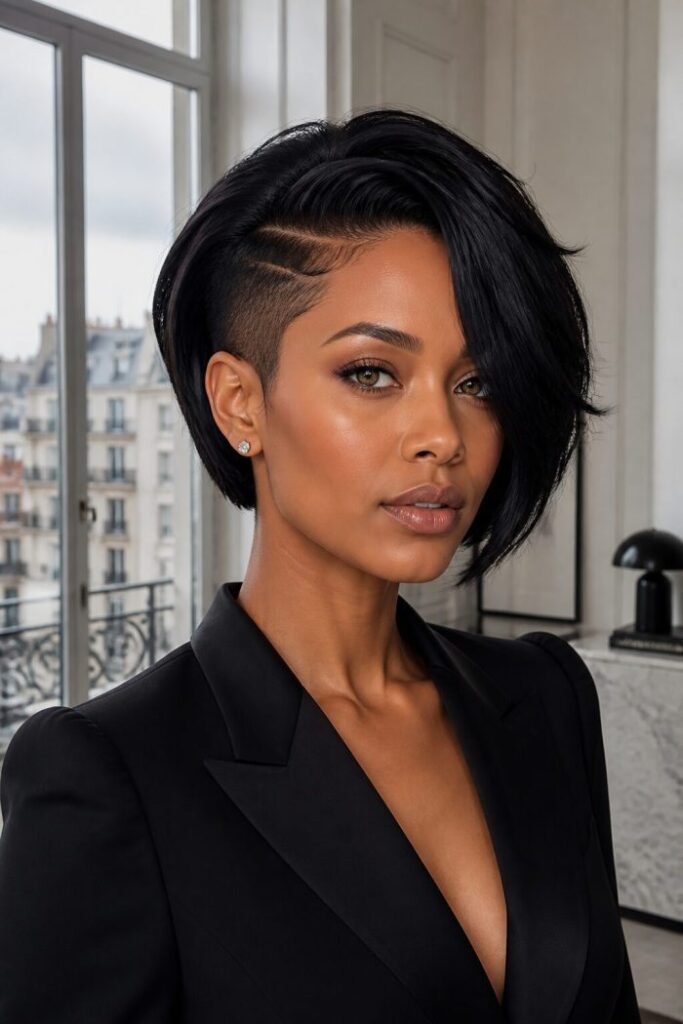
A hidden undercut beneath a glossy jet-black asymmetrical bob is the kind of detail that changes the entire character of a style when it’s revealed — the moment the hair is swept back, pulled up, or the shorter side tucked behind the ear, the close-cut or shaved undercut appears as an unexpected, confidently edgy element that wasn’t visible in the style’s default position.
The contrast between the deep glossy top layer and the closely cut undercut is specifically striking on Black hair because the color saturation of natural or dyed black hair makes the contrast between lengths most visible — there’s no ambiguity about where the undercut begins.
What to ask your stylist: Specify how visible you want the undercut to be in the default styling position — whether you want it completely hidden, slightly visible, or intentionally revealed is a decision that affects where the undercut line is placed. Discuss this specifically rather than leaving it to interpretation.
Styling tip: Use a boar-bristle brush and a light-hold finishing spray to smooth the top layer over the undercut for occasions when the clean, covered look is preferred. For occasions when you want to reveal the undercut, simply tuck the top layer behind the ear or pull it back — the contrast does the rest.
Best for: Women who want a style with visible edge and unexpected depth — the kind of cut that has a different character depending on how it’s worn, which adds versatility and longevity to the look.
9. Caramel Ombre Asymmetrical Bob
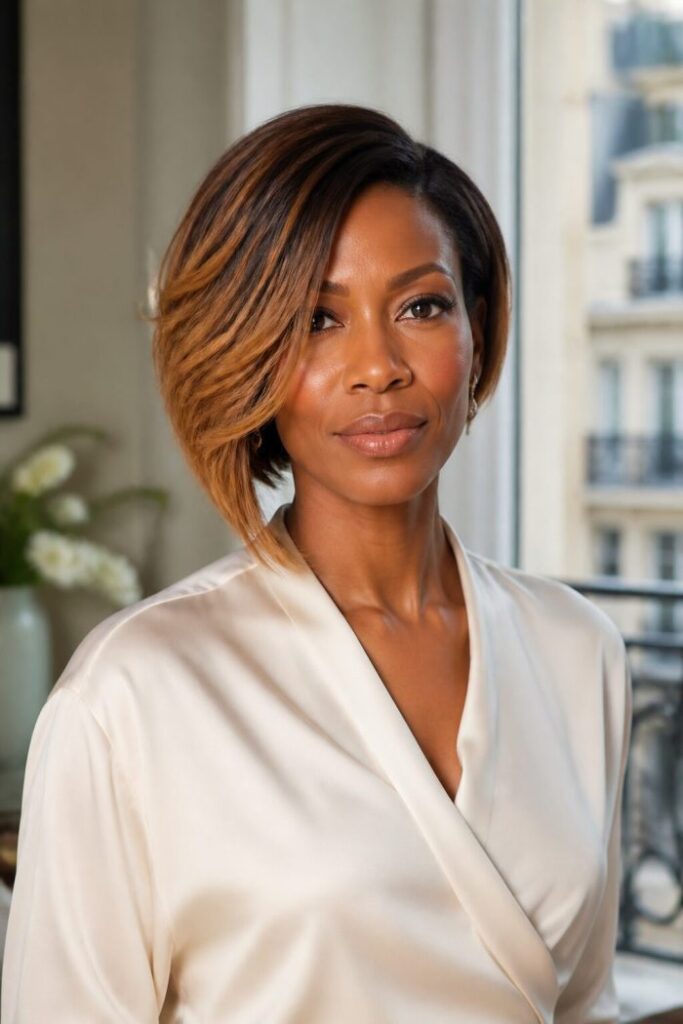
A dark root melting seamlessly into a warm caramel tone through the mid-lengths and ends gives the asymmetrical bob a gorgeous tonal journey that adds depth and dimension to the angled cut. The color transition draws the eye along the length of the longer section, which amplifies the visual impact of the asymmetry itself.
Caramel ombre is specifically flattering on medium to deep skin tones because the warm amber-brown quality of caramel sits in a complementary warmth relationship with those skin tones rather than creating the cool, stark contrast that lighter blonde ombres can produce.
What to ask your colorist: Ask for the root shadow to start at least two to three inches from the scalp and transition gradually — a transition that happens too quickly produces a harsh demarcation line rather than a melt. The caramel at the ends should be warm rather than golden or honey-toned, which reads as a different aesthetic.
Styling tip: Apply a heat protectant spray specifically to the lighter ends before any heat styling — the lightened caramel sections are more porous and therefore more susceptible to heat damage than the darker root sections. This step significantly extends the time before the ends start to look dry or frizzy.
Best for: Women with medium to deep skin tones who want a color story that feels luxurious and warm without requiring significant maintenance between appointments. The deep root means the grow-out is seamless.
10. Asymmetrical Bob With Side-Swept Bang
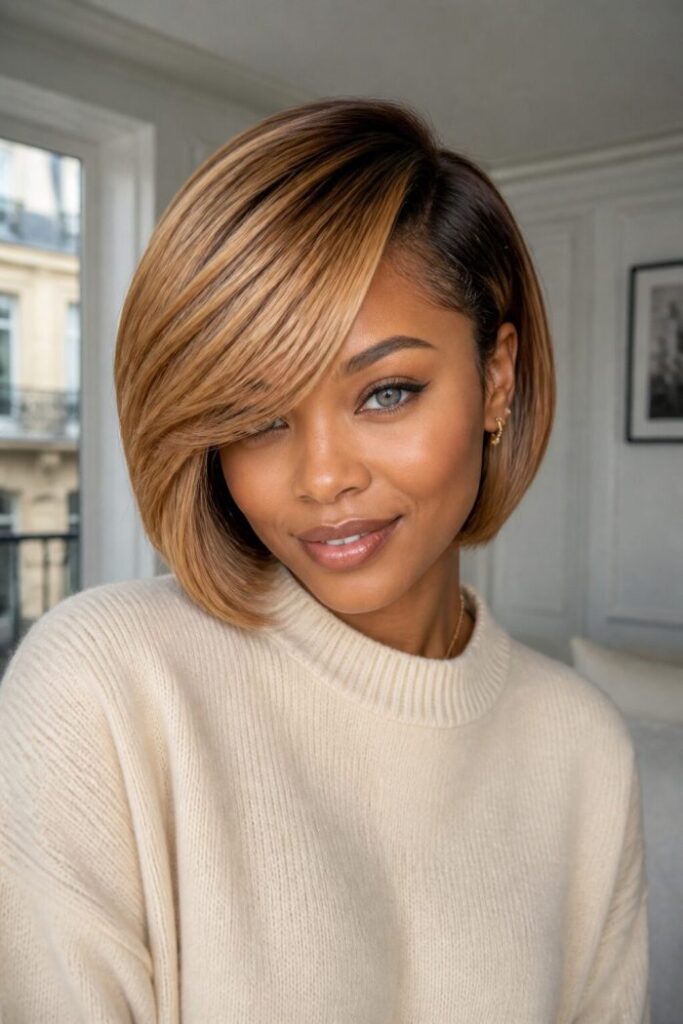
A heavy side-swept bang on one side of an asymmetrical bob creates a fully face-framing style where the bang and the longer bob section work together to create a cascading, directional movement across the face. The bang falls at an angle that mirrors the asymmetry of the cut below it, making every element of the style feel like part of a single cohesive design.
The side-swept bang also does specific facial work that a bangless version doesn’t — it adds a strong horizontal-to-diagonal visual element at the forehead that draws the eye toward the eyes and cheekbones, which is flattering for oval, heart, and square face shapes specifically.
What to ask your stylist: Ask for the bang to be cut long enough to sweep rather than stand up — a bang that’s cut too short can’t maintain its sweep and tends to lift or fall in the wrong direction. The sweep direction should match the natural growth direction of your hairline for the most effortless result.
Styling tip: Use a medium round brush to blow-dry the bang in its intended sweep direction while directing warm air in the same direction. Finish with a curl in the tip of the bang using a one-inch iron — the slight curl at the end of the sweep prevents the bang from looking flat or lifeless.
Best for: Oval, heart, and square face shapes specifically, women who want a fully face-framing style where every element contributes to the directional flow, and anyone who wants a more dramatic version of the asymmetrical bob.
11. Big Chop Asymmetrical Bob With Defined Coils
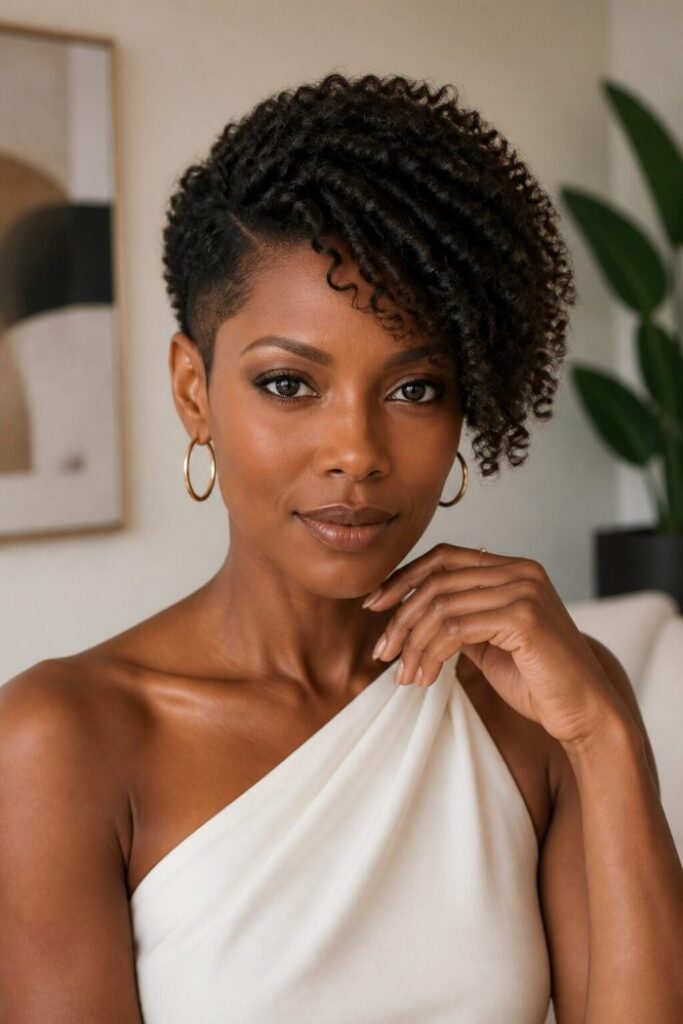
For women at the early stages of a natural hair journey after a big chop, shaping the new growth into an asymmetrical bob is a powerful way to embrace the transition with deliberate style rather than waiting out a length that feels uncertain. The asymmetry creates a shaped, intentional silhouette even at short lengths that read as a cut choice rather than simply unfinished growth.
Defined coils on the longer section add personality and texture that makes the cut look more finished and deliberate — the definition signals intention, which is the most important quality for any transition-length style.
What to ask your stylist: Ask for the shaping to account for how your specific curl pattern sits when fully dry and defined — at this stage of a natural hair journey, understanding the actual behavior of the hair rather than its wet length is what determines where the asymmetric line should fall.
Styling tip: Use a Denman brush with a curl cream on the longer section — working from root to tip in the direction of the natural curl pattern — to stretch and define coils with maximum bounce and minimum frizz. The brush helps each coil form uniformly rather than randomly.
Best for: Women in the early stages of a natural hair journey who want to embrace their texture with a styled, intentional cut rather than simply waiting for length.
12. Crimped Asymmetrical Bob
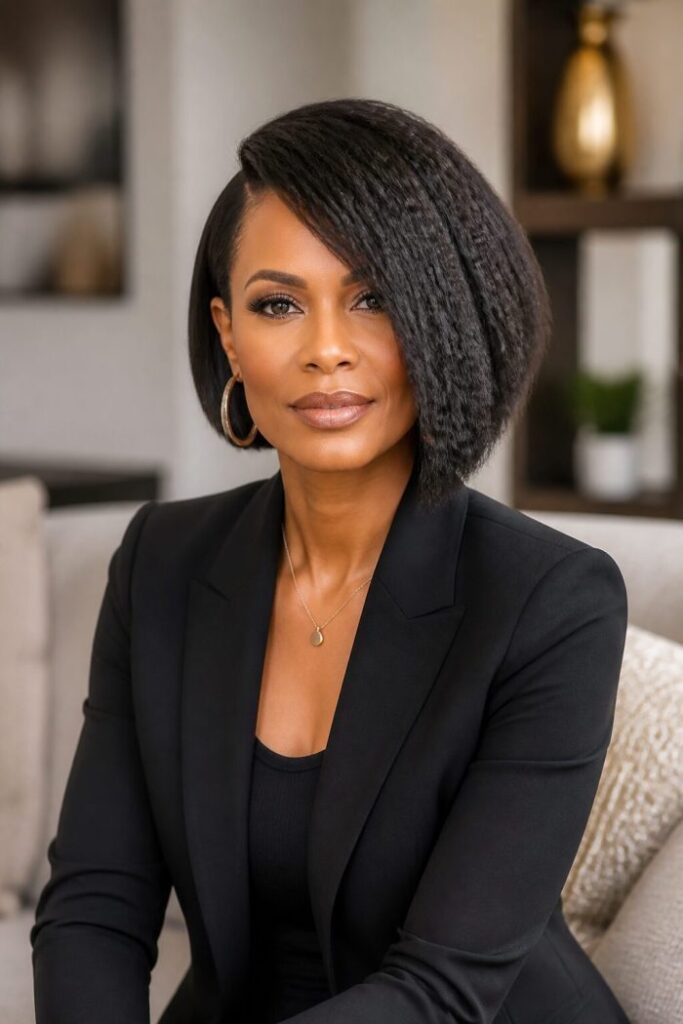
Crimping the longer section of an asymmetrical bob introduces a retro-forward texture that creates significant volume from minimal length — because the zigzag crimped pattern lifts and separates each section, making fine or medium hair look considerably fuller and more dramatic than smooth styling would.
The contrast between the crimped, high-texture longer section and the smooth shorter side is specifically what makes this look interesting — the two textures create a visual dynamic that neither section would have alone.
What to ask your stylist: The cut itself needs to accommodate crimped volume — ask your stylist to leave the longer section slightly longer than you might for a smooth style, since the crimping process will cause the hair to appear shorter due to the volume it creates.
Styling tip: Use a fine-tooth crimping iron in sections no wider than one inch for uniform, consistent crimps — wider sections produce looser, more irregular crimps that look less deliberate. Finish with a light-hold flexible spray rather than anything heavier, which would flatten the crimped texture.
Best for: Women who love experimenting with texture and retro aesthetic references, creative contexts where a distinctive, high-fashion styling choice is appropriate and valued.
13. Sleek Asymmetrical Bob With Statement Ear Cuff
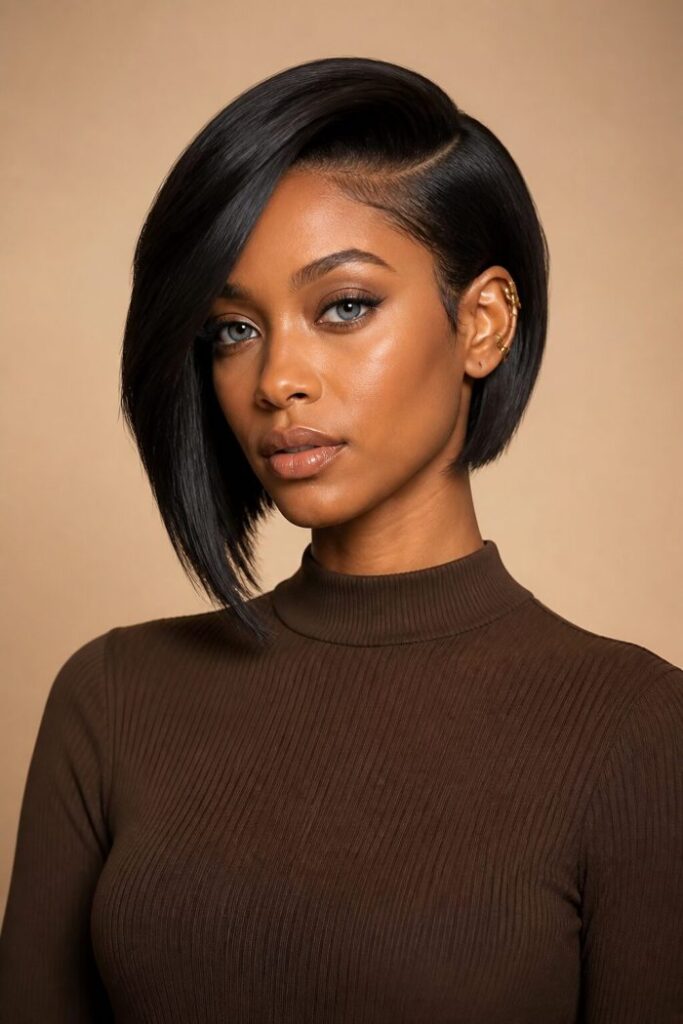
A super-sleek asymmetrical bob paired with a bold statement ear cuff on the shorter side is a styling combination that understands something important about how the asymmetrical bob works: the shorter side reveals the ear and neck, creating a natural canvas for jewelry that a longer style would cover.
The ear cuff functions as an intentional accessory that completes the look rather than competing with it — the bob creates the space for the jewelry, and the jewelry fills that space with additional visual interest.
What to ask your stylist: Ask specifically for the shorter side to be cut to the length that reveals the ear most attractively for your specific ear shape and placement. This is a detail worth discussing rather than leaving to the default.
Styling tip: Apply a smoothing serum through the hair before wrapping it at night to maintain the sleek quality between washes. Wrap the hair in the direction the style falls — not simply bundled under a bonnet — and secure with a silk scarf over the bonnet for the best preservation of the smooth finish.
Best for: Women who love jewelry and accessories as part of their overall style expression, and anyone who wants a look where the haircut and the accessories function as a deliberate, cohesive combination.
14. Wavy Asymmetrical Bob on Relaxed Hair
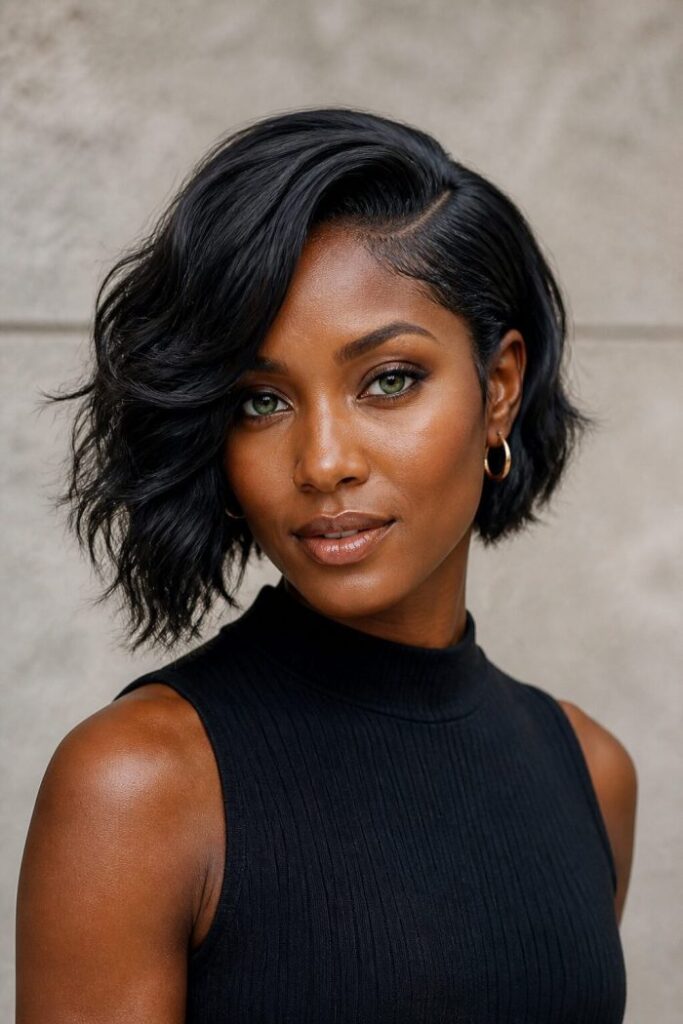
Soft waves on a relaxed asymmetrical bob create a style with a romantic, effortless quality — polished enough to read as intentional, relaxed enough not to feel stiff or overly done. The longer front section carries most of the wave movement while the shorter side is pinned or smoothed for contrast.
Relaxed hair specifically works beautifully in this context because the smoothed cuticle catches and reflects light more uniformly than natural hair, which makes soft waves look particularly luminous and healthy.
What to ask your stylist: Discuss the angle of the cut in the context of waves — waves add apparent length and volume, which can affect how the asymmetric proportion reads when styled versus when straight. Your stylist should account for this when determining where the shorter and longer sections fall.
Styling tip: Use a one-inch curling wand and wrap sections away from the face rather than toward it — this direction creates waves that open outward and frame the face rather than falling inward and covering it. Finger-comb the waves apart gently once cool rather than brushing, which would flatten the wave pattern.
Best for: Women with relaxed hair who want a bob that looks beautiful worn both smooth and with soft waves — versatility across two looks from the same cut.
15. Copper Red Asymmetrical Bob
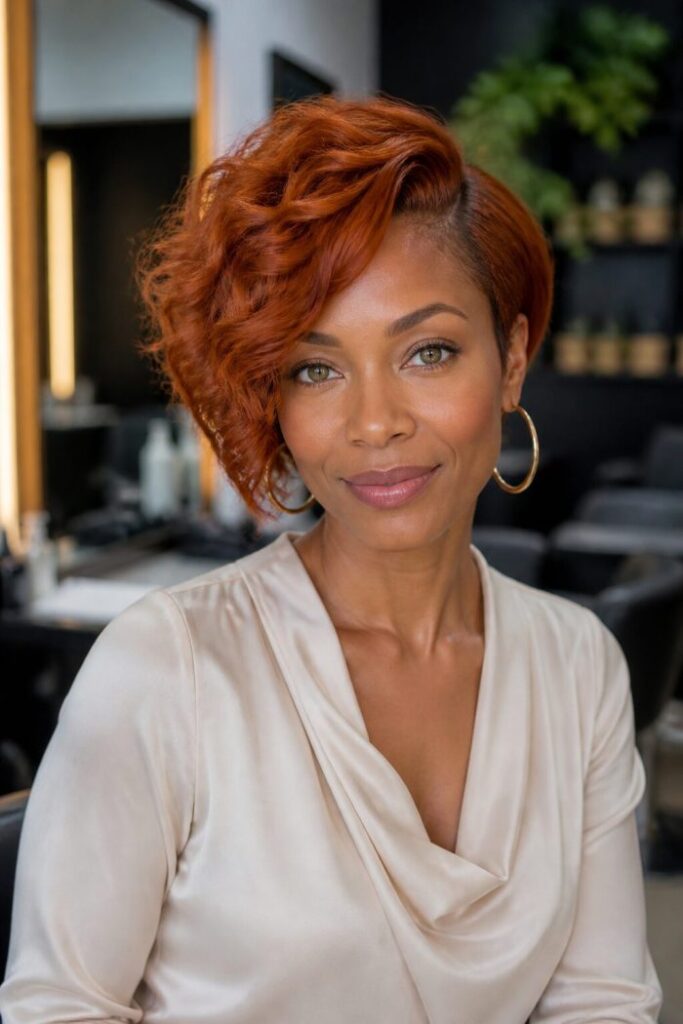
Copper red is one of the most striking color choices for an asymmetrical bob on Black women specifically because the warm, fiery quality of copper interacts with melanin-rich skin in a way that intensifies rather than contrasts. On medium to deep skin tones, copper reads as rich, warm, and powerful — a color that belongs rather than sits on top.
The asymmetric cut allows the copper color to catch light differently at every angle as the hair moves — the longer section shows the color’s depth, the shorter side shows its vibrancy, and the angled line between them creates a continuous color story that changes with every head turn.
What to ask your colorist: Copper red is among the most fade-prone tones in the warm color family, and a faded copper reads as a dull, indeterminate orange rather than a rich metallic red. Ask specifically about the maintenance schedule upfront — most copper applications need a color refresh every six to eight weeks to maintain their vibrancy.
Styling tip: Wash with cool water rather than hot — hot water opens the cuticle and allows pigment to escape significantly faster than cool water. Use a sulfate-free shampoo and a color-safe deep conditioner weekly rather than alternating between the two.
Best for: Women with medium to deep skin tones who want a genuinely bold, high-impact color statement and are willing to invest in the maintenance that copper’s vibrancy requires.
16. Protective Style Asymmetrical Bob
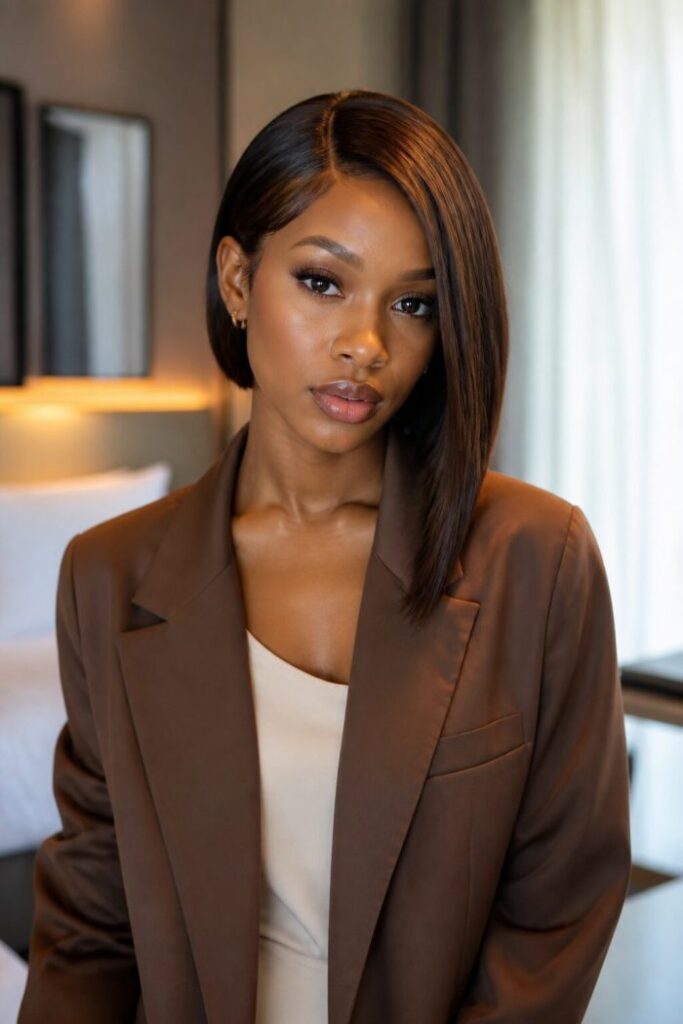
A sleek weave or lace front wig in an asymmetrical bob shape is one of the most practical and versatile entries on this list — it delivers the full visual impact of the cut while protecting natural hair underneath and eliminating the daily styling commitment of a cut made from one’s own hair.
The protective style interpretation is also uniquely flexible in a way that a cut isn’t: the length, the angle, and even the color can be changed with the next install rather than requiring growing out or recoloring.
What to ask your stylist or wig specialist: Ask for a lace front option specifically for the most seamless hairline at the front edge — the asymmetric bob’s front section is visible at close range in a way that the back isn’t, so the quality of the front hairline construction matters most for this cut.
Styling tip: Secure natural hair in flat twists or individual braids rather than a bun underneath — a flat base significantly reduces the bulge and raised appearance that can make a wig sit unnaturally high on the head. The flatter the natural hair is secured, the more seamlessly the wig lays.
Best for: Women who want the asymmetrical bob look with maximum flexibility and minimum manipulation of their natural hair — a genuinely practical option for anyone prioritizing hair health or who wants to change their look frequently.
17. Two-Toned Black and White Asymmetrical Bob
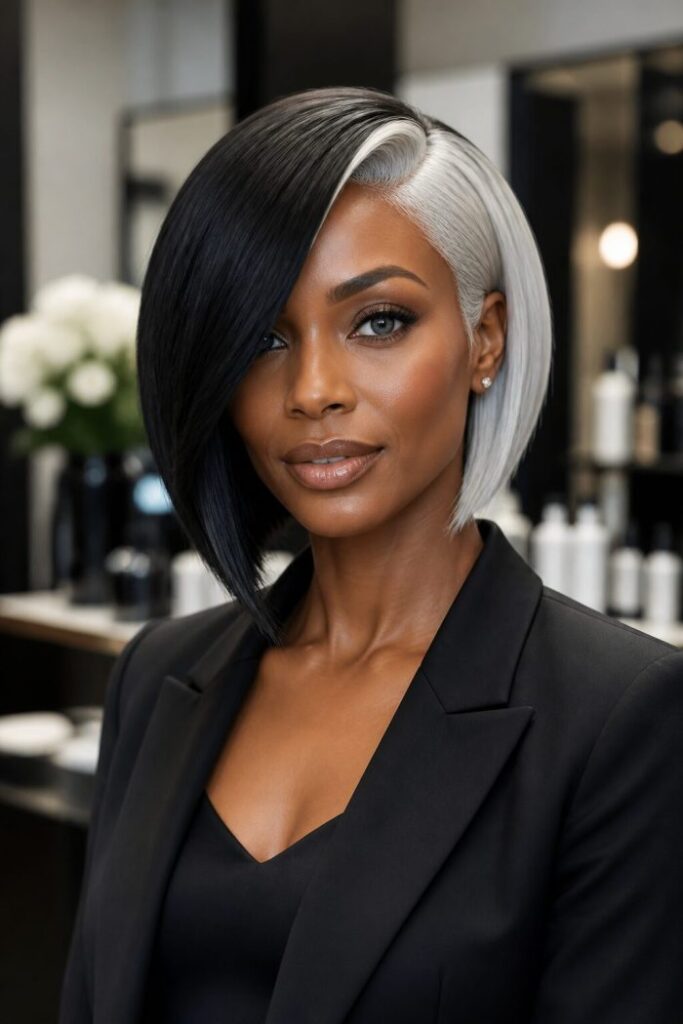
Jet black on one side and platinum or silver-white on the other — with the color division mirroring the cut’s inherent asymmetry — turns the asymmetrical bob into something that reads as genuinely avant-garde. The bold color story amplifies the structural drama of the cut so significantly that the combination reads as a single artistic statement rather than two separate elements.
This is specifically one of the most technically demanding looks on the list from a color perspective — maintaining a clean, bright platinum section adjacent to jet black requires regular toning appointments and careful product use to prevent the platinum from yellowing or the black from bleeding.
What to ask your colorist: Ask about the pre-lightening process specific to your natural hair before committing — achieving a true platinum on Black hair requires significant lifting, which is a multiple-session process for most natural hair types. Go into this look with a realistic timeline and a trusted colorist rather than attempting it in a single appointment.
Styling tip: Schedule toning appointments for the white section every four to six weeks specifically — the platinum section will shift toward yellow or warm tones faster than any other color on this list. A purple toning shampoo used twice a week on the white section between appointments helps maintain the cool, bright quality.
Best for: Creative women with a genuinely avant-garde aesthetic who want their hair to read as a deliberate artistic statement and who are comfortable with the maintenance commitment this level of color work requires.
18. Silk-Pressed Natural Hair Bob With Swooped Edges
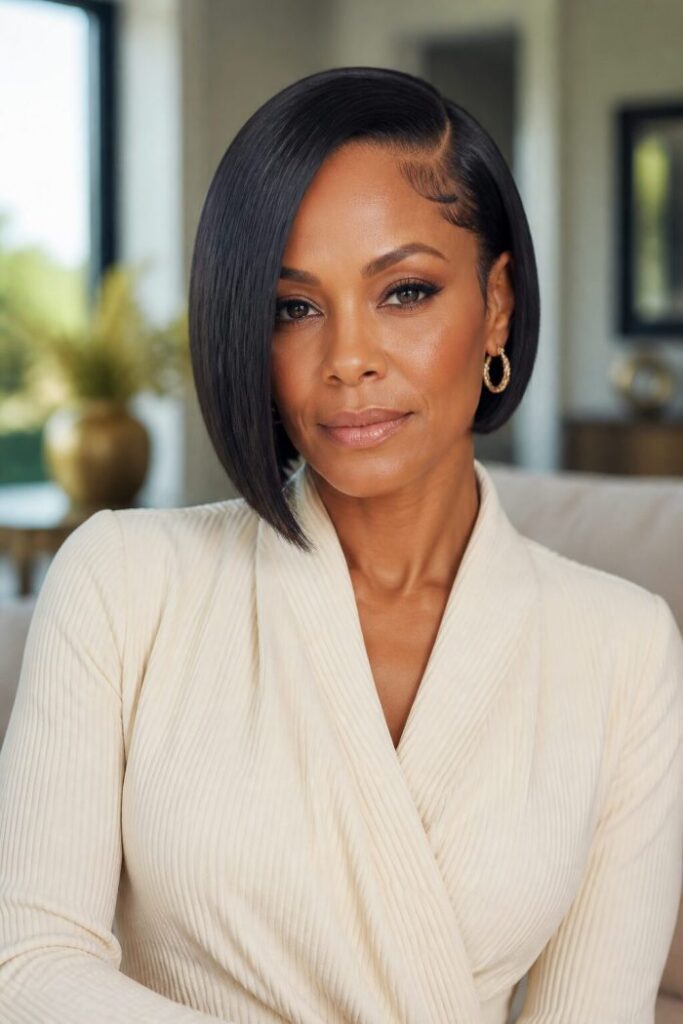
A silk-pressed natural hair asymmetrical bob with perfectly laid, swooped edges is the full expression of Black hair artistry — the silk press itself, the precise cut, and the swooped edge design are each technically accomplished elements that together produce a look that could only exist within the tradition of Black hairstyling.
The edges are laid specifically along the shorter side of the bob, where the close length creates the most visible canvas for the edge design. The artistic pattern — swoops, curved lines, or deliberate wave formations — adds a signature finishing touch that makes the look unmistakably intentional.
What to ask your stylist: The edge laying pattern should be decided as a deliberate design choice rather than left to the stylist’s default — bring a reference image for the specific edge pattern you want, since this is a significant element of the overall look.
Styling tip: Use an edge control product with genuine hold — not a light gel — applied in thin layers and shaped with a small edge brush or a toothbrush rather than your fingers. Once the pattern is shaped, seal with a light-hold gel and press a silk scarf firmly against the edges for ten minutes to set the design in place.
Best for: Women who want to honor the full tradition of Black hairstyling artistry in a contemporary cut, and any occasion — events, celebrations, professional settings — where looking exceptionally put-together and intentional matters.
19. Asymmetrical Bob With Blunt Front and Tapered Back
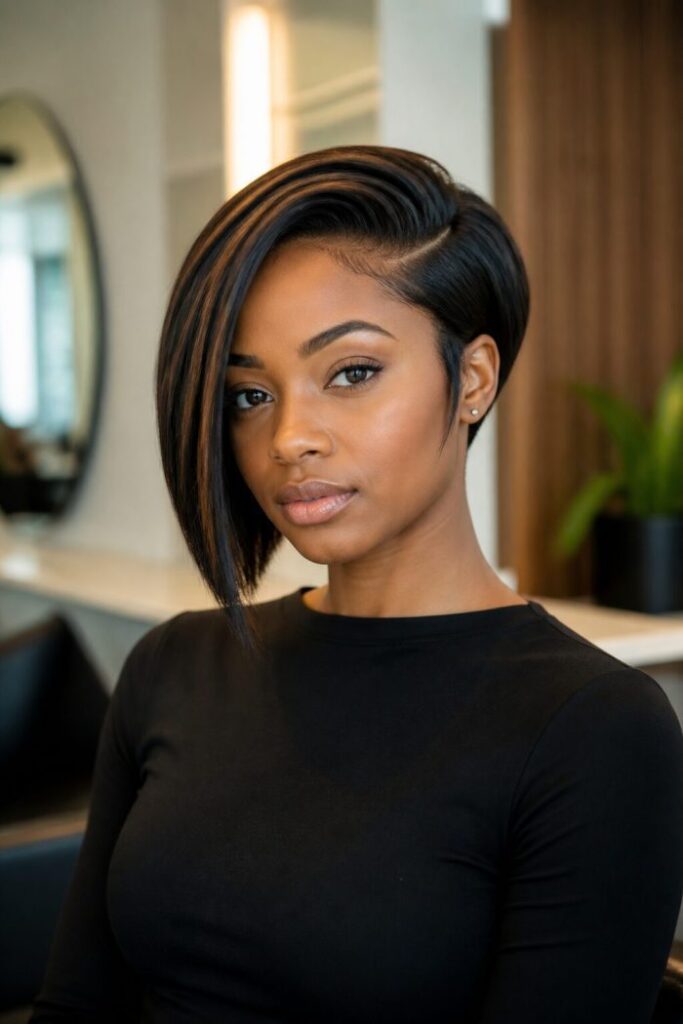
The structural contrast between a heavy, blunt front panel on one side and a close-tapered back creates one of the most architecturally precise variations of the asymmetric bob — the weight and sharpness of the blunt front against the clean precision of the taper creates a silhouette that reads as genuinely designed rather than simply cut.
The blunt front adds visual weight and drama to the longer side while the taper keeps the overall silhouette from becoming heavy or shapeless. For oval and oblong face shapes specifically, the blunt front’s horizontal weight at the jaw-to-cheekbone area creates a flattering proportional balance.
What to ask your stylist: Ask specifically for scissor work on the blunt edge rather than a razor — razor-cut blunt edges have a softer, slightly imprecise quality that undermines the precise, architectural aesthetic this specific version requires. The blunt line should be clean and straight.
Styling tip: Keep the blunt front section perfectly smooth and the taper closely maintained for this style to read at its most intentional — both elements need regular maintenance. Book trims every four to five weeks rather than six to eight specifically for this version.
Best for: Oval and oblong face shapes, women who appreciate structural precision and architectural cut quality, and anyone who wants the most deliberately designed, least casual version of the asymmetric bob.
20. Soft Lavender Asymmetrical Bob
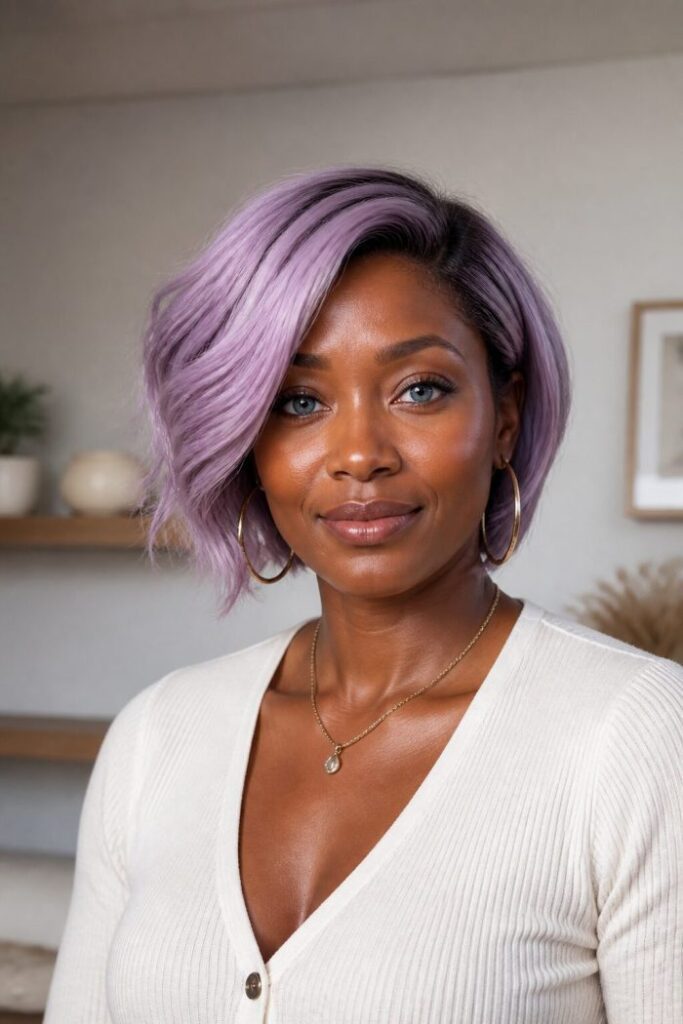
Pastel lavender on an asymmetrical bob is a color choice that works specifically well on deep skin tones because the cool purple quality creates a stunning complementary contrast — the cool tone against warm melanin-rich skin produces a visual warmth to the complexion rather than washing it out, which is what cool pastels often do on lighter skin tones.
The ethereal, almost otherworldly quality of lavender at bob length is surprisingly wearable in everyday contexts — the softness of the pastel prevents it from reading as shocking or high-fashion costume, and instead creates a dreamy, sophisticated aesthetic that works across a wider range of settings than bolder fashion colors.
What to ask your colorist: Pre-lightening to a pale yellow or white base is required for lavender to appear true to tone on dark hair — applying lavender directly to dark hair without pre-lightening produces a result that reads as barely-visible shimmer rather than a visible color. Discuss the pre-lightening timeline and the health of your hair honestly before beginning the process.
Styling tip: Deep condition weekly without exception — the pre-lightening process that lavender requires is the most structurally demanding of any color work on this list, and maintaining the integrity of the hair between appointments is the difference between lavender that looks vibrant and healthy and lavender that looks damaged and dull.
Best for: Women with deep skin tones in their 20s and 30s who want a pastel color that’s specifically flattering rather than simply fashionable, and who are comfortable with the pre-lightening investment the color requires.
21. Dramatic Long-to-Short Asymmetrical Bob With Defined S-Waves
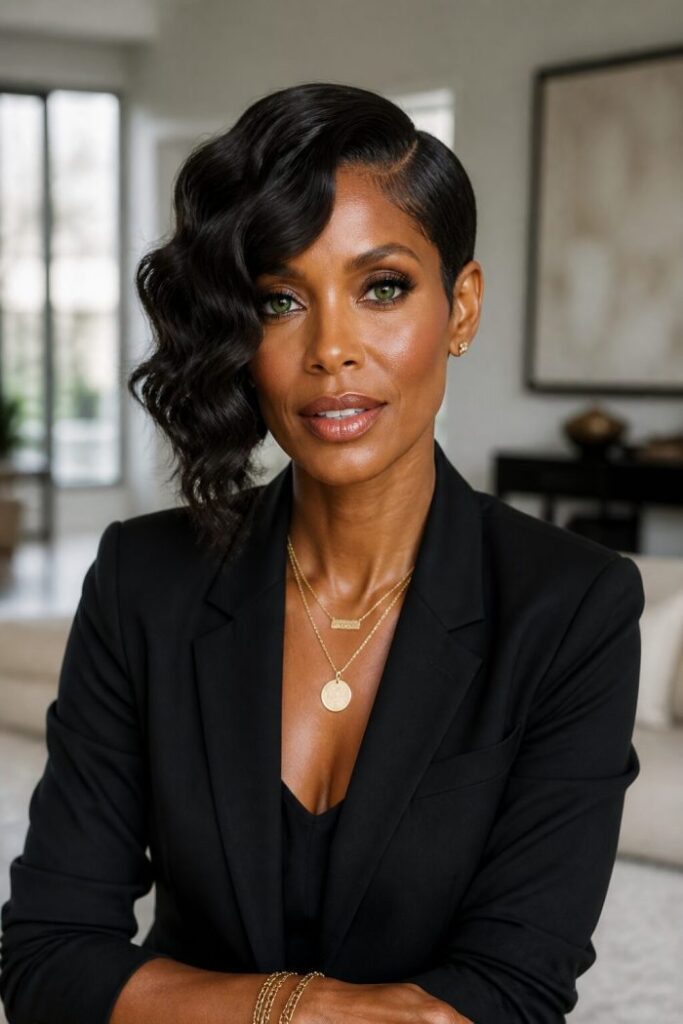
The most extreme version of the asymmetric bob — a front section that falls significantly past the chin on one side against a closely cut back — with defined S-shaped waves through the longer section is one of the most simultaneously glamorous and editorial looks available in this cut family.
The S-wave pattern on the dramatically longer section adds light-catching dimension and movement to what would otherwise be a stark, graphic length contrast. The waves soften the length’s potential severity while maintaining the full drama of the asymmetric proportion.
What to ask your stylist: The extreme length contrast of this version requires precise planning around face shape — a very long front section on a shorter face can create a pulling-down effect that elongates the face unfavorably. Discuss the actual length in the context of your specific proportions rather than committing to an exact reference image length without that conversation.
Styling tip: Create S-waves using a medium-barrel curling iron by alternating the curl direction — wrap one section toward the face, the next section away from the face, and continue alternating. The alternating direction is what creates the S-shaped wave rather than a simple curl or wave that moves in a single direction.
Best for: Women who want the most high-impact, maximum-drama version of the asymmetric bob — a showstopping look for occasions that warrant it and women whose everyday aesthetic operates at that register.
Pin it to find it later!
Final Thoughts
The asymmetrical bob earns its enduring popularity among Black women because it consistently delivers on its two most important promises: it looks sharp and intentional, and it adapts to the full diversity of Black hair textures, styling approaches, and personal aesthetics without requiring any of them to compromise.
Whether you’re drawn to the precision of a silk-pressed sleek version, the celebration of natural texture in a coil-defined or TWA interpretation, the protective style practicality of a wig or weave version, or the bold statement of a color-forward approach — the structural foundation of the asymmetric cut supports all of it equally.
Take your two or three favorites from this guide, note specifically what appeals to you about each — the angle, the finish, the color, the texture approach — and bring that information to your stylist. The more specific your brief, the closer the result will be to the vision you have in your head.
What is an asymmetrical bob and why does it look so good on Black women?
An asymmetrical bob is any bob cut where one side of the hair is longer than the other, creating an angled, uneven silhouette that contrasts with the symmetry of a traditional bob. It looks specifically striking on Black women for a combination of reasons: the diagonal line creates a visual dynamic that frames melanin-rich skin in a particularly flattering way, the precision of the cut reads as intentional and powerful against darker skin tones where contrast is most visible, and the versatility of the cut accommodates the full range of textures, finishes, and color approaches that Black women work with — from natural coils to silk-pressed, from color-treated to protective styles.
Can natural hair work in an asymmetrical bob?
Absolutely — and some of the most beautiful versions of this cut are done on natural hair. The key is working with a stylist experienced in natural hair cutting techniques, specifically dry cutting for coily textures, which ensures the shape accounts for the actual shrinkage and behavior of your specific curl pattern rather than a wet-hair measurement that changes once the hair dries. 3C through 4C patterns all work in asymmetric bob formats, though the specific techniques and length requirements vary by curl type.
How often does an asymmetrical bob need to be maintained?
The maintenance schedule depends on the specific version. Highly precise versions — the blunt front with tapered back, the sleek silk-pressed version, the undercut version — benefit from trims every four to six weeks to maintain their defining precision. Softer or more textured versions — the razor-cut bob, the natural curl version, the wavy relaxed version — can go six to eight weeks without losing their character significantly. Color-treated versions may need more frequent appointments depending on the color used: copper and red tones need refreshing every six to eight weeks, while darker tones like burgundy can go eight to ten weeks.
Which face shapes does the asymmetrical bob suit best?
The asymmetrical bob is one of the more universally flattering cuts precisely because the adjustable angle means it can be calibrated for different face shapes. Oval face shapes have the most flexibility and can work with almost any version. Square faces benefit from a longer front panel that softens the jawline. Heart-shaped faces suit versions with fullness at the bottom that balance a wider forehead. Round faces benefit from the vertical emphasis created by the diagonal line. The one face shape that requires the most careful calibration is oblong or very long faces, where a very dramatic length contrast can add apparent length unfavorably — a more moderate angle typically works better.
What colors look best on an asymmetrical bob for Black women?
The asymmetric bob’s angled surface and layered structure make it an exceptional canvas for almost every color approach — but the most consistently flattering options for Black women are warm tones that complement melanin-rich skin rather than contrast with it. Burgundy, copper, caramel ombre, and honey blonde highlights are the most universally flattering across medium to deep skin tones. Bold fashion colors — lavender, platinum, two-toned black and white — work beautifully but require more careful planning around skin tone undertone and the pre-lightening process. Ask your colorist to assess your skin’s undertone before committing to a specific shade rather than choosing purely from a visual reference.