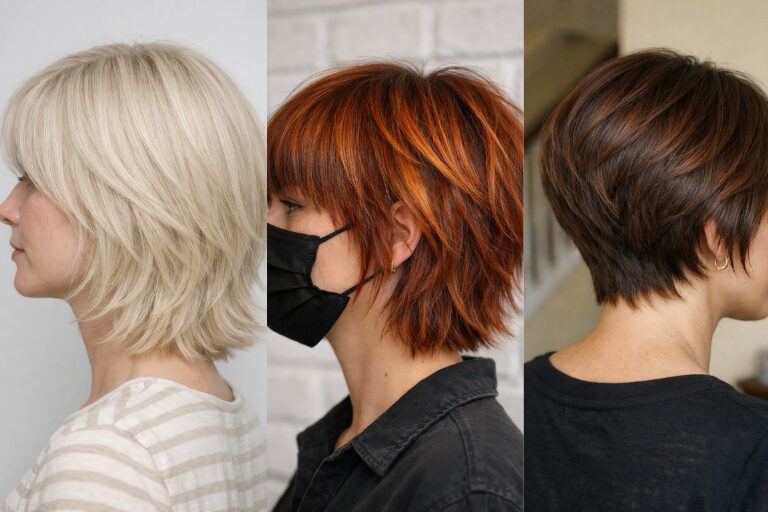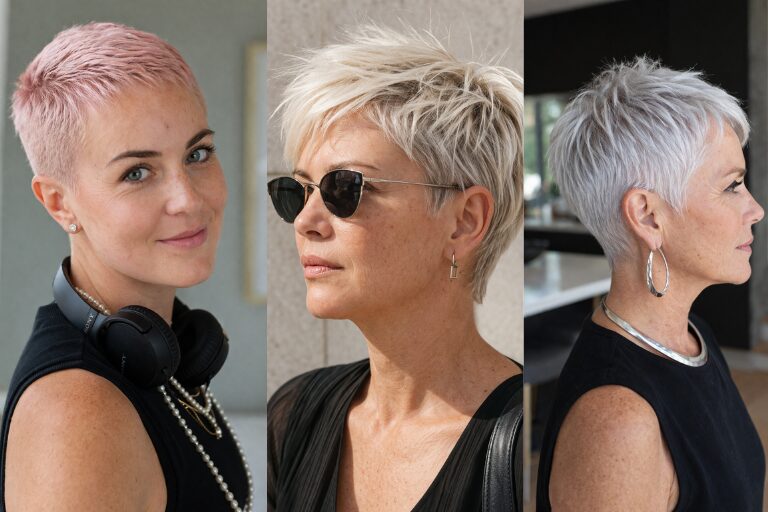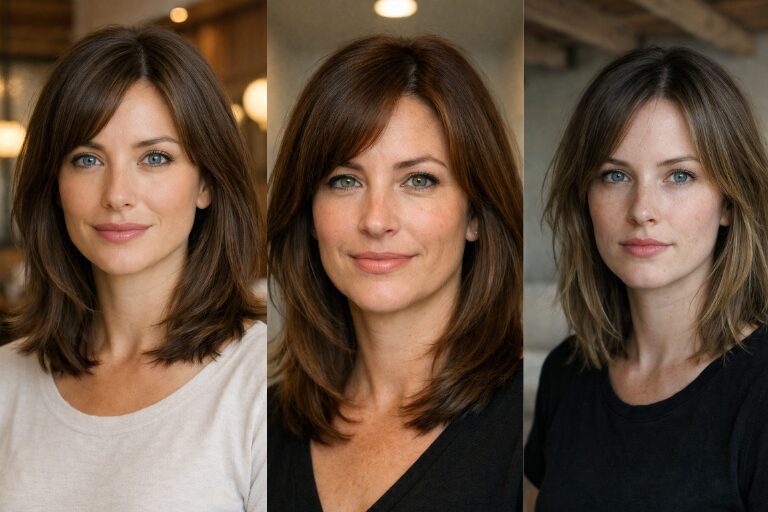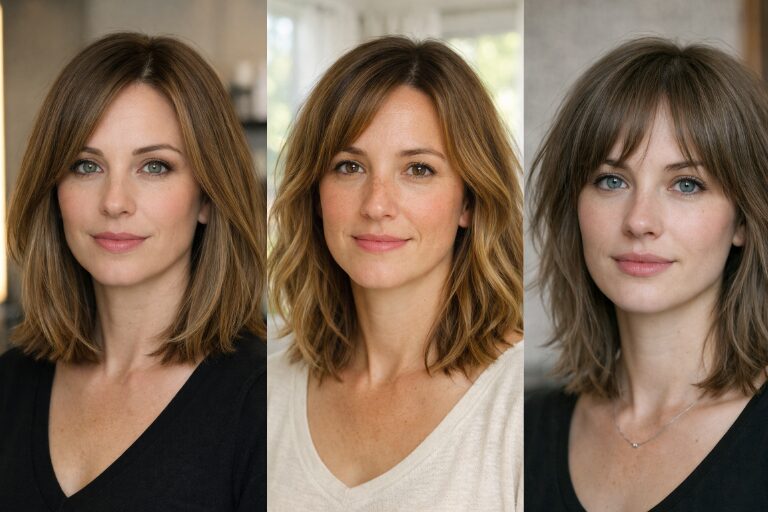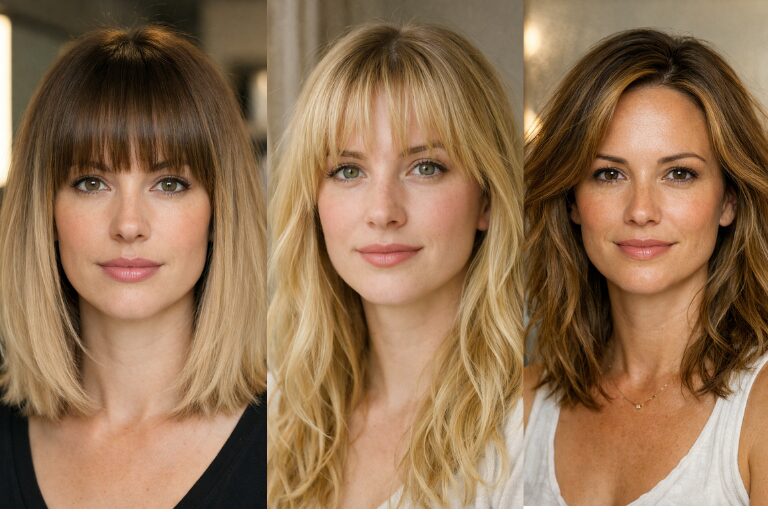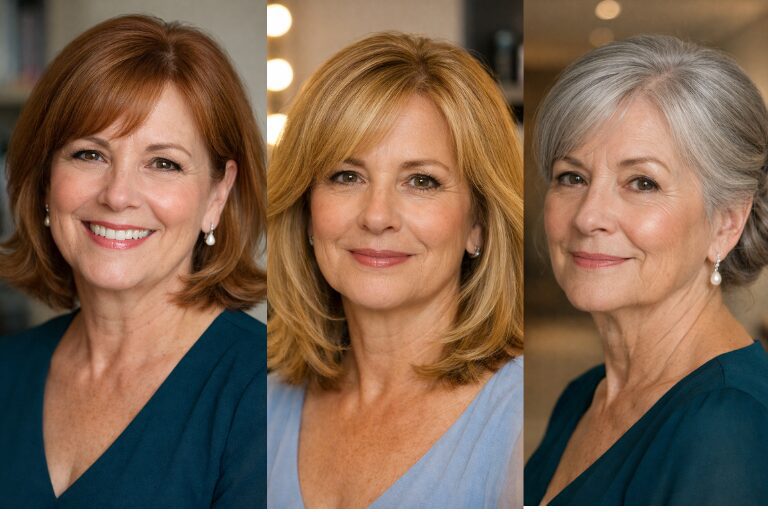
20 Trending Wolf Cut Hairstyles Right Now That You Need to Try
The wolf cut has achieved something genuinely rare in the hair world: it became a trend and then stayed, because it turns out the reasons women love it aren’t trend-dependent. The lived-in texture, the face-framing layers, the volume at the crown, the way it looks deliberately undone without requiring constant maintenance — these are qualities that work on real hair in real life, not just in tutorial videos and salon photos.
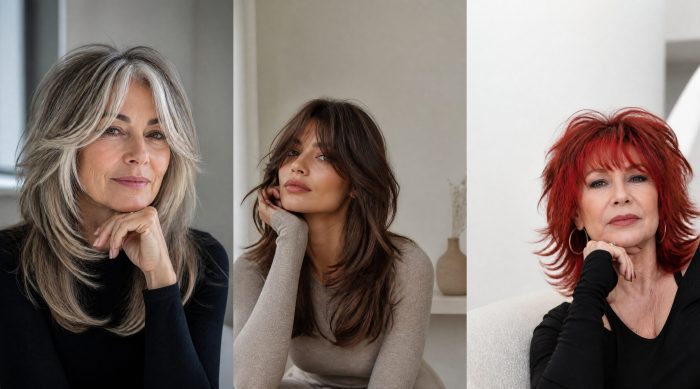
At its core, the wolf cut is a structural hybrid. It takes the heavy layering and crown volume of the classic shag and combines it with the longer, looser length-through-the-back quality of the mullet’s DNA — without actually looking like a mullet. The result is a cut that has shape and intention without looking sculpted, and texture and movement without looking messy. It’s a genuinely difficult balance to achieve, which is why the wolf cut keeps gaining new converts who’ve been looking for exactly that quality in a cut and hadn’t found it elsewhere.
The 20 styles below cover the full range of what a wolf cut can be — from closely cropped pixie-length versions to long, flowing interpretations, from gritty and textured to soft and feminine, and from natural color to bold color pairings. Every style includes what specifically makes it distinctive, a quick styling tip, and context for who it suits most.
1. Classic Curtain-Bangs Wolf Cut
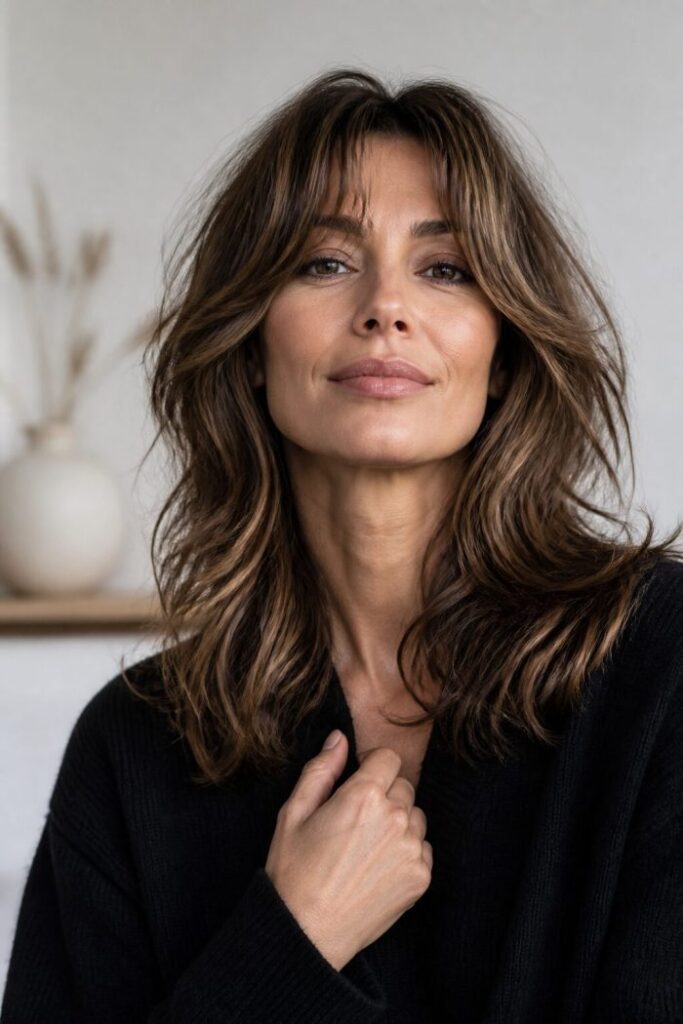
The style that launched the trend and still represents its most universally flattering version — heavily layered lengths with soft, center-parting curtain bangs that frame the face on both sides. The layers start short at the crown, creating volume and lift, then gradually lengthen downward to create the signature cascading silhouette.
What makes the curtain-bang wolf cut so consistently recommended is that the fringe does specific facial work that the layering alone can’t: it draws the eye toward the center of the face, softens the forehead, and creates the face-framing warmth that makes this cut look flattering across a wide range of face shapes. The curtain bang also grows out more gracefully than a blunt fringe, which extends the life of the style between appointments.
What to ask your stylist: Ask for curtain bangs that fall to the cheekbone length — long enough to part and sweep naturally to each side without sitting flat, short enough to frame rather than cover the face. Ask for the layers to start at the crown rather than mid-length for maximum volume at the top.
Styling tip: Use a round brush to gently flip the curtain bangs outward during blow drying rather than smoothing them flat — the outward flip creates the open, voluminous framing that makes this style’s silhouette most recognizable.
Best for: Most face shapes, first-time wolf cut wearers, anyone who wants the defining version of the trend rather than a variation on it.
2. Soft Silver Wolf Cut
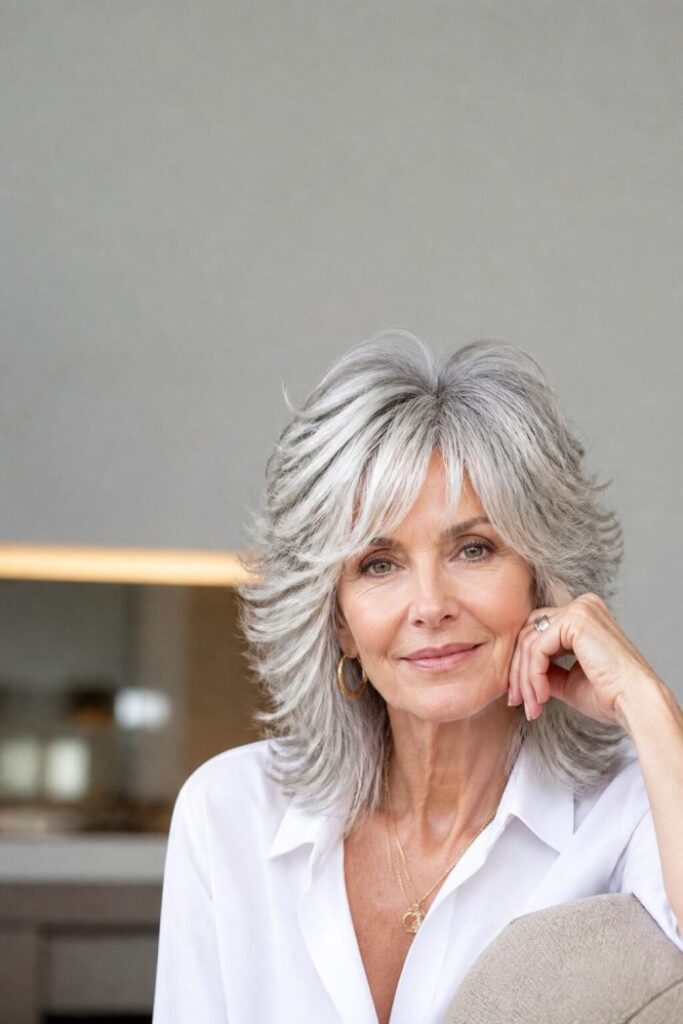
Natural silver and gray hair has a texture quality that most colored hair doesn’t have — a slight coarseness that responds beautifully to heavy layering because each section has enough grip and body to hold the shape the layers create. The wolf cut specifically is one of the best possible cuts for silver hair because the layering prevents the flatness and heaviness that can make gray hair look dull, and instead creates the dimensional movement that makes silver tones catch light from multiple angles simultaneously.
This version leans soft and elegant rather than edgy — the layers are present and textured but not choppy or aggressively piece-y. The overall effect is modern and vibrant without reading as trying too hard to counteract age, which is exactly the quality most women with silver hair are looking for in a contemporary cut.
What to ask your stylist: Ask for soft layering throughout with face-framing pieces that are slightly lighter in weight than the rest of the layers — this creates movement around the face without the heaviness that can drag silver hair down. Ask your stylist to work with the natural texture of your silver hair rather than cutting against it.
Styling tip: Apply a purple toning shampoo weekly to maintain the cool, bright quality of silver tones and prevent any warmth or yellowing that naturally develops between appointments. Use it for two to three minutes rather than immediately rinsing — the toning effect requires contact time to work.
Best for: Women with natural silver or gray hair who want a contemporary, movement-forward cut that makes their natural color look as vibrant and intentional as possible.
3. Curly Wolf Cut With Defined Ringlets
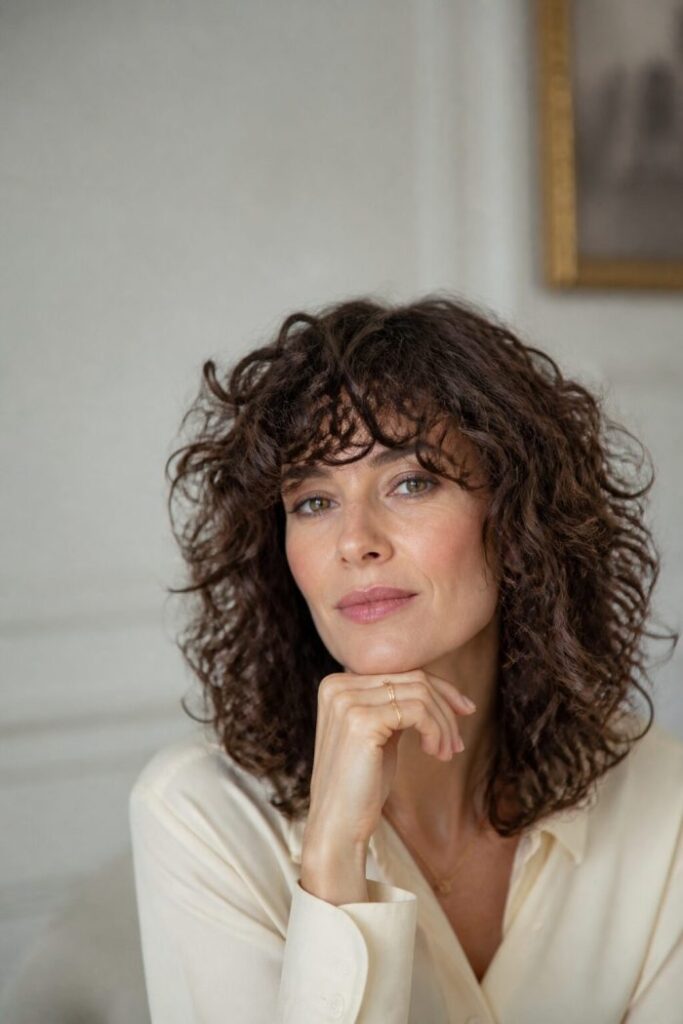
Curly hair and the wolf cut have an exceptional relationship — the strategic layering removes the bulk that causes curly hair to form a shapeless, heavy triangle, and allows each individual curl to spring up and define itself independently. The result is a bouncy, volumized cloud of ringlets with the kind of defined, romantic shape that most curly-haired women spend years trying to achieve through products and technique alone.
The critical technical element for a curly wolf cut is that the layers should be cut dry rather than wet. Curly hair shrinks dramatically when it dries — cuts executed on wet hair often become significantly shorter and differently shaped once dry, which means the proportion and layer placement can be completely wrong for the natural curl pattern. A dry cut allows the stylist to work with the actual curl behavior and ensure each layer falls exactly where intended.
What to ask your stylist: Specifically request a dry cut — this is important enough to be worth repeating if the stylist reaches for the spray bottle first. Ask for layers that start at the crown and are graduated to work with your specific curl pattern, removing weight from the mid-length where bulk typically accumulates most.
Styling tip: Apply a curl-defining cream to soaking wet hair section by section, then diffuse on low heat with the diffuser cupped upward rather than pressing the diffuser down onto the hair, which disturbs the curl formation. Avoid touching the curls until they’re fully dry.
Best for: Women with naturally curly or coily hair who’ve struggled to find a cut that gives their curls shape and definition rather than bulk and shapelessness.
4. Shaggy Wolf Cut With Choppy Ends
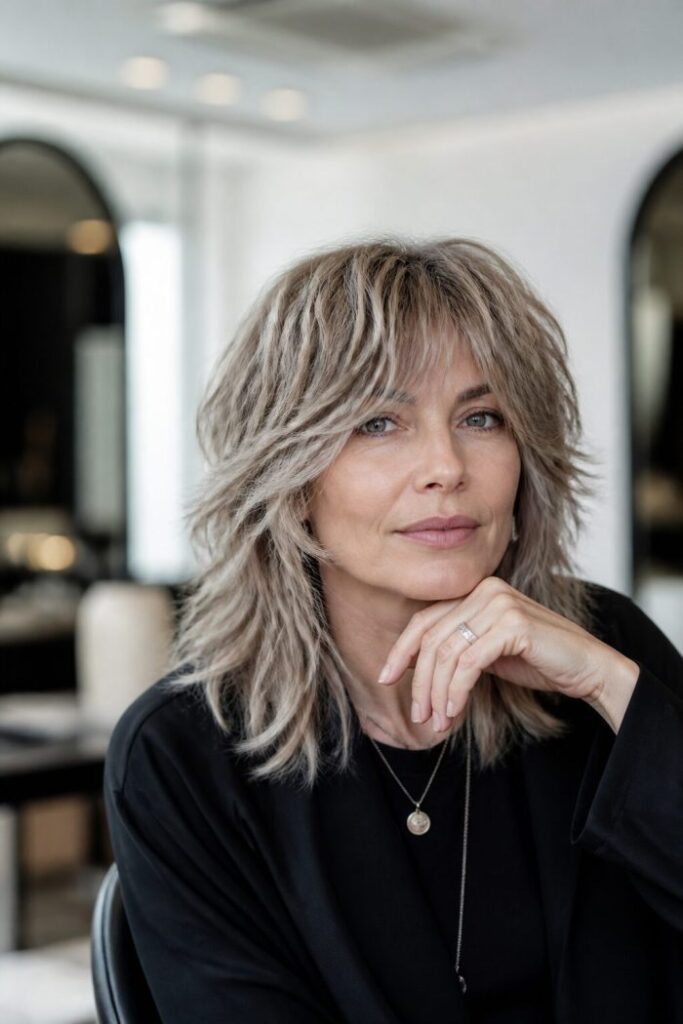
This is the wolf cut at its most deliberately textured and rock-and-roll — point-cut ends that are intentionally choppy, heavy layering that creates serious drama, and an overall aesthetic that reads as confidently disheveled rather than simply unstyled. It’s the version that references the cut’s musical heritage most directly, channeling the kind of hair that defined 1970s and 1990s rock aesthetics.
The choppy ends are the technical element that creates this version’s distinctive feel. Point-cutting removes bulk from the ends of each layer by cutting upward into the hair at an angle rather than straight across, which creates a soft, feathered edge that moves independently rather than as a single blunt wall of hair. The result is ends that look lived-in and deliberately textured from day one.
What to ask your stylist: Ask specifically for point-cutting at the ends rather than a straight-across trim — the technique distinction matters enormously for achieving the choppy quality. Ask for layers that are deliberately visible and dramatic rather than blended to be seamless.
Styling tip: Work a small amount of matte texture paste through the ends while scrunching upward — the matte finish is important because it maintains the raw, undone quality that glossy products undermine. Avoid heat styling for this version; air drying actively improves the result.
Best for: Women who have a naturally edgy aesthetic and want a cut that matches that energy, or anyone who wants to make a bold, confident style statement.
5. Blunt-Fringe Wolf Cut
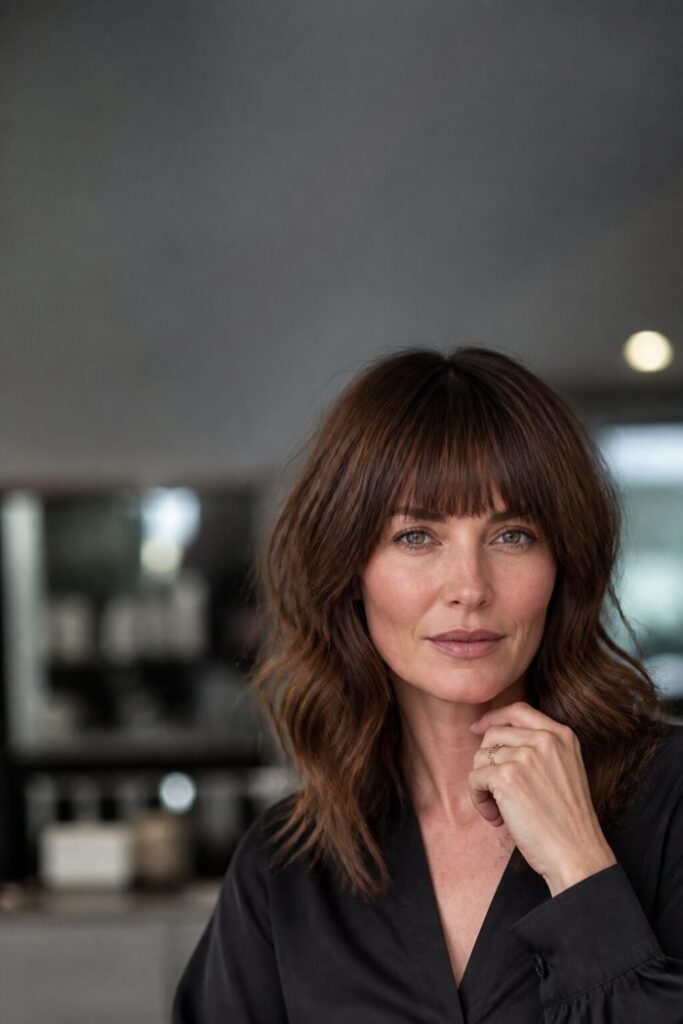
Rather than the curtain bang’s soft, face-framing sweep, this version pairs the layered wolf cut body with a straight-across blunt fringe — and the visual tension between the precise geometric bang and the wild, textured layers behind it is exactly what makes this combination interesting.
The blunt fringe creates a strong horizontal line at the forehead that functions differently from curtain bangs: it emphasizes the eyes and brow line rather than framing the face broadly. On oval and heart-shaped faces specifically, this strong horizontal element balances the face proportions beautifully. On rounder faces, the blunt fringe can feel widening rather than flattering — in those cases, the curtain bang version is typically more universally flattering.
What to ask your stylist: Ask for the fringe to be cut at or slightly above the brow rather than longer — a longer blunt fringe has less visual impact and tends to part naturally even when you want it straight, which defeats the purpose of the blunt version. Request that the fringe be cut into the wolf cut layers rather than sitting as a separate section on top of them.
Styling tip: Trim the blunt fringe every three to four weeks — this is more frequently than most women trim the rest of their hair, but a blunt fringe loses its defining characteristic (the precise straight edge) as soon as it starts to grow past the eye line.
Best for: Oval and heart-shaped faces, women who want a strong, graphic element in their wolf cut, anyone who’s comfortable committing to the maintenance schedule that a blunt fringe requires.
6. Short Wolf Cut at Lob Length
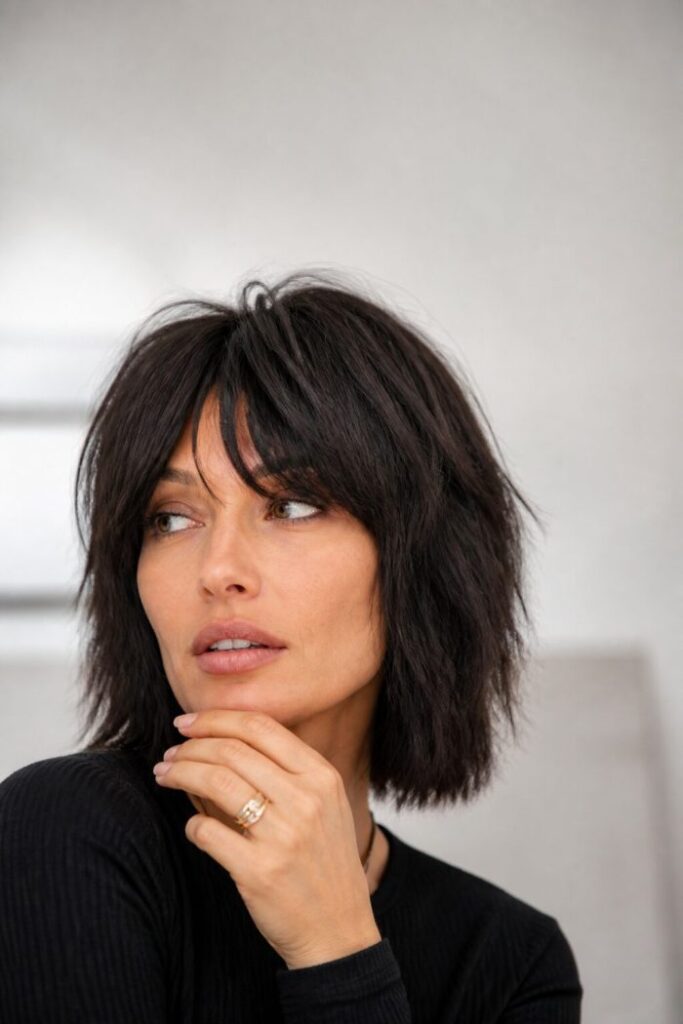
The wolf cut at lob length — collarbone to just above the shoulder — is one of the best entry points into the trend for women who love the aesthetic but are cautious about committing to the longer, more dramatic versions. All the structural elements that define the wolf cut are present: heavy crown layering, visible texture, face-framing pieces. The reduced length simply makes the whole thing more manageable day-to-day.
The crown volume on a shorter wolf cut is actually more impactful than on a longer version because there’s less length below it to balance against — the proportion between the short crown layers and the collarbone length bottom makes the silhouette particularly striking and intentional-looking.
What to ask your stylist: Ask for the crown layers to be genuinely short — not just slightly shorter than the rest — because this length range needs pronounced contrast between the crown and the ends to read as a wolf cut rather than simply a layered lob.
Styling tip: Flip your head upside down while blow-drying to maximize root lift and crown volume, then flip upright and use a large round brush to smooth the outer surface lightly. The volume needs to be built from the root up rather than added to the surface.
Best for: Women who want the wolf cut’s texture and volume without long hair’s weight or management demands, and anyone hesitant to go fully long for a first wolf cut attempt.
7. Wavy Beachy Wolf Cut
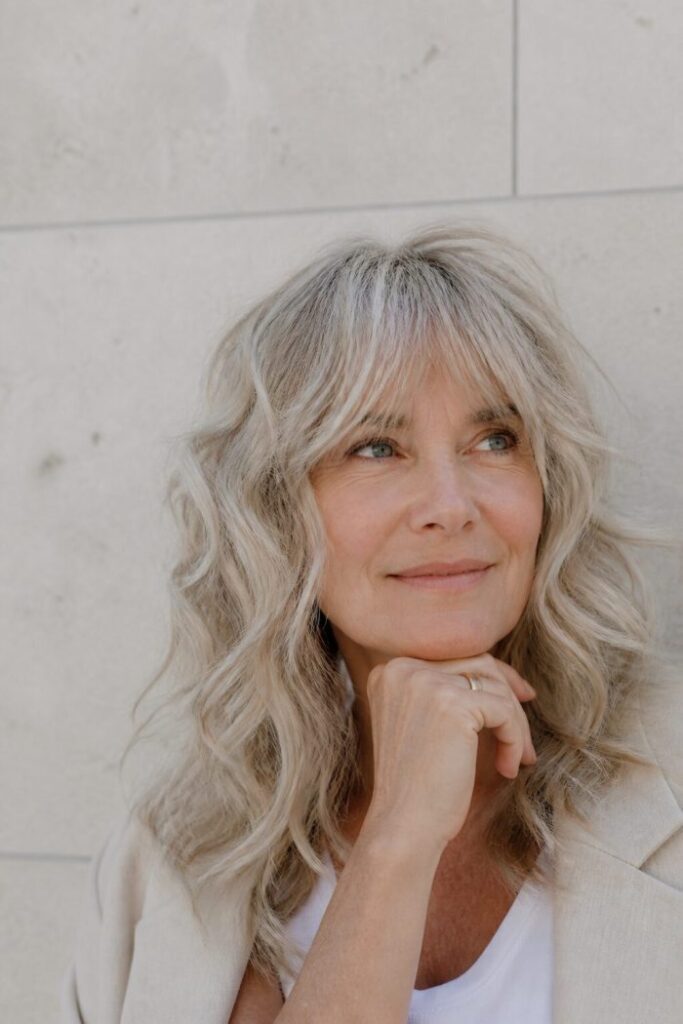
Naturally wavy hair is arguably the texture that shows a wolf cut at its most effortlessly beautiful — the layers enhance and define the wave pattern, prevent clumping that makes waves look heavy and undefined, and create the separation between sections that allows the wave to move independently and catch light in multiple directions simultaneously.
The result is a look that reads as genuinely sun-kissed and carefree rather than styled — beachy in the sense of actually looking like hair that’s been outside rather than hair that’s been prepared to look like it’s been outside. For women with natural wave who’ve felt their hair looked better when they neglected it than when they styled it, a wolf cut is often the structural reason that was always missing.
What to ask your stylist: Ask for the layering to follow the natural wave groupings rather than cutting across them — this preserves the wave pattern and prevents sections from being cut too short to wave naturally. Ask for face-framing pieces that are slightly shorter and lighter than the rest of the layers.
Styling tip: Spritz a sea salt spray through damp hair and scrunch from the ends upward before air-drying — the salt enhances the natural wave texture and adds the slight grit that gives beachy waves their grip and separation. Don’t brush; only scrunch.
Best for: Naturally wavy-haired women who want a cut that works with their wave rather than requiring product and technique to compensate for a shape that fights it.
8. Balayage Wolf Cut With Warm Highlights
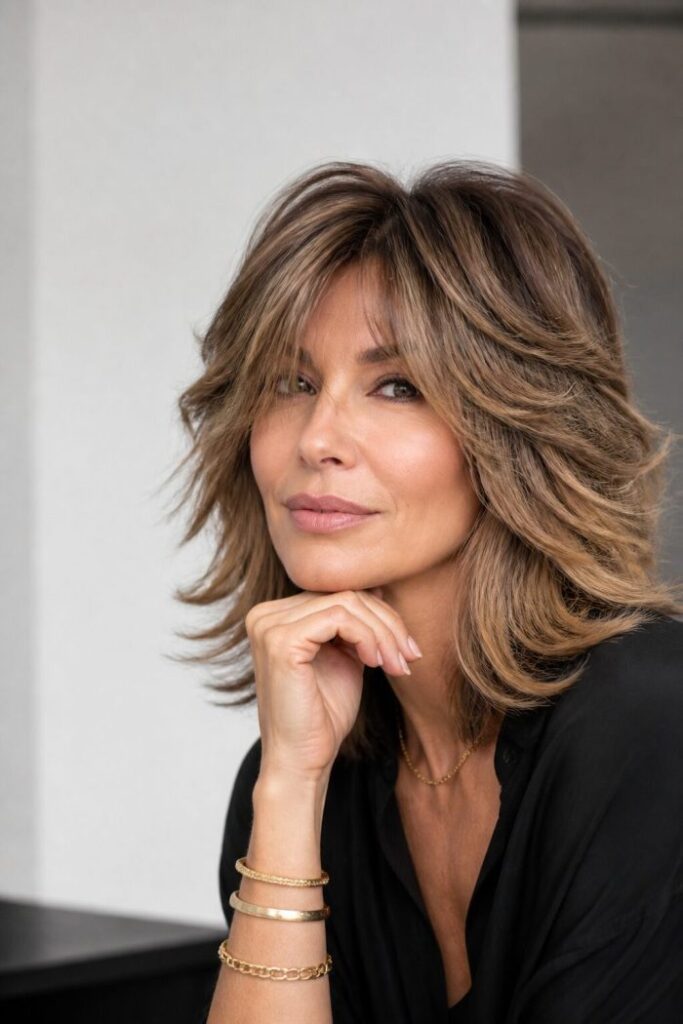
The combination of a wolf cut’s layered structure with hand-painted balayage highlights creates one of the most multidimensional color results available — because the wolf cut’s many layers ensure that every color transition catches light from a different angle, making the dimensional quality of the balayage visible from every position rather than only when the hair falls a specific way.
Caramel and honey highlights on a brunette wolf cut base are the most requested version because the warmth of those tones complements the natural warmth of brown hair while adding genuine luminosity that straight brunette hair sometimes lacks. The face-framing layers of the wolf cut also position the lightest highlights exactly where they have the most brightening effect on complexion.
What to ask your colorist: Ask for the lightest, brightest highlights to be concentrated specifically in the face-framing layer sections — this positioning maximizes the brightening effect near the skin and ensures the color’s most visible impact is in the most visible section of the style.
Styling tip: Style with loose waves to show the balayage dimension at its most flattering — waves create the varied light angles that make each color transition visible. Straight styling on a balayage wolf cut shows the ribbons but doesn’t capture the dimensional quality that makes the combination most striking.
Best for: Brunettes who want warmth and luminosity from a color treatment that enhances the wolf cut’s natural movement rather than being a separate element.
9. Fine Hair Wolf Cut With Volume Layers
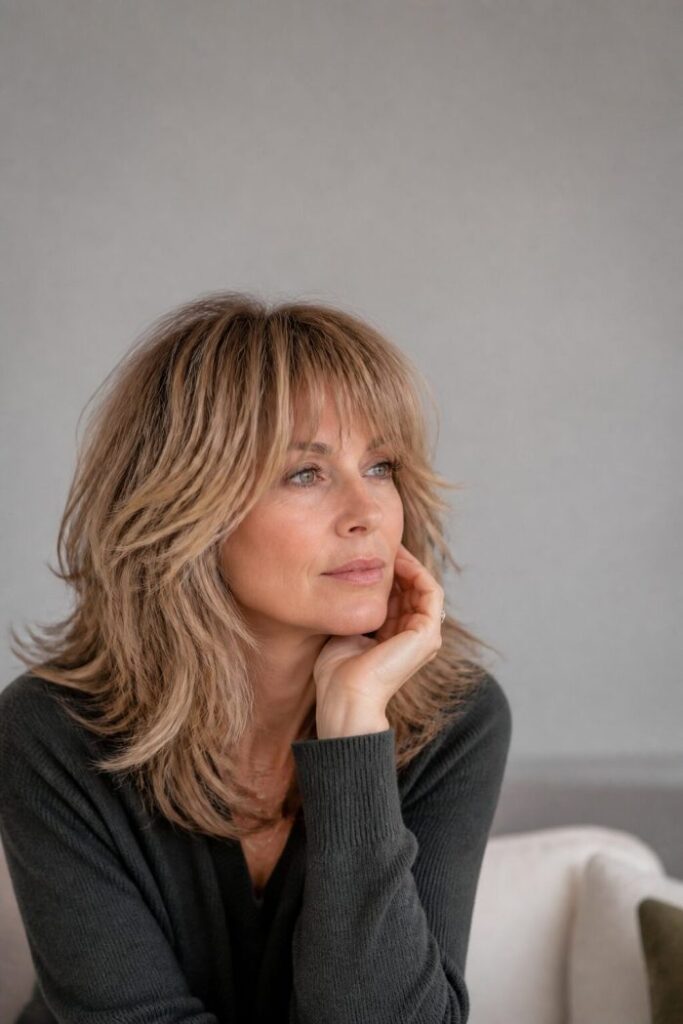
Fine hair and the wolf cut are fundamentally well-matched because the strategic layering does for fine hair what no product reliably can: it removes weight from sections that drag fine strands down and creates built-in volume at the crown that holds through the day without needing constant refresh.
The shorter crown layers in a wolf cut function like a structural volumizer — they lift the root area away from the scalp and create body that isn’t dependent on how much product you use or how long ago you washed. Women with fine hair who’ve tried every volumizing shampoo, every thickening spray, every root-lift product, often find that the right cut resolves the problem that the products were trying and failing to solve.
What to ask your stylist: Ask for the crown layers to be cut short enough to create genuinely noticeable lift — on fine hair, timid layering produces minimal results. The crown layers need to be meaningfully shorter than the rest of the cut for the volume effect to be visible.
Styling tip: Apply a volumizing mousse to the roots before blow-drying and use a diffuser rather than a regular nozzle — the diffuser distributes heat more gently and doesn’t flatten the root area the way directed airflow can. Finish with a light-hold hairspray rather than anything heavier that would weigh fine strands down.
Best for: Fine-haired women who want volume and body from their haircut structure rather than relying entirely on products to achieve fullness that the cut isn’t supporting.
10. Thick Hair Wolf Cut With Thinning Layers
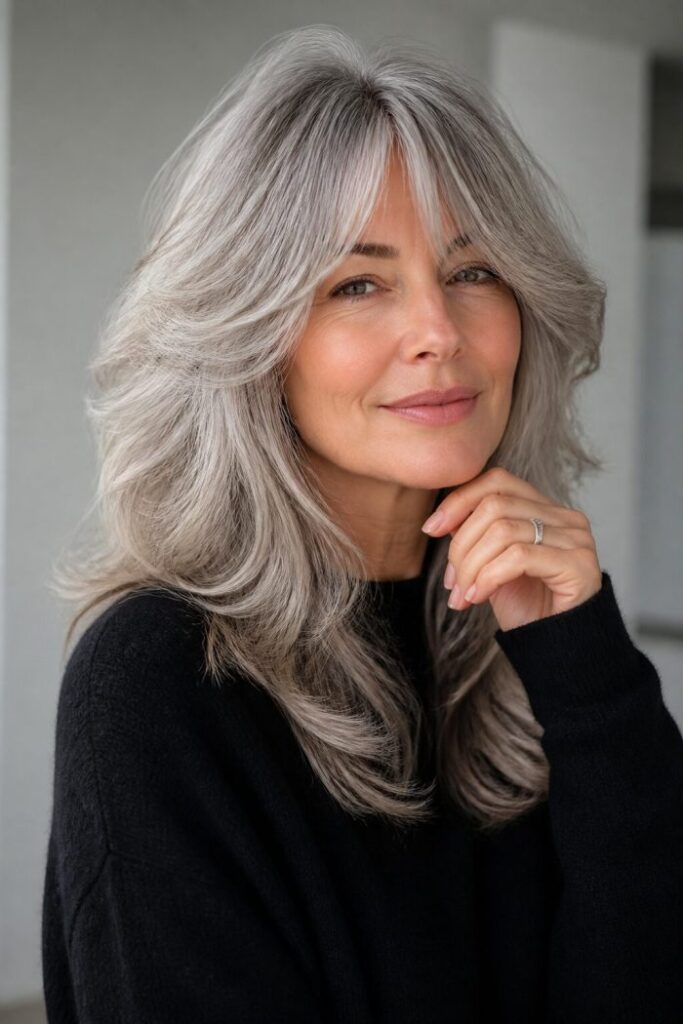
Thick, dense hair has a well-known silhouette problem: without strategic weight removal, it defaults to a triangular shape that’s flat at the crown and wide at the ends. The wolf cut solves this by redirecting where the volume lives — the thinning layers remove bulk from the mid-length and ends where thick hair expands outward, while the crown layers lift the volume upward where it actually flatters the silhouette.
The result is thick hair that finally feels proportionate, light, and easy to manage — the volume is still present, because there’s no getting around what’s there, but it’s shaped rather than simply existing wherever gravity takes it.
What to ask your stylist: Ask for point-cutting through the ends and thinning shears through the mid-lengths specifically — these are the two techniques that remove bulk from thick hair without creating blunt, heavy lines that look like the hair was simply chopped rather than shaped. Avoid requesting too much thinning at once; it’s easier to remove more at the next appointment than to manage over-thinned hair.
Styling tip: A lightweight cream rather than a heavy serum keeps thick wolf cut hair looking manageable without flattening the shape. Apply sparingly through the mid-lengths and ends only — never at the roots, which will collapse the crown lift.
Best for: Women with thick or dense hair who want to maintain their hair’s natural fullness while finally having a silhouette that looks shaped and intentional rather than simply large.
11. Retro 70s-Inspired Wolf Cut
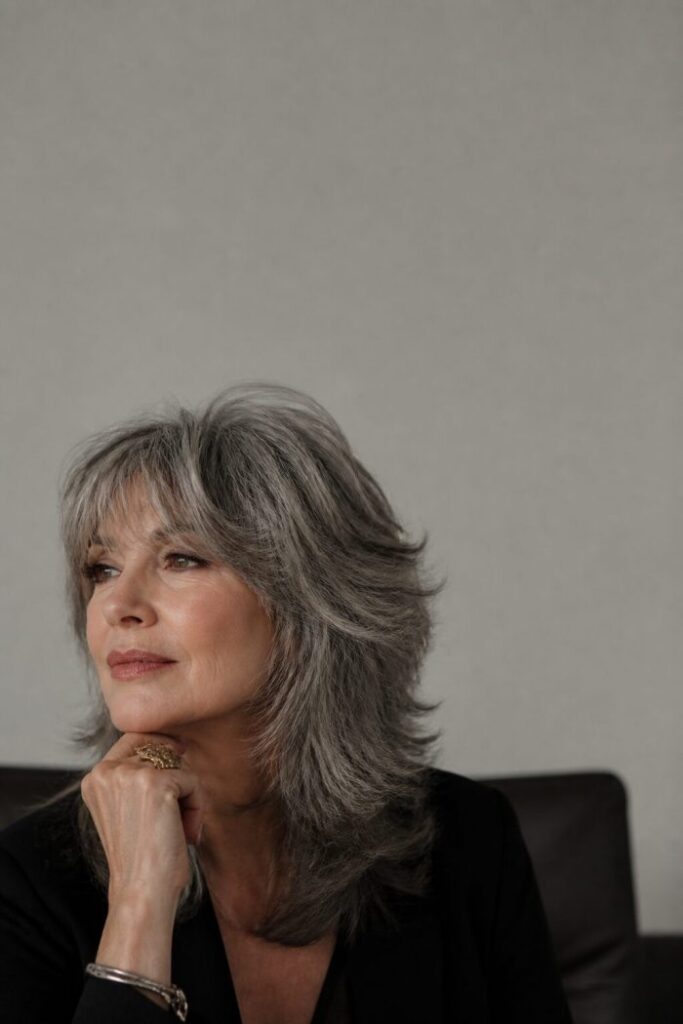
This version leans deliberately into the wolf cut’s most direct historical ancestor — the 1970s shag that defined the decade’s rock aesthetic, with exaggerated layer length, full curtain bangs, and a feathered, Farrah Fawcett-inspired movement throughout the style. Where the contemporary wolf cut updates the shag’s proportions for a modern sensibility, this version embraces the original aesthetic directly.
The distinction from the classic wolf cut lies in the layer length and the feathering technique — the 70s version has longer, more dramatic layers that are styled with a specific outward flip rather than the more organic, tousled movement of the contemporary interpretation.
What to ask your stylist: Ask for longer layers than the standard wolf cut, with the length concentrated in sections that will be styled outward rather than falling naturally. Ask specifically for a feathering technique rather than point-cutting — feathering creates the swept, flowing layer quality of the 70s original.
Styling tip: Use a large round brush to blow-dry sections backward and away from the face in the specific direction of the intended flip, then reinforce the shape with a large-barrel curling iron. Finish with a light-hold spray to preserve the classic feathered movement.
Best for: Women who love vintage aesthetics, anyone whose personal style references 1970s fashion, or anyone who wants a wolf cut with a more deliberately styled, less tousled feel.
12. Pixie-Length Wolf Cut
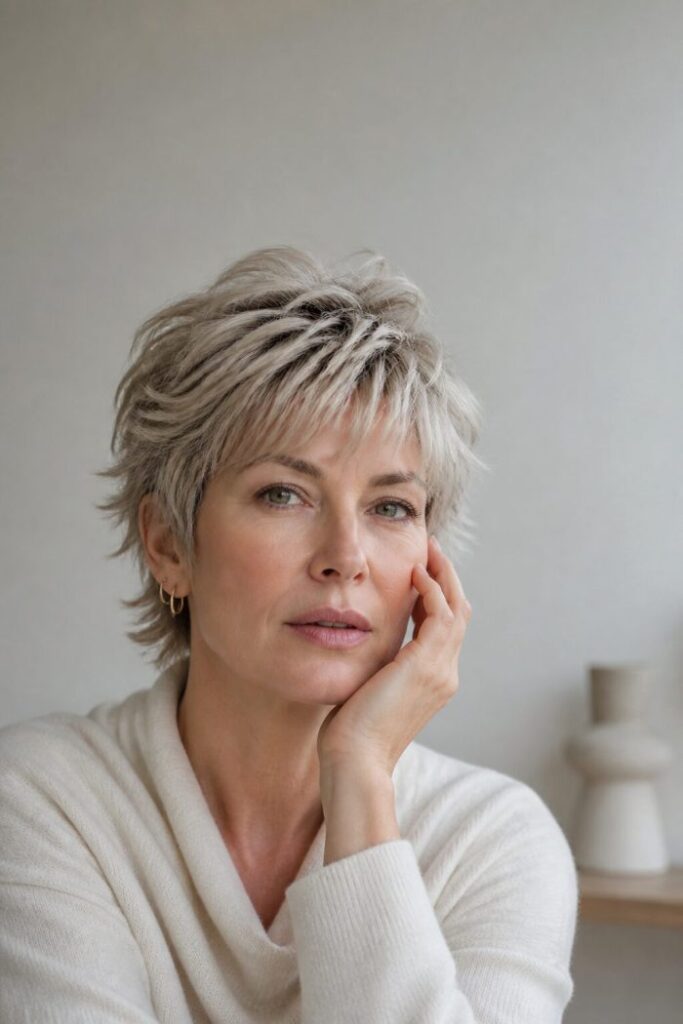
The pixie wolf cut — also called a short shag — is the most architecturally bold version on this list. It takes the wolf cut’s layering philosophy and applies it to a genuinely short length, creating a cropped shag with dramatic layers throughout and a longer, wispy fringe that maintains the face-framing quality the wolf cut depends on.
This version requires real confidence to wear, but it rewards that confidence completely — a well-executed pixie wolf cut has a degree of style personality that most longer cuts don’t achieve, because there’s nothing to hide behind at this length. The cut has to work entirely on its own structural terms, and when it does, the result is genuinely striking.
What to ask your stylist: The pixie wolf cut requires an experienced hand specifically with short textured cuts — not all stylists who can execute a longer wolf cut have the same fluency with the proportions at a much shorter length. Ask to see examples of their previous short shag or wolf cut work before committing.
Styling tip: Work a small amount of pomade or wax through the ends to separate and define the individual layers — at this length, product is doing the definition work that length does on longer versions. A matte or low-shine finish preserves the textured, piece-y quality that makes the pixie wolf cut distinctive.
Best for: Women who’ve been considering a significant cut and want something with genuine style identity rather than simply short hair, and anyone whose personal aesthetic embraces bold, confident self-expression.
13. Money-Piece Wolf Cut
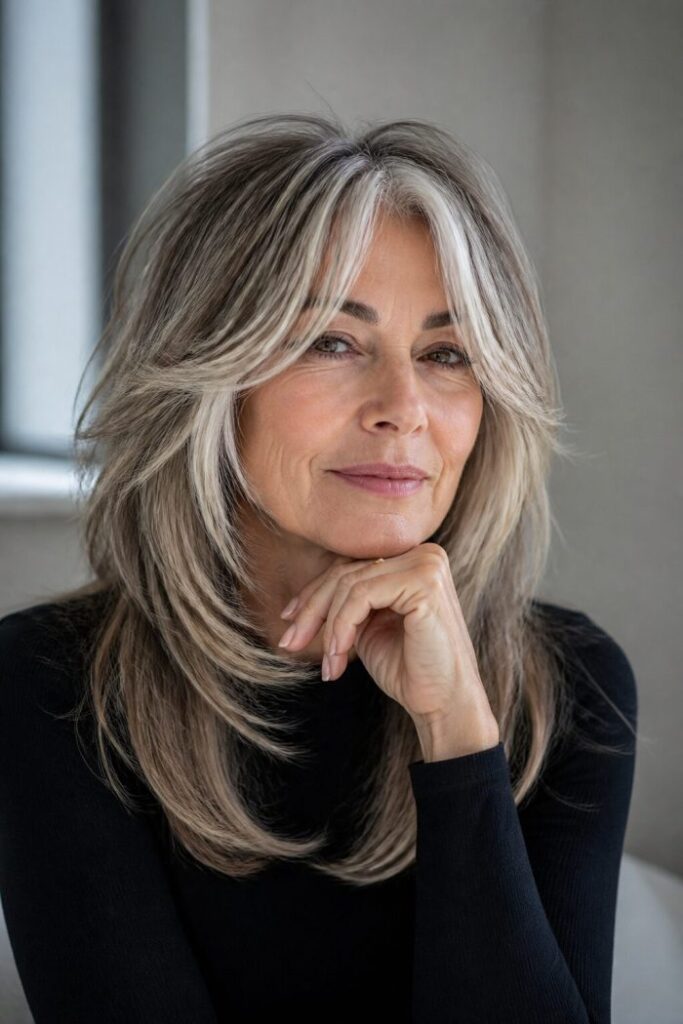
The money-piece technique — bright, face-framing highlights concentrated in the very front sections — has strong natural synergy with the wolf cut because those front sections are already the wolf cut’s most structurally prominent layers. Placing the brightest, most visible highlights in the sections that the cut design already draws attention to doubles the face-framing impact of both elements.
Whether the money piece is a natural-looking caramel, a bright blonde, or a bold fashion color, the effect is the same: the eye is drawn to the face immediately, and the layered texture of the wolf cut makes those highlighted sections move and catch light rather than sitting flat.
What to ask your colorist: Ask for the money piece to be developed slightly lighter than you think you want — face-framing highlights fade and soften between appointments, and a piece that’s at the right brightness in the salon will feel underwhelming at the six-week mark. A root smudge at the base of the money piece sections creates seamless, maintenance-friendly grow-out.
Styling tip: Keep the rest of the hair in a deeper base tone so the money piece has maximum contrast to stand out against — a money piece on a base that’s already quite light loses much of its visual impact because there isn’t enough tonal difference to create the contrast effect.
Best for: Anyone who wants high-impact color results concentrated in the most face-brightening location possible, with the minimum color application and maintenance commitment.
14. Grown-Out Wolf Cut
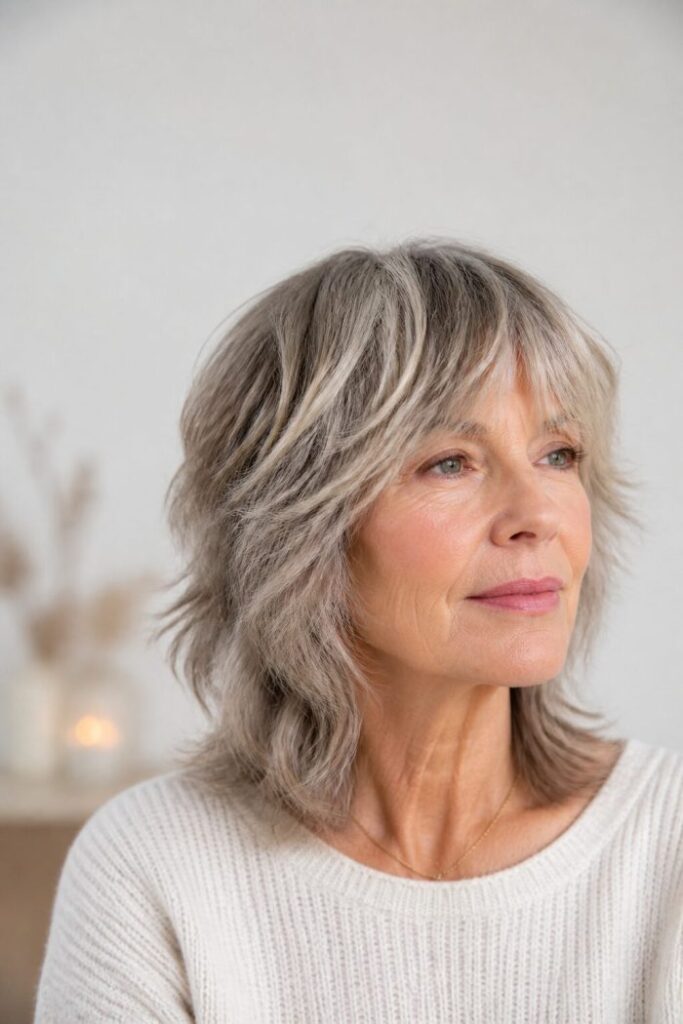
A wolf cut at the mid-grow-out stage — where the original layers have softened and lengthened, the curtain bangs have grown toward the cheekbone, and everything has blended into a more romantic, undone version of the original cut — is worth acknowledging as a look in its own right rather than simply a maintenance problem.
At this stage, the layers that were distinct and intentional in the freshly cut version have grown into a softer, more blended silhouette with beautiful natural movement. Many women find they genuinely prefer this phase to the original cut because it requires even less styling and has an organic, effortless quality that the fresh cut sometimes lacks.
What to ask your stylist: If you love the grown-out phase, ask your stylist to work toward that aesthetic — longer layers with soft blending rather than the pronounced contrast of a fresh wolf cut. A light dusting of the very tips every eight to ten weeks maintains the health of the ends without resetting the softness you’ve grown into.
Styling tip: The grown-out wolf cut is specifically suited to minimal styling — a light leave-in, air drying, and nothing else often produces the most flattering result. The layers at this stage have enough blending to move naturally without manipulation.
Best for: Women who prefer a more relaxed, romantic aesthetic than the deliberately textured fresh wolf cut, and anyone who finds that their hair looks better with more time between appointments rather than less.
15. Wolf Cut With Face-Framing Highlights
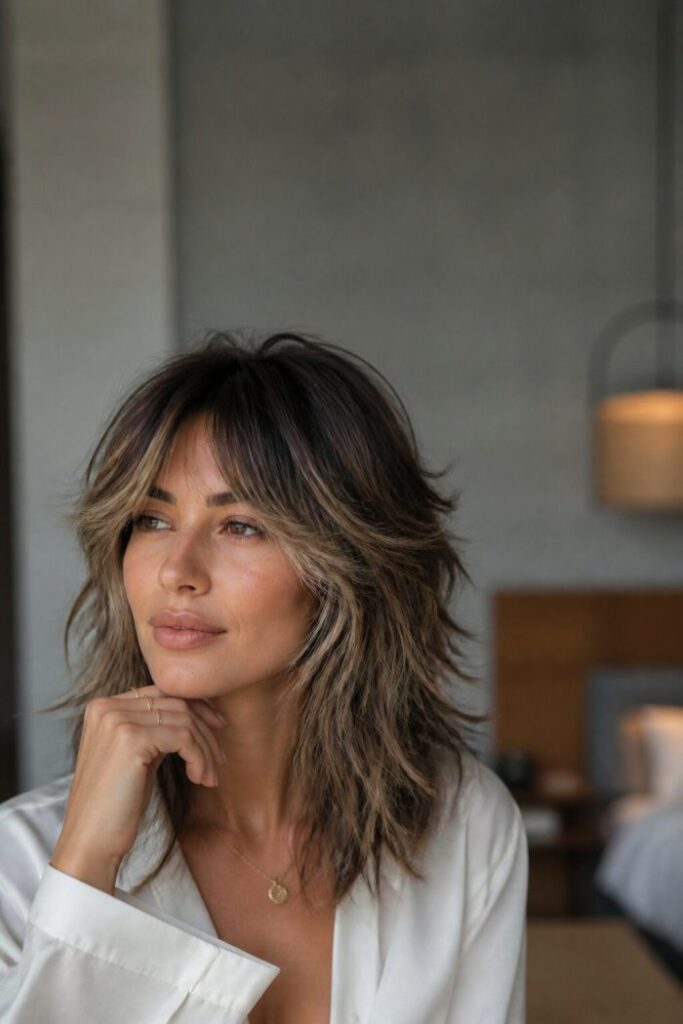
Rather than an all-over color or a bold money piece, this sophisticated version uses carefully placed highlights exclusively in the face-framing layer sections to create a luminous halo effect around the face. The highlights are intentionally subtle — two to three shades lighter than the base rather than dramatically contrasting — which means the result reads as naturally brighter and more radiant rather than obviously highlighted.
This approach is particularly effective for women over 50 who want to brighten their complexion through color without committing to a high-maintenance or high-contrast color treatment. The face-framing placement maximizes the brightening benefit per foil used.
What to ask your colorist: Ask for a soft, blended connection between the face-framing highlights and the rest of the hair — a harsh line where the highlighted section meets the non-highlighted section undermines the natural quality this approach is designed to create. Feathering the highlights into the adjacent sections keeps everything looking seamlessly integrated.
Styling tip: Style the face-framing sections with a soft outward bend using a one-inch curling wand to show the highlights at their most luminous angle — a bent section catches more light than a straight one, which maximizes the brightening quality of the lighter tone.
Best for: Women who want a subtle, natural-looking color enhancement that specifically targets complexion brightening without a visible or high-maintenance color treatment.
16. Textured Lob Wolf Cut for Straight Hair
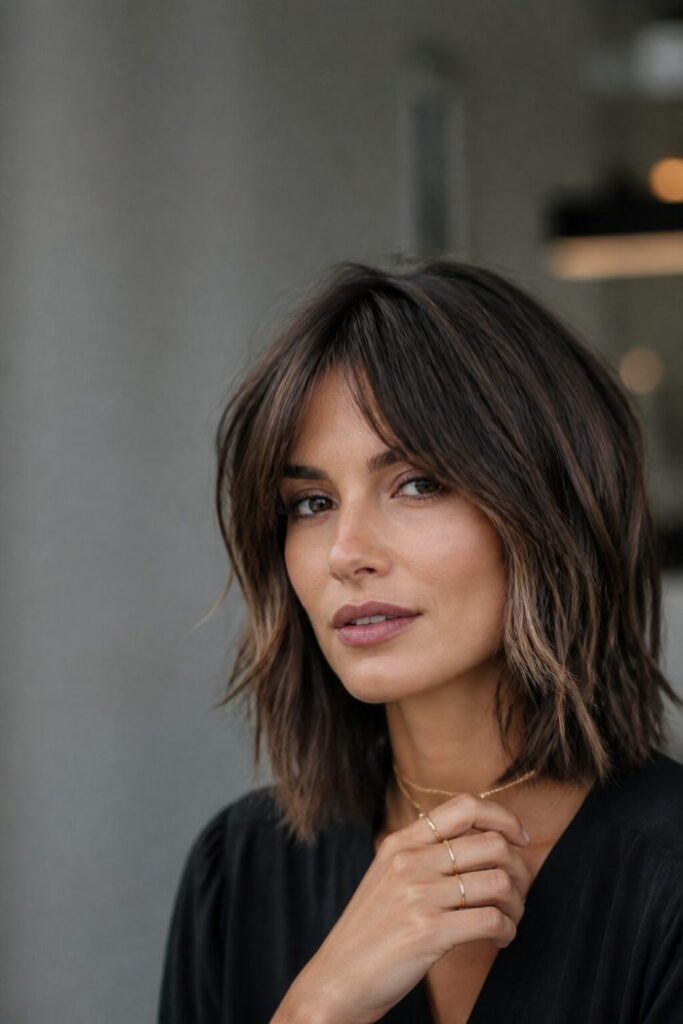
Straight hair sometimes gets excluded from wolf cut conversations because the style’s signature movement and texture are most visually obvious on wavy and curly textures. But straight hair creates its own compelling version of the wolf cut — the layers slice through the length cleanly, creating visible movement and dimension that straight hair can’t achieve without a strong structural cut.
The key to making a wolf cut work on straight hair is embracing the cut’s natural visual language rather than trying to make it look like a wavy or textured version. Straight wolf cuts have a sleeker, more polished quality than textured versions, and that’s a feature rather than a compromise.
What to ask your stylist: Ask for the layers to be blended rather than choppy — on straight hair, choppy layers can look disconnected rather than textured. The transitions between layers should be smooth enough to create movement without creating visible gaps.
Styling tip: A flat iron used to create subtle bends — not full curls or waves — in the ends of each layer adds just enough movement to prevent the straight wolf cut from looking flat. Work in small sections and rotate the iron slightly as you pull through rather than wrapping the hair around the barrel.
Best for: Straight-haired women who want the wolf cut’s structural benefits — volume at the crown, face-framing layers, visible movement — without needing heat styling to achieve waves or texture every day.
17. Bold Red-Hued Wolf Cut
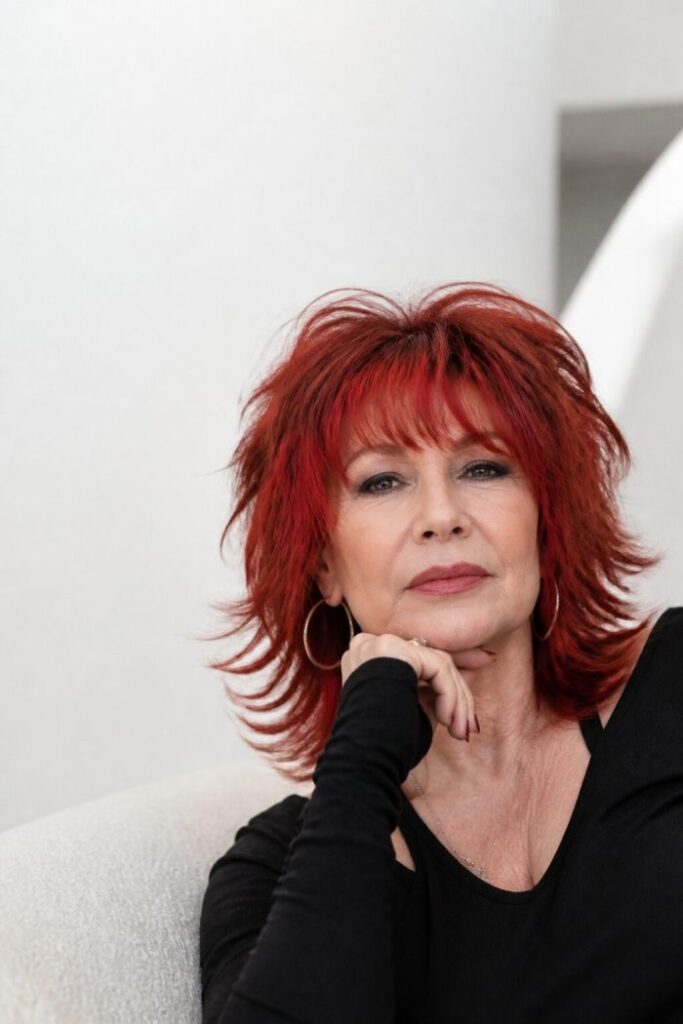
Red hair — whether natural copper, rich auburn, or a deliberate fashion red — paired with a wolf cut creates one of the most visually striking combinations available in hair styling. Red tones are the most light-reactive of any hair color, which means they look dramatically different depending on the angle of light — and the wolf cut’s many layers ensure that this light-catching quality is visible from every angle simultaneously.
The layering creates a fiery, multi-dimensional quality in red hair that a blunt or single-length cut simply can’t replicate — each layer section catches light independently, creating the impression of a color that’s constantly shifting and alive.
What to ask your colorist: Red tones are the most fade-prone of any hair color, and the vibrancy of the color directly affects how much impact the wolf cut has — a faded, dull red loses the light-catching quality that makes this combination so striking. Budget for color appointments every six to eight weeks rather than extending to ten or twelve.
Styling tip: Wash with cool water — as cool as you can tolerate — rather than hot. Hot water opens the hair cuticle and allows pigment molecules to escape; cool water keeps the cuticle closed and the color locked in significantly longer between appointments.
Best for: Anyone who wants a maximum visual impact combination and is willing to invest in the color maintenance that red hair specifically requires to stay vibrant.
18. Effortless Air-Dried Wolf Cut
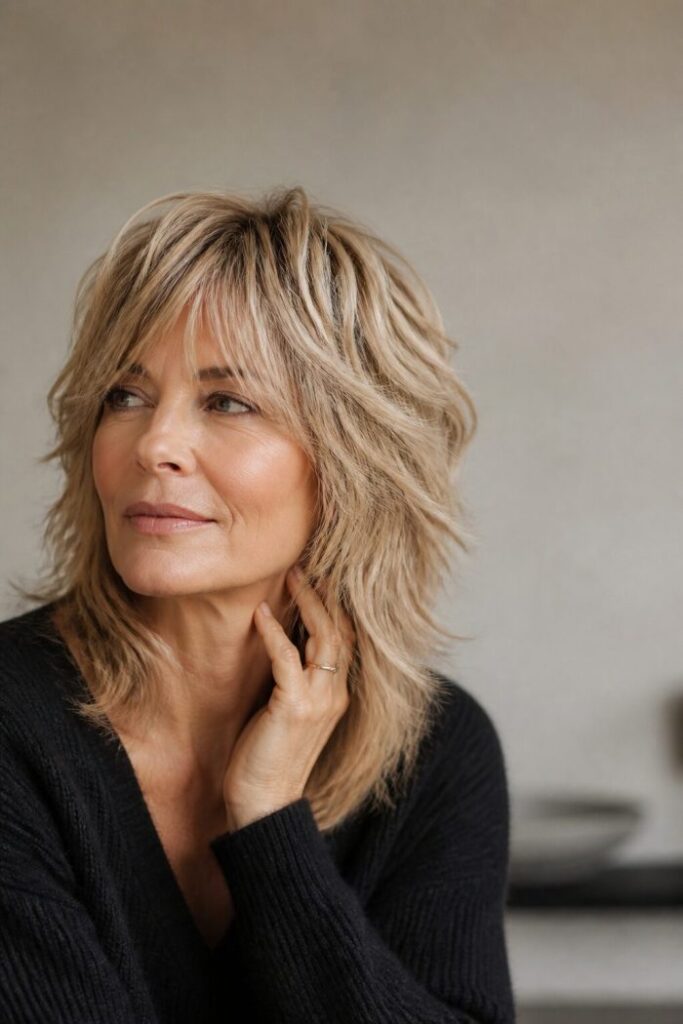
One of the most practical and genuinely appealing qualities of the wolf cut is that it can be specifically designed to look its best without heat styling — and this version is built entirely around that capability. The layers are placed and weighted to work with the hair’s natural texture as it dries, creating organic movement and shape that would require significant heat styling effort to achieve with a different cut.
For women who want great hair without dedicating significant morning time to achieving it, or who want to reduce their heat styling frequency for hair health reasons, the air-dry wolf cut is one of the most genuinely useful cuts available.
What to ask your stylist: Tell your stylist explicitly that you want a cut designed for air-drying with minimal product — this is useful information that affects the layering decisions, and stylists don’t always assume this is the goal. Ask for the layers to be cut to work with your specific natural texture as it dries rather than assuming you’ll be heat styling.
Styling tip: Apply a leave-in conditioner and a light curl cream or wave-enhancing product to damp hair before air-drying — these products help your hair’s natural texture emerge cleanly rather than drying with frizz or flatness. Apply through the mid-lengths and ends rather than the roots.
Best for: Women who want low-effort, low-maintenance hair that looks genuinely styled rather than unstyled, and anyone reducing heat styling frequency for health or convenience reasons.
19. Layered Wolf Cut for Medium-Length Hair
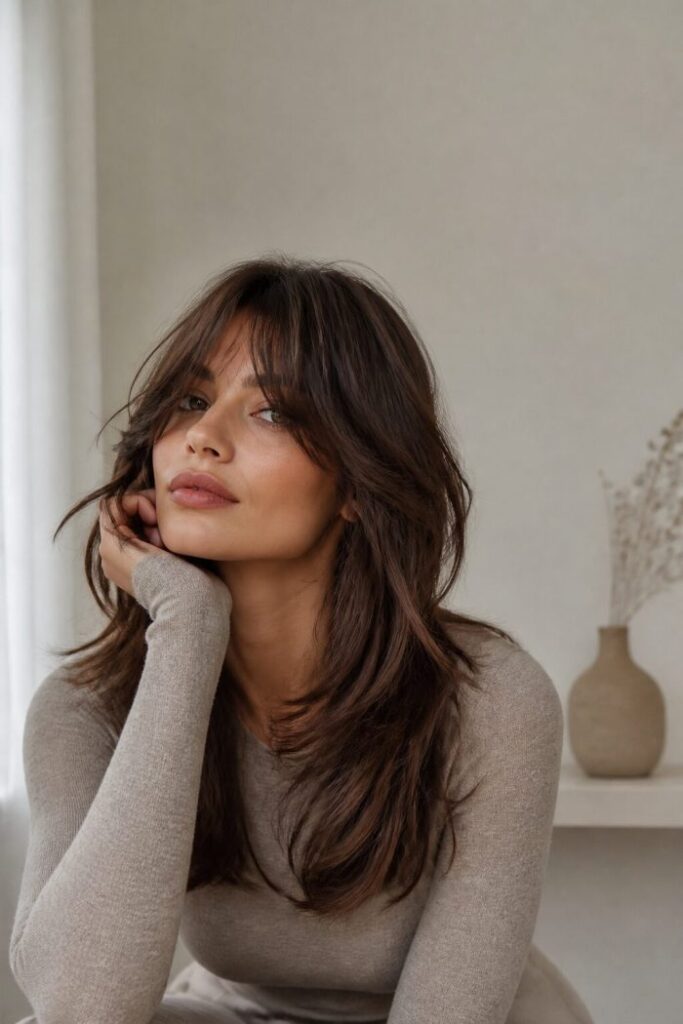
Medium length — somewhere between chin and shoulder — is the most practically versatile canvas for a wolf cut. It’s long enough for dramatic layering to have real visual impact, short enough to manage without the weight challenges of very long hair, and sits in the range where the wolf cut’s defining proportions read most clearly.
The layers start short at the crown for volume and gradually lengthen toward the mid-length, creating a cascading effect that shows the architecture of the cut clearly. For first-time wolf cut wearers specifically, medium length is the safest starting point — it’s committal enough to see the full effect of the cut but not so dramatic a change that it feels irreversible.
What to ask your stylist: Ask for the crown layers to start higher on the head rather than mid-shaft — a common mistake with medium-length wolf cuts is keeping the layers too conservative, which produces a result that looks like a layered cut rather than a wolf cut. The crown volume is the defining element, and it needs short layers near the root to achieve it.
Styling tip: A half-up style that gathers the shorter crown layers while letting the longer layers fall freely at the back is one of the most flattering ways to wear a medium-length wolf cut — it showcases both the crown volume and the length simultaneously.
Best for: First-time wolf cut wearers, women who want versatility in styling options, and anyone who wants the wolf cut’s full visual effect without the length management of a longer version.
20. Soft Feminine Wolf Cut With Wispy Layers
The wolf cut doesn’t require an edgy personal aesthetic to work — this version demonstrates that the same structural principles produce a completely different feel when the layering is lighter, the edges are softer, and the overall approach prioritizes polish and femininity over texture and drama.
The wispy layers blend seamlessly rather than creating visible contrast between sections, which gives the cut a gentle, romantic movement that reads as sophisticated and refined rather than rock-and-roll. It’s the option for women who want to be on-trend while staying true to an aesthetic that runs toward elegance rather than edge.
What to ask your stylist: Ask for soft, wispy layering throughout rather than the more dramatic contrast of a classic wolf cut — tell your stylist you want the layers to blend seamlessly rather than be visibly distinct. Ask for the ends to be softened with a light point-cut rather than left blunt, which gives a wispy quality without choppiness.
Styling tip: Blow-dry with a Denman brush or a medium round brush to smooth and direct the layers in the same direction — the control from brush blow-drying creates the polished, intentional finish that separates this version from the more tousled wolf cuts. A light shine serum through the ends adds the luminous quality that completes the feminine aesthetic.
Best for: Women who want the wolf cut’s structural benefits — volume, face-framing, movement — without its characteristically edgy feel, and anyone whose personal style prioritizes elegance over texture.
Pin it to find it later!
Final Thoughts
The wolf cut’s longevity as a trend comes down to a simple fact: it solves real hair problems. It adds volume where fine hair lacks it, removes weight where thick hair has too much, creates movement in straight hair that would otherwise sit flat, and defines curly hair that bulks rather than bounces. When a cut does that many things for that many different hair types, it stops being a trend and starts being a reliable option.
The twenty versions in this guide represent the full range of what the wolf cut can be — which is the other reason it stays relevant. It adapts to the person wearing it rather than requiring the person to adapt to it. A wolf cut can read as bohemian, rock-and-roll, polished, feminine, vintage, or contemporary depending entirely on how it’s executed.
Bring your two or three favorite references to your stylist along with an honest conversation about your hair type, your styling routine, and how much time you’re willing to spend on maintenance. Those three inputs will guide your stylist toward the specific version of the wolf cut that was made for your hair and your life rather than simply the one that looked best in a photo.
What exactly is a wolf cut and how does it differ from a shag?
The wolf cut is a layered haircut that combines the heavy layering of the classic shag with a more pronounced contrast between the short, voluminous crown layers and the longer lengths below. Where a shag distributes layers more consistently throughout, the wolf cut creates a starker visual contrast between the crown volume and the looser lower section — which gives it a slightly wilder, more dramatic silhouette. In practice, the line between the two can be blurry, and many stylists use the terms interchangeably. The key visual signature of a wolf cut is that strong crown volume against longer, looser ends.
Is the wolf cut flattering for women over 50?
Consistently yes — and for specific structural reasons rather than just general versatility. The face-framing layers minimize the appearance of fine lines by drawing the eye upward toward the eyes and cheekbones rather than downward. The crown volume directly counteracts the flattening that thinning hair experiences with age. And the overall texture and movement of the cut gives the hair a vibrancy and life that closely clipped or heavily structured cuts can suppress. It can be calibrated from very soft to quite edgy depending on personal preference.
What face shapes does the wolf cut suit?
The wolf cut works across most face shapes but in different ways. Curtain bangs and face-framing layers make it specifically flattering for round, square, and heart-shaped faces by adding vertical emphasis and drawing the eye toward the center. Oval faces have the most flexibility and can experiment with almost any version. The blunt-fringe version suits oval and heart-shaped faces most specifically. Women with very long or narrow face shapes may want to keep the layers softer and avoid adding significant crown height, which can elongate the face further.
How often does a wolf cut need to be trimmed to maintain its shape?
Every six to eight weeks for most versions — the crown layers grow out quickly, and when they do, they lose the volume-creating effect that defines the cut’s proportions. However, the grown-out phase of a wolf cut is genuinely attractive in its own right rather than simply neglected-looking, which gives some flexibility in the maintenance schedule. If you specifically love the softer, more romantic quality of the grown-out phase, extending to ten to twelve weeks and then getting a full reshape is a legitimate approach.
Can the wolf cut work on fine hair?
Not only can it work — it’s often specifically recommended for fine hair because the structural approach of the cut does what no product reliably can. The strategic weight removal through layering lifts fine strands away from the scalp, and the short crown layers create built-in volume that doesn’t depend on how recently the hair was washed or how much product was applied. Women with fine hair consistently report that a well-executed wolf cut makes their hair look and feel significantly fuller than any previous cut had.